Feeds:
Posts
Comments

Archive for the ‘Art’ Category

I was on my hands and knees last Friday, trying to get a shot of a small wildflower growing on the forest floor, when a bee landed on the very flower on which I was focusing. What are the odds of that happening at the moment when my eye was glued to the viewfinder and I was focusing manually?

The flower was only about four inches (10 cm) tall, which gives you an idea of the low angle from which I was shooting. After a second or two on the first flower (shown in the second shot), the bee moved to an adjacent flower, and I took the image I presented first. It’s interesting to note the narrowness of the depth of field—in the first shot below, I managed to focus on the bee’s head, whereas in the second shot, the focus point was more on the center of its body. I like each of the images for somewhat different reasons, but I am still shocked that I managed to get them.

Sometimes it’s better to be lucky than skilled.

bee2_flower_blogbee_flower_blog

© Michael Q. Powell. All rights reserved

Read Full Post »

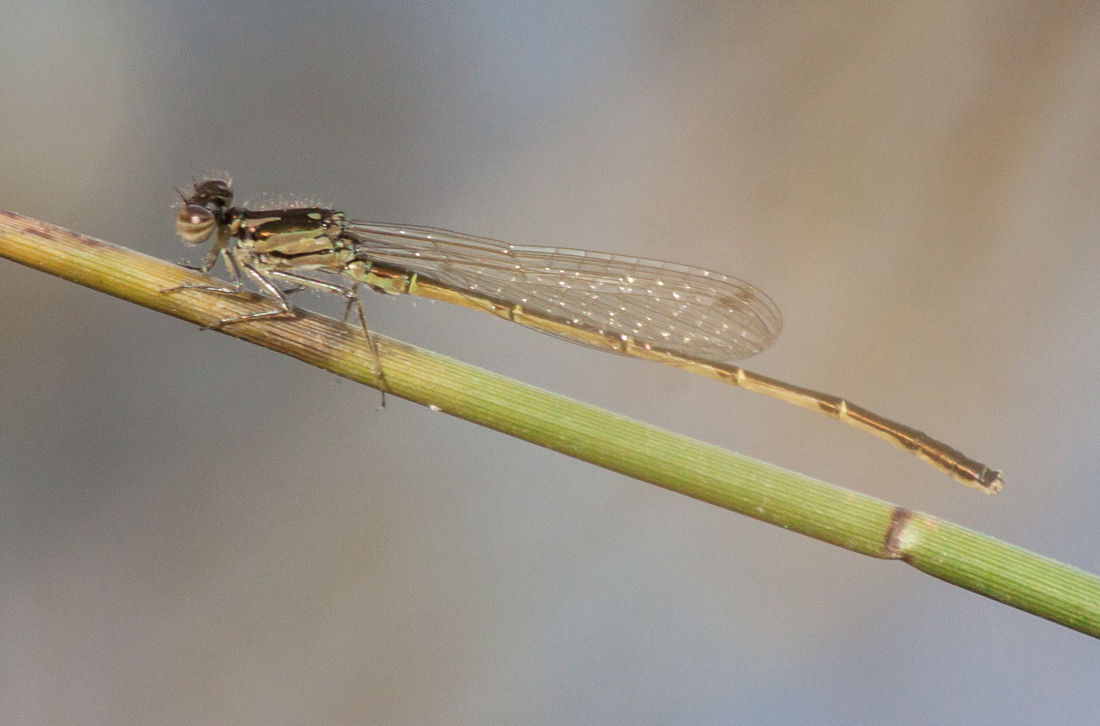
This is the last image in my mini-series on insect eyes from this past Friday—a close-up of a beautiful little damselfly at Huntley Meadows Park, the local marshland where I take many of my nature photographs. 

Photographing damselflies is particularly challenging for me, because they are so long and skinny (not to mention the fact that they are really small in size). About the only way to get their bodies completely in focus is to be absolutely perpendicular to them. When I took this image, I couldn’t get into the optimal position, thanks to a sharp, thorny bush, so the lower half of the body was out of focus. That is one of the reasons why I chose to crop this image as I did, though the main reason was to focus viewers’ attention on the eyes.

This image shows the wide separation of the damselfly’s eyes, which is one of the ways to tell them apart from dragonflies, the other members of the Odonata family. Dragonflies have eyes that are very close together or even touching each other.

If you missed the earlier postings on insect eyes, check out the images of a fly’s eyes and a dragonfly’s eyes. In all three cases, click on the images, if you want to get a higher resolution view of the insects’ beautiful eyes.

damsel_eyes_blog

© Michael Q. Powell. All rights reserved

Read Full Post »

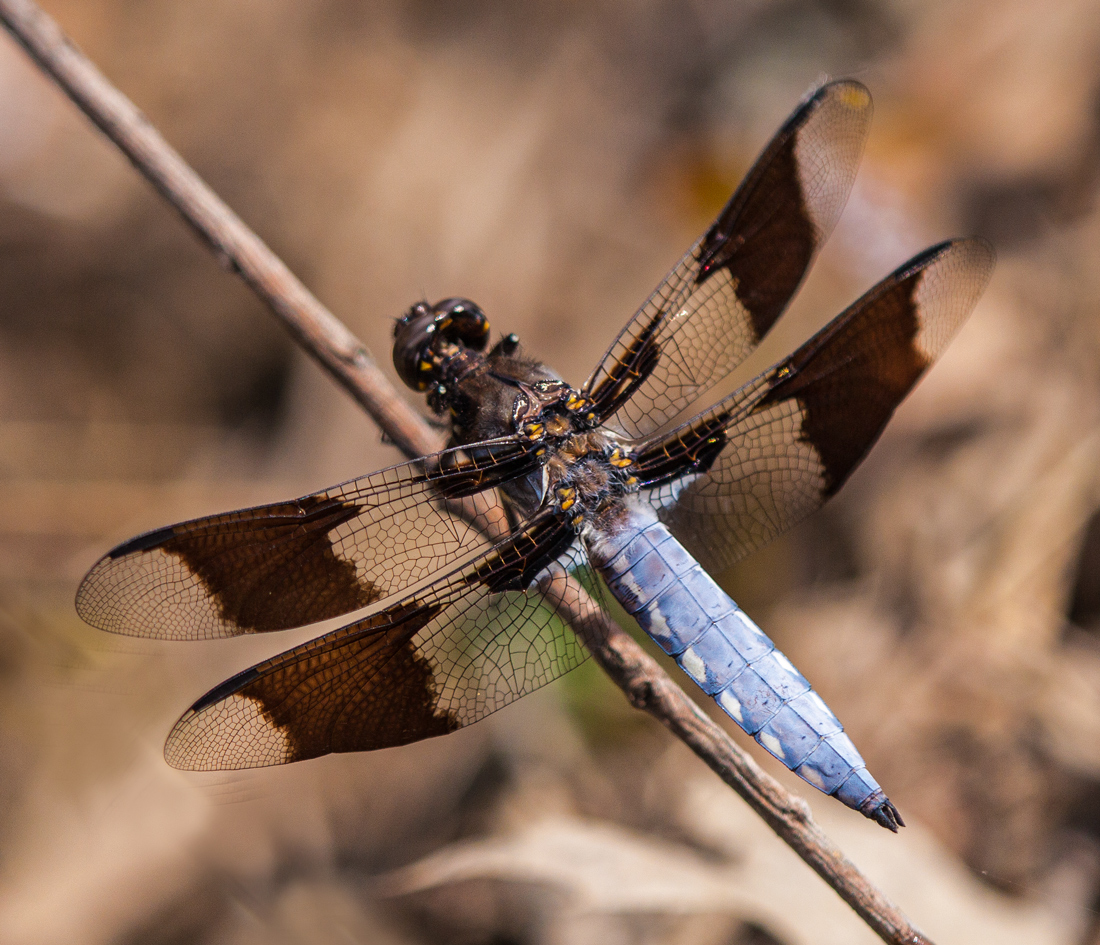
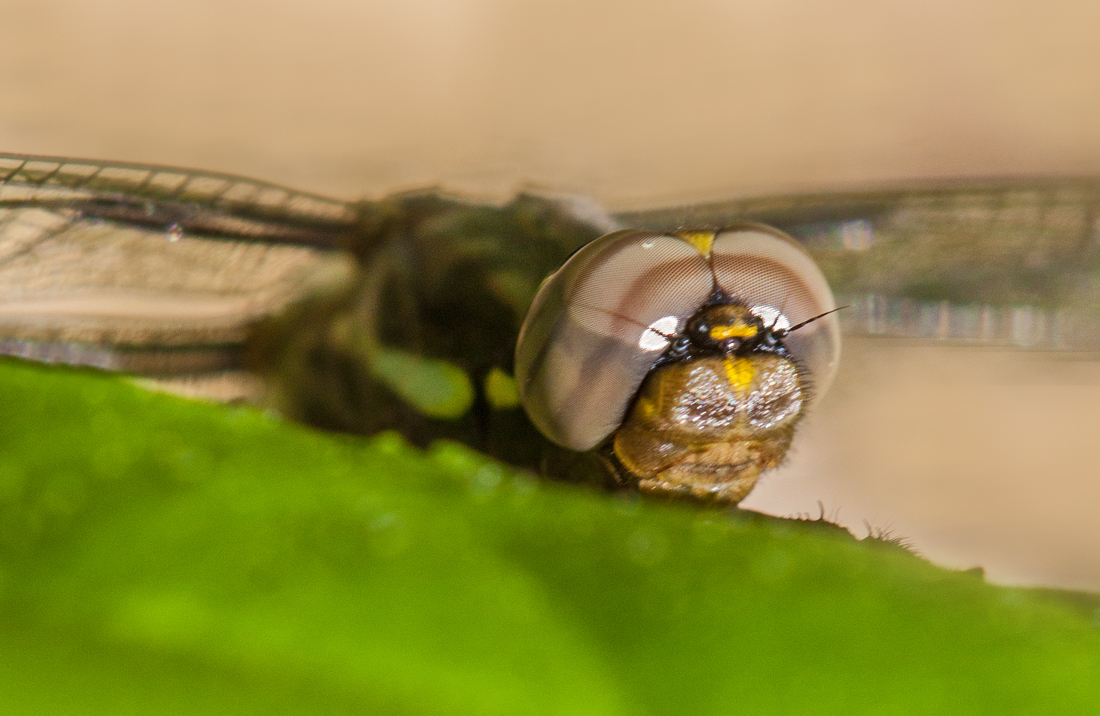
Yesterday, I seemed to be particularly fascinated by insect eyes and did a posting on a fly, whose compound eyes were pretty amazing. However, dragonflies have the largest compound eyes of any insect and I was thrilled to be able to capture this face-to-face shot of a Common Whitetail dragonfly (Plathemis lydia), peering right at me over the edge of a leaf.

A dragonfly’s eyes can have as many as 30,000 facets, known as ommatidia, that contain light-sensitive proteins, according to an article in ScienceBlogs. Although, humans also have these kind of proteins, called opsins, we have only three (red, green, and blue), whereas a dragonfly has four or five, giving it the capability to see colors beyond human visual capabilities. A dragonfly’s eyes also wrap around its head, giving it an incredible field of view. For more information and a more scientific explanation, check out a posting entitled “Super-predators” that Sue did last June in her Backyard Biology blog.

I took this shot in a wooded grassy area adjacent to a pond. It seems that the Common Whitetail dragonflies are hanging out there early in the season and not too many of them are patrolling over the water, as I commonly saw them do last summer. The fact that the dragonfly was not perched on a branch coming out of the water proved to and advantage as I was able to approach pretty closely to it in order to take this shot.
dragonfly_eyes_blog

© Michael Q. Powell. All rights reserved

Read Full Post »

I am back in Vienna, Austria for a short business trip and captured a few of the sights of this beautiful city on an early morning walk today as the city was coming to life.

Conservatory in Vienna

Conservatory in Vienna

Rathaus_blog

Vienna City Hall (Rathaus)

Statue_female_blog

Athena statue outside Austrian Parliament Building

Statue_male_blog

Statue in Volksgarten

© Michael Q. Powell. All rights reserved

Read Full Post »

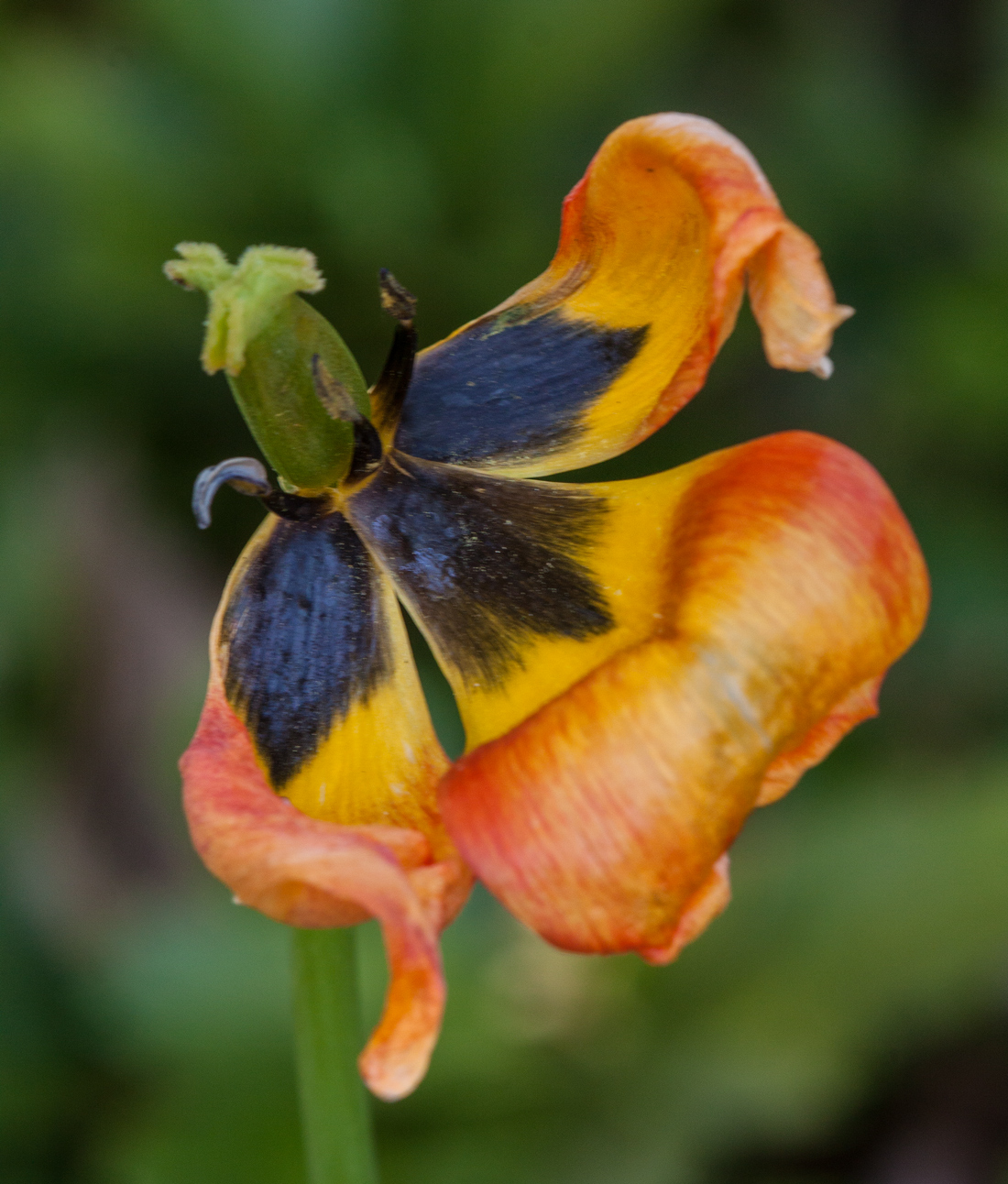
Do you pass by flowers that are past their prime? Their beauty is still visible in the fragments of their former glory.

tulip_memory2_blog

© Michael Q. Powell. All rights reserved

Read Full Post »

Memories of this past winter’s unusually heavy snowfall are beginning to fade, but were revived when I saw these beautiful little Snowflakes during a recent visit to Lewis Ginter Botanical Garden in Richmond, VA.

There are two varieties of Snowflakes—the Spring Snowflake (Leucojum vernum) and the Summer Snowflake (Leucojum aestivum)—and I am not absolutely certain which variety I photographed.

I love the simple beauty of this delicate flower and am happy that I was able to isolate a couple of the blooms to showcase that beauty.

snowdrop2_apr_blogsnowdrop1_apr_blog

© Michael Q. Powell. All rights reserved

Read Full Post »

Tree Swallows have been flying about for several weeks, but it was only this weekend that I finally observed one of their multi-colored brethren, the Barn Swallow (Hirundo rustica). Last year, the Barn Swallows built a nest underneath a raised observation platform of the boardwalk at my local marsh, and it looks like they are doing the same thing this year.

I was able to photograph this swallow as it perched on a small branch coming out of the water directly opposite the platform. The sky was mostly overcast during the day, which caused the reflections in the water to look mostly white. As I made a few adjustments to the image, the background essentially disappeared, resulting in a photo that looks almost like it was shot in a studio.

I really like the swallow’s serious pose and the fact that I was able to capture its signature swallow tail. It won’t be long before I see swallowtails on some of my favorite butterflies.

barn_swallow1_blog

© Michael Q. Powell. All rights reserved

Read Full Post »

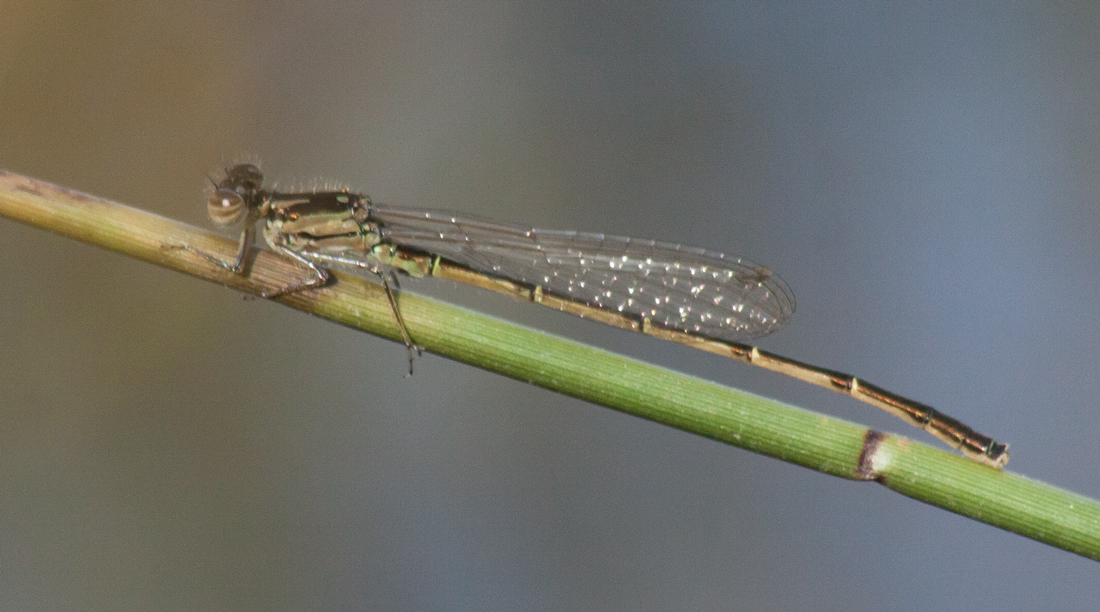
Damselflies are beautiful, delicate insects that are often hard to see and photograph. I captured this image of my first damselfly of the year at Huntley Meadows Park this past Friday. I am not very good at identifying these tiny insects, but think this might be a Fragile Forktail (Ischnura posita).

I was standing my the edge of my favorite beaver pond when I saw the damselfly in flight. I followed it with my eyes and was delighted when it landed on a nearby stalk of grass. I didn’t have a lot of maneuver, because much of the area at the pond’s edge is covered with thorny bushes, and I had to pull back a bit to get within the minimum focusing distance of my 70-300mm telephoto lens , i.e. 4.9 feet (1.5 meters). At that range, the dragonfly filled a reasonable amount of the frame.

Lighting was a bit of a challenge and I tried a couple of different settings as the damselfly lifted its tail from time to time. Eventually, it climbed to the end of the stalk and I changed position too and tried a couple of shots (including the final shot) using my pop-up flash.

Most of the time the first shot below is my favorite, but sometimes I like the others as well or more. In any case, I am happy that I was able to get some good shots of my first damselfly of the spring.

damselfly2a_blogdamselfly1a_blogdamselfly3_blog

© Michael Q. Powell. All rights reserved

Read Full Post »

Within minutes of seeing the elegant honey bee that I featured in a recent posting, I encountered this Eastern carpenter bee (Xylocopa virginica), which is built more like a sumo wrestler than a dancer, especially when viewed face-to-face, as in the second image below.


carpenter1_blog

carpenter2_blog

© Michael Q. Powell. All rights reserved


Read Full Post »

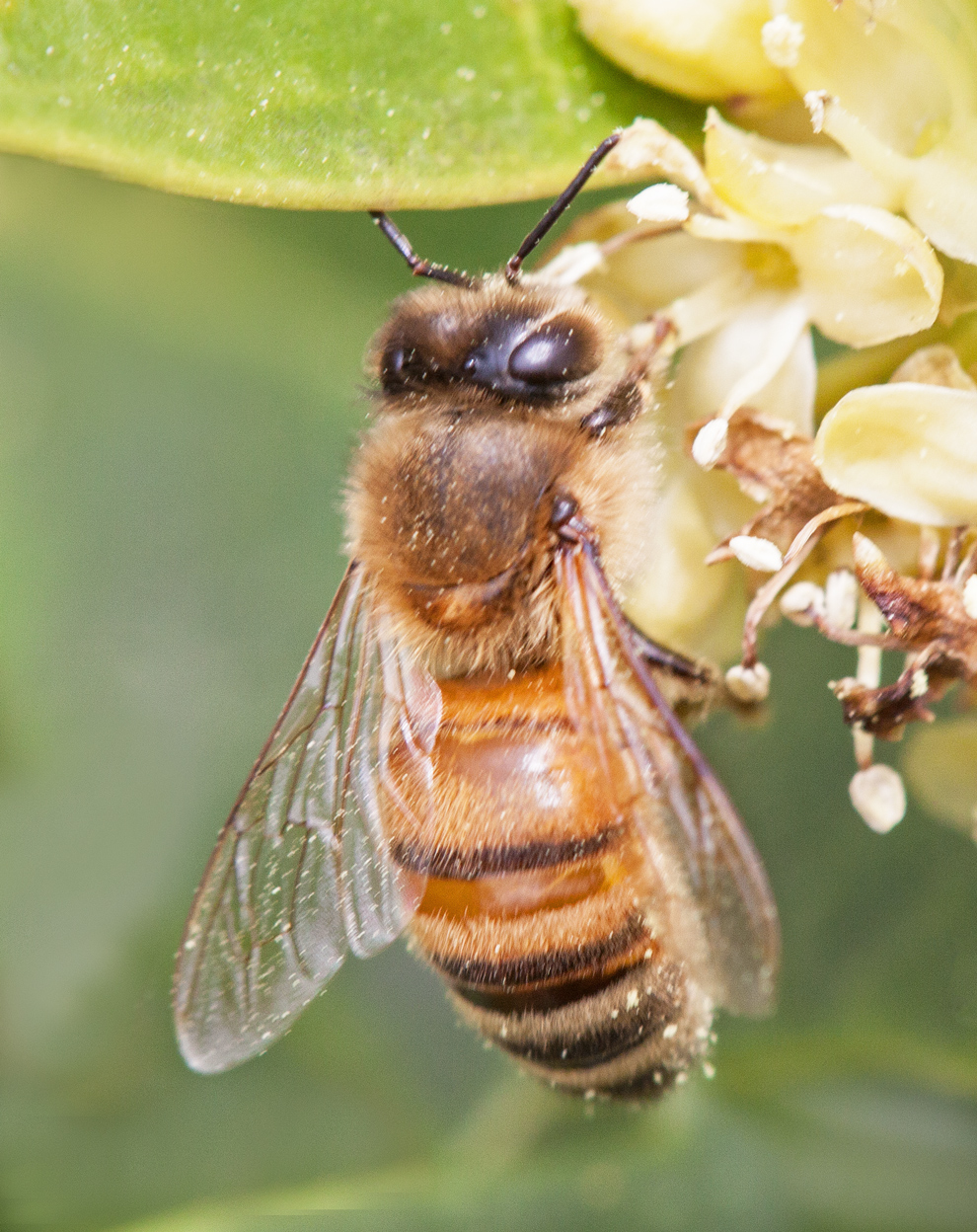
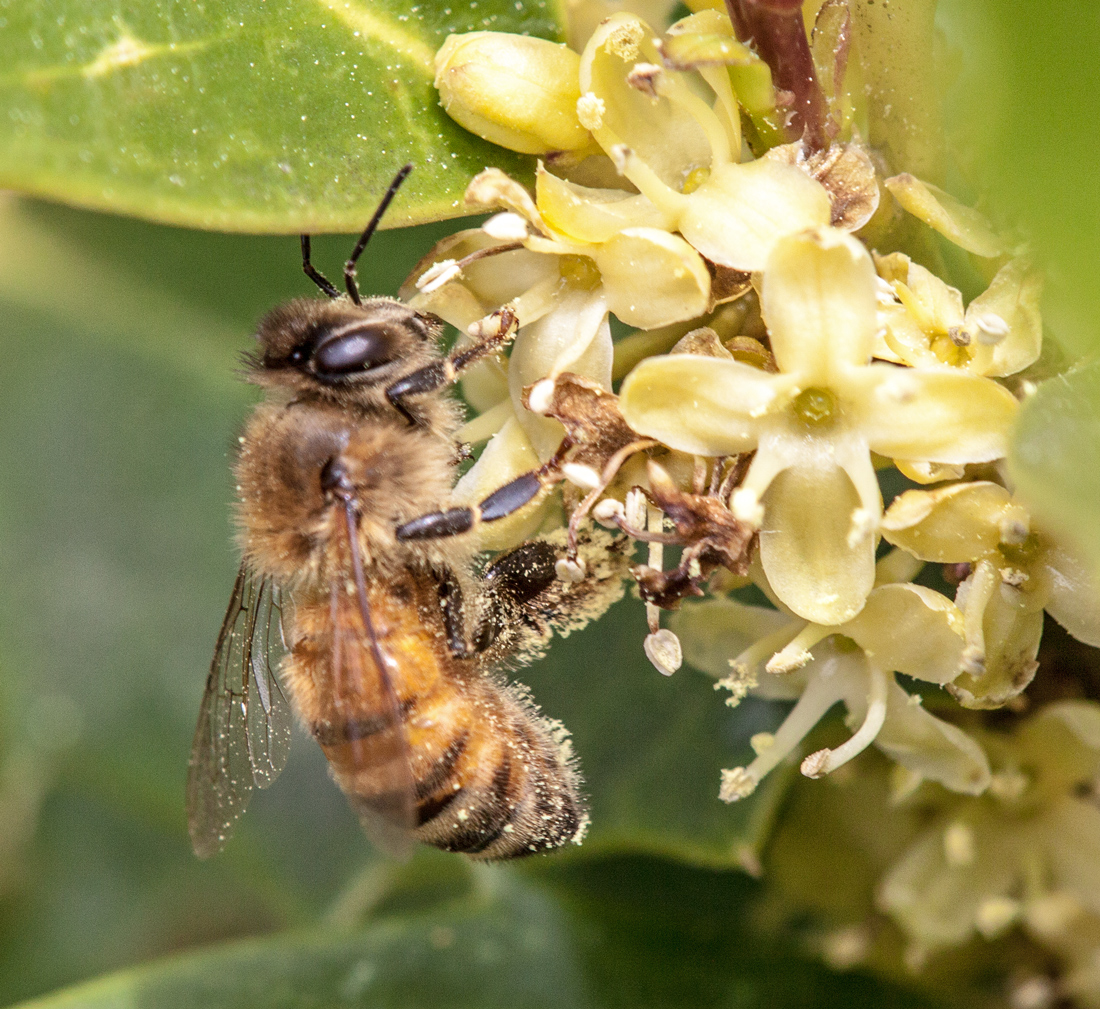
While visiting a garden during an event advertised as “A Million Blooms” I looked hard, but didn’t find any bees among the many tulips and other spring flowers. It was a bit ironic that I discovered this honey bee on a bush while waiting for my fellow photographers outside the gift shop of the Lewis Ginter Botanical Garden in Richmond, Virginia after seeing lots and lots of flowers.

I was hand-holding my 180mm macro lens for these shots, so I couldn’t close down the lens too far. In some of the shots, therefore, you can see that the depth of field was pretty narrow. Still, I am happy that I was able to capture some of the beautiful details of this honey bee, one of the first bees that I have observed this spring.

honeybee1_bloghoneybee2a_bloghoneybee3_blog

© Michael Q. Powell. All rights reserved

Read Full Post »

A few dandelions have popped up recently, but I was surprised to see one yesterday that had already gone to seed. Despite the wind that kicked up from time to time, the dandelion remained a perfect sphere.

April continues to be a mass of contradictions, with a mixture of signs of winter, spring, and even summer.

unseasonable_blog

© Michael Q. Powell. All rights reserved

Read Full Post »

Sometimes the beauty of Easter reveals itself in subtle ways, like this delicate orchid that I photographed yesterday in the conservatory at Lewis Ginter Botanical Gardens in Richmond, VA.

orchid_april_blog

© Michael Q. Powell. All rights reserved

Read Full Post »

This brightly colored American goldfinch (Spinus tristis) reminds me of the marshmallow Peeps that I grew up with and the brightly colored spring outfits that people would wear to church to celebrate Easter (including some pretty outrageous hats).  Best wishes to all for a Happy Easter, no matter how you choose to celebrate it.

Finch and Blossoms web

© Michael Q. Powell. All rights reserved


Read Full Post »

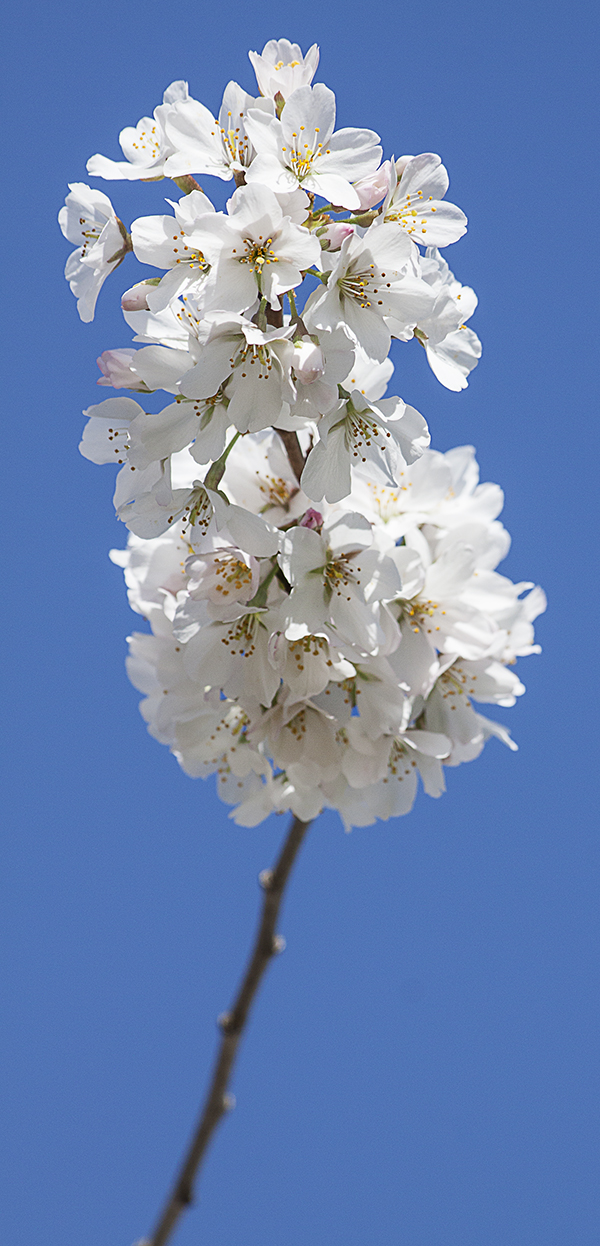
Although I live in the Washington D.C. area, I didn’t feel like fighting the crowds to get images of the iconic cherry blossoms. However, the blossoming trees in my neighborhood were pretty spectacular too, albeit on a smaller scale.

I think the first two images are Bradford pear trees, the third is a forsythia bush, and I am not sure what kind of tree the final one is. The shapes and colors and lighting make each of these shots quite different, but I think my favorite is the first one, which reminds me of a Japanese painting.

IMG_0426 webIMG_0555 webIMG_0600 webIMG_0609 web

© Michael Q. Powell. All rights reserved


Read Full Post »

After seeing three of my recent postings that featured unopened tulips, some readers might come to the erroneous conclusion that I don’t like the colorful flowers of blooming tulips. How could that be possible? Everyone seems to like the cheery colors of tulips.

My neighbor, and fellow photographer and blogger Cindy Dyer, has planted quite a variety of tulips in her garden and I recently took some photos of two very different species. The first is a small, delicate tulip know as the “Lady Jane” (Tulipa clusiana var. ‘Lady Jane’). I am not sure that I have every seen a more petite tulip and I really like its subtle colors.

The second tulip is big and bold and multi-colored, almost a visual equivalent of shouting. This style of tulip is known as a “broken” tulip, because of the way that the colors are broken, resulting in intricate bars, stripes, streaks, featherings, or flame-like effects of different colors on the petals. According to Wikipedia, this effect was originally produced by a tulip-breaking virus, and bulbs with this effect went for exorbitant prices in 17th century Netherlands, during a period known as “tulip mania.” Today, tulips displaying a “broken” effect are stable variants and the result of breeding, not viral infection.

IMG_0831 web

IMG_0860 web

© Michael Q. Powell. All rights reserved


Read Full Post »

The moon was shining brightly in my neighborhood this morning at 6:00, just a few days after the full moon.

moon_april_blog

© Michael Q. Powell. All rights reserved

Read Full Post »

Like tiny bunches of grapes, growing out of the ground on a stalk, grape hyacinths are one of my favorite spring flowers. I moved in really close with my macro lens in the first shot to emphasize the beautiful details and the rich dominant bluish-purple color of the plant and moved back a bit for the other two shots to highlight the varied shapes and colors of the individual “grapes.”

GrapeHyacinth Closeup webHyacinth Umbels webGrape Hyacinth 1 web

© Michael Q. Powell. All rights reserved

Read Full Post »

This final image of my mini-series on unopened tulips is my favorite—I love the simple composition, the almost monochromatic palette (with the slightest touch of pink at the tip), and the  sensual curves of the leaves.

It was almost six o’clock in the evening when I took this shot and the light was still pretty strong, but was starting to fade. I knew that I wanted to shoot some close-up shots of flowers, so I was using my 180mm macro lens. I probably should have been using my tripod for increased steadiness, especially because the lens does not have image stabilization (VR for Nikon folks), but I hadn’t brought a tripod with me.

As is often the case with my macro lens, I ended up focusing manually, trying to get as much of the tulip in focus as I could as I carefully composed the shot. The settings for this shot, for those who might be interested in such technical details, were ISO 400, f/8, and 1/50 second. The shutter speed is a bit slow, I’ll admit, but I was able to brace myself pretty well and I was trying to avoid increasing the ISO and introducing more noise.

If you haven’t seen the other images in this mini-series, Anticipation I and Anticipation II, be sure to check them out. Is there one that you like more than the others?


IMG_0907 web

© Michael Q. Powell. All rights reserved

Read Full Post »

With the cold, gray days of winter receding in my memory and the world exploding with color, I’ve taken a brief break from focusing primarily on wildlife photography and have turned my attention to capturing the beauty of flowers and blossoms.

I’ve never quite figured out how to photograph broad expanses of color, so I tend to focus more on the details of a single flower and try to isolate it from the background.  (One of my favorite bloggers, Camilla, of Calee Photography did an amazing job in capturing the beauty of tulip fields by photographing them from a small airplane. Check out her posting.)

In this case, my eyes were drawn to the not-yet-open tulip, where the color of the flower was beginning to be revealed. The composition is simple and graphic and a little abstract.

I can already sense the beauty that is to come—the anticipation makes it even more sweet.

IMG_0790 web

© Michael Q. Powell. All rights reserved

Read Full Post »

Anticipation, waiting for the moment when a tulip will burst open. For now, all we can see is a little tongue of color, a foretaste of the beauty that is to come.

Anticipation web

© Michael Q. Powell. All rights reserved

Read Full Post »

The flowering trees in my neighborhood are spectacular right now. Here’s a couple of shots of the flowers of one of them, which I think is some kind of magnolia or tulip tree.

magnolia_blogmagnolia2_blog

© Michael Q. Powell. All rights reserved

Read Full Post »

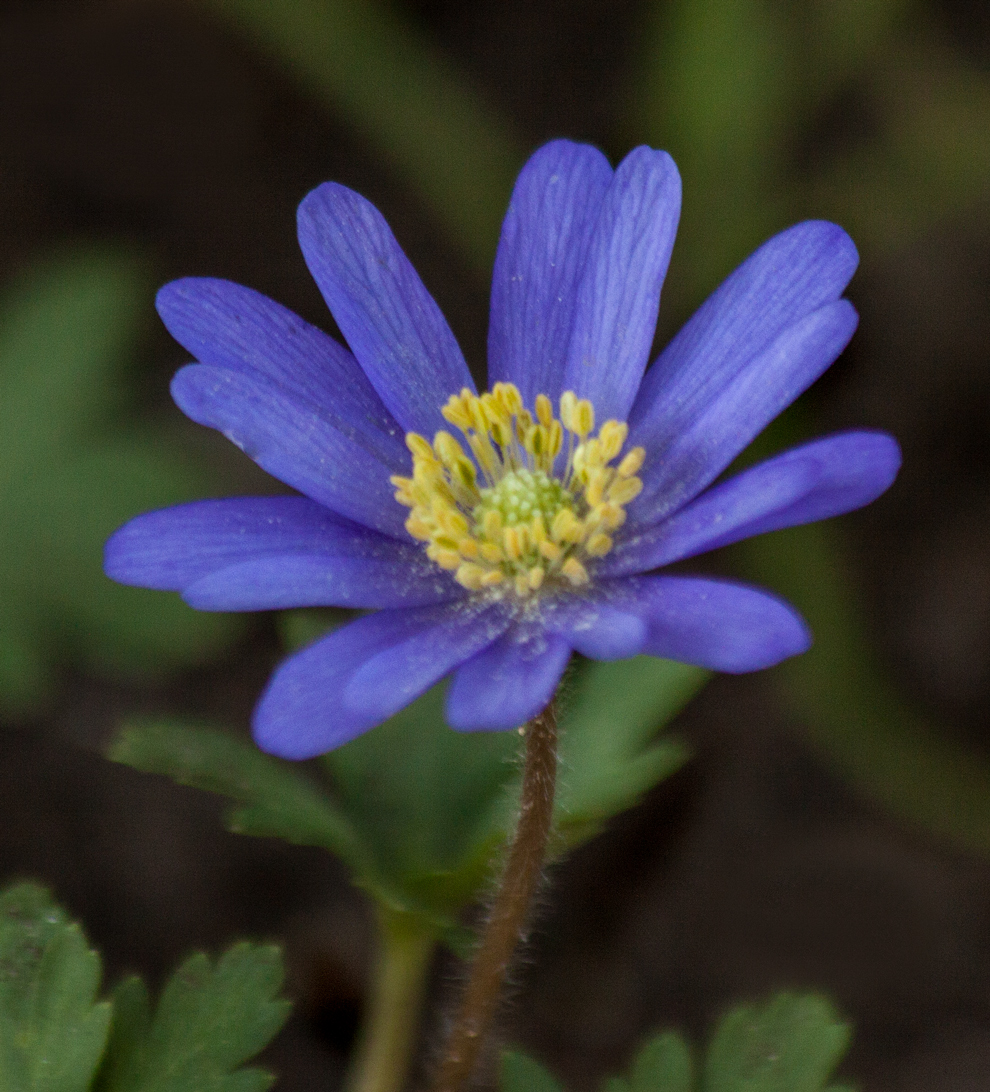
I am always happy to visit the garden of one of my neighbors, Cindy Dyer, a fellow photographer and blogger, at this time of the year, because there is always something new in bloom. Yesterday’s treat was this simple little purple flower. I have no idea what it is, but I love its shape and colors.

flower_tiny_blog

© Michael Q. Powell. All rights reserved

Read Full Post »

Spring is here and I am once again chasing dragonflies, on a quest to capture images of these beautiful insects. Common Green Darners (Anax junius) rarely seem to perch, so I was forced to try to photograph them in flight.

This early in the spring, there aren’t yet a lot of dragonflies, so my patience was tested as I waited for one to fly by. I tried a lot of different approaches and the one that worked best on this day was to focus manually, which is a bit of a challenge at 300mm when the subject is moving pretty fast.

I hope I’ll get some better shots later this season—this is my best one so far.

dragonfly_flight_blog

© Michael Q. Powell. All rights reserved

Read Full Post »

This red tulip may have been at its peak a few days ago when it was in full bloom, but it has retained its beauty in its current faded state.

tulip_faded_blog

© Michael Q. Powell. All rights reserved

Read Full Post »

Sometimes a coiled snake is prepared to strike, but this Northern Water Snake (Nerodia sipedon) was definitely not ready for action. The snake seemed total relaxed as it basked in the sun, curled up above the surface of the water on some dried up vegetation.

I really like the texture of the snake’s skin, but there was no way that I was going to reach out and touch it. Telephoto lenses are a good thing in situations like this.

snake_coil_blog

© Michael Q. Powell. All rights reserved

Read Full Post »

Unlike the Great Blue Herons that stay in Northern Virginia all winter, Great Egrets (Ardea alba) depart for warmer locations during the winter. I was happy to note this past weekend that the egrets are now back at my local marsh, where I took these shots of one coming in for a landing.

The wing span of this bird is impressive and I love the way that it points its toes as it comes in for the landing. As is often the case, I had challenges getting a proper exposure—I try to expose for the brilliant white body, but often blow out the highlights. I am pleased that I was able to capture some of the details of the wings in these images, though the shadows caused much of the plumage to look gray, rather than white.

egret2_april_blogegret1_april_blogegret3_april_blog

© Michael Q. Powell. All rights reserved


Read Full Post »

What kind of birds do you have in your neighborhood? I live in the suburbs of Washington D.C. in a townhouse community in Northern Virginia. There are quite a few trees and some green spaces, so I am able to find birds to photograph when I walk through the neighborhood, though the birds tend to be small and elusive.

This past weekend, I encountered a reasonably cooperative Carolina Chickadee (Poecile carolinensis) that remained perched in a tree in a fenced backyard as I desperately sought to compose the shot. I was hoping to have the sky as the background, because I was shooting upward, but the branches of the tree made it impossible to get that shot. I quickly realized that my only hope for an uncluttered background was to use the white siding of the townhouse as the backdrop. As I moved from side to side, I noticed that the blue shutters of the townhouse kept creeping into the frame and decided to incorporate them as an element of the image.

I really like the final result, a pleasing portrait of a little chickadee with a simple, almost minimalist composition.

chickadee1_april_blog

© Michael Q. Powell. All rights reserved

Read Full Post »

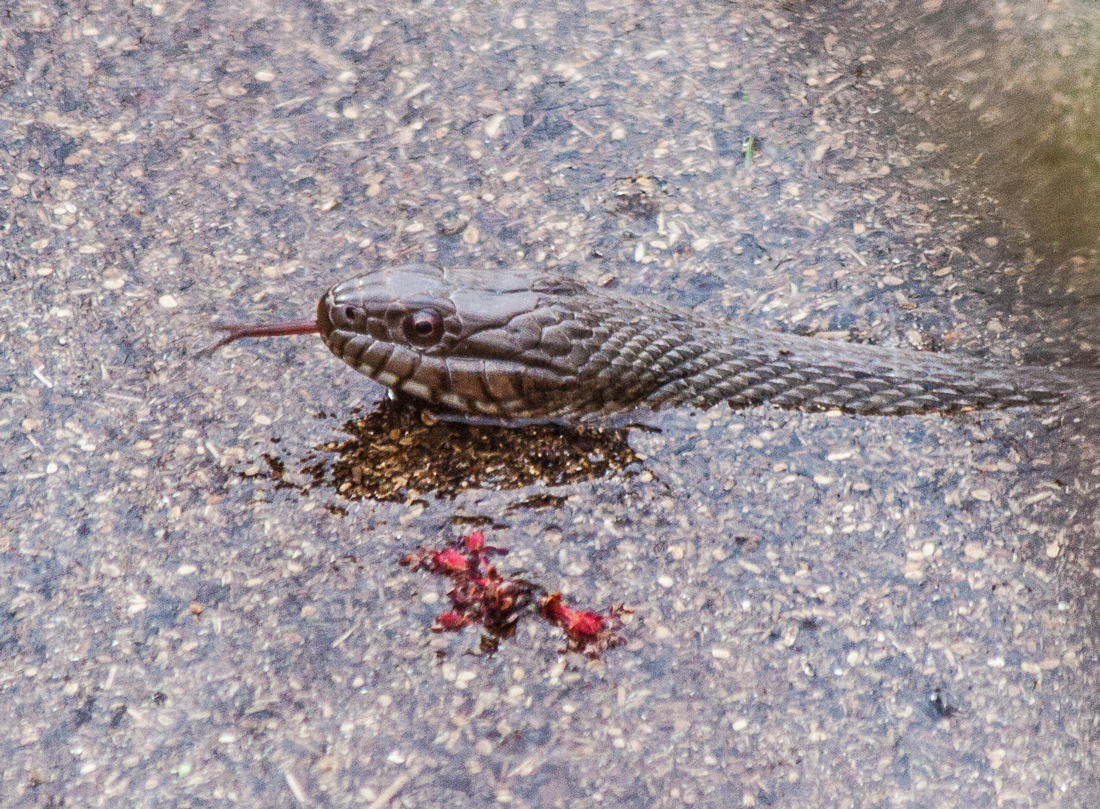
Spring has definitely arrived, bringing with it an abundance of snakes in addition to the profusion of flowering plants.  Most of the snakes have been all curled up, basking in the sun.  This Northern Water Snake (Nerodia sipedon), however, was slithering through the water and stuck out its tongue and hissed at me before disappearing below the surface of the water.

I really like the way the colors of the snake’s skin match those of its surroundings and even the reddish color of the forked tongue is repeated in the fallen blossom.

snake1_water_tongue_blog

© Michael Q. Powell. All rights reserved


Read Full Post »

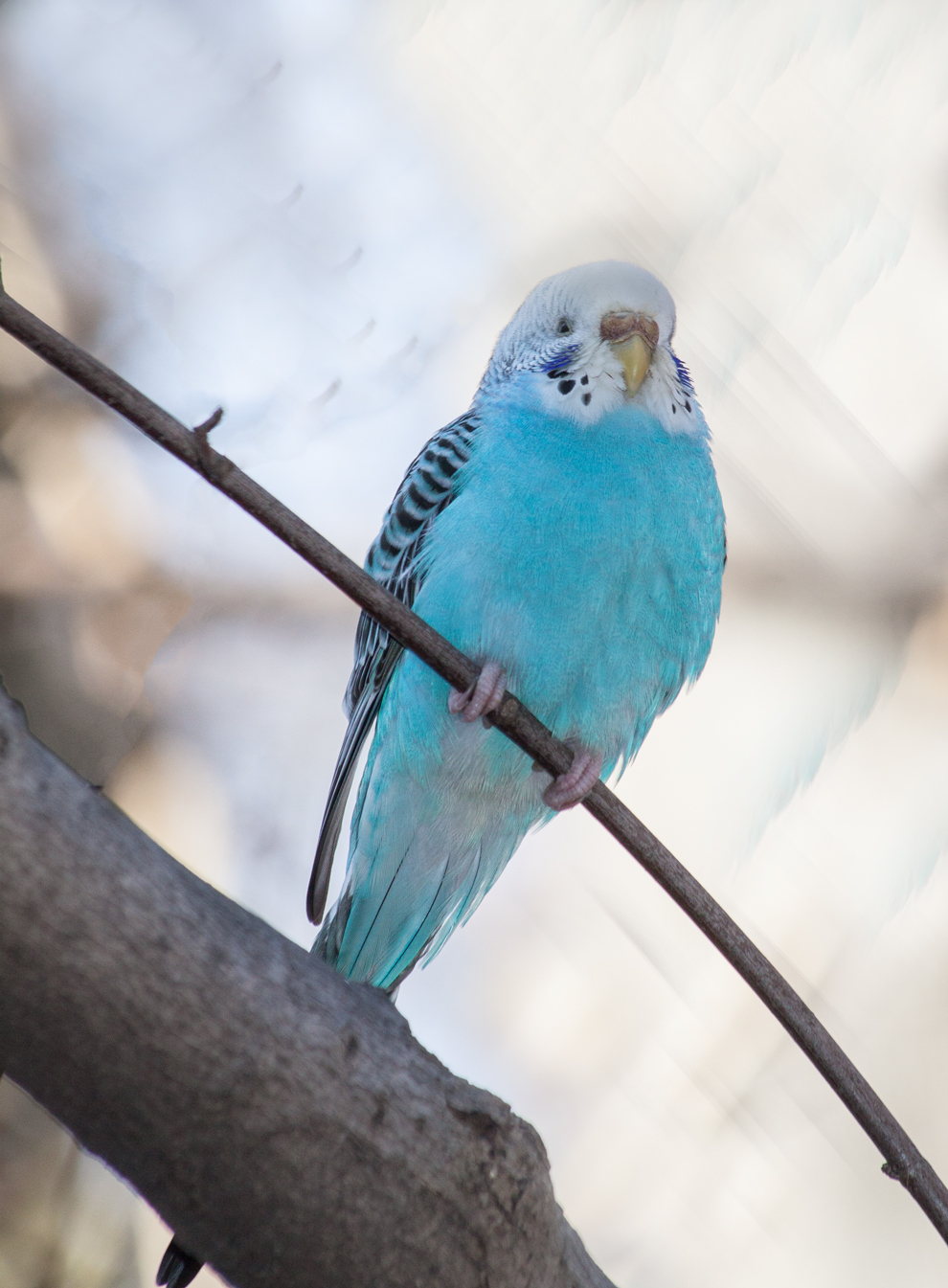
As I strolled through my suburban neighborhood on a sunny Sunday afternoon, I expected to see cardinals, chickadees, sparrows, and goldfinches in the trees—I had no idea that I would also encounter a brightly colored tropical bird.

I first saw the bird as a flash of brilliant blue, when it flew from a bird feeder on a back porch to a nearby tree. I love the blue colors of the Eastern Bluebirds, but this was an entirely different shade of blue. Initially the bird was in the shade and I tried to figure out what it was from its shadowy shape, but I was stumped, because it didn’t seem to have a bill.

When I circled around and got a better look, I could see that it was a blue parakeet. What was a parakeet doing outdoors in Northern Virginia? Had it recently escaped from one of the nearby townhouses? Can it survive for long outside?

I did a little research on the internet and learned that the birds we know as parakeets are more technically known as Budgerigars (Melopsittacus undulatus). In the wild, they live in parts of Australia and are naturally green and yellow. In captivity, they have been bred to have different colors, like the electric blue of this one. Judging from the brown color of the cere (the waxy structure that covers the base of the bill), this appears to be a female.

I’ll keep my eyes open to see if I can spot this beautiful bird again. Meanwhile, I will post the photos in the Facebook group of my homeowners’ association and see if I can learn from others how long this bird has been living in the wild.


parakeet1_blogparakeet2_blog

© Michael Q. Powell. All rights reserved

Read Full Post »

The weather has gotten warmer, but I was still a bit surprised when I saw my first dragonfly of the year yesterday at Huntley Meadows Park, my local marsh. I think that it is a female Common Green Darner dragonfly (Anax junius), one of the species that migrates north after spending the winter in warmer places. This is the only dragonfly that I saw yesterday and I was able to squeeze off a couple of shots before it disappeared. I’m hoping that it won’t be long before I see more dragonflies and butterflies, some of my favorite photographic subjects.

dragonfly_april_blog

© Michael Q. Powell. All rights reserved

Read Full Post »

Some folks complain a lot about Canada Geese, but I enjoy trying to photograph them, especially when they are taking off and landing. It seems like the number of them has dwindled somewhat at my local marsh recently–perhaps some of them have migrated north.

Yesterday, this goose began to sound the alarm as soon as it became aware of my presence and took off a short time later, still crying out with its tongue extended. I managed to track the bird as it was taking off and to shoot a series of shots. The sky was pretty heavily overcast yesterday, so I had raised my ISO to 320 and figured that I would have enough speed to capture the action. What I didn’t realize at the time, though, was that my aperture was still set at f/11, because I had been shooting some landscapes just prior to these shots. I was in aperture priority mode and my camera chose a shutter speed of 1/1oo of a second.

In the first shot, the goose is relatively sharp and there is little motion blur, except for the background, which is blurred, I think, because I was panning as I tracked the goose. In the second shot, though, which preceded the first in time, the wings and the feet have some motion blur, which accentuates the feeling of the goose scrambling to get into the air.

I keep going back and forth in trying to decide which of this two photos I like better. The technical side of my brain wants to vote for the first one, but the artistic side prefers the second image. What do you think?

goose_alarm goose_alarm2_blog

© Michael Q. Powell. All rights reserved


Read Full Post »

« Newer Posts - Older Posts »