Feeds:
Posts
Comments

Archive for the ‘Arachnids’ Category

How does a jumping spider, a spider that does not build a web, manage to capture a dragonfly? I don’t know how this Bold Jumping Spider (Phidippus audax) snagged an Eastern Pondhawk dragonfly (Erythemis simplicicollis), but I came upon the two of them after the capture had been completed and managed to snap a series of photographs of the action.

I am still working on the images and plan to do a longer posting, but wanted to give you a sneak preview.

dragon8_spider_blogdragon11_spider_blog

© Michael Q. Powell. All rights reserved.

Read Full Post »

When you think of a spider, what kind of body do you imagine? I realize that most people don’t even want to think about spiders—they find them to be creepy and frightening.  For some of us, though, spiders are beautiful creatures with some amazing features.

Still, I don’t usually think of a spider as having a long, thin body, and most don’t. Last week I encountered one that had such a body, which I think is a kind of long-jawed spider from the  Tetragnathidae family. In addition to the elongated bodies, these spiders have legs of varying lengths, with the front pair appearing to be really long.

Spiders apparently come in all sizes and shapes. Who knows what new ones I’ll see in the coming months?

longjaw1_bloglongjaw2_blog

© Michael Q. Powell. All rights reserved.

Read Full Post »

Sometimes you don’t have to travel far to get good nature photos. I noticed this colorful little jumping spider on my car yesterday when I was loading my camera gear, getting ready to go out shooting. spider4_car_blog

It was a fun challenge trying to get shots of the spider as it moved to various parts of the trim surrounding the windshield, many of which were reflective. I wasn’t sure how long the spider would hang around, so I didn’t set up my tripod and I think it would have been pretty awkward to do so.

spider1_car_blog

I am hoping that nobody snapped pictures of me as I sprawled my body across the hood of the car, trying to find a way to brace my body and get a decent shooting position. My Tamron 180mm macro lens lets me get in close, but it does not have image stabilization.

spider3_car_blogOne of the first things that I noticed when I reviewed my images was that my car is dirty. In this area, they use a lot of salt on the roads when it snows and I suspect that those little white spots are salt residue. I thought about removing them in post-processing, but decided that I like the more urban, gritty feel that they give the images (and besides, it would have been a lot of work to get rid of all of them).

spider2_car_blog

I am always thrilled when I find a jumping spider. There is something special about all of those eyes that simply fascinates me and I am particularly happy when I manage to get reflections in the eyes.

© Michael Q. Powell. All rights reserved

Read Full Post »

I was a little surprised yesterday when a small spider crossed my path when I was walking on the boardwalk at my local marsh. Sure, temperatures had warmed up and it was over 50 degrees outside (10 degrees C), but I didn’t think there were any spiders around at this time of the year. This is definitely my first spider of 2014.

Expecting to photograph birds, not bugs (yes, I know a spider technically is an arachnid, not a bug), I had equipped my camera with a telephoto lens, not a macro lens, and wasn’t even carrying my macro lens. The spider was moving too, so I used what I had and shot these photos at 300mm and cropped them.

You can probably tell that the boardwalk at the marsh is made of a synthetic material and not real wood, which means that I am not at risk of getting splinters when I kneel on it as I often do.  This spider, whose species I cannot identify, was pretty small. The visible head of a screw used to hold in place the planks of boardwalk help to give you an idea of the relative size of the spider.  Eagle-eyed readers may notice that the third photo is the same image as the first one, but cropped less severely.

In a few short months, I hope to see (and photograph) a whole lot more spiders in even greater detail, but the first one of the year is always special.

spider2a_blogspider1_bblogspider2_blog

© Michael Q. Powell. All rights reserved

Read Full Post »

Some spiders can be creepy, but others are quite beautiful, like this one that I photographed earlier this month at my local marshland park. I am catching up a bit on posting photos from this month that I really liked and thought it might be good to post a spider image on Halloween night. I have not yet been able to identify this spider, but noted that it did not have a web and seemed to be lying in wait for prey on the long leaf of this plant. I’d welcome assistance in identifying the species of spider,

spider_halloween_blog

© Michael Q. Powell. All rights reserved.

Read Full Post »

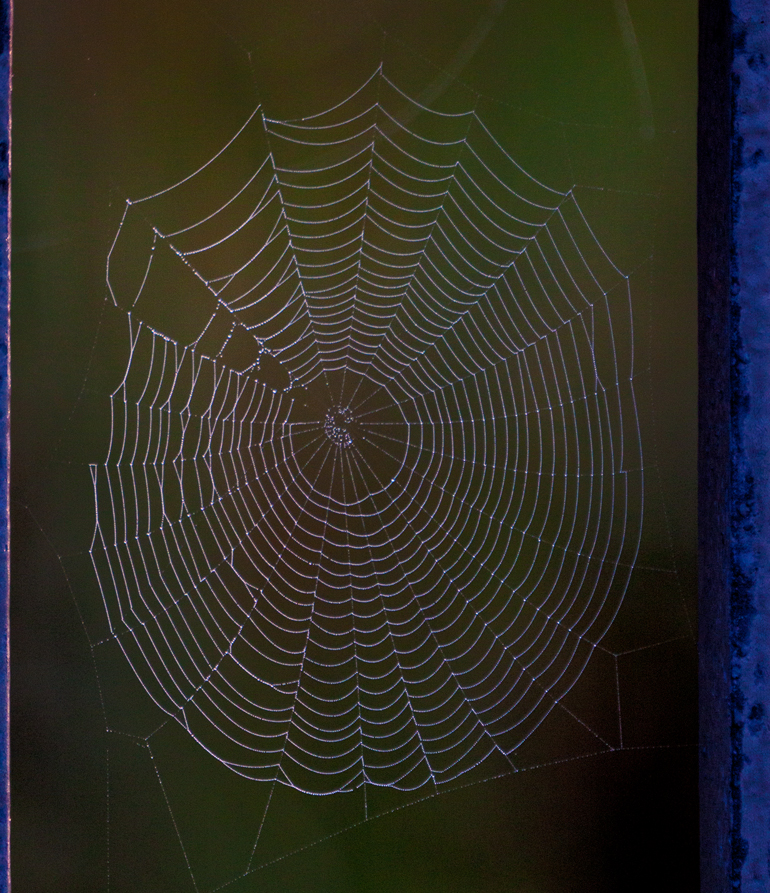
On Halloween night, it somehow feels appropriate to post this photograph of a spider web that I took earlier this month. Some people find spider webs (and spiders) to be creepy, but I find them to be fascinating.  I look at spider webs as a form of beautiful natural art, filled with wonderful geometric shapes and designs and always marvel at the ability of spiders to weave them.

web_halloween_blog

© Michael Q. Powell. All rights reserved.

Read Full Post »

As the outside temperatures continue to drop, I am seeing fewer and fewer spiders. This is one of my favorite recent shots of what I think is a barn spider. I really like the way that the spots in the background mirror the spots on the spider’s abdomen.

I think that this may be a Neoscona crucifera spider, though it may be an Araneus cavaticus spider. Strangely enough, both of them are sometimes known as barn spiders.

orange_spider2_blog

© Michael Q. Powell. All rights reserved.

Read Full Post »

I am not really sure what these spiders were doing, but it looked to me like they were engaged in a game that I played as a child called “King of the Hill.” The objective of the game was to climb to the top first and then to repel the efforts of the others trying to unseat you and take your place.

The two spiders seemed to be racing to the top of this plant’s stalk in the first photo and the second image shows that the one on the left was the winner. Somehow that second image reminds me of the iconic shot of King Kong on the Empire State Building, clutching the spire of the building.

It was a challenge trying to track moving subjects like this with a macro lens and my need for a higher shutter speed caused me to sacrifice some depth of field. I do like the simple, uncluttered composition that I was able to achieve and the fact that I was able to capture these little spiders in action.

spider_games2aspider_games1a© Michael Q. Powell. All rights reserved.

Read Full Post »

Here’s another shot of one of the numerous spiders that I observed yesterday at my local marsh, which I have not yet been able to identify.

This one was pretty big and seemed to be putting out a lot of silk, one strand at a time. If you look closely, you can spot numerous eyes and a cool orange racing stripe down the middle of its face. I took this shot from a low angle so that I could capture the spider with the sky as the partial backdrop.spider_sky_blog

© Michael Q. Powell. All rights reserved.

Read Full Post »

There seemed to be spiders everywhere at the marsh today. When I arrived in the morning, there were webs all over the place, though not the kind that orbweavers make—plants were simply covered with web-like material. Later in the day I saw all kinds of spiders scurrying along the boardwalk and even flying through the air in a process known as ballooning.

I saw a lot of one of my favorite type of spiders, the jumping spider. I am still downloading my images from today, but here is an advance preview, an image of a jumping spider that had crawled onto part of the railing of the boardwalk. I love the details of the spider, especially the eyes, and even the peeling paint of the railing.

spider_jump1_blog

© Michael Q. Powell. All rights reserved.

Read Full Post »

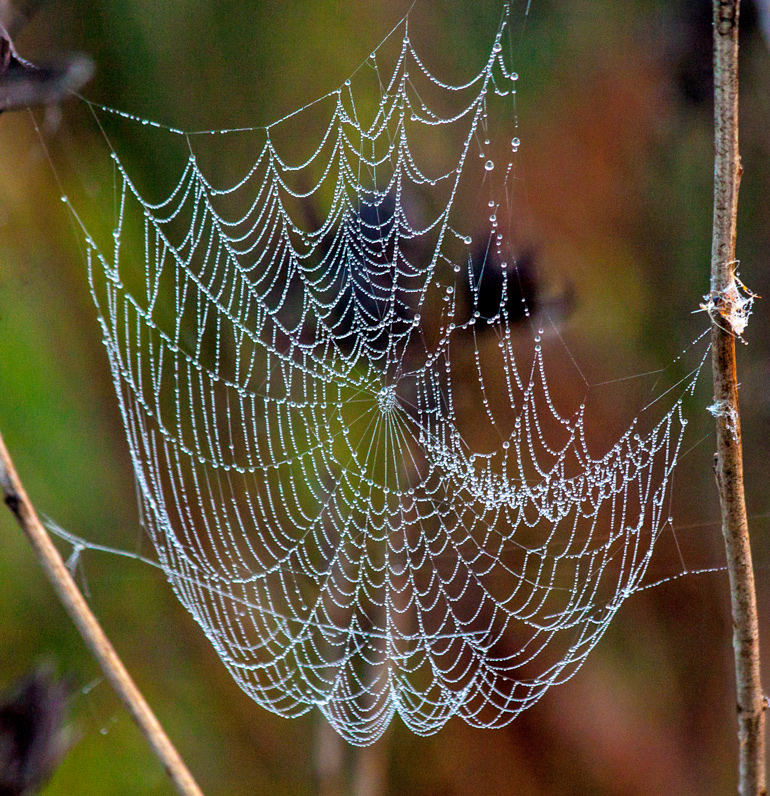
I haven’t seen many big spiders this fall, but I did come across this spiderless web early one morning recently. The morning was damp and foggy and the droplets of water on the web made it easier to spot in the cattails of the marsh. Using manual focusing, which is still a challenge for me with my DSLR, I was able to capture this image of the web. If you click on the image, you can see the beads of water that look like tiny strands of transparent pearls.

web_fall_blog

© Michael Q. Powell. All rights reserved

Read Full Post »

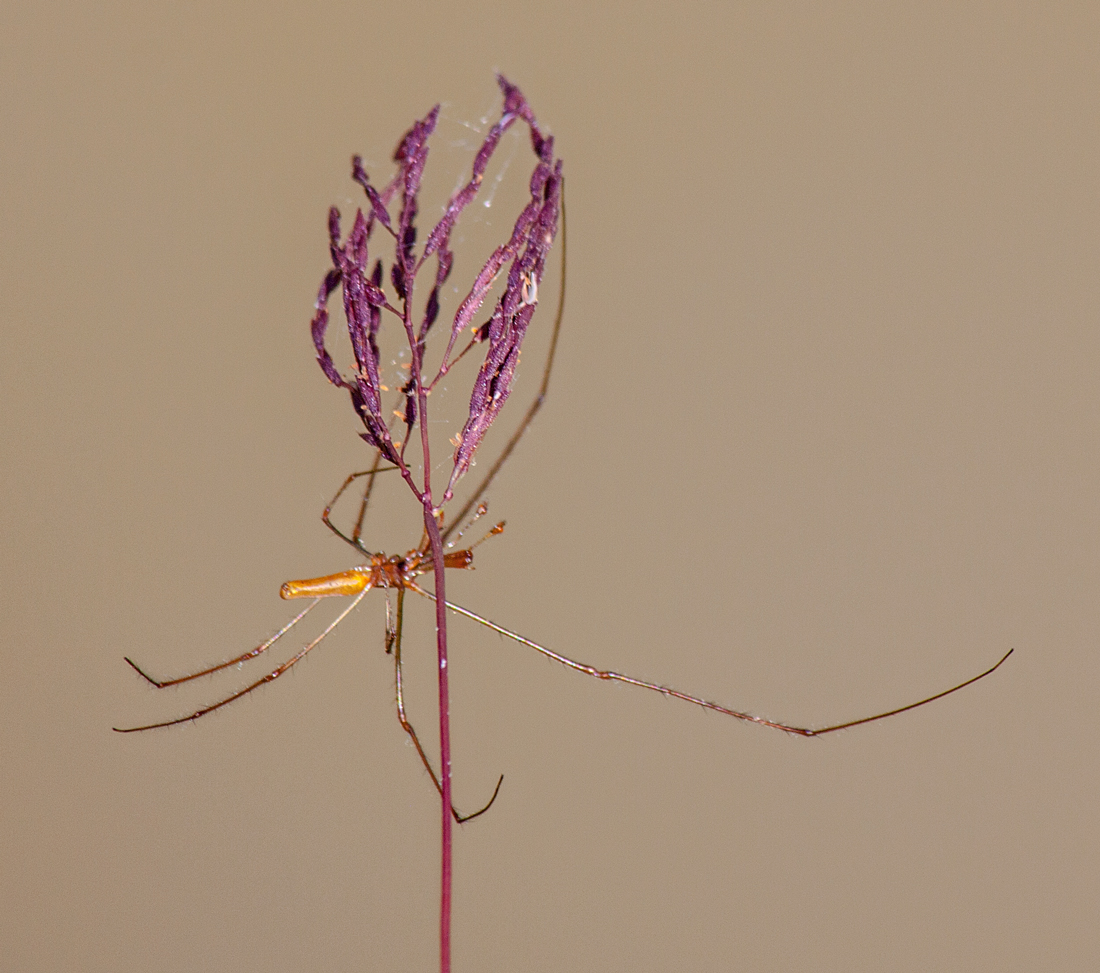
This long-jawed spider is not really camouflaged, of course, but it positioned itself in such an artistic way that its elongated body and legs seem to be an extension of the plant, especially from a distance. The plant was growing at the edge of a small pond at my local marsh and the brown background color is the water of the pond.

spider_purple_blog

Click on the image to get a higher resolution view of it.

© Michael Q. Powell. All rights reserved

Read Full Post »
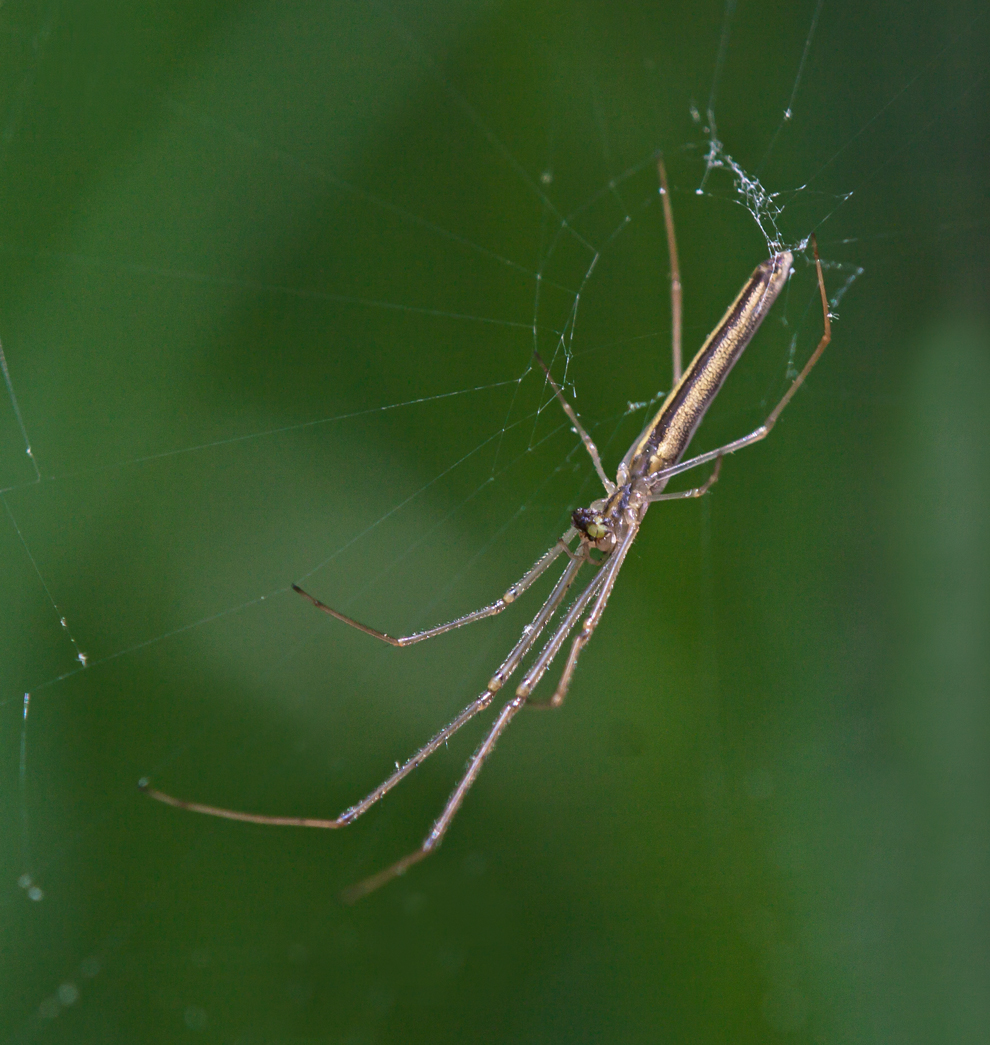
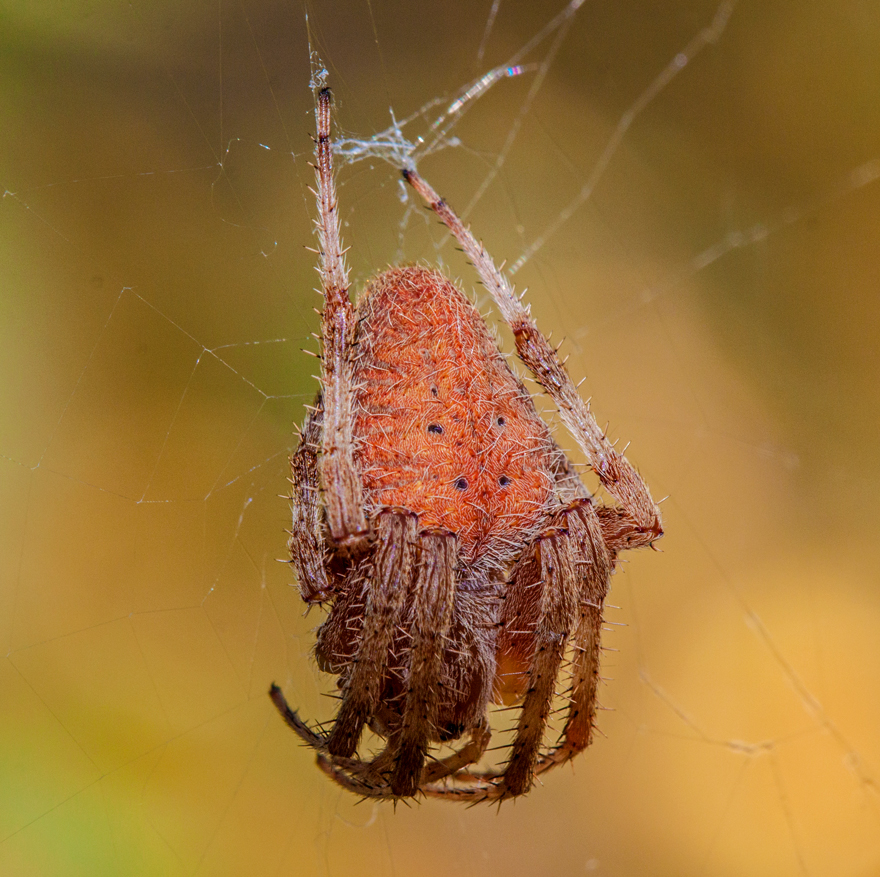
Walking along the boardwalk at my local marsh, I encountered this fairly large, hairy red spider in a web almost at eye level.

It was a little disconcerting to look a spider in the eye (eyes) at such close range, but it did allow me to get a pretty detailed shot at close range against an uncluttered background. I’ve been searching around on the internet, attempting to identify the spider but so far have not had any success. Can anyone identify this cool-looking spider?

orange_spider1_blog

© Michael Q. Powell. All rights reserved.

Read Full Post »

Last year at this time of the year there were lots of large Argiope orbweaver spiders at my local marsh, but I couldn’t find a single one this past Monday, when I showed up just after sunrise. I was able to find a number of smaller spider webs, however, on the railings of a raised section of the boardwalk. The photo looks to be more appropriate for a Halloween posting, but hopefully I can find something a bit creepier for that day.

web_rail1_blog

© Michael Q. Powell. All rights reserved.

Read Full Post »

Earlier this week I came across this little Jumping spider, patiently waiting for a prey to come by.  I never fail to be amazed by those eyes that seemed to be staring right at me.

Transfixed, I can’t take my eyes off of you, tiny spider, and your eyes seem to follow me. I don’t want to seem paranoid, but when I am with you, I always feel like somebody is watching me.

Somehow I thought I heard the spider humming, “I only have eyes for you,” but it was just my imagination, running away with me.

jumping_marsh2_blog

© Michael Q. Powell. All rights reserved

Read Full Post »

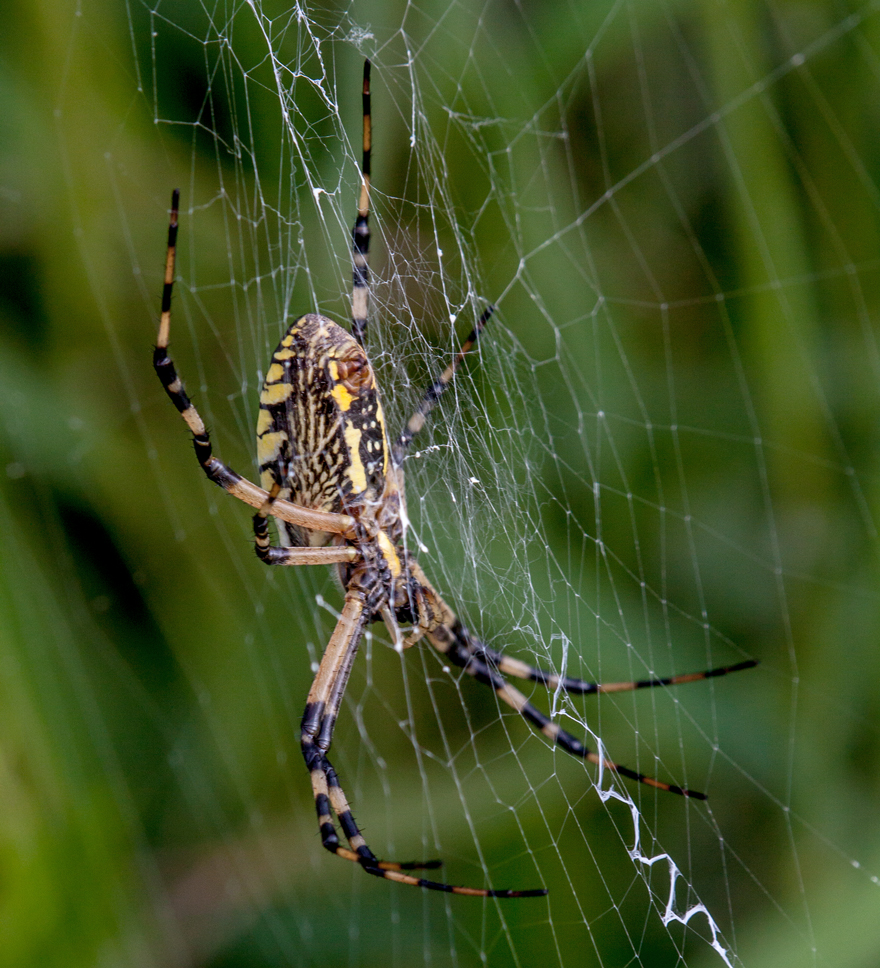
Finally I am starting to see some of the Yellow Garden Orbweaver spiders (Argiope aurantia) that fascinated me so much last summer. These spiders are big and colorful and have awesome webs with a distinctive zigzag section. I will be keeping an eye on the spiders to see if I can observe them catching prey and wrapping it up in silk.

Stay tuned for more spiders., most likely coming pretty soon to the blog—this spider is just the first fall installment.

argiope_web1_blog

© Michael Q. Powell. All rights reserved

Read Full Post »

I seem to be seeing spiders everywhere recently, so I thought I’d feature photos of three of them to represent the wide diversity of the population that I have observed.

The first one was very small and appeared to be hiding at the bottom of this leaf, waiting for its prey to come along. It did not appear to have made a web.

The second one had a web suspended over the water and is, I believe, a kind of long-jawed orb weaver of the Tetragnathidae family. It has awfully long legs compared to most other spiders. I usually see them making webs late in the day as the sun is beginning to go down.

The final one is a kind of spider that I see pretty regularly, though I don’t know what kind it is. It appears to have captured some prey, perhaps a grasshopper.

spider_leaf_blogjaw_blogspot2_blog

© Michael Q. Powell. All rights reserved

Read Full Post »
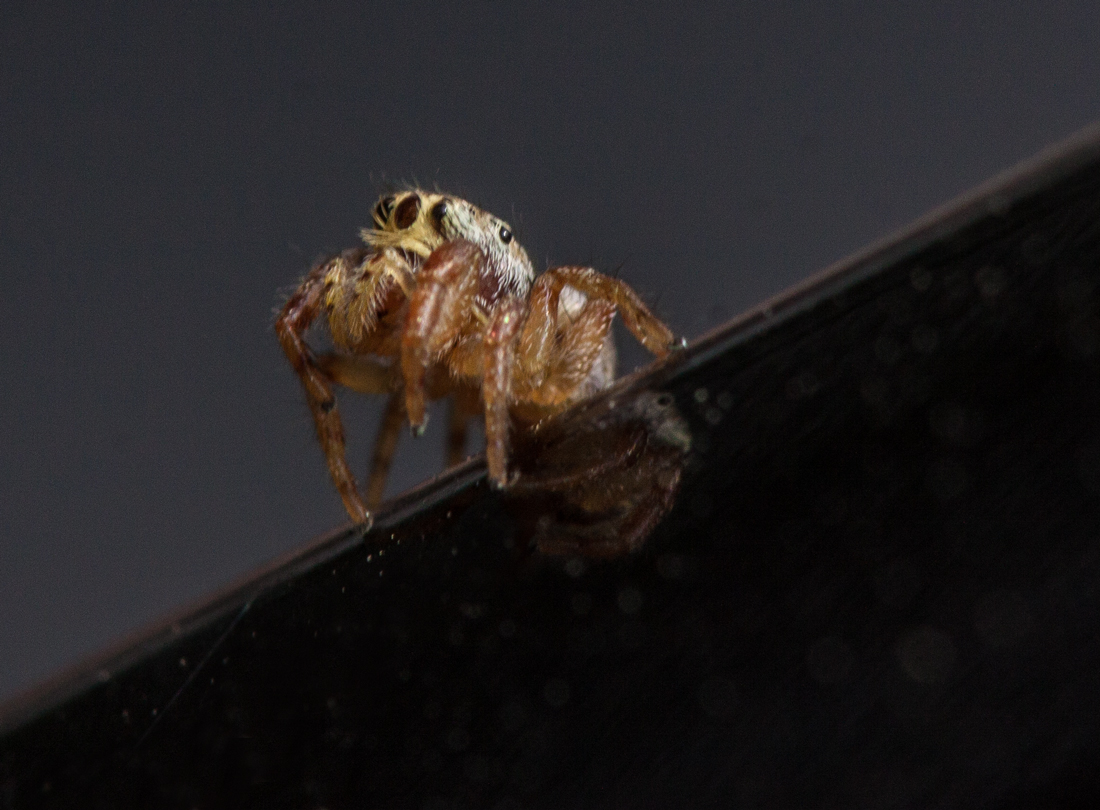
Every since I got my new 180mm macro lens, it seems like the spider population has increased. That’s an exaggeration, of course, but somehow my new lens has caused me to be hypersensitive to spiders and insects within range of the new lens and I find myself filled with an almost irresistible urge to photograph them when I encounter them.

I saw this spider alongside a path at my local marshland park and gave in to the urge. As you can probably tell, I used flash to add a little light to the spider. I probably need to diffuse the flash more, so there is not quite as much glare, but I am happy with the way the background turned  out—I think the combination of black and green works well with the colors of the spider.

spider_with_web1_blog

© Michael Q. Powell. All rights reserved

Read Full Post »
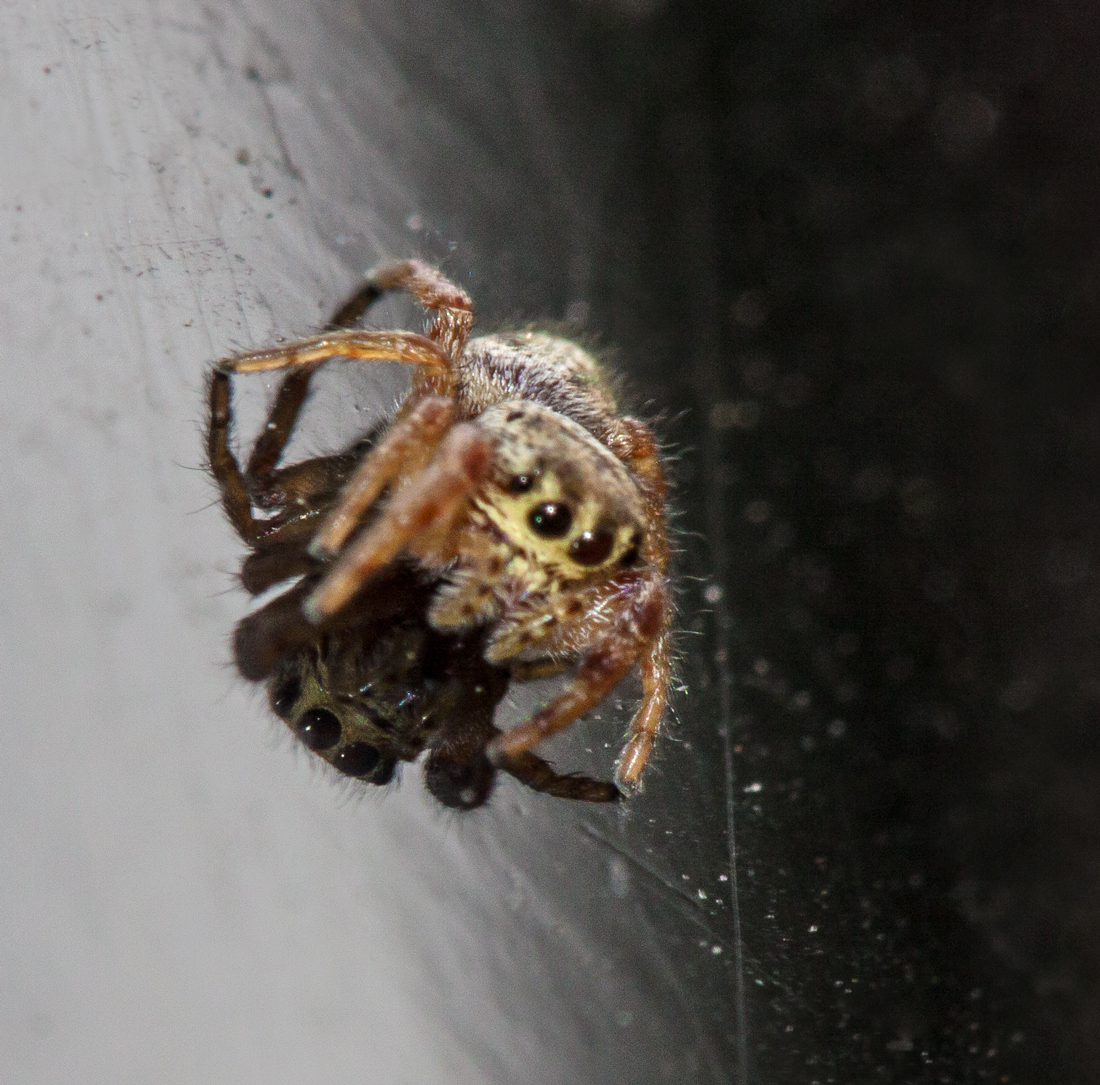
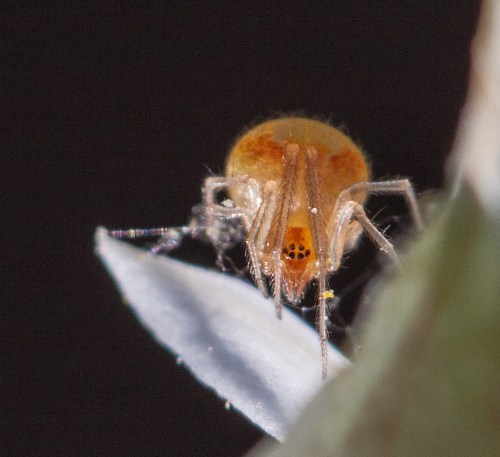
Is it just my imagination or do the eyes of this spider look like a smiley face to you too?

Eager to use my new macro lens, I went searching yesterday in my neighbors’ garden for subjects and came upon a tiny orange spider, which I have not yet been able to identify.

The spider was initially suspended in midair, but climbed up an invisible silken thread as I approached and took refuge in the shadow of white flower.

I boldly (or foolishly) tried photographing the spider handheld, but the images were blurry. Eventually I put the camera on my tripod and did my best to focus manually. For some shots, I used my pop-up flash to add a bit more light. Of course, it turned the background black, but I think that works for this shot.

In the original shot, the spider was upside down, but I decided it looked better when I rotated the image 180 degrees. I am fascinated with the multiple eyes of spiders.  There seem to a lot of different eye patterns in the different species of spider—a macro lens tends to make me look more closely at these kinds of details.

orange_spider_blog

© Michael Q. Powell. All rights reserved

Read Full Post »

Sometimes an insect or a spider is so small that it seems almost impossible to get a clear shot of it, which was the case the this morning with this tiny crab spider.It was located in a place where a tripod was not feasible and the spider kept changing its position.

I kept shooting and got this image that is kind of artsy. The spider ended up as merely one element of the composition. I especially like the limited color palette and the different shades of green and brown that are present in the image.

crab_blog

© Michael Q. Powell. All rights reserved

Read Full Post »
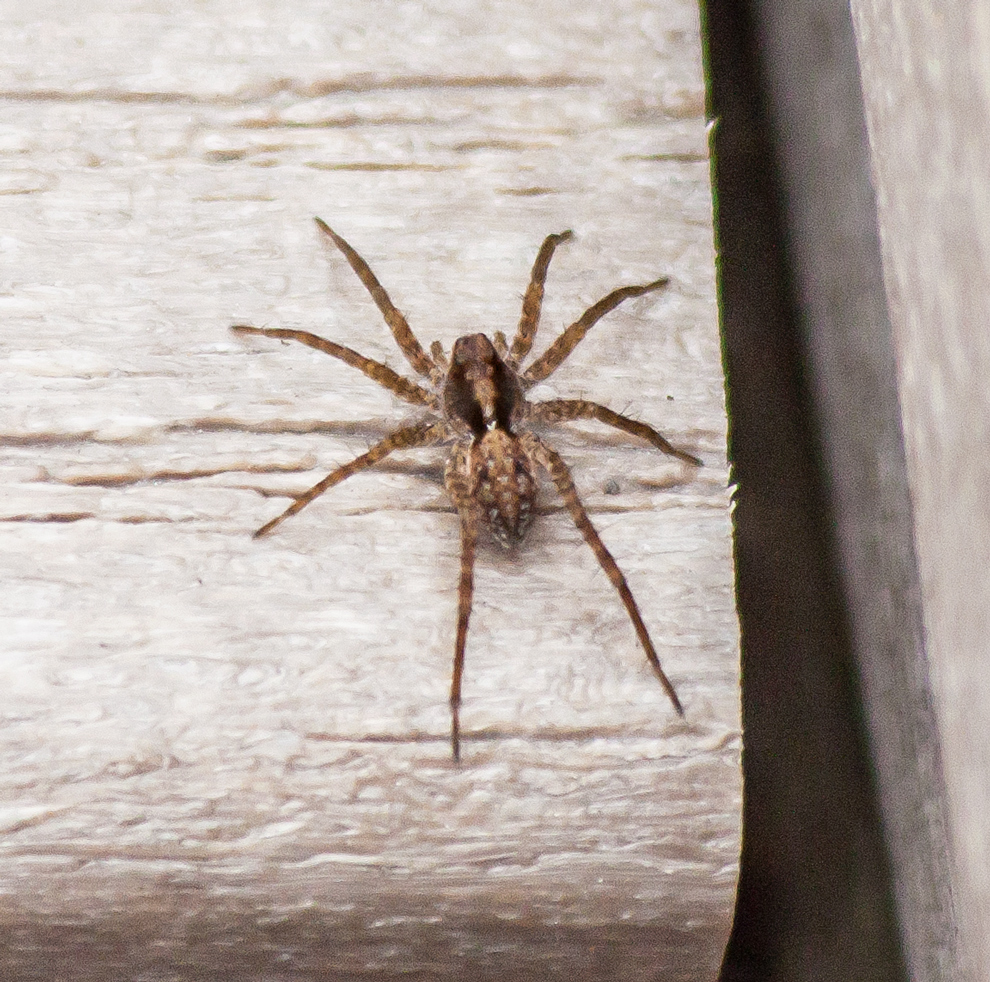
I have encountered some cool-looking spiders in the past, but I think that this Bold Jumping spider (Phidippus audax) just leaped to number one on my personal list.

I was checking out my neighbor’s garden (fellow blogger and photographer Cindy Dyer) this past weekend, when I saw a little movement among the flowers. The first thing that i noticed was the fuzzy body and I suspected that I had a jumping spider in front of me. It crawled all around a couple of different plants and most of the time it had its back to be. I tried to be patient as I waited for it to turn toward me, so that I could get a shot of its amazing eyes.

It is equally remarkable that the Bold (also known as Daring) Jumping spider has iridescent blue-green mouth parts that are technically known as chelicerae. At first, I thought the spider was eating something brightly colored that really made it stand out—you can’t really camouflage yourself when you have a color that distinctive.

This is the third species of jumping spider that I have now seen in this one little garden. I am not sure what attracts the spiders to it, but the garden has an equal attraction for me.

Jumping_spider_A_blogjumping_spiderB_blog

© Michael Q. Powell. All rights reserved

Read Full Post »

The last time I posed a question about using flash to photograph a spider, the majority of readers said that the spider looked much better in natural light, but the case is not so clear for this Barn Spider (Araneus cavaticus) that I spotted in the garden yesterday.

The spider was in a web that stretched across the path in the garden, about chest-high, and was in subdued light. I really wanted to shoot at an angle to give the spider some dimensionality, but it was tough to do so, because of the web, and depth of field was an issue. To make matters worse, a breeze would kick up periodically, making slow shutter speeds a bit problematic.

There was no question about whether to use a tripod or not—it was obvious that I needed it. Initially, I shot at f/10 in aperture priority, with a shutter speed of 1/13 of a second, resulting in the second image. Although parts of the spider are blurry, the head and eyes are pretty sharp. I then raised the shutter speed to 1/200 and used my pop-up flash and got the first image. The background turned almost totally black, but I was happy that it did not blow out the details in lighter areas of the spider and the eyes remain pretty sharp.

I like the image with the black background better this time and like the look of the background. Which one do you prefer? (Clink on this link to see the posting from March when I initially posed a similar question.)

spider_black_blogspider_brown_Blog

© Michael Q. Powell. All rights reserved

Read Full Post »

With my macro lens on my camera on Monday, I was happily scouring every plant and flower for insects to photograph when I came upon this unusual-looking spider. Instead of having a rounded body like most spiders, it had a really elongated body and what appeared to be legs of varying lengths.

I have purposely attached a clickable higher resolution image to give you a better look at the details of this strange spider. For example, I think I can see at least two rows of tiny eyes in the middle of the photo.

Last year, I photographed a similar spider and I think that it is probably a kind of Long-jawed Orbweaver, though I can’t make a more definite identification.

What mental image do you have when you think of a spider? Perhaps this photo will help you broaden your perspective about what a spider might look like.

long_spider_blog

Michael Q. Powell. All rights reserved

Read Full Post »

Looking for spiders to photograph, I came across this one, which I think may be a Lattice Orbweaver spider (Araneus thaddeus). I tried a number of different techniques to get a shot of this little spider and think that this may be one of the ones on which I used my pop-up flash.

I especially like the way in which part of the web is visible against the dark background and the way the light seems to be shining through the jelly-like front part of the spider’s body.

spider_drops_blog

Michael Q. Powell. All rights reserved

Read Full Post »

As I was going over my images from the last few weeks, I came across this image of a daddy longlegs (also known as a harvestman) that I really like, in part because of the way that the photo shows its eyes.

Previously I posted  what I had characterized as an artistic shot of this arachnid that showed mostly its bottom side. In this shot, the harvestman had turned toward the camera and the eyes, which grow on a stalk in the middle of its back are visible.

They are a huge contrast with the eyes of a jumping spider that I featured recently in a posting, which had multiple sets of large eyes.  

daddy2_blog

Michael Q. Powell. All rights reserved

Read Full Post »

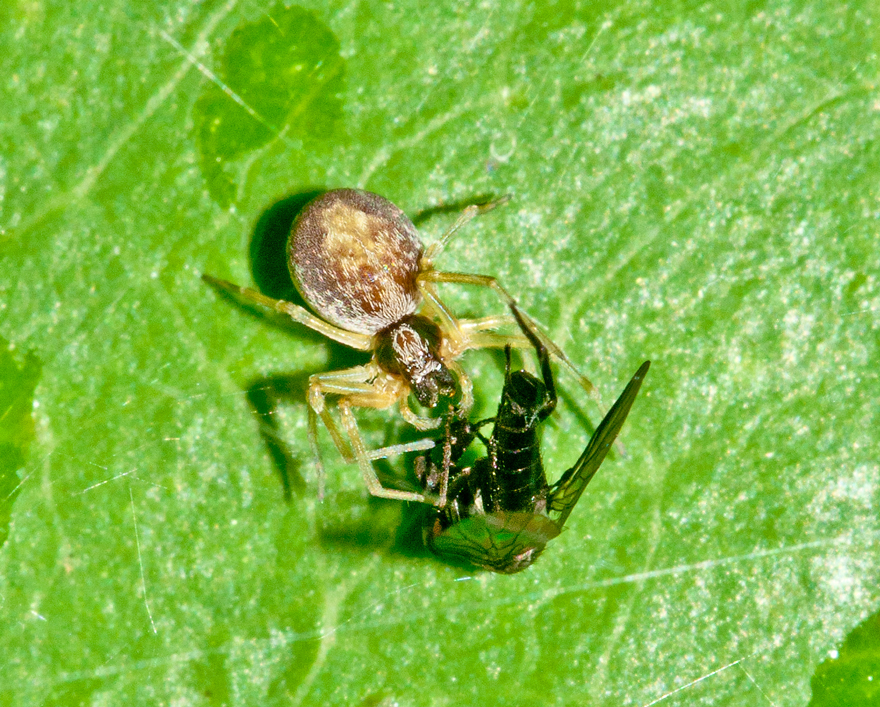
This past weekend I was off in search of spiders again and came across this little spider perched on a leaf, munching on a flying insect.

The lighting was poor, so I used the pop-up flash on my camera to provide a little extra light. Generally I don’t like it if the flash causes a shadow, but in this case it seems to add a somewhat more menacing and sinister look to the spider.

I am still trying to identify the spider and would welcome assistance. The patterns on its body, and especially the front section, are particularly cool and should assist me in finally being able to identify it.

spider_fly_blog

Michael Q. Powell. All rights reserved

Read Full Post »

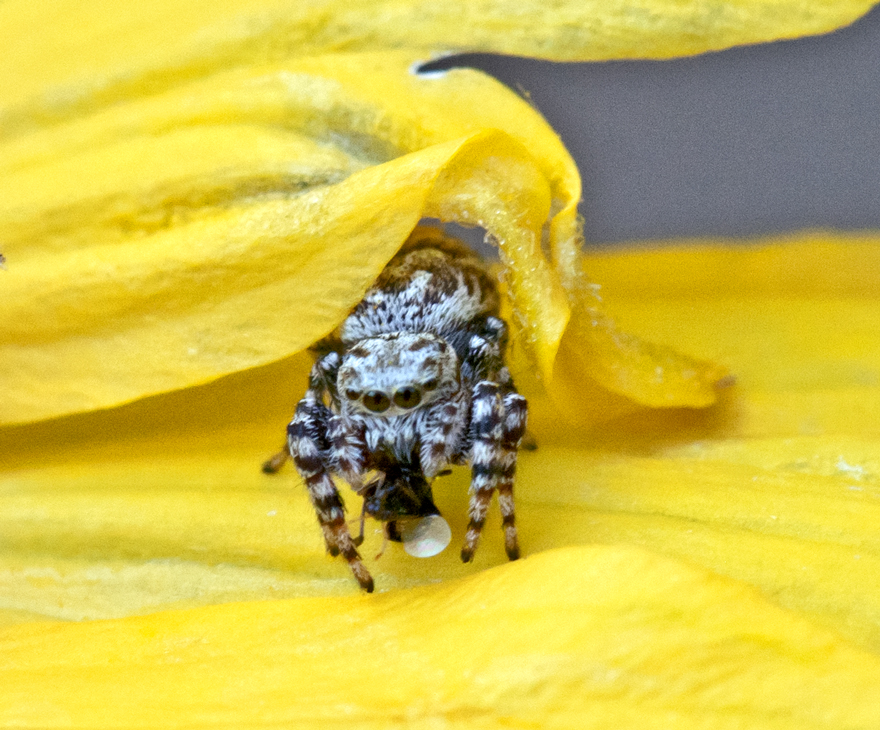
As I was checking out the flowers in my neighbors’ garden yesterday afternoon, I came across this little spider, sitting on top of a flower. There was no web anywhere in the vicinity, so I suspected that I might have a jumping spider.

Last month, I encountered a tiny, fuzzy spider that turned out to me a jumping spider, so I am a little more attuned to looking for them now. This one is definitely not the same kind, though, with completely different colors and markings. You can compare the two by checking out the photos in my previous posting.you

When I first saw the spider, it had just captured some kind of insect as you can see in the second photo. It then moved under the shade of a petal of the flower to enjoy its freshly caught dinner. I showed this moment in the first and third shots. The first one was taken a little closer and shows a lot of detail, but I really like the context that the third one provides and it is probably my favorite one. The final shot gives you an overall view of the spider.

I love the color and pattern of the spider and was happy that I was able to capture some of the details. The spider was not very big and I had trouble placing my tripod on the uneven ground to get a sharp shot. I am really happy with the results, however, and will definitely keep looking for these spiders with eyes that I find to be simply irresistible.

jumping3_blog

jumping2_blogjumping1_blogjumping4_blog

Michael Q. Powell. All rights reserved

Read Full Post »

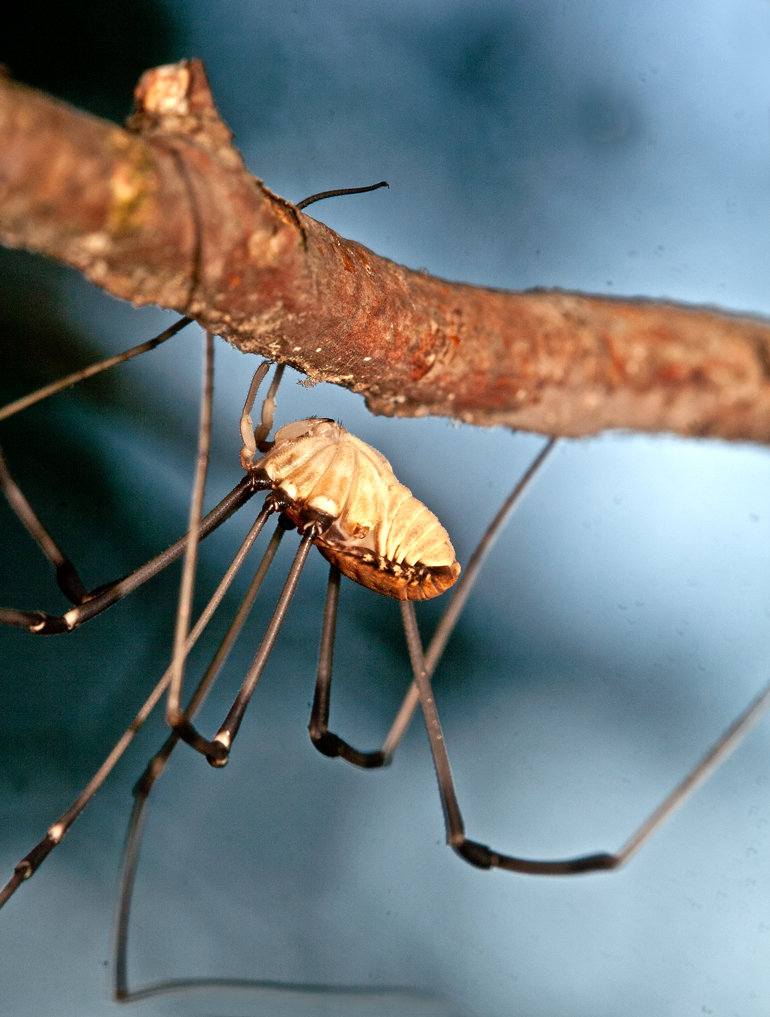
Can a photo of a daddy longlegs (also known as a harvestman) be artistic?

Ordinarily, I would emphatically respond in the negative, but somehow this macro shot that I took of a daddy longlegs, suspended upside down from a branch, came out with a cool, creative vibe to it. I like the way the legs are placed, the way the light is hitting its body, and the way the branch is in focus only in the center area.

I ran across this daddy longlegs as I was walking through the woods and I took the time to set up my tripod and use my 100mm macro lens to get this shot. The daddy longlegs was amazingly tolerant of my efforts and remained in place the whole time, even when I experimented with the use of my pop-up flash.

daddy1a_blog

Michael Q. Powell. All rights reserved

Read Full Post »

Temperatures were forecast to soar yesterday, so I arrived early at the marsh—about 6 o’clock— and was treated to many stunning examples of spider art. The early morning light and the dew made it possible to get these shots.

I had thought that it was a bit early in the season for spiders to be active, but I was thrilled to be proven wrong. I never fail to be impressed by the handiwork of the different kinds of spiders and how they are able to adapt their webs to the environment.

I shot some webs with my macro lens and others with a telephoto zoom. In virtually all cases, I focused manually and used my tripod.

Only a few of the webs had visible spiders and I chose to highlight one of those in the first image, which is a close-up of the web shown in the final shot. The webs themselves are not perfect and have gaps and breaks in some places, an appropriate metaphor for the lives that most of us live.

web3_blogweb1_blogweb4_blogweb2_blog

Michael Q. Powell. All rights reserved

Read Full Post »

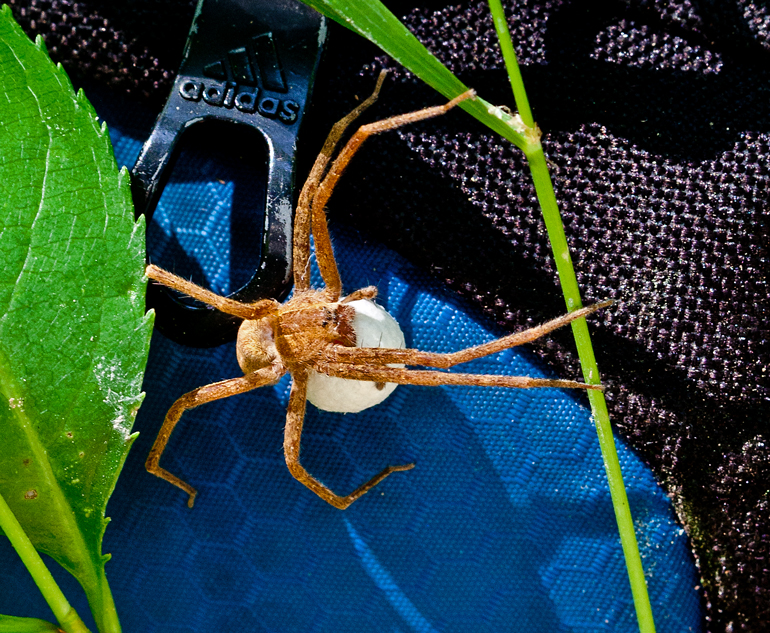
As I was reaching for my camera bag after taking a photo of a spider, I was surprised to see an unexpected visitor—a much larger spider with what looks like an egg sack.

I was in a wooded area and had placed my bag on the ground while I set up my tripod to take a photo of a small spider (shown in the second photo).  After getting the shots, I returned to my bag. I bent down to open the zipper of the bag and suddenly was eye-to-eye with the spider. The spider seemed really large at that moment, although retrospectively it does not seem that big when I compare it with the Adidas logo on the zipper pull. When I tried to adjust the bag’s position, the spider moved away, but fortunately I had the foresight to take some photos before attempting to improve the lighting situation.

I am not sure of the identification of either of these spiders, but find them both to be pretty cool in their own ways. I’d welcome some more information from more knowledgeable readers about the white ball and, in particular, if it is an egg sack.

UPDATE: I have done a little research and think that the spider in the first shot may be a Nursery Web Spider (Psaurina mira), a spider that is known for carrying its egg sack with its fangs. Some other spiders attach the egg sack to their spinnerets.

egg1_blogspider2_green_blog

Michael Q. Powell. All rights reserved

Read Full Post »
This weekend I learned how difficult it is to get good shots of a tiny spider when it is in the middle of a cluster of plants and is surrounded by an untidy mess of web material, rather than a nice web.  Auto-focus was utterly useless and the camera refused to focus on the spider—it wanted to focus either on the plants in the background or on the web material. Manual focusing was required and it was tough to tell which parts of the spider were in focus at any given moment.

I used my tripod, which helped a little, and even used the pop-up flash to give me little extra light (you can see the shadows it caused in the second photo). I especially like the way that the colors in the images turned out, giving the photos kind of an out-of-this-world, sci-fi look.

The second shot is an action shot in which the spider has captured some kind of flying insect, which I can’t really identify. I didn’t have a great angle, but find the shot to be interesting.

As I shoot more insects and spiders, I am experimenting and finding out what works for me (and admiring even more the photographers who are able to get the amazing shots that I see on other blogs and elsewhere on the internet).

spider1_blog

spider2_blog

Michael Q. Powell. All rights reserved

Read Full Post »
« Newer Posts - Older Posts »