© Michael Q. Powell. All rights reserved.
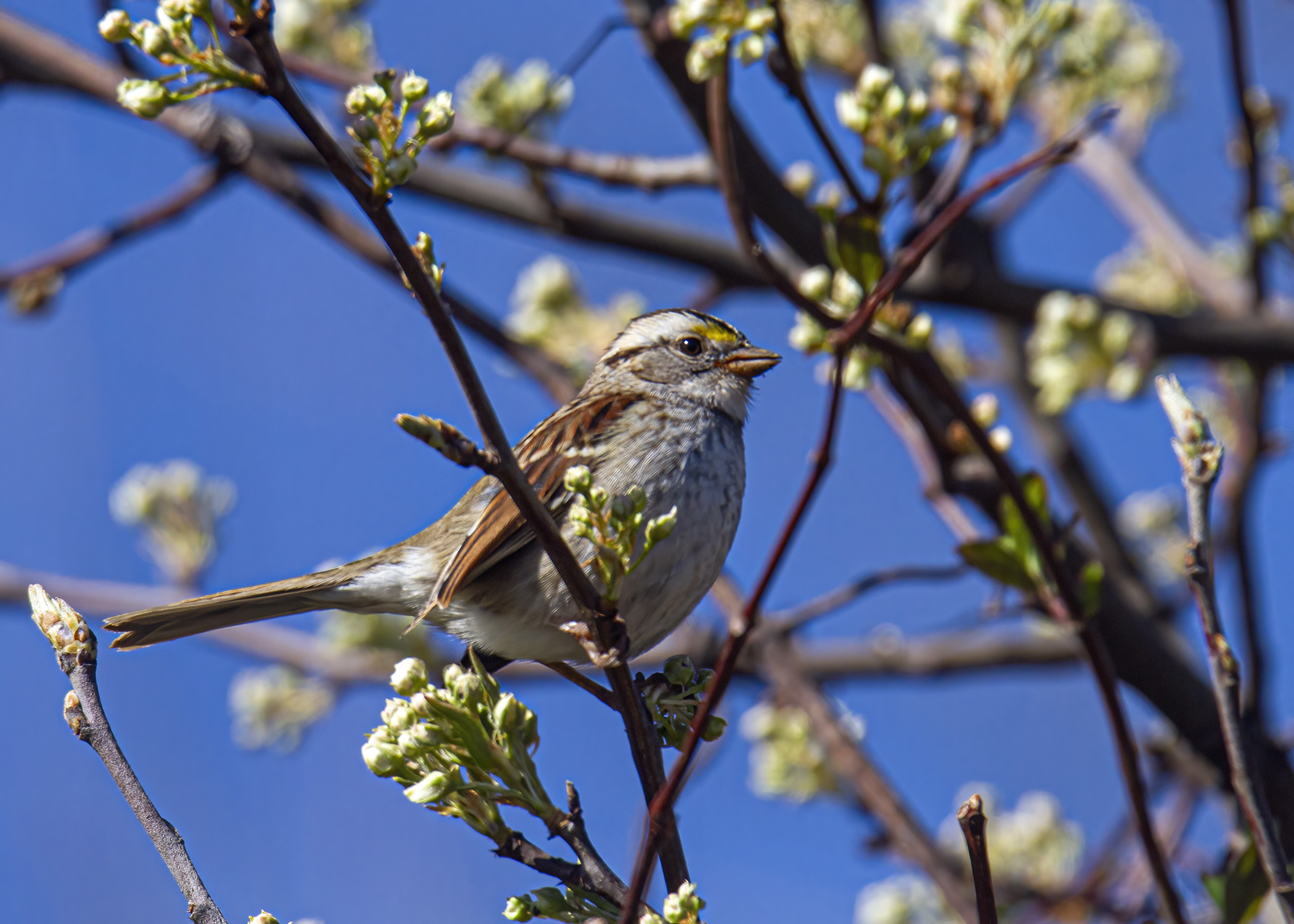
Posted in Birds, Nature, Photography, spring, wildlife, tagged Canon 7D, Occoquan Bay National Wildlife Refuge, Tamron 150-600mm, white-throated sparrow, Woodbridge VA, Zonotrichia albicollis on March 29, 2026| 2 Comments »
Posted in Birds, Nature, Photography, spring, wildlife, tagged Canon 7D, Occoquan Bay National Wildlife Refuge, Osprey, Pandion haliaetus, Tamron 150-600mm, Woodbridge VA on March 28, 2026| 7 Comments »
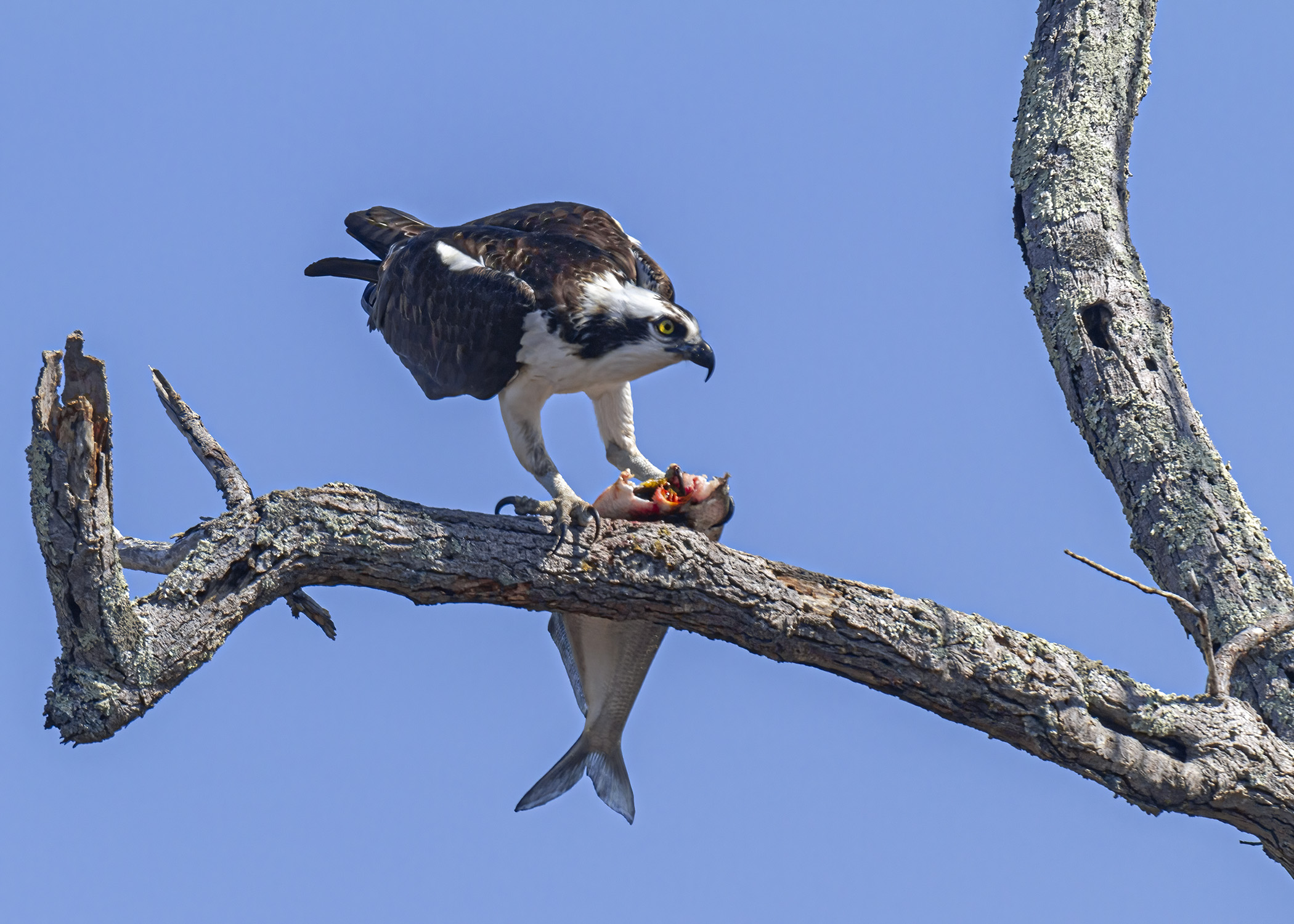
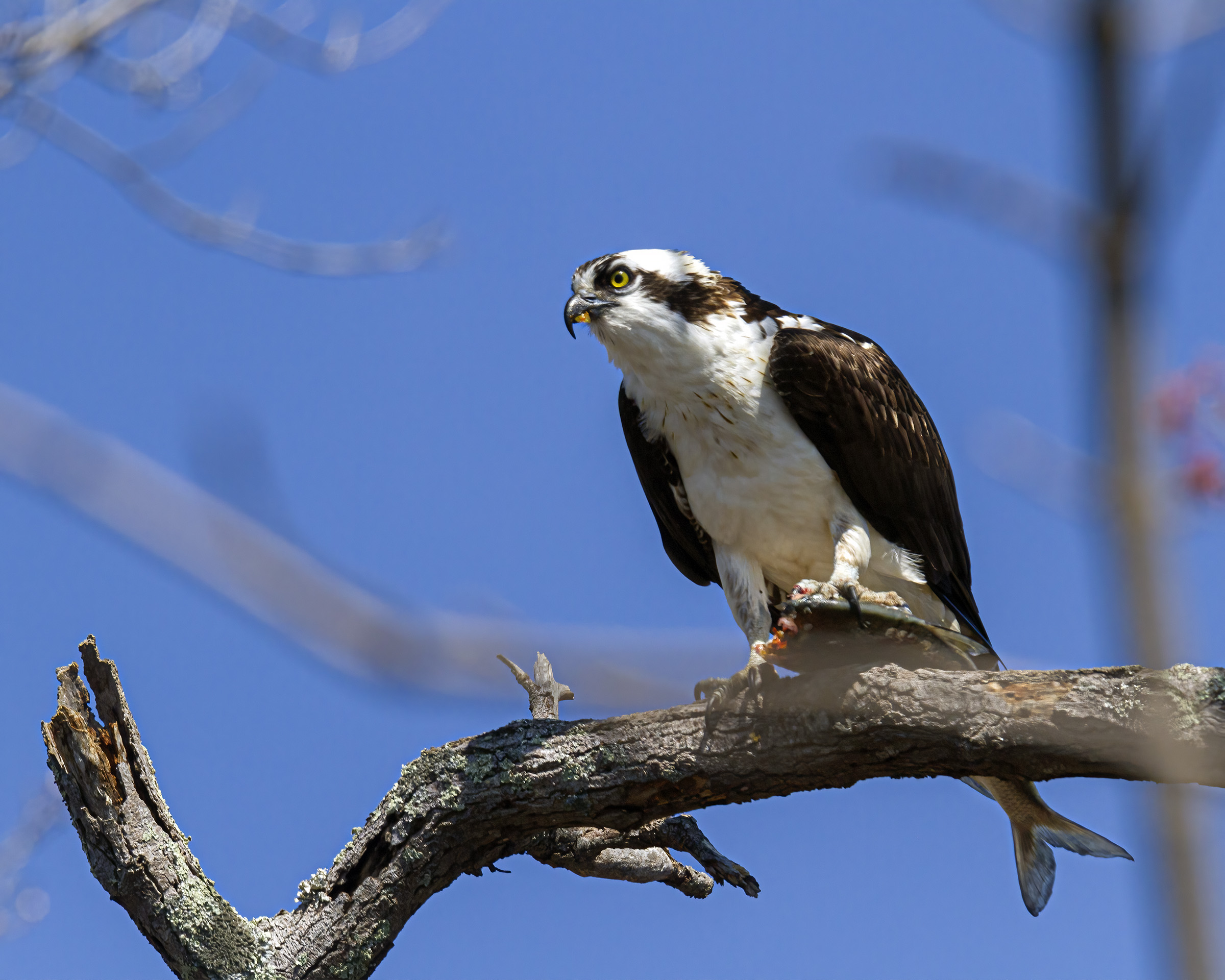
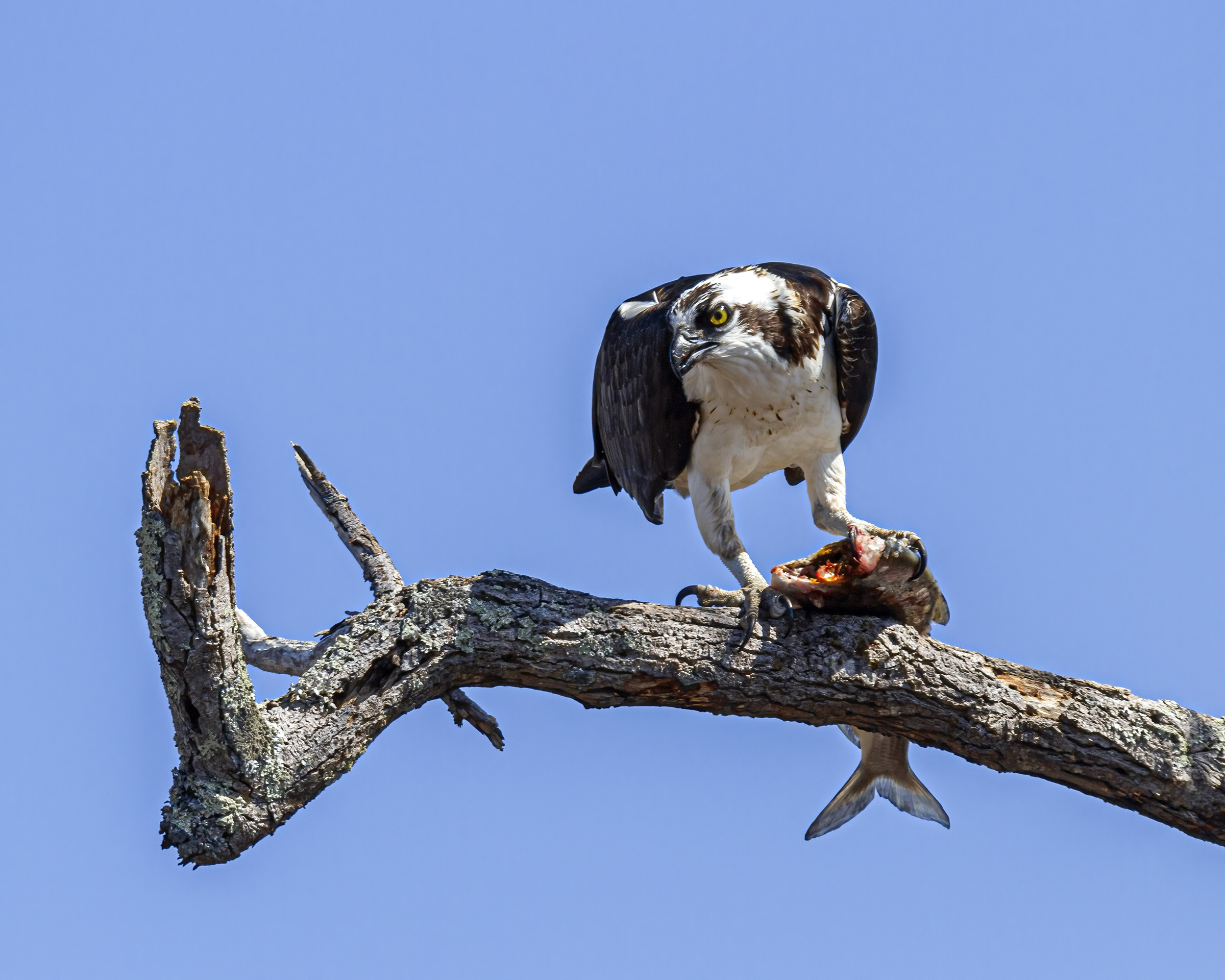
The ospreys (Pandion haliaetus) are definitely back at Occoquan Bay National Wildlife Refuge after spending the winter in warmer locations. I captured these images last week of an osprey as it was enjoying a freshly caught fish. I tried to vary the angles a bit for the individual shots, but moved slowly and carefully so that I did not disturb the osprey during its breakfast.
© Michael Q. Powell. All rights reserved.
Posted in Photography, Insects, Nature, wildlife, Butterflies, spring, tagged Canon7D, Celastrina ladon, Occoquan Bay National Wildlife Refuge, Spring Azure, Spring Azure butterfly, Tamron 150-600mm, Woodbridge VA on March 25, 2026| 3 Comments »
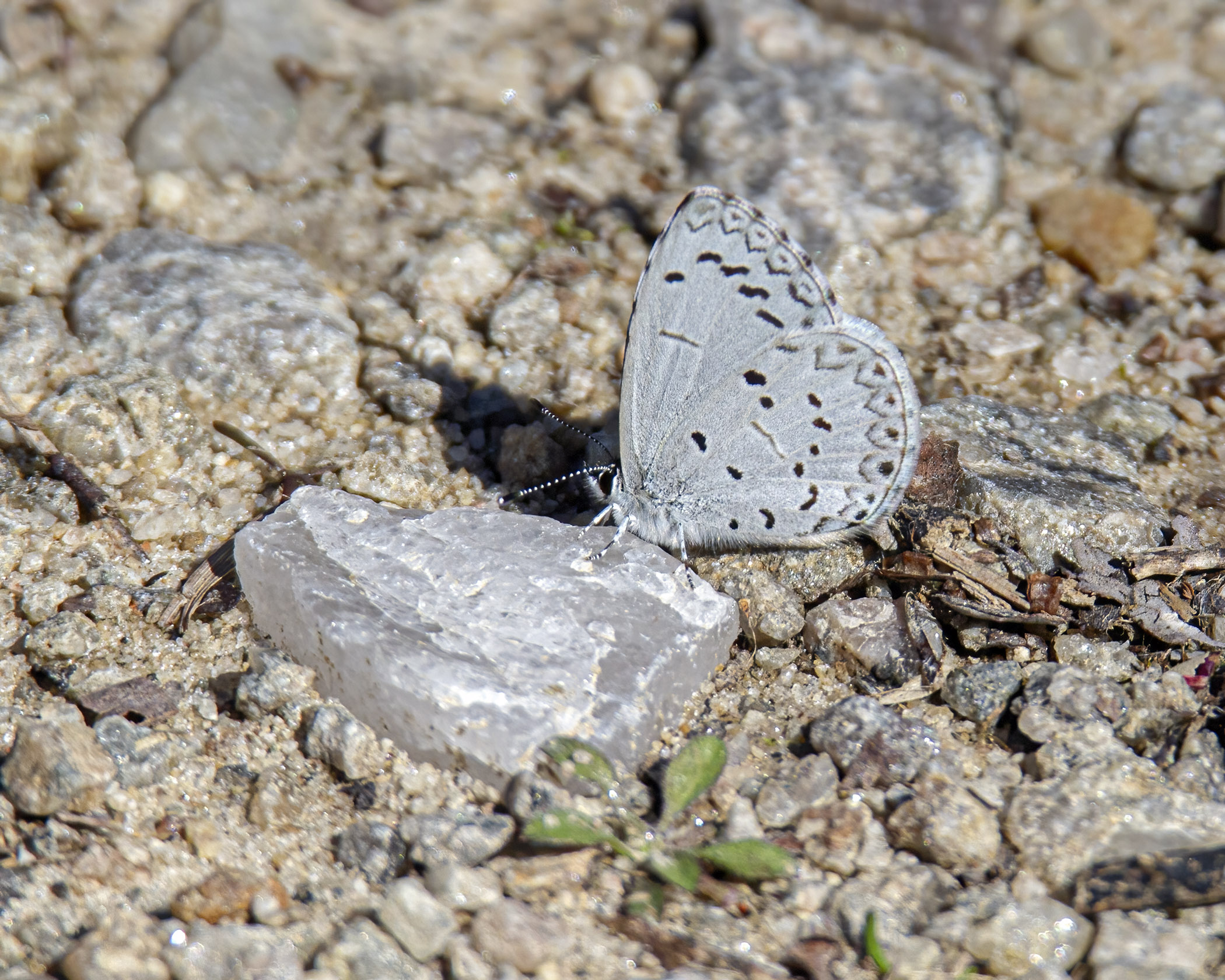
Butterflies are already starting appear at Occoquan Bay National Wildlife Refuge, including this tiny Spring Azure butterfly (Celestrina ladon) that I photographed there on 20 March. These little butterflies look pretty nondescript when their wings are close, but when they are flying, you can see the beautiful blue coloration of their inner wings.
Spring Azure butterflies are almost always the first butterflies that I see in the spring. A few other species, like Mourning Cloaks, overwinter as adults, but Spring Azure butterflies spend the winter in the pupal stage in a chrysalis and emerge as adults in the early spring.
© Michael Q. Powell. All rights reserved.
Posted in Birds, Nature, Photography, spring, wildlife, tagged Bald Eagle, Canon 7D, eagle, Haliaeetus leucocephalus, Occoquan Bay National Wildlife Refuge, staring contest, Tamron 150-600mm, Woodbridge VA on March 24, 2026| 12 Comments »
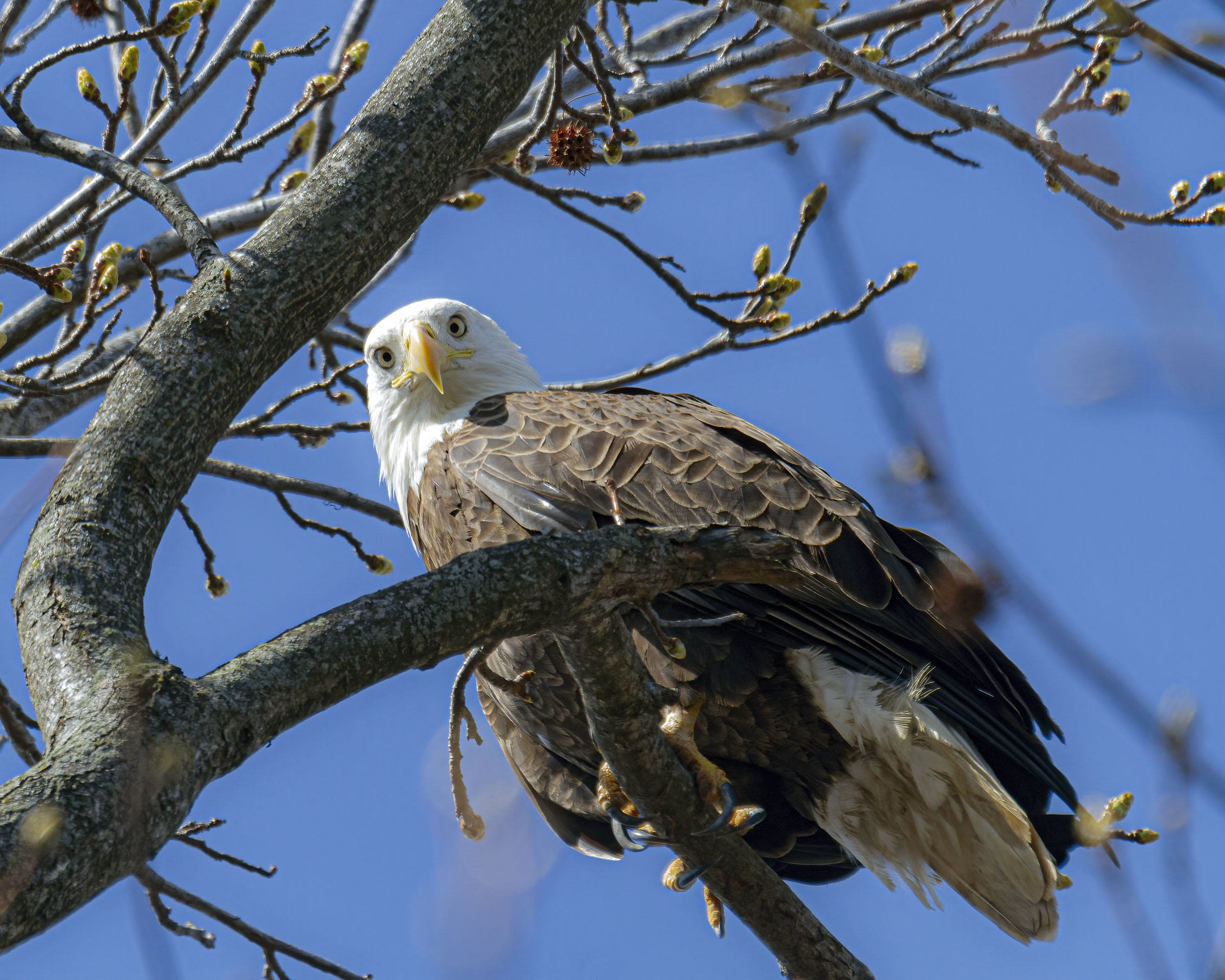
I got involved in a little staring contest with a Bald Eagle (Haliaeetus leucocephalus) last Friday at Occoquan Bay National Wildlife Refuge. I moved slowly and deliberately to get some photos and then departed silently, leaving the eagle in peace on its perch.
Most of the time my first indication that there is an eagle in the area is when it takes off in response to my presence. In this case, however, the eagle looked right at me and seemed to decide that I did not represent a threat, so it stayed in place.
I like that kind of peaceful coexistence.
© Michael Q. Powell. All rights reserved.
Posted in Birds, Nature, Photography, wildlife, tagged Blue Jay, Canon 7D, Cyanocitta cristata, Occoquan Bay National Wildlife Refuge, Tamron 150-600mm, Woodbridge VA on March 19, 2026| 4 Comments »
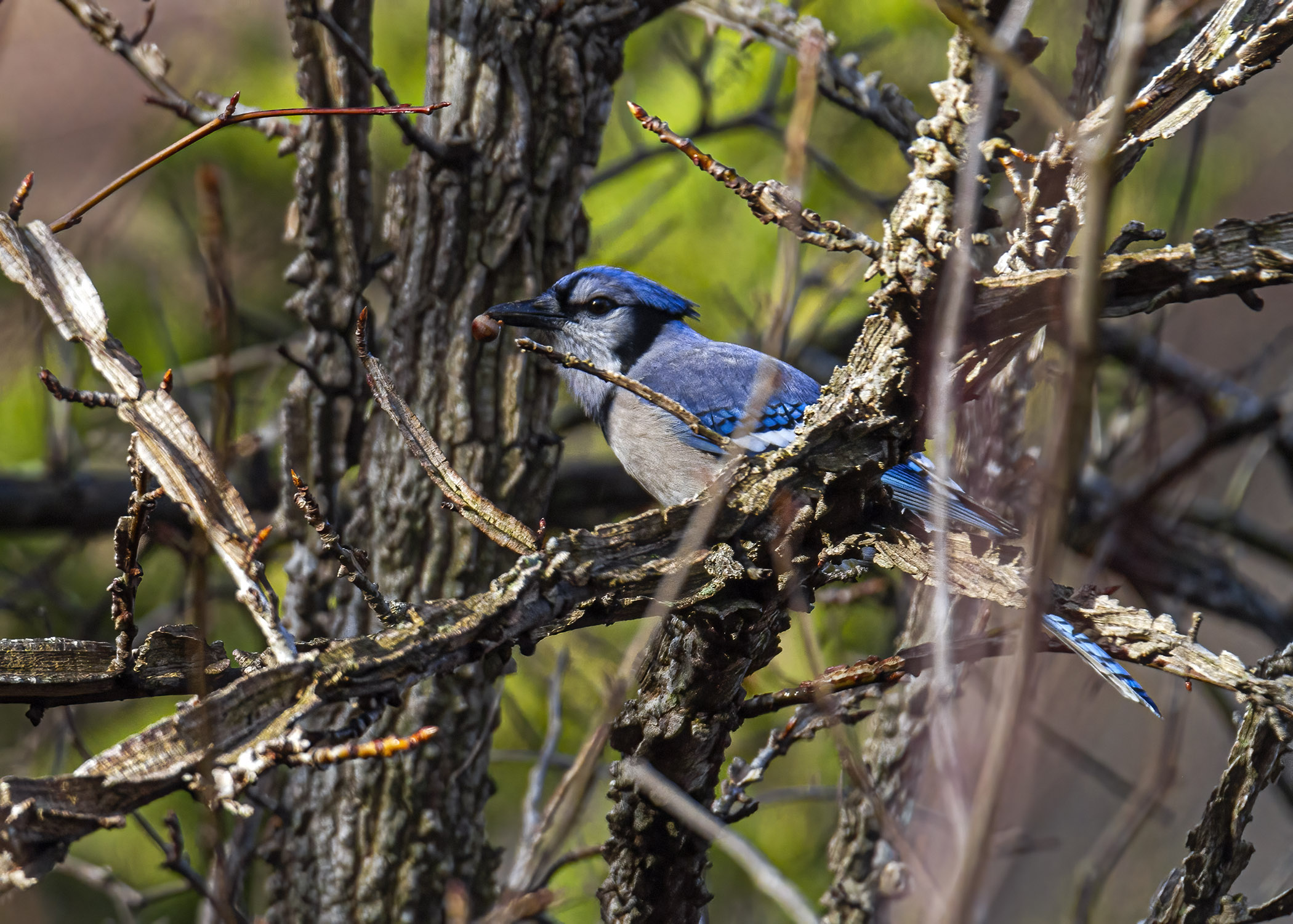
When it’s this early in the spring, I try to photograph as many of the birds that I encounter as I can. Blue Jays (Cyanocitta cristata) are pretty common where I live, but I rarely have the chance to photograph one. Earlier this month I was thrilled to hear and see this Blue Jay during a visit to Occoquan Bay National Wildlife Refuge.
The Blue Jay was busily foraging in the trees, rarely stopping in any one place for very long. I was thrilled to capture this shot of the jay when it paused momentarily with some kind of berry that it had just snagged. It is not a great photo, but I like the overall feel of the photo, with the blues and greens working well together to create a pleasant image.
© Michael Q. Powell. All rights reserved.
Posted in Birds, Nature, Photography, spring, wildlife, tagged Canon 7D, Carolina Chickadee, chickadee, Occoquan Bay National Wildlife Refuge, Poecile carolinensis, Tamron 150-600mm, Woodbridge VA on March 17, 2026| 2 Comments »
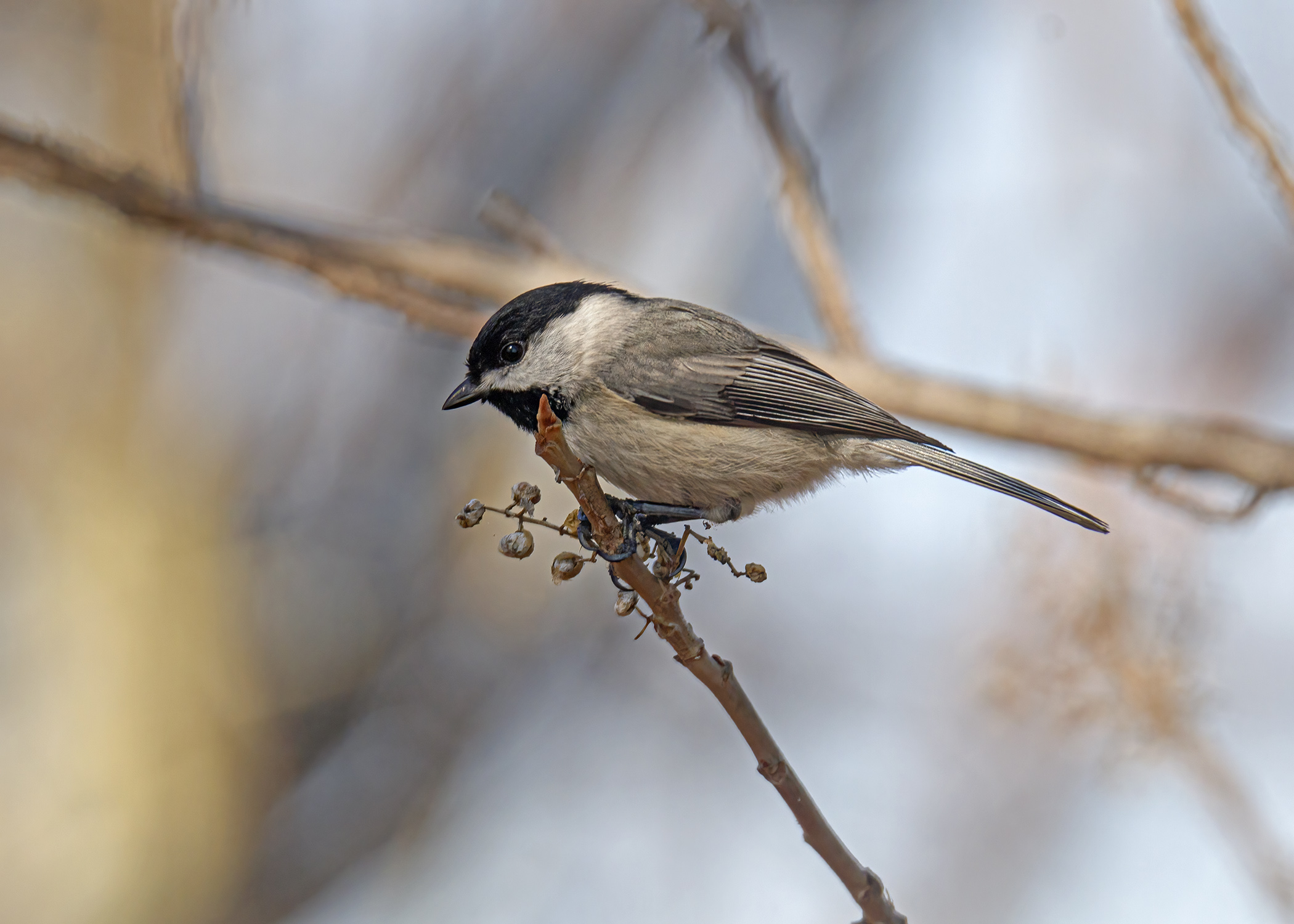
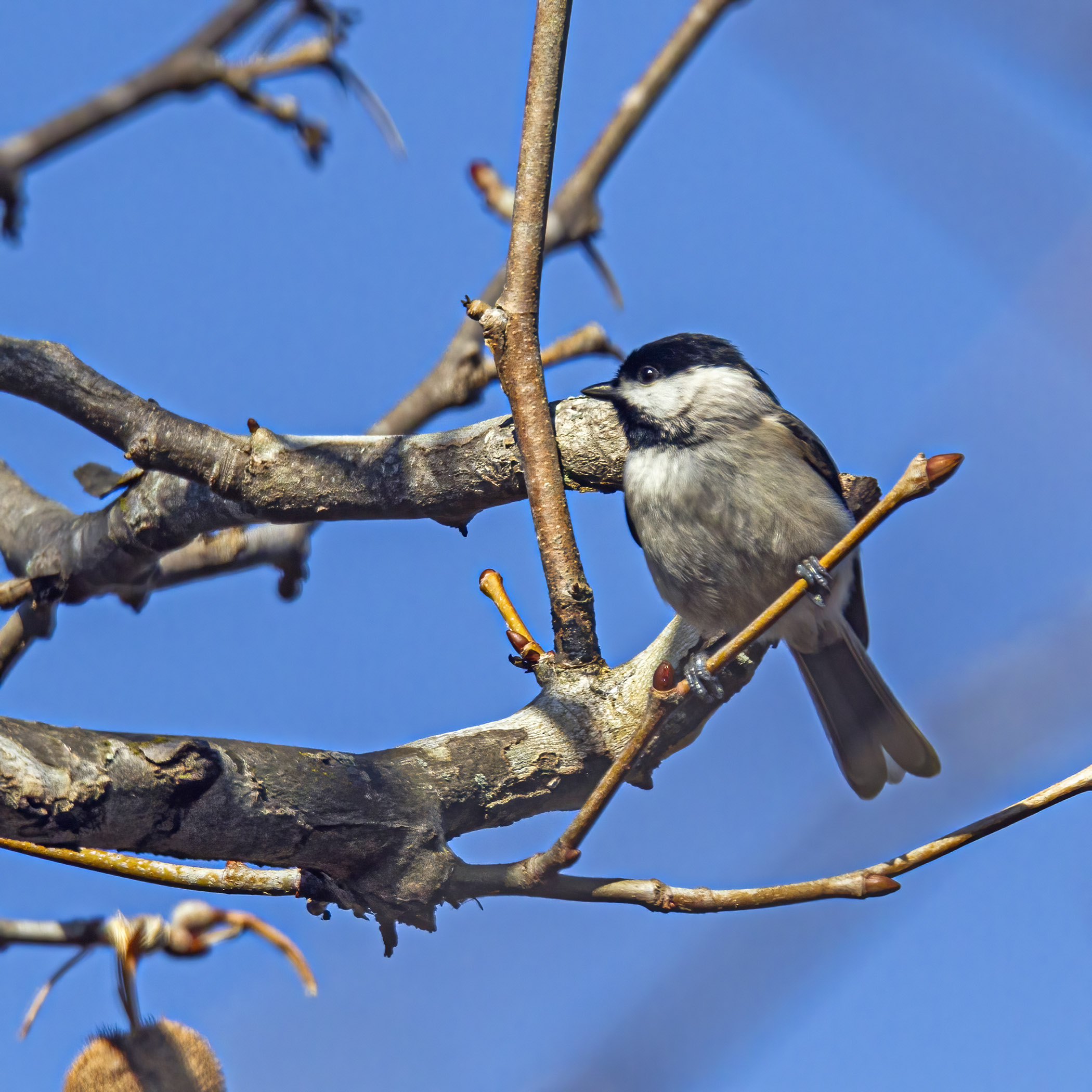
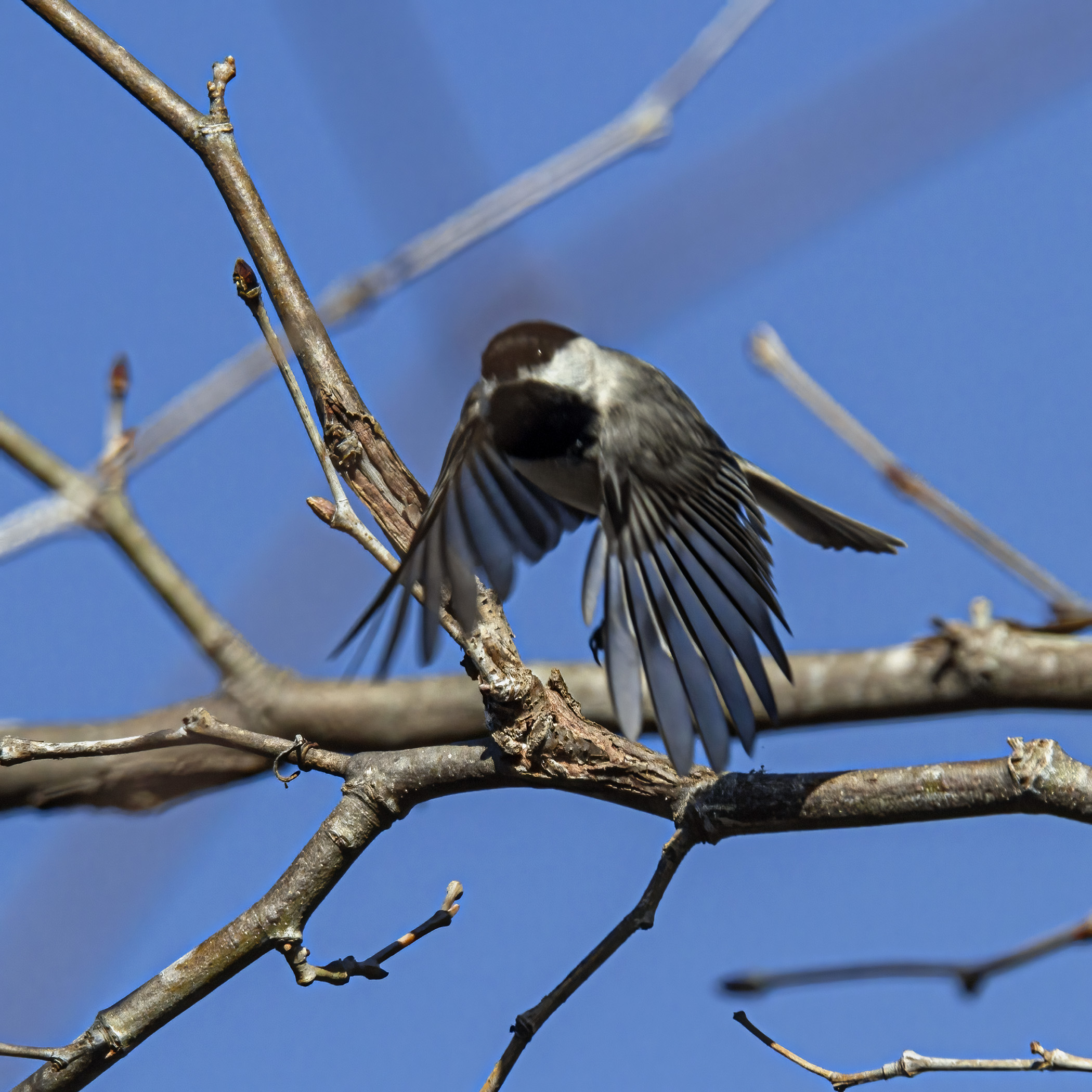
I couldn’t help but notice the sight and sounds of little birds last week at Occoquan Bay National Wildlife Refuge—they were really active. Of course, being aware of their presence did not magically result in photographs of them. As many of you know, one of the “secrets” of my wildlife photography is that I am unusually patient and persistent.
So I watched and waited and eventually managed to capture images of Carolina Chickadees (Poecile carolinensis), some of the smallest birds in our area. Here are a few of my favorites. In the first one, I managed to isolate the little bird from its cluttered background, which was a bit tricky, considering that the chickadee was perched on a small branch in the midst of a tangled group of branches.
The second photo was a little easier to take, because the bird was perched at the end of a branch in a more open area. The final photo was an unplanned one. As I was focusing on the chickadee, it took off and I instinctively pressed the shutter release. The photo is far from perfect, but I really like it.
I’m sure I’ll be taking more (and hopefully better) bird photos as we move deeper into spring and I’m looking forward to seeing a few dragonflies appearing in the next month or so.
© Michael Q. Powell. All rights reserved.
Posted in Birds, Nature, Photography, spring, wildlife, tagged brown thrasher, Canon 7D, Occoquan Bay National Wildlife Refuge, Tamron 150-600mm, thrasher, Toxostoma rufum, Woodbridge VA on March 14, 2026| 5 Comments »
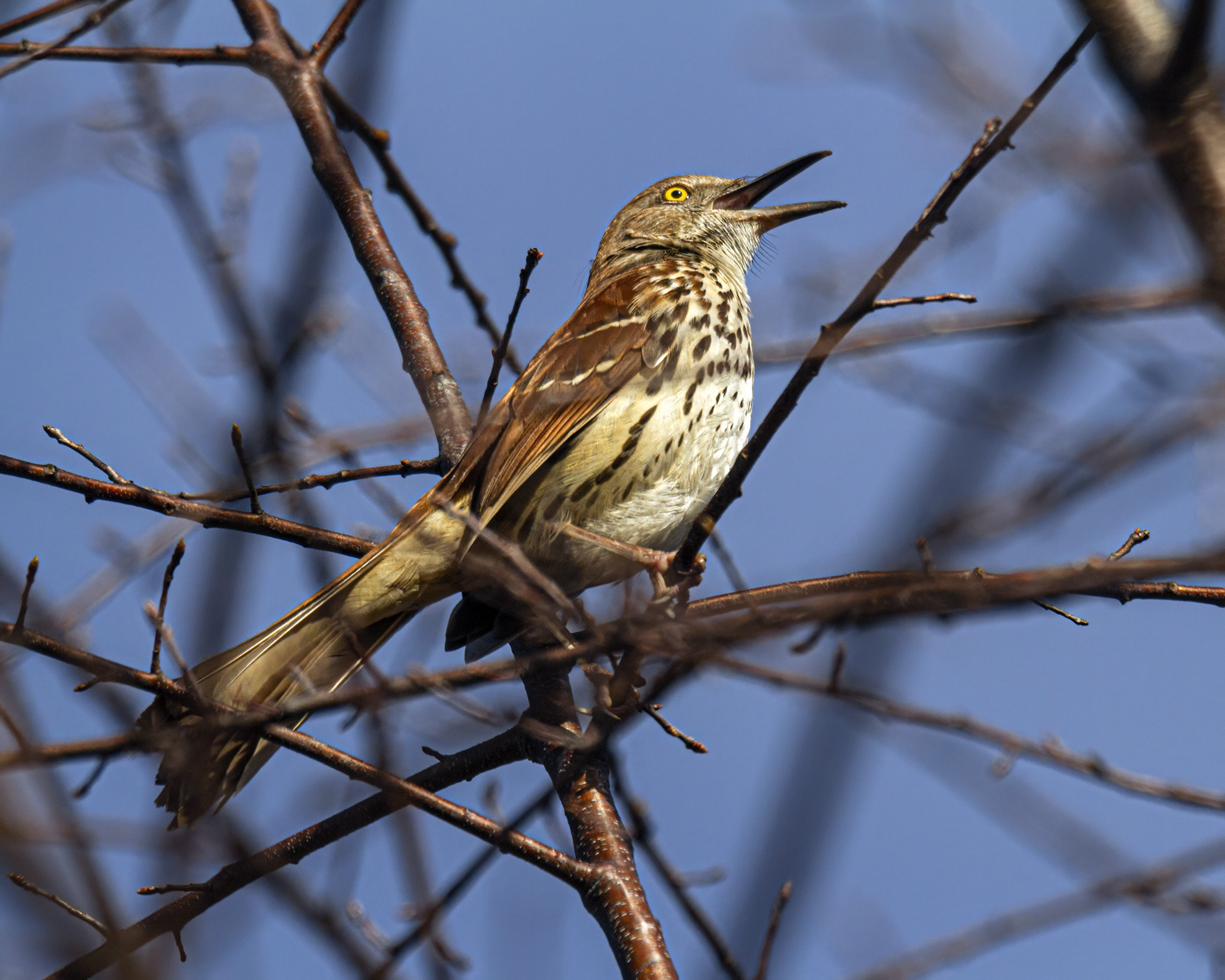
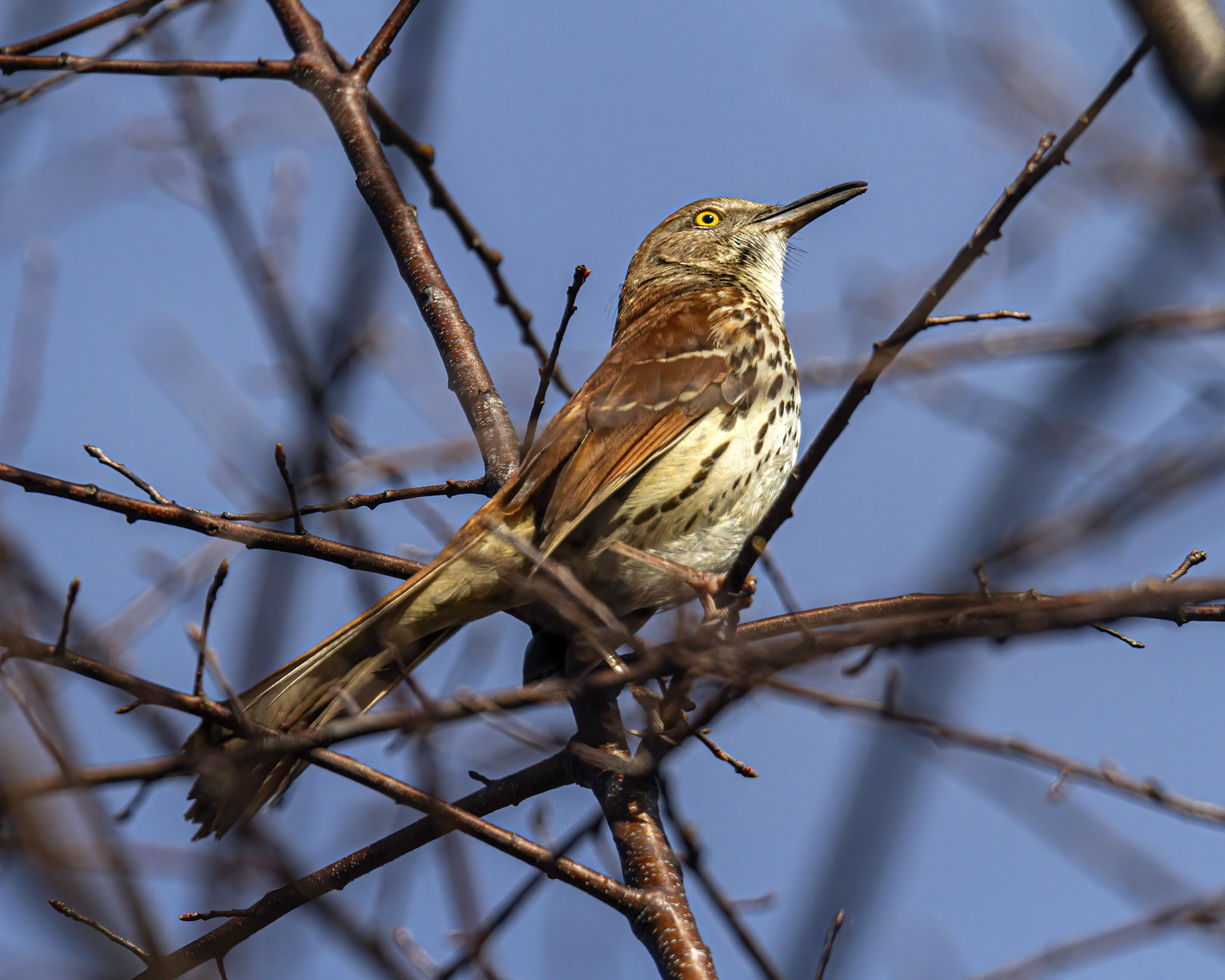
I could easily hear this Brown Thrasher (Toxostoma rufum) singing high in the trees this past Tuesday at Occoquan Bay National Wildlife Refuge, but I had a hard time getting an obstructed view of it because it was hidden in the branches. I waited and waited and eventually the Thrasher moved to a more open spot. I was delighted when I managed to capture a shot when it started singing again.
According to some naturalists cited on the Cornell Lab of Ornithology website, “It is the opinion of many ornithologists that the song (of the Brown Thrasher)… is richer, fuller, and definitely more melodious than that of polyglottis” (the Northern Mockingbird).” I was also happy that I was able to get some good shots of the striking yellow eyes of the Brown Thrasher. Wow!
© Michael Q. Powell. All rights reserved.
Posted in Birds, Nature, Photography, spring, wildlife, tagged Canon 7D, Cygnus columbianus, Occoquan Bay National Wildlife Refuge, Pelecanus erythrorhynchos, pelicans, Tamron 150-600mm, Tundra Swan, White American Pelicans, Woodbridge VA on March 13, 2026| 4 Comments »
At this time of the year, the skies are often filled with migratory birds. I live in Northern Virginia, which seems to be a kind of midpoint in the journeys of birds that spend their winters in warmer places and then fly northward for breeding.
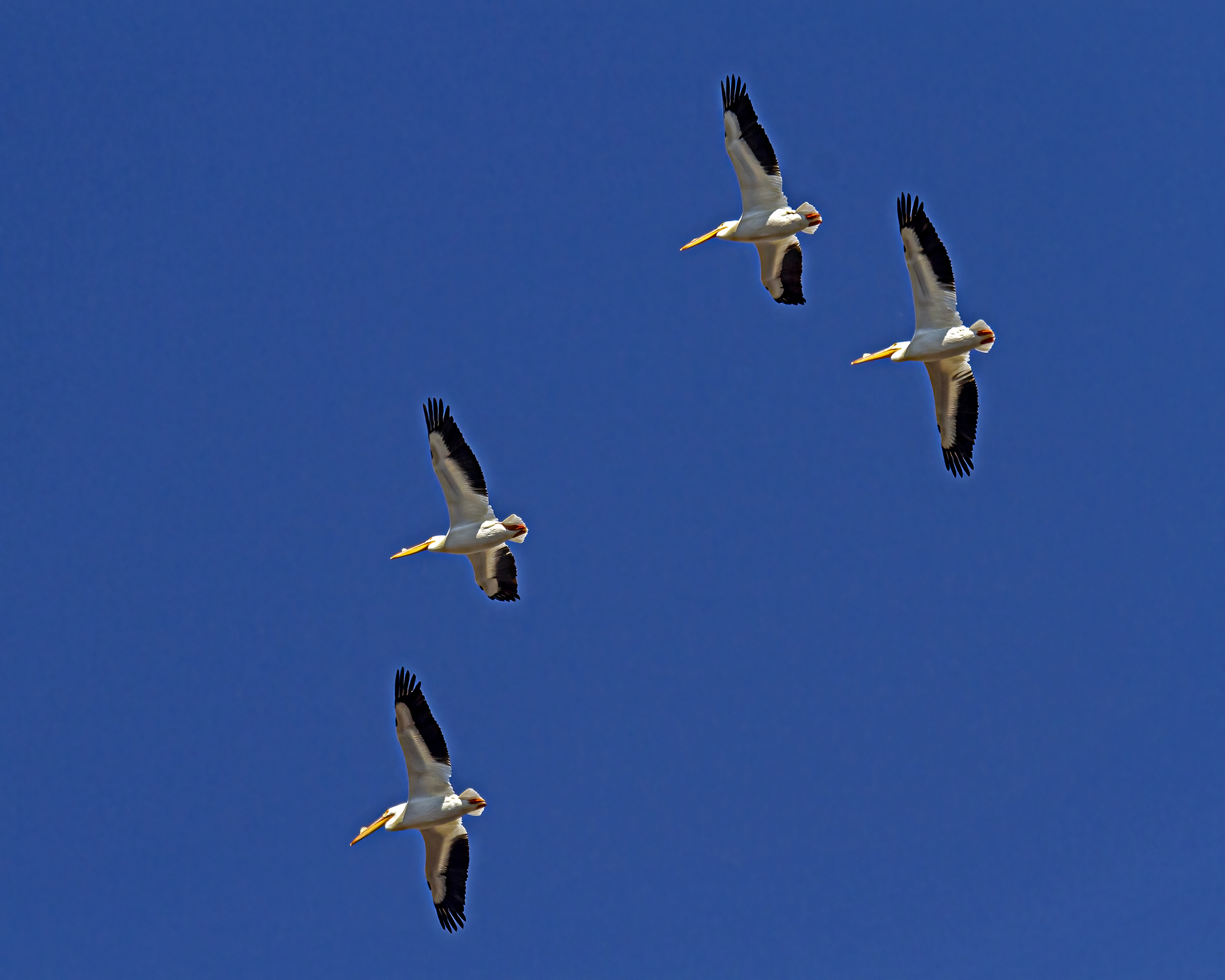
The most common birds that I see are Canada Geese, but this past Tuesday I was delighted to spot a couple of less common Species. In the first photo are some members of a large flock of American White Pelicans (Pelecanus erythrorhynchos). Although the photo makes it look like the birds were flying in a military-like formation, the grouping was often quite disorganized and was slow-moving. I couldn’t help but notice the “horn” on the upper bill of several of the pelicans that they will eventually shed after the birds mate and lay their eggs.
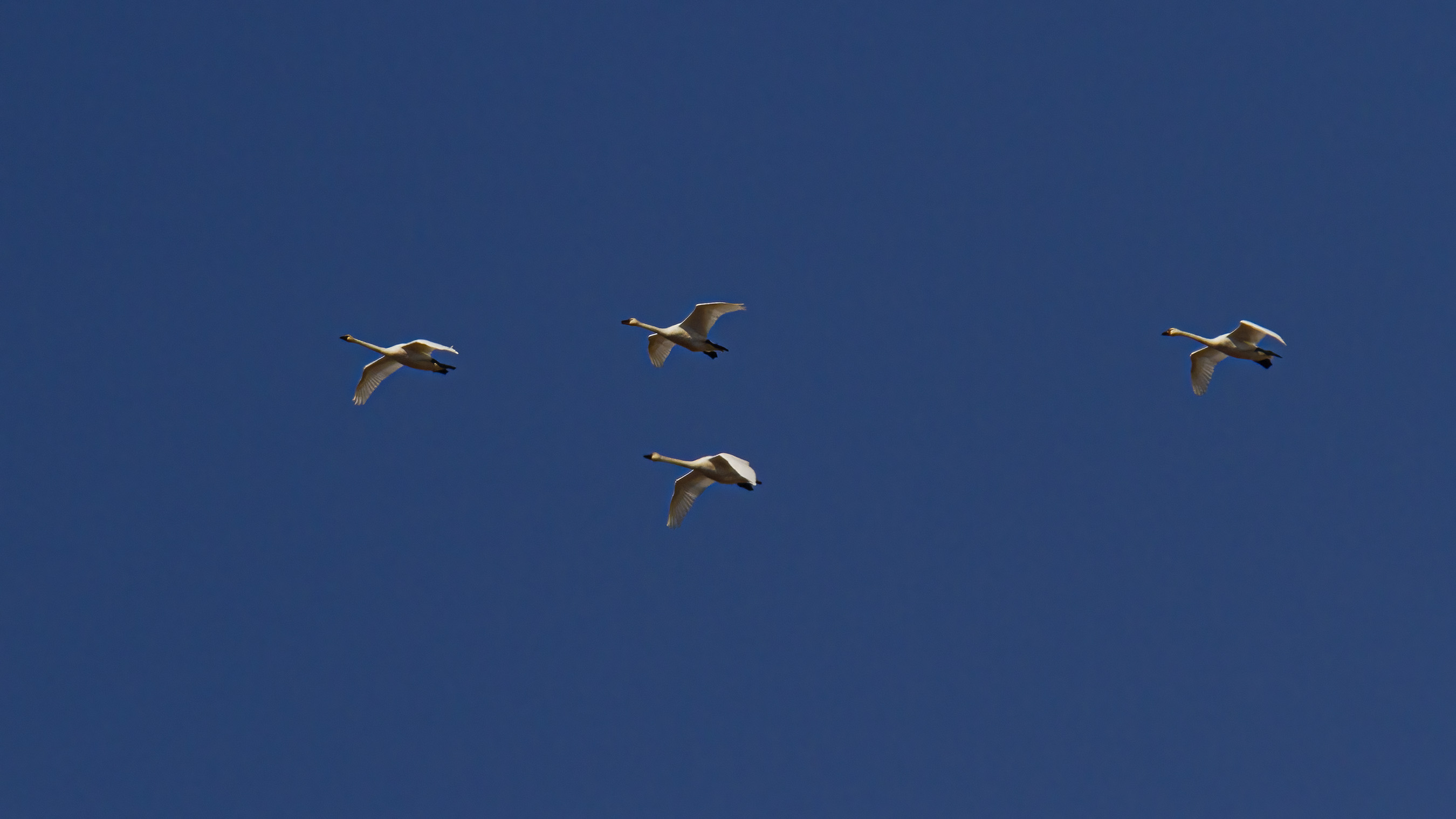
A short while later, I spotted a small group of Tundra Swans (Pelecanus erythrorhynchos), as shown in the second photo below. I noted that these swans fly with their necks fully extended, unlike the herons and egrets that I am more used to seeing that fly with their necks tucked in, creating an S-shape.
Tuesday was a warm, beautiful spring day and I managed to spot some additional birds in the trees and in the underbrush that I will feature in blog postings in the next few days.
© Michael Q. Powell. All rights reserved.
Posted in Flowers, Nature, Photography, spring, tagged Alexandria VA, crocuses, g. Crocus, g. Galanthus, iPhone 16 Pro Max, Needlework Show, snowdrops, Woodlawn Plantation on March 7, 2026| 12 Comments »
I was delighted yesterday to spot my first spring flowers of the year during a visit to Woodlawn Plantation in Alexandria, Virginia. Woodlawn is a 126-acre estate that was originally part of George Washington’s Mount Vernon. The main Federal-style house was designed by the architect of the U.S. Capitol, Dr. William Thornton, and constructed between 1800 and 1805 as the plantation house for Washington’s nephew, Major Lawrence Lewis, and his wife, Eleanor “Nelly” Custis Lewis, according to the website savingplaces.org.
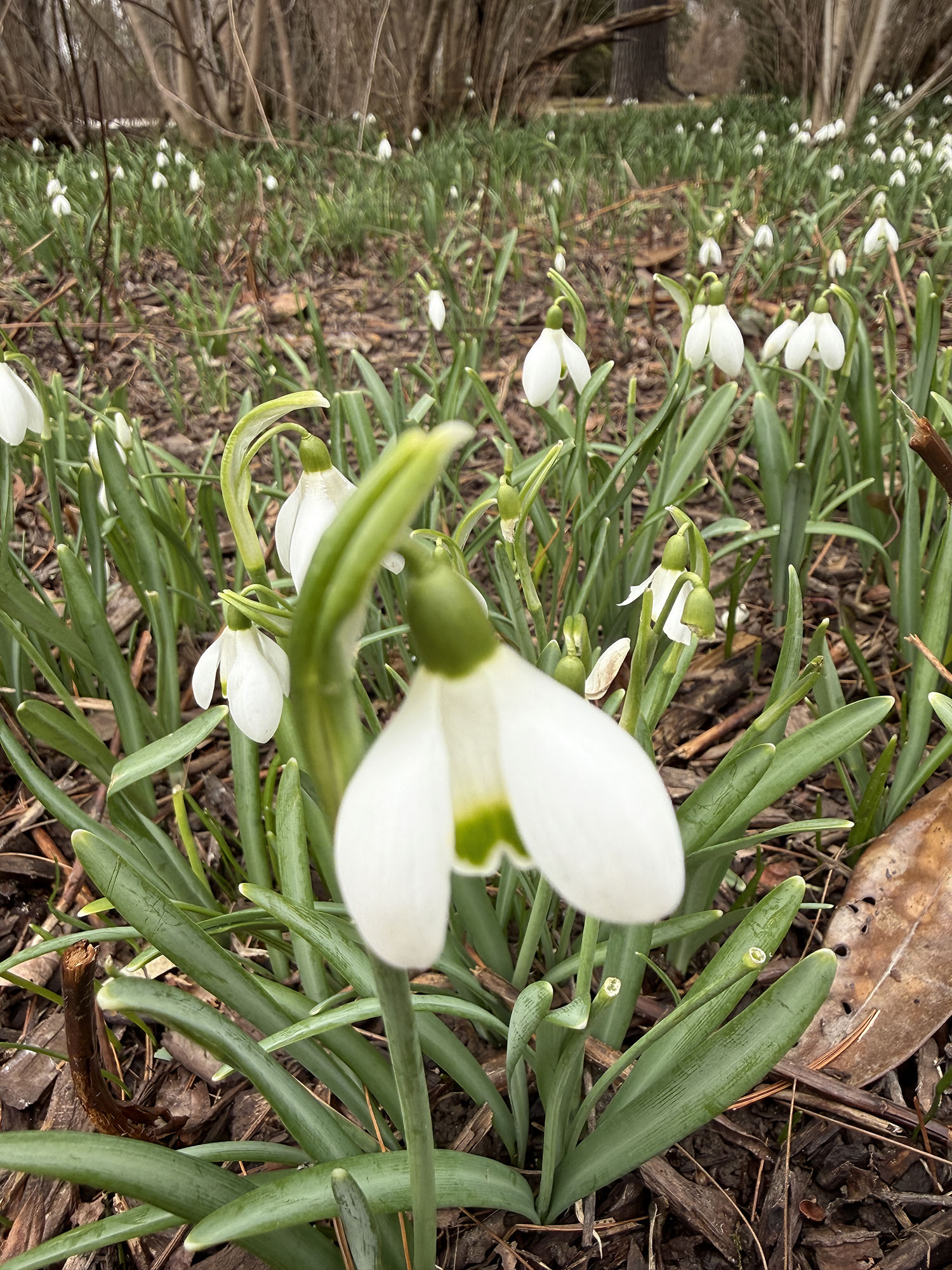
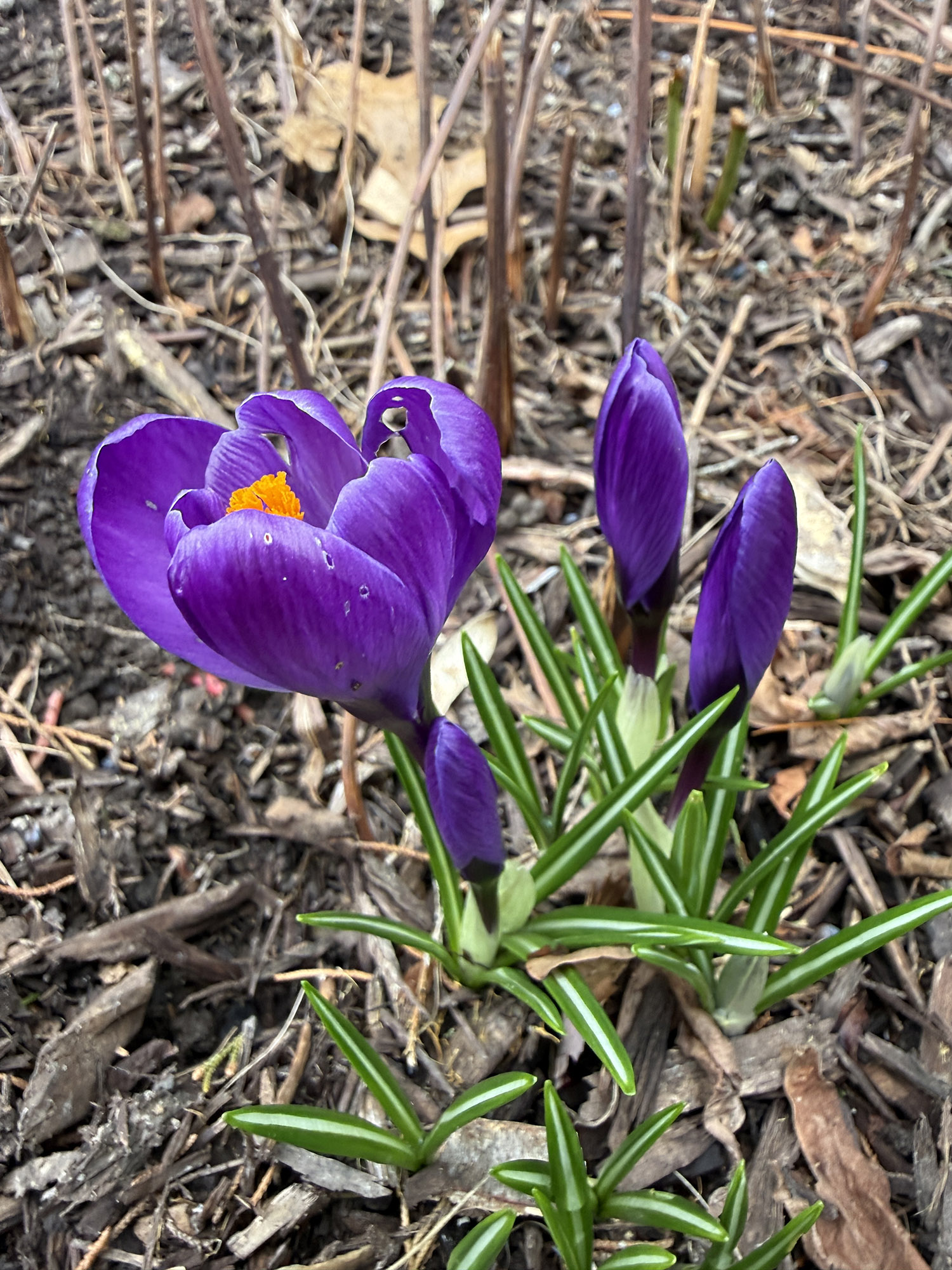
During the month of March, 63rd Annual Woodlawn Needlework Show is taking place at this location, reportedly the largest judged needle arts show in the nation, featuring hundreds of embroidered works by artists from around the world. As I was walking from the parking lot to the main building, I spotted a patch of snowdrops (g. Galanthus) and a few purple crocuses (g. Crocus) already in bloom. I did not have my “real” camera with me, but managed to capture these images with my iPhone.
Winter may not be completely over, but the weather forecast for the upcoming weather indicates that the high temperatures may reach the upper 70’s (25 degrees C). I hope to be outdoors as much as I can, soaking up the warmth of those days. Within a month, I hope to start seeing dragonflies again, one of my favorite subjects to photograph.
© Michael Q. Powell. All rights reserved.
Posted in Birds, Nature, Photography, spring, wildlife, tagged Bucephala albeola, bufflehead, Canon 7D, Occoquan Bay National Wildlife Refuge, Tamron 150-600mm, Woodbridge VA on March 5, 2026| Leave a Comment »
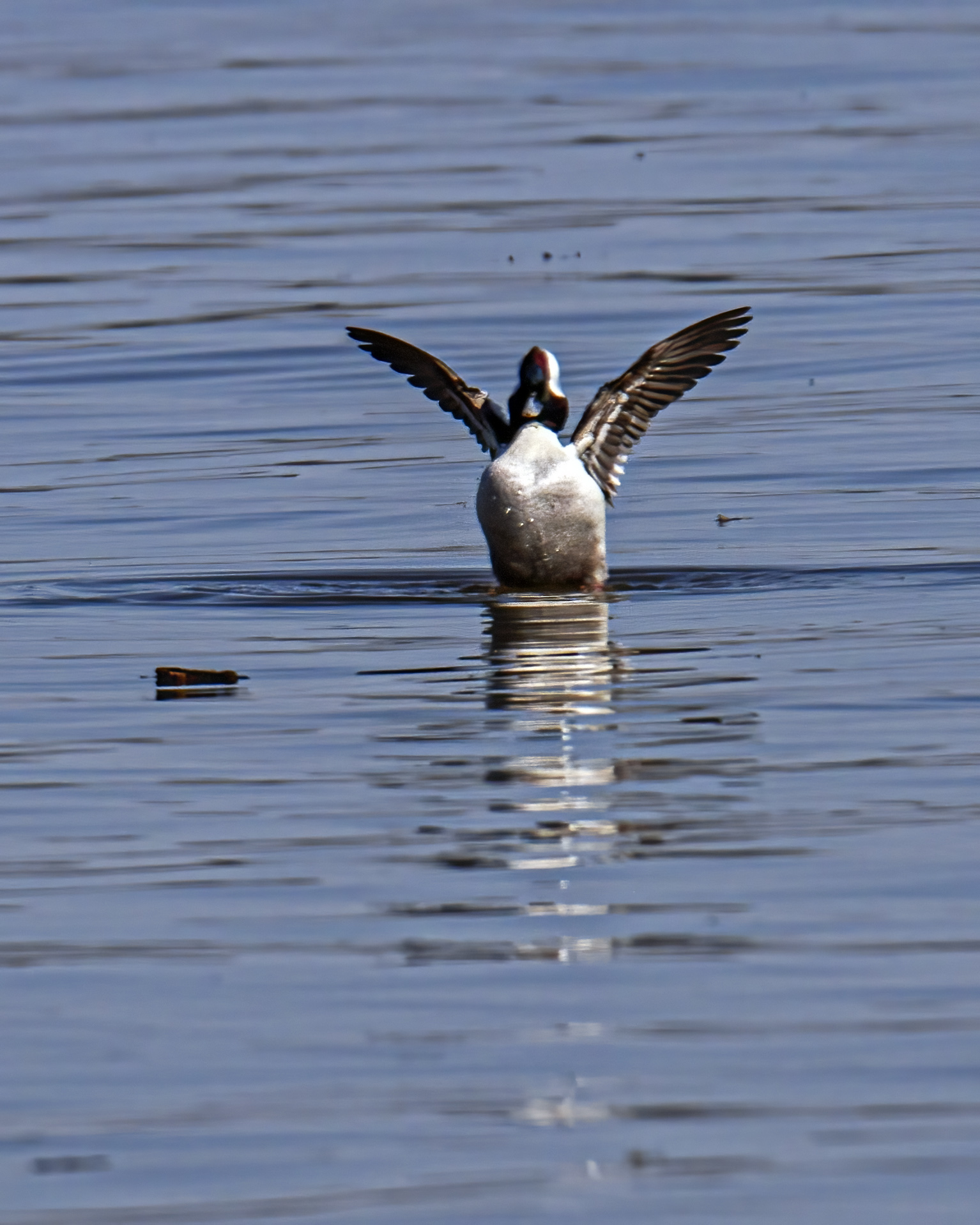
Buffleheads (Bucephala albeola) are small sea ducks that I sometimes observe during the winter in the waters off of Occoquan Bay National Wildlife Refuge. The males have a large white patch on their heads that makes them relatively easy to identify. From a distance these males often look to be black and white. When the sun is shining from the right directions, as it was last week when I captured this image, you can see that their heads are actually a glossy green and purple that really helps to set off their distinctive white patches.
In addition to being able to see the colors, the straight-on angle of this shot shows the odd shape of the head of this bufflehead’s head. It may be a bit of an optical illusion, but it looks to me like the lower portion of its head is considerably bigger than the upper part.
© Michael Q. Powell. All rights reserved.
Posted in counted cross stitch, cross stitch, Dragonflies, dragonfly, Inspiration, Photography, Water Lilies, tagged counted cross stitch, cross stitch, dragonflies, imperative day, march forth, new beginnings, TheCozyDH on March 4, 2026| 7 Comments »
Do you remember learning grammar in school? My memories are a bit hazy, because it was a long time ago, but I remember learning that the imperative mood is used to express direct commands, instructions, or advice and the subject is understood to be “you.”
I always think of today, March 4th in the imperative form of “March Forth.” Sometimes it takes a lot of courage (or faith) to take that first step. It can be really scary, especially when heading off for an unknown destination or trying something you have never done before.
As many of you know I’ve been doing a lot of counted cross stitch over the past few months. Some of the designs have been really simple and some have been a bit complicated, but they have all been made up of a series of x’s done on a flat piece of fabric. I have long been intrigued, however, by the three dimensional objects that some people have made with their finished cross stitch pieces.
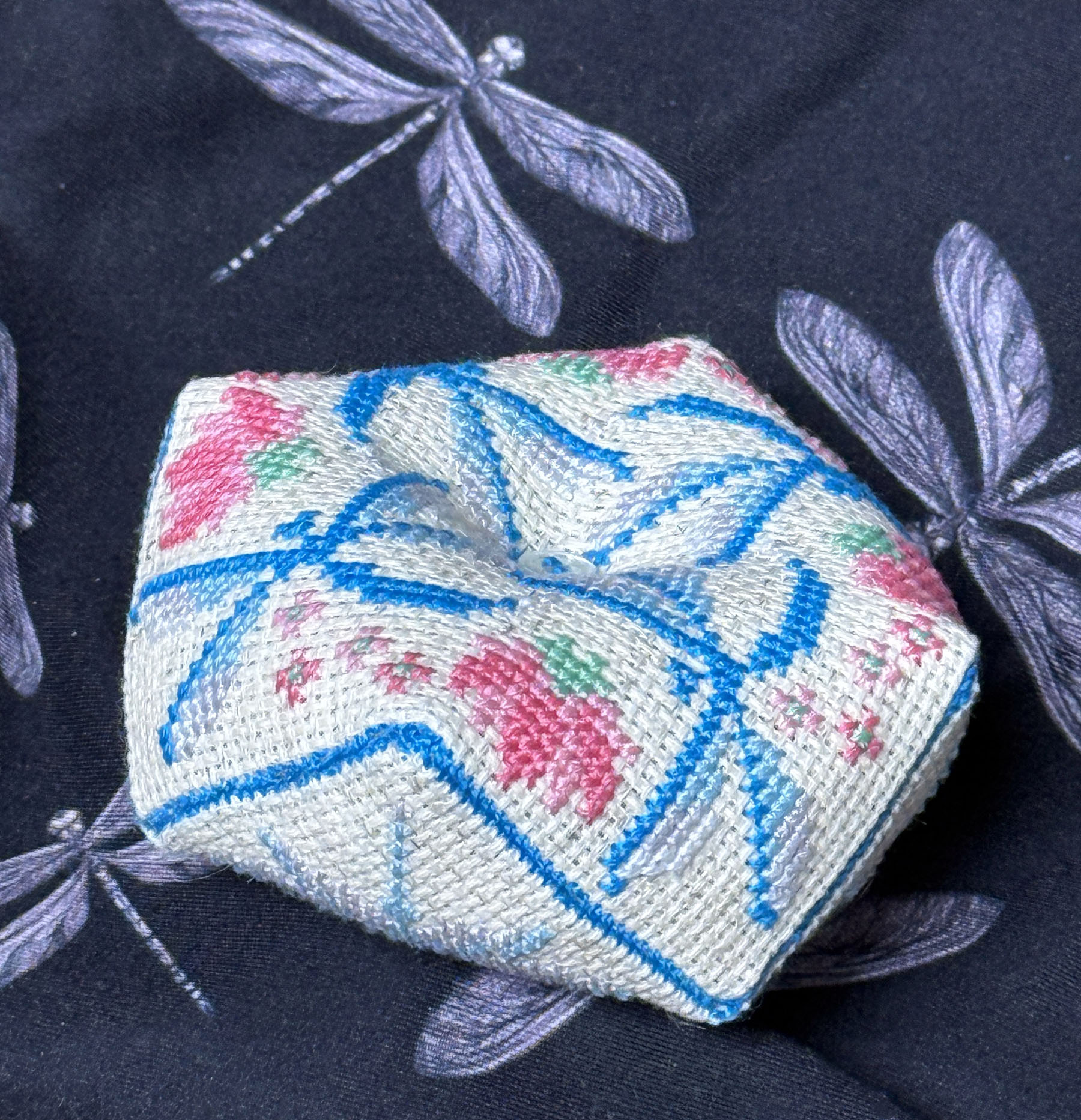
I can understand pretty well how folks make pillows, although personally my sewing skills are somewhat lacking. Sometimes, though, people will make geometric-shaped objects known as “biscornus.” What is a biscornu? According to Wikipedia, “A biscornu is a small, octagonal, stuffed ornamental pincushion. It is usually made using evenweave fabric, such as Aida cloth, cotton, or linen. The technique involves joining two embroidered squares framed with a backstitch border with a whip stitch in such a way that each corner of one square is attached to the middle of the side of the other. The term comes from the French adjective biscornu, which means irregular, skewed, or odd.”
In theory, it is easy to sew together the two panels and I watched numerous You Tube instructional videos. In practice it was difficult, but I forced myself to push on through—I was determined to “march forth” until the end. The first photo shows my finished biscornu. It is a little wonky and some of the stitches that hold it together are uneven, but I am happy that I pushed through to finish it.
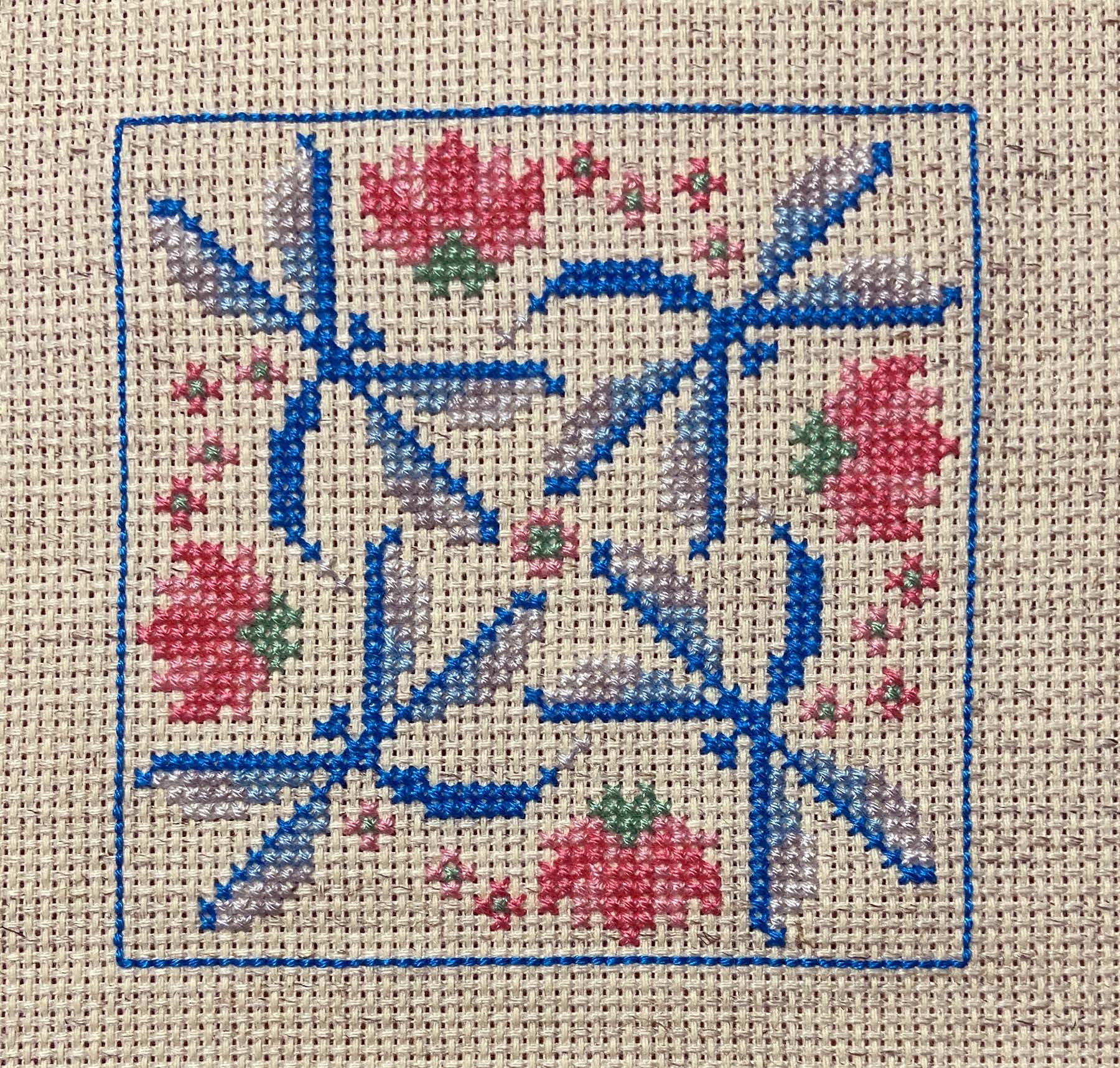
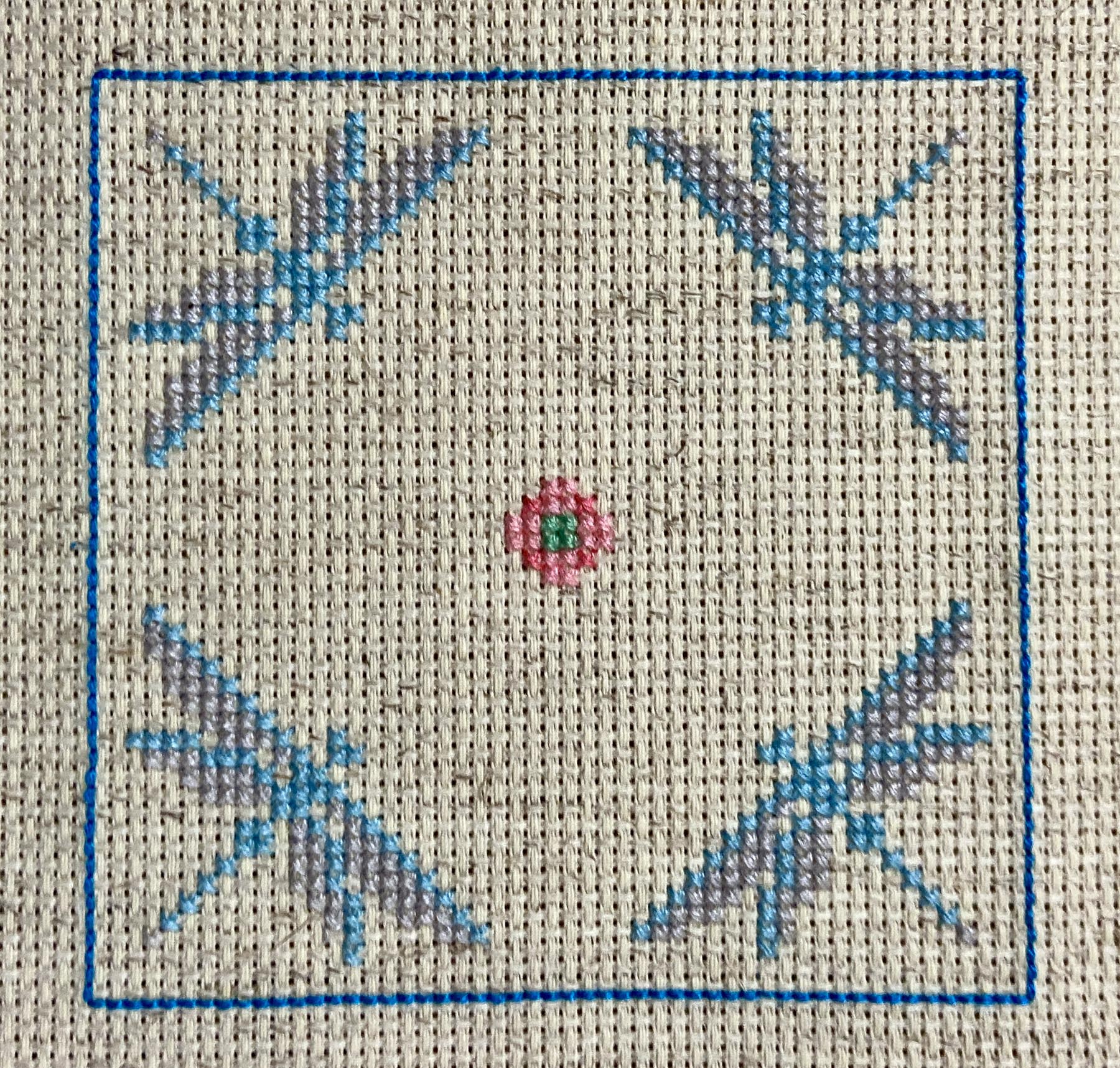
The final two photos show the two panels of my version of the New Beginnings Biscornu that was designed by DH, a talented cross stitch designer and streamer @TheCozyDH.com. As soon as I saw the pattern I knew that I wanted to stitch it, because it features dragonflies, one of my favorite creatures.
So what about you? Are you willing to step out of your comfort zone and “march forth” into unknown territories to try something new? I’d like to say that I followed the Star Trek mission statement “to boldly go where no one has gone before,” but my initial step was more “hesitant” than “bold.”
Success, of course, is not guaranteed, but I really do think that it is worth the risk. Who knows, you might end up with something really cool, like my little biscornu (and, yes, I am definitely biased in my views).
“March forth!”
© Michael Q. Powell. All rights reserved.
Posted in Birds, Nature, Photography, spring, wildlife, tagged astronomical spring, Bald Eagle, Canon 7D, Haliaeetus leucocephalus, meteorological spring, Occoquan Bay National Wildlife Refuge, Tamron 150-600mm, Woodbridge VA on March 2, 2026| 4 Comments »
Yesterday, 1 March, marked the start of meteorological spring for those of us who live in the Northern Hemisphere. Meteorologists divide the seasons into three month increments for easier data tracking, although in the United States we generally use the astronomical calendar that ties the start of spring to the vernal equinox, which is on March 20 in 2026. No matter how you calculate the start of spring, there are definite signs that the seasons are changing.
After a brutally cold period of weather in most of February, we had an unusually warm day on Saturday, the last day of the month. The sun was shining brightly throughout the day and temperatures soared to over 60 degrees (15.5 degrees C). I generally don’t go out with my camera on the weekends to avoid the inevitable crowds, but I couldn’t resist the pull of the beautiful weather and headed off to Occoquan Bay National Wildlife Refuge.
There were quite a few people at the refuge and most of the wildlife that I encountered was out of camera range, but that didn’t really matter. Like the turtles that had risen up from the bottom of the ponds, I enjoyed simply basking in the warmth of the sun.
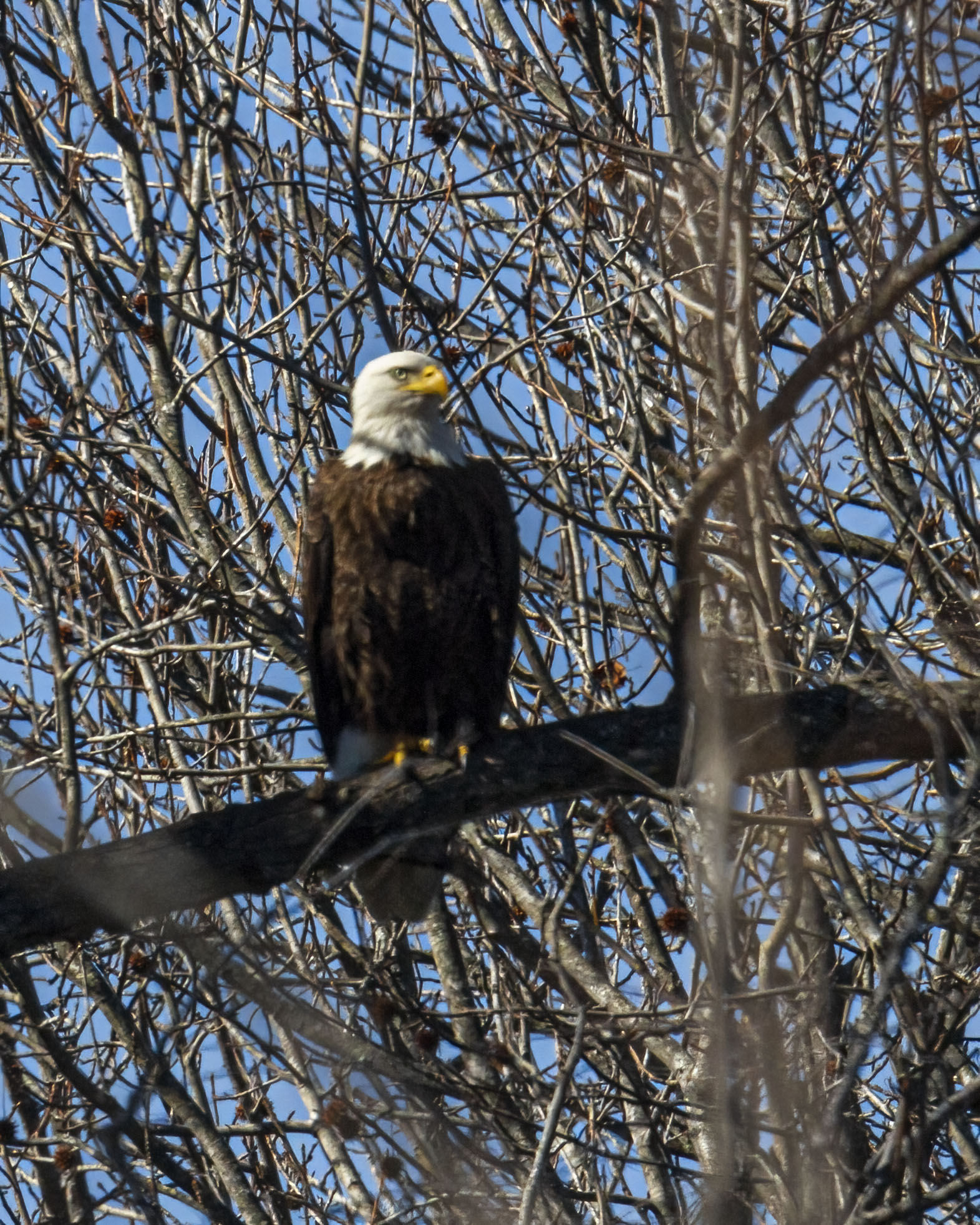
I did manage to capture a shot of a distant Bald Eagle (Haliaeetus leucocephalus). Many of you know that I rarely pass up an opportunity to photograph an eagle, even when they are far away. As you can see from the blurry branches in the foreground, I had to bend and twist my body to get a clear view of the eagle through the thicket of branches that mostly blocked my view.
It will soon be nesting season for the eagles, so I’ll be checking out several locations at the wildlife refuge this month for signs of eagle activity.
© Michael Q. Powell. All rights reserved.
 Mike Powell