Feeds:
Posts
Comments

Archive for October, 2014

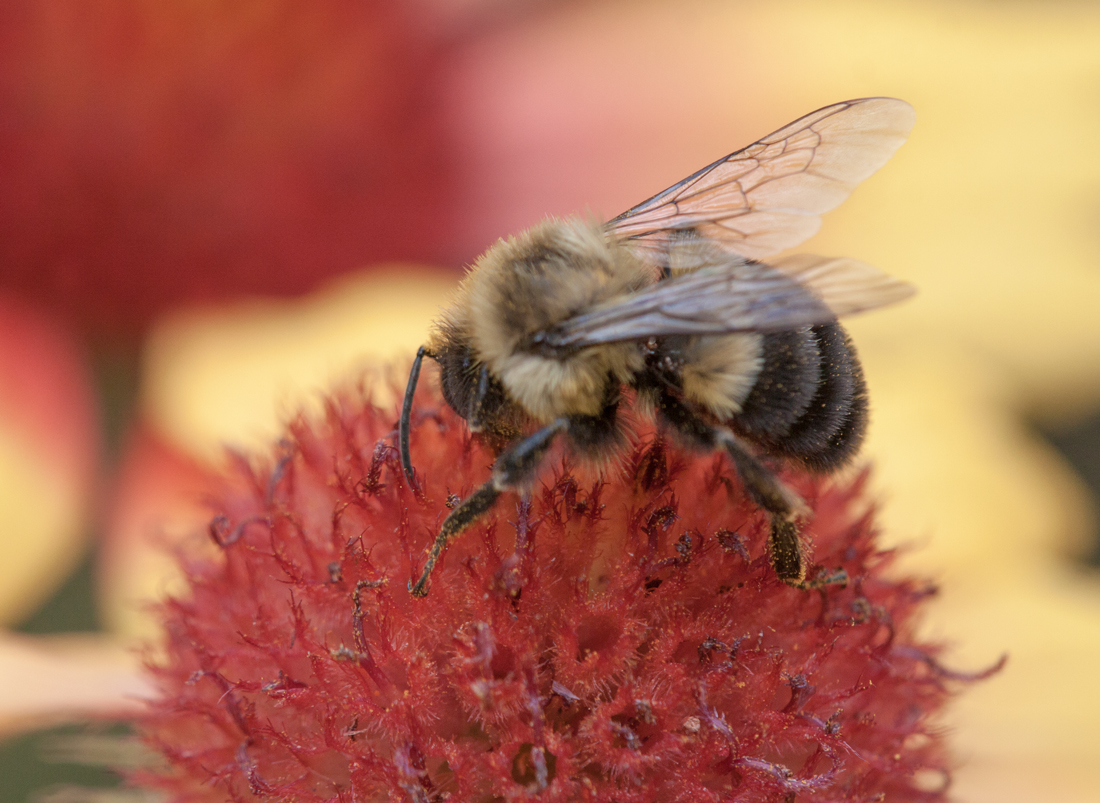
Although it is already October and the weather is getting cooler, the local bees have not yet called it quits for the season. I am not sure what kind of purple flower this is, but the bumblebee was busily burrowing its head into its open blossoms.

I was happy to be able to catch the bee in action, capturing an “artsy” image of the moment.

October bee

© Michael Q. Powell. All rights reserved.

Read Full Post »

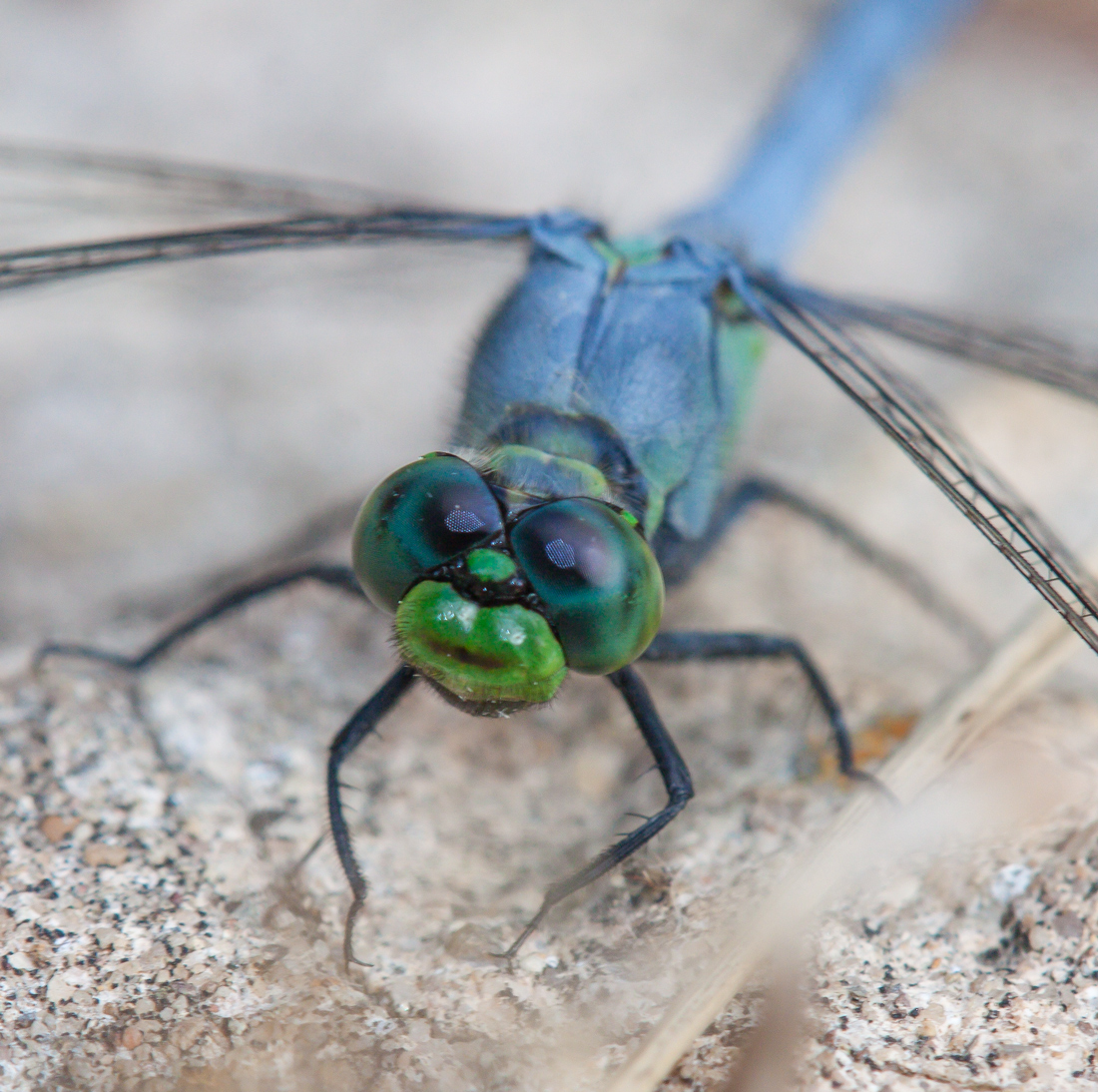
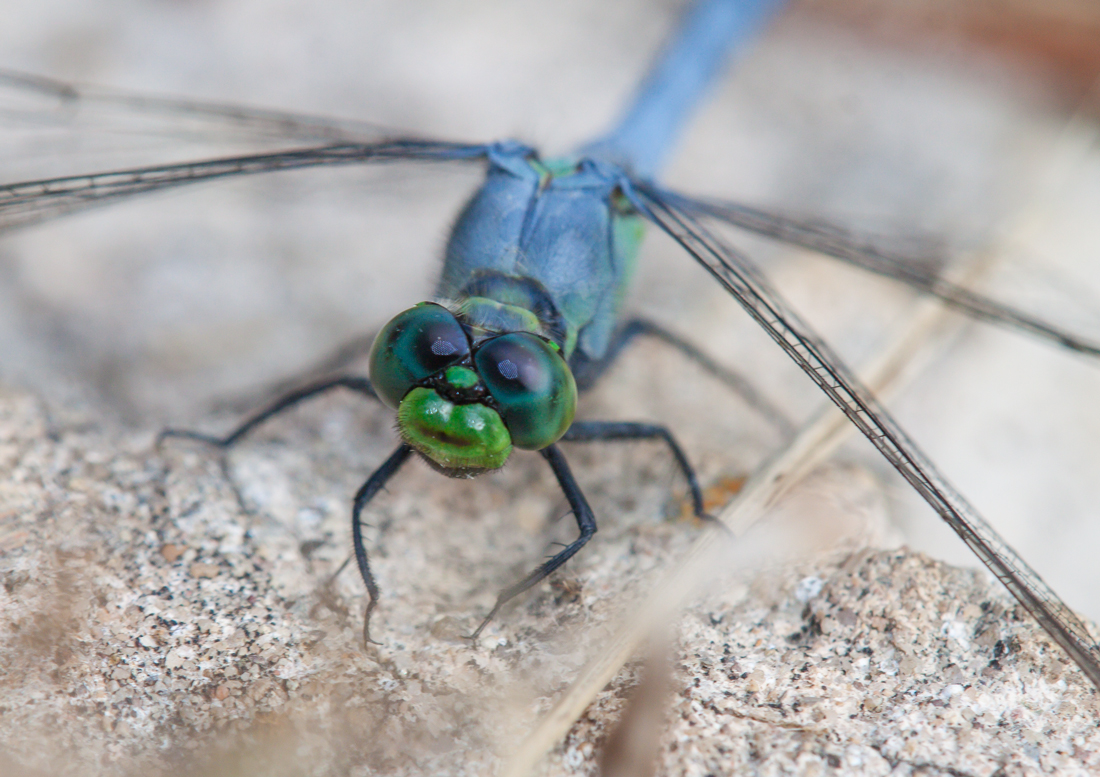
One of the main reasons why I love having a macro lens is that it that it lets me capture photos like this extreme close-up image of a male Eastern Pondhawk dragonfly (Erythemis simplicicollis) that I took yesterday at Green Spring Gardens, a historical, county-run garden in Alexandria, Virginia.

I have always been fascinated by the multi-faceted compound eyes of dragonflies and the blue-green eyes of the Eastern Pondhawk are particularly stunning. When I first caught sight of this dragonfly, he was sunning himself on a rock near the edge of a small pond. I kept low to the ground and approached him slowly. He didn’t fly away and seemed more curious about my presence than afraid.

For these shots, I rested the lens hood of the camera on the edge of the rock ledge to get this low, eye-to-eye perspective. This technique served to steady my camera, so I was able to capture a good deal of detail of the dragonfly’s face. In the initial photo, for example,which is a cropped version of the second image, you can see that the dragonfly has stubble on his chin. The third shot is a cropped version of the last photo, again to show greater detail and to draw the attention of viewers more directly to the eyes.

Do you think the shots are more effective when cropped or do you prefer the larger perspective images?

Eastern Pondhawk

Eastern Pondhawk

Eastern Pondhawk


pondhawk1_closeupb

© Michael Q. Powell. All rights reserved.


Read Full Post »

Yesterday afternoon I had a little photo shoot with Freckles, a two year old Cocker Spaniel who is one of my favorite subjects. Freckles belongs to a friend who has been staying with me and I have the pleasure of spending a lot of time with this beautiful little dog.

Freckles was more cooperative than usual, though I still had to chase her around a lot to try to get some shots. The small size of the backyard of my townhouse and the 180mm focal length of my lens guaranteed that all the shots would be close-ups, which means you can easily see her beautiful coloration and expressive eyes.

Freckles1_oct_blog Freckles2_oct._blog Freckles3_oct_blog Freckles4_blog

© Michael Q. Powell. All rights reserved.

Read Full Post »

Many dragonflies species have disappeared by now as we move deeper into autumn, but some especially beautiful ones have taken their place, like these male Blue-faced Meadowhawks (Sympetrum ambiguum) that I photographed yesterday at my local marshland park.

According to the Dragonflies of Northern Virginia website, this species peaks in September to October and is the rarest and hardest to find meadowhawk in our area. I was walking through a meadow at the park with one of my fellow photographers when she spotted the Blue-faced Meadowhawk in the second photo perched on a log. At that moment, I happened to have a 70-300mm telephoto lens on my camera and I was happy  to be able to get a shot that shows the spectacular colors of this dragonfly. Little did I know that I would have an even better opportunity a few minutes later.

As we continued into an area with thigh-high growth, my friend stopped for a moment and said she had spotted a spreadwing damselfly. I looked in the direction that she was pointing and didn’t see the damselfly, but I did spot another Blue-faced Meadowhawk perched atop one of the plants.

In a whispered voice, I asked my friend to freeze and I quickly changed lenses to my 180mm macro lens. Amazingly, the dragonfly stayed in place and I was able to get a number of shots, including the first one below. Given that these dragonflies are less than two inches in size (50mm), I am thrilled with the results. There is something almost magical about the combination of red, blue, and turquoise on this dragonfly.


Blue-faced Meadowhawk Blue-faced Meadowhawk.

© Michael Q. Powell. All rights reserved.

Read Full Post »

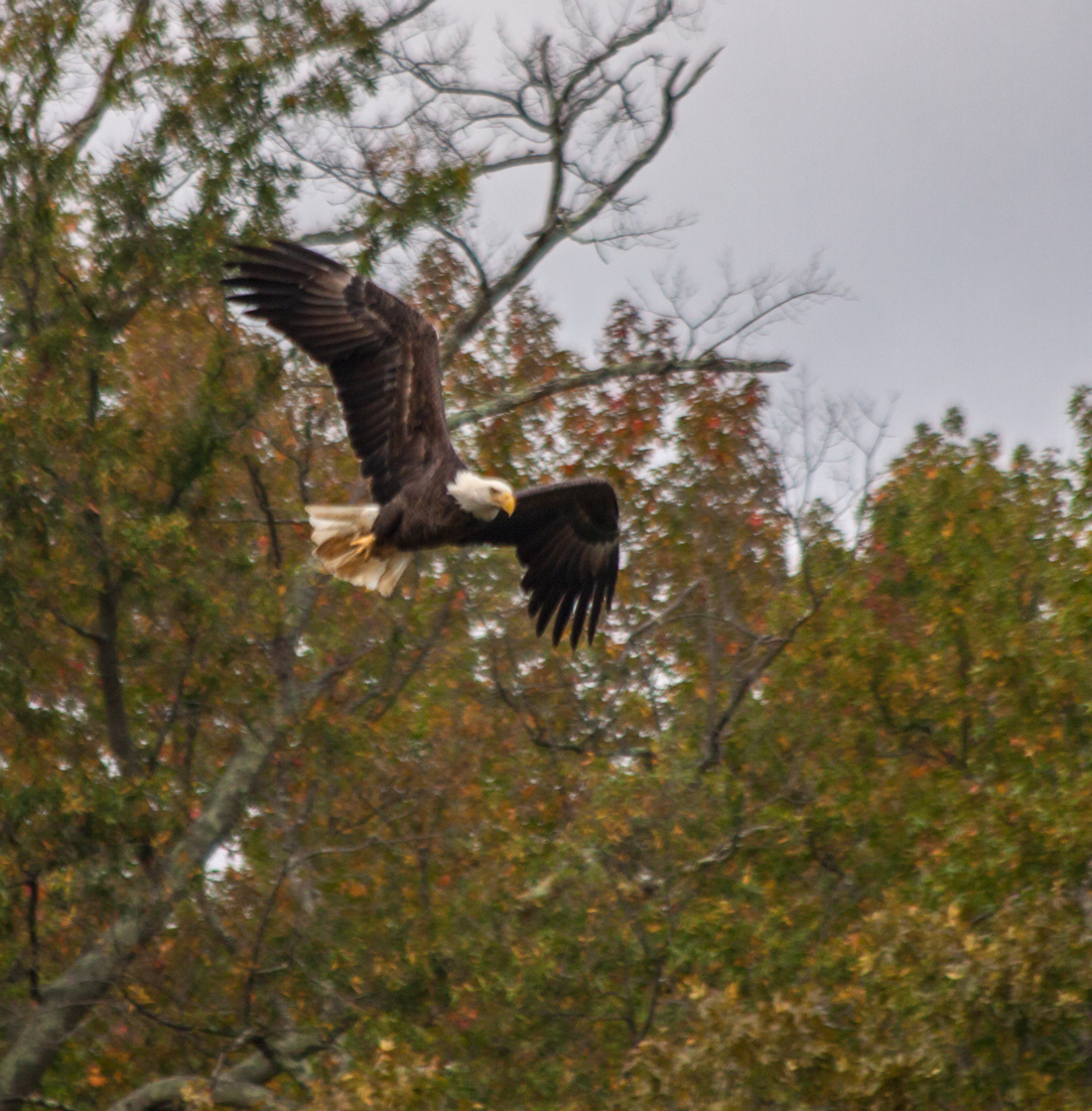
This morning I spotted a Bald Eagle (Haliaeetus leucocephalus) in a tree a my local marshland park, not far from where I had previously seen one. Once again, the eagle reacted more quickly than I did and took off before I was completely ready. This time, however, I was able to more quickly track the flying eagle and got a better shot than last time. I’m still not fully satisfied with the sharpness of this image, but I continue to believe that any day that I see an eagle is a great day.

Bald Eagle at Huntely Meadows Park

© Michael Q. Powell. All rights reserved.


Read Full Post »

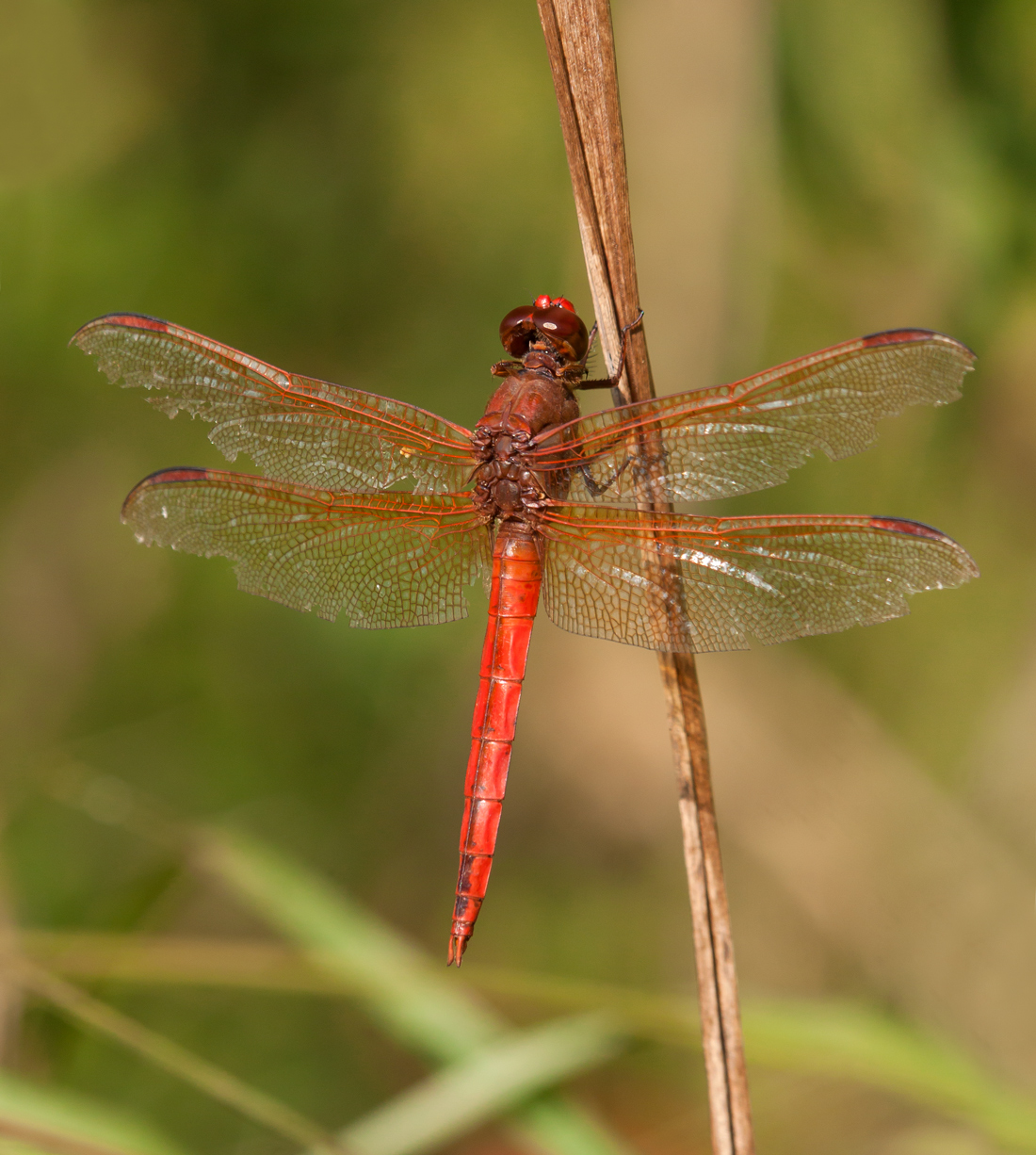
Two weeks ago, during the waning days of summer, I captured this image of a beautiful Needham’s Skimmer dragonfly (Libellula needhami) at Huntley Meadows Park, the local marshland where I do a lot of my shooting. The vivid red of its body made it really stand out—camouflage did not seem to be a viable option.

Although this dragonfly species is pretty common, I only saw a couple of them this season and this was the only one that I managed to photograph. The dragonfly was perched on a dried stalk in a field and it was tough to try to get any kind of clear background, particularly because I did not want to move too much and risk scaring away the dragonfly.

In these two images, you can see two slightly different approaches that I used. In the first one, I was not worried that there were some horizontal stalks in the background. In fact, I actually like the repetition of the horizontal line and don’t find them distracting, given how blurred they are. In the second image, I tried to get as uncluttered a background as I could, which isolates the dragonfly a little better. I tend to like the first image a little more, but I welcome any thoughts about which image you prefer.

Needham's SkimmerNeedham's Skimmer

© Michael Q. Powell. All rights reserved.


Read Full Post »

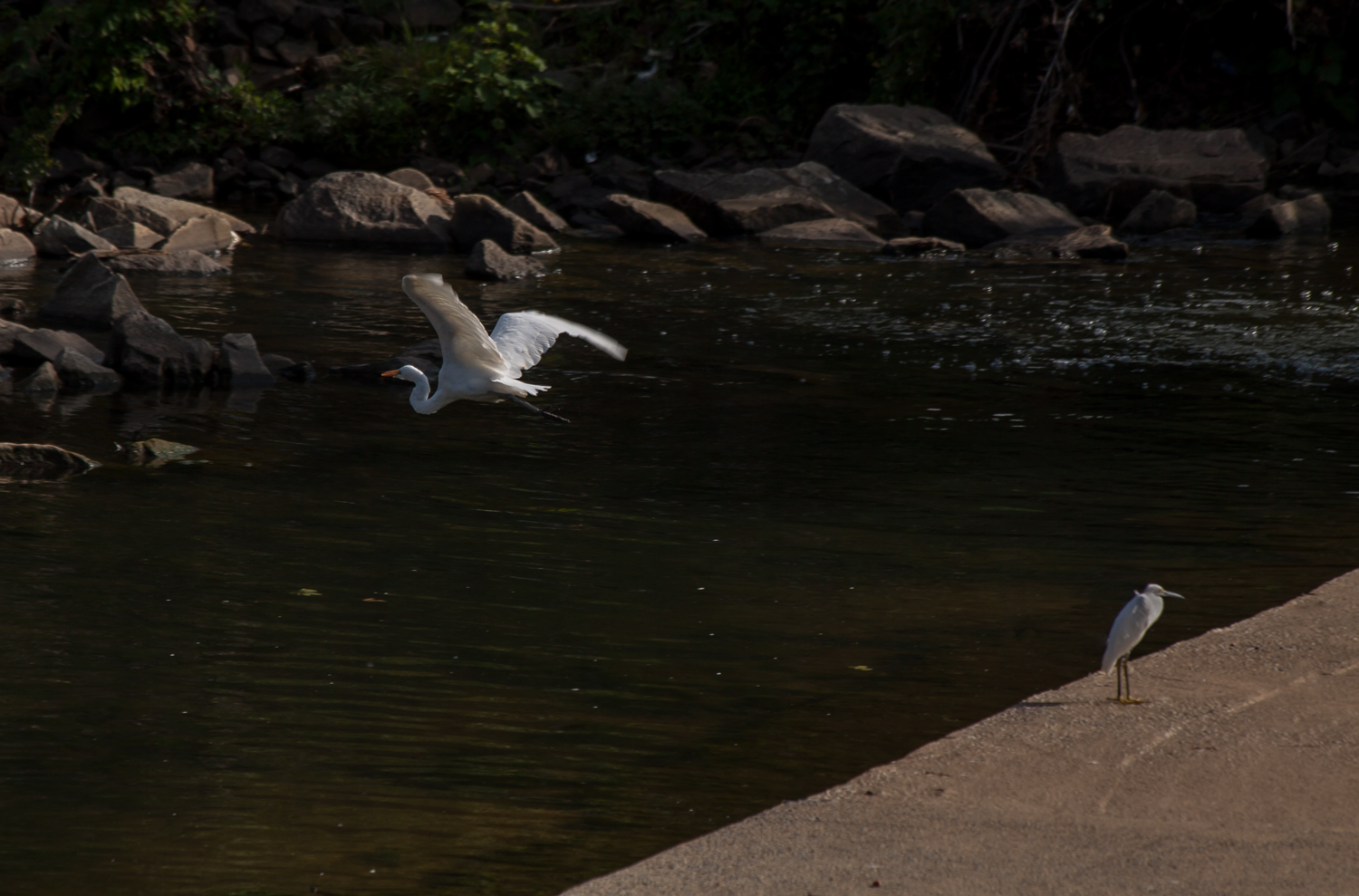
I’ve seen lots of Great Egrets (Ardea alba) over the past couple of years, but until recently I had never seen a juvenile one and had no idea that they were so small compared to the adults.

I caught this little interaction between what I assume is a mother and a young egret at Cameron Run, a tributary of the Potomac River in Alexandria, Virginia. The birds were standing on one of a number of concrete slabs that cross the entire width of the stream, presumably to slow down the flow of the water.

UPDATE: A number of more experienced birders have weighed in and pointed out that the smaller egret is not a juvenile Great Egret as I thought, but is instead a Snowy Egret (Egretta thula), a species that I had never seen before. As a result, the scenario below that I imagined is no longer valid—I’ll have to think a bit more about what herons of two different species might have been discussing.

The mother seemed to be giving instructions to the young one to stay put while she flies off to fish a short distance away.

Great Egret and baby

Mom gets a bit excited as she warns the little one to stay put

Great Egret adult and juvenile

The little one finally agrees

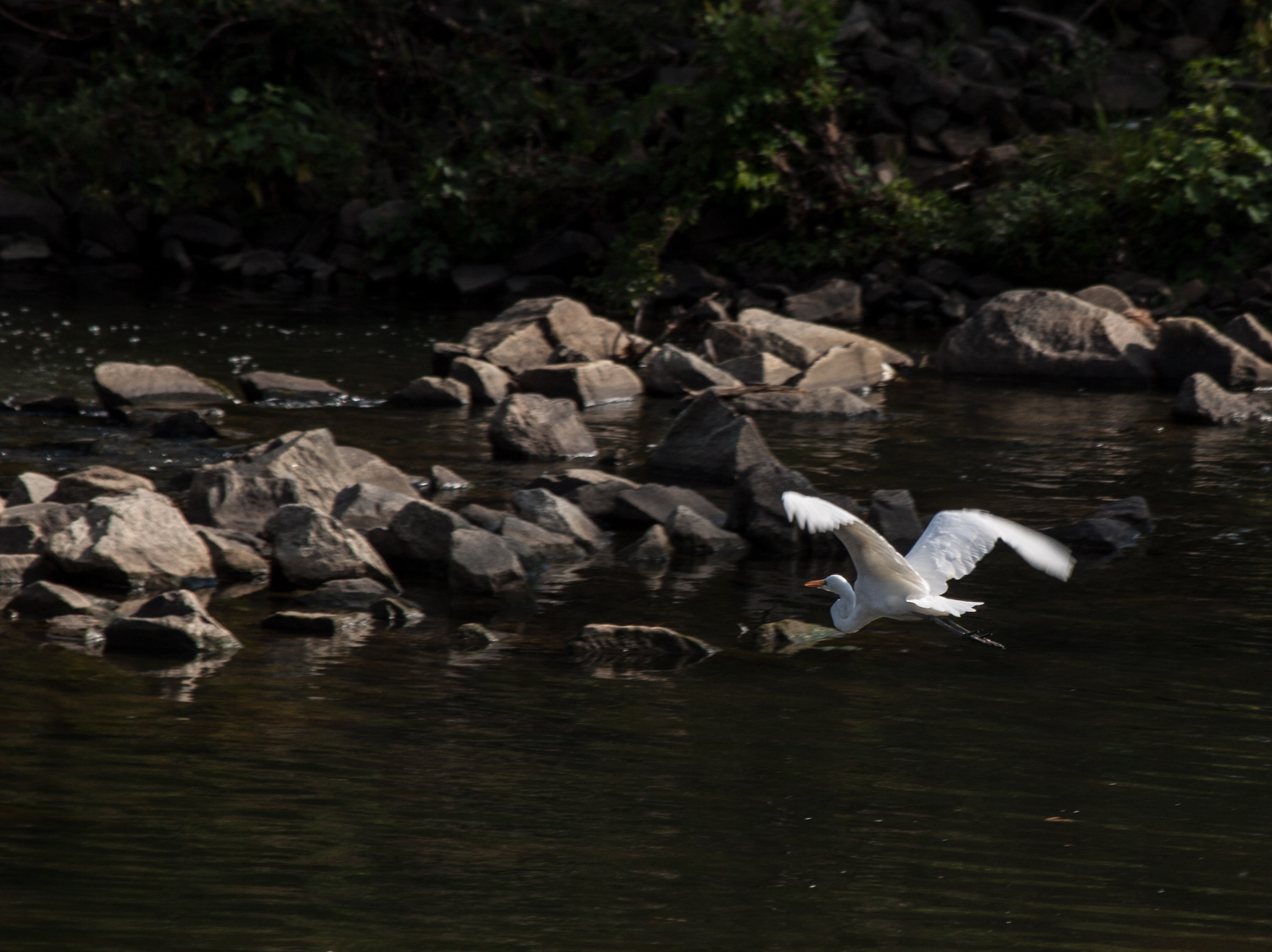
The mother eventually is reassured and takes off for the rocky edge of the water, hoping for a quick catch, so that she can feed the hungry youngster.

Great Egret adult and juvenile

Flying away for a little while

Great Egret in flight

Searching for the perfect spot for fishing

The young egret is left all alone to wait for the return of his Mom, hopefully with a tasty snack.

Great Egret adult and juvenile

Waiting for Mom

© Michael Q. Powell. All rights reserved.


Read Full Post »

With rain and gray skies that started today, I feel the need to compensate with some bright colors, so I thought I’d post an image from this past weekend. I love the way that it looks like this bumblebee is clinging to a rolling red ball, which, of course, is merely the center of a flower in the garden of my neighbor and fellow photographer Cindy Dyer.

bee_fall_blog

© Michael Q. Powell. All rights reserved.

Read Full Post »

Here’s an awesome image of a pair of mating dragonflies by a photographer with whom I often go shooting at my local marshland park. Be sure to check out the rest of his blog for some more amazing shots.

waltersanford's avatarwalter sanford's photoblog

Lately I’ve been working harder at “making art” rather than just getting a shot. How am I doing?

Autumn Meadowhawk dragonflies (mating pair, in wheel)

The preceding photo shows a mating pair of Autumn Meadowhawk dragonflies (Sympetrum vicinum) spotted during a photowalk at Huntley Meadows Park on Sunday, 28 September 2014. The pair is shown “in wheel.”

The copulatory, or wheel, position is unique to the Odonata, as is the distant separation of the male’s genital opening and copulatory organs. Source Credit: Paulson, Dennis (2011-12-19). Dragonflies and Damselflies of the East (Princeton Field Guides) (Kindle Locations 377-378). Princeton University Press. Kindle Edition.

All dragonflies and damselflies have a 10-segmented abdomen: male dragonfly secondary genitalia are located in segments two and three (2 and 3); female genitalia in segment eight (8). Therefore, the male dragonfly is on top; the female is on the bottom.

Copyright © 2014 Walter Sanford. All rights reserved.

View original post

Read Full Post »

This past weekend I traveled to Washington D.C. to cheer on a friend and her team, the DC Strokes Rowing Club, in the 3.1 mile Head of the Anacostia Regatta. I don’t have a lot of experience photographing sports or even people, so it was a challenge for me to capture some images of the event.

The last time that I watched my friend row, she was part of a four-woman boat, but this time she was in a mixed boat, with four female and four male rowers (plus a coxswain). I can’t even imagine how difficult it must be to synchronize your efforts with such a large number of others of such varied sizes and strengths. It was fascinating, for example, to see how they carried the boat down the ramp to the water, with the rowers arranged in ascending order by height.

I learned from the last time that I watched a race at this location that the best way to get action shots of the entire boat was to place myself on a bridge that overlooks the finish line. So after I watched the rowers launch their boat, the Stonewall, and head slowly for the start line, I walked quickly to the bridge to await their arrival. As I looked upriver to see when the boats would be coming, it was tough see across several railings and four lanes of traffic.

Eventually their boat arrived and I was happy that I was able to get some action shots from above as they headed for the finish line. Congratulations to all of them!

(Click on any of the photos in the tiled mosaic to see the photos in a larger size.)

The rowers in action

The rowers in action

© Michael Q. Powell. All rights reserved.

Read Full Post »

« Newer Posts