Feeds:
Posts
Comments

Archive for October, 2013

As I walked along the boardwalk yesterday at Huntley Meadows Park, fellow photographer Christy Turner pointed out this Southern Leopard frog (Lithobates sphenocephalus) in the bushes and I managed to get a shot of the cool-looking frog.

These frogs are pretty common and I think I hear them often, but I hadn’t seen one in months. We have had a lot of rain this past week and this frog may have decided to chill out in the underbrush rather than remain in the now deep water in this part of the marsh. It was an interesting challenge to try to find an uncluttered visual pathway to get this shot—I crouched and leaned as I focused on the frog, conscious of the fact that I could end up in the bushes with the frog if I were not careful.

Things turned out pretty well, and I avoided falling in the water at that moment, though my feet got soaked later in the afternoon when I ventured too close to a flooded-out section of the boardwalk.

frog_leopard1_blog

© Michael Q. Powell. All rights reserved
Read Full Post »

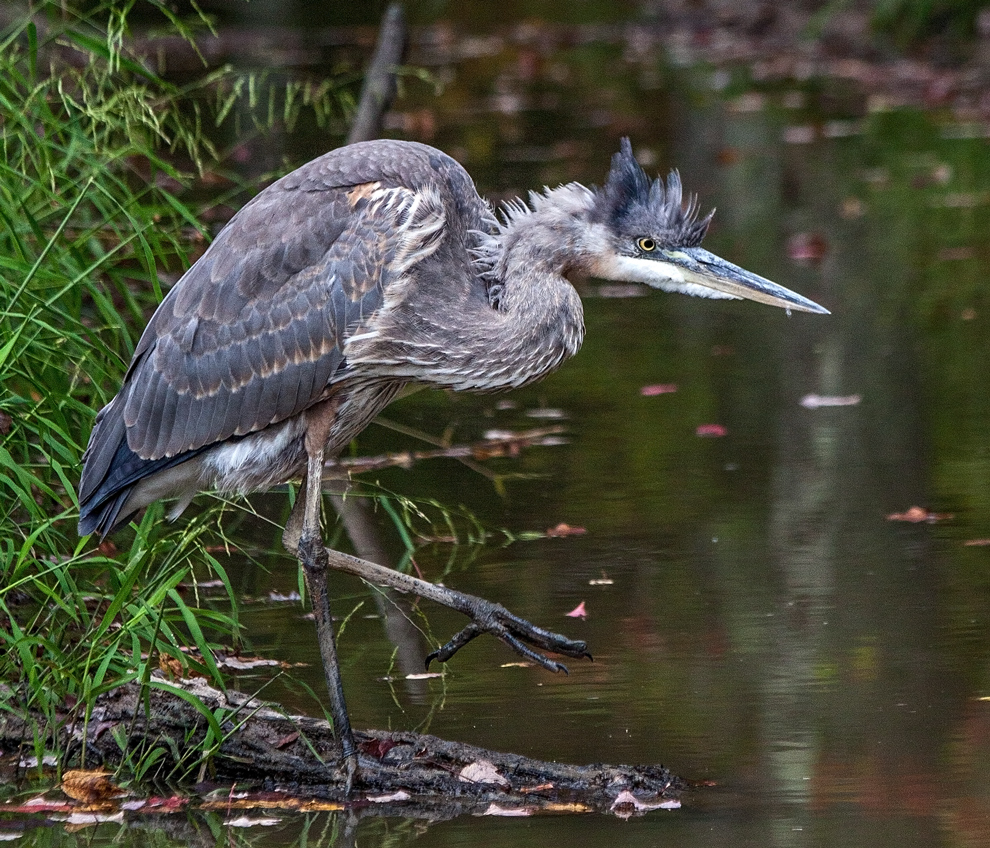
A blue heron with attitude? The pose, facial expression, and hair style of this Great Blue Heron (Ardea herodias) at Huntley Meadows Park, my local marsh, remind me of a punk rocker. Do you think he has tattoos and body piercings too?

heron_punkrocker_blog

© Michael Q. Powell. All rights reserved

Read Full Post »

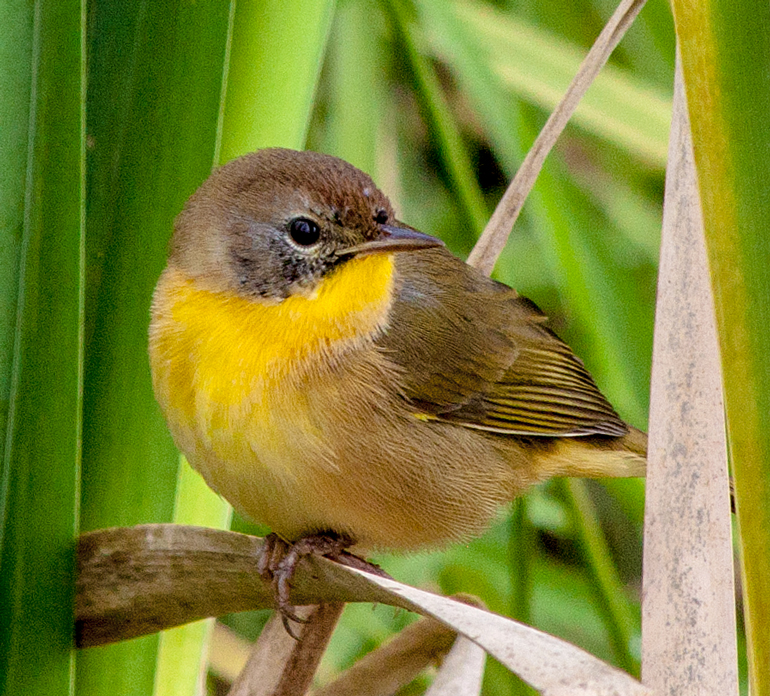
This week we are caught in a weather system with constant gray skies and rain, so I need a splash of color to lift my spirits, like this immature male Common Yellowthroat (Geothlypis trichas) that was hiding in the lower levels of the cattails last week.

The little yellow bird was in almost constant motion and was often obscured by the stems of the underbrush, but I did manage to get a few relatively unobstructed shots when the bird poked its head into an open area. As is often the case, I also managed to get a shot as the bird flew away. Normally that means that the bird is partially out of the frame, but this time the bird flew almost straight down and I got a fun little final image.

yellow_brush_blogyellow_brush2_blogyellow_brush3_blog

© Michael Q. Powell. All rights reserved

Read Full Post »

Sometimes I don’t want to freeze motion entirely in the way that I did in a photo of a Canada Goose landing in the water that I posted earlier today.

Here is another shot of a Canada Goose in which I panned the camera, helping to blur the background, and the slower shutter speed left a certain amount of motion blur in the wings, helping to enhance the impression of speed. My camera was in aperture-priority mode and the shutter speed dropped when the goose that I was tracking flew against the darker background of the trees.

I really like the overall feel of the image, the sense that the goose is straining to slow down as it prepares for landing, but is still moving forward at a fast speed. Is the image “tack sharp?” No, it’s not, but I am happy that it is not—it’s a creative choice. Check out a recent posting entitled “Chasing the tack sharp mirage” by Lyle Krahn, one of my favorite photographers, for a provocative  discussion about this topic.

goose_flying_blog

© Michael Q. Powell. All rights reserved

Read Full Post »

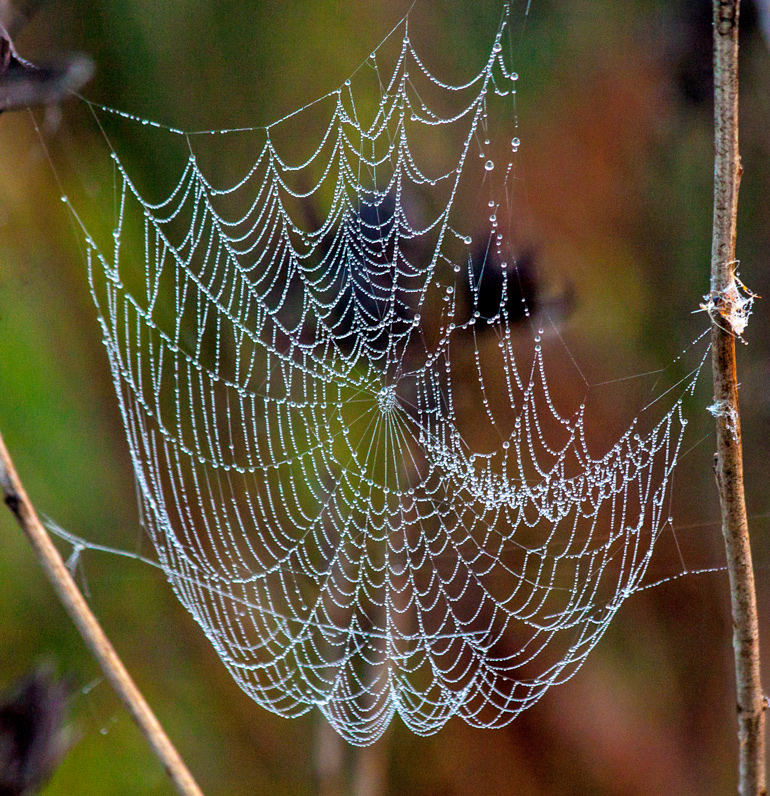
I haven’t seen many big spiders this fall, but I did come across this spiderless web early one morning recently. The morning was damp and foggy and the droplets of water on the web made it easier to spot in the cattails of the marsh. Using manual focusing, which is still a challenge for me with my DSLR, I was able to capture this image of the web. If you click on the image, you can see the beads of water that look like tiny strands of transparent pearls.

web_fall_blog

© Michael Q. Powell. All rights reserved

Read Full Post »

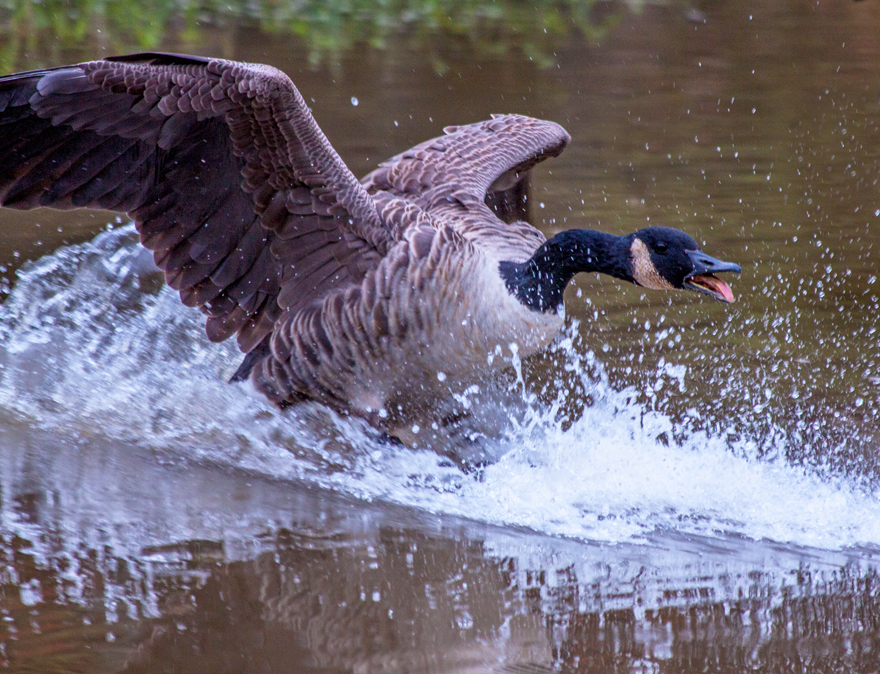
One of the first waves of migrating Canada geese (Branta canadensis) loudly announced its arrival and landed right in front of me in the beaver pond of my local marsh yesterday.

Last year we seemed to have geese arriving and departing so frequently that I felt like I was at a major geese transit airport. I kept expecting to hear departure announcements on a loudspeaker.

Several areas of the marsh had dried up in the last few months, because of a lack of rain, and I had been fearful that the migrating birds would not stop over. The rain storms this week have partially filled those areas, so my concerns have been partially assuaged.

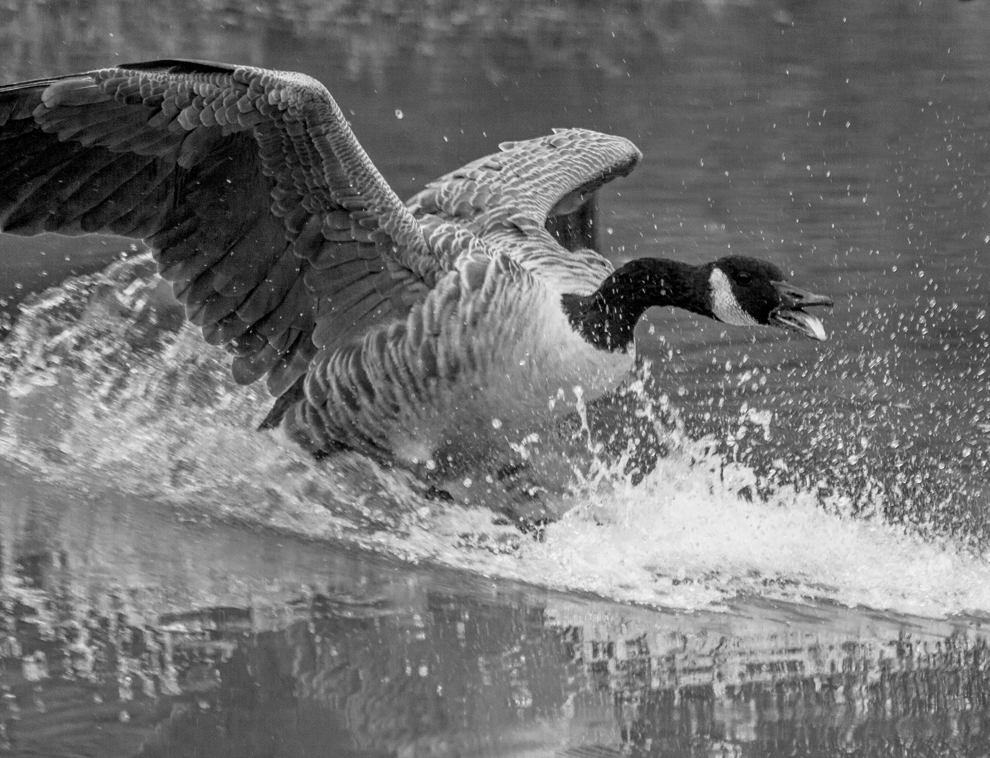
When I looked at this photo, it seemed like it was mostly black and white already (except for the pink tongue), so I played around a little and converted it to black-and-white. For me, the second version really draws my eye to the texture of the feathers, but I can’t decide whether I like it more than the color version.

What do you think about the black-and-white version?

goose_arrrival1_bloggoose_arrrival1a_blog

© Michael Q. Powell. All rights reserved
Read Full Post »

This Great Blue Heron, which I think was a juvenile, was clearly not experienced at hunting for food. Unlike his more patient elders, he seemed unable to stay in one spot for more than a few minutes and his success rate when he made a strike was not very high. He was persistent, however, and I kept hoping that he would pull a frog or some other tasty morsel out of the waters of the beaver pond.

I readied myself as he prepared for another strike and fired away as he triumphantly pulled his catch out of the water. The photo confirmed my initial impression—the big catch was just a leaf that had been floating on the surface of the water.

With more practice, this heron’s fishing skills are sure to improve or it is going to be a long, cold autumn and winter for him.

heron_leaf_blog

© Michael Q. Powell. All rights reserved
Read Full Post »

I watched the sun go down yesterday evening at my local marsh and was initially disappointed as the sun dropped lower and lower on the horizon without any real displays of color. Eventually, though, my patience was rewarded, when for a few minutes  the sky turned a beautiful shade of red.

sunset_sky_blog

© Michael Q. Powell. All rights reserved
Read Full Post »

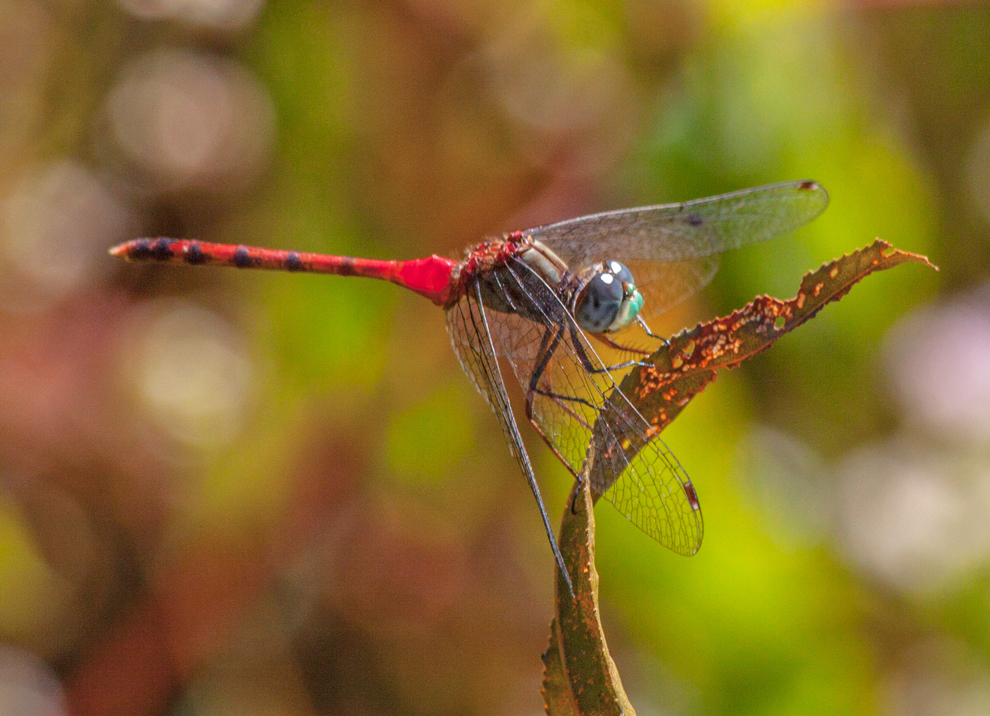
I don’t expect to see new species of dragonflies at this time of the year, but one of my fellow photographers, Walter Sanford, has been stalking the Blue-faced Meadowhawk (Sympetrum ambiguum) almost daily and I joined him for a few hours one late September day and got this shot.

I learned quickly that these dragonflies are hard to spot, despite their conspicuous coloration. They seem to like to remain perched down low in the vegetation and wait for their prey, rather than fly around when they are hunting.

I love the combination of colors on the Blue-faced Meadowhawk and I was happy to get a decent shot that shows its blue face. If you want to see more shots of this beautiful dragonfly, check out Walter’s blog posting from yesterday.

I am now in search of the Autumn Meadowhawk, the last dragonfly that I observed last fall. Normally they should be here already, but none of my fellow dragonfly followers has observed any of them yeat.

blue-faced1_blog

© Michael Q. Powell. All rights reserved

Read Full Post »

In the shallow water of the marsh, this Northern Water snake (Nerodia sipedon) patiently waits for its unwary prey, probably a frog. At one point its body began to vibrate violently and I thought it was getting ready to strike, but it turned out to be a false alarm. In the end, the snake turned out to be more patient than I was and I left without observing the snake capture its next meal.

snake_water_blog

Click on the photo to see a higher resolution view of the snake.

© Michael Q. Powell. All rights reserved


Read Full Post »

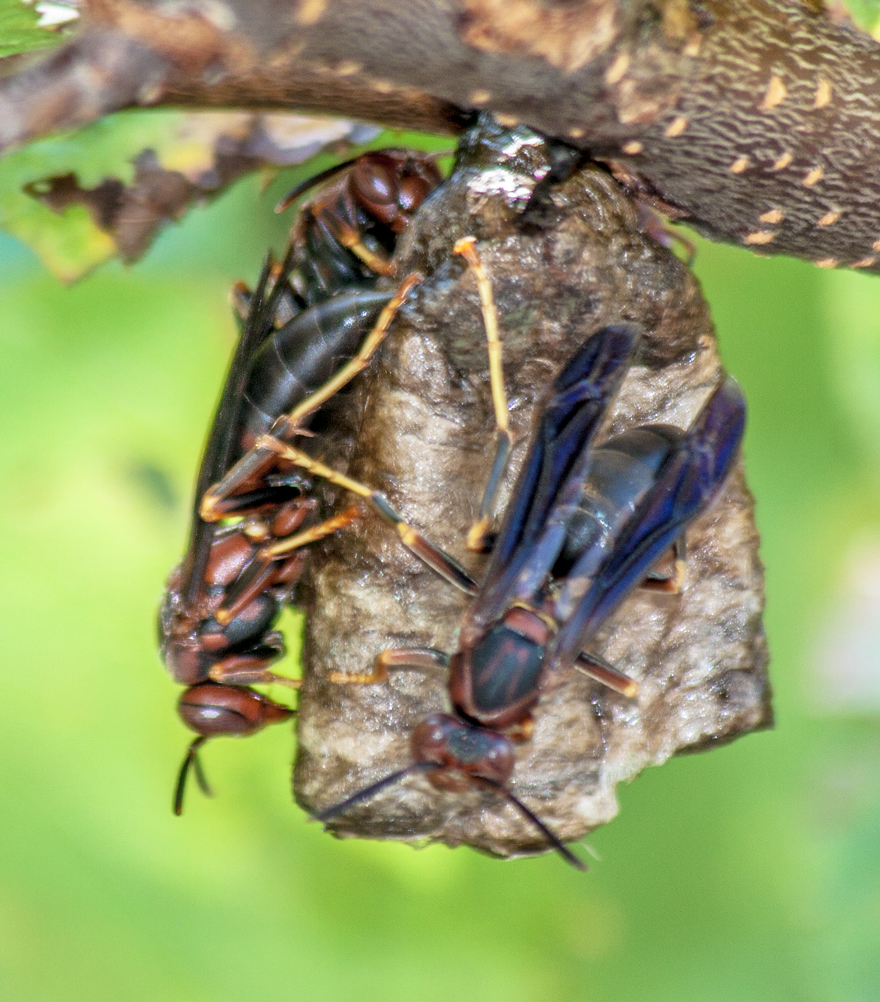
” Do you want to get some shots of a wasp nest?” I was at a loss for words when a fellow photographer excitedly posed that question to me this past weekend. I had visions of an enormous cluster of very large and angry insects and I hesitated for a long moment before finally agreeing.

What had I gotten myself into? It turns out that my fears were greatly exaggerated and the nest was a very modest one, not much bigger than the wasps themselves. My fellow photographer had been told that they are paper wasps and it looks to me like they may be brown paper wasps, judging from some of the photos that I have seen on-line.

I am hoping that the nest doesn’t get too big, because it is near a path that I regularly use. There were not a lot of wasps present yet, but they looked pretty fierce and I kept my distance and used my telephoto zoom at the far end of its range.

wasp_nest_blog

© Michael Q. Powell. All rights reserved
Read Full Post »

In the faint light and fog of the pre-dawn hour, I watched the shadowy forms of a small group of deer move slowly across an open area at my local marsh, heading for the treeline. My attempts to photograph them while they were moving were not successful. Once they reached the edge of the trees, however, this male White-tailed deer (Odocoileus virginianus) stopped for a moment and looked back at me. A moment later, he was gone.

deer3_blog

© Michael Q. Powell. All rights reserved

Read Full Post »

I arrived at the marsh before dawn, hoping to photograph a beautiful sunrise. I stumbled around in the fog and the dark as it gradually got lighter and captured this shot of a flock of blackbirds flying over a field of cattails. If you click on the photo, you can get a better look at all of the different flying positions of the blackbirds.

As it turned out, there were virtually no colors in the sky as the sun rose. I’m sure that I will be back again soon for another attempt.

pre-dawn_blackbirds_blog

© Michael Q. Powell. All rights reserved
Read Full Post »

Most of the tree frogs that I have seen until now have been lime green, but the one that I saw on Friday was a much darker shade of green. I am pretty sure, though, that he is a Green Treefrog (Hyla cinerea) and he was in a very familiar pose, comfortably napping during the heat of the day.

He was a pretty good distance away, perched on a small tree (or maybe a bush) in the partial shade, but luck was with me, because the sunlight was shining on him. I had a telephoto lens on my camera and managed to get a pretty good shot without scaring him away.

I left the frog thinking that he probably had the right approach—a nap sounded like a good idea.

dark_green_treefrog_blog

© Michael Q. Powell. All rights reserved

Read Full Post »

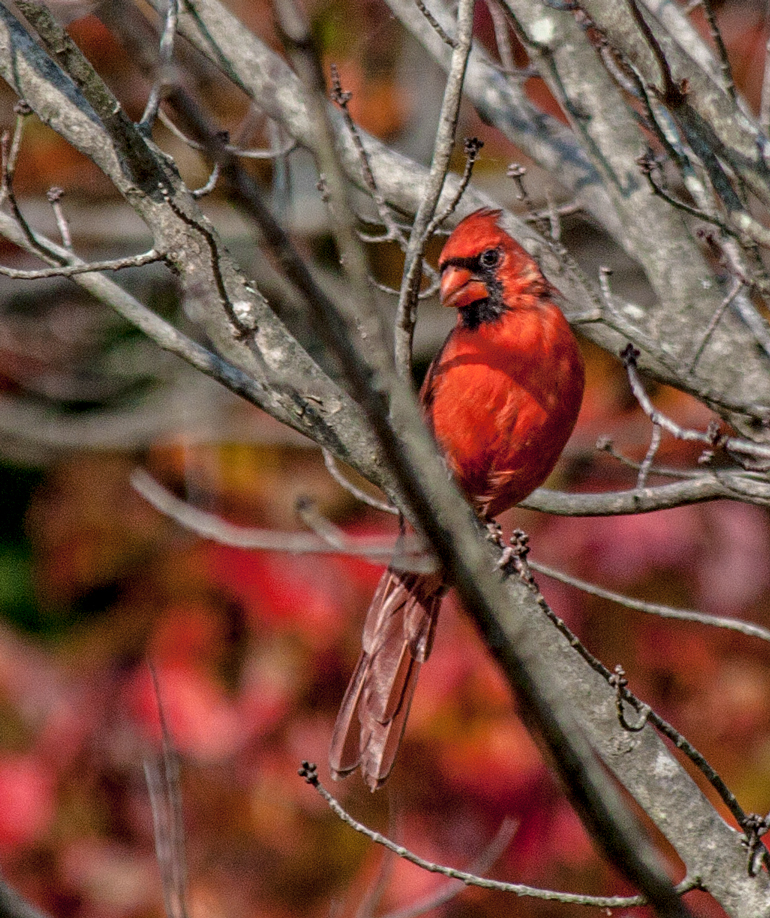
I love to photograph cardinals throughout the year, but I was really excited when I saw this male Northern Cardinal (Cardinalis cardinalis) land on a tree with colorful fall foliage in the background. There were a lot of branches, but I somehow managed to get a facial shot with an interesting expression.

The cardinal seemed to be staring at me, silently criticizing my behavior. It reminded me of the expression that parents sometimes adopt when they want to publicly communicate their displeasure to their offspring without uttering a single word.

cardinal_autumn_blog

© Michael Q. Powell. All rights reserved

Read Full Post »

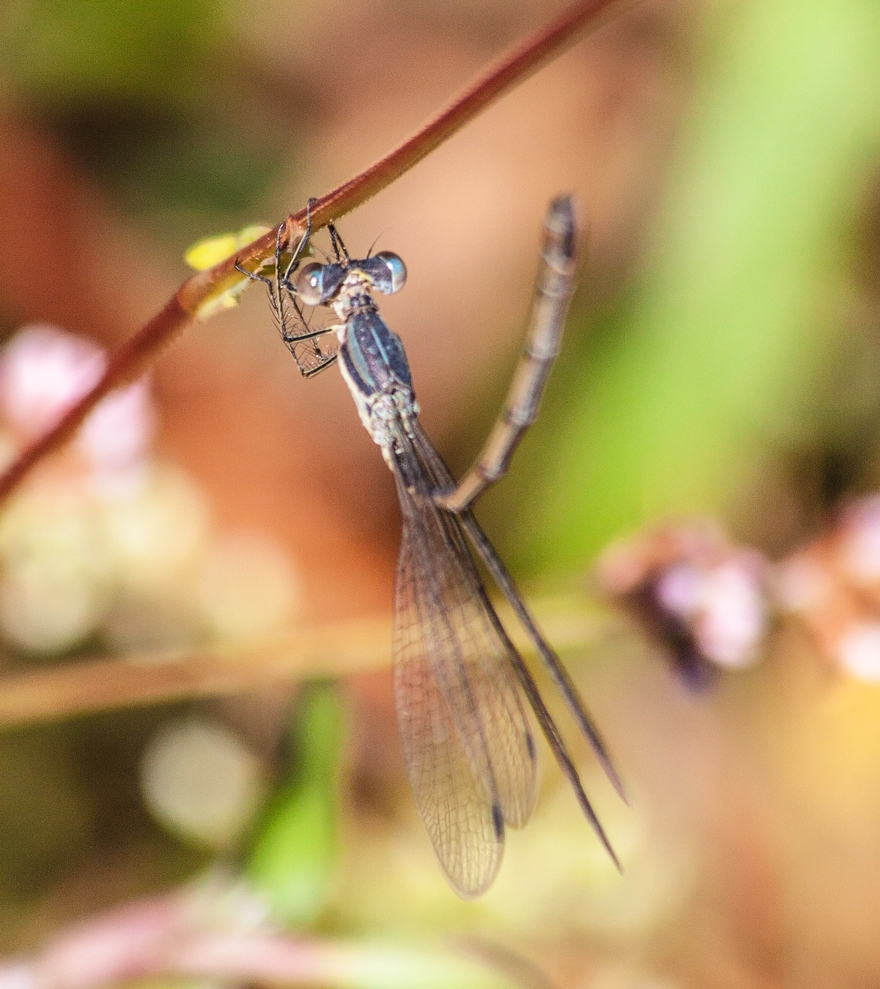
I featured this Slender Spreadwing damselfly (Lestes rectangularis) in an earlier posting in a series of action shots, but thought this more formal portrait deserved a posting of its own.

As I stalked this beautiful little dragonfly, it moved to a number of different perches and it is interesting to see how the background shifted in terms of color palette and clutteredness (I think I may have just created a new word). In the gymnastics shots of this damselfly, the background was bright and colorful and a little busy, whereas the background here is darker and a bit more moody, with just a hint of colors. Be sure to click on the image to see a higher resolution view of this little damselfly that was probably less than 2 inches ( 50 mm) long.

Those of you who like to observe damselflies know that this species is an exception to the general rule that damselflies, unlike dragonflies, hold their wing close into and parallel to their bodies when at rest. My fellow photographer and blogger, Walter Sanford, an expert on dragonflies, was the one who first spotted this damselfly and you should check out his blog for lots of wonderful wildlife photos, including a recent image of a perched Wandering Glider dragonfly, a species that never seems to land.damsel_spread_blog

© Michael Q. Powell. All rights reserved

Read Full Post »

As I was observing this Slender Spreadwing damselfly (Lestes rectangularis) earlier this week, it suddenly launched into a series of acrobatic maneuvers worthy of an Olympic gymnast on the high bar. I captured several action shots of the routine, possibly related to laying eggs, although I managed my clearest shot when the damselfly returned to its starting position and waited for the scores from the judges.

Pointing the toes for maximum extension

Pointing the toes for maximum extension

damsel_spread2_blog

Swinging back to generate greater velocity for the next trick

Finishing up the routine

Finishing up the routine

Waiting for the scores from the judges

Waiting for the scores from the judges

© Michael Q. Powell. All rights reserved
Read Full Post »

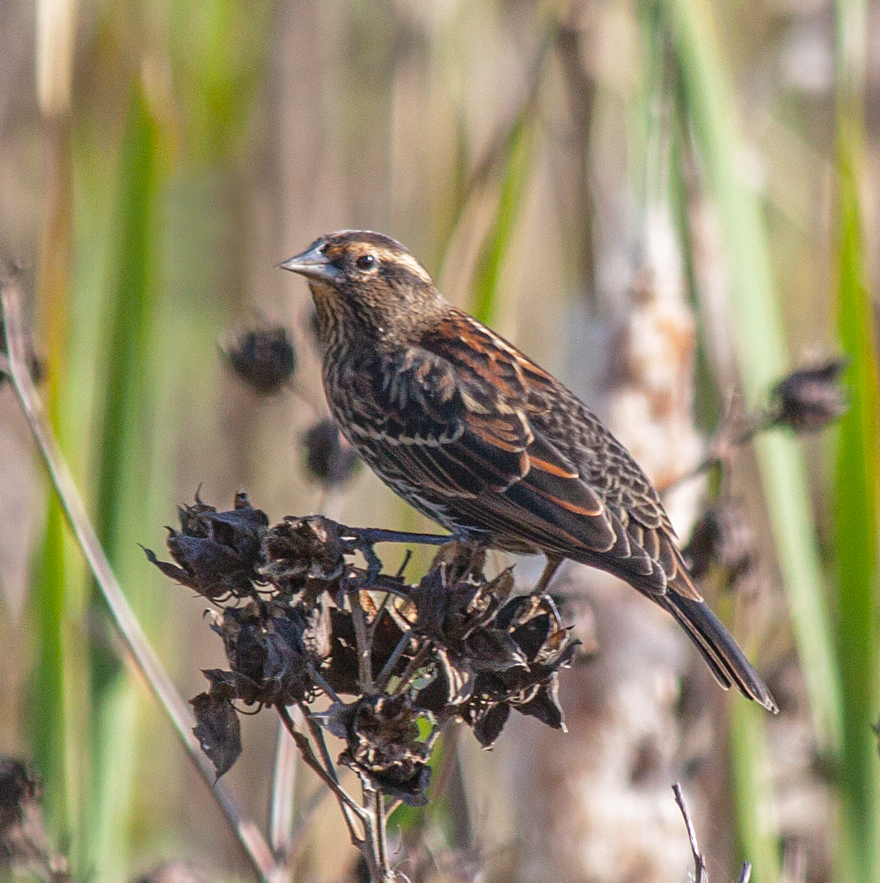
I remember well my confusion the first time that someone identified a bird like this one as a female Red-winged Blackbird (Agelaius phoeniceus). “How can it be a Red-winged Blackbird, when it’s not black and doesn’t have red wings?” I naively asked.

I have learned a lot since that moment and have resigned myself to the reality that the names of birds and insects are often not descriptive (or apply only to one gender of the species).

Female Red-winged Blackbirds seem to forage for food in the underbrush most of the time and I have found it to be harder to get a good shot of females than the males, which seem to like to perch and pose prominently on the cattails. This female lifted her head for a brief moment, permitting me to get this shot, and then quickly returned to work.

blackbird_female_blog

© Michael Q. Powell. All rights reserved

Read Full Post »

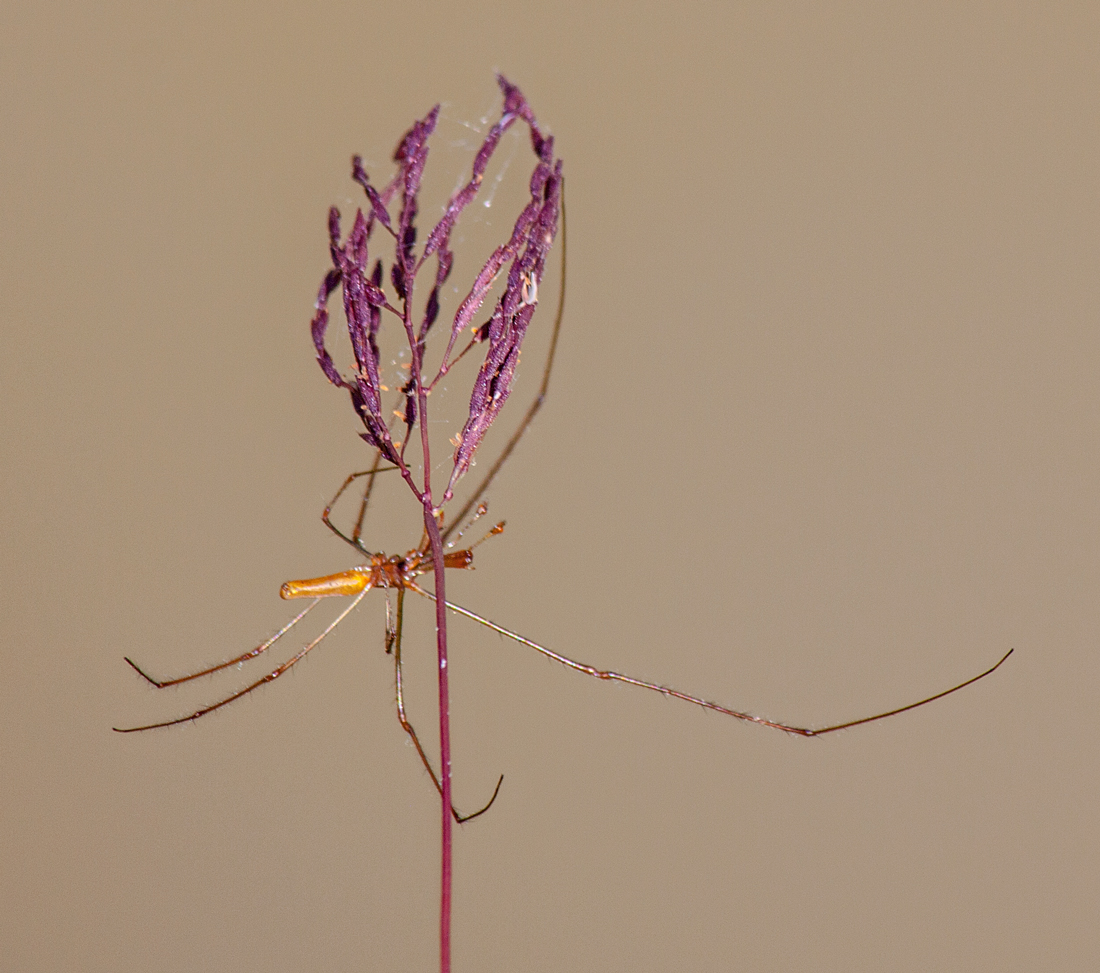
This long-jawed spider is not really camouflaged, of course, but it positioned itself in such an artistic way that its elongated body and legs seem to be an extension of the plant, especially from a distance. The plant was growing at the edge of a small pond at my local marsh and the brown background color is the water of the pond.

spider_purple_blog

Click on the image to get a higher resolution view of it.

© Michael Q. Powell. All rights reserved

Read Full Post »

Out of the corner of my eye, I detected some movement and, glancing upward, caught sight of this Great White Egret (Ardea alba) flying almost directly overhead. Normally I see egrets in flight only when I spook them and prompt them to fly away from me.

The early morning light helped to illuminate the underside of this gorgeous bird, which is usually in the shadows, revealing some of the details of the feathers. It is always tricky for me to get the proper exposure with these very white birds and I was happy that I managed to avoid blowing out too many of the highlights.

As I recall, I was pointing the camera almost straight up for these shots and that provides an unusual perspective. In the second shot, for example, it almost looks like the egret is imitating a fighter jet and is flight straight up into the air.

egret_overhead1_blog egret_overhead2_blog

© Michael Q. Powell. All rights reserved
Read Full Post »

The pose of this bullfrog seemed almost Zen-like, as he contemplated the early morning sun in a calm, meditative state of mind and body.

zen_frog_blog

© Michael Q. Powell. All rights reserved

Read Full Post »

There seemed to be a lot of small birds in the trees this past weekend, mostly hidden in the foliage. I did manage to get a shot of this pretty little bird, which I think is a Red-eyed Vireo (Vireo olivaceus). The eye does not look as bright red as in some of the images that I see on-line of this bird, but most of the other characteristics seem to match pretty well.

We seem to be moving into the prime season for birds and my bird identification guide (I was given a Peterson Field Guide to Birds of North America by a dear friend) now has a prominent spot on my desk. Unlike some of the birders that I encounter, I don’t carry around a field guide when I am shooting—I don’t like to have my head buried in a book and potentially miss some action shots.

vireo_blog

© Michael Q. Powell. All rights reserved

Read Full Post »

Glancing into the cattails, I caught sight of a flash of color and then gradually a bright yellow bird came into view. The tail was partially concealed by the cattails, accentuating the bird’s circular body shape (and everyone knows that the camera adds pounds to subjects).

I have done some internet searches and concluded that this is probably an immature male Common Yellowthroat (Geothlypis trichas). Adult male Yellowthroats are really easy to identify, because they have a prominent black mask. Like many bird species, however, young male Yellowthroats look a lot like the females, but gradually develop the mask. It looks to me that this bird may have the first traces of such a mask.

The lighting and camera settings combined to produce images that I really like, with colors that are beautifully saturated. I need to figure out how to replicate this look.

yellowbird_blogyellowbird2_blog

© Michael Q. Powell. All rights reserved
Read Full Post »

« Newer Posts