Feeds:
Posts
Comments

Posts Tagged ‘Woodbridge VA’

What kind of bird would be a perfect match for a gloomy, fog-filled day? I might suggest that this Black Vulture (Coragyps atratus) that I spotted this past weekend at Occoquan Bay National Wildlife Refuge would fit the bill admirably.

There was something shadowy, mysterious, and a little creepy about this large dark bird as it perched low in a tree and looked right at me through the fog. I felt a little shiver as I looked up at the vulture, but maybe it was just reaction to the cool temperature.

Black Vulture

© Michael Q. Powell. All rights reserved.

Read Full Post »

We don’t often have daytime fog where I live—most of the time it burns off shortly after sunrise. Yesterday, however, it hung around all morning and visibility was very limited at Occoquan Bay National Wildlife Refuge. Except for a lot of gulls and a few geese, the birds seemed to have decided to stay sheltered until the fog dissipated.

It was a nice challenge for me to try to capture a sense of the moment in the indistinct shapes that were visible as I looked out into the water of the bay. Here are a couple of images that have a kind of abstract, impressionist feel that I really like.

foggy impressions

foggy impressions

© Michael Q. Powell. All rights reserved.


Read Full Post »

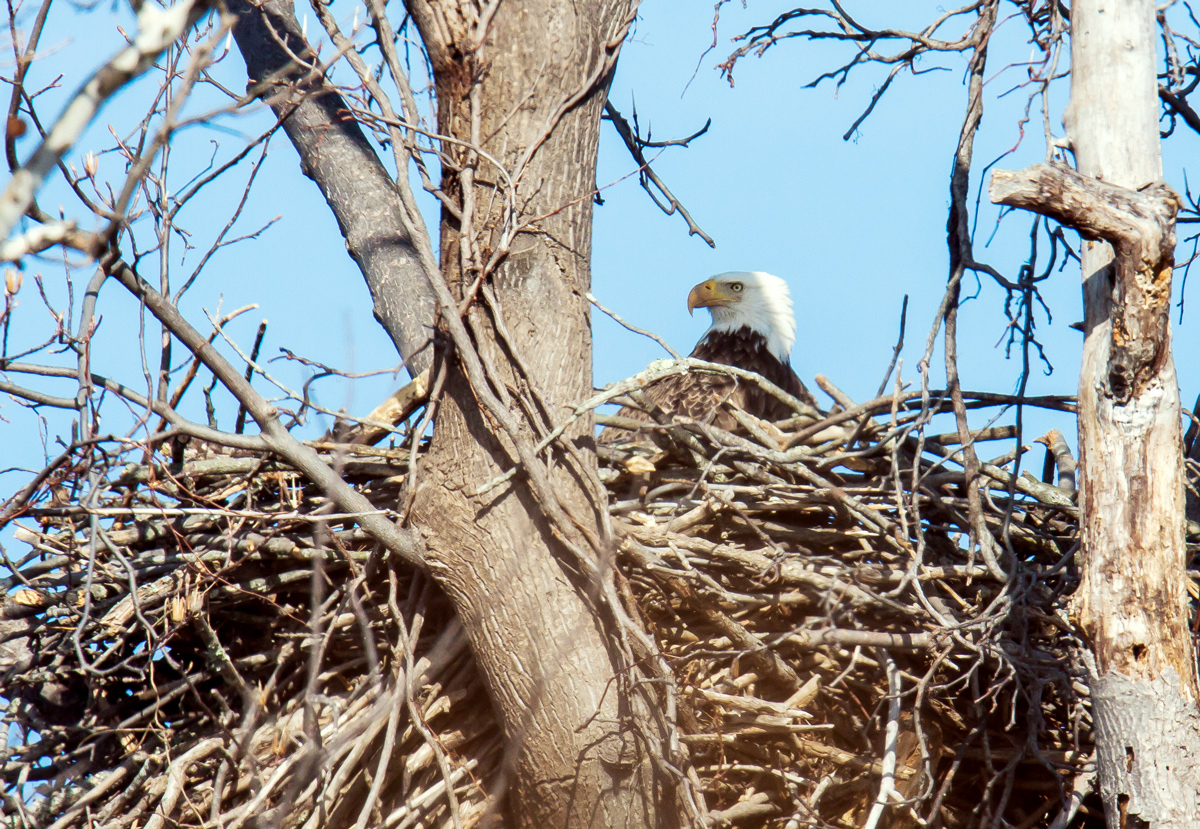
This eagle’s nest is nestled back in the trees at Occoquan Bay National Wildlife Refuge, somewhat obstructed though still visible from the trail. When I first sighted the nest this past Saturday morning, it looked like it was empty.  I kept my eyes glued to the nest as I slowly walked past it and suddenly I spotted a Bald Eagle (Haliaeetus leucocephalus) sitting on the nest, partially hidden in the shadow of the trees. This is the second nest at the refuge that I have spotted so far this winter that appears to be in use, though I suspect that there may be more. When leaves return to the trees, I fear that the nest will be completely hidden from view, which will give the eagles a little more privacy from paparazzi like me.

bald eagle

© Michael Q. Powell. All rights reserved.

Read Full Post »

Composition does not get much more simple than this—a single subject with its reflection against an uncluttered, almost monochromatic background.

The skies were heavily overcast this past Friday and rain fell intermittently on me as I walked along the trails at Occoquan Bay National Wildlife Refuge. Most of the birds seem to have taken shelter from the inclement weather. One hardy heron, however, had waded out into the shallow waters of the bay and I was thrilled to be able to capture this image of it. I see Great Blue Herons (Ardea herodias) pretty often, but will always stop to observe them. Sometimes I am patient enough to see one catch a fish, but most of the time the heron’s patience exceeds mine.

Recently I have been watching a lot of videos on pencil sketching and watercolors and it struck me that the shadowy reflection of the bird in this photo could have been rendered using one of those techniques.

Great Blue Heron

© Michael Q. Powell. All rights reserved.


Read Full Post »

The light was so beautiful early this morning at Occoquan Bay National Wildlife Refuge that it looked like this male Bufflehead duck (Bucephala albeola) was swimming in the clouds rather than in the water, giving this image an almost surreal feel that I really enjoy.

bufflehead

© Michael Q. Powell. All rights reserved.

Read Full Post »

Yesterday I spotted this cool-looking Brown Thrasher (Toxostoma rufum) in the vegetation at Occoquan Bay National Wildlife Refuge. I especially love the thrasher’s light-colored eyes and distinctive markings.

Brown Thrasher

Brown Thrasher

© Michael Q. Powell. All rights reserved.

Read Full Post »

I am rarely able to see the red belly of the Red-bellied Woodpeckers (Melanerpes carolinus) that I occasionally spot, but the light was coming from the right direction on Monday at Occoquan Bay National Wildlife Refuge to illuminate the reddish-brown color of this woodpecker’s belly.

When I first started taking photos of birds, I remember seeing the bright red color of a woodpecker like this one and thinking it must be called a “red-headed woodpecker.” I am somewhat more knowledgeable about birds now and have a greater appreciation for the difficulties associated with identifying them. In particular, I have learned that you often cannot rely on the name of a bird to identify its key features.

Red belly or not, I knew what this bird was as soon as I saw it, but it was nevertheless wonderful that it chose to pose so nicely for me. One of my Facebook viewers said that it reminded her of a similar pose in the movie The Lion King. It turns out that The Lion King is one of my favorite movies, and I was thrilled when I just now watched a You Tube video of The Circle of Life, one of the songs in the movie that features the rock outcropping that looks like the branch in my photo. I was particularly drawn to the beauty of the birds in the opening moments of the video. It is worth checking out if you have never seen it before or even if you have.

Red-bellied Woodpecker

© Michael Q. Powell. All rights reserved.

Read Full Post »

Bufflehead ducks (Bucephala albeola) recently were playing around off of Occoquan Bay National Wild Life Refuge, chasing each other around and even giving each other piggyback rides—or so it seemed.

buffleheads

© Michael Q. Powell. All rights reserved.

Read Full Post »

The weather was not very cooperative this past Monday, but my persistence was rewarded when I was able to observe a Bald Eagle (Haliaeetus leucocephalus) pulling a fish out of the waters off of Occoquan Bay National Wildlife Refuge in Northern Virginia. On multiple occasions I have seen an eagle with a fish in its talons, but this was the first time that I actually got the see the eagle catch the fish.

The only downside was that I was quite a distance away and the light was limited when I captured the shots. Like most wildlife photographers, though, I feel inspired by the images that I do capture to go out again and again, often to the same places, with the hope and expectation that I will have more opportunities to make better images. Unlike Olympic athletes, I won’t have to wait four more years to have another chance to test myself.

bald eagle

bald eagle

© Michael Q. Powell. All rights reserved.


Read Full Post »

This majestic Bald Eagle (Haliaeetus leucocephalus) was partially hidden behind some branches yesterday at Occoquan Bay National Wildlife Refuge, but I managed to find a visual tunnel and capture this image of it. Most of the time I prefer an uncluttered background, but in this case I really like the organic shapes and patterns of the out-of-focus branches.

Bald Eagle

© Michael Q. Powell. All rights reserved.

Read Full Post »

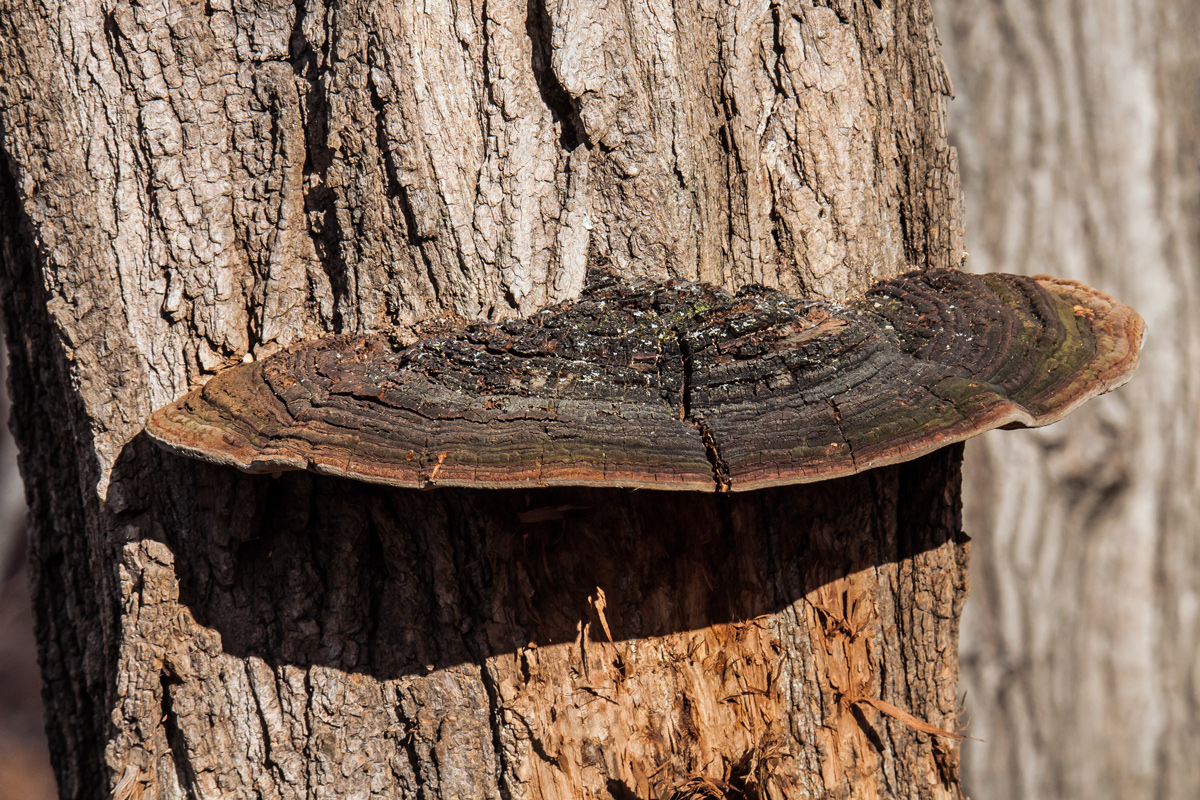
The skeletal forms of trees remain hidden during much of the year, but winter reveals them in all of their naked glory. Without the distractingly bright colors of leaves, it is easy during the cold season to become entranced by the delightful contours and textures of the trees and the unusual growths that protrude from their bark.

As I get older, it seems that I too am developing protrusions and discolorations, but I tend to keep them hidden under layers of clothing, especially during the winter.

natural growth

natural growth

© Michael Q. Powell. All rights reserved.

Read Full Post »

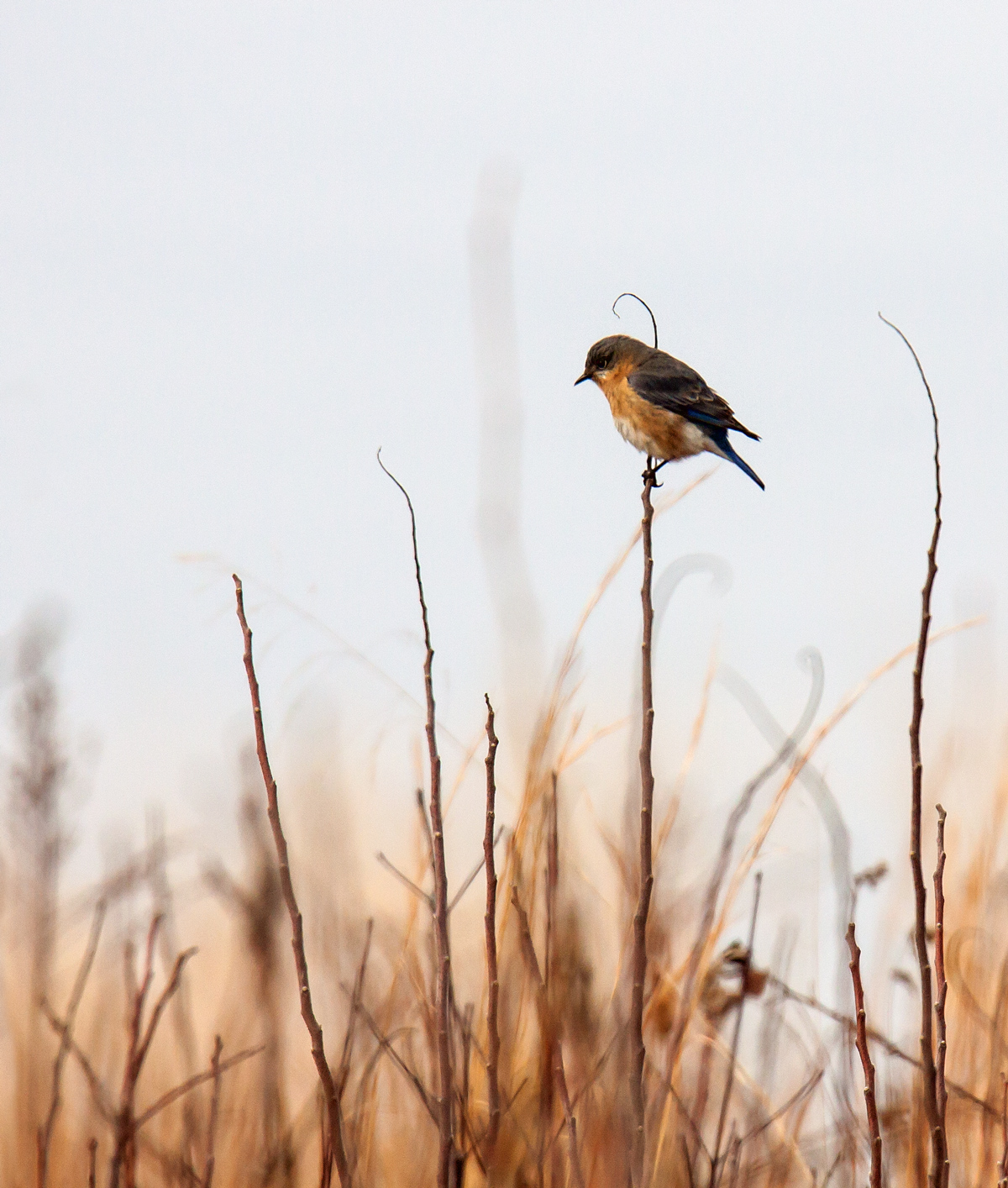
Sometimes I am content to capture a sense of the moment rather than a detailed image of my subject. That was certainly the case this past Friday at Occoquan Bay National Wildlife Refuge, when I experienced an overwhelming feeling of tranquility upon spotting this solitary Eastern Bluebird (Sialia sialis) peacefully perched in middle of a large field.

We were alone, but somehow together, as we each enjoyed the moment on our own terms.

Eastern Bluebird

© Michael Q. Powell. All rights reserved.

Read Full Post »

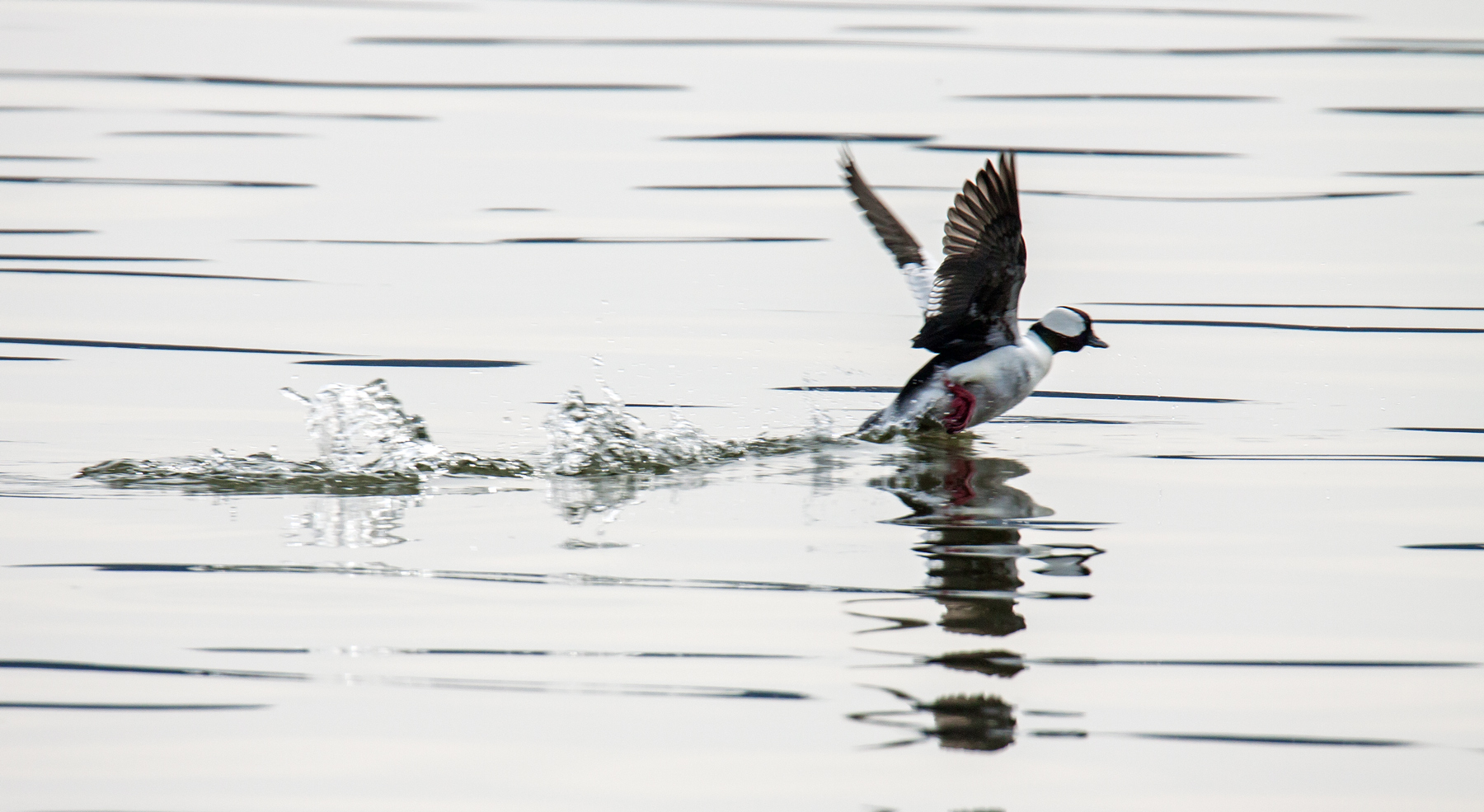
Although many ducks take to the air straight out of the water, some of them, like this tiny Bufflehead (Bucephala albeola) need to get a running start. It is simultaneously fascinating and amusing to watch them bounding across the surface of the water to generate enough lift for take-off.

I saw quite a few Buffleheads today at Occoquan Bay National Wildlife Refuge, but most of them were far away—diving ducks seem to prefer the deep water. This male Bufflehead was on his own a bit closer to the shore than the others. I had barely enough time to focus on him before he took off, but fortunately he was moving parallel to me, so I was able to retain focus on the bird and capture some of the water spikes that he was generating.

Bufflehead

bufflehead

Bufflehead

© Michael Q. Powell. All rights reserved.

Read Full Post »

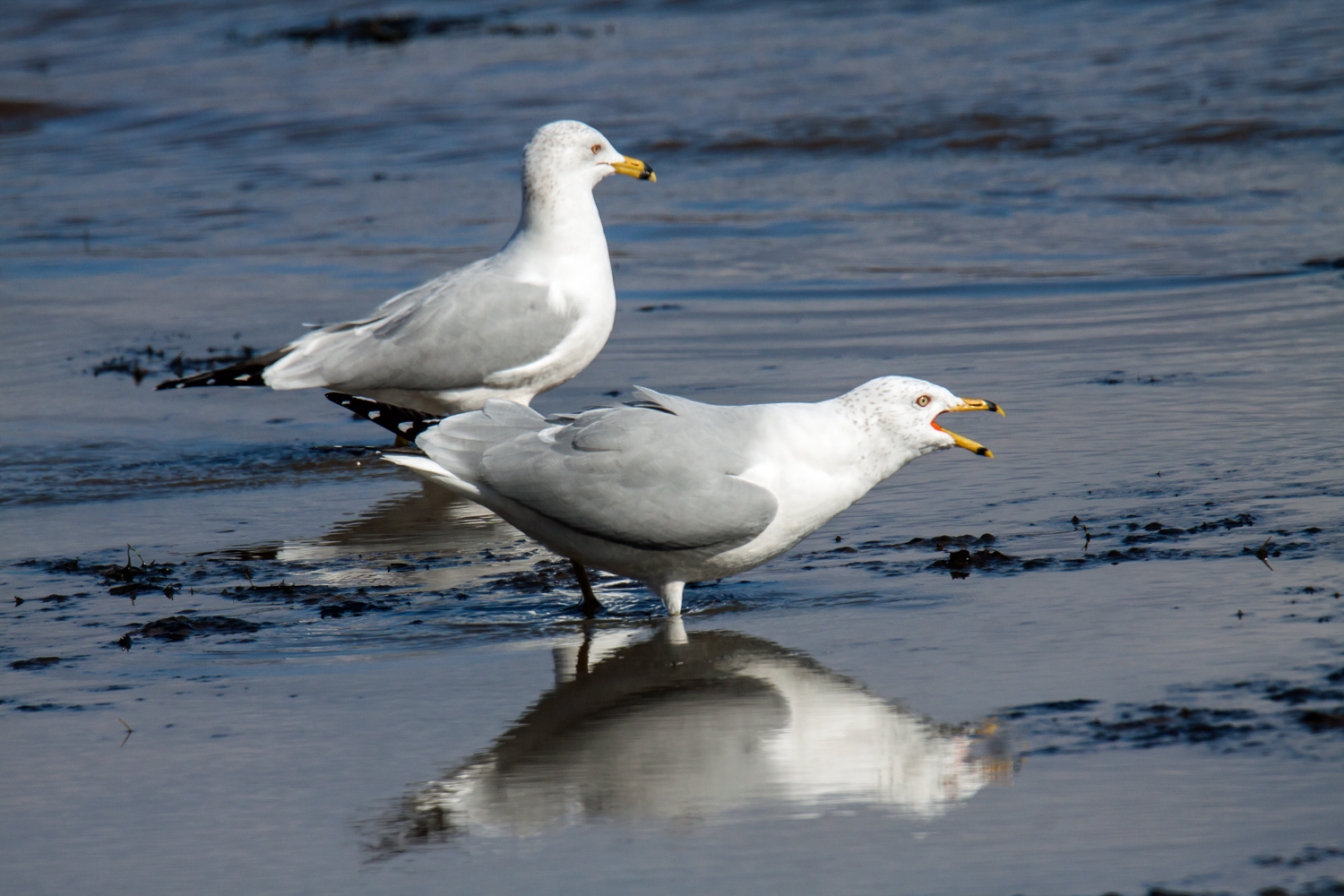
I generally do not pay much attention to gulls when I am out with my camera, but this Ring-billed Gull (Larus delawarensis) was so loud and so close last weekend at Occoquan Bay National Wildlife Refuge that it was impossible to ignore. I love the juxtaposition between the tensed, emotion-filled pose of the gull in the foreground and the blasé  attitude of the gull in the background, who has clearly heard this screaming multiple times and was not in the least impressed by it.

Ring-billed Gull

© Michael Q. Powell. All rights reserved.

Read Full Post »

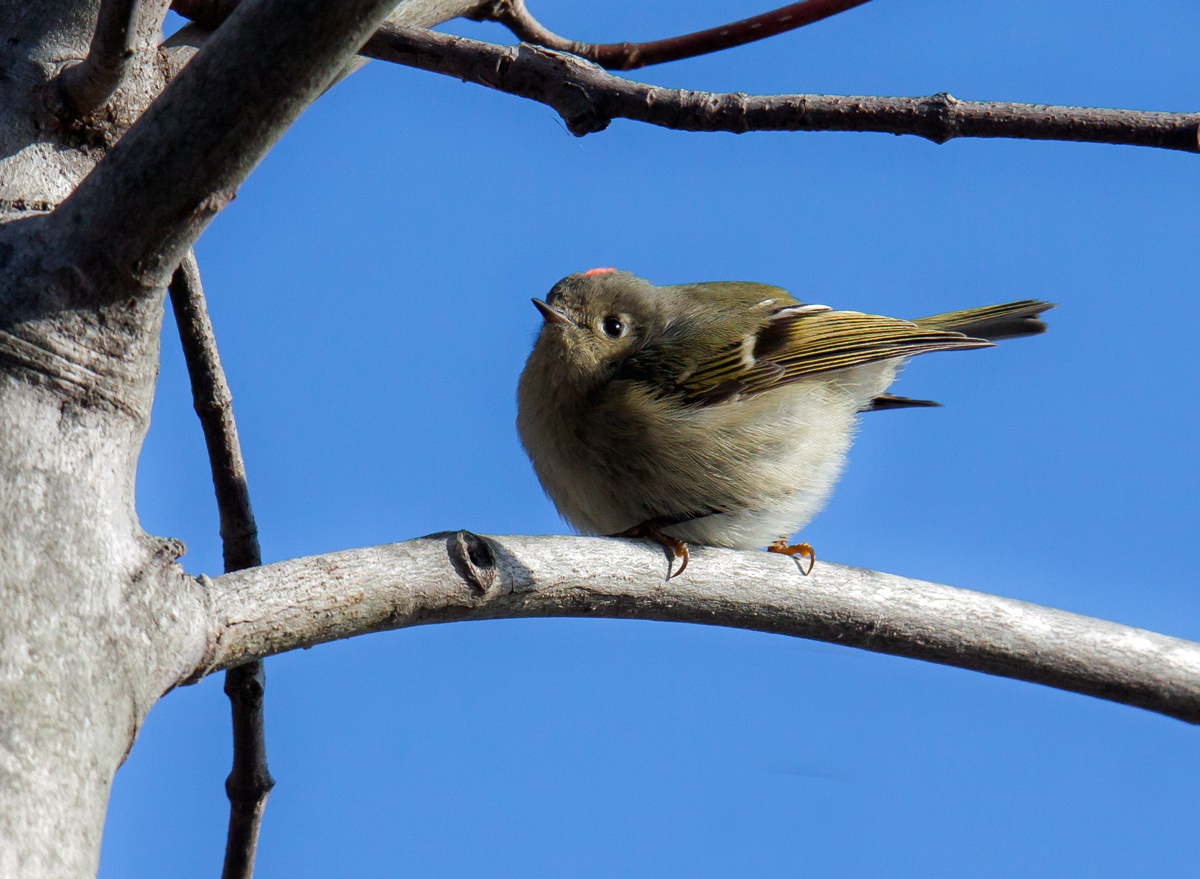
Under normal circumstances, Rub-crowned Kinglets (Regulus calendula) are described as “stocky” or “chubby” or “compact.” In cold weather, when they fluff up their feathers to retain heat, they amazingly grow even rounder in shape. These round balls of fluff bounce from branch to branch as they frenetically forage for food, reminding me of the pinball games that I used to play in my youth.


I was thrilled last Friday at Occoquan Bay National Wildlife Refuge when this male Ruby-crowned Kinglet paused for a split-second on a branch and I was able to capture this image. I love the tilt of his head, the contrast between the curves of his body and the angular lines of his bill and wings, and the wonderful little details like the glimpse of his ruby crown and the peek  at his tiny little feet.

Ruby-crowned Kinglet

© Michael Q. Powell. All rights reserved.

Read Full Post »

From a distance, the large bird perched on a broken-off tree looked majestic and I assumed that it was a hawk or an eagle. Zooming in with my telephoto lens, I realized that it was “only” a Turkey Vulture (Cathartes aura).  It got me thinking about the fact that vultures have a bad reputation—many people are creeped out by the way that vultures circle overhead and eat dead things. For them, the words “majestic” and “vulture” just don’t go together. If you suspend all preconceived notions and examine the bird in this photo (or watch a vulture effortlessly soaring overhead), perhaps you too will find a bit of majesty there.

Turkey Vulture

© Michael Q. Powell. All rights reserved.

Read Full Post »

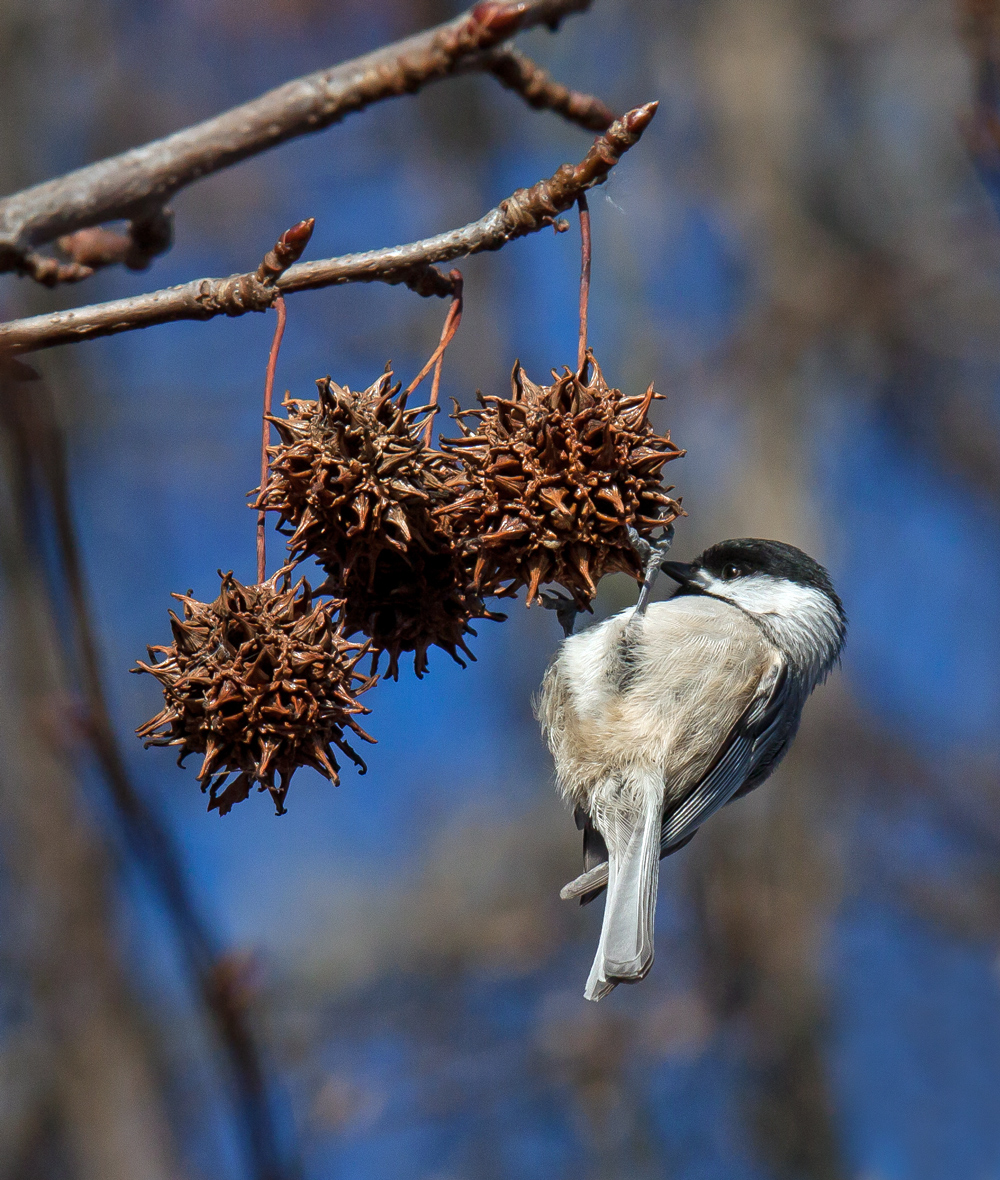
This Carolina Chickadee (Poecile carolinensis) was working hard this past Friday at Occoquan Bay National Wildlife Refuge to get to the seeds inside the spiky pods of a sweetgum tree. I was amazed that the stem of the seedpods was able to support the weight of the little bird, particularly because it had to peck away vigorously to get to the seeds. Eventually the chickadee’s persistence would pay off and it would sit on a branch and really seemed to enjoy the seeds.

It makes me wonder what the seeds taste like.

Carolina Chickadee

© Michael Q. Powell. All rights reserved.

Read Full Post »

I am always struck by the amazing energy and tenacity of Downy Woodpeckers (Picoides pubescens), like this male that I spotted on Friday at Occoquan Bay National Wildlife Refuge as he pecked away at a seed pod. I was worried that his weight would pull down the seed pod, but I guess that he is pretty light and the pod seemed to be firmly attached to the tree,

Downy Woodpecker

© Michael Q. Powell. All rights reserved.

Read Full Post »

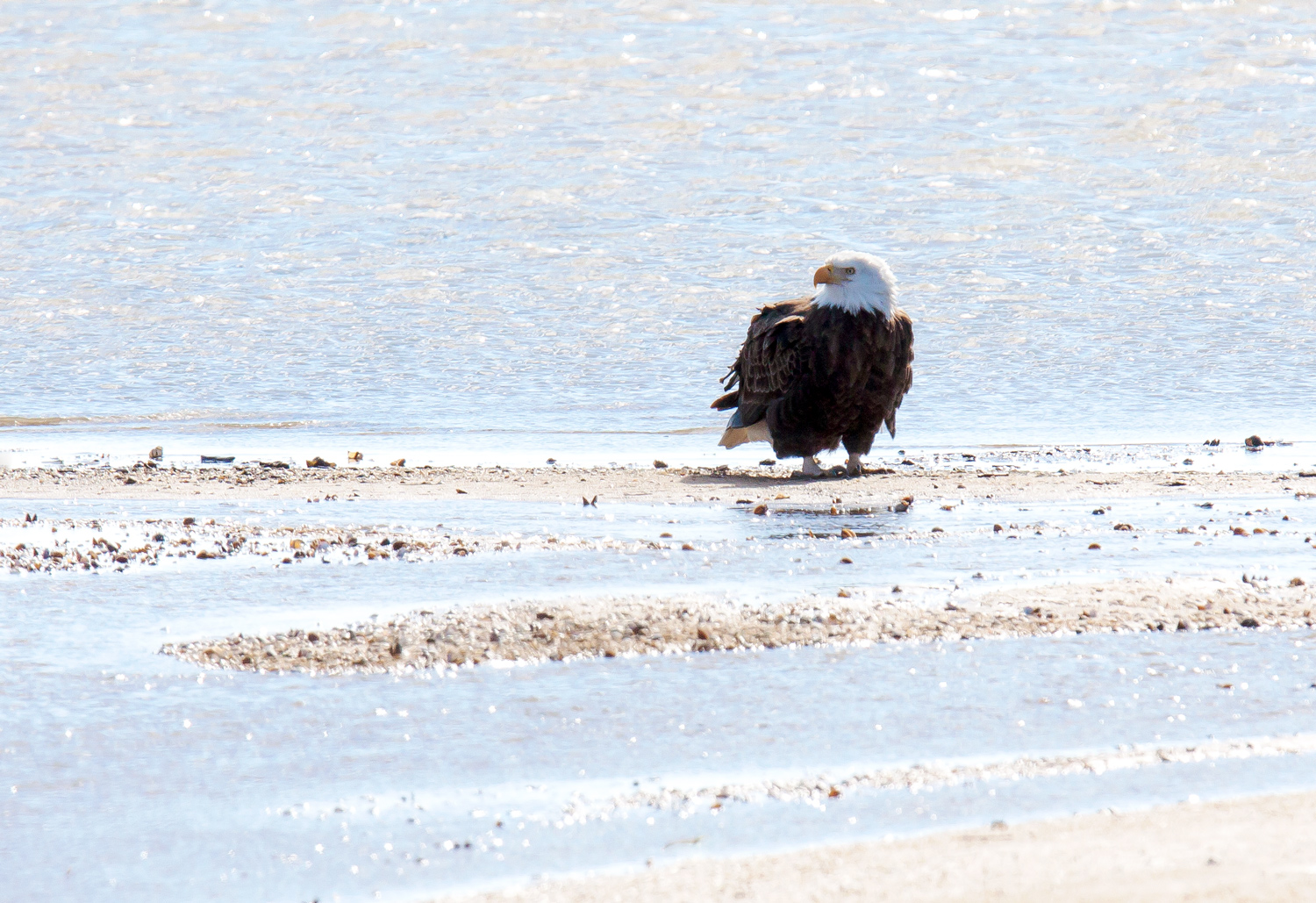
When it is frigid and windy, perhaps your imagination turns to a tropical beach somewhere. Maybe that is what this Bald Eagle (Haliaeetus leucocephalus) was thinking yesterday when it perched at water’s edge at low tide at Occoquan Bay National Wildlife Refuge, when the wind chill made it feel like it was way below the freezing level.

As you may be able to tell, I was shooting almost directly into the sun, which forced me to significantly overexpose the shot to keep the eagle from looking like a silhouette. I really like the way that the way that the water turned an almost pastel turquoise, enhancing the sense of this being a tropical location, at least in my mind.

Bald Eagle at the beach

© Michael Q. Powell. All rights reserved.

Read Full Post »

When I first looked at this bird through my telephoto lens this morning at Occoquan Bay National Wildlife Refuge, I was struck by its incredible eyes. After marveling for a moment at those spectacular eyes,  I suddenly realized that I had never seen a bird like this before and was not sure of its identification.

It turns out that this is a Peregrine Falcon (Falco peregrinus), one of the fastest creatures on the earth. According to the Cornell Lab of Ornithology, a Peregrine Falcon can reach speeds of 69 miles per hour (112 kn/h) in flight and when diving from high in the air a Peregrine Falcon  may reach speeds of 200 mph (320 km/h) as it drops toward its prey.

Peregrine Falcon

© Michael Q. Powell. All rights reserved.

Read Full Post »

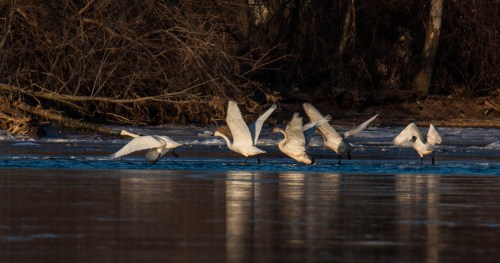
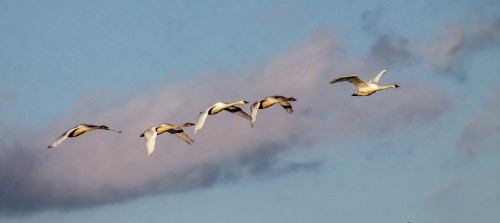
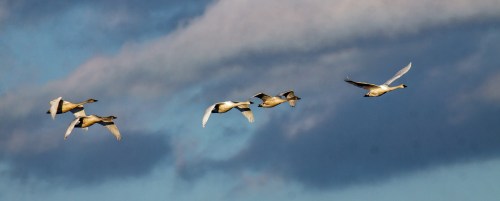
When I photographed a family of Tundra Swans (Cygnus columbianus) early in January at Occoquan Bay National Wildlife Refuge, I initially put off doing a post on them, thinking I would be likely to see more of them later and hopefully at a closer range. As time passed and I took more photos, I sort of forgot about the swans, even though it was my first time seeing this species.

As it turns out, I did not see any other Tundra Swans in January, so I thought I would feature them today. I initially spotted the swans across a wide expanse of ice near a small island. From the differences in coloration, I judged that there were two adults and three juveniles. I was a long way away and don’t think that I spooked them, but suddenly they took to the air. I especially like my in-flight shots, with the cool-looking clouds, but I am also including a shot of the swans in the process of taking off.

I took a whole series of shots and as I reviewed them, I realized how tough it is to capture an image in which all of the birds are facing the right way and have their wings in a good position. Actually, that’s a problem with any group photo, so I can’t blame the birds too much.
Tundra Swans

Tundra Swans

Tundra Swans

© Michael Q. Powell. All rights reserved.

Read Full Post »

I think that duck hunting season is finally over at Occoquan Bay. It has been somewhat jarring in recent weeks to have my photography expeditions to the wildlife refuge interrupted by volleys of shotgun fire, sometimes at rather close range. In addition to some fixed blinds in the water that look like tiny cabins on stilts, hunters also use small boats like the one featured in these two images. The two hunters in this boat were so close to the shore that I had to zoom out to about 250mm on my 150-600mm telephoto lens to be able to fit them into the frame.

duck hunting

duck hunting

© Michael Q. Powell. All rights reserved.

Read Full Post »

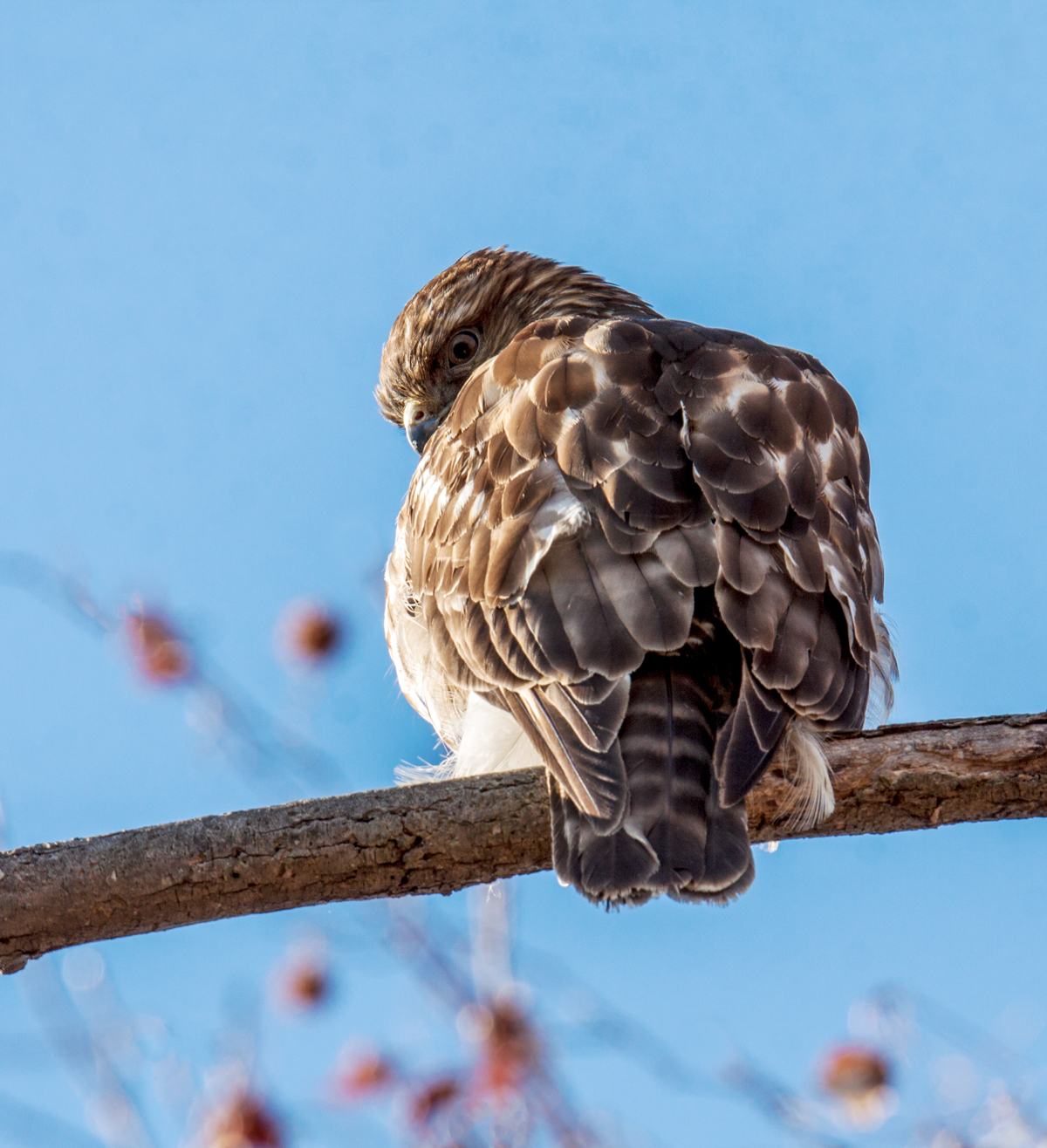
I have already featured a frontal image of this young Red-shouldered Hawk (Buteo lineatus) that I spotted last Friday at Occoquan Bay National Wildlife Refuge, but I decided I also really like this shot in which it is looking over its shoulder.  The hawk definitely was keeping an eye on me after I had passed almost directly underneath it and was walking further down the path away from it.

In a strange way the hawk seemed to be simultaneously intensely focused and quite relaxed and was quite content to remain on its perch.

Red-shouldered Hawk

© Michael Q. Powell. All rights reserved.

Read Full Post »

Reduced to its essence, photography is all about light and shadows. Sometimes details are not even necessary to evoke a mood, a sense of the moment, as in this image of a Double-crested Cormorant (Phalacrocorax auritus) that I captured this past Friday at Occoquan Bay National Wildlife Refuge.

Double-crested Cormorant

© Michael Q. Powell. All rights reserved.

Read Full Post »
I spotted this White-tailed Deer (Odocoileus virginianus) this past Friday at Occoquan Bay National Wildlife Refuge as it carefully made its way across one of the small streams that crisscross the refuge.

This deer was lagging behind a small group of four deer that I initially spotted. That group pretty quickly and I was not really ready for them, so my photos were not that good. I was quite happy when this final deer appeared and I was able to get some shots. I couldn’t tell for sure how stable the footing was where the deer was crossing, but the deer did appear to be very careful as it chose places to place its feet.

deer crossing

deer crossing

deer crossing

© Michael Q. Powell. All rights reserved.

Read Full Post »

This young Red-shouldered Hawk (Buteo lineatus) stared down at me with curiosity and interest yesterday at Occoquan Bay National Wildlife Refuge and stayed in place even when I passed almost directly beneath it. In my experience, younger birds are more likely than adults to hang around as I approach. As they grow older, I suspect, they rightly come to view humans as potential predators.

Red-shouldered Hawk

© Michael Q. Powell. All rights reserved.

Read Full Post »

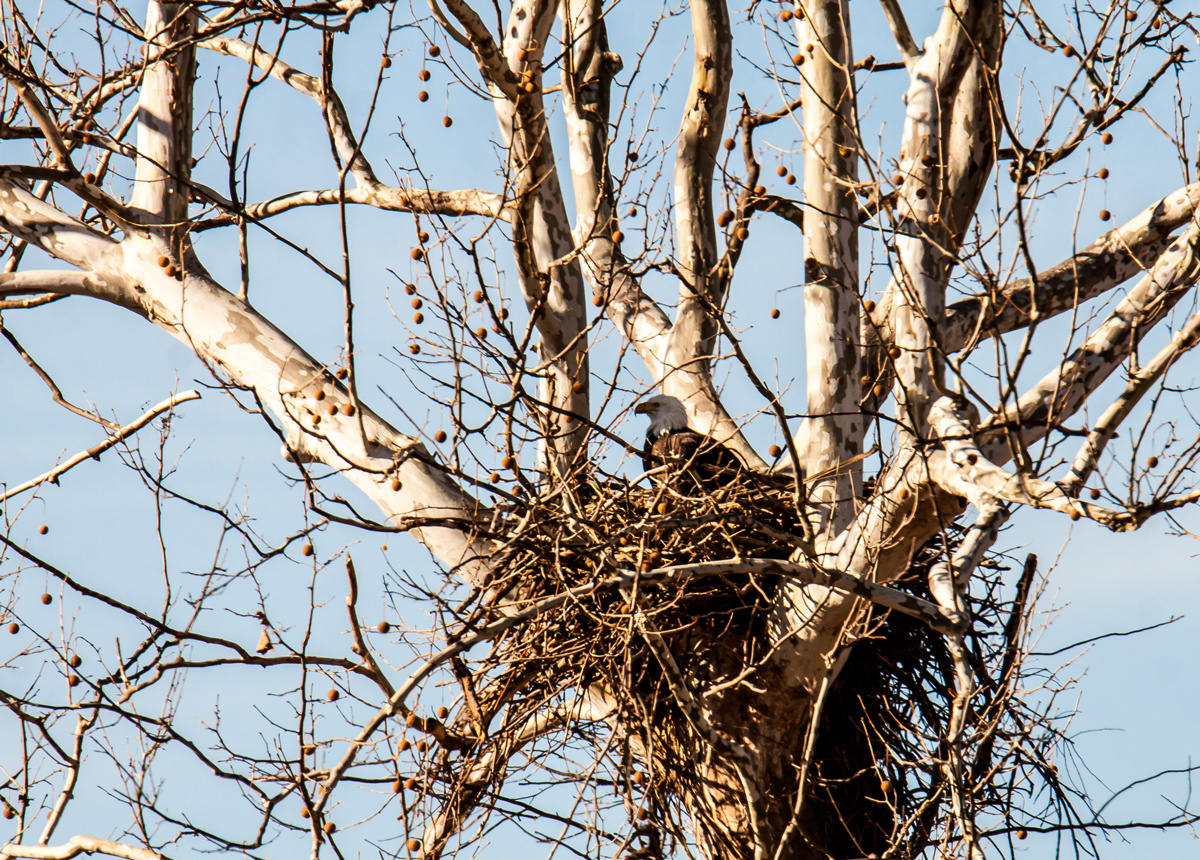
From a distance I was able to catch a glimpse of a nesting Bald Eagle (Haliaeetus leucocephalus) last week at Occoquan Bay National Wildlife Refuge. I love the way that this shot shows the awesome structure of the tree in which the eagles built their nest.

As I mentioned in an earlier posting, officials at the wildlife refuge have blocked of roads near this nest to keep the eagles from being  unnecessarily disturbed by human activity. I captured this image from behind the barriers. As nesting activity continues, I suspect that the barriers will be pushed even further back, so I decided to get this shot while I was still able to do so.

Once I was aware of the presence of the eagle in the nest I attempted to be as stealthy as I could in approaching the barrier, which is a little tough to do when you are standing in the middle of a wide trail with fields on both sides. I stayed low and left after I had taken a few shots.

Bald Eagle

© Michael Q. Powell. All rights reserved.


Read Full Post »

Is this love or anger or a bit of both? Relationships of any sort are complicated and I don’t know enough about eagle behavior to interpret the interaction between these two Bald Eagles (Haliaeetus leucocephalus) that I observed one morning last week at Occoquan Bay National Wildlife Refuge.

Sharp-eyed reader viewers may have noted that these two eagles are perched on the same branch where I previously photographed an eagle couple. The branch is part of a tree in which there is a nest that I am now relatively certain is an eagle nest. It is a pretty good distance off of the path and partially hidden, so I am hoping that the wildlife will judge that passing humans won’t unduly disturb what may become nesting eagles and will leave the path open.

As for the behavior, I must admit that I am a bit romantic and couldn’t help but note how the space between their beaks forms a heart. I’m voting therefore for love.

Bald Eagle

© Michael Q. Powell. All rights reserved.


Read Full Post »

Bluebirds never fail to make me feel happy—there is just something really positive about their attitude and their colors.

These Eastern Bluebirds (Sialia sialis) made it a little easier for me to capture their images by perching on the tip of  branches this past Saturday at Occoquan Bay National Wildlife Refuge.

Eastern Bluebird

Eastern Bluebird

© Michael Q. Powell. All rights reserved.

Read Full Post »

Birds can be very expressive, though it can sometimes be hard to interpret their expressions. It was pretty clear, however, that this Northern Mockingbird (Mimus polyglottos) was not happy about something last Friday at Occoquan Bay National Wildlife Refuge.

Was it me?

In addition to the priceless expression on the bird’s face, I really love the limited color palette in this image. It also has a kind of sparse minimalist feel that appeals to me.

Northern Mockingbird

© Michael Q. Powell. All rights reserved.


Read Full Post »

I  love the small birds that are always around us, but they rarely perch long enough in the open for me to photograph them. I spotted this energetic little Carolina Chickadee (Poecile carolinensis) last Friday moving about in the vegetation at Occoquan Bay National Wildlife Refuge and was happy when it paused for a second to pose for me.

The tiny bird was still for only a moment and then hopped off the branch and disappeared in the vegetation. I was thrilled when I looked at the image to see that I had captured a pretty clear view of the eye and that there was even a nice little catchlight—almost all of us who do portraits of any sorts are sort of obsessive about the eyes of our subjects.

Carolina Chickadee

© Michael Q. Powell. All rights reserved.

Read Full Post »

« Newer Posts - Older Posts »