Feeds:
Posts
Comments

Posts Tagged ‘wasp’

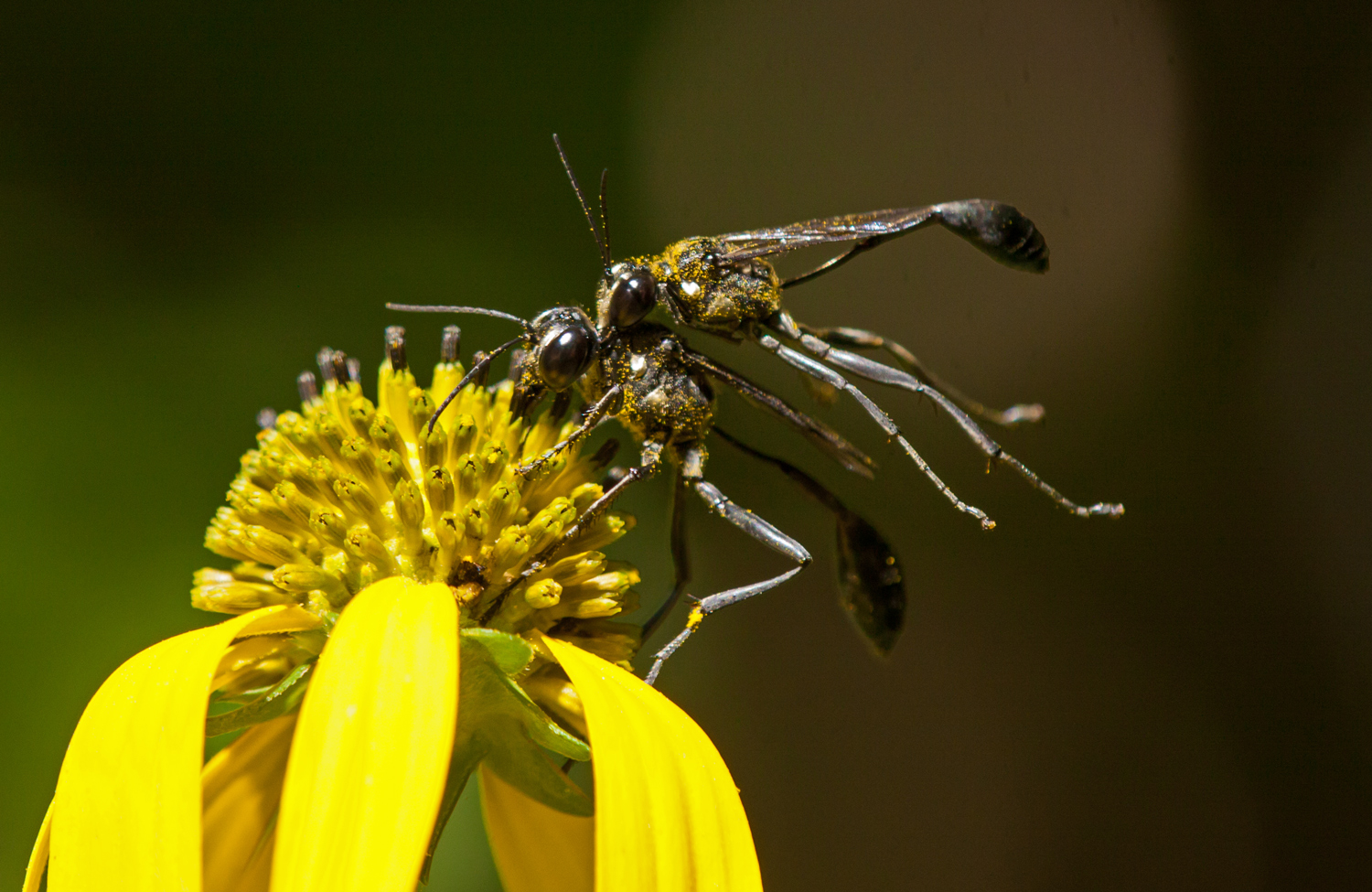
I don’t know much about the intimate life of wasps, but it sure looked to me like one of them is giving the other a loving nibble on the back of its neck. Both of them were covered in a lot of pollen, like they had just had a roll in the hay, figuratively speaking.

The two of them had flown to this flower in what appeared to be a mating position, though I can’t tell if the wasps are actually hooked up in this shot. My experience with dragonflies, however, has shown me that insects can mate in all kinds of unusual positions.

I am comfortable with moving in close for photos of bees, but I decided that in this case it was prudent to maintain a respectful distance from the wasps.

wasp kiss

© Michael Q. Powell. All rights reserved.

Read Full Post »

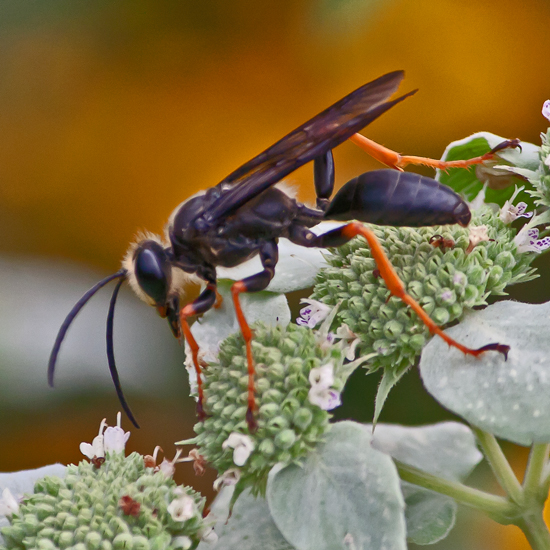
Isn’t “beautiful wasp” an oxymoron? Can a wasp really be considered to be beautiful? I may be insect-deprived after a long winter and my perceptions may be skewed, but I find the wasp in these two images to be exceptionally beautiful.

The rich reddish-brown of its upper body, with a pattern that looks like some exotic wood, and the bluish-purple of its wings make for a stunning combination, and the holly leaf provides a perfect backdrop.

I took this shot during a visit Lewis Ginter Botanical Garden in Richmond, VA this past weekend, a garden that featured thousands of tulips and other spring flowers in bloom, but almost no insects. I actually was not inside the garden, but was waiting outside the gift shop for some fellow photographers when I spotted this wasp sprawled out on the leaf, as shown in the second image. The nice thing about my 180mm macro is that I didn’t have to get right on top of the insect to capture some good detail. When I moved in a little closer, the wasp slowly climbed up the leaf, as captured in the first shot, before it flew away.

It was nice to see insects start to reappear and I suspect that I will start using my macro lens more and more as we move deeper into spring and into summer.

wasp1_blogwasp2_blog

© Michael Q. Powell. All rights reserved

Read Full Post »

The wasp looked huge, even from a distance, but I could get a clear shot of it against a beautiful blue sky, so I stepped out of my comfort zone and got close enough to it to get these images.

Fortunately I was shooting with a 180mm macro lens, so I was not exactly on top of the wasp, but even so, it was a little disconcerting to try to get a shot of a moving insect that looked so enormous and a bit threatening in the viewfinder.

After I took these shots, the wasp flew away and I breathed a sigh of relief—another sting avoided.

wasp2_blog

wasp1_blog

© Michael Q. Powell. All rights reserved

Read Full Post »

Every now and then when I am focusing intently on an insect and trying to set up a shot, other insects creep into the frame. Only later, when I am looking at the photos on my computer screen, do I realize that they are there. My friend, Cindy Dyer, likes to call them “bonus bugs.”

This morning as I was looking at some recent wasp photos, I realized that there was a black shield bug in one of them. The shot is not that great technically, but I think that the combination of the two very different insects makes for an interesting photo, particularly because the wasp seems to have noticed the shield bug.

To me the moment is reminiscent of the bar scene in the Star Wars movie in which all kinds of different alien creatures are interacting. Click on the link to a You Tube video if you’ve never seen this classic piece of film history.

This photo really is begging for a clever caption and I’d welcome any suggestions.

© Michael Q. Powell. All rights reserved.

Read Full Post »

Bees and butterflies seem to get all the love. Where is the love for the lowly wasp? Maybe wasps need a public relations firm to give them a new image.

This photo from a recent shoot suggests one approach to that new image—an edgy, radical image. The wasp already appears to be sporting a mohawk hairstyle and large, dark sunglasses. Some piercings and a few tattoos and the new image would be complete.

The result—a cool new image for the wasp to match the attitude he already possesses.

© Michael Q. Powell. All rights reserved.

Read Full Post »

I have always been fascinated by light and shadows.

Shadows often hide or mask details of a subject, although they also may reveal elements of a subject that might otherwise be concealed. Sometimes shadows are an accurate reflection of the subject (like a silhouette), but other times they distort reality. Shadows intrigue me too because they often pick up characteristics of the surfaces on which they are cast in addition to those of the subject.

My musings on shadows were prompted by this photo of an unidentified wasp (I think it is some kind of wasp) that I shot yesterday morning. The wasp was back lit by the morning sun, causing a hidden part of his body to be revealed in the shadow.

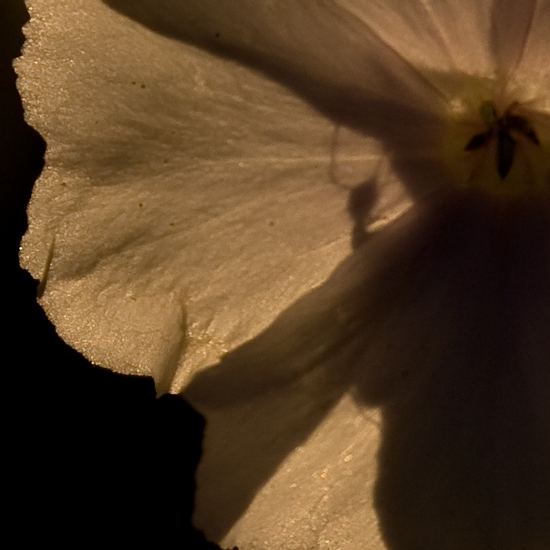
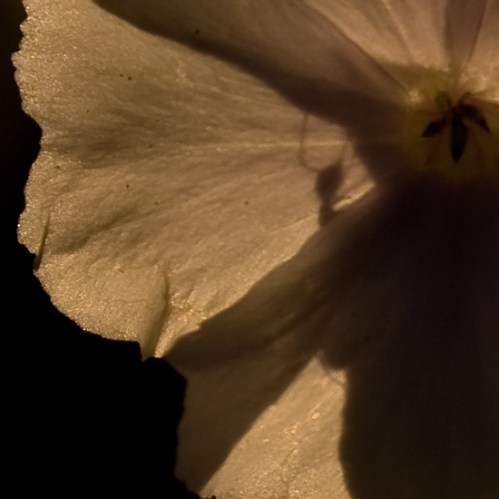
A few months ago I decided to photograph the morning light coming through a small flower in my neighbor’s garden. As I getting ready to shoot, an ant started walking across the back of the flower. It’s not a technically good shot but I like the effect that was produced by the ant’s shadow.
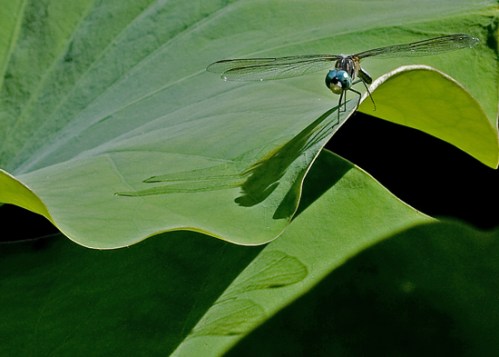
Folks who follow this blog know that I love dragonflies. In early June I took some photos of dragonflies on a sunny day, resulting in lots of shadows. The dragonfly’s shadow makes me think of the position of a person hang gliding and it even looks like the dragonfly is wearing a little helmet.

The undulating surfaces on which the shadow falls really make a difference in the shape of the shadow. I especially like how the shadows of the wings fall on a separate leaf from the shadow of the main body. The shadows of the leaves themselves make this image even more interesting for me.
In this final photo a dragonfly literally is casting a long shadow. The distortion caused by the angle of the sunlight causes his legs to appear much longer and I find that this dragonfly looks much more menacing than is typical of a dragonfly.

Can a dragonfly actually look menacing?

© Michael Q. Powell. All rights reserved.

Read Full Post »