Feeds:
Posts
Comments

Posts Tagged ‘Tringa solitaria’

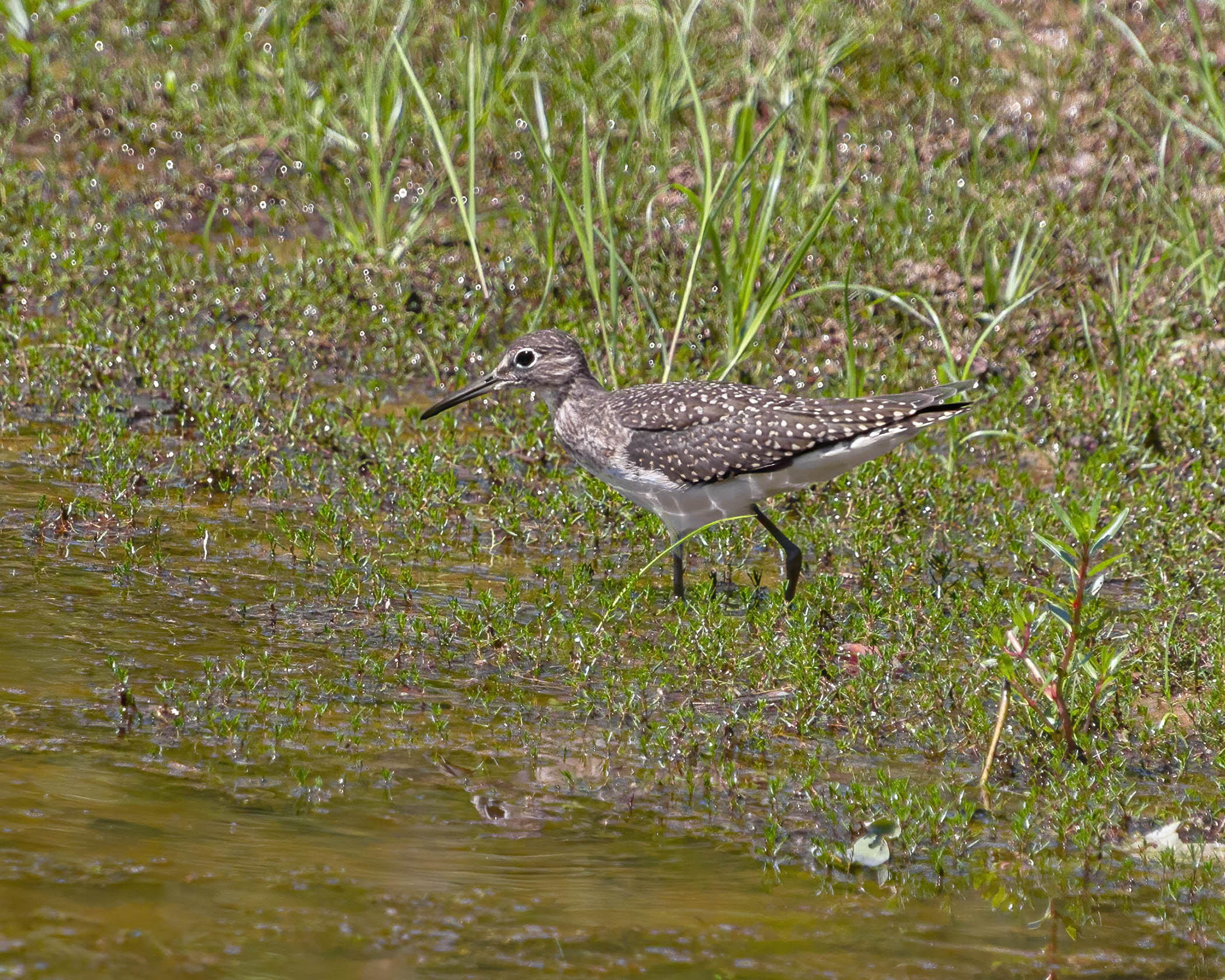
While I was looking for dragonflies last Friday at a small pond at Occoquan Bay National Wildlife Refuge, I spotted this Solitary Sandpiper (Tringa solitaria) foraging in the shallow water. As its name suggests, the sandpiper was all by itself, with not another member of its species visible.

The bird was quite skittish, so I was not able to get close to it and observed it from a distance. The sandpiper was in almost constant motion as it waded through the water, periodically dipping its head down to hunt insects, crustaceans, mollusks, amphibians, and other prey. I think that the Solitary Sandpiper was having some success, though it was hard to tell for sure.

I was happy to be able to capture this shot of the bird as it plunged its opened bill into the water. The reflection of the sandpiper and the surrounding area in the water was a nice bonus.

Solitary Sandpiper

© Michael Q. Powell. All rights reserved.
Read Full Post »

Shorebirds are always tough for me to identify—so many of them are similar in appearance. When I spotted this little bird on Monday at Occoquan Bay National Wildlife Refuge, I noticed that it was all alone. Half-jokingly, I thought to myself that maybe it is a Solitary Sandpiper (Tringa solitaria).

When I later checked my bird identification guide I was shocked to discover that it probably is a Solitary Sandpiper. As its name suggests, this bird was by itself, foraging for food in the shallow water at the edge of a pond. I watched it for a while, but when I moved closer to get a better shot, the bird flew away to a spot across the small pond.

Solitary Sandpiper

© Michael Q. Powell. All rights reserved.

Read Full Post »

I often have trouble identifying shorebirds, because so many of them are similar in appearance. When I spotted this one last Friday at Occoquan Bay National Wildlife Refuge, I immediate thought it might be a Solitary Sandpiper (Tringa solitaria). This bird seemed to be perfectly content to be by itself, pursuing its goals at its own pace, marching to the beat of a different drummer. Was it an introverted shorebird of a different species or was it really a Solitary Sandpiper?

As I stood there at the edge of the pond, I realized that we were a lot alike, the bird and I. It was a moment for reflection. Most of the time I too would rather enjoy nature in solitude, separated from others.

I make a conscious effort to avoid contact with other people when I am out with my camera and avoid certain locations because they are too popular and crowded. I generally prefer to spend my time communing with wildlife.

Solitary Sandpiper

© Michael Q. Powell. All rights reserved.


Read Full Post »

Shorebirds are always tough for me to identify—so many of them are similar in appearance. When I spotted this little bird on Wednesday at Occoquan Regional Park, I noticed that it was all alone. Half-jokingly, I thought to myself that maybe it is a Solitary Sandpiper (Tringa solitaria). When I later checked my bird identification guide I was shocked to discover that it actually is a Solitary Sandpiper.

According to the Cornell Lab of Ornithology, however, the name of the Solitary Sandpiper is not completely accurate—”While not truly solitary, it does not migrate in large flocks the way other shorebirds do.” On the same website I also learned the interesting fact of the world’s 85 sandpiper species, only the Solitary Sandpiper and the Green Sandpiper of Eurasia routinely lay eggs in tree nests instead of on the ground.

Solitary Sandpiper

Solitary Sandpiper

© Michael Q. Powell. All rights reserved.

Read Full Post »

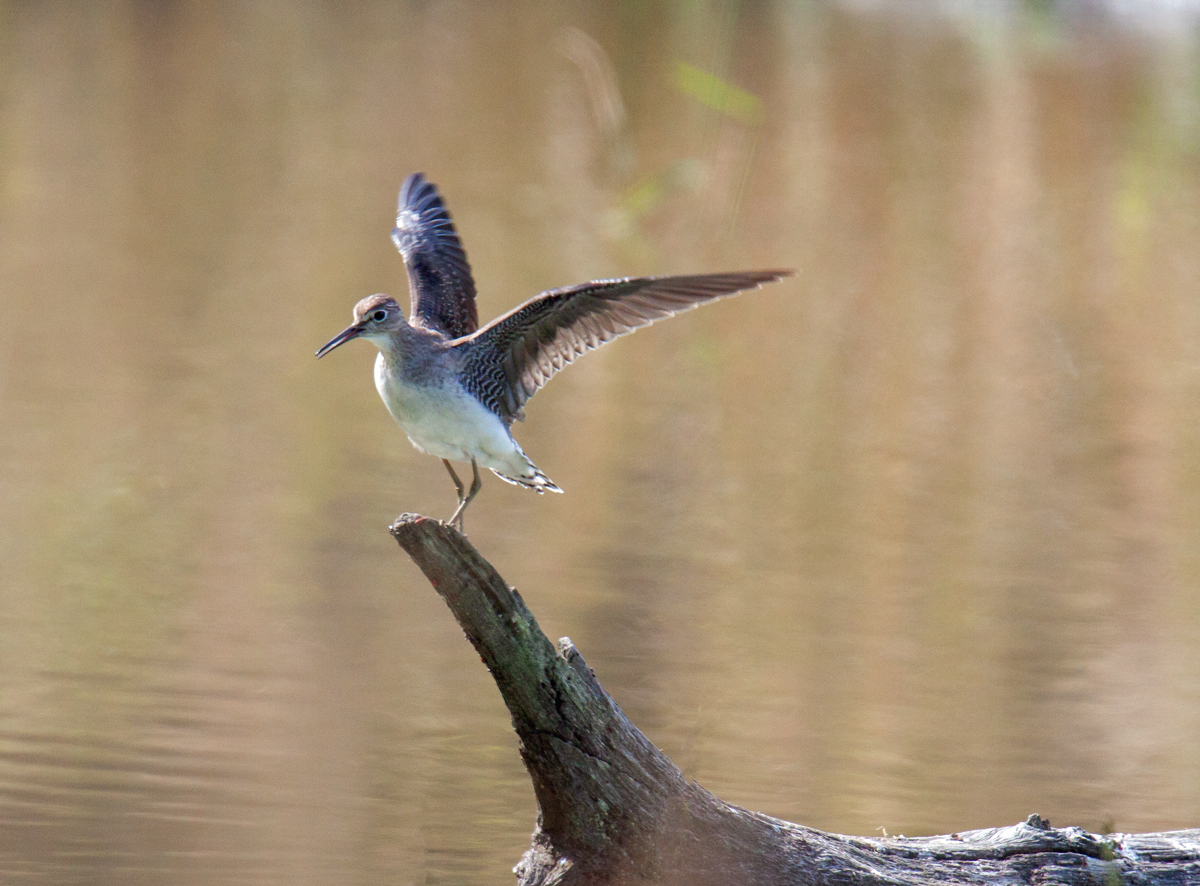
With Celine Dion’s voice echoing in his head, this Solitary Sandpiper (Tringa solitaria) reenacts a scene from his favorite movie and loudly exclaims, “I’m the king of the world.”

Solitary Sandpiper

Despite believing that his heart will go on, this sandpiper is still feeling very solitary. Imagine how different that the movie “Titanic” would have been if Jack Dawson had followed the lead of this little bird and jumped from his perch.

Solitary Sandpiper

In the interest of full disclosure, I’m not completely sure that this is a Solitary Sandpiper, but I didn’t want to let accuracy get in the way of a good story. Please let me know if my identification is incorrect.

© Michael Q. Powell. All rights reserved.
Read Full Post »