Feeds:
Posts
Comments

Posts Tagged ‘Ruddy Duck’

At this time of the year I often see large groups of ducks, often referred to as “rafts” because the ducks gather so closely together, in the waters off of Occoquan Bay National Wildlife Refuge. Frequently there are different species of ducks intermixed, though in my experience there is usually a dominant species.

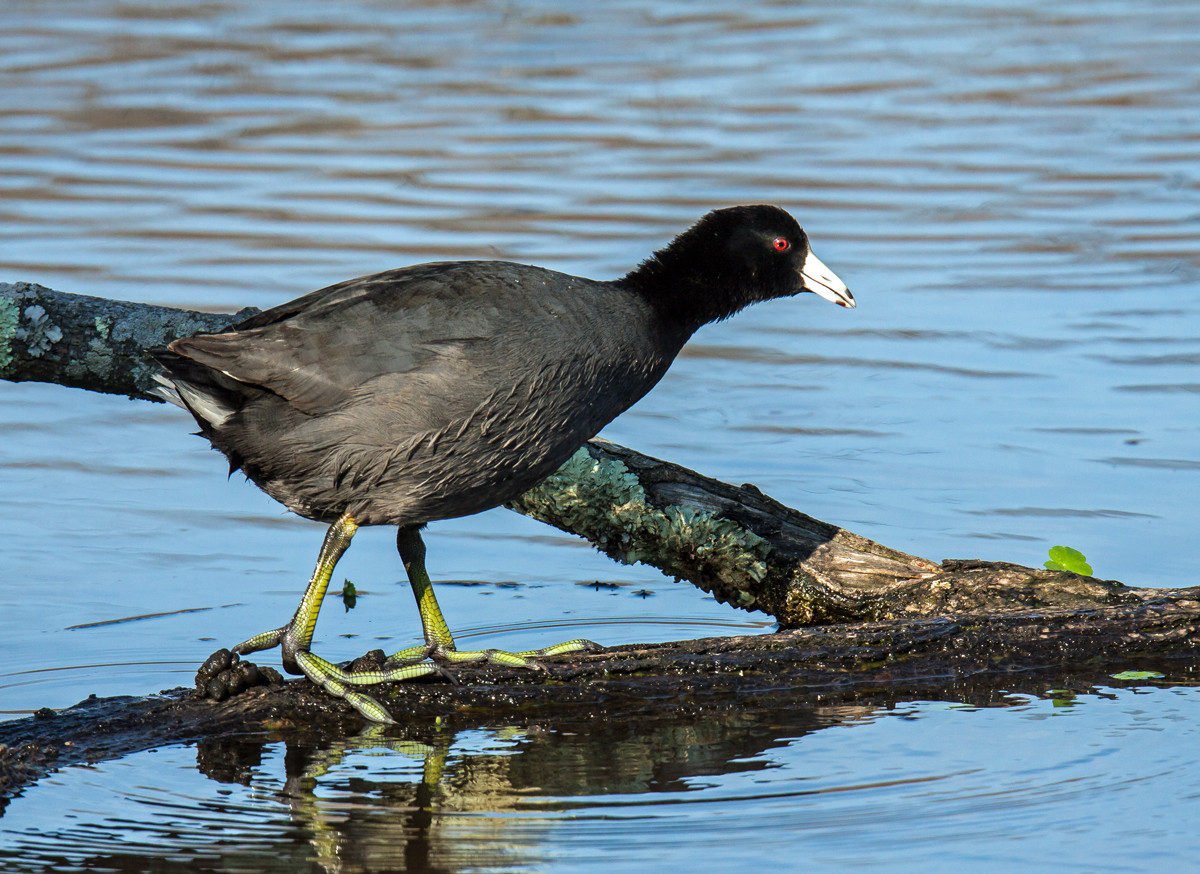
In later November, I spotted a large group of American Coots (Fulica americana) during a visit to the refuge, as you can see in the first photo below. Coots are pretty easy to identify because of the shape and color of their bills. In addition to the coots, a number of Ruddy Ducks (Oxyura jamaicensis) were part of the raft. I encourage you to click on the image to get a better look at the individual birds.

Technically, coots are not ducks, though, because they have lobed rather than webbed feet. The coots that day were too far away for me to get a shot of their feet, so I am instead including a photo I took in April 2017 that shows those lobed feet and the coot’s distinctive red eyes.

American Coots

American Coot

© Michael Q. Powell. All rights reserved.


Read Full Post »

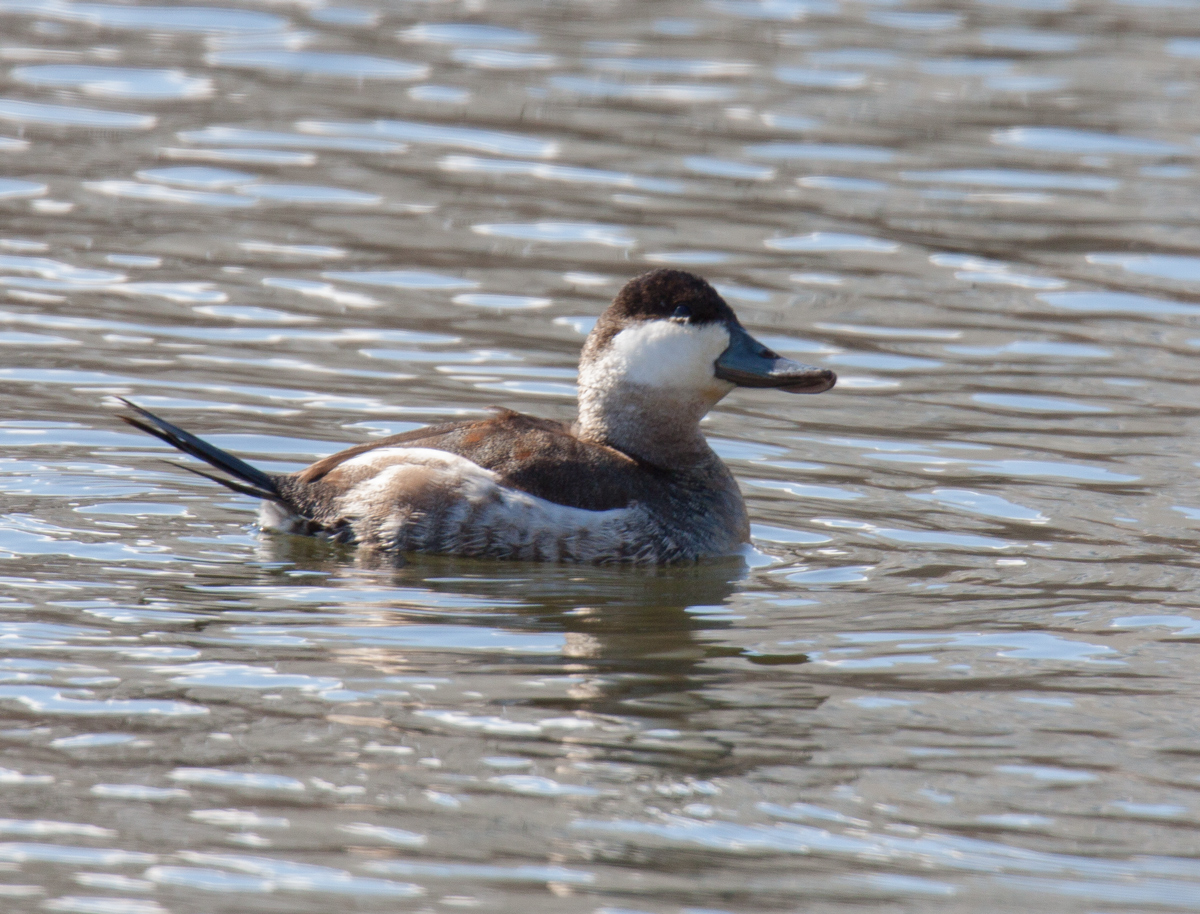
Ruddy Ducks (Oxyura jamaicensis) “feed most actively at night, so you’ll often see Ruddy Ducks sleeping during the day, head tucked under a wing and tail cocked up,” according to the Cornell Lab of Ornithology. I spotted a small group of them, including the sleeping male Ruddy Duck in the first photo, on Tuesday at a small suburban pond in Kingstowne, a community only a couple of miles from where I live.

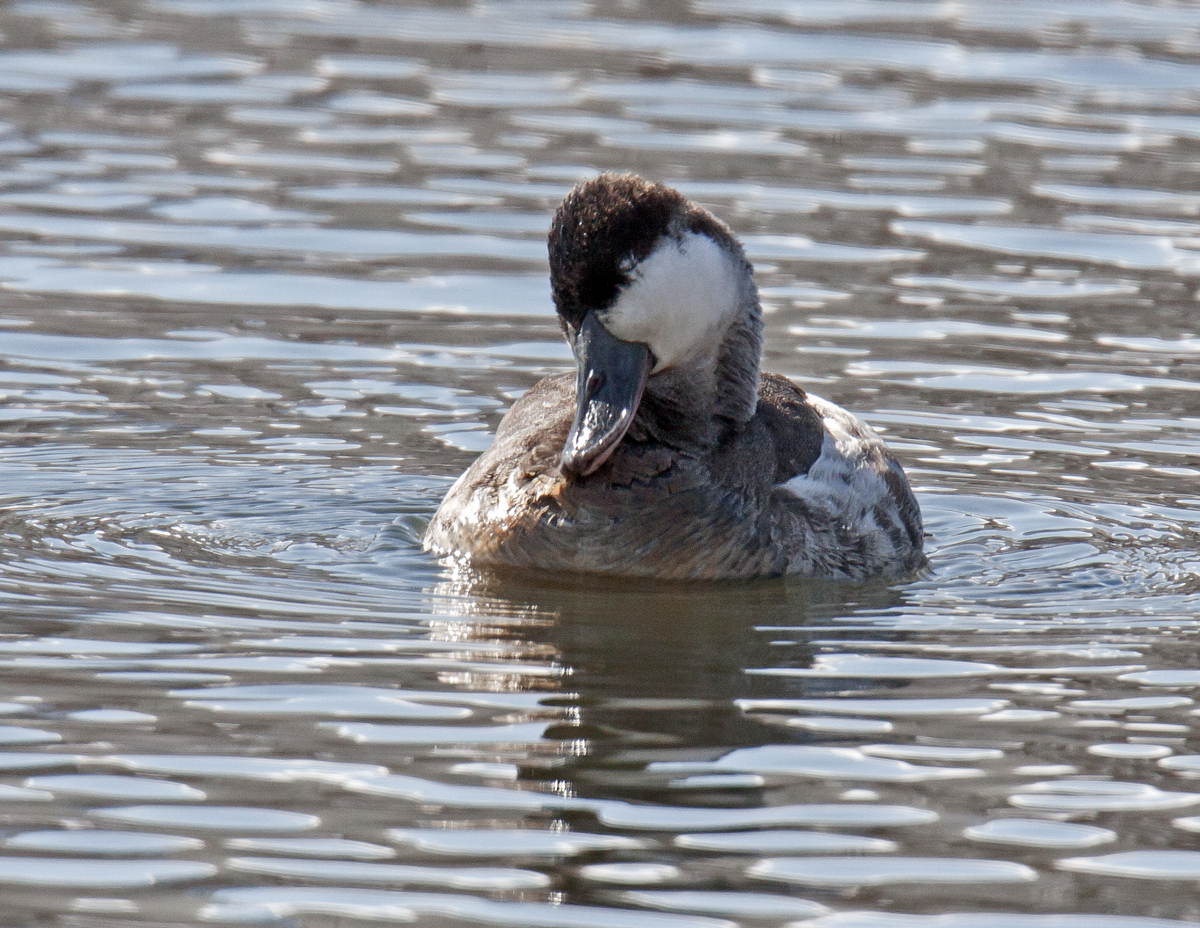
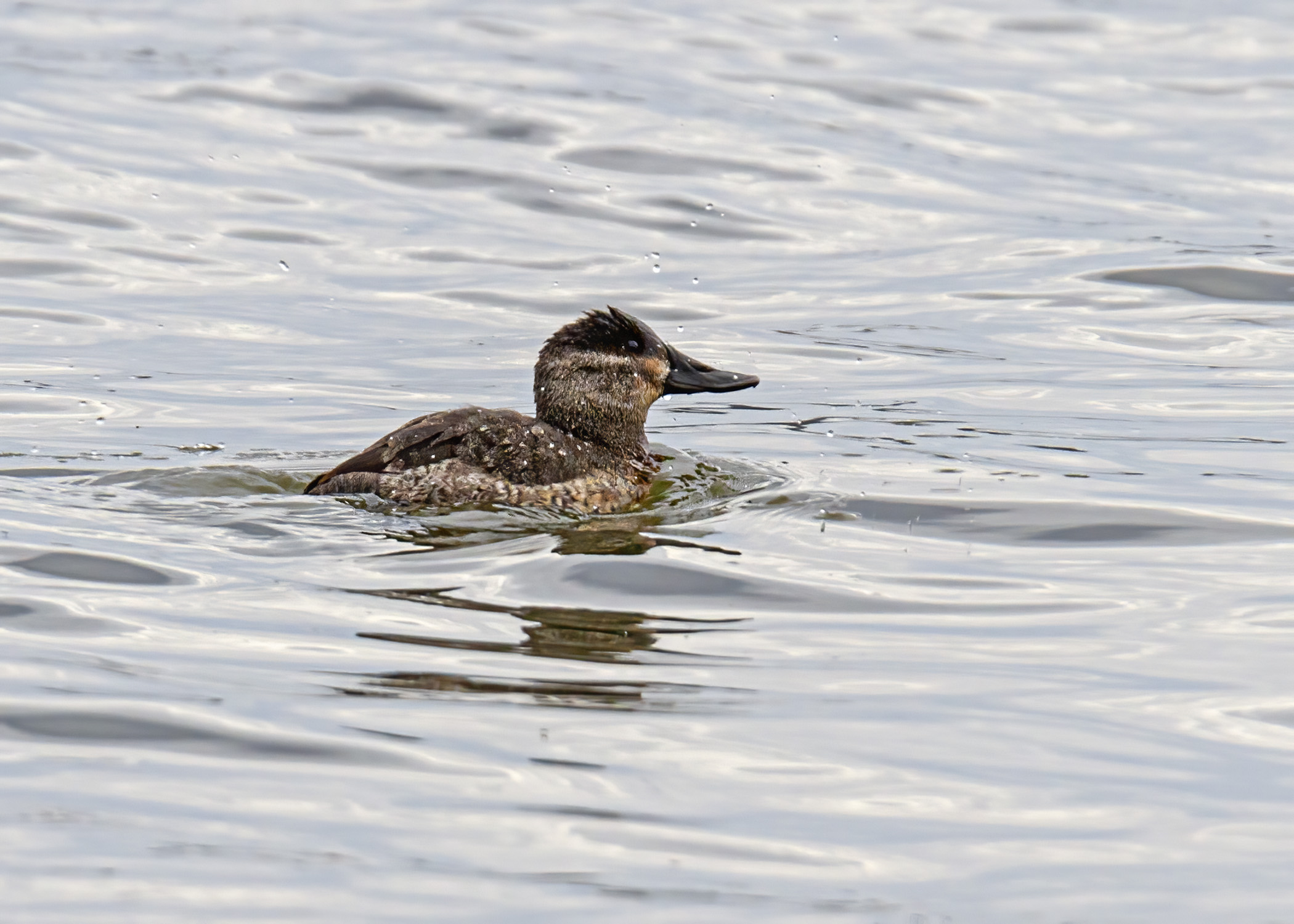
Earlier this month I spotted a much larger flock of Ruddy Ducks in the waters off of Occoquan Bay National Wildlife Refuge. As you can see in the second photo, many of the ducks were sleeping. The ducks were quite a distance from shore, but the bright white cheek patches on some of the males made them easy to identify. Eventually one of the ducks swam a bit closer and I captured the final image—judging from its coloration, this appears to be either a female or an immature male.

I read on-line that the breeding colors of the male are spectacular, with a sky-blue bill, shining white cheek patch, and gleaming chestnut body, but I have never seen Ruddy Ducks during breeding season. As I read further in the entry for the species on the Cornell Lab of Ornithology website, I could not help but chuckle:

“The bright colors and odd behavior of male Ruddy Ducks drew attention from early naturalists, though they didn’t pull any punches. One 1926 account states, “Its intimate habits, its stupidity, its curious nesting customs and ludicrous courtship performance place it in a niche by itself…. Everything about this bird is interesting to the naturalist, but almost nothing about it is interesting to the sportsman.” ”

UPDATE: A sharp-eyed Facebook friend noted that the position of the duck in the first photo is a bit more upright than it would be if he were sleeping and suggested the duck was in the process of grooming.

Ruddy Duck

Ruddy Ducks

Ruddy Duck

© Michael Q. Powell. All rights reserved.

Read Full Post »

Most of the Ruddy Ducks(Oxyura jamaicensis) that I spotted last week at Occoquan Bay National Wildlife Refuge were gathered together in the deep water, asleep in a group with their heads tucked at an angle. One male, however, was grooming himself near the shore and I managed to capture this fun little portrait when he paddled by me.

The bright white cheek patch of male Ruddy Ducks make them pretty easy to identify. I have never seen the breeding behavior of this species, but I could not help but laugh when I read this description on the Cornell Lab of Ornithology website of a 1926 account about the Ruddy Duck that stated, “Its intimate habits, its stupidity, its curious nesting customs and ludicrous courtship performance place it in a niche by itself…. Everything about this bird is interesting to the naturalist, but almost nothing about it is interesting to the sportsman.” I am much more of a naturalist than a sportsman, so I like this little duck.

Happy New Year. It is hard to believe that 2023 is already here. Thanks so much to all of you who have supported and encouraged me throughout this past year. The world is very much a crazy place these days and I very much value the sense of community and camaraderie that I have found in the blogosphere. This blog allows me to express myself more fully, genuinely, and creatively than I am able to do in many aspects of my life, where filters, pressures, and expectations often constrain my freedom of action.

Best wishes for a happy and healthy 2023.

Ruddy Duck

© Michael Q. Powell. All rights reserved.
 

Read Full Post »

Isn’t it wonderful that birds that are so different in appearance can get along so well? Why is it that we find it so difficult to do the same?

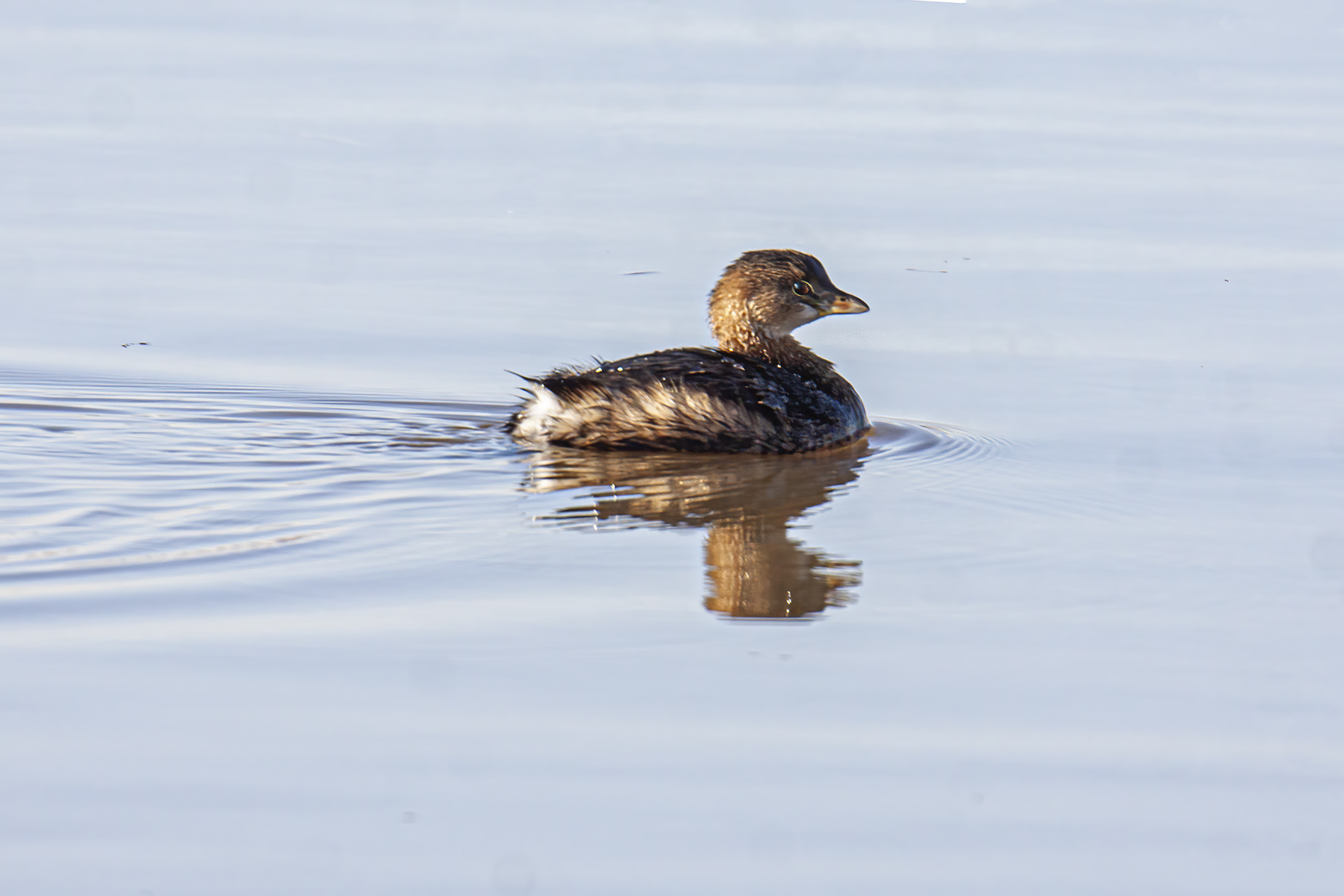
I spotted this Ruddy Duck (Oxyura jamaicensis) and Pied-billed Grebe (Podilymbus podiceps) swimming together on Tuesday at Occoquan Bay National Wildlife Refuge. I was immediately struck by the diminutive size of the Ruddy Duck—I somehow had the mistaken impression that Pied-billed Grebes were smaller than all ducks.

I decided to include separate images of the two species that I captured earlier in January to give you a better look at them. The color of the water in each of the three shots gives you an indication of what the weather was like on the day when they were taken. It has been a really variable month weather-wise, with almost as many days above 50 degrees (10 degrees C) as below freezing and barely a trace of snow.

peaceful coexistence

Pied-billed Grebe

Ruddy Duck

© Michael Q. Powell. All rights reserved.


Read Full Post »

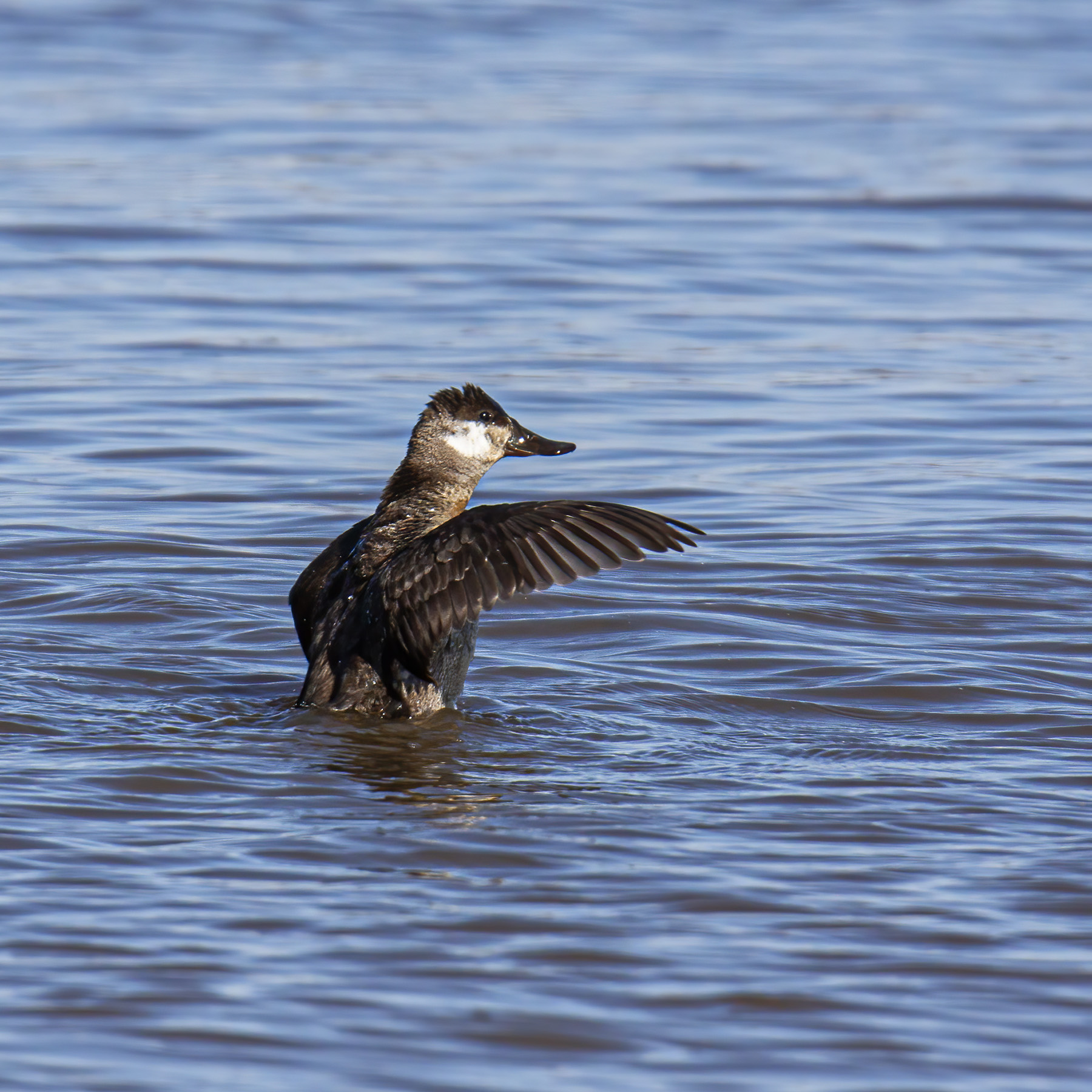
Ruddy Ducks (Oxyura jamaicensis) are one the many duck species that overwinter in the Northern Virginia area where I live. The males are pretty easy to identify, even from a distance, because of the bright white patch on the sides of their heads. I spotted this one on Tuesday as he was shaking himself dry after a plunge in the waters off of Occoquan Bay National Wildlife Refuge.

Unfortunately they do not breed in our area—I would love to see the brilliant plumage of the breeding males. The Cornell Lab of Ornithology notes that, “Breeding males are almost cartoonishly bold, with a sky-blue bill, shining white cheek patch, and gleaming chestnut body.” Wow!

It is so much fun to read the “Cool Facts” section that is part of the description of each bird on the Cornell Lab of Ornithology website. I love this description of the Ruddy Duck:

—The bright colors and odd behavior of male Ruddy Ducks drew attention from early naturalists, though they didn’t pull any punches. One 1926 account states, “Its intimate habits, its stupidity, its curious nesting customs and ludicrous courtship performance place it in a niche by itself…. Everything about this bird is interesting to the naturalist, but almost nothing about it is interesting to the sportsman.”

As you can see from the three shots below, I played around with the cropping of the images. They were all part of the same sequence, so initially the framing was similar for all three. I am not sure that any one of the three crops jumps out as “better,” but I really enjoy the process of considering options and thought that some of you would enjoy getting this little peek behind the curtains of my mental processes when working on an image.

Ruddy Duck

Ruddy Duck

Ruddy Duck

© Michael Q. Powell. All rights reserved.

Read Full Post »

Even when they are dozing, ducks seem to be keeping an eye on me, including a male Ring-necked Duck (Aythya collaris), a male Hooded Merganser (Lophodytes cucullatus), and a male Ruddy Duck, all of which I spotted this past week floating on a local pond.


Ring-necked Duck

Hooded Merganser

Ruddy Duck

© Michael Q. Powell. All rights reserved.
 

Read Full Post »

This male Ruddy Duck (Oxyura jamaicensis) and I spotted each other at almost the same time and we both immediately sprung into action. As I was bringing my camera up to my eye, the duck was swimming away. I thought that I had lost the photo opportunity when suddenly the duck turned his head to the side and I was able to capture this image.

This Ruddy Duck, like the Hooded Merganser duck that I featured yesterday, has taken up residence in a small pond in a suburban neighborhood not far from where I live. I am thrilled, because it gives me a place where I can experience wildlife without having to travel too far. Things can get busy sometimes, especially at this time of the year, and I cannot always spend hours on end in the wild with my camera as I prefer to do.

Ruddy Duck

© Michael Q. Powell. All rights reserved.

Read Full Post »

What does it mean to have your ducks in a row? For most of us, it means being well-prepared and organized in advance. Personally, I am a little scatter-brained and disorganized, so it is not a term that I would apply to myself very often.

As is the case with many such expressions, it is sometimes fun to apply them literally. Last week I spotted some Ruddy Ducks (Oxyura jamaicensis) in the waters off of Occoquan Bay National Wildlife Refuge. The wind was blowing pretty hard and the ducks seemed to be struggling to stay together. From my perspective, they seemed to be ducks in a row, though from their perspective, they probably felt like they were ducks in a column. It’s all a matter of perspective.

Most of the time that I see Ruddy Ducks, they are in groups like the one in the first photo, usually in the deeper waters. For more than a month, though, I have been seeing a solitary male Ruddy Duck in the more placid waters of a small pond at the wildlife refuge. I captured him in the second image below on the same day as the first shot. In both of the photos, you can see the stiff tail that is one of the distinguishing characteristics of this species.

I often wonder about the origins of expressions like “ducks in a row.” I assumed that it had to do with a mother duck and her ducklings, but decided to search the internet to see if that was the case. I came across a wonderful posting by The Word Detective that addresses speculation that the expression comes from the game of pool. It is a fun read, particularly the comments from readers suggesting that the expression is related to ship or aircraft construction or to duck hunting.

Ruddy Duck

Ruddy Duck

© Michael Q. Powell. All rights reserved.


Read Full Post »

I spotted this little Ruddy Duck (Oxyura jamaicensis) all by itself on Wednesday morning at the far end of Painted Turtle Pond at Occoquan Bay National Wildlife Refuge. He must have been feeling a little lonely, however, and tried to strike up a conversation with the mallard decoy that is a permanent feature at this pond. The mallard remained silent.

I was trying to capture a shot of the Ruddy Duck by itself, as in the second image, but I like the eye contact in the first image so much that I decided to make it my lead photo for the posting. The shot simply makes me smile.

Have a wonderful Friday.

Ruddy Duck

Ruddy Duck

© Michael Q. Powell. All rights reserved.
Read Full Post »

As I was scanning a group of Ring-necked Ducks and Canada Geese earlier this week, I noticed a pair of ducks that looked different, very different from the others. Their colors were unusual, but what really set them apart was their tails that stood almost straight up. I think that I encountered ones like this once before, but I couldn’t remember what species they were.

Fortunately I got some decent shots and was able to find them in my identification guide when I returned home—they turned out to be a pair of Ruddy Ducks (Oxyura jamaicensis). The light was bright and producing a lot of glare off of the water and ice and I didn’t managed to get any good shots of the female, but here are a few images of the male.

Ruddy Duck

Ruddy Duck

© Michael Q. Powell. All rights reserved.


Read Full Post »

The wind was kicking up yesterday on the Potomac River, making it difficult for the ducks there, like this Ruddy Duck (Oxyura jamaicensis). I watched as the small ducks got drenched repeatedly as they sought to ride the waves.

At least it wasn’t raining and the temperatures have not yet dropped below the freezing levels, even at night.

ruddy_waves_blog

© Michael Q. Powell. All rights reserved.

Read Full Post »

I haven’t seen many migrating ducks yet at my local marsh, so I traveled to the Potomac River this weekend, because I had heard from a birder that there were numerous ducks there. There were lots of Mallards, some Northern Shovelers (I think), and this cool-looking duck with a distinctive white patch on its cheek that I could not identify initially. After I returned home, it didn’t take long to figure out that this as a Ruddy Duck (Oxyura jamaicensis), a species that I had never seen before.

ruddy_duck1_blog

© Michael Q. Powell. All rights reserved.

Read Full Post »