Feeds:
Posts
Comments

Posts Tagged ‘male Spangled Skimmer’

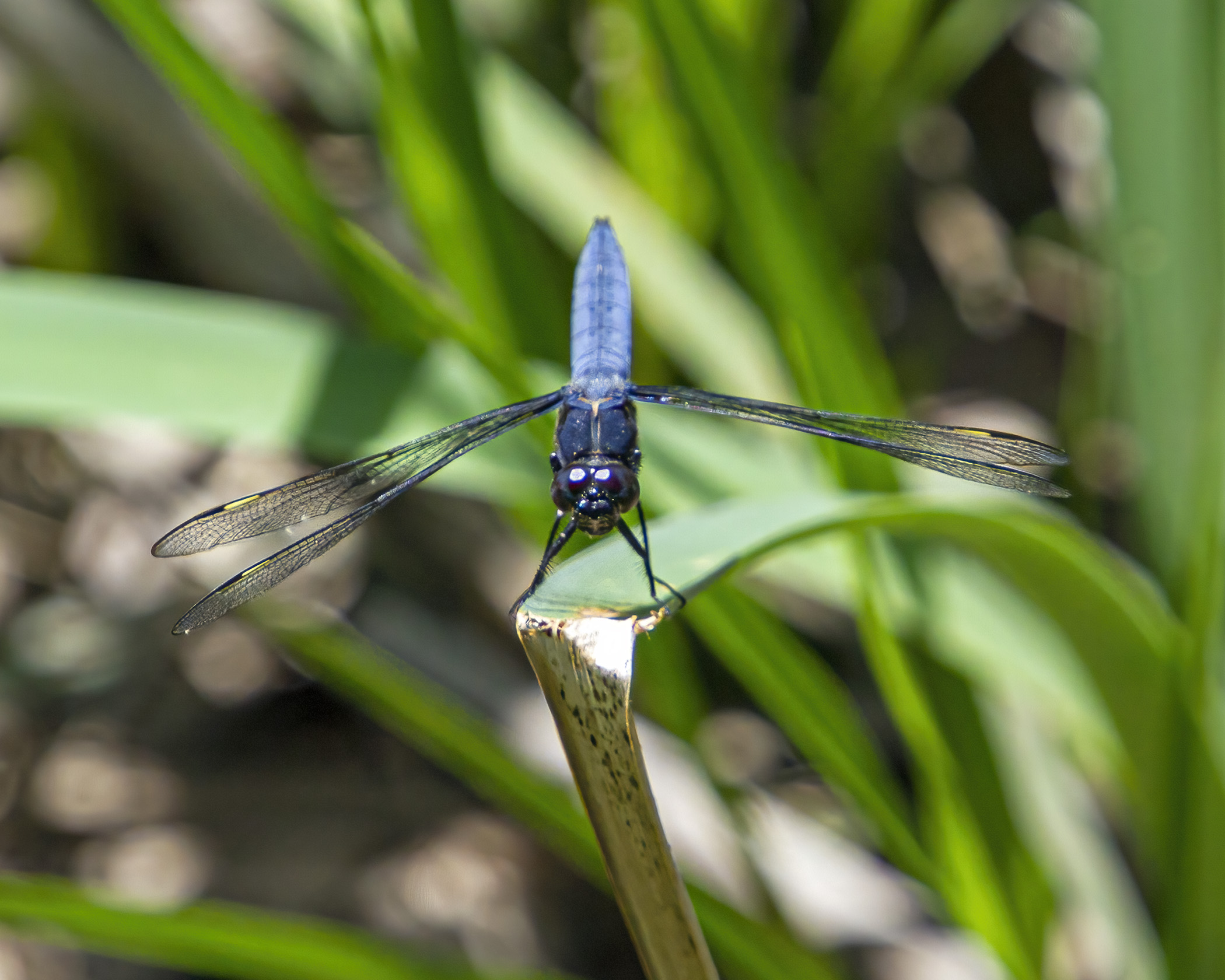
There are quite a few blue dragonflies where I live, so I can’t always rely on color to tell them apart. Fortunately, it is relatively easy to identify a male Spangled Skimmer (Libellula cyanea), because it has a lighter-colored spot beside a black spot on the outer leading edge of each wing—as far as I know, no other dragonfly in our area has multi-colored stigmata, the technical name for those spots.

The stigmata are not there for decoration, but reportedly serve an important role in the flight of dragonflies. I do not really understand the physics of flight, but have read that the stigmata are heavier than the adjoining cells and help to stabilize the vibrations of the wings.

I spotted this male Spangled Skimmer as he was perched in the vegetation at the edge of a small pond at Shrine Mont, an Episcopal Church retreat center, in Orkney Springs, Virginia. Most often I try to get side views of dragonflies in order to get most of the body in focus, but in this case I deliberately tried to focus on the dragonfly’s large, compound eyes, knowing that much of the body would fall out of focus. This allows the viewer’s attention to be drawn immediately to those eyes.

I encourage you to click on the image to get a closer look at the dragonfly’s amazing eyes.
Spangled Skimmer

© Michael Q. Powell. All rights reserved.

Read Full Post »

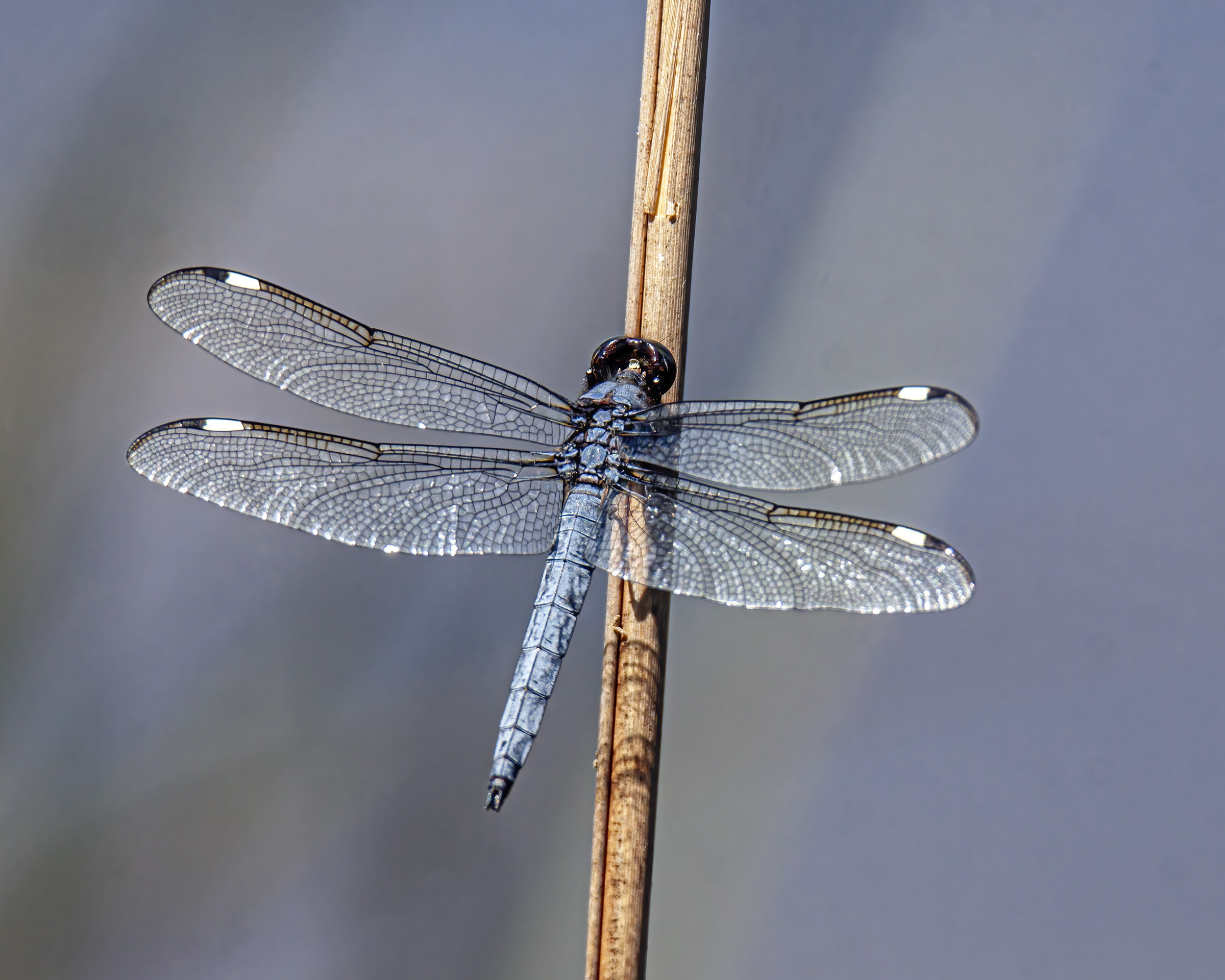
There are quite a few blue dragonflies where I live, so I can’t simply rely on color to tell them apart. Fortunately, it is very easy to identify a male Spangled Skimmer (Libellula cyanea), because it has a white spot beside a black spot on the outer leading edge of each wing—as far as I know, no other dragonfly in our area has multi-colored stigmata, the technical name for those spots.

The stigmata are not there for decoration, but serve an important role in the flight of dragonflies. I do not really understand the physics of flight, but have read that the stigmata are heavier than the adjoining cells and help to stabilize the vibrations of the wings.

I spotted these two mature male Spangled Skimmers during recent trips to Occoquan Regional Park. Earlier this year I saw some immature male Spangled Skimmers at the same location that were brown and yellow in coloration, just like the females of the species. (See my posting from 30 May 2022 entitled Spangled Skimmer dragonflies to see photos of an immature male and a female of this species.) Although the color of the males changes completely as they mature, the distinctive stigmata are present even when they are young.

Spangled Skimmer


Spangled Skimmer

© Michael Q. Powell. All rights reserved.
Read Full Post »

How do dragonflies decide where to perch? Sometimes I can guess in advance where a dragonfly will choose to perch—many dragonflies like exposed stalks of vegetation at the water’s edge and will often return to the same perch over and over again.

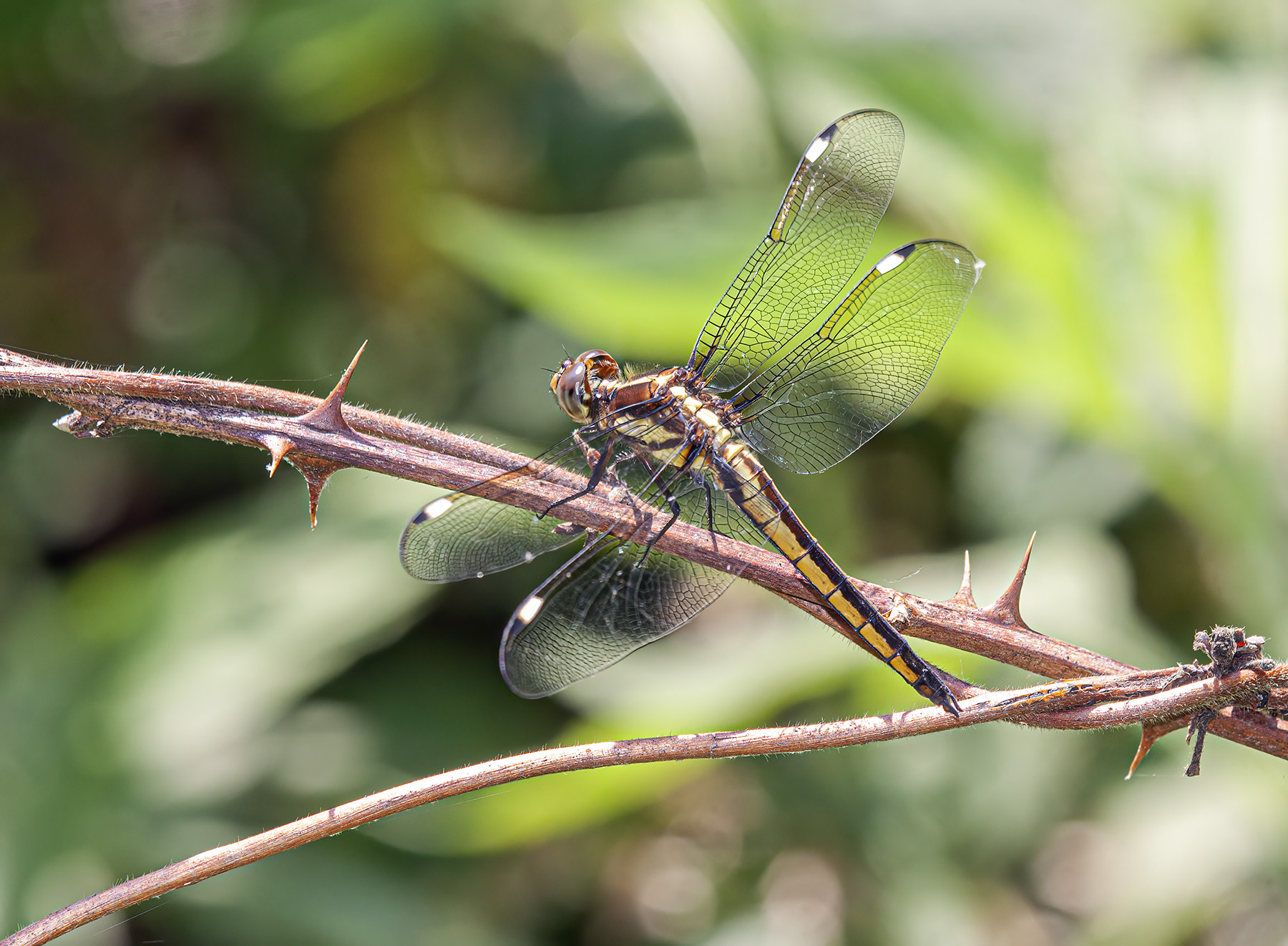
Some dragonflies, though, will choose to perch in unexpected places. I was a little shocked yesterday during a short visit to Jackson Miles Abbott Wetland Refuge to spot this juvenile Spangled Skimmer dragonfly (Libellula cyanea) perched on a thorny vine. The sharp thorns seemed to be larger than the dragonfly’s head and the distance between them seemed smaller than the dragonfly’s wingspan.

What was the point of his choice of perches? Is it pointless to talk of safer perches? Perhaps the dragonfly is a young thrill seeker who simply likes to live life on the edge—many of us did some things in our youth that in hindsight were incredibly risky if not outright stupid. Maybe instead he calculated that the risk of damage to his delicate wings was outweighed by the additional protection that the thorns provided him from potential predators.

Rather than ponder these deep questions of intent, I focused on photographing the handsome little dragonfly. I really like the way that I captured him in an environmental portrait.

Spangled Skimmer

© Michael Q. Powell. All rights reserved.


Read Full Post »

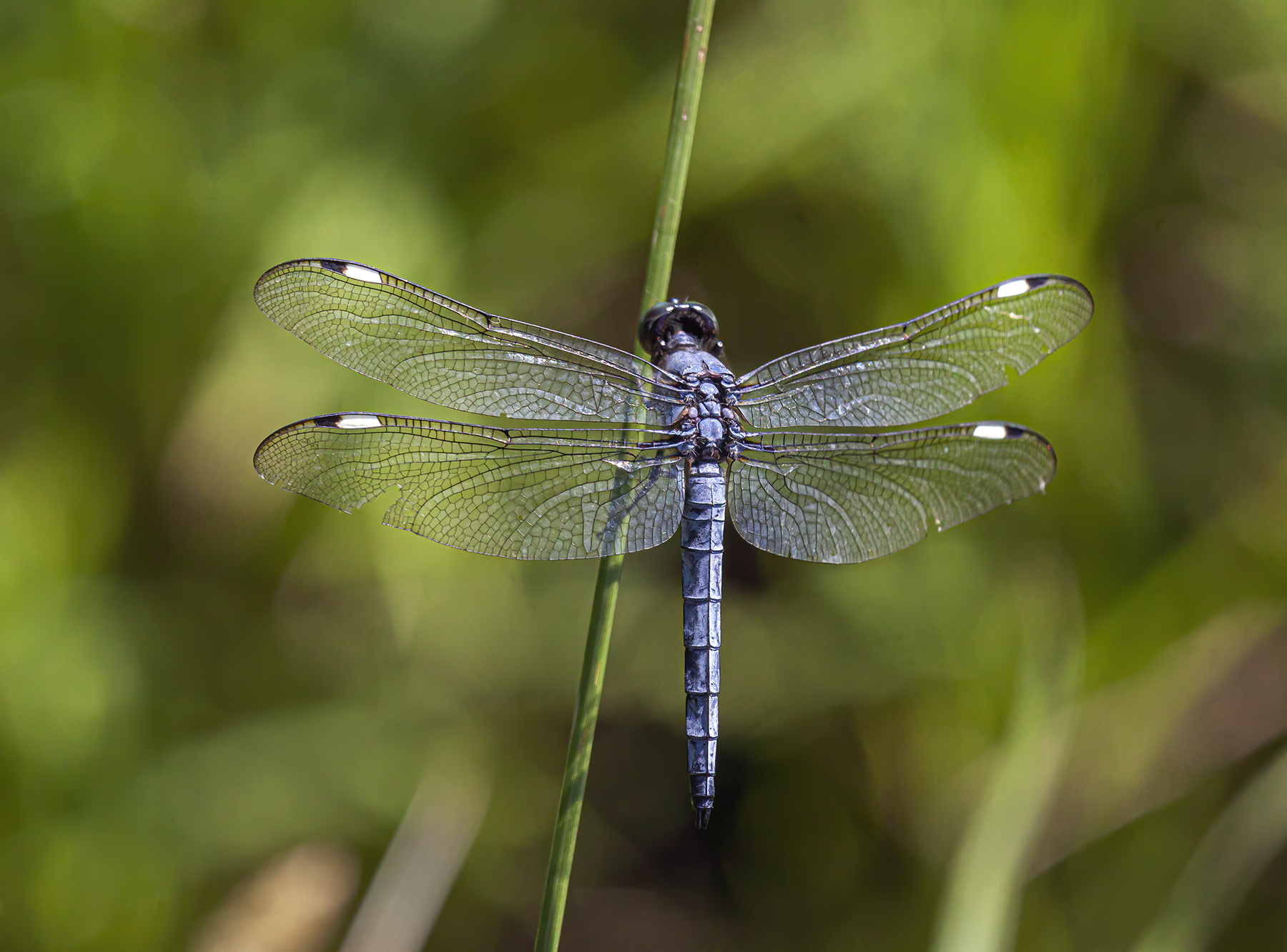
As summer progress, the once pristine wings of dragonflies and butterflies become increasingly tattered and torn. When I spotted this handsome Spangled Skimmer dragonfly (Libellula cyanea) last week at Occoquan Regional Park, I couldn’t help but notice that he has varying degrees of damage on the trailing edge of all of his wings. Comparatively speaking, the damage is minor and did not seem to inhibit his activity in any way—I have seen dragonflies with much more severe damage that were still able to fly.

How did his wings get damaged? Predators such as birds or even other dragonflies could inflict damage as could vegetation with sharp branches and thorns. When I looked closely at this dragonfly’s abdomen, I also noticed scratches there, which made me think of another potential source of some of the damage. It is now the prime season for mating and like most male dragonflies, this dragonfly is vigorously trying to do his part to perpetuate the species.

Dragonfly mating can be rough and could be the source of some of the visible damage. The final photo shows a mating pair of Spangled Skimmer dragonflies and, judging from the locations of the damage to its wings, the male in the first photo appears to be one of the participants.

In case you are curious about identifying this dragonfly species, the white “stigmata” on the trailing edge both male and female Spangled Skimmers, i.e. the “spangles” responsible for its common name, make this species an easy one to identify.

Spangled Skimmer

Mating Spangled Skimmers

© Michael Q. Powell. All rights reserved.
Read Full Post »

On Tuesday I spotted this handsome male Spangled Skimmer dragonfly (Libellula cyanea) at Occoquan Regional Park. This species is fairly easy to identify because of the “spangles,” the little white patches on the leading edges of the wings, often referred to as stigmata or pterostigmata. Most other species have darker colored stigmata or none at all.

If you use the meteorological calendar, summer started on the first of June. For most of us, though, who use the astronomical calendar, we have a few weeks to wait until the summer begins on the 20th of June. No matter how you calculate summer, I have noticed a lot more of the summer dragonfly species during my most recent outings. If things work out well, June could be a great month for dragonfly hunting, with the possibility of seeing some of the remaining spring species, plus the new summer ones.

spangled skimmer

© Michael Q. Powell. All rights reserved.


Read Full Post »