Feeds:
Posts
Comments

Posts Tagged ‘male Calico Pennant’

I was thrilled to spot this stunning male Calico Pennant dragonfly (Celithemis elisa) on Monday at Occoquan Bay National Wildlife Refuge. At this time of the year I am eager to search for the survivors of the summer species. The number of dragonflies continues to dwindle as we move deeper into September and I never know for sure when an encounter with one of the species will turn out to be the last one of the season.

I absolutely love the look of male Calico Pennant dragonflies. The beautiful patterning on their wings and the red heart-shaped markings on their abdomens really make them stand out. I guess that I am a bit romantic when it comes to those red hearts and I managed to find a shooting angle that allowed me to capture that detail really well in the image below.

Alas, this male was the only Calico Pennant that I spotted that day. Dragonflies spent a lot of their time looking for a mate and then doing their part to ensure the preservation of their species. Perhaps this solitary dragonfly will find a mate or maybe it is too late in the season for that. As I said, I am somewhat of a romantic and I choose to hope that love will find a way for him.

Calico Pennant

© Michael Q. Powell. All rights reserved.

Read Full Post »

The weather in my area this month has been mostly miserable. It has been hot and humid and we have had almost daily thunderstorms, resulting in a significant amount of localized flooding.

Some of the dragonflies in our are are also showing signs of the stresses of summer, like this male Calico Pennant dragonfly (Celithemis elisa) that I spotted during a recent visit to Occoquan Bay National Wildlife Refuge. The photo below shows a substantial amount of damage to the wings of this dragonfly. I can’t tell if the damage was caused by a predator or if it is part of the normal wear-and-tear associated with life as a dragonfly.

I hope to get out a bit more often with my camera during the second half of July, perhaps starting out a bit earlier in the morning before things heat up to miserable levels.

Calico Pennant dragonfly

© Michael Q. Powell. All rights reserved.

Read Full Post »

This past Friday I was delighted to spot some mature male Calico Pennant dragonflies (Celithemis elisa) at Occoquan Bay National Wildlife Refuge. Earlier this season I had seem some immature male Calico Pennants who still had yellow bodies. As they mature, male Calico Pennants turn red in a pattern that looks like a column of little hearts, as you can see in the second photo below.

Like other “pennant” dragonfly species, Calico Pennants like to perch precariously on the very tips of vegetation. Even the slightest breeze will cause them to flutter, like pennants in the wind.

You can’t help but notice the beautiful patterning in the wings that makes this species stand out from almost all other dragonfly species. Wow!

I took the first two photos when the dragonflies were perched nearby in the vegetation. Periodically the dragonflies would fly out over the water of a small pond at the wildlife refuge and would perch at the water’s edge. The shoreline was really mucky, so I could not get close to these dragonflies. I was happy, though, to be able to capture the final photo below, an “artsy” minimalist view of a Calico Pennant perched at an almost right angle on a slim blade of vegetation.

Calico Pennant

Calico Pennant

Calico Pennant

© Michael Q. Powell. All rights reserved.

Read Full Post »

Later in the season I can rely on coloration to distinguish between male and female Calico Pennant  dragonflies (Celithemis elisa)—the bodies of males are red and those of females are yellow. When they first emerge, however, immature males are yellow, so you have to look really closely at a given individual to determine its gender.

The terminal appendages of the dragonfly in the second photo indicate to me that it is a male, despite the fact that its body is yellow. The one in the first photo is also an immature male Calico Pennant dragonfly that is just beginning to change from yellow to red. I love the way that he is perched on the very tip of the flimsy vegetation stalk, holding tightly to it with all of his little legs.

I spotted these two dragonflies on 12 May at Occoquan Bay National Wildlife Refuge, my first sightings of this colorful dragonfly species of the year. There is something really special about the patterned wings of both genders of Calico Pennants and when viewed from the right angle, as in the second photo, the pattern on their bodies look like a series of hearts.

Calico Pennant

Calico Pennant

© Michael Q. Powell. All rights reserved.

Read Full Post »

I thought that the Calico Pennant dragonflies (Celithemis elisa) might be gone for the season, so I was thrilled to spot this handsome male last Monday (12 August) at Occoquan Bay National Wildlife Refuge. Calico Pennants are among the most colorful dragonflies that I encounter, with beautiful patterned wings. Early in their development, male Calico Pennants have yellow bodies, like their female counterparts, but eventually they become a bright red in color.

When I captured this image of the Calico Pennant, he was perched at the very tip of the vegetation, a favorite perching spot for this species. Like other pennant species, Calico Pennants often occupy precarious perches that cause them to flap like a pennant when even the slightest breeze is blowing.

Calico Pennant

© Michael Q. Powell. All rights reserved.

Read Full Post »

When male Calico Pennant (Celithemis elisa) dragonflies are immature, they have yellow markings on their bodies similar to those of the females. As the males mature, those markings turn bright red. I was thrilled to spot several mature male Calico Pennants last week at Occoquan Bay National Wildlife, the first adult males of this species that I have encountered this year.

The bright body markings and the prominent wing patches really make this dragonfly stand out, although they are quite small, about 1.2 inches (30 mm) in length.

Calico Pennant

Calico Pennant

© Michael Q. Powell. All rights reserved.

Read Full Post »

I love the light and delicate pose of this handsome male Calico Pennant dragonfly (Celithemis elisa) that I spotted during a recent visit to Occoquan Bay National Wildlife Refuge. Pennant dragonflies, like the Calico Pennant, usually perch on the very tips of vegetation where they sway in the slightest breeze—like a pennant.

The red of the dragonfly’s body and the green of the vegetation help the dragonfly to “pop,” because red and green are complementary colors, i.e. they are directly opposite each other on the traditional color wheel that artists use.

Callico Pennant

© Michael Q. Powell. All rights reserved.


Read Full Post »

On Monday I finally spotted some mature male Calico Pennant dragonflies (Celithemis elisa) with red markings at Occoquan Bay National Wildlife Refuge. Heretofore all of the males that I had seen this year were immature and had yellow markings, like those of their female counterparts.

The first two photos show male Calico Pennants. I love the way that the red marking on the abdomen look like a series of tiny hearts. The dragonfly in the third photo is an immature male—you can tell that it is a male by looking at the shape of the tip of the abdomen (the “tail”).

For the sake of comparison, I have added a final photo of a female Calico Pennant from a posting I did in May 2020. You can readily see that the dragonflies in the last two photos are similar in coloration, but you have to look a bit closer at them to see that the wing patterns are slightly different and the shapes of the terminal appendages are quite different.

Most of us tend to rely on colors for identifying species of birds and insects, but I have learned over time that color is often not a reliable identification feature, especially for immature subjects, when the males and females are often similar in color and the color differentiation becomes apparent only when they mature.

Calico Pennant

Calico Pennant

Calico Pennant

Calico Pennant

© Michael Q. Powell. All rights reserved.

Read Full Post »

Calico Pennant dragonflies (Celithemis elisa) often remind me of pole vaulters. They hold on to a long, narrow “pole” at the very end and flex it, as though they were trying to propel themselves over a bar. I spotted this handsome male Calico Pennant last Saturday at Occoquan Bay National Wildlife Refuge, one of the few local spots where I encounter this spectacular species.

This will probably be my last blog posting this week. I will be driving from Virginia to Massachusetts later today to deal with some family issues and will return home this coming weekend, when I hope to resume my habit of posting nature and wildlife photos almost daily.

Calico Pennant

© Michael Q. Powell. All rights reserved.


Read Full Post »

When I am writing a blog posting with multiple photos, I will usually lead with the “best” photo. Most of the time I have a clear favorite image, but today I struggled a bit in trying to decide which image of a Calico Pennant (Celithemis elisa) was the “best” one. I was delighted on Monday at Occoquan Bay National Wildlife Refuge to have multiple opportunities to photograph male Calico Pennants, which are among the most striking dragonflies that I encounter, thanks to their bold coloration and wonderfully patterned wings.

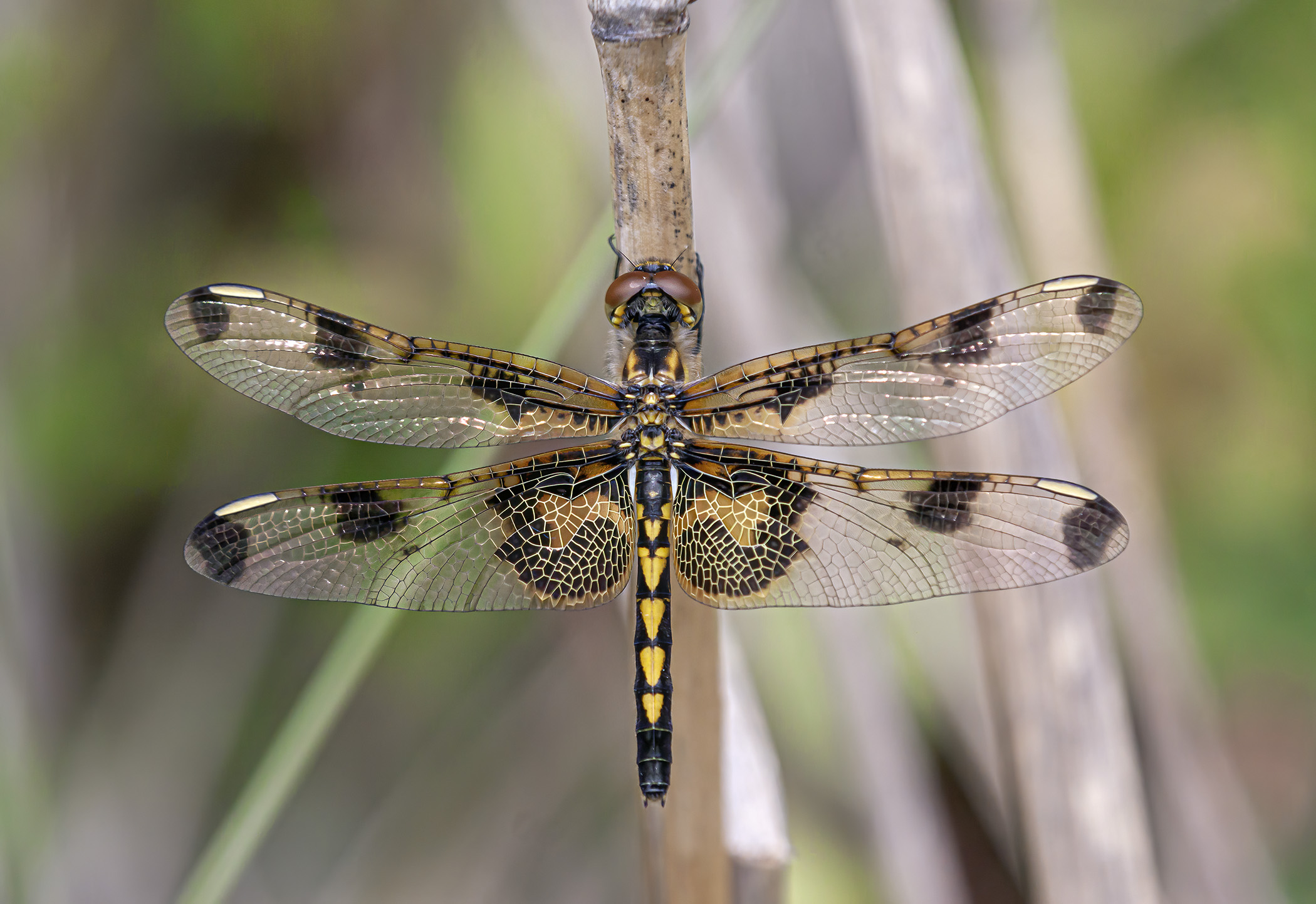
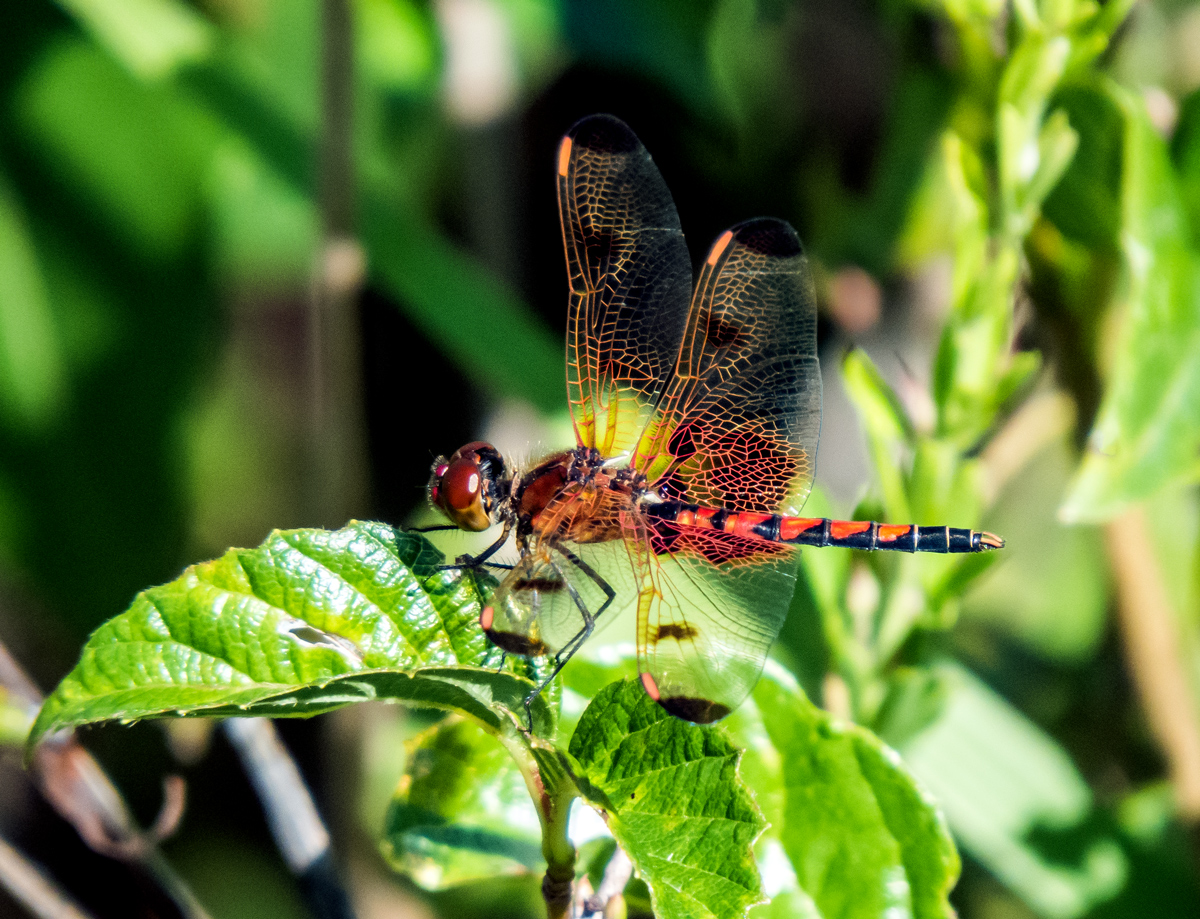
From a technical perspective, the first image could be considered the “best.” The background is pleasantly blurred and virtually all of the dragonfly’s features are in sharp focus. Graphically this image stands out, even when viewed as a thumbnail on a cell phone.

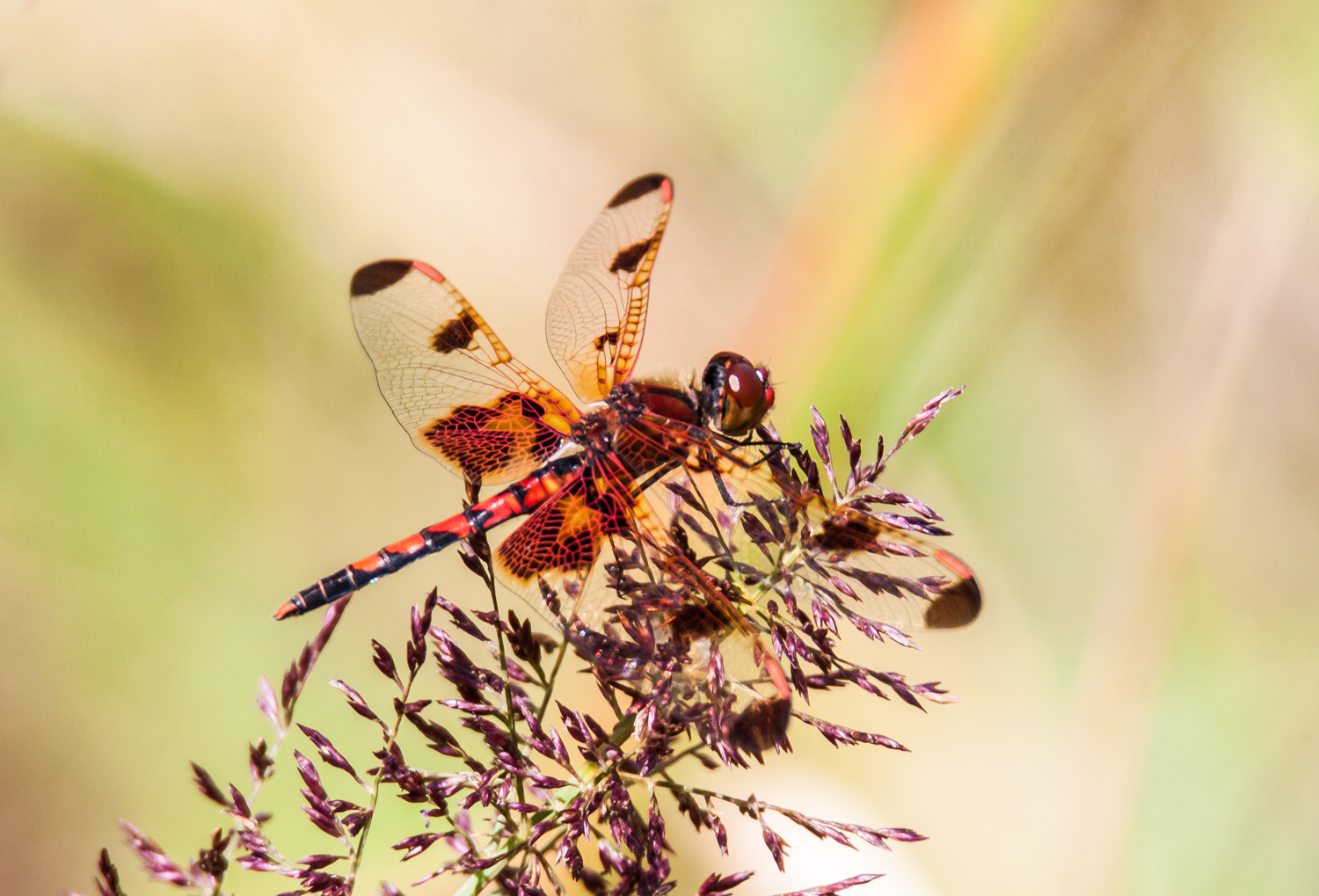
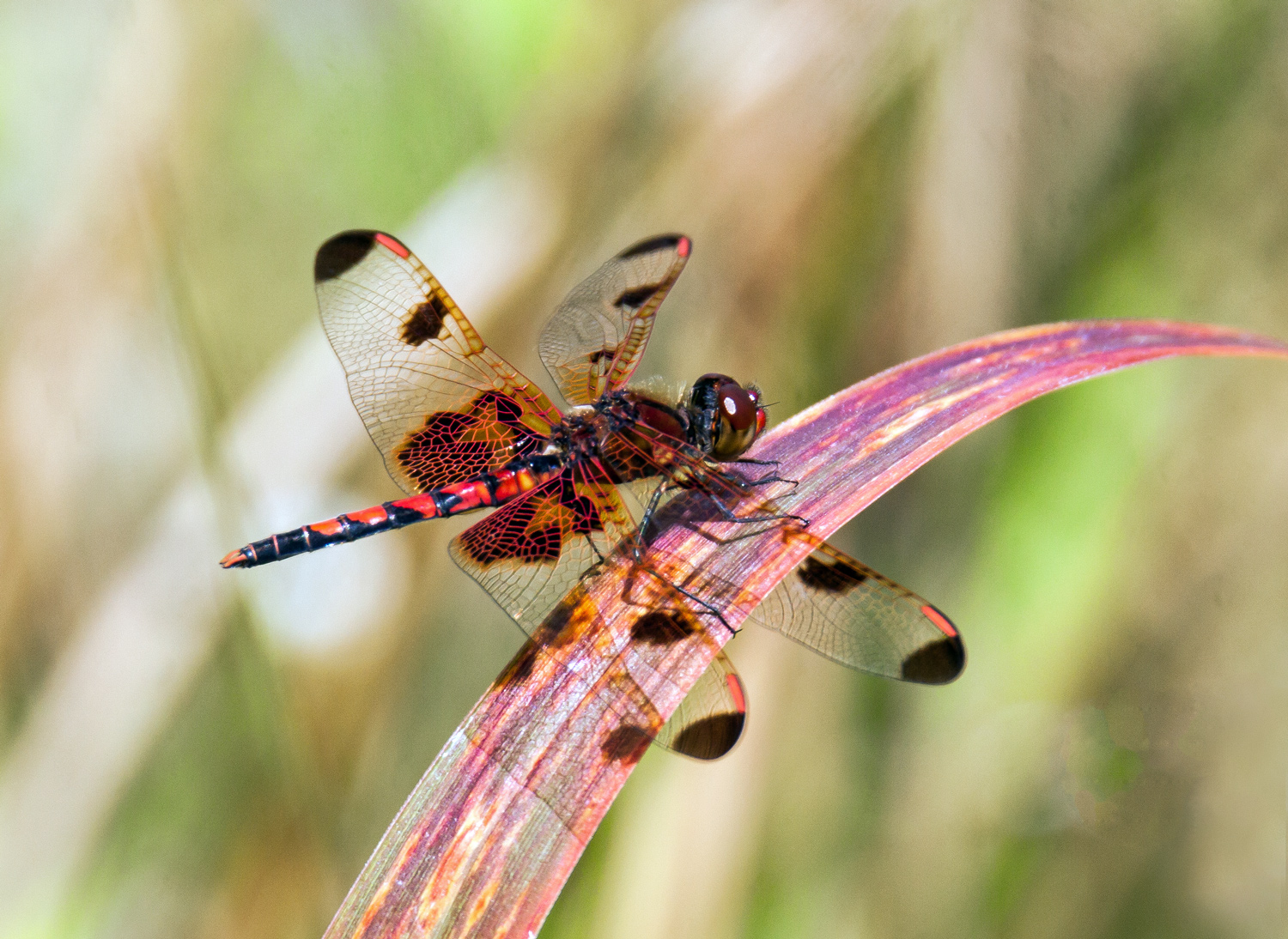
The background in the second image is considerably more cluttered than in the first image. However, I think the color contrast between the bright red of the dragonfly and the pinkish-purple colors in the background makes it easy to see the primary subject. The vegetation helps to provide the viewer with a sense of the environment in which I photographed the dragonfly.

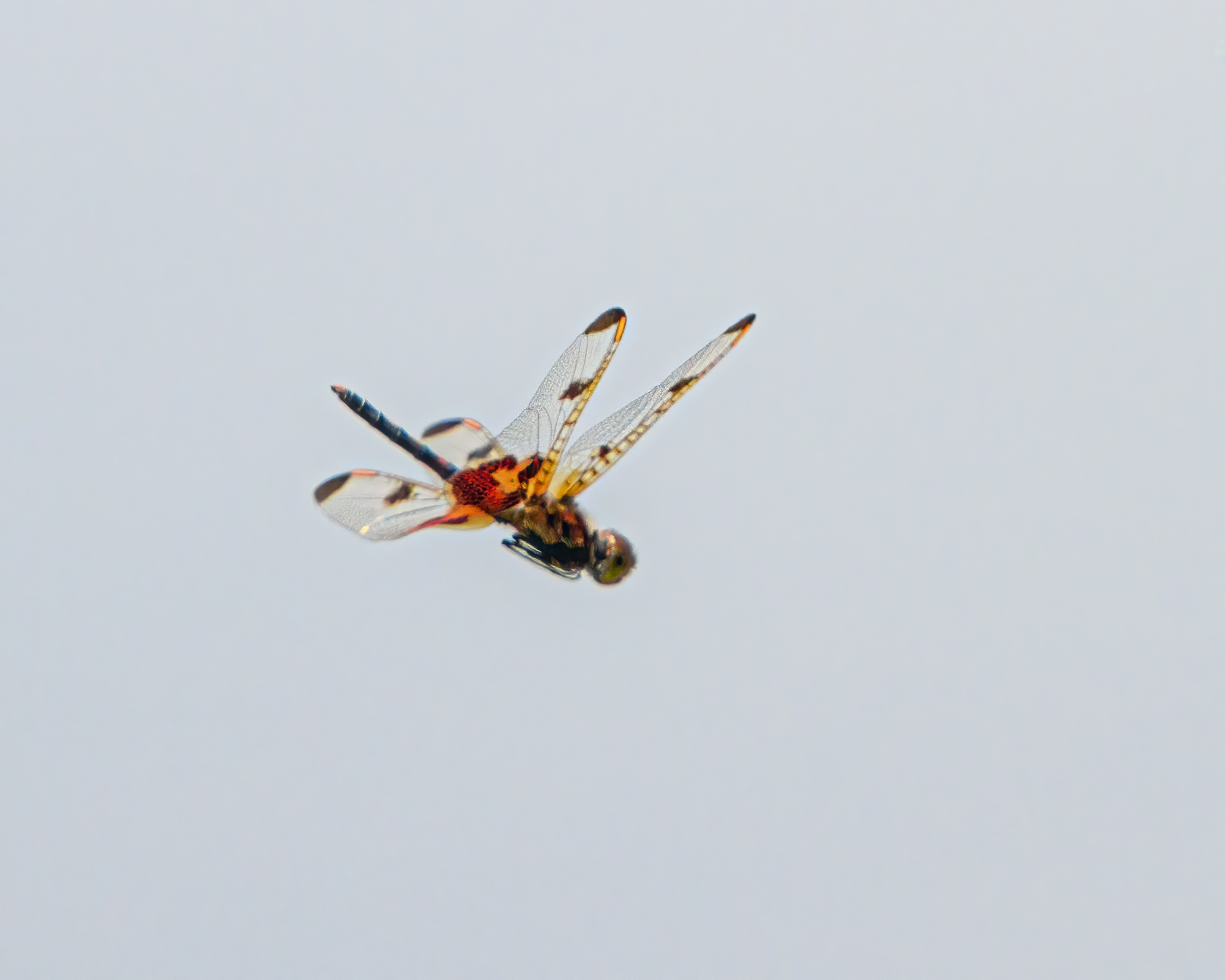
The third image was the most challenging to capture. Several Calico Pennants were flying around over the waters of a pond and I was thrilled to capture this in-flight shot, my first such photo of this species. Most of the other dragonflies that I have photographed as they were flying were considerably larger—a Calico Pennant is only about 1.3 inches (33 mm) in length—and it took a lot of persistence and concentration to get this shot.

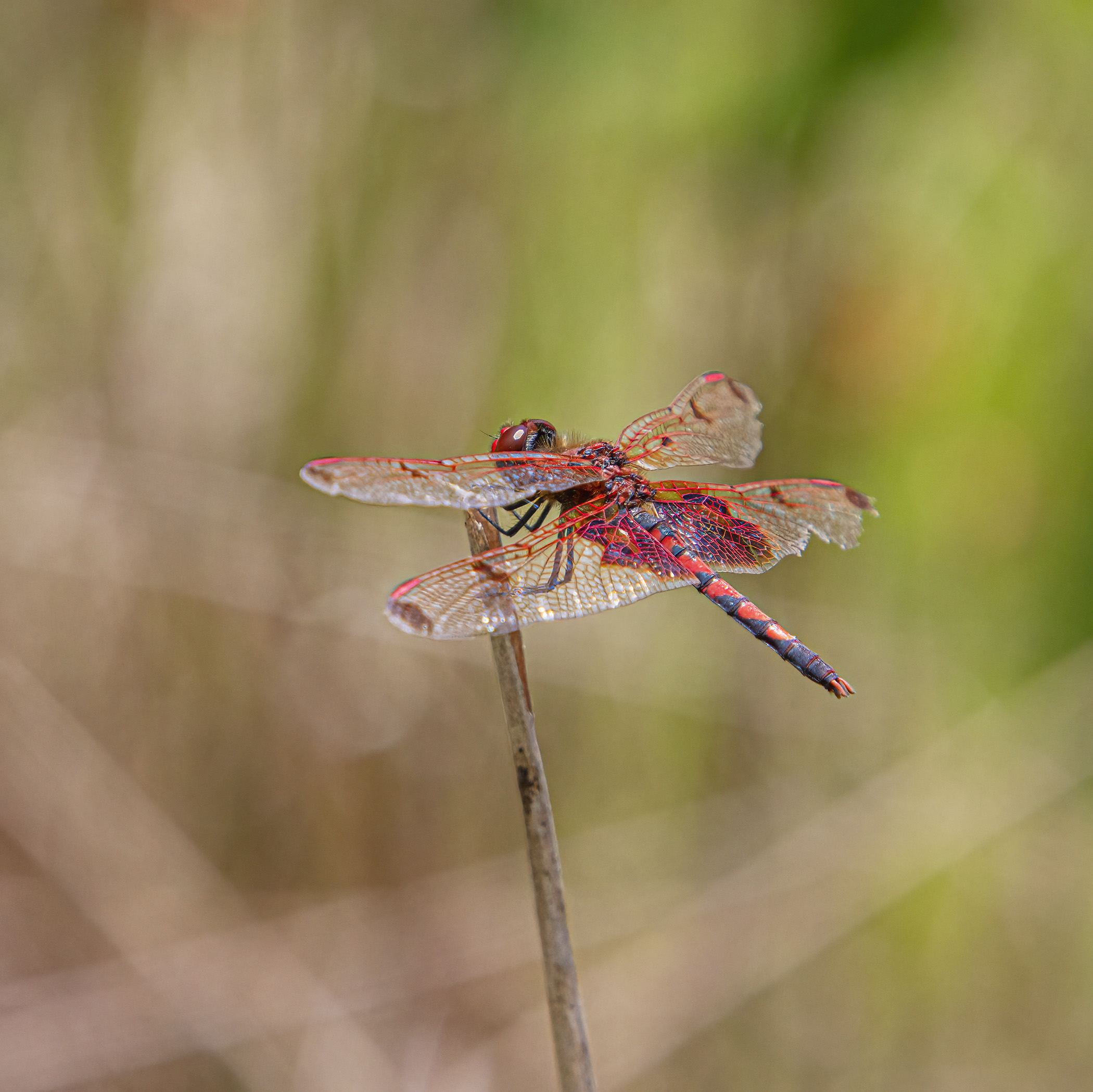
The final shot was a lucky one. I was focused on the perched dragonfly and reacted quickly when it took off. From an artistic perspective, I really like this image. The mottled colors of the pond works well as a backdrop for the action and the contrast between the muddy brown and the bright red of the dragonfly makes the subject “pop.” I love the texture of the branch and the branch helps to lead the viewer’s eyes to the dragonfly. Finally, the dragonfly’s wing patterns are displayed beautifully as I managed to capture a moment when they were fully extended.

I don’t know if it is possible for me to state definitively which one of these images is the “best”—I like each of them for different reasons. Is there one that stands out to you more than the others? I’d welcome your views on this question.

Calico Pennant

Calico Pennant

Calico Pennant

Calico Pennant

© Michael Q. Powell. All rights reserved.

Read Full Post »

I was delighted on Thursday at Occoquan Bay National Wildlife Refuge to see that the Calico Pennant dragonflies (Celithemis elisa) are still with us. Now that we have entered into September, I have begun an unofficial countdown for each species. Every encounter is now even more special, because oI am conscious that it coule be the last one of this dragonfly season.

A couple of weeks ago I featured a beautiful yellow-bodied female Calico Pennant dragonfly (see the posting Female Calico Pennant from 24 August if you need to refresh your memory of this delicate creature). Today I am spotlighting an equally stunning male Calico Pennant. I absolutely love the multi-colored pattern on his hind wings and the bright red markings on his body—the red markings look like a series of little hearts when viewed directly from above.

Calico Pennant

© Michael Q. Powell. All rights reserved.

Read Full Post »

I was quite surprised and delighted to spot a male Calico Pennant dragonfly (Celithemis elisa) yesterday at Occoquan Bay National Wildlife Refuge. I thought I would have to wait another couple of weeks to find one of these tiny dragonflies that are only 1.3 inches (33 mm) in length, but perhaps our recent warm weather prompted this dragonfly to emerge early.

The Calico Pennant is one of a small group of dragonflies known as “pennants.” As you can see from these two images, pennant dragonflies like to perch on the very tips of flimsy stalks of vegetation where they are whipped about by the slightest breezes like pennants in the wind.

Calico Pennant


Calico Pennant

© Michael Q. Powell. All rights reserved.

Read Full Post »

Almost all of the male Calico Pennant dragonflies (Celithemis elisa) that I have seen this season have been immature. How can I tell? When male Calico Pennants are young their abdomens are bright yellow, like those of the females. As they mature their abdomens turn a beautiful shade of red, like the male Calico Pennant in the image below that I captured on Monday at Occoquan Bay National Wildlife Refuge.

You might think that it would be easy to spot a dragonfly with such gaudy colors, but Calico Pennants are small and elusive. I usually manage to find them in the waist high vegetation in a field at the edge of a small pond at the refuge.

If you would like to compare the coloration of this male Calico Pennant with that of an immature male, check out the my posting from a couple of weeks ago entitled “Immature Calico Pennant dragonfly.”

Calico Pennant

© Michael Q. Powell. All rights reserved.


Read Full Post »

Some of the dragonfly species that I search for are around for only a few weeks, while other species have a flight season of multiple months. Calico Pennants (Celithemis elisa) are in the latter category. I photographed some Calico Pennants in the middle of June and spotted this colorful immature male this past Tuesday—I am happy to see that they are still around.

Calico Pennants are so small—about 1.3 inches (33 mm) in length—that many viewers have probably never seen one. I love their bright colors and multi-colored wing markings. Adult males are red while females and immature males, like this one, are yellow. I can tell that this one is a male because of the distinctive appendages at the tip of the abdomen.

If you want to see photos of a female Calico Pennant and an adult male, be sure to check out the earlier posting entitled “Calico Pennant dragonflies in June.”


Calico Pennant

© Michael Q. Powell. All rights reserved.

Read Full Post »

Last Friday I spotted this handsome adult male Calico Pennant dragonfly (Celithemis elisa) while exploring Occoquan Bay National Wildlife Refuge with my friend and fellow dragonfly enthusiast Walter Sanford.  Earlier this month I did a posting entitled Mosaic Wings that featured a photo of an immature male of this same species that had a bright yellow body. This image gives you an idea of how the body color changes to red as the male Calico Pennant dragonfly matures.


Calico Pennant

© Michael Q. Powell. All rights reserved.

Read Full Post »

Dragonfly wings are amazing, but most of the time they are so transparent that it is hard to see all of the tiny little “cells” that make up the wings. Last Friday, though, I captured this shot of an immature male Calico Pennant dragonfly (Celithemis elisa) at Occoquan Bay National Wildlife Refuge that really highlights the beautiful mosaic-like pattern of its hind wings. Wow!

Calico Pennant

© Michael Q. Powell. All rights reserved.


Read Full Post »

Last Tuesday as I was exploring Occoquan Bay National Wildlife Refuge I spotted this handsome male Calico Pennant dragonfly (Celithemis elisa). Unlike some species that perch close to the ground and are hard to see, Calico Pennants perch on the uttermost tips of vegetation. Although they are visible, they are often hard to photograph, because their precarious perches start to sway at the slightest hint of a breeze.

Calico Pennant

© Michael Q. Powell. All rights reserved.

Read Full Post »

It is great to see that at least a few colorful Calico Pennant dragonflies (Celithemis elisa) are still around. I photographed this handsome male last Friday as he perched at water’s edge at the small pond at Occoquan Bay National Wildlife Refuge.

Summer is slowly slipping away. Some species of dragonflies are already gone for the year and others will soon follow suit. A few species have yet to appear, so all of the news is not bad. Still, as kids return to school and the daylight hours become noticeably shorter, it’s hard not to have the feeling that the lazy days of summer are coming to a close.

Autumn is my favorite season for a number of different reasons, but I am not quite ready to give up on summer. So I’ll keep sweating and searching, seeking to capture the summer beauty that still surrounds us. Like this dragonfly, I’m still holding on.

calico pennant

© Michael Q. Powell. All rights reserved

Read Full Post »

I was really happy to spot a couple of male Calico Pennant dragonflies (Celithemis elisa) during a visit today to Occoquan Bay National Wildlife Refuge in Woodbridge, Virginia. The weather was pretty cool when I set out early this morning, about 56 degrees (13 degrees C), so I was not certain that I would be able to find many dragonflies. Fortunately for me it warmed up a bit and a few dragonflies appeared.

The bright red color of this dragonfly helps a little in finding them, but Calico Pennants are pretty small and it is easy to lose them in the vegetation. I shot the first two shots with my Canon 50D DSLR and Tamron 150-600mm telephoto zoom lens and the third one with my Canon SX50 super zoom camera. The poses are not identical, but I think that you can see how much shallower the depth of field is when using the DSLR than the point-and-and-shoot—I think it is related to the difference in the size of the sensors in the cameras.

Calico Pennant

Calico Pennant

Calico Pennant

© Michael Q. Powell. All rights reserved


Read Full Post »