Feeds:
Posts
Comments

Posts Tagged ‘Holmes Run’

A group of small birds was foraging in the shallow waters of a stream and I approached them quietly, hoping to get close enough to isolate one of them with my camera. They seemed to be in constant motion and I followed them, waiting and hoping. Finally they stopped for a moment and I crouched low and took this shot of what I believe to be a Least Sandpiper (Calidris minutilla).

I thought about cropping the image a little so that the bird would not be quite as centered, but I decided that I like the ripples in the left corner too much to cut them off. What you see in this posting, therefore, is the framing as the image came out of the camera.

Least Sandpiper

© Michael Q. Powell. All rights reserved.

Read Full Post »

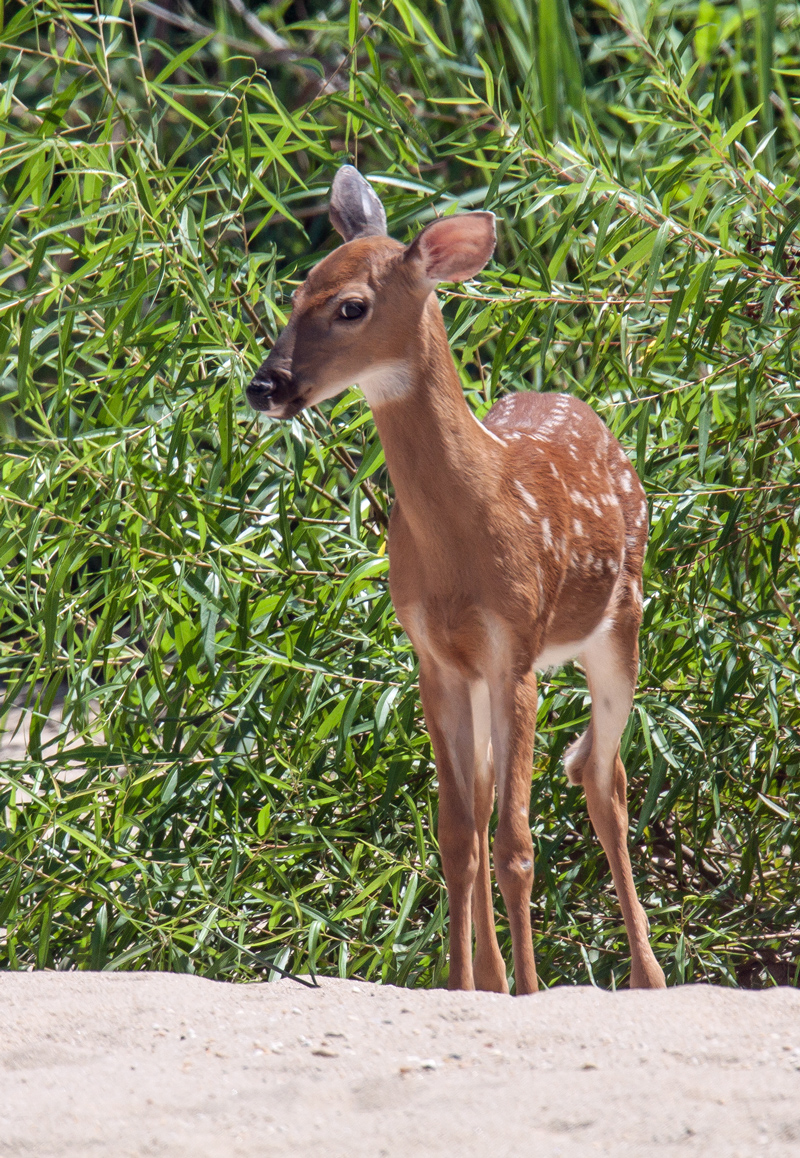
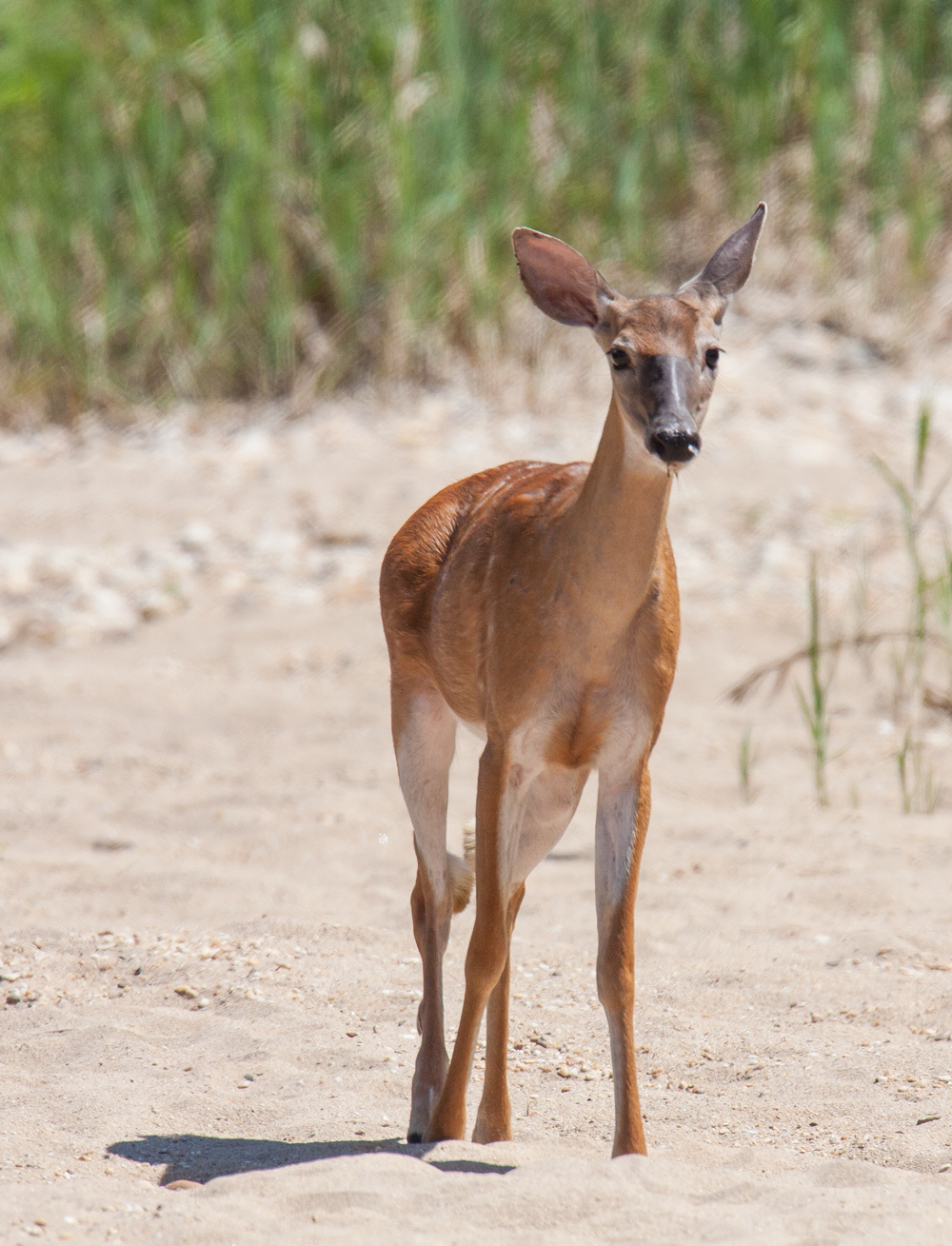
Last weekend I encountered an adorable family of White-tailed Deer (Odocoileus virginianus) while walking along a sandy area of Holmes Run, a stream not far from where I live that eventually flows into the Potomac River.

I had unobstructed views of the deer and was able to get some shots with my telephoto zoom without scaring them away. Unfortunately, the loud sounds of a passing freight train caused them to turn and run into the brush as I was trying to get shots from additional angles.

Still, I am happy with my results and think the sand adds a different look to my normal shots of deer in vegetation.

White-tailed deer

White-tailed deer

White-tailed deer

White-tailed deer

© Michael Q. Powell. All rights reserved.

Read Full Post »

What is the most beautiful bird that you can see in the wild in your area? We have lots of pretty birds here in Northern Virginia, but I could make a really strong case for the male Wood Duck (Aix sponsa) as the most stunning bird.

Alas, wood ducks are also amazingly elusive and it is rare that I get a glimpse of one of them. Toward the end of November, however, I was thrilled when I caught sight of one in Holmes Run, a tributary stream of the Potomac River. I was on a bridge pretty high above the stream and the duck did not seem to sense my presence, so I was able to get some decent shots as he swam in and out of the light.

The water in which the duck was swimming looks amazing, with swirls and colors that complement the Wood Duck’s bright colors and striking patterns.  I am not sure what caused the effect, but I really like it.

This was the only Wood Duck that I spotted all autumn, but it sure was worth waiting for. I’ll be keeping an eye out for these beauties as we move deeper into winter.

Merry Christmas and Happy Holidays to all of you.

Wood Duck

Wood Duck

© Michael Q. Powell. All rights reserved.

Read Full Post »

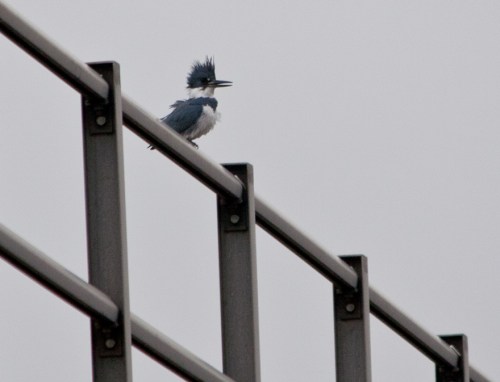
Walking alongside a stream yesterday, I heard the unmistakable call of a Belted Kingfisher, a call that is usually described as a “piercing rattle.” Here is a link to the Cornell Lab of Ornithology, which has sound clips that you might find interesting if you have never heard a Kingfisher’s call in person.

A previous post chronicled my quest for an elusive female Belted Kingfisher (Megaceryle alcyon) at a little suburban lake that is stocked with trout. I made multiple attempts on different days to photograph that Kingfisher as she perched on tree branches overlooking the water.

Although the stream along which I was walking yesterday is only a half mile or so from the female Kingfisher’s fishing spot, I was surprised to hear a Kingfisher’s call, because there are no trees on the banks of the stream at that location. When I heard its call again, I turned my head in the direction of the sound and was surprised to see a male Kingfisher perched on a power line above the stream. (It’s really easy to distinguish a male Belted Kingfisher from a female, because the male has only a blue stripe on is chest and a female has blue and chestnut stripes.)

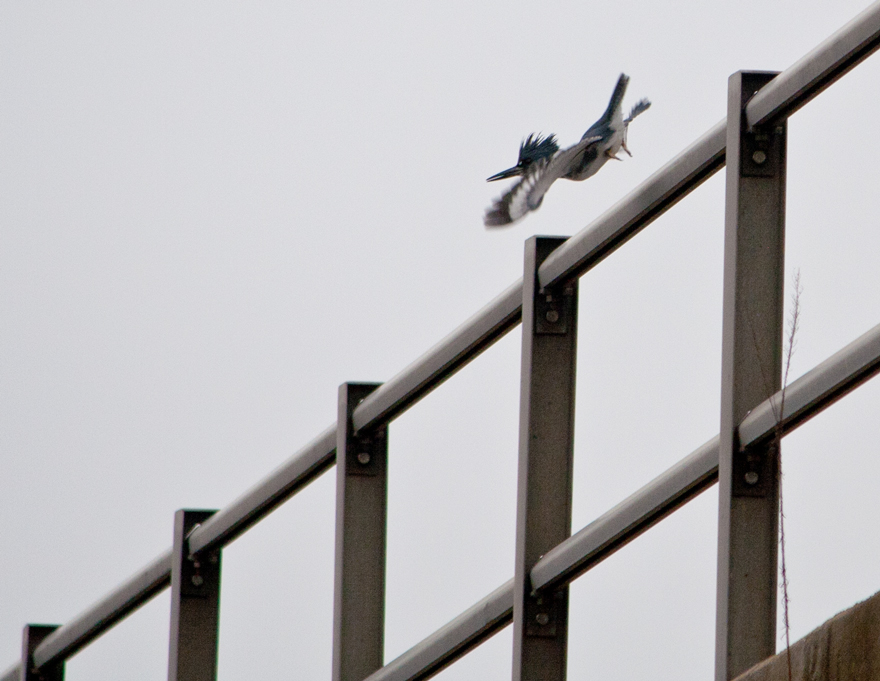
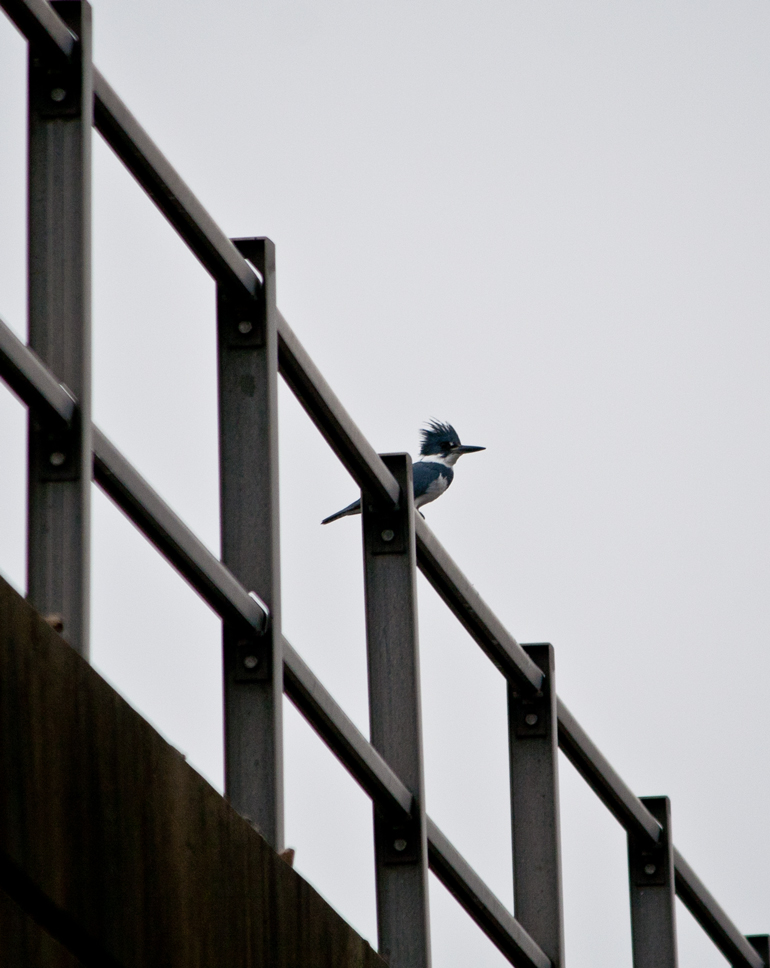
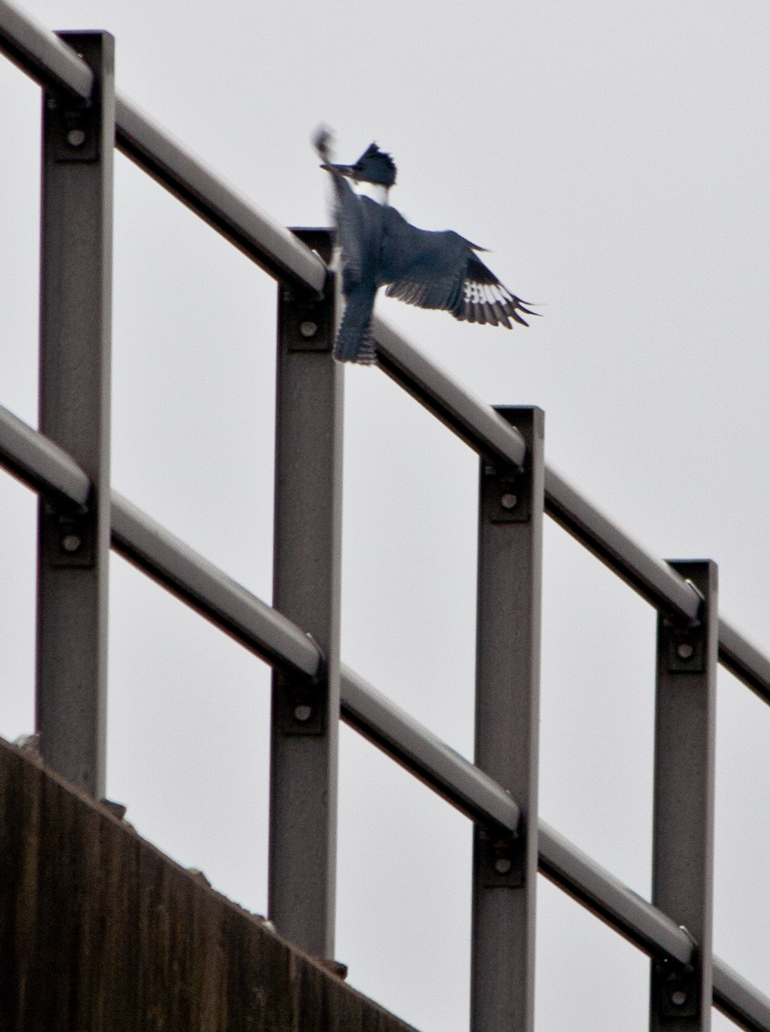
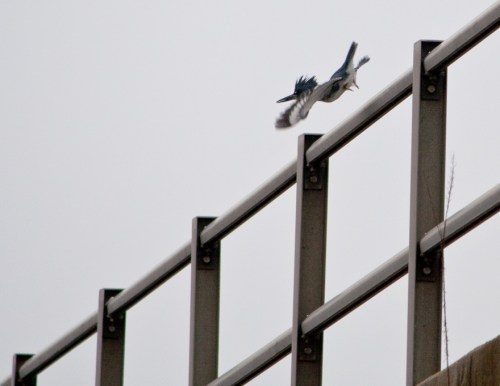
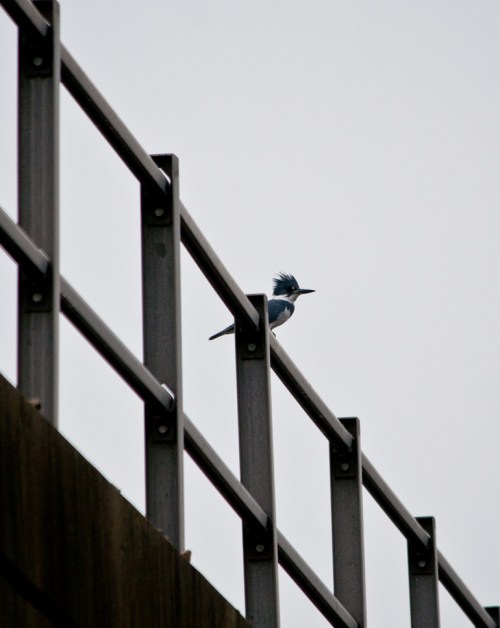
When I moved a little closer to him, he flew a short distance downstream and I located him again, this time perched on the railing of a railroad bridge over the stream. Over the course of an hour or so, he and I played  a little game in which he would pose for a few minutes on the railing and then fly downstream. A short while later he would be back on the suspended power line. I would walk slowly in the direction of the power line and once I arrived there, the Kingfisher would return to the railroad bridge.

Although I was not able to get really close to the Kingfisher, I managed to get some pretty cool pictures, including several in-flight shots. I really like the industrial-looking setting of the railroad bridge, with its simple geometric structure and beautiful angular lines. In many ways, the bridge is a much a subject in the photos as the bird.

I confessed in a previous post that I was a stalker of Kingfishers, but maybe it’s time to elevate my status—perhaps from now on I will refer to myself as a member of the Kingfisher paparazzi.
kingfisher_M3_blogkingfisher_M1_blogkingfisher_M2_blogkingfisher_M5_blogkingfisher_M6_blogkingfisher_M4_blog

© Michael Q. Powell. All rights reserved

Read Full Post »