Feeds:
Posts
Comments

Posts Tagged ‘female Common Whitetail’

It is a bit early to be thinking of autumn, but early signs are beginning to appear. On Monday, classes begin for public school students in our county and traffic will be crazier than ever as commuters and school buses adjust to a changed dynamic.

Some species of summer dragonflies are beginning to disappear and I have begun to search for their autumn replacements. The trails at the wildlife refuges that I haunt are now littered with fallen leaves, making it hard to spot those species that perch on the ground.

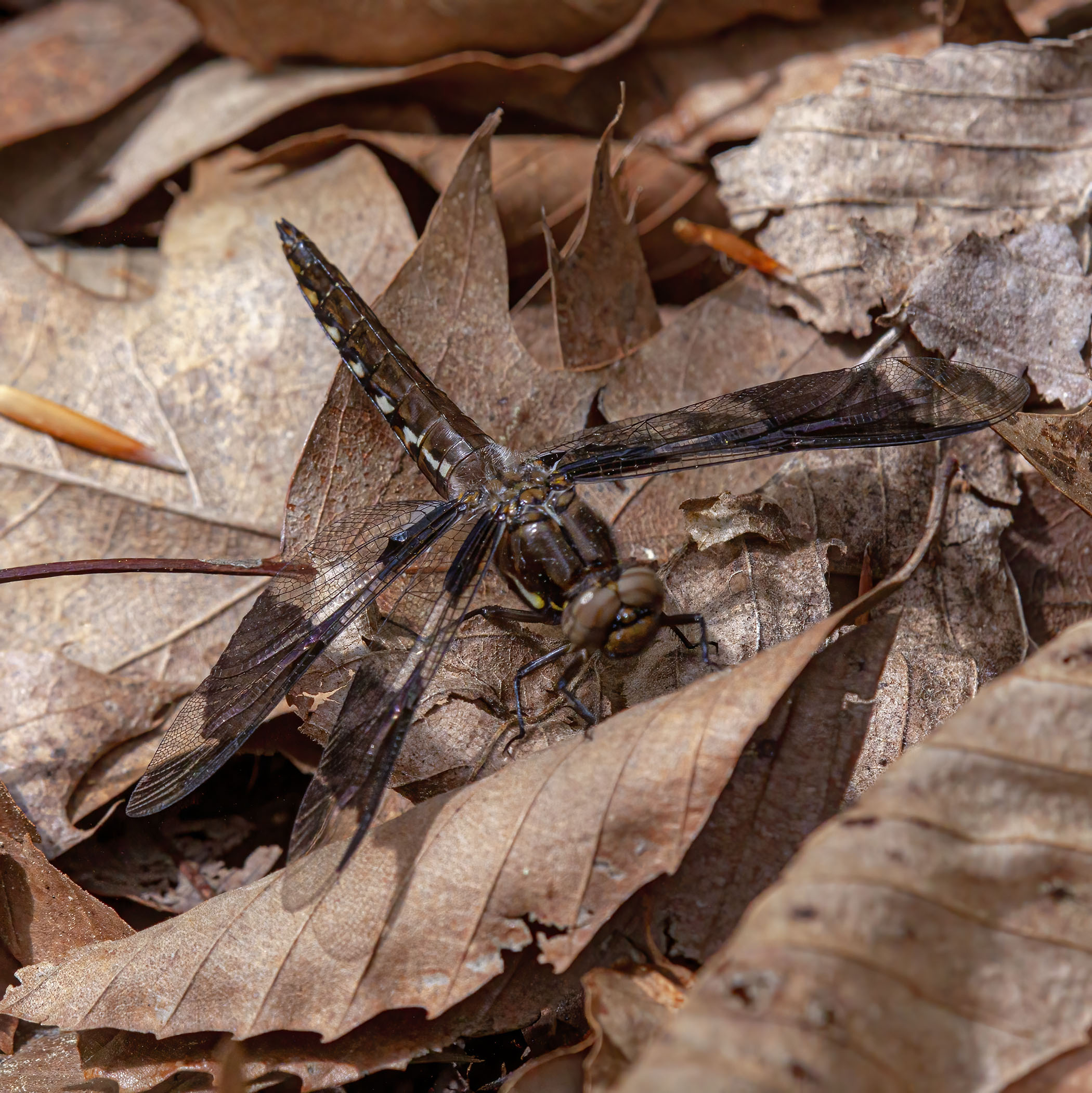
This past Monday I captured this shot of a female Common Whitetail dragonfly (Plathemis lydia) at Huntley Meadows Park. This species is one of the most common in my area at this time of the year and I spotted a lot of them during my visit to the park. I particularly like the way that I was able to capture the texture and detail of the dried leaves on which the dragonfly was perched—I can almost hear the crunch of those leaves as I walked through them that day.

Truth be told, autumn is my favorite time of the year and I am patiently waiting for it to arrive. In the meantime, I am still enjoying the summer. “To everything there is a season, and a time to every purpose under heaven.”

Common Whitetail dragonfly

© Michael Q. Powell. All rights reserved.

Read Full Post »

Common Whitetails (Plathemis lydia) can be found almost everywhere and are among the first dragonflies to appear in the spring and the last to survive in the fall. I nonetheless enjoy trying to capture creative images of them, like these two that I spotted this past week.

How do wildlife photographers choose their subjects? Some of them are attracted almost exclusively to rare and/or exotic species and are always looking for something new to photograph. Their mentality is close to those of many birders, who keep “life lists” of all the birds they have seen and are always lookin got add another one to the “list.”

Other photographers, like me, are content to photograph a more limited selection of subjects over and over again, hoping to capture something new and different, finding the extraordinary in the ordinary. The first photo is one such example—I love the prominent specular highlights in the image and the unusual pose of this female Common Whitetail with one of her legs extended.

At other times, I am simply trying to compose an image creatively, as in the second photo below. There is nothing super special about this shot of a male Common Whitetail, but I tried to add some visual interest by including some of the vegetation at the base of its perch and a portion of the lily pads in the distance. It is not a prize-winner by any standards, but I like the overall “feel” of the pleasant little image.

Female Common Whitetail

Male Common Whitetail

© Michael Q. Powell. All rights reserved.


Read Full Post »

Common Whitetail dragonflies (Plathemis lydia) are probably the most common dragonflies in my area. They are among the first species to appear in the spring and among the last to be seen in the autumn and can be found in a variety of habitats. I photographed my first Common Whitetails of the season last week at Accotink Bay National Wildlife Refuge.

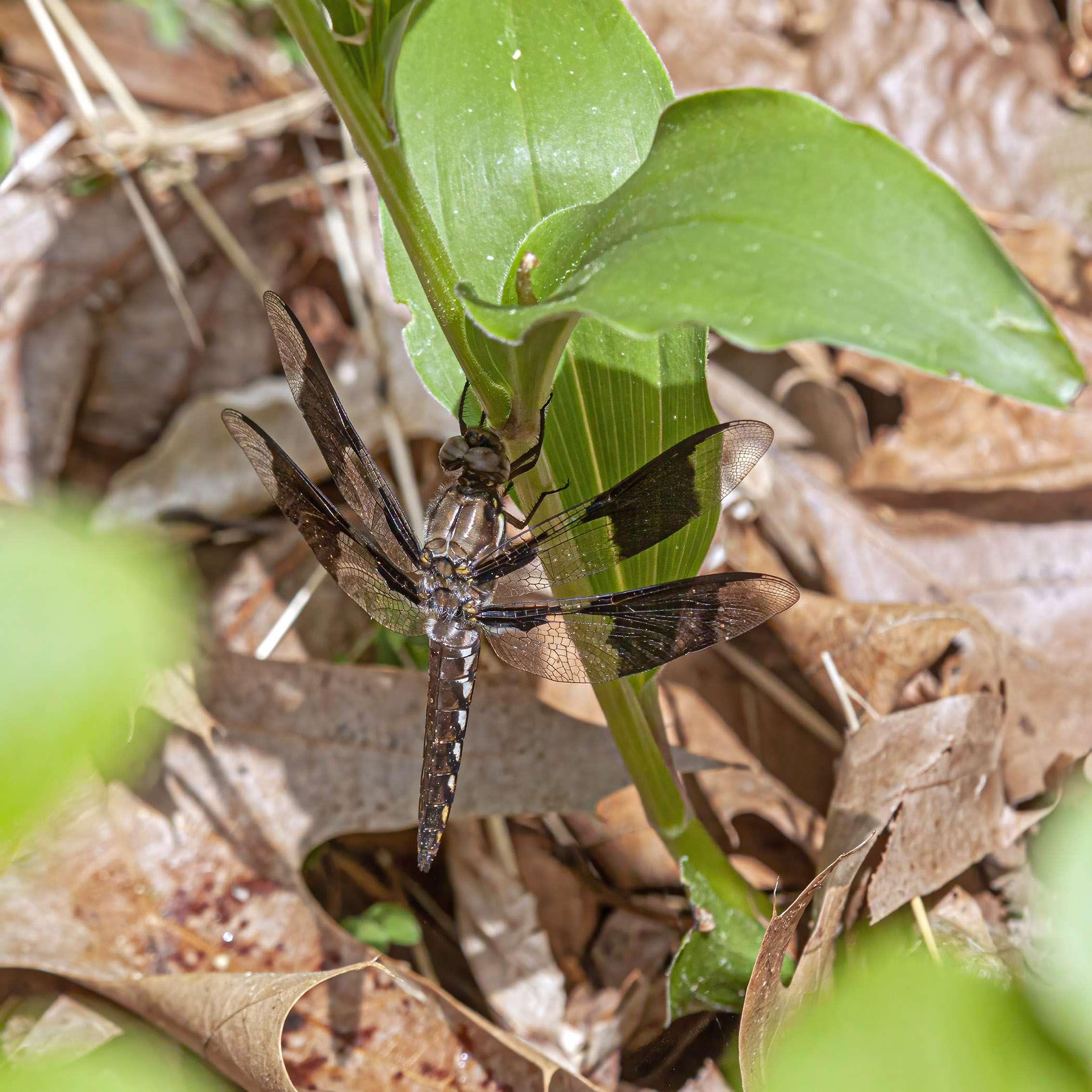
When they are adults, it is easy to distinguish the male Common Whitetails from the females—the males have white-blue abdomens and the females have brown abdomens. Immature males, however, have the same coloration as the females. If you look at the first two photos below, you can see that the coloration and markings on the two dragonflies is quite similar, but the first one is an immature male and the second one is a female.

For Common Whitetails, the first thing I do is to look at the pattern of dark patches on the clear wings. Males have two patches per wing and females have three, including one that extends to the wingtip. This is really easy to see in the first two photos, because the dragonflies were perched above the ground.

Quite often, though, Common Whitetails will perch flat on the ground in the leaf litter, as in the third photo, and it is a little tougher to see the wing markings. As long as you can see a clear wingtip, however, you can tell that it is a male.

There are, of course, other ways to tell the gender of a Common Whitetail, if you can’t see the wings. If you look really closely at the tips of the abdomen (the “tail”), for example, you can see that they are shaped differently—the male’s terminal appendages are more tapered, while the female’s are more stubby in appearance.

I don’t consider myself an expert in dragonflies and my background is not in science, but I have learned about these colorful aerial acrobats over the last ten years of photographing them. Folks sometimes ask me how I can tell the gender of a dragonfly and I think it cool to be able to explain what is going on in my mind when I am trying to figure out what I have photographed. This is especially true when I have photos that show both the male and female of a species, as was the case with these Common Whitetail dragonflies.

Common Whitetail

Common Whitetail

Common Whitetail

© Michael Q. Powell. All rights reserved.
Read Full Post »

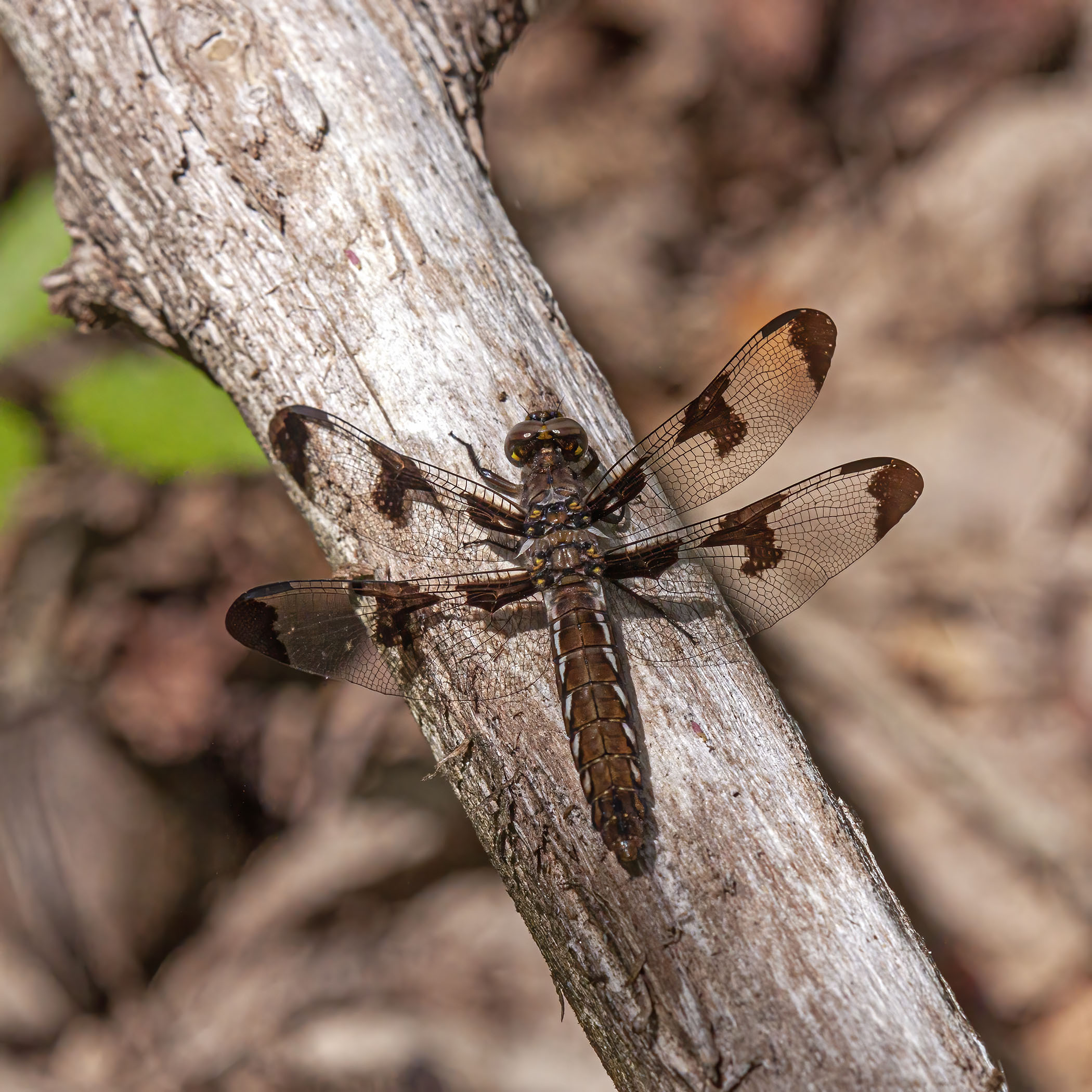
Common Whitetail dragonflies (Plathemis lydia) often perch flat on the ground, where they are relatively easy to spot. When this pretty little Common Whitetail female decided on Wednesday to perch on the side of a large tree, however, she almost disappeared from sight—the pattern of the light and shadows and the muted tones of the bark and the vegetation growing on the tree served to camouflage her presence almost perfectly.

I really like the limited palette of colors in this image and the relative simplicity of the composition. The rough texture of the bark helps to break up the background of the image and add some visual interest without being overly distracting.

Common Whitetail

© Michael Q. Powell. All rights reserved.
 

Read Full Post »