Feeds:
Posts
Comments

Posts Tagged ‘Euptoieta claudia’

The number of butterflies continues to dwindle, so I was thrilled to spot this pretty little Variegated Fritillary butterfly (Euptoieta claudia) last Tuesday at Occoquan Bay National Wildlife Refuge. The weather has gotten cooler and it won’t be long before below freezing temperatures arrive, so I will be out chasing these last summer survivors until none remain.

Variegated Fritillary

© Michael Q. Powell. All rights reserved.

Read Full Post »

I chased this small orange butterfly around for quite a while before it finally landed. Only then was I able to determine that it was probably a Variegated Fritillary butterfly (Euptoieta claudia), a species that I do not see very often. I looked over my old blog postings and discovered that most of my sightings of this species have been late in the season—earlier in the season I tend to see the somewhat similar-looking Great Spangled Fritillary more often.

We have had a decent amount of rain recently, so there is still a lot of green in the vegetation that provides a nice contrast with the orange and brown tones of the butterfly. Those colors somehow remind me of the imminent arrival of the fall season. There is still a bit of the summer to enjoy, however, so I am not quite ready to jump ahead to the autumn—I prefer to live in the moment and celebrate what is in front of me in the present moments.

Variegated Fritillary

© Michael Q. Powell. All rights reserved.


Read Full Post »

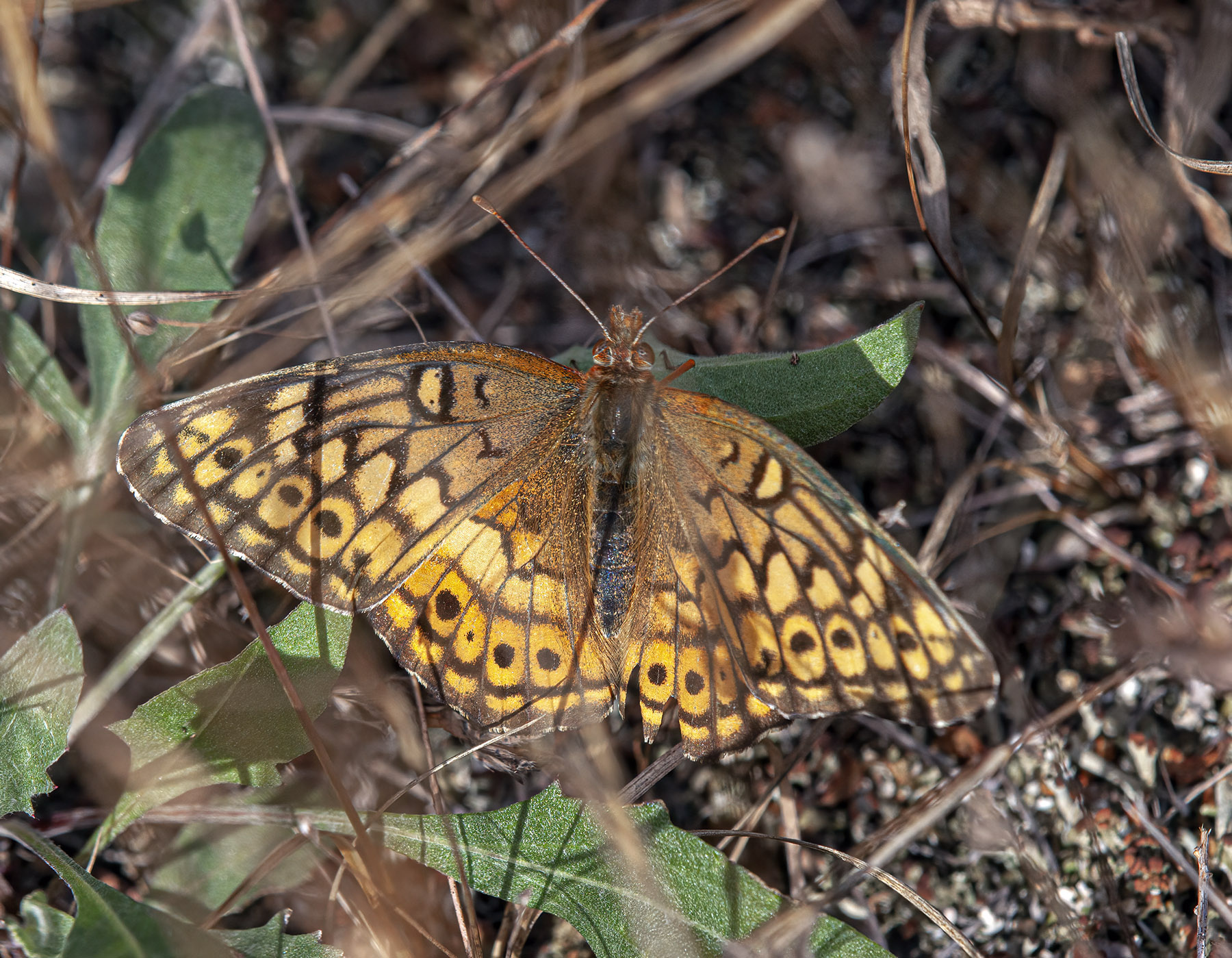
This late in the season, most of the large butterflies seem to be gone, but I continue to see some of the smaller ones, like this beautiful Variegated Fritillary butterfly (Euptoieta claudia) that I spotted on Thursday during a visit to Huntley Meadows Park, a county-run marshland park not far from where I live. Earlier in the year I encountered some Great Spangled Fritillaries, but I think this may well be my first sighting of a Variegated Fritillary in 2023.

The butterfly appeared to be basking in the sun as it perched with its wings wide open on some dried-out vegetation. I was using my Tamron 150-600mm telephoto zoom lens, which has a minimum focusing distance of almost nine feet (270 cm), so I was pretty far from the butterfly when I captured this image. I have read reviews that state that this lens is soft when fully extended to 600mm, but I have found that I can get acceptably sharp images if I pay a lot of attention to my focusing and shooting techniques, including remaining steady—in this case I was using a monopod.

Variegated Fritillary

© Michael Q. Powell. All rights reserved.


Read Full Post »

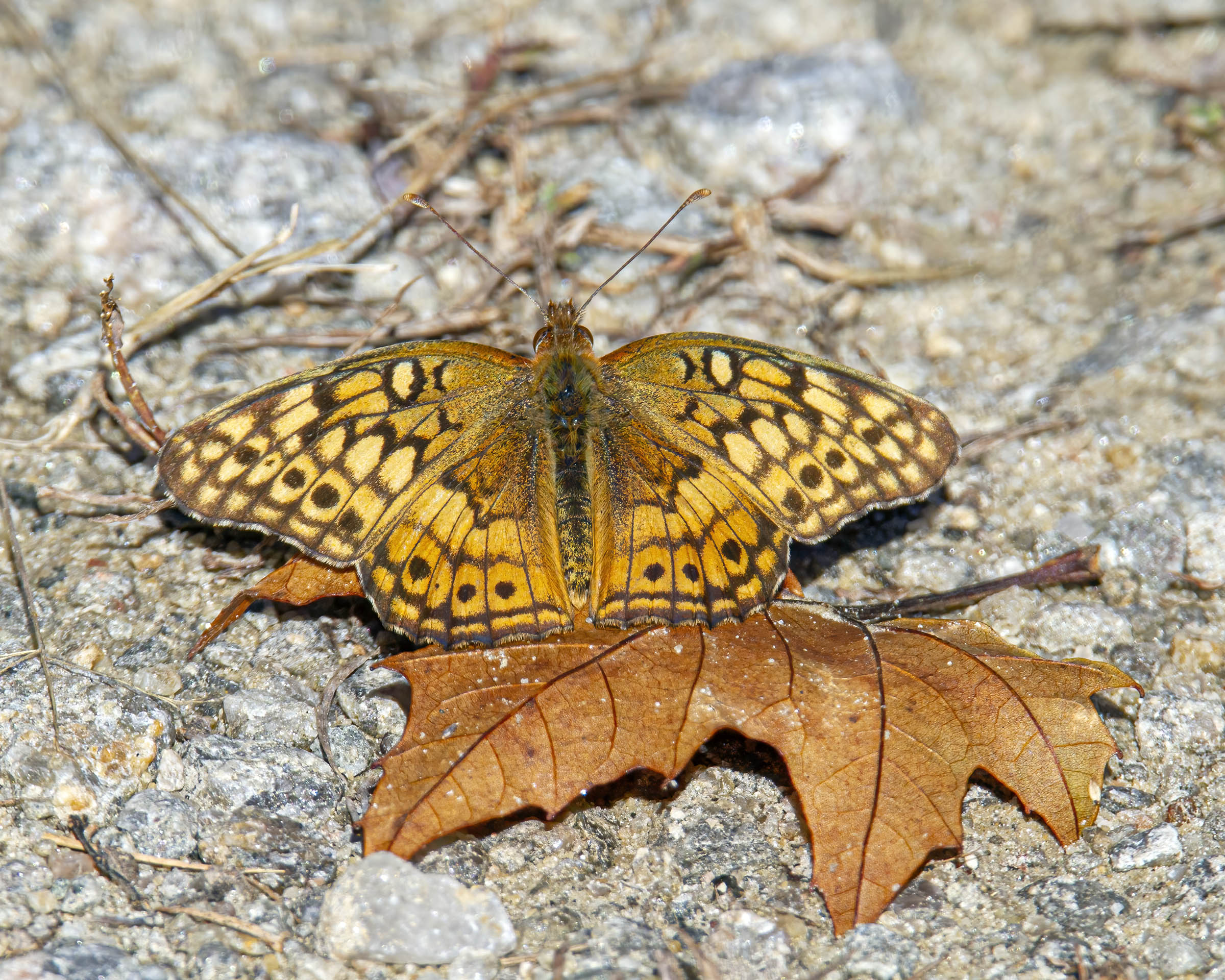
I chased this orange butterfly for quite some time on Wednesday at Occoquan Bay National Wildlife Refuge and was delighted when it chose to land on top of a fallen leaf. The warm oranges and browns of the butterfly are a wonderful match for the autumn season and the fallen down leaves that now litter the landscape.

I could not immediately identify the butterfly, but when I got home I was able to determine that it is a Variegated Fritillary butterfly (Euptoieta claudia). My car windshield was covered with frost yesterday morning—autumn is definitely here and I suspect that my insect sightings will be decreasing sharply soon.

Variegated Fritillary

© Michael Q. Powell. All rights reserved.


Read Full Post »

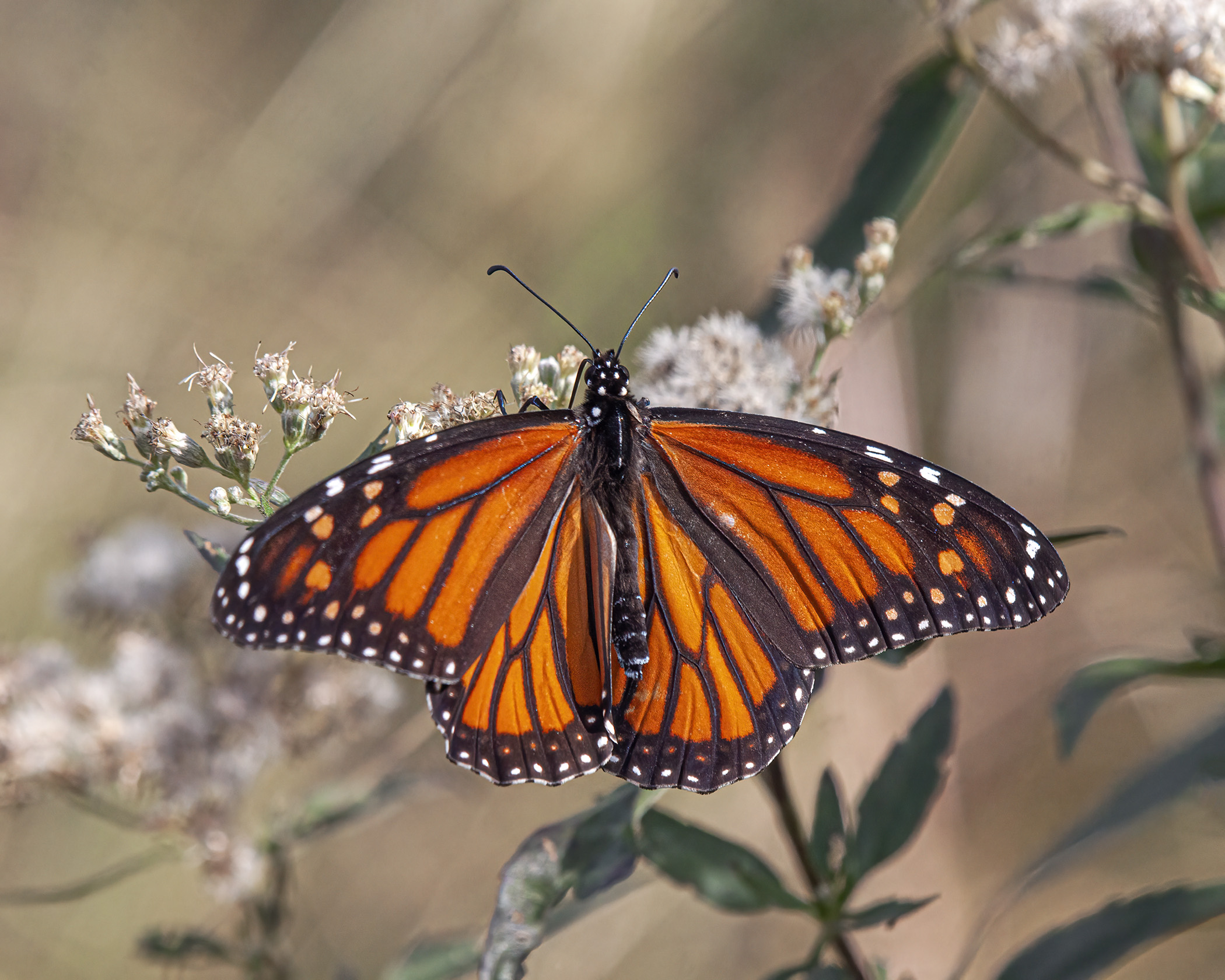
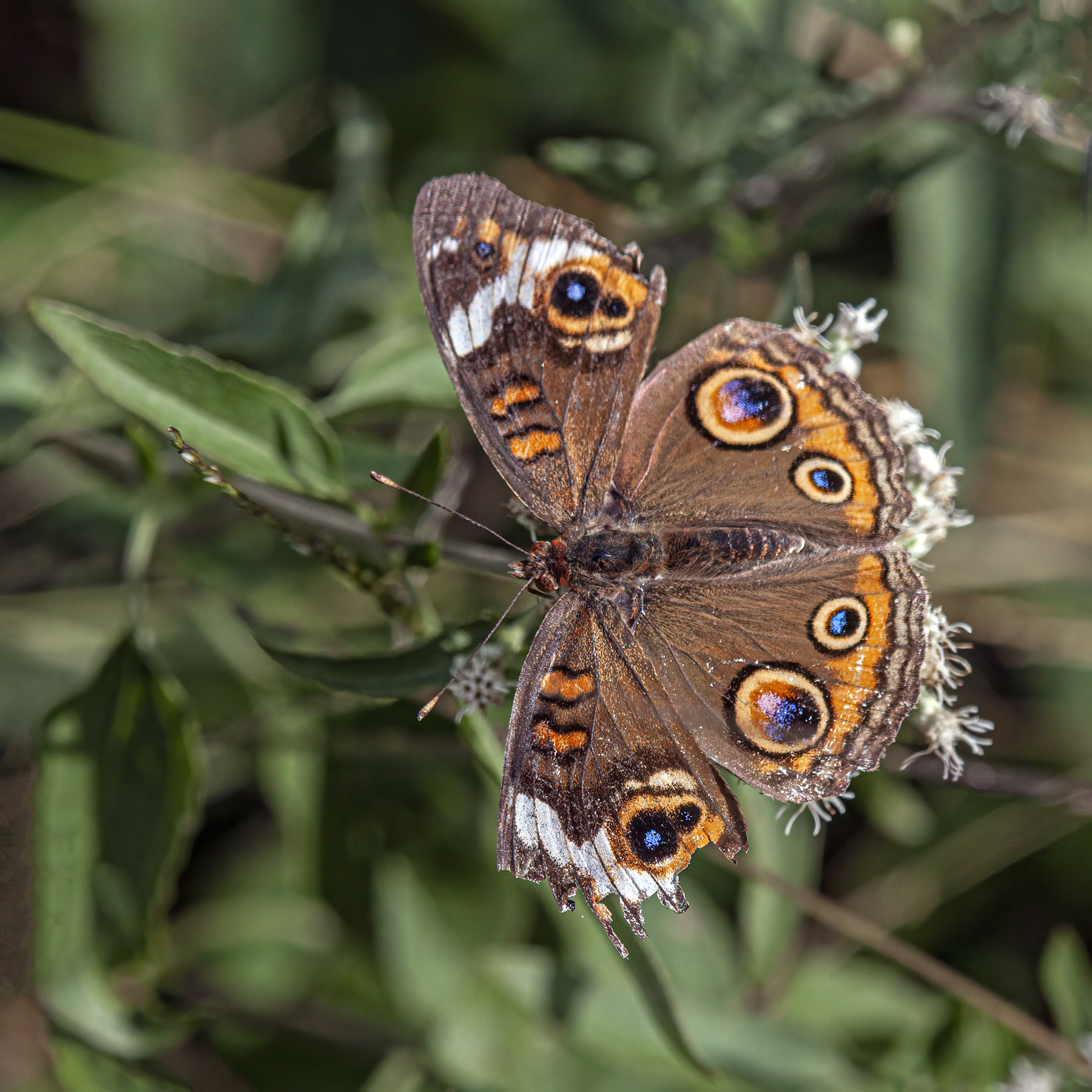
I am shocked and delighted by the number of butterflies that I continue to see at the end of October, despite the cooling temperatures and decreasing number of hours of daylight. Last Thursday, 28 October, I spotted a Monarch butterfly (Danaus plexippus) and multiple Variegated Fritillaries (Euptoieta claudia) and Common Buckeyes (Junonia coenia).

The dominant browns and oranges in the color palette of these butterflies seems to be a perfect reflection of the autumn season, when the colors in nature seem more muted than they were during the spring and the summer. For me, though, there is an inner warmth and comfort in these colors, like the feel of a well-worn flannel shirt or the taste of an autumn soup.

Monarch

Variegated Fritillary

Common Buckeye

© Michael Q. Powell. All rights reserved.


Read Full Post »

This past Saturday I visited Meadowlark Botanical Gardens in nearby Vienna, Virginia with several photographer friends and was pleasantly surprised to see that a lot of flowers are still in bloom. Those flowers kept the bees busy as well as an assortment of small butterflies, including this Variegated Fritillary butterfly (Euptoieta claudia).

This is a species that I do not see very often, so I was happy to capture a mostly unobstructed shot of it when it opened its wings—I am more used to seeing the somewhat similar Great Spangled Fritillary.

Variegated Fritillary

© Michael Q. Powell. All rights reserved.

Read Full Post »

With thousands of gorgeous flowers blooming at Brookside Gardens in Wheaton, Maryland today, this beautiful butterfly, which I think is a Variegated Fritillary (Euptoieta claudia), chose to land on a lowly dandelion growing at the edge of a walkway. Why did it make that choice?

I had been chasing this butterfly around though several sections of the garden, hoping desperately that it would land somewhere within range of my 100mm macro lens. When it did finally land, I approached it cautiously and got a few shots handheld that came out pretty well. I am also including a shot that gives you an idea of the setting—there was a landscape timber to the left and a series of stone tiles that made up the walkway, and the dandelion was growing low to the ground at the edge of the walkway. The lighting was less than optimal, but sometimes you have to work with what you have, especially when the subject is likely to fly away at any moment.

I deliberated for quite some time over the identification of the butterfly. At first, I was sure that it was a Pearl Crescent (Phyciodes tharos), which is orange and has brown spots. As I looked at more photos, though, I changed my mind and now think that it may be a Variegated Fritillary.

As always, I welcome assistance on the identification of my subjects.

pearl2_blogpearl1_blogpearl3_blogMichael Q. Powell. All rights reserved

Read Full Post »