Feeds:
Posts
Comments

Posts Tagged ‘Danaus plexippus’

I was absolutely thrilled to spot several Monarch butterflies (Danaus plexippus) yesterday during a visit to Occoquan Bay National Wildlife Refuge. Every year I worry that I will not see any Monarchs due to a reported decrease in suitable habitats, although I don’t think that Monarchs are officially on the endangered species list at the present time.

The Monarchs that I saw were very much focused on a particular patch of wildflowers, so I had a chance to move about a bit to frame my photos, as you can see below.

I have fond childhood memories of seeing photos of migration of Monarch butterflies in National Geographic magazine, and every time that I see them, it brings back those memories.

Monarch butterfly

Monarch butterfly

Monarch butterfly

© Michael Q. Powell. All rights reserved.

Read Full Post »

Last Wednesday I was thrilled to spot multiple Monarch butterflies (Danaus plexippus) during a visit to Occoquan Bay National Wildlife Refuge, the most Monarchs that I have seen at one time this entire season. I do not know if these are local Monarchs that are preparing to migrate southward or if they are migrating Monarchs that are stopping by to refuel their bodies as they continue on their journey.

In either case, the butterflies were really active, in almost constant motion as they moved about the the open thistle flowers. I was hoping to get multiple butterflies in a single shot, but was never able to capture more than two of them in any photo, as you can see in the first image below.

The final photo shows the kind of photo that I was trying to take, a sidewards view of the Monarch in action. If you look closely, you can even see the butterfly’s extended proboscis. I also love the wonderful contrast between the orange of the butterfly and the pink of the thistle flower.

Monarch butterfly

Monarch butterfly

© Michael Q. Powell. All rights reserved.

Read Full Post »

I have seen quite a few Viceroy butterflies this summer, but have had real difficulties finding Monarch butterflies (Danaus plexippus). I have repeatedly heard warnings about how their habitats are threatened and fears that they might soon become extinct.

I was therefore quite thrilled when I spotted this bright orange butterfly on Thursday at Occoquan Bay National Wildlife Refuge. It seemed to be a bit larger that the Viceroys that I am used to seeing, so I chased after it, full of hope that it might be a Monarch. It landed for only a moment and I was able to capture this shot of the beautiful creature—it was indeed a Monarch butterfly.

The Monarch took off a few seconds later and flew out of sight. I stayed in place a bit longer, still filled with awe and wonder at the brief encounter, before I too moved on. It is amazing how much moments like this one lift my spirits.

Monarch

© Michael Q. Powell. All rights reserved.

Read Full Post »

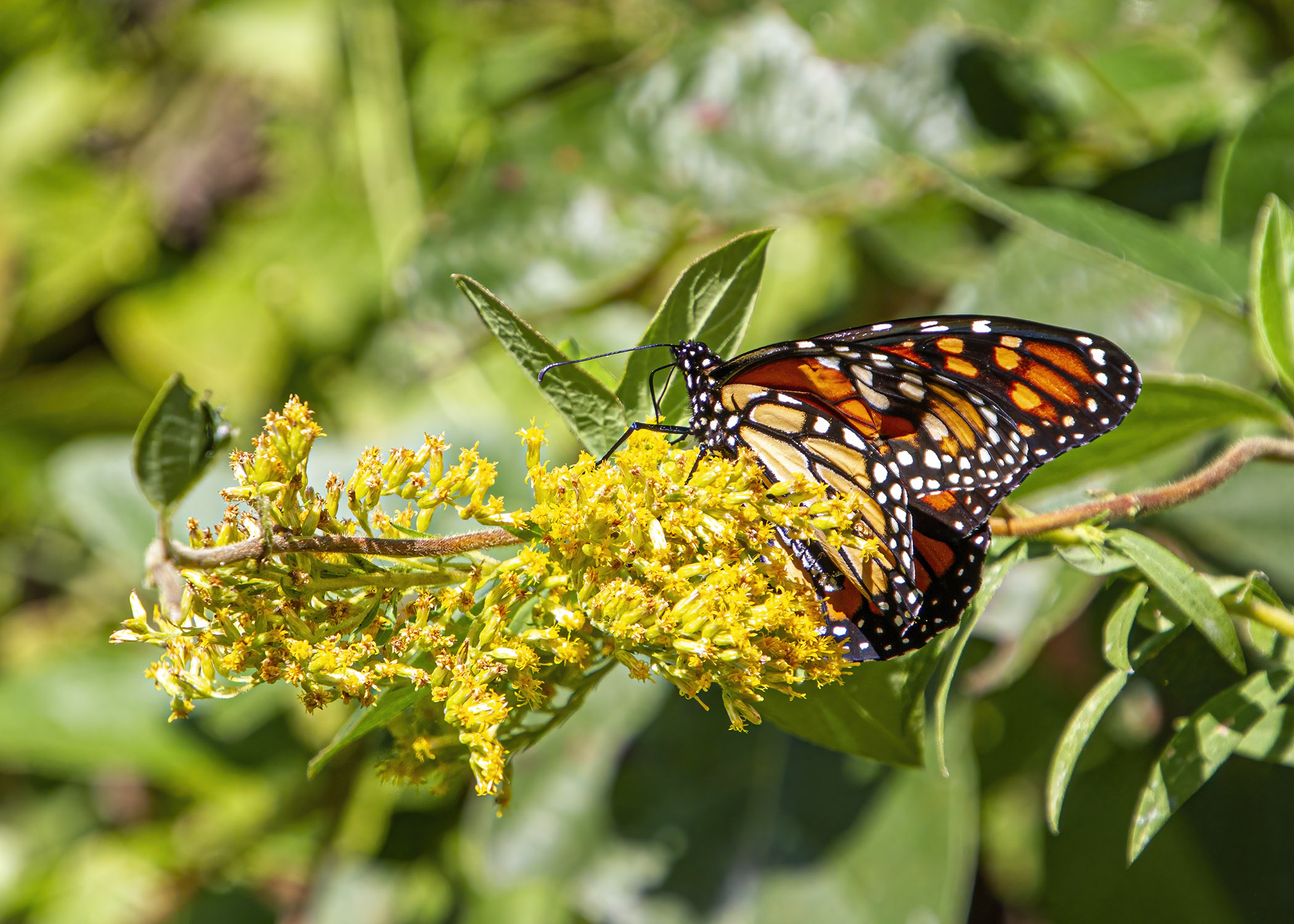
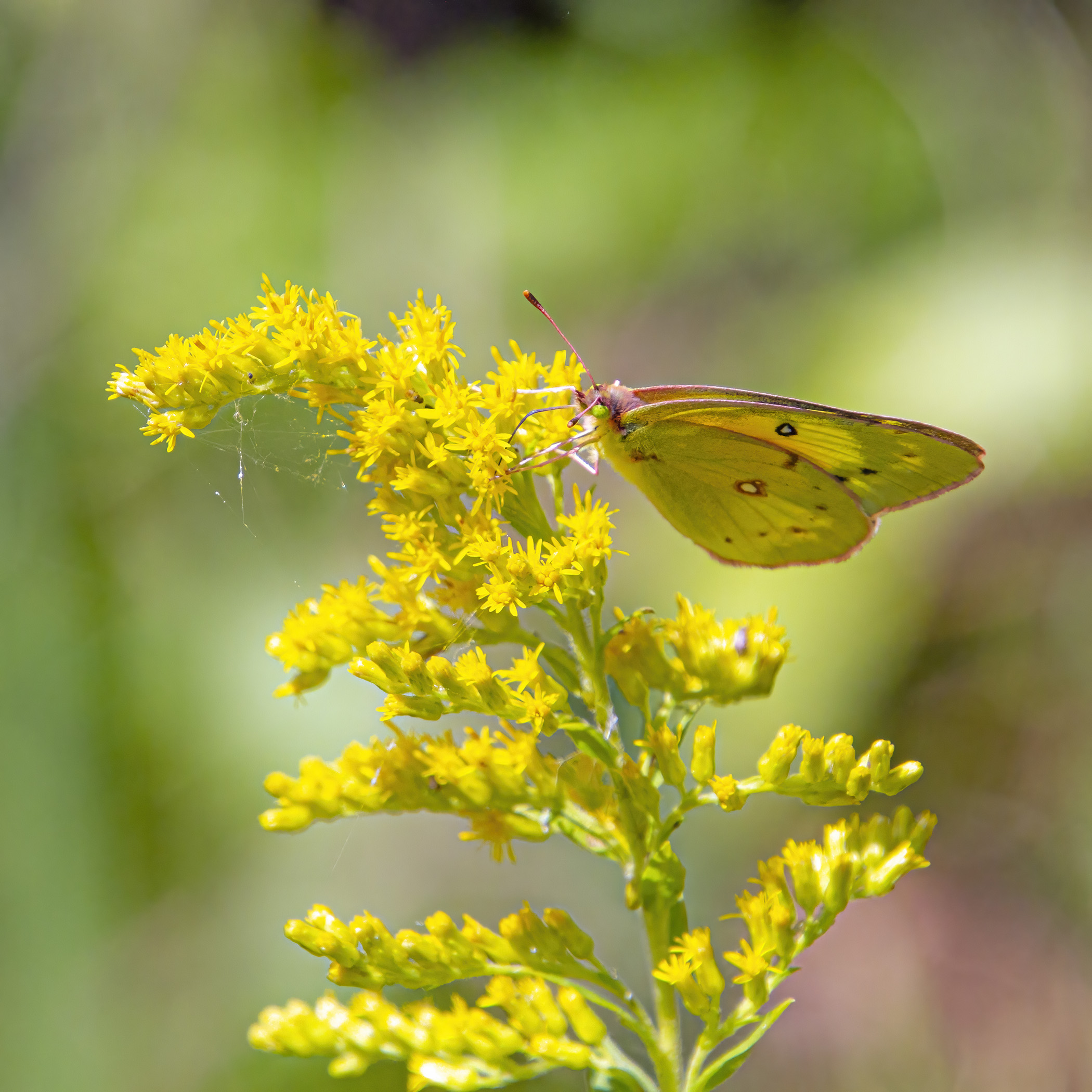
I love bright colors and instinctively smile when I see the large patches of goldenrod that are still in bloom at Occoquan Bay National Wildlife Refuge. The insects seem to love these flowers too and last Tuesday I spotted a large Monarch Butterfly (Danaus plexippus) and smaller Clouded Sulphur butterfly (Colias philodice) feeding on goldenrod.

Monarch

Clouded Sulphur

© Michael Q. Powell. All rights reserved.
 

Read Full Post »

At this time of the year, many of the butterflies that I see are showing the ravages of a long summer season. That, however, was not the case with several Monarch butterflies (Danaus plexippus) that I spotted last week at Occoquan Bay National Wildlife Refuge that appeared to be in perfect condition.

Perhaps these are newly emerged Monarchs that are now preparing for a long migration flight to warmer locations.

Monarch

Monarch

© Michael Q. Powell. All rights reserved.
Read Full Post »

On Monday I was thrilled to spot multiple Monarch butterflies (Danaus plexippus) during a visit to Occoquan Bay National Wildlife Refuge. The first shot is the typical kind of shot that I usually try to take, but I really like the third image that I captured of a distant Monarch butterfly in a field of flowers—so many flowers, so little time.

Monarch butterfly

Monarch butterfly

Monarch butterfly

© Michael Q. Powell. All rights reserved.

Read Full Post »

Certain creatures, like Bald Eagles (Haliaeetus leucocephalus) and Monarch butterflies (Danaus plexippus), never fail to thrill my heart when I encounter them. I remember dire warnings from my youth of their threatened extension and I consider it a real blessing that they are still around. The Bald Eagle population has really rebounded, but it is my understanding that the survival of Monarchs is still at risk as a result of the loss of Monarch breeding habitats.

I did not see any Bald Eagles during my visit to Occoquan Bay National Wildlife Refuge this past Thursday, but I was excited to spot this stunning Monarch butterfly. Its colors were bright and vibrant and it seemed to be in perfect condition. I suspect that this butterfly was preparing itself for its upcoming migration flight. According to an article by the National Wildlife Federation, “Beginning in late summer and continuing into early fall, monarchs that emerge from their chrysalides will be behaviorally and biologically different from generations that emerged earlier this year. Unlike their parents and grandparents, these late-season monarchs do not mate or lay eggs. Instead, the insects focus on feeding to fatten up for long migrations to their winter habitats: coastal California for monarchs west of the Rocky Mountains and central Mexico for those to the east.”

The Monarch butterfly was so focused on feeding that it did not fly away as I maneuvered into position to capture this image. I even had the luxury of attempting shots from several angles as the butterfly moved about from flower to flower.

Monarch butterfly

© Michael Q. Powell. All rights reserved.

Read Full Post »

Recently I featured some shots of a Monarch butterfly (Danaus plexippus) feeding on some milkweed. I feared that it might be the only Monarch that I would see this year, because there have been some years in the recent past when I have not spotted a single Monarch butterfly.

I was absolutely delighted this past Wednesday when I spotted another Monarch. I was walking along one of the trails at Occoquan Bay National Wildlife Refuge when my eyes were attracted by a flash of bright orange. I assumed incorrectly that it was “only” a Viceroy, but when I zoomed in, I could see that it was a Monarch.

I was using my long 150-600mm lens with a monopod, so I had to scramble a bit to get a good shooting angle. I was thrilled with the shot that I captured of the Monarch in action with its proboscis extended. I am not sure what kind of flower this is, but I really like the way that it was drooping a little as the butterfly perched lightly on it, helping to create a nice triangular composition.

Monarch butterfly

© Michael Q. Powell. All rights reserved.

Read Full Post »

I was excited to spot my first Monarch Butterfly (Danaus plexippus) of the season last Friday at Occoquan Regional Park in Lorton, Virginia. The milkweed was barely in bloom, but the Monarch nonetheless seemed to be really enjoying it.

I love the beauty of the Monarch, of course, but I am also very conscious of the fact that this species is considered to be endangered, threatened by the loss of habitat and by climate change. Some years I have not seen any Monarchs at all, so each sighting is special to me, reassuring me that Monarchs are continuing to survive.

As you can see, I attempted to get shots of the Monarch, the only one that I saw that day, from varying distances. When I first spotted the Monarch, I took several long distance shots like the third one below that show some of the habitat. Then I slowly moved forward, attempting to use the milkweed in my compositions.

It was a bit of a challenge to get good shots, because the butterfly was in almost constant motion, moving all around the little clumps of milkweed and changing its wing and body positions. I had to work quickly too, fully aware that the butterfly could fly off at any moment.

Monarch butterfly

Monarch butterfly

Monarch butterfly

© Michael Q. Powell. All rights reserved.


Read Full Post »

I was delighted this past Wednesday to spot several Monarch butterflies (Danaus plexippus) during a visit to Occoquan Bay National Wildlife Refuge. I often see news stories about Monarchs being threatened or becoming endangered, so I am happy whenever I see some. The ones that I saw looked to be in perfect condition—perhaps they have recently emerged and are preparing for migration.

I tried several different angles when photographing this Monarch. The first photo shows the detail of the butterfly best, but I really like the way that I was able to capture the curve of the vegetation in the second shot by shooting in a vertical format.


Monarch butterfly

Monarch butterfly

© Michael Q. Powell. All rights reserved.

Read Full Post »

There has been an explosion of butterflies in the last few weeks in my area. Throughout most of the summer, I felt lucky when I managed to spot a few large, colorful butterflies.  All of the sudden I am seeing lots of butterflies in multiple locations at Occoquan Bay National Wildlife Refuge.

Here are a few of my favorite butterfly shots from a visit to the wildlife refuge last Friday. Quite often I will focus on a single species in a blog posting, but in this case I like the way that these three images work as a set that highlights the beauty and diversity of these wonderful creatures that I was blessed to photograph that day.

The butterfly in the first image is a Monarch (Danaus plexippus); the butterfly in the second image is a Zebra Swallowtail (Eurytides marcellus); and the butterfly in the third image is a Black Swallowtail (Papilio polyxenes).

I like each of the photographs for different reasons, but, if pressed, I would probably say that the final one is my favorite. Do you have a favorite?

Monarch butterfly

Zebra Swallowtail

Black Swallowtail

© Michael Q. Powell. All rights reserved.


Read Full Post »

Throughout most of the summer I have seen very few large butterflies. Recently, though, I have been seeing them in greater numbers. I do not know if this is somehow linked to the blooming of the thistle plants, but I have spotted numerous butterflies in patches of this plant during recent visits to Occoquan Bay National Wildlife Refuge.

Last week I spotted this beautiful Eastern Tiger Swallowtail butterfly (Papilio glaucus) high atop a plant and I captured the first image with the sky in the background. The second image is linked to a short video I captured yesterday of a Monarch butterfly (Danaus plexippus). Most of the time I tend to associate Monarchs with milkweed, but this one sure seemed to be enjoying the thistle flower. Before long, it should begin its migration and perhaps this was part of the fueling process.

I am still experimenting with taking short videos with my iPhone and once again posted the video to YouTube. I have started a little channel on YouTube and have already posted a number of short clips, primarily of butterflies, bison, and butterflies, some of them with music tracks as accompaniment—I inserted some copyright free piano music, for example, in the Monarch video below. I have also experimented with some slightly longer compilations of clips with voiceover narration. Check out my channel Mike Powell if you are at all curious to see and hear what I have done so far.

Eastern Tiger Swallowtail

© Michael Q. Powell. All rights reserved.


Read Full Post »

Tuesday was a wonderful day for butterflies at Occoquan Bay National Wildlife Refuge and I was delighted to see lots of them, including the three orange varieties that I am featuring today. First up is a pretty Monarch butterfly (Danaus plexippus). Although its wings show some damage, it was happily feeding on some milkweed. Recent reports have shown that Monarchs are endangered, so it is always exciting to spot one.

The next photo shows a Viceroy butterfly (Limenitis archippus), which is visually quite similar to the Monarch. As I have noted before, the biggest distinguishing feature to tell the two species apart is the line on the hind wing of the Viceroys that Monarchs do not have.

The final orange butterfly is the much smaller Pearl Crescent butterfly (Phyciodes tharos). I see Pearl Crescent butterflies much more often than its larger counterparts, but they are usually quite skittish and perch so close to the ground that it is a challenge to photograph them.

Many of you know that I really like the color orange. I frequently wear a pair of orange Converse All-star sneakers and drive the orange KIA Soul that made a guest appearance in a recent blog post. For me, the color is warm and comfortable. Although it is often associated with the autumn, orange is very much a summer color too, as you can easily see in these butterfly photos.

Monarch

Viceroy

Pearl Crescent

© Michael Q. Powell. All rights reserved.


Read Full Post »

I have not seen very many Monarch butterflies (Danaus plexippus) this summer, though I did spot a similar-looking Viceroy butterfly (Limenitis archippus) on Tuesday at Occoquan Bay National Wildlife Refuge. Monarchs were in the news last week. According to the Smithsonian Magazine, “The International Union for Conservation of Nature (IUCN), a Switzerland-based conservation organization that monitors the status of wildlife, added migratory monarchs (Danaus plexippus plexippus) to its list of threatened species this week.”

I decided to include an image of a Monarch that I captured earlier this month as it was feeding on a cone flower. I thought I would have more chances to photograph more monarchs, but this one was the only one that I have seen in July.

How do you tell the two species apart? The main visual difference between the two species is the black line across the Viceroy’s hind wings, which Monarch butterflies do not have. Both are stunningly beautiful.

Viceroy butterfly

Monarch butterfly

© Michael Q. Powell. All rights reserved.


Read Full Post »

I was a bit surprised and absolutely delighted to see my first Monarch butterfly (Danaus plexippus) of the year yesterday at Occoquan Bay National Wildlife Refuge. I love to see these colorful butterflies, but each year it is a bit of a hit-or-miss proposition, as habitats for Monarchs continue to be threatened and their numbers seem to be declining.

Monarch butterfly

© Michael Q. Powell. All rights reserved.

Read Full Post »

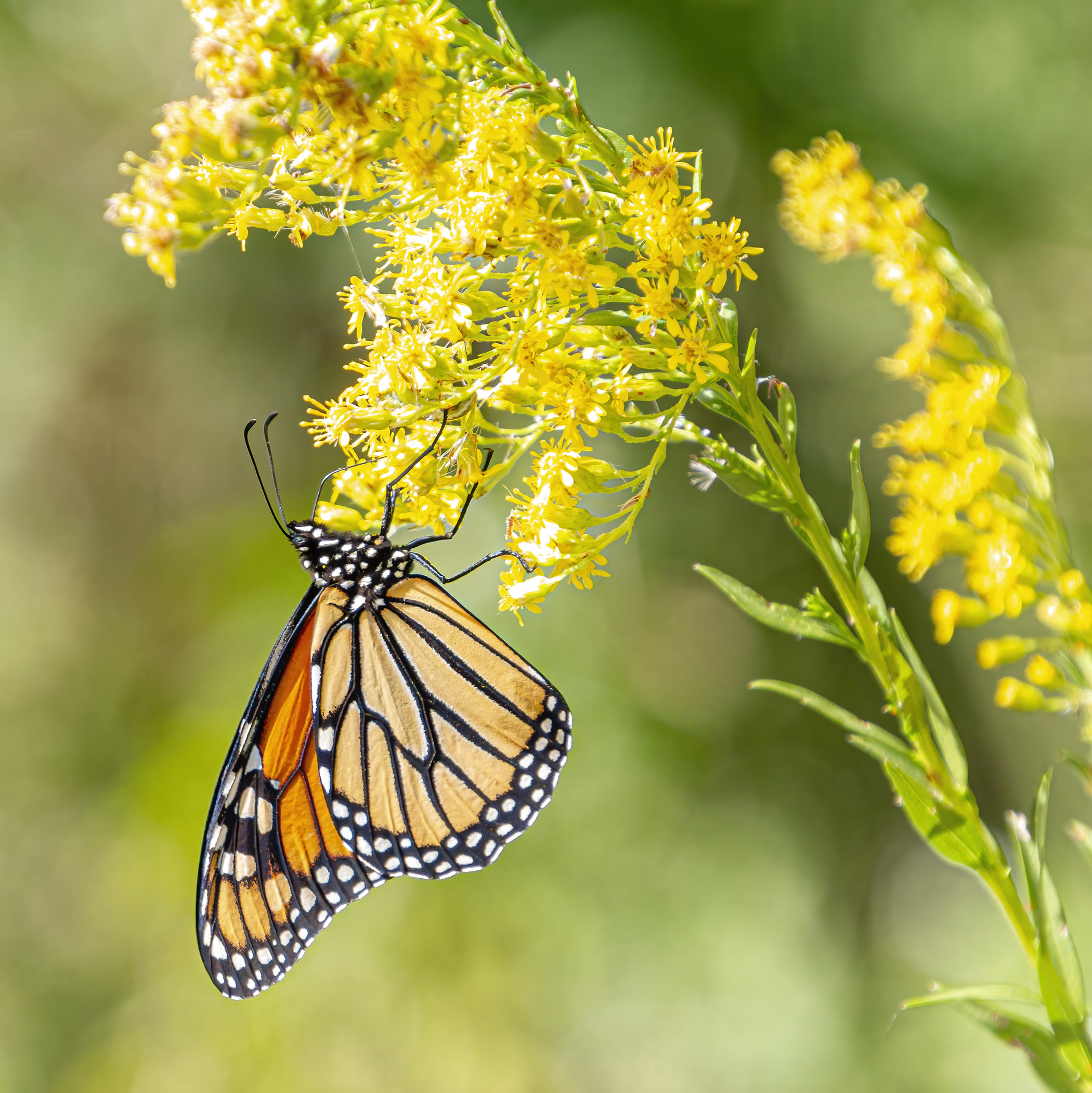
I am shocked and delighted by the number of butterflies that I continue to see at the end of October, despite the cooling temperatures and decreasing number of hours of daylight. Last Thursday, 28 October, I spotted a Monarch butterfly (Danaus plexippus) and multiple Variegated Fritillaries (Euptoieta claudia) and Common Buckeyes (Junonia coenia).

The dominant browns and oranges in the color palette of these butterflies seems to be a perfect reflection of the autumn season, when the colors in nature seem more muted than they were during the spring and the summer. For me, though, there is an inner warmth and comfort in these colors, like the feel of a well-worn flannel shirt or the taste of an autumn soup.

Monarch

Variegated Fritillary

Common Buckeye

© Michael Q. Powell. All rights reserved.
 

Read Full Post »

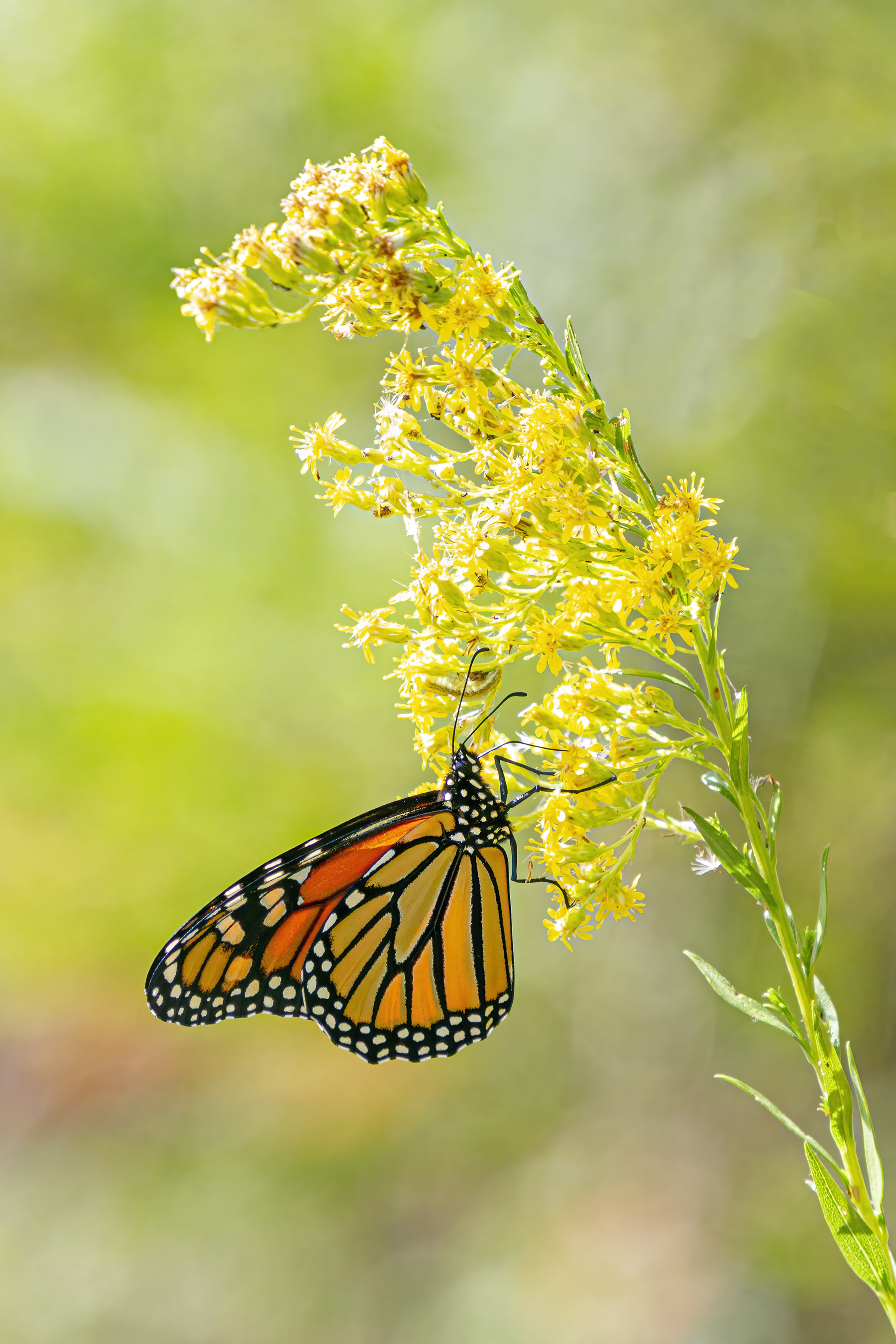
I was delighted and a bit surprised on Monday to spot this Monarch butterfly (Danaus plexippus) at Occoquan Bay National Wildlife Refuge.  thought the Monarchs had all left the area by now to head to warmer locations. When I posted this photo is a Facebook forum, I learned that viewers also have been spotting occasional Monarchs recently in other parts of Virginia.

Although the calendar tells us that we are well into autumn, we are still reminded from time to time of the beauty of the summer days that are gradually fading from our consciousness. Time moves on inexorably.

Monarch butterfly

© Michael Q. Powell. All rights reserved.
 

Read Full Post »

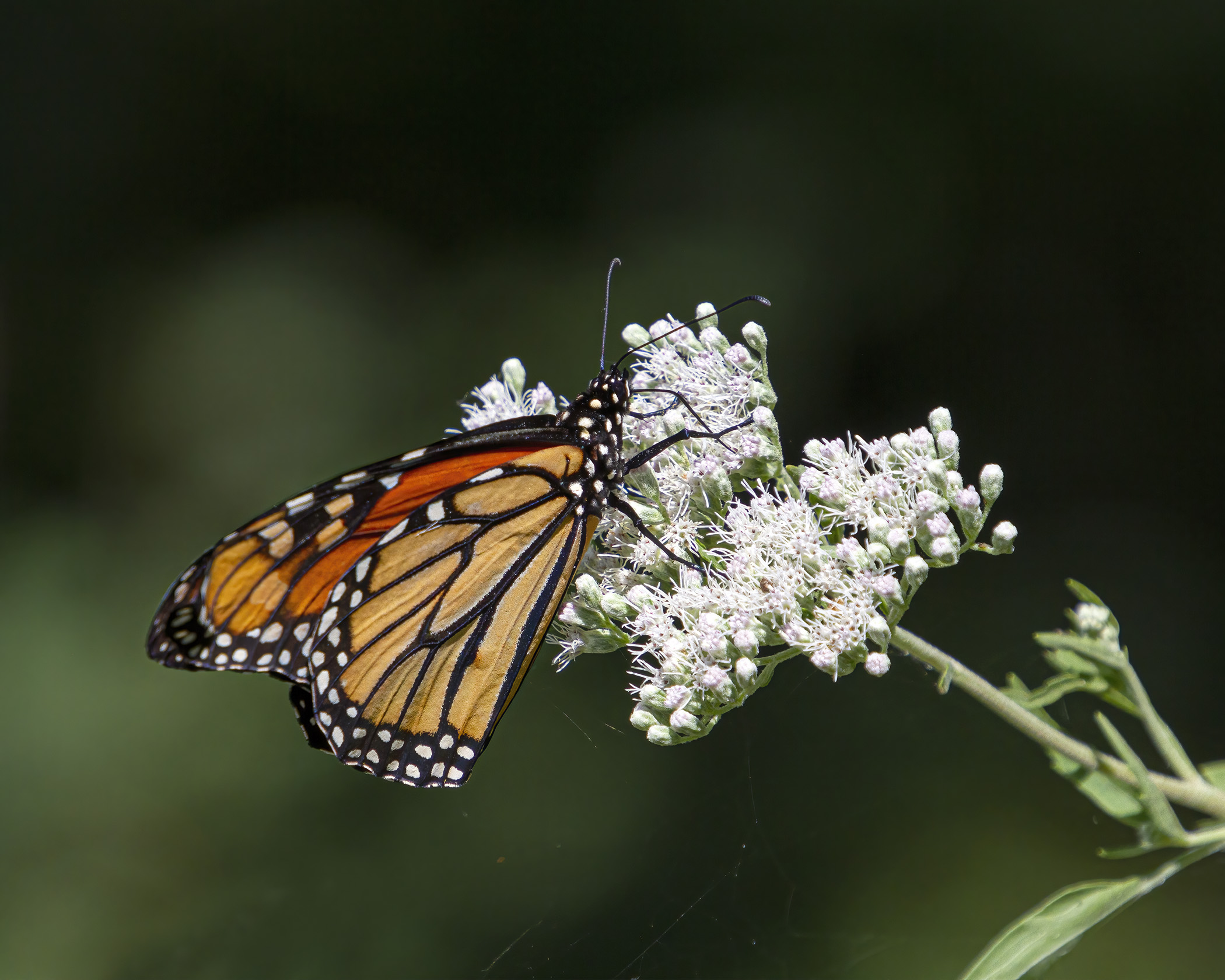
I had given up on Monarch butterflies (Danaus plexippus) for the season, so I was thrilled when I spotted several of them on Monday at Occoquan Bay National Wildlife Refuge. I do not know if these are local butterflies, but I like to imagine that they are temporary visitors who stopped in to visit during their magical migration journey to warmer locations.

I photographed these two butterflies in different parts of the wildlife refuge. I thought about using only one of the two photos for this posting, but decided that I really like the impact that the images have as a pair, presenting a kind of yin-yang contrast in light and shadows and overall mood. What do you think?

Monarch

Monarch

© Michael Q. Powell. All rights reserved.
 

Read Full Post »

With all of the recent rain, I have not gotten out as much as I would have liked—today’s weather forecast noted that we have had rain during nine of the last ten days. So I decided to share another photo today of a Monarch butterfly (Danaus plexippus) from my visit last Friday to Green Springs Garden.

In a previous posting entitled Monarchs at last, I showed Monarchs feeding on brightly-colored flowers. The background in today’s image is much more muted and the butterfly appeared to be relaxing rather than actively feeding. I love the way that you can see the butterfly’s curled-up proboscis from this angle, looking almost like a very large nose-ring—yeah, I imagine this to be a punk rock butterfly.

Have a wonderful Friday.

Monarch butterfly

© Michael Q. Powell. All rights reserved.


Read Full Post »

Several times recently I have noted with regret that I had not yet seen any Monarch butterflies (Danaus plexippus) this summer. On Friday my luck changed and I was absolutely delighted to have multiple encounters with Monarchs during a visit to Green Spring Gardens, a country-run historical garden only a few miles from where I live. Obviously I had been looking for Monarchs in all the wrong places.

I felt carefree as a child as I chased the butterflies all over as they flitted from flower to flower. It was a hot, humid day and it was not long before I was drenched in sweat, but I was content in what I was doing.

I will let the beauty of the Monarchs speak for itself through these photos. I will only add that it was definitely worth the wait.

Monarch butterfly

Monarch butterfly

Monarch butterfly

© Michael Q. Powell. All rights reserved.

Read Full Post »

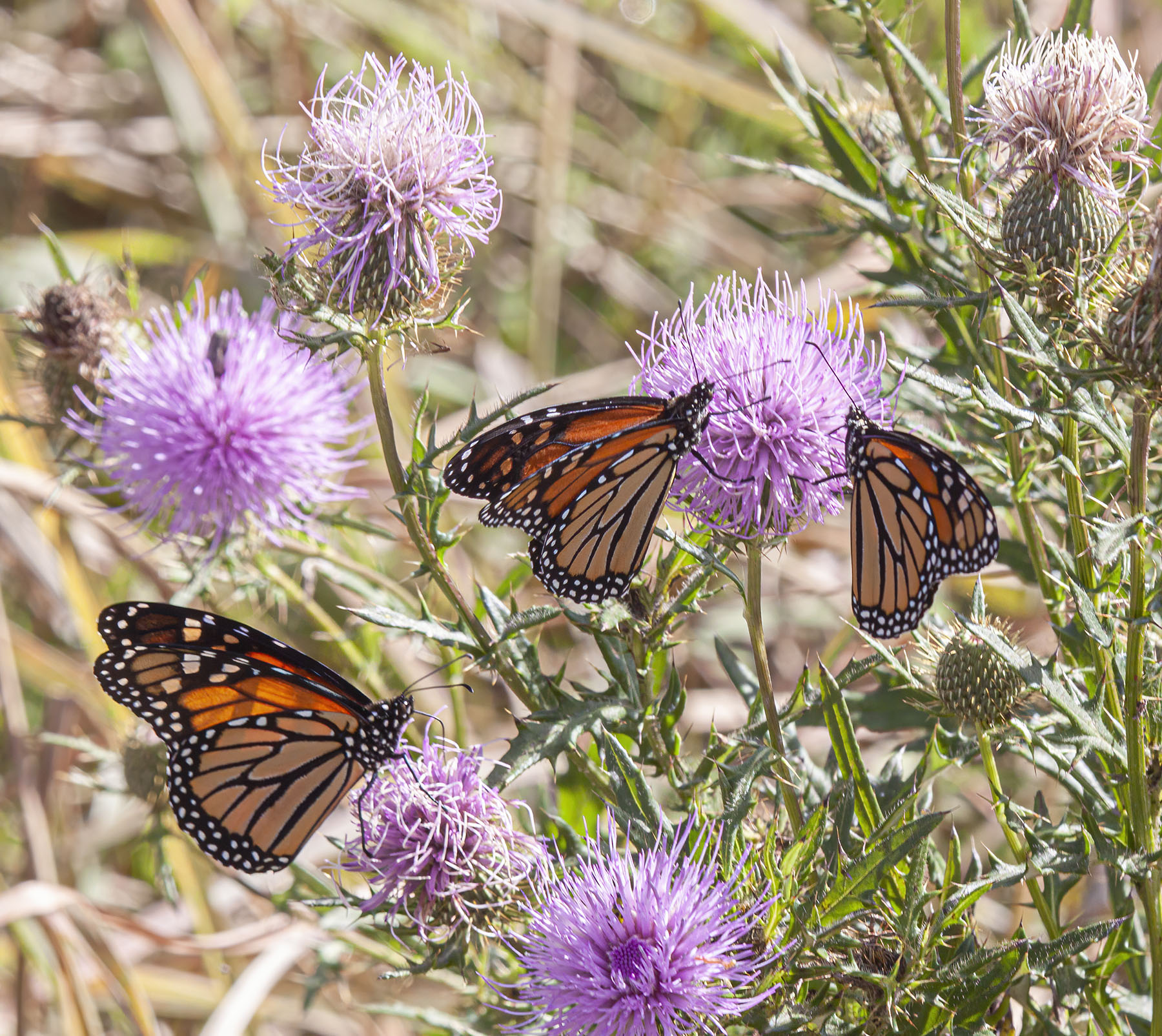
As many of you know, I am always excited to see a Monarch Butterfly (Danaus plexippus). This season started slowly and after a few months I feared that I would not see any of them at all. However, late in the season I began to spot them at multiple locations. Often they were by themselves and only occasionally did I see two of them in the same location.

Imagine my joy when I managed to capture three of them in a single shot on the first of October at Occoquan Bay National Wildlife Refuge, long after I expected them to have migrated out of our area. The butterflies were feverishly feeding on some thistles that were flowering, probably packing in energy for the long migratory journey south.

I suspect that this will be my last sighting of this colorful butterfly species this year. I bid these three monarchs farewell and wish them a safe onward journey.

Monarch butterflies

© Michael Q. Powell. All rights reserved.

Read Full Post »

Have Monarch butterflies (Danaus plexippus) started their migration southward? I thought that they were already gone from my area, but was delighted to spot this one on Tuesday at Occoquan Bay National Wildlife Refuge in a newly blooming patch of goldenrod.

Is this butterfly a bit behind schedule? Perhaps this is a butterfly that started its migration journey from a point farther north and stopped in for a snack. Whatever the reason for its presence, my spotting of this beautiful butterfly added a colorful highlight to my day.

Keep your eyes open and look expectantly for colorful highlights in your own daily lives. That sense of joyful expectation will have a positive influence on your entire day.

Monarch butterfly

© Michael Q. Powell. All rights reserved.


Read Full Post »

Over the years I have developed the habit of checking milkweed plants carefully whenever I spot them. Milkweed plants host an extensive cast of colorful characters including ladybugs, milkweed beetles, and Monarch butterfly caterpillars (Danaus plexippus). Though I have been keeping an eye out for them for the last couple of months, I was unsuccessful in spotting a Monarch caterpillar until this past Sunday when I finally spotted one at Occoquan Bay National Wildlife Refuge.

This Monarch appears to be in one of its final phases of development as a caterpillar, when fattening up seems to be a priority before forming a chrysalis. It is not surprising, therefore, that most of the edges of the leaves in this photo have been gnawed on by the caterpillar. This caterpillar seems to be a little late calendar-wise in its path to becoming a butterfly, but I did spot several Monarchs yesterday, so it seems that the Monarch migration has not yet taken place, or at least not in its entirety.


Monarch caterpillar

© Michael Q. Powell. All rights reserved.


Read Full Post »

There are some subjects that I will try to photograph every single time that I see them. Bald Eagles are high on that list, as are Monarch Butterflies (Danaus plexippus), like this beauty that I spotted last Monday at Jackson Miles Abbott Wetland Refuge. Both of these subjects have “stopping power” for me.

Seven years ago I read a blog posting entitled “Stopping power” by fellow wildlife photographer Lyle Krahn that introduced me to this concept. In Lyle’s own words, “I think every beautiful scene has stopping power. That’s my term for the ability of a scene to make a person stop hiking or driving in order to pull out a camera and make images. Did you ever wonder what makes you stop? Do you ever hear the music?” That idea really took root in me and I still think about it quite often and vividly recall that initial posting.

What is your threshold for putting your camera to you eye and taking photos? Would you stop to photograph a squirrel or a Canada Goose or a mallard duck? Does a subject have to be new or exotic for you to stop? Are you so focused on a single subject that the rest of the world is invisible to you or simply doesn’t matter? Lyle described an encounter with a bear watcher in Grand Tetons National who said that he would not stop to photograph a moose. Yikes! It is hard to imagine not stopping to photograph a moose.

Most of you know that my personal threshold is really low—I will stop to take photos of almost anything that catches my eye. Every now and then I will end a posting with the words “beauty is everywhere” and I truly believe that. Of course, there is an opportunity cost for spending time on one subject and you might miss out on another potential subject. I am ok with that and rarely fall prey to the sense of anxiety that is popularly called FOMO (fear of missing out).

Even if you are not someone who takes pleasure in taking photos, I encourage you to stop more often during the day, to pause to feel the wind or listen to a bird or smell the flowers. I believe that in doing so you can lower the threshold for “stopping power” and experience our wonderful world more deeply.

Monarch Butterfly

© Michael Q. Powell. All rights reserved.


Read Full Post »

In a recent posting featuring my first Monarch butterfly (Danaus plexippus) of the year, I lamented the scarcity of Monarchs this summer. A few days later, I was delighted to spot several more Monarchs during a visit to Jackson Miles Abbott Wetland Refuge. The Monarchs moved about quite a bit and I ended up sweaty and out of breath after chasing them all over, but I was more than happy with the results.

The Monarchs concentrated most of their efforts on several patches of swamp milkweed at the edge of a small pond. I moved quickly as I tried to compose shots with both a good background and a photogenic wing position, which often was easier said than done.

In the first shot you get a view of some of the vegetation growing in the pond and the lighting from that angle really made the colors pop. The second shot gives you a wide view of the largest patch of swamp milkweed that the Monarch was sharing with some much smaller Pearl Crescent butterflies. I captured the final image in an adjacent field. The dominant green of the vegetation and the vertical lines of the stalks of the vegetation give this image a much different feel that the other two images. I think the three images work well together as a little collection.

I continue to remain hopeful that I will continue to see more Monarchs (and other butterflies too) as we move deeper into summer.

Monarch butterfly

Monarch butterfly

Monarch butterfly

© Michael Q. Powell. All rights reserved.

Read Full Post »

This butterfly had its choice of flowers as I chased after it last week at Green Spring Gardens, but it chose instead to grab some nectar from a lowly clover plant. Still, I can’t complain—it was my first sighting of a Monarch Butterfly (Danaus plexippus) this season.

Monarch Butterfly

© Michael Q. Powell. All rights reserved.

Read Full Post »

Monarch butterflies (Danaus plexippus) are beautiful in any situation, but when you surround them with red, orange, and yellow flowers, they absolutely explode with color. I was thrilled when I spotted this Monarch during a short visit to Green Spring Gardens this past Saturday morning. The butterfly was initially quite skittish and flew all around before finally settling on what I believe to be some kind of lantana flower. I had to maneuver around to try to get a good shooting position, but the butterfly stayed put for a minute and accommodated me. I was super happy when I managed to include some of the colorful flowers in the background and I just love the way that the colors work so well together.

monarch

© Michael Q. Powell. All rights reserved.

Read Full Post »

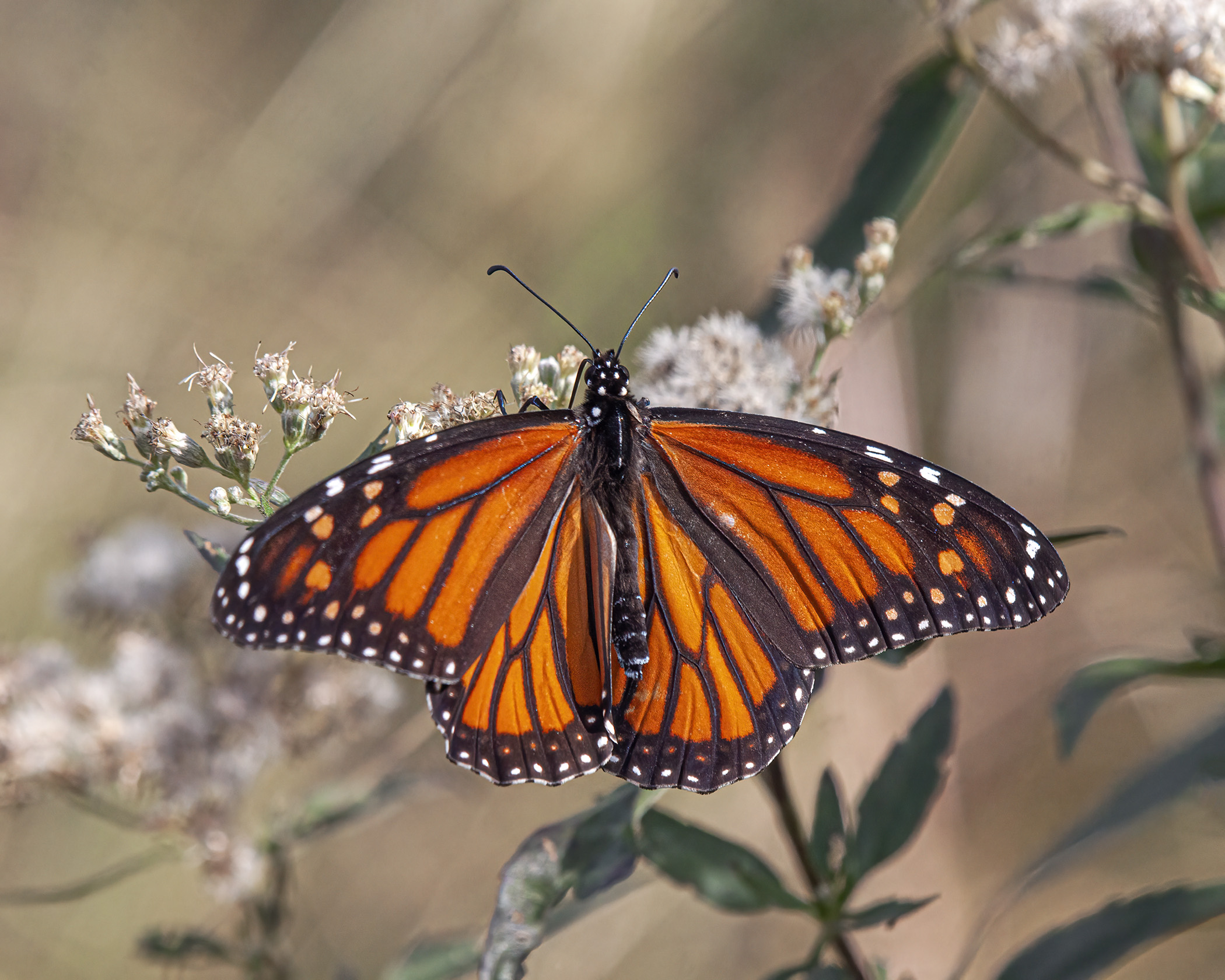
I haven’t seen many Monarch butterflies (Danaus plexippus) this season, so I was thrilled when I spotted this one on some goldenrod on Monday at Occoquan Bay National Wildlife Refuge.

The habitat of Monarch butterfly has been threatened in recent years both in the United States and in the areas to which Monarchs migrate. According to an article yesterday at oregonlive.com, the Monarch butterfly is currently under government consideration for listing under the U.S. Endangered Species Act.

Monarch butterfly

© Michael Q. Powell. All rights reserved.
Read Full Post »

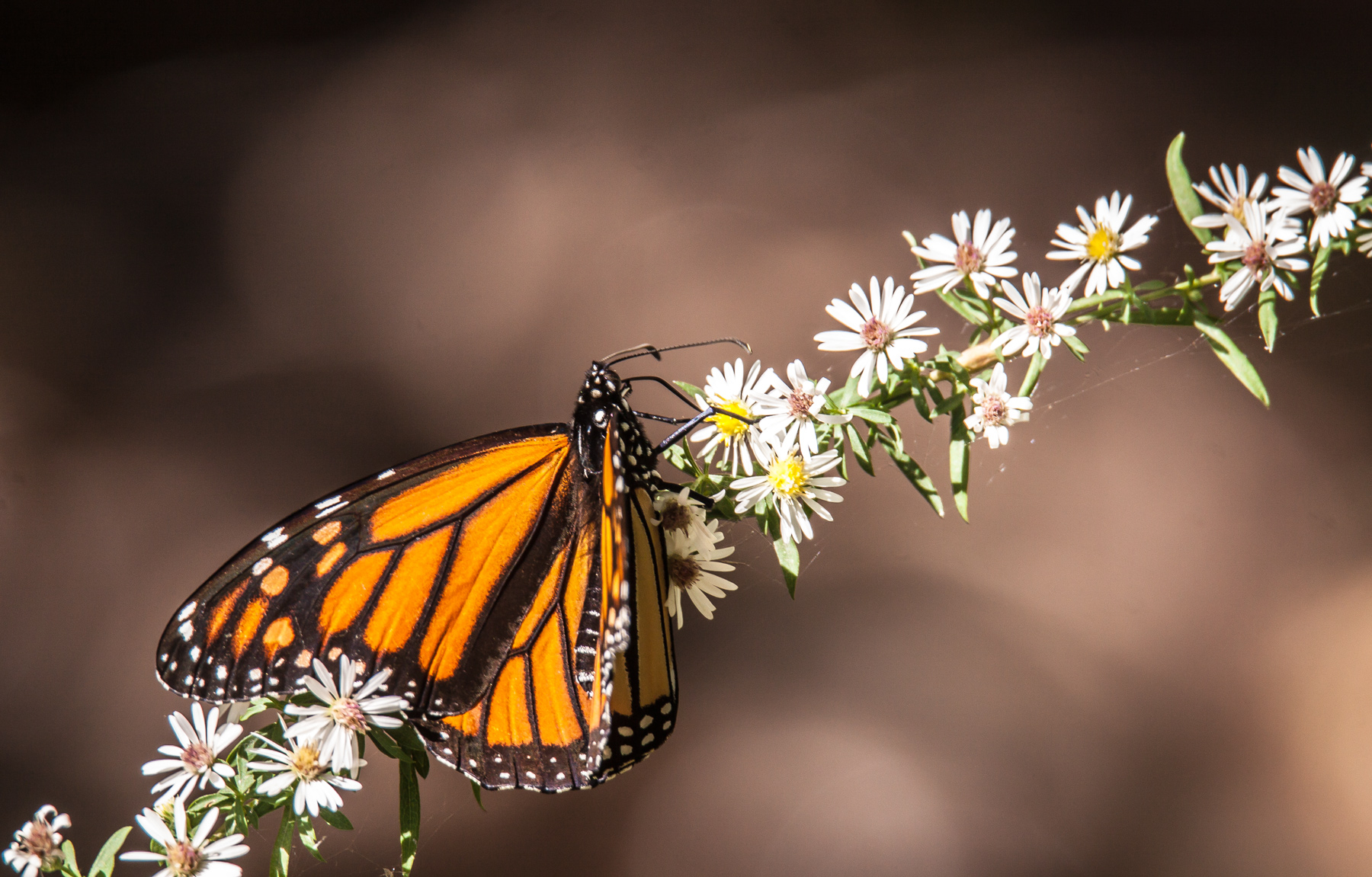
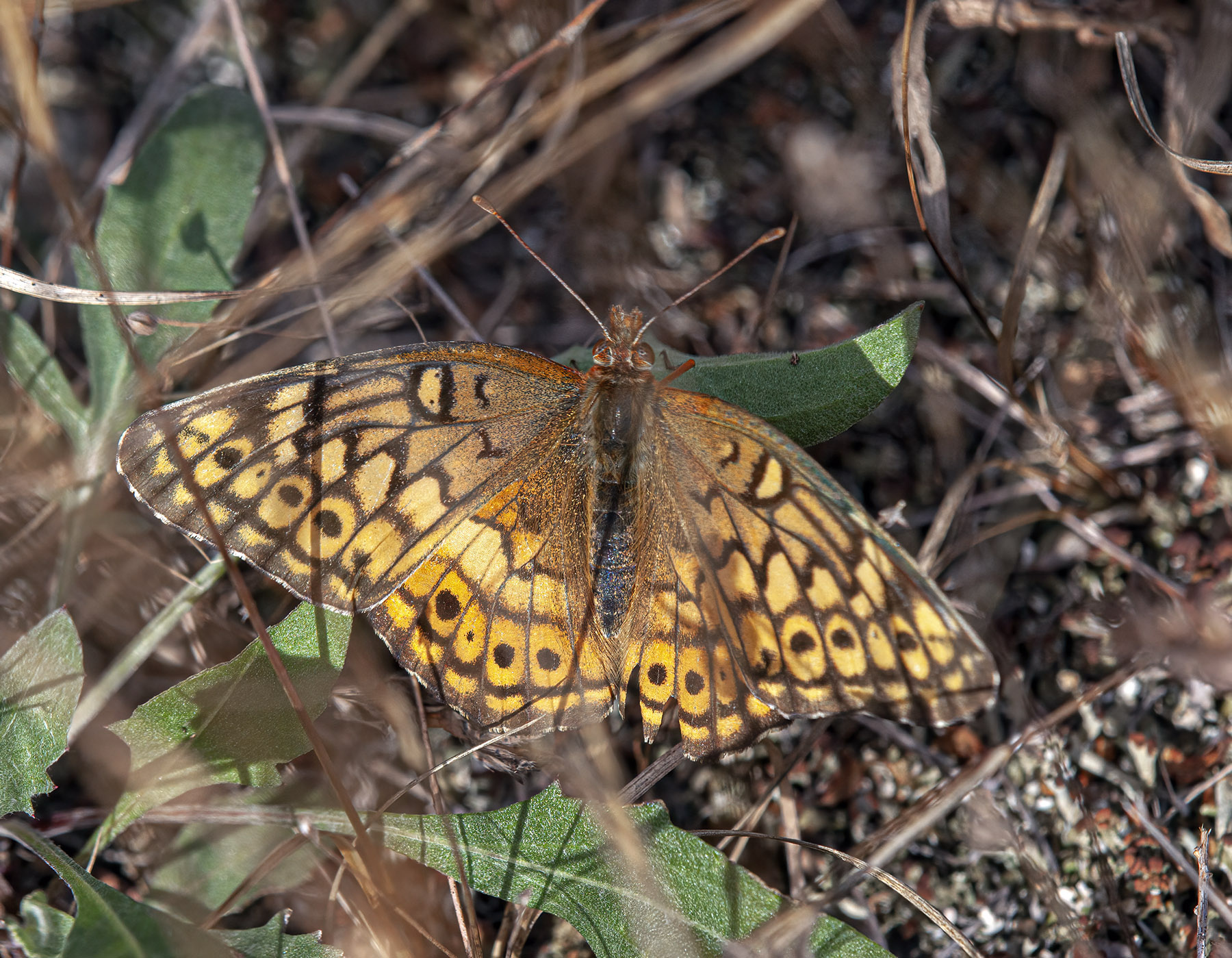
Despite the cooler autumn temperatures, there are still quite a few butterflies fluttering about, like this Monarch butterfly (Danaus plexippus)that I spotted last weekend at Occoquan Bay National Wildlife Refuge. I think that the little flowers are some kind of aster—they seem to be going strong at a time when most other flowers are wilting and turning brown.

Monarch butterfly

© Michael Q. Powell. All rights reserved.
 

Read Full Post »

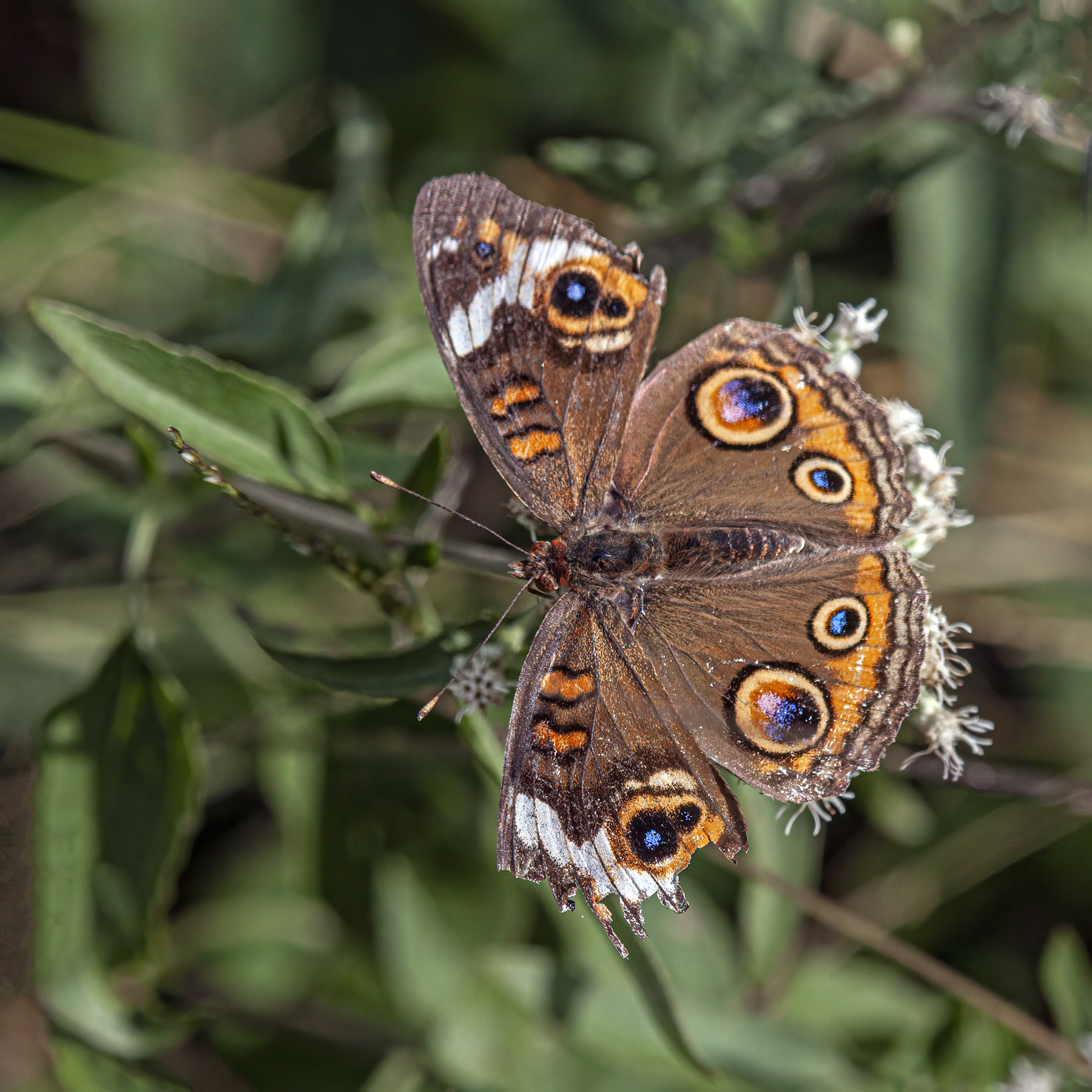
I suspect that all of the Monarch butterflies (Danaus plexippus) will soon be leaving our area for warmer places, so I am really trying to enjoy each and every encounter with one. I spotted this beauty feeding on some kind of thistle plant thispast weekend at Occoquan Bay National Wildlife Refuge.

monarch butterfly

© Michael Q. Powell. All rights reserved.
Read Full Post »

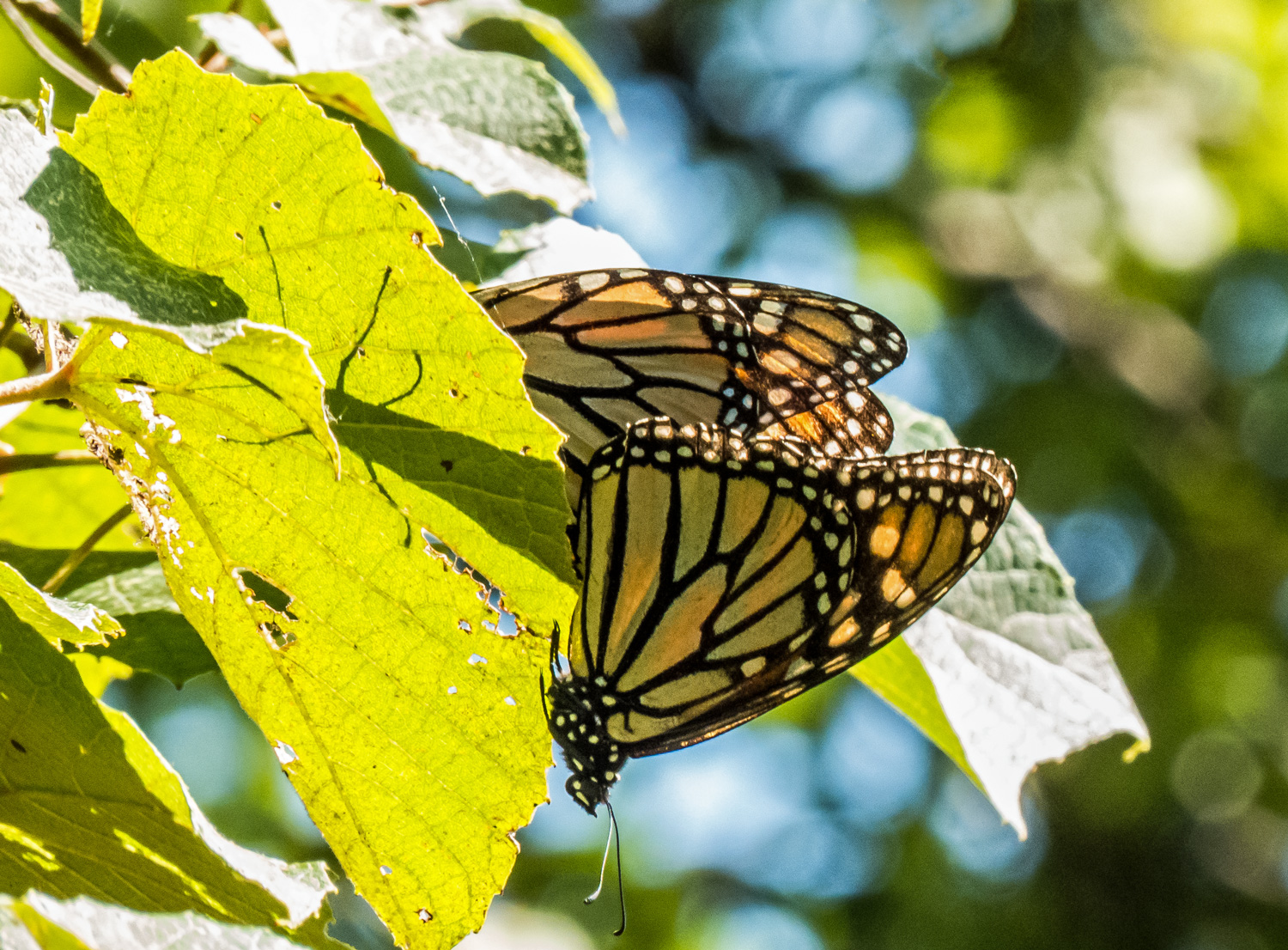
Nestled gently in the leaves of a tall tree, these two Monarch butterflies (Danaus plexippus) were mating, doing their part to perpetuate a species often considered at risk. I captured this image in late August at Occoquan Bay National Wildlife Refuge and re-discovered it yesterday when I was going through my photos from the week before my recent trip to Brussels.
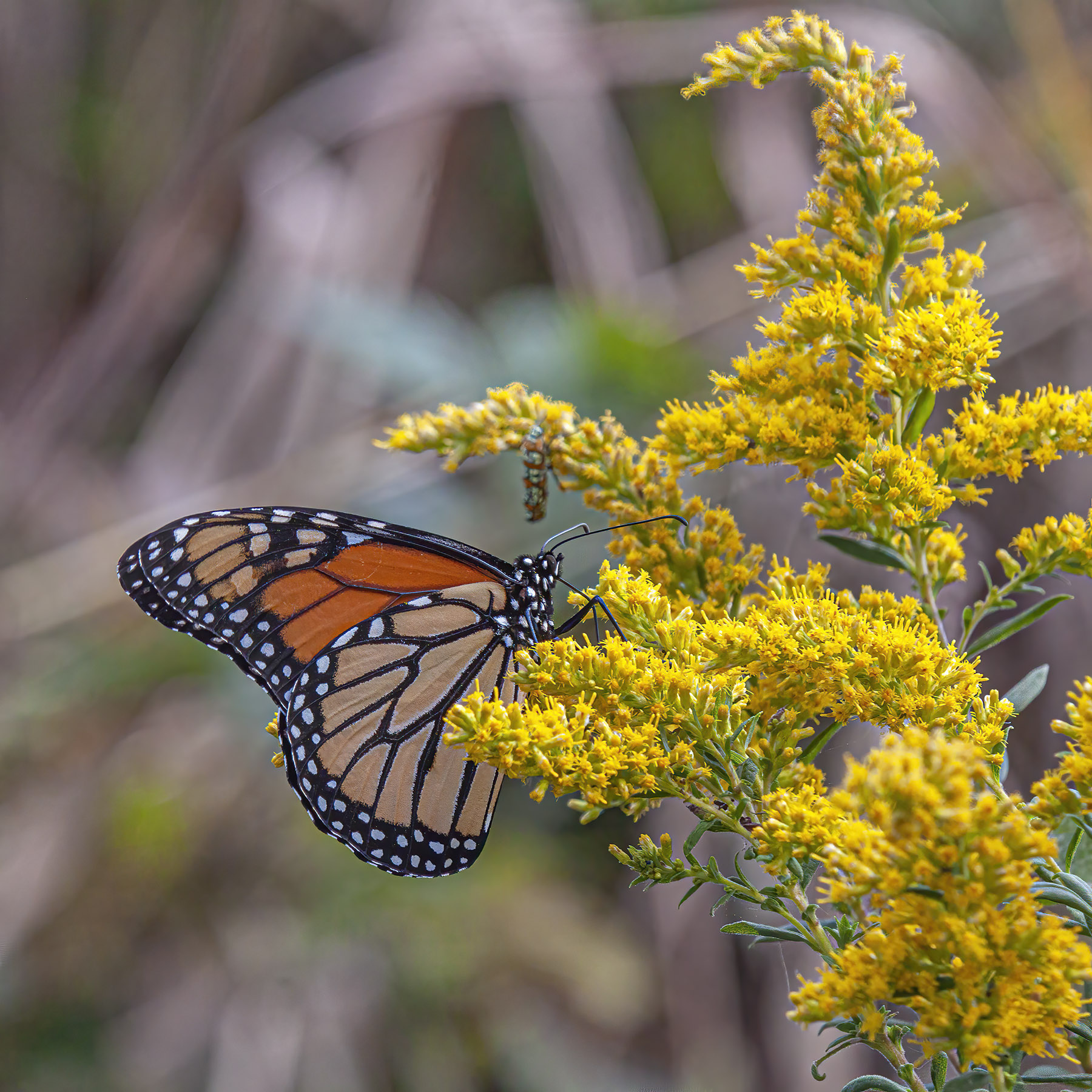
I love the way that the upper butterfly is discreetly hidden by the leaves, but is revealed in its shadow. I find the colors in this image to be especially beautiful. with a wonderful contrast between the warmth of the orange and the coolness of the blue. Most of all, though, I love the way that the background turned out, with its soft circles of out-of-focus highlights.

This is the kind of image that I strive to capture, one that gently draws in viewers and speaks to them softly, reminding them of the undiscovered beauty that surrounds them all of the time.

mating monarchs

© Michael Q. Powell. All rights reserved

Read Full Post »

Older Posts »