Feeds:
Posts
Comments

Posts Tagged ‘Calico Pennant dragonfly’

I was thrilled to spot this stunning male Calico Pennant dragonfly (Celithemis elisa) on Monday at Occoquan Bay National Wildlife Refuge. At this time of the year I am eager to search for the survivors of the summer species. The number of dragonflies continues to dwindle as we move deeper into September and I never know for sure when an encounter with one of the species will turn out to be the last one of the season.

I absolutely love the look of male Calico Pennant dragonflies. The beautiful patterning on their wings and the red heart-shaped markings on their abdomens really make them stand out. I guess that I am a bit romantic when it comes to those red hearts and I managed to find a shooting angle that allowed me to capture that detail really well in the image below.

Alas, this male was the only Calico Pennant that I spotted that day. Dragonflies spent a lot of their time looking for a mate and then doing their part to ensure the preservation of their species. Perhaps this solitary dragonfly will find a mate or maybe it is too late in the season for that. As I said, I am somewhat of a romantic and I choose to hope that love will find a way for him.

Calico Pennant

© Michael Q. Powell. All rights reserved.

Read Full Post »

The weather in my area this month has been mostly miserable. It has been hot and humid and we have had almost daily thunderstorms, resulting in a significant amount of localized flooding.

Some of the dragonflies in our are are also showing signs of the stresses of summer, like this male Calico Pennant dragonfly (Celithemis elisa) that I spotted during a recent visit to Occoquan Bay National Wildlife Refuge. The photo below shows a substantial amount of damage to the wings of this dragonfly. I can’t tell if the damage was caused by a predator or if it is part of the normal wear-and-tear associated with life as a dragonfly.

I hope to get out a bit more often with my camera during the second half of July, perhaps starting out a bit earlier in the morning before things heat up to miserable levels.

Calico Pennant dragonfly

© Michael Q. Powell. All rights reserved.

Read Full Post »

This past Friday I was delighted to spot some mature male Calico Pennant dragonflies (Celithemis elisa) at Occoquan Bay National Wildlife Refuge. Earlier this season I had seem some immature male Calico Pennants who still had yellow bodies. As they mature, male Calico Pennants turn red in a pattern that looks like a column of little hearts, as you can see in the second photo below.

Like other “pennant” dragonfly species, Calico Pennants like to perch precariously on the very tips of vegetation. Even the slightest breeze will cause them to flutter, like pennants in the wind.

You can’t help but notice the beautiful patterning in the wings that makes this species stand out from almost all other dragonfly species. Wow!

I took the first two photos when the dragonflies were perched nearby in the vegetation. Periodically the dragonflies would fly out over the water of a small pond at the wildlife refuge and would perch at the water’s edge. The shoreline was really mucky, so I could not get close to these dragonflies. I was happy, though, to be able to capture the final photo below, an “artsy” minimalist view of a Calico Pennant perched at an almost right angle on a slim blade of vegetation.

Calico Pennant

Calico Pennant

Calico Pennant

© Michael Q. Powell. All rights reserved.

Read Full Post »

Later in the season I can rely on coloration to distinguish between male and female Calico Pennant  dragonflies (Celithemis elisa)—the bodies of males are red and those of females are yellow. When they first emerge, however, immature males are yellow, so you have to look really closely at a given individual to determine its gender.

The terminal appendages of the dragonfly in the second photo indicate to me that it is a male, despite the fact that its body is yellow. The one in the first photo is also an immature male Calico Pennant dragonfly that is just beginning to change from yellow to red. I love the way that he is perched on the very tip of the flimsy vegetation stalk, holding tightly to it with all of his little legs.

I spotted these two dragonflies on 12 May at Occoquan Bay National Wildlife Refuge, my first sightings of this colorful dragonfly species of the year. There is something really special about the patterned wings of both genders of Calico Pennants and when viewed from the right angle, as in the second photo, the pattern on their bodies look like a series of hearts.

Calico Pennant

Calico Pennant

© Michael Q. Powell. All rights reserved.

Read Full Post »

I thought that the Calico Pennant dragonflies (Celithemis elisa) might be gone for the season, so I was thrilled to spot this handsome male last Monday (12 August) at Occoquan Bay National Wildlife Refuge. Calico Pennants are among the most colorful dragonflies that I encounter, with beautiful patterned wings. Early in their development, male Calico Pennants have yellow bodies, like their female counterparts, but eventually they become a bright red in color.

When I captured this image of the Calico Pennant, he was perched at the very tip of the vegetation, a favorite perching spot for this species. Like other pennant species, Calico Pennants often occupy precarious perches that cause them to flap like a pennant when even the slightest breeze is blowing.

Calico Pennant

© Michael Q. Powell. All rights reserved.

Read Full Post »

When dragonflies mate, they usually assume a “wheel” position, in which the male grasps the female by the back of her head and she bends her abdomen towards his thorax. The position appears to be both awkward and acrobatic, but amazingly the dragonflies are able to fly while in this position.

I was searching for dragonflies last week at Occoquan Bay National Wildlife Refuge when a pair of mating Calico Pennant dragonflies (Celithemis elisa) flew by me and landed in some nearby vegetation. Calico Pennants are some of the most spectacular dragonflies in our area, with bright colors and distinctive patches on their wings.

Feeling a bit like a voyeur, I moved a little closer to them and slowly crouched a bit to get a better angle for my shot. In the image below, you can see how the female grasps the abdomen of the male during this process.

I was happy to be able to get most of the two dragonflies in focus, which is always a challenge in situations like this.

Calico Pennant

© Michael Q. Powell. All rights reserved.

Read Full Post »

When male Calico Pennant (Celithemis elisa) dragonflies are immature, they have yellow markings on their bodies similar to those of the females. As the males mature, those markings turn bright red. I was thrilled to spot several mature male Calico Pennants last week at Occoquan Bay National Wildlife, the first adult males of this species that I have encountered this year.

The bright body markings and the prominent wing patches really make this dragonfly stand out, although they are quite small, about 1.2 inches (30 mm) in length.

Calico Pennant

Calico Pennant

© Michael Q. Powell. All rights reserved.

Read Full Post »

I love the light and delicate pose of this handsome male Calico Pennant dragonfly (Celithemis elisa) that I spotted during a recent visit to Occoquan Bay National Wildlife Refuge. Pennant dragonflies, like the Calico Pennant, usually perch on the very tips of vegetation where they sway in the slightest breeze—like a pennant.

The red of the dragonfly’s body and the green of the vegetation help the dragonfly to “pop,” because red and green are complementary colors, i.e. they are directly opposite each other on the traditional color wheel that artists use.

Callico Pennant

© Michael Q. Powell. All rights reserved.


Read Full Post »

On Monday I finally spotted some mature male Calico Pennant dragonflies (Celithemis elisa) with red markings at Occoquan Bay National Wildlife Refuge. Heretofore all of the males that I had seen this year were immature and had yellow markings, like those of their female counterparts.

The first two photos show male Calico Pennants. I love the way that the red marking on the abdomen look like a series of tiny hearts. The dragonfly in the third photo is an immature male—you can tell that it is a male by looking at the shape of the tip of the abdomen (the “tail”).

For the sake of comparison, I have added a final photo of a female Calico Pennant from a posting I did in May 2020. You can readily see that the dragonflies in the last two photos are similar in coloration, but you have to look a bit closer at them to see that the wing patterns are slightly different and the shapes of the terminal appendages are quite different.

Most of us tend to rely on colors for identifying species of birds and insects, but I have learned over time that color is often not a reliable identification feature, especially for immature subjects, when the males and females are often similar in color and the color differentiation becomes apparent only when they mature.

Calico Pennant

Calico Pennant

Calico Pennant

Calico Pennant

© Michael Q. Powell. All rights reserved.
Read Full Post »

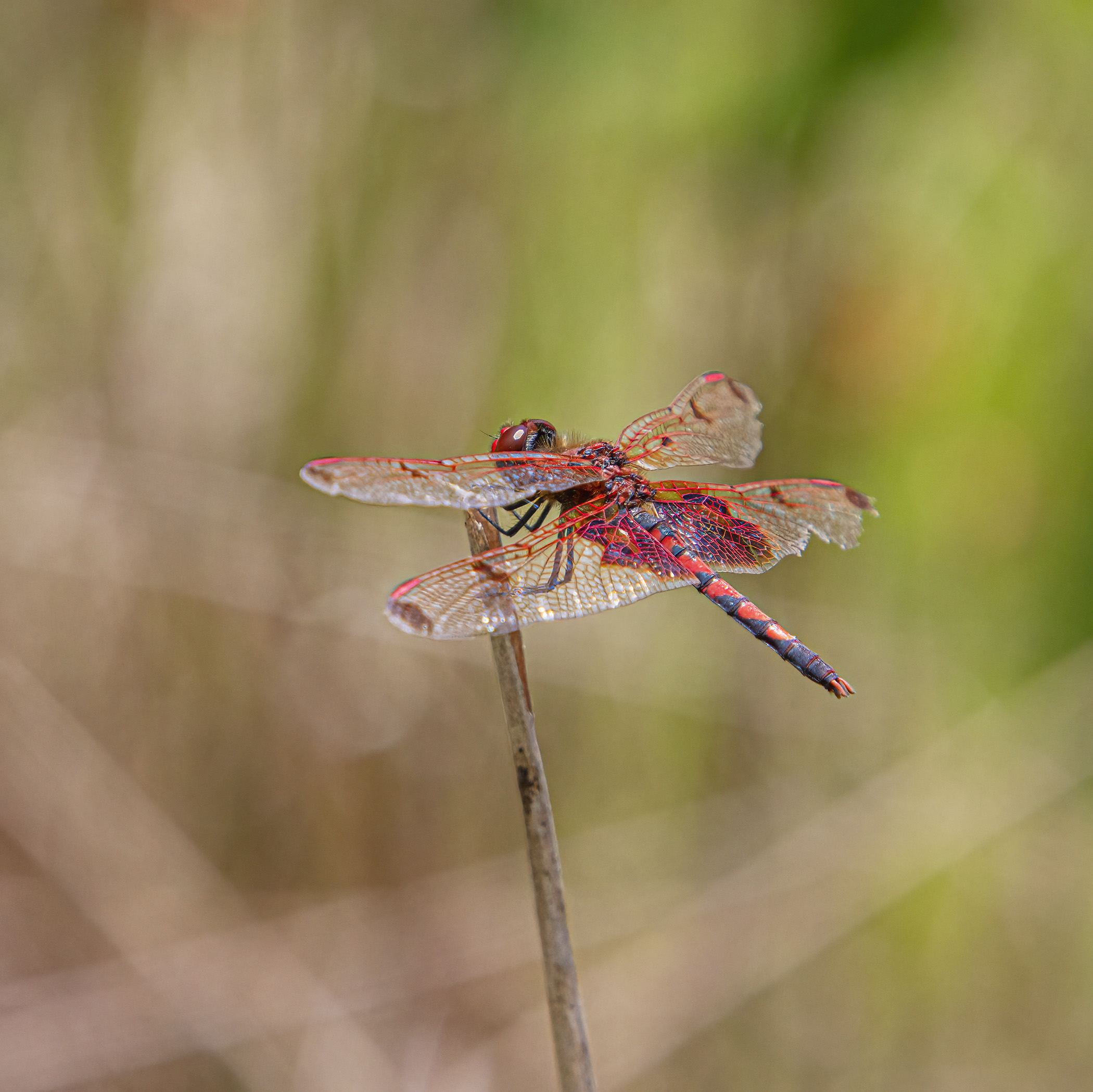
Calico Pennant dragonflies (Celithemis elisa) often remind me of pole vaulters. They hold on to a long, narrow “pole” at the very end and flex it, as though they were trying to propel themselves over a bar. I spotted this handsome male Calico Pennant last Saturday at Occoquan Bay National Wildlife Refuge, one of the few local spots where I encounter this spectacular species.

This will probably be my last blog posting this week. I will be driving from Virginia to Massachusetts later today to deal with some family issues and will return home this coming weekend, when I hope to resume my habit of posting nature and wildlife photos almost daily.

Calico Pennant

© Michael Q. Powell. All rights reserved.


Read Full Post »

When I am writing a blog posting with multiple photos, I will usually lead with the “best” photo. Most of the time I have a clear favorite image, but today I struggled a bit in trying to decide which image of a Calico Pennant (Celithemis elisa) was the “best” one. I was delighted on Monday at Occoquan Bay National Wildlife Refuge to have multiple opportunities to photograph male Calico Pennants, which are among the most striking dragonflies that I encounter, thanks to their bold coloration and wonderfully patterned wings.

From a technical perspective, the first image could be considered the “best.” The background is pleasantly blurred and virtually all of the dragonfly’s features are in sharp focus. Graphically this image stands out, even when viewed as a thumbnail on a cell phone.

The background in the second image is considerably more cluttered than in the first image. However, I think the color contrast between the bright red of the dragonfly and the pinkish-purple colors in the background makes it easy to see the primary subject. The vegetation helps to provide the viewer with a sense of the environment in which I photographed the dragonfly.

The third image was the most challenging to capture. Several Calico Pennants were flying around over the waters of a pond and I was thrilled to capture this in-flight shot, my first such photo of this species. Most of the other dragonflies that I have photographed as they were flying were considerably larger—a Calico Pennant is only about 1.3 inches (33 mm) in length—and it took a lot of persistence and concentration to get this shot.

The final shot was a lucky one. I was focused on the perched dragonfly and reacted quickly when it took off. From an artistic perspective, I really like this image. The mottled colors of the pond works well as a backdrop for the action and the contrast between the muddy brown and the bright red of the dragonfly makes the subject “pop.” I love the texture of the branch and the branch helps to lead the viewer’s eyes to the dragonfly. Finally, the dragonfly’s wing patterns are displayed beautifully as I managed to capture a moment when they were fully extended.

I don’t know if it is possible for me to state definitively which one of these images is the “best”—I like each of them for different reasons. Is there one that stands out to you more than the others? I’d welcome your views on this question.

Calico Pennant

Calico Pennant

Calico Pennant

Calico Pennant

© Michael Q. Powell. All rights reserved.

Read Full Post »

I was delighted last Thursday to see quite a few Calico Pennant (Celithemis elisa) dragonflies during a visit to Occoquan Bay National Wildlife Refuge. The markings and wing patterns on this species are really striking, making this one of the most attractive species that I see during the dragonfly season.

Some of the Calico Pennants appeared to have newly emerged—when dragonflies initially break through the exoskeleton of their water-dwelling larvae selves, their wings are really shiny and fragile and their coloration is often pale. The dragonfly in the first photo appears to be in that stage of development, which is sometimes referred to as “teneral.” It you look closely at the place where the dragonfly is grasping the vegetation, you can see what is quite probably its discarded exoskeleton from which it had recently emerged.

The Calico Pennants in the second and third photo are females, as was the one in the first photo. The patterns on the wings of these more mature females are more distinct and their yellow coloration is somewhat brighter. How do I know that they are females? If you look closely at the ends of their abdomens (the “tails”) you can see the terminal appendages that indicate their gender.

Female Calico Pennants have yellow markings on their abdomens, but that is not a reliable indicator of their gender, because immature males have that same coloration. The dragonfly in the fourth photo, for example, is an immature male Calico Pennant. If you compare the tip of the abdomen of this dragonfly with the one in the third photo, you may be able to see that there are differences.

What does a mature male Calico Pennant look like? I managed to spot only a single mature male that day, but fortunately was able to capture a shot of it. As you can see in the final photo, adult male Calico Pennants have red marking on their abdomens and the veining on their wings is pinkish in color.

We are gradually transitioning to the summer dragonfly species and some of the early spring ones are starting to disappear. I’ll be keeping my eyes open for the “new” species, so don’t be surprised to see more dragonfly photos in the upcoming months.

Calico Pennant

Calico Pennant

Calico Pennant

Calico Pennant

Calico Pennant

© Michael Q. Powell. All rights reserved.

Read Full Post »

As we approach the end of September, I am keeping a mental checklist of the dragonflies that I continue to see. Some species have already disappeared for the season. With other species, I see only the tattered survivors. There are a few other species that will remain with for at least another month.

Here are some shots of three of the dragonflies that I saw last Tuesday at Occoquan Bay National Wildlife Refuge. The first one is a colorful male Calico Pennant (Celithemis elisa). We are nearing the normal late date for this species, so I was particularly happy to see this dragonfly.

The second image shows a female Common Whitetail (Plathemis lydia), one of the most common dragonflies in our area. This species is always one of the first to appear in the spring and one of the last to disappear in the autumn.

The final photo shows a male Slaty Skimmer (Libellula incesta) perching in the vegetation at the edge of a pond. This species is probably the most common one that I see right now when I am visiting a pond. I thought about cropping the image a little closer, but decided I really like the pops of pinkish-purple provided by the flowers near the edge of the frame.

There are, of course, other species still around that I have featured in recent postings, such as the Russet-tipped Clubtail, the Blue-faced Meadowhawk, and the Prince Baskettail, as well as several others. I am still searching for my first Autumn Meadowhawk of the season, a small red dragonfly that is often the last species to disappear.  I have seen Autumn Meadowhawks as late as the 3rd of December. If you want a sneak preview of what an Autumn Meadowhawk looks like, check out the December 2018 blog posting of that late sighting.

Calico Pennant

Common Whitetail

Slaty Skimmer

© Michael Q. Powell. All rights reserved.

Read Full Post »

Summer dragonflies continue to hang in there as we approach the September Equinox next week that for many marks the start of fall in the Northern Hemisphere and spring in the Southern Hemisphere—some places alternatively use the meteorological calendar in which autumn begins on the 1st of September in the Northern Hemisphere. This year the equinox arrives on Thursday, 22 September.

Last Friday I was delighted to see colorful Calico Pennant dragonflies (Celithemis elisa) as I explored Occoquan Bay National Wildlife Refuge. Calico Pennants are small in size—about 1.3 inches (33 mm) in length—but are among the most brightly colored dragonflies in my area. Adult males are bright red in color, as you can see in the first two photos, and females (and immature males) are bright yellow in color. Both genders have wonderfully intricate patterns on their wings.

I have noticed that the overall number of dragonflies has been dropping of later and I am mentally keeping track of which species are still around. In another month or so, most will be gone and I expect to see primarily Autumn Meadowhawks, Blue-faced Meadowhawks, and hopefully some Fine-lined Emeralds, a relatively uncommon late summer /early fall species that is found on coastal plains that include my favorite wildlife refuge.

Calico Pennant

Calico Pennant

Calico Pennant

© Michael Q. Powell. All rights reserved.

Read Full Post »

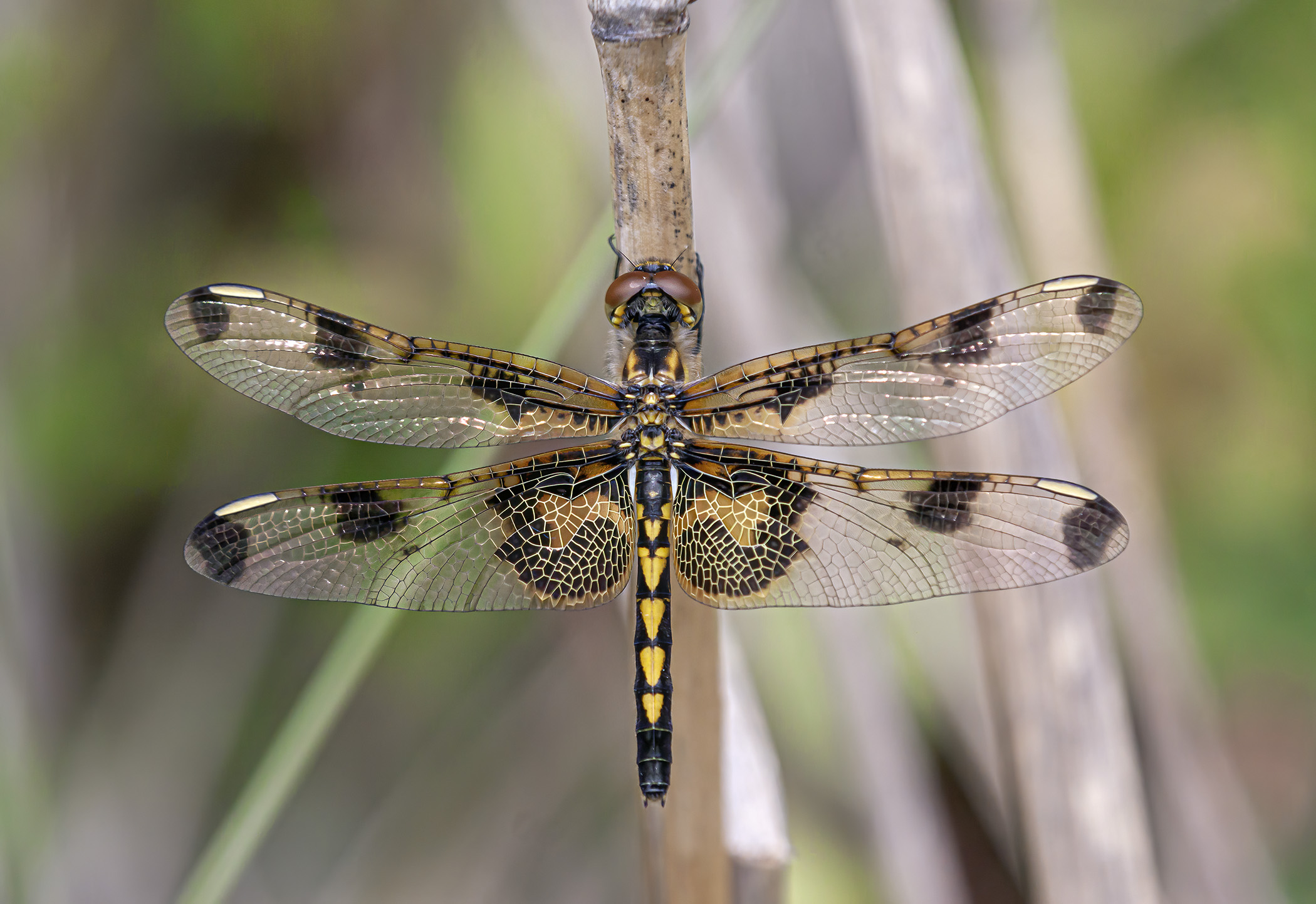
I was delighted to spot this beautiful female Calico Pennant dragonfly (Celithemis elisa) last Tuesday at Occoquan Bay National Wildlife Refuge. She was perched high in the vegetation and tolerated my presence pretty well, which permitted me to get shots from several angles. I love the way that the feet and the wings are in slightly different positions in each shot, as she adjusted her position to maintain her balance.

Calico Pennant

Calico Pennant

Calico Pennant

© Michael Q. Powell. All rights reserved.
Read Full Post »

On Tuesday I was happy to see that there are still lots of dragonflies at Occoquan Bay National Wildlife Refuge. We still have at least several months before the dragonfly season will be over, but already I am noticing some changes in dragonfly demographics. Some of the dragonflies that I saw in great numbers in July, like Needham’s Skimmers for example, are now much less common.

When I visited the small pond at the refuge, I was delighted to spot some Calico Pennant dragonflies (Celithemis elisa), among the most colorful and prominently marked dragonflies in our area. The first two images show mature male Calico Pennants and highlight really well their wonderful wing markings and the beautiful red patterns on their abdomens.

Female and immature male Calico Pennants have yellow and black markings on their bodies, so when I first saw the dragonfly in the third image, I assumed it was a Calico Pennant. When I looked more closely at the image on my computer screen, however, I realized that the markings on the front wings of this dragonfly are shaped more like bands than spots. This means that the dragonfly is most likely a Halloween Pennant dragonfly (Celithemis eponina).

Pennant dragonflies, including the Calico and Halloween Pennants, love to perch at the very tip of vegetation. When even the slightest wind begins to blow, the dragonflies flap about, like pennants, especially when the vegetation is as flimsy as the one in the final photo.

Calico Pennant


Calico Pennant

Halloween Pennant

© Michael Q. Powell. All rights reserved.


Read Full Post »

I was absolutely delighted yesterday to spot several colorful Calico Pennant dragonflies (Celithemis elisa) while I was exploring a pond at Occoquan Bay National Wildlife Refuge. There is something really special about dragonflies with patterns on their wings, and Calico Pennants have wonderfully intricate patterns on their wings, particularly on their hind wings.

Yesterday was our first sunny day in a week or so and the weekend had been unseasonably cold, so it felt especially good to be outdoors again. It is still early in the season for many dragonflies species, but I try to be diligent in searching areas where they might be present. Some days, like last Friday when I spotted the Lady’s Slipper orchids that I featured yesterday, I am not able to find any dragonflies at all, while other days my persistence pays off—that is the fate of a wildlife photographer.

Calico Pennant

Calico Pennant

Calico Pennant

© Michael Q. Powell. All rights reserved.

Read Full Post »

I was delighted on Thursday at Occoquan Bay National Wildlife Refuge to see that the Calico Pennant dragonflies (Celithemis elisa) are still with us. Now that we have entered into September, I have begun an unofficial countdown for each species. Every encounter is now even more special, because oI am conscious that it coule be the last one of this dragonfly season.

A couple of weeks ago I featured a beautiful yellow-bodied female Calico Pennant dragonfly (see the posting Female Calico Pennant from 24 August if you need to refresh your memory of this delicate creature). Today I am spotlighting an equally stunning male Calico Pennant. I absolutely love the multi-colored pattern on his hind wings and the bright red markings on his body—the red markings look like a series of little hearts when viewed directly from above.

Calico Pennant

© Michael Q. Powell. All rights reserved.

Read Full Post »

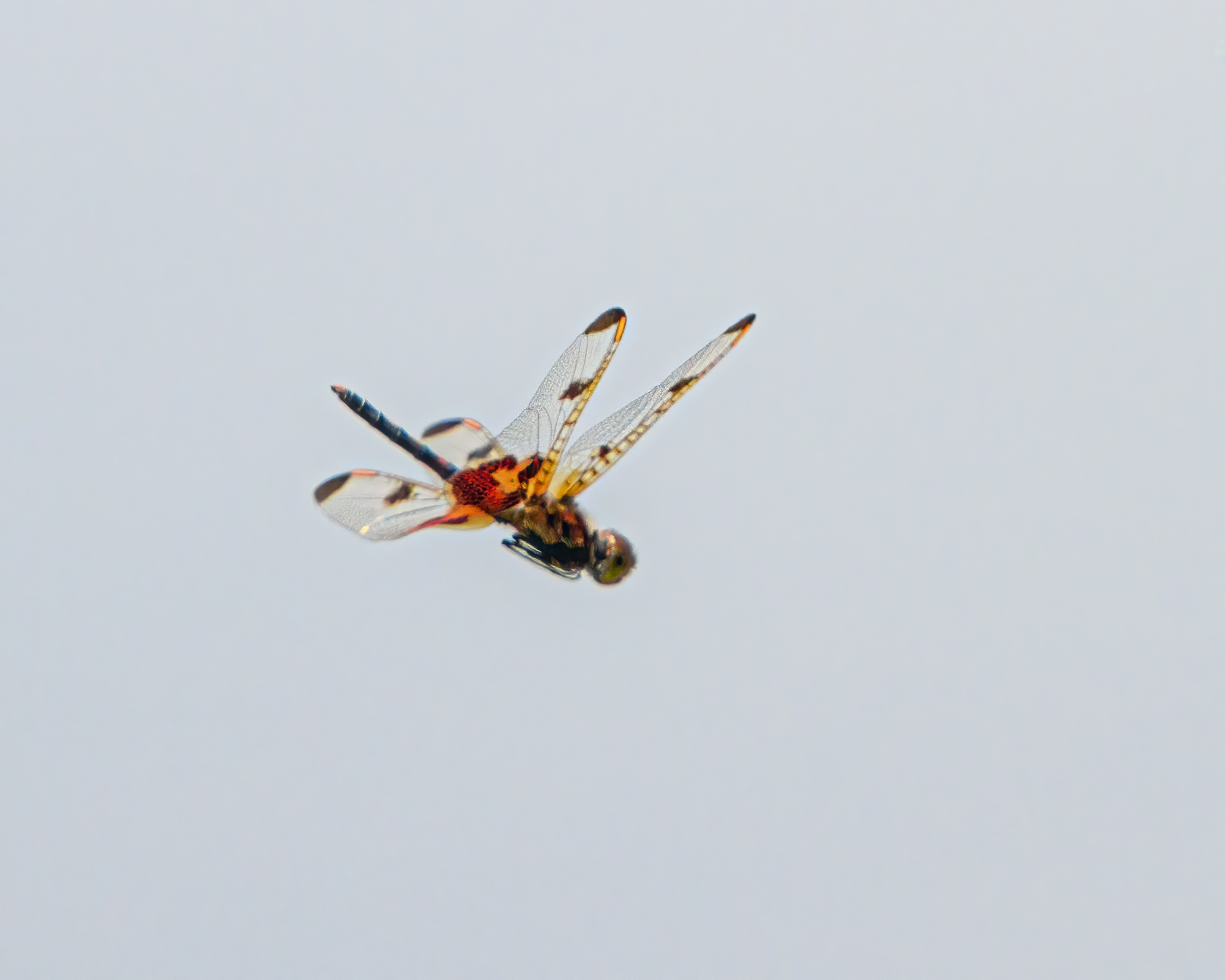
I was happy to see that some of my favorite dragonflies were still around when I visited Occoquan Bay National Wildlife Refuge last Saturday, including this beautiful female Calico Pennant dragonfly (Celithemis elisa). The bright colors—yellow for the female and red for mature males—and beautiful patterns on the wings of this species never fail to delight and amaze me.

This is the only location in our area where I can find Calico Pennants. As we move closer to the end of summer, I am never sure when I will see the last one of the season, so I look carefully for them each time I am at this refuge. You might think that it would be easy to spot Calico Pennants, because of their bright colors, but their small size—about 1.3 inches (33 mm) in length—makes them a real challenge to find and photograph.

Calico Pennant

Calico Pennant

Calico Pennant

© Michael Q. Powell. All rights reserved.
Read Full Post »

I am always excited to see the brightly colored bodies and patterned wings of Calico Pennant dragonflies (Celithemis elisa). Calico Pennnants are small in size, with a length of only 1.1 to 1.3 inches (29-34 mm), and often perch in dense vegetation of fields adjacent to the water, so they are often difficult to spot. I can usually plan on getting scratched up a bit when photographing them and sometimes come away with chigger bites.

Last Friday I was particularly happy when I managed to get shots of both a male and a female Calico Pennant at Occoquan Bay National Wildlife Refuge. Males have a red and black pattern on their bodies, while females (and juvenile males) are yellow and black—the Calico Pennant in the first photo is a male and the one in the second is a female. Both genders have exquisitely detailed patterns on their wings that also help to distinguish them from other dragonflies.

Calico Pennnant

Calico Pennant

© Michael Q. Powell. All rights reserved.


Read Full Post »

I was delighted to spot these beautiful Calico Pennant dragonflies (Celithemis elisa) on Tuesday at Occoquan Bay National Wildlife Refuge. The one with the yellow markings is a female and the one with the red markings is a male.

The combination of bright colors and intricate wing patterns makes Calico Pennants one of the most stunning dragonflies species that I am blessed to see and photograph. They sure do pack a lot of beauty into their tiny bodies that are only 1.3 inches (33 mm) in length.

Calico Pennant


calico pennant

calico pennant

© Michael Q. Powell. All rights reserved.

Read Full Post »

I was quite surprised and delighted to spot a male Calico Pennant dragonfly (Celithemis elisa) yesterday at Occoquan Bay National Wildlife Refuge. I thought I would have to wait another couple of weeks to find one of these tiny dragonflies that are only 1.3 inches (33 mm) in length, but perhaps our recent warm weather prompted this dragonfly to emerge early.

The Calico Pennant is one of a small group of dragonflies known as “pennants.” As you can see from these two images, pennant dragonflies like to perch on the very tips of flimsy stalks of vegetation where they are whipped about by the slightest breezes like pennants in the wind.

Calico Pennant


Calico Pennant

© Michael Q. Powell. All rights reserved.

Read Full Post »

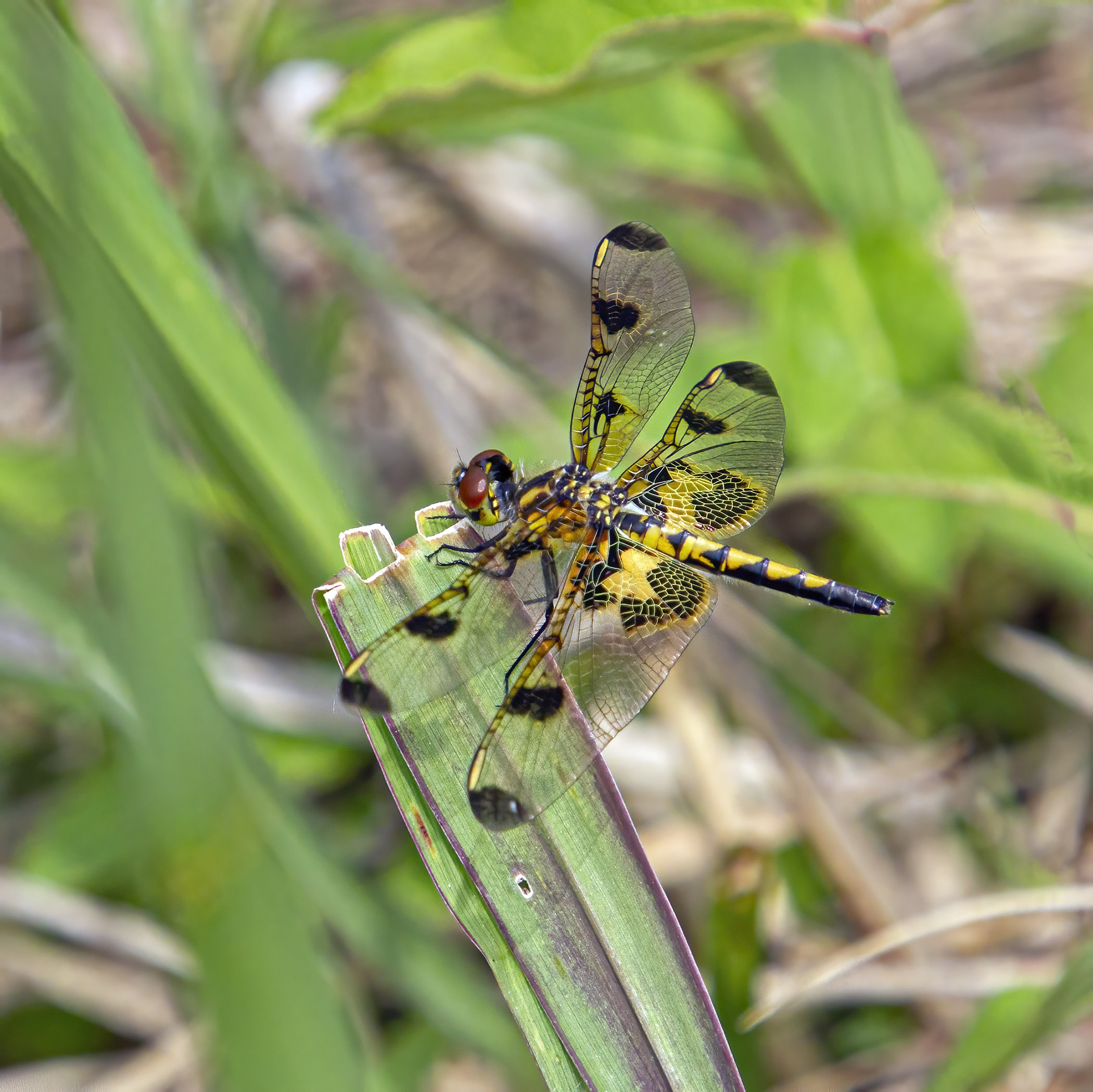
Almost all of the male Calico Pennant dragonflies (Celithemis elisa) that I have seen this season have been immature. How can I tell? When male Calico Pennants are young their abdomens are bright yellow, like those of the females. As they mature their abdomens turn a beautiful shade of red, like the male Calico Pennant in the image below that I captured on Monday at Occoquan Bay National Wildlife Refuge.

You might think that it would be easy to spot a dragonfly with such gaudy colors, but Calico Pennants are small and elusive. I usually manage to find them in the waist high vegetation in a field at the edge of a small pond at the refuge.

If you would like to compare the coloration of this male Calico Pennant with that of an immature male, check out the my posting from a couple of weeks ago entitled “Immature Calico Pennant dragonfly.”

Calico Pennant

© Michael Q. Powell. All rights reserved.
 

Read Full Post »

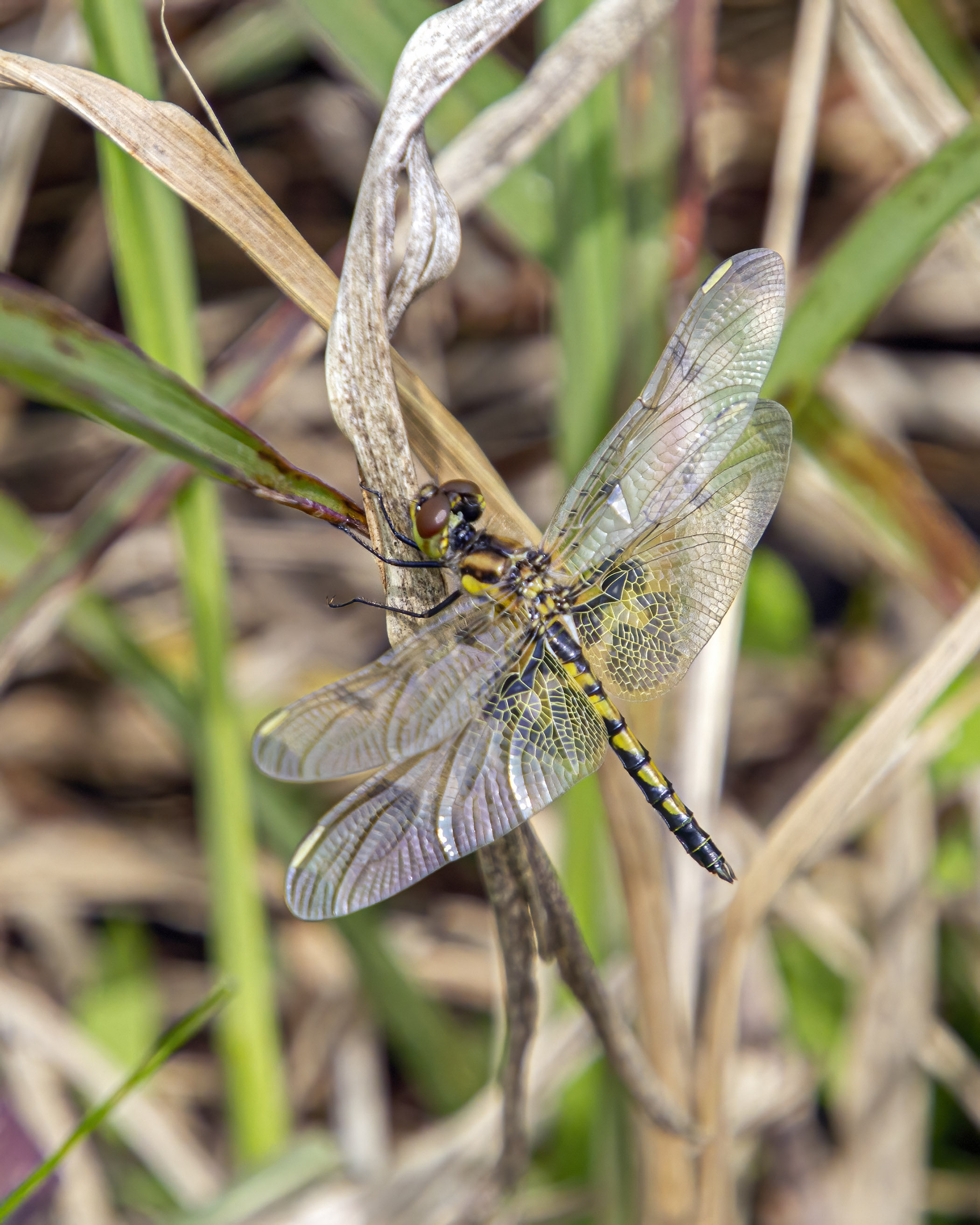
Some of the dragonfly species that I search for are around for only a few weeks, while other species have a flight season of multiple months. Calico Pennants (Celithemis elisa) are in the latter category. I photographed some Calico Pennants in the middle of June and spotted this colorful immature male this past Tuesday—I am happy to see that they are still around.

Calico Pennants are so small—about 1.3 inches (33 mm) in length—that many viewers have probably never seen one. I love their bright colors and multi-colored wing markings. Adult males are red while females and immature males, like this one, are yellow. I can tell that this one is a male because of the distinctive appendages at the tip of the abdomen.

If you want to see photos of a female Calico Pennant and an adult male, be sure to check out the earlier posting entitled “Calico Pennant dragonflies in June.”


Calico Pennant

© Michael Q. Powell. All rights reserved.
Read Full Post »

Although Calico Pennant dragonflies (Celithemis elisa) are quite small, about 1.3 inches (33 mm) in length, they pack a lot of color into their tiny bodies and wings. Adult females have bright yellow markings, as shown in the first photo, and wonderful designs on their wings that appear to be outlined in gold when the sun hits them from the right angle. Adult males have bright red markings that look almost like little hearts and have similarly detailed patches on their wings, although the pattern and colors are different from those of the females.

What about the dragonfly in the third photo? Its coloration is similar to that of the adult female, but it is in fact a juvenile male that will eventually turn red. How can I tell it is a male? If you look closely at the tips of the abdomen (the “tail”) in all three images, you will note that the terminal appendages are similar in the final two photos and are different from those in the first photo. Normally I will try to rely on those anatomical features when trying to tell the gender of a subject, because in quite a large number of dragonfly species, juvenile males and females have the same coloration.

I spotted all three of these Calico Pennant dragonflies during a visit last Friday to Occoquan Bay National Wildlife Refuge, one of my favorite places to spend time with my camera. This refuge was one of the few facilities in our area to remain open during the stay-home period and got a bit too crowded for my taste. Now that other parks have reopened, the number of visitors has dropped to much lower levels and I am able to enjoy the solitude of nature once again.

Calico Pennant

Calico Pennant

Calico Pennant

© Michael Q. Powell. All rights reserved.

Read Full Post »

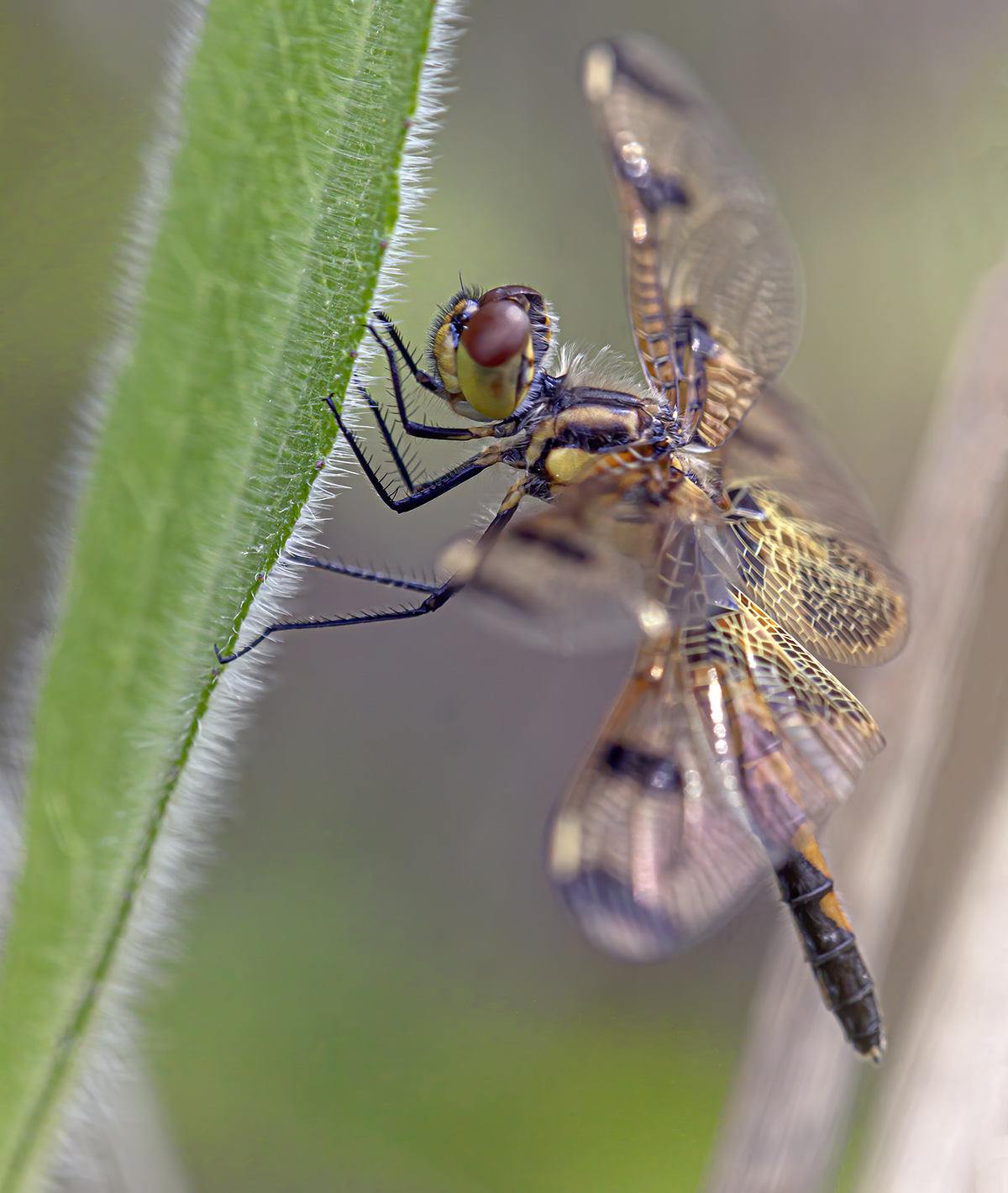
On Tuesday I spotted this beautiful female Calico Pennant dragonfly (Celithemis elisa) during a visit to Occoquan Bay National Wildlife Refuge.  I always love to see the wonderfully patterned wings of this dragonfly species and the first shot provides a good view of the wing details, especially if you click on the image to enlarge it.

In the second image, I focused primarily on the dragonfly’s head and body and the wings are mostly out of focus. I love the way that you can see the dragonfly’s tiny feet and the tenuous grasp they have on the fuzzy plant stem from which the dragonfly is hanging.

Calico Pennant

calico pennant

© Michael Q. Powell. All rights reserved.

Read Full Post »

Last Friday I spotted this handsome adult male Calico Pennant dragonfly (Celithemis elisa) while exploring Occoquan Bay National Wildlife Refuge with my friend and fellow dragonfly enthusiast Walter Sanford.  Earlier this month I did a posting entitled Mosaic Wings that featured a photo of an immature male of this same species that had a bright yellow body. This image gives you an idea of how the body color changes to red as the male Calico Pennant dragonfly matures.


Calico Pennant

© Michael Q. Powell. All rights reserved.

Read Full Post »

Dragonfly wings are amazing, but most of the time they are so transparent that it is hard to see all of the tiny little “cells” that make up the wings. Last Friday, though, I captured this shot of an immature male Calico Pennant dragonfly (Celithemis elisa) at Occoquan Bay National Wildlife Refuge that really highlights the beautiful mosaic-like pattern of its hind wings. Wow!

Calico Pennant

© Michael Q. Powell. All rights reserved.


Read Full Post »

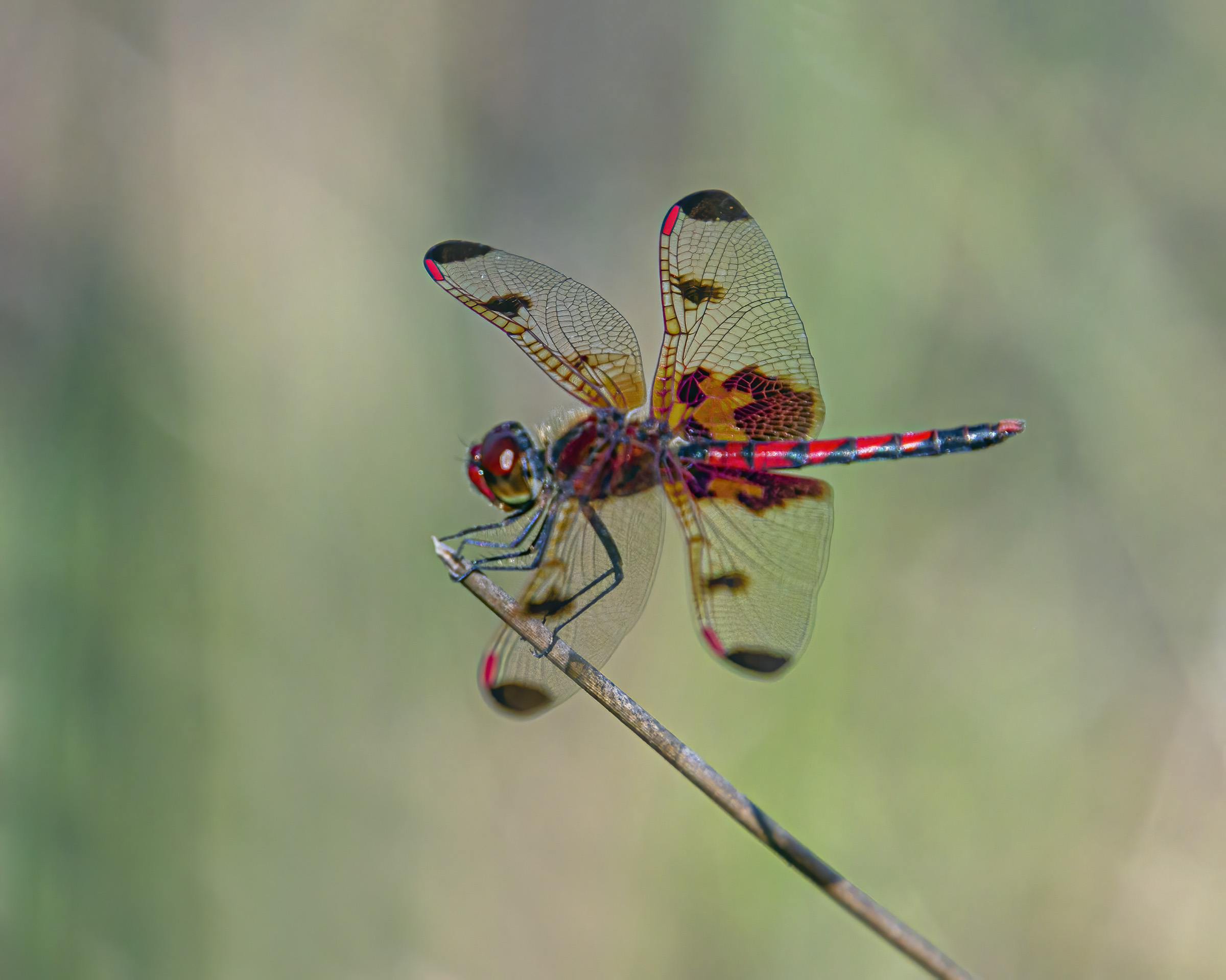
Calico Pennants (Celithemis elisa) have really distinctive markings and are among the prettiest dragonflies in our area. I spotted this female Calico Pennant on Thursday at Occoquan Bay National Wildlife Refuge. As is usually the case for pennant dragonflies, she was perched on the very tip of the vegetation. As a slight breeze began to blow, she seemed to be holding on tightly with her tiny feet.

Calico Pennant

© Michael Q. Powell. All rights reserved.
Read Full Post »

Last Tuesday as I was exploring Occoquan Bay National Wildlife Refuge I spotted this handsome male Calico Pennant dragonfly (Celithemis elisa). Unlike some species that perch close to the ground and are hard to see, Calico Pennants perch on the uttermost tips of vegetation. Although they are visible, they are often hard to photograph, because their precarious perches start to sway at the slightest hint of a breeze.

Calico Pennant

© Michael Q. Powell. All rights reserved.

Read Full Post »

This time of the year is always exciting for me as my favorite dragonfly species begin to emerge—it is like renewing a relationship with old friends after an extended absence. On Monday at Occoquan Bay National Wildlife Refuge I was thrilled to spot my first Calico Pennant (Celithemis elisa) dragonflies of the season.

As dragonflies go, Calico Pennants are small, a little over an inch (25 mm) in length and very colorful. In addition to their bright red (male) and yellow (female) bodies, they have beautifully patterned wings. Like other pennant dragonflies, Calico Pennants like to perch at the very tip of flimsy grasses and other vegetation. That makes them fairly easy to spot, but tough to photograph as they flap in the slightest breeze like a pennant.

I spotted a number of male Calico Pennants during my visit, but only a single female, the one that is mating with a male in the final photo. For those of you with curiosity or prurient interest, the couple are hooked up in what is often referred to as the “wheel position.” Anatomically speaking, it is a bit confusing, but you have to admire the couple’s acrobatic flexibility. The first two photos show perched males, with the initial photo a back-lit image that shows wing details and the second one a more traditional pose that highlights the body coloration.

Calico Pennant

Calico Pennant

Calico Pennant

© Michael Q. Powell. All rights reserved.


Read Full Post »

Older Posts »