Feeds:
Posts
Comments

Posts Tagged ‘beaver’

Have you ever watched an animal sleep? I used to watch my dog sleep. He slept soundly, but sometimes a sound or a smell or a dream would wake him up. He would look around a little to reassure himself that all was well and then would put down his head and go back to sleep.

Yesterday, I did a posting on a trio of North American beavers (Castor canadensis) that had been temporarily flooded out of their lodge and were sleeping on dry land a short distance from their home. The general response to the photo in that posting was that the beaver seemed peaceful and content (and cute!) when sleeping.

Today, I am posting a few photos of the occasions when one of the beavers woke up and looked around, much like my dog used to do.  This is actually not the same beaver that was featured yesterday, although part of this beaver was visible in the photo yesterday. This beaver was the one on which the other beaver was leaning as it snuggled.

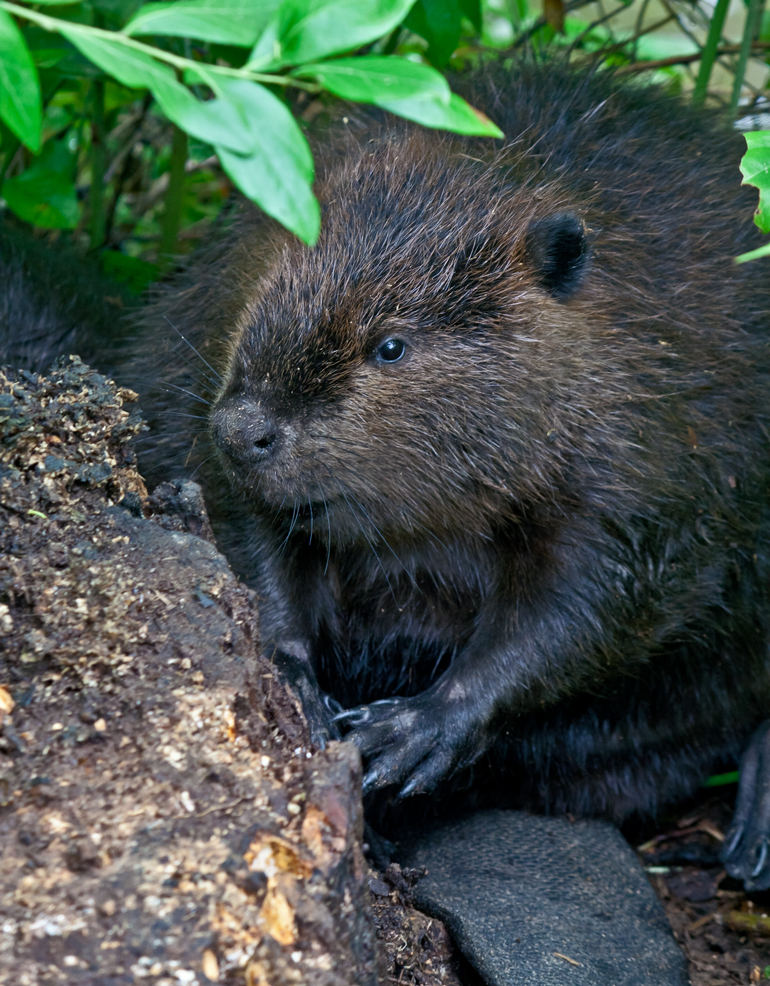
The first photo shows a pretty alert beaver, leaning on a stump around which the beavers were sleeping. I like the details that you can see of the fur and of the front paw. I was on a boardwalk at my local marshland park when I took these photos and was looking slightly down at the beavers. I was so close that I did not even have to use the full length of my zoom lens and, for example, shot the first photo with my lens at a focal length of 135mm.

beaver1_blog

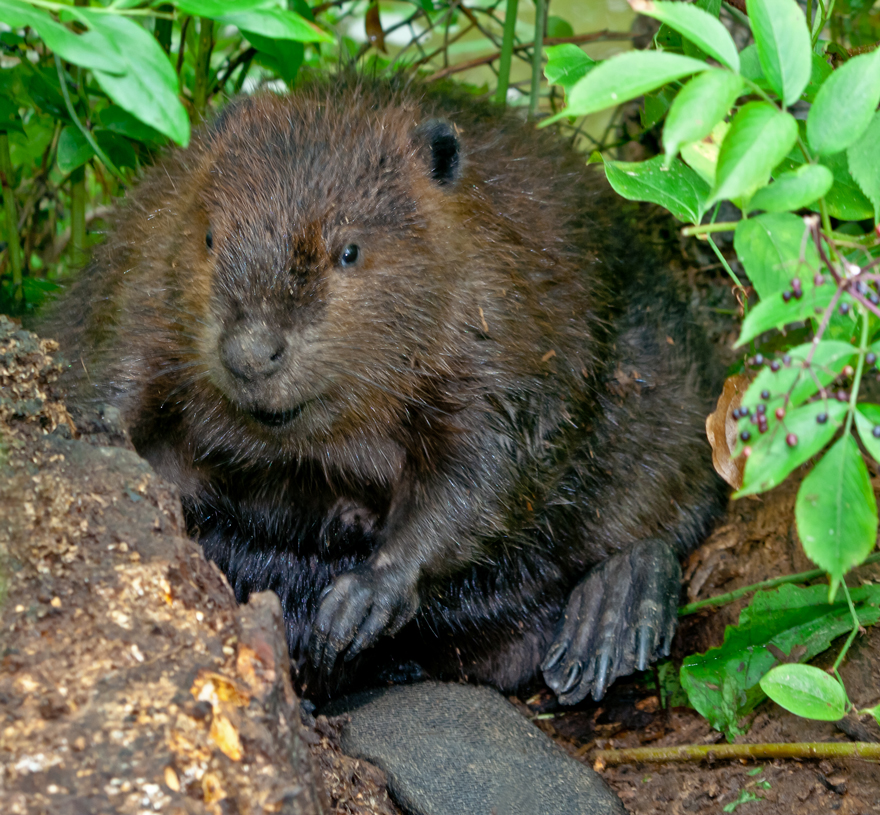
The second shot is somewhat similar to the first, but it shows part of the beaver’s tail. It was interesting to see how the beaver’s tail was tucked under the beaver when it was sleeping. I somehow had always assumed the tail was rigid—it seems to be reasonably flexible.
beaver2_blog

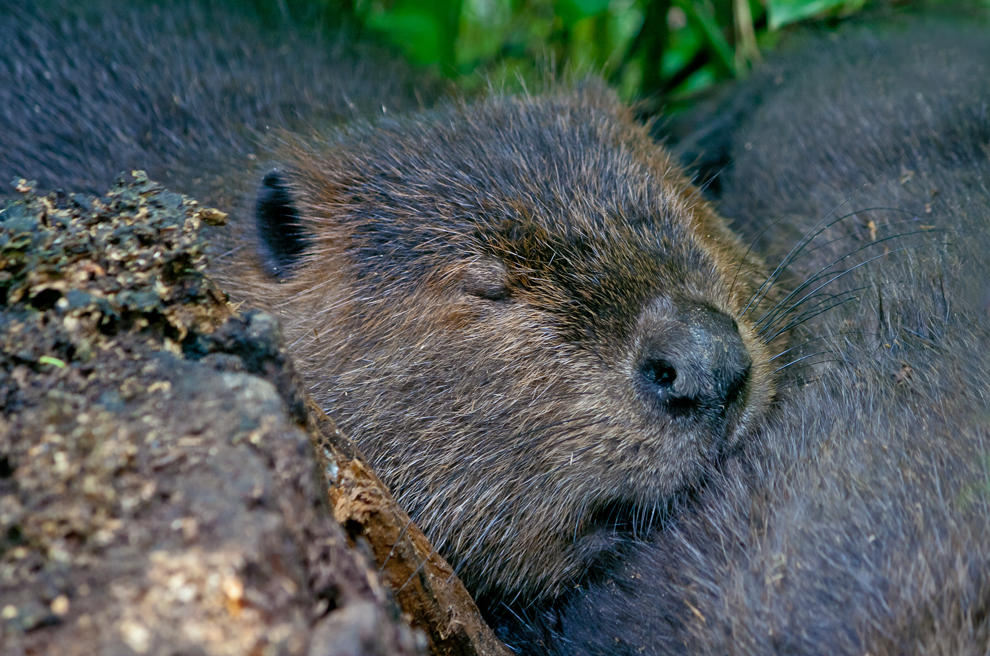
The final image today is not quite as sharp as the first two, but I like it because of the way that it shows both a front and back paw, as well as the tail. The beaver also has a tousled look and somehow unfocused eyes, looking a lot like most of us do when we first wake up.
beaver4_blog

I am still going over my photos and may post a few more, so stay tuned. I feel really lucky that I was able to see these beavers in this kind of situation in the wild and managed to capture it well enough in photos to be able to share part of the experience with all of you.

© Michael Q. Powell. All rights reserved
Read Full Post »

Last Friday, after some violent thunderstorms, I visited my local marshland park, where the staff alerted me that three beavers were sleeping on a patch of dry land near their lodge, which apparently had flooded. The three North American Beavers (Castor canadensis) were all snuggled together and reminded me a little of puppies. I am working up some more images, but thought that I would give a sneak preview of coming attractions.

beaver6_blog

© Michael Q. Powell. All rights reserved

Read Full Post »

To supplement their diets, the beavers at the National Zoo in Washington D.C. get crunchy vegetables like carrots and corn.

I had the chance to watch them eat this past weekend and took some fun photos of one of the beavers munching away on part of an ear of corn. This beaver, a female named Willow, was able to manipulate the corn really easily with her front paws and seemed to enjoy each bite as she slowly consumed the entire piece of corn.

I watched some videos on photographing animals at a zoo before this shoot and followed some of the tips, like shooting close-ups and paying attention to backgrounds. I did not, however, switch to shutter-priority mode, as suggested, but kept the camera in aperture-priority mode. I may have lost a few shots, because the shutter speed was too slow, but I was able to get decent results by using a more familiar approach.

beaver_corn_blogbeaver_corn2_blog© Michael Q. Powell. All rights reserved

Read Full Post »

If you look carefully at this photo you can see why I am able to take photos of the local beavers—when I am standing on the boardwalk I am virtually on top of their lodge in the center of the beaver pond.

About 18 months ago, the county replaced the boardwalk surface at Huntley Meadows Park with a synthetic material and shortly thereafter the beavers relocated themselves from another area of the park. I am not sure how the beavers decided on this spot, but they took over one of the benches on the boardwalk and integrated it into their architectural plans. This fall I followed their progress as they added mud and branches to the lodge and built up the walls surrounding the beaver pond.

The entrance to the lodge seems to be underneath the board walk itself and the recent photos I have taken of the beavers and muskrats have been in the pond area to the right. This is also one of my favorite spots for photographing geese and ducks taking off and landing and, during the summer, for getting shots of dragonflies, frogs, and turtles.

lodge_blog

© Michael Q. Powell. All rights reserved

Read Full Post »

I was fortunate enough this past weekend to be present as one of the beavers at my local marsh first emerged from the icy waters of the beaver pond and got a series of shots of that process.

It was late in the afternoon and a thin layer of ice covered the small area of open water that the beavers had cleared about 30-35 feet (9-10 meters) from their lodge. I could hear some activity in the beaver lodge and then I saw the shadow of a beaver swimming toward the hole in the ice.

When he reached the opening, the beaver stuck his head out of the ice and then more of his body. The beaver never did come out of the water completely, but seemed content to breathe in the cool, fresh air. From what I have been able to learn, the inside of the beaver lodge is pretty crowded and the air probably gets fetid, which may explain why fresh air was the beaver’s first priority.

I like all three of these shots, but the third one is my favorite. The beaver’s position is especially interesting, as he tips his head back and arches his back a little, as if to let in even more fresh air.

emerging1_blogemerging2_blog emerging3_blog

© Michael Q. Powell. All rights reserved

Read Full Post »

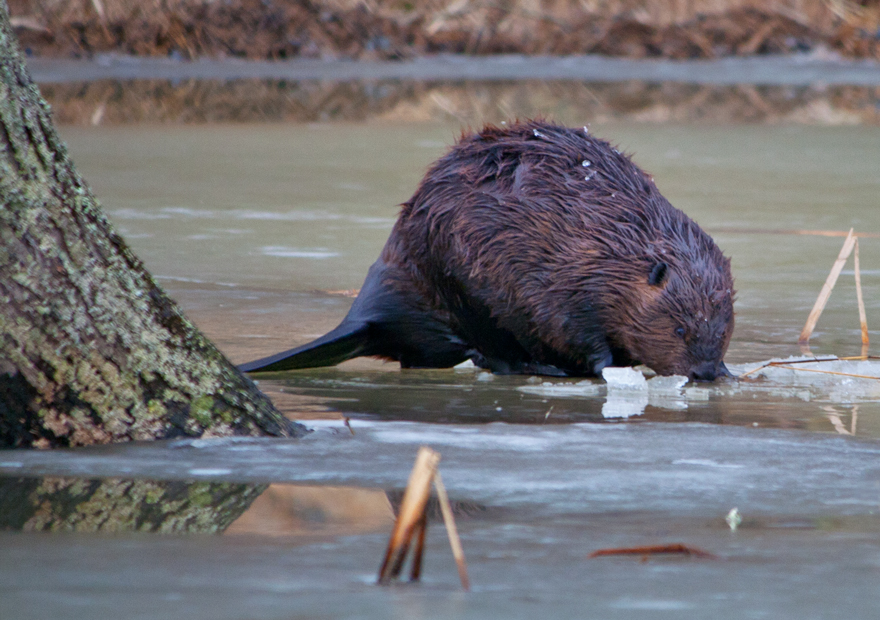
The beaver had disappeared from the small open water area of the ice-covered beaver pond.  Wondering if he would resurface, I stood in silent readiness with my camera still in my hand.

My eyes were focused on one area of the pond, but my ears detected a sound emanating from another location near the edge of the pond. Somehow I knew instantly what was about to happen—the beaver was about to achieve a breakthrough. The light had faded a bit and I couldn’t see well enough to focus perfectly, but I aimed at the source of the sound and got this shot of the beaver poking his head through a newly-created hole in the ice. From this perspective, it looks like the beaver is pretty small.

breakthrough1_blog

As I watched, the beaver placed his front paws on the ice, which appeared to be able to support his weight, and gradually pulled his body out of the water. Naturally, the small hole became a lot bigger as his large body came increasingly into view.

breakthrough4_blogbreakthrough2_blogAfter the beaver was completely out of the water, he bent down over the opening that he had just created. Perhaps he was trying to decide if he needed to enlarge it further or was trying to free a tasty-looking stick from the ice. It almost looks to me, though, that he is peering into the water, wondering if one of his fellow beavers is going to be popping up to join him.

breakthrough3_blog

The beaver did not linger long at the new location. After a few seconds on the “outside,” he dove back into the icy waters of the pond.

There are few moments in life that are truly “once-in-a-lifetime” experiences, ones that would be impossible to replicate, but I have the sense that this was one of them. So many things had to work together to make these photos happen—the timing, the location, and the ice, to name a few.

It is supposed to get up to 70 degrees (21 degrees C) today and the ice will almost certainly be gone by the time I am able to return to the marsh this weekend. Perhaps I will get to observe the beavers eating or working or playing or maybe they will remain in the lodge. In either case, I can be happy, knowing that we shared a really special moment together.

© Michael Q. Powell. All rights reserved

Read Full Post »

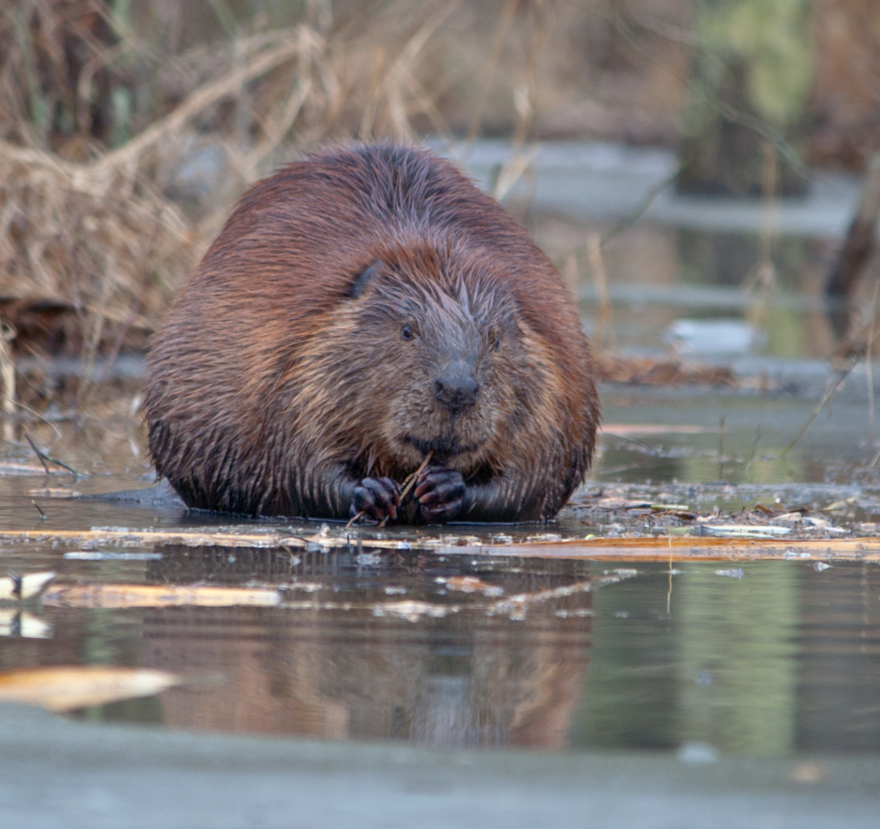
Who knew that a beaver could be so cute while he is eating?

I am still working on putting together a series of photos of the local beavers, but thought I’d post another one of my favorite images in the interim. I was surprised that the beaver did not notice me (or simply didn’t care) when I was taking this photo. Not only was I looking straight at him, but I also got as close to the level of the ice as I could to get this low-angle shot.

round_beaver3_blog

© Michael Q. Powell. All rights reserved

Read Full Post »

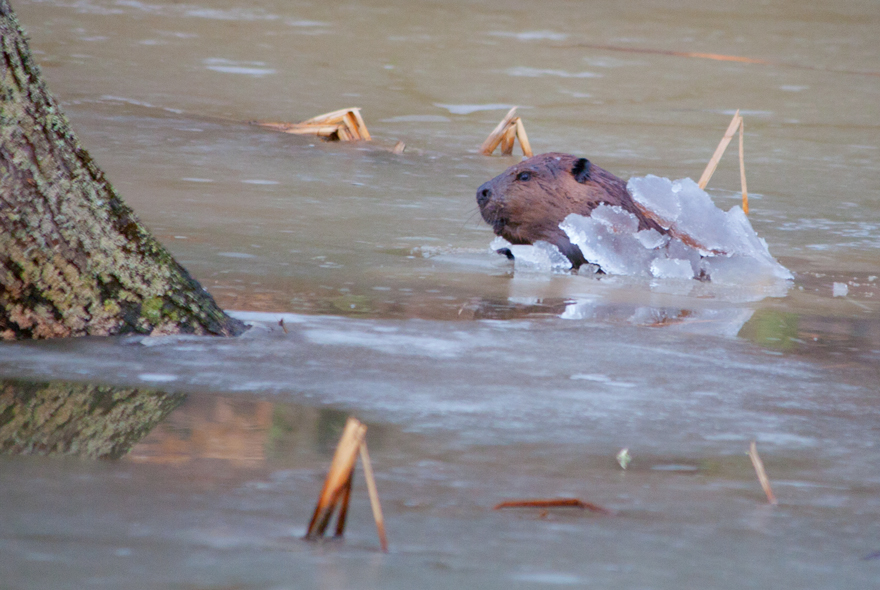
I got down pretty low to take this shot of a beaver at my local marshland park as he swam in my direction. I especially like the the reflection of his face in the water and the fact that his tail is visible. The ice in the foreground helps to give some interesting context to the photo.

During other seasons, the beavers would immediately dive whenever they sensed my presence, but the last week or so the beavers have been much more wiling to tolerate me (and others). Maybe the ice on the pond forces them to stay closer to home and to venture out more during the daylight hours rather than at night.

swimming_blog

© Michael Q. Powell. All rights reserved
Read Full Post »

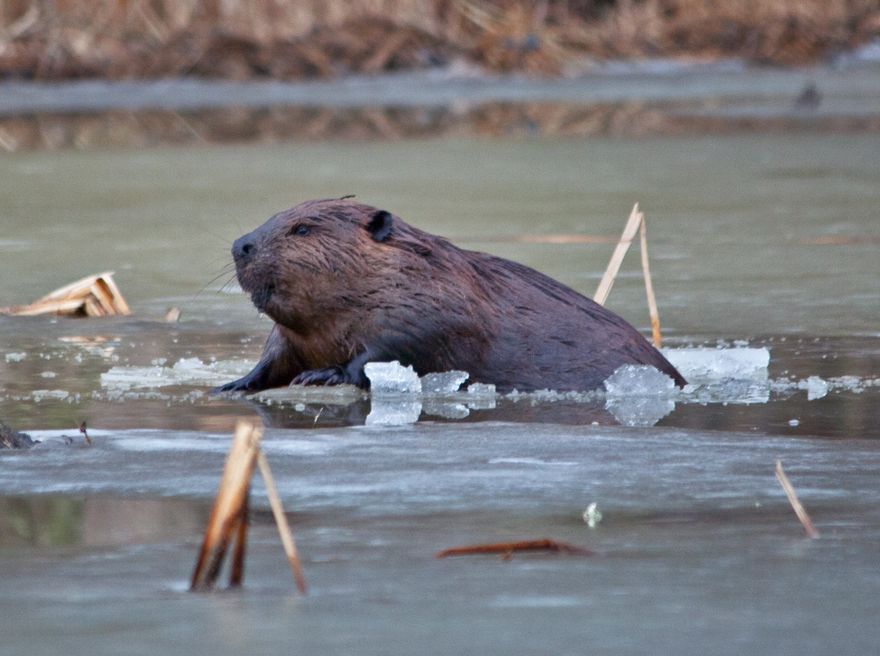
The beavers at Huntley Meadows Park, my local marshland park, have been unusually active during daylight hours the last few days and I managed to get some pretty good shots of them feeding. I am still going through my photos and probably will post some more later, but I thought I would give a sneak preview by posting this image. Spoiler alert—my photos today, which I am still uploading, included some shots of a beaver pushing its way up through the ice and I hope they look as good on my computer screen as they did on the back of my camera.

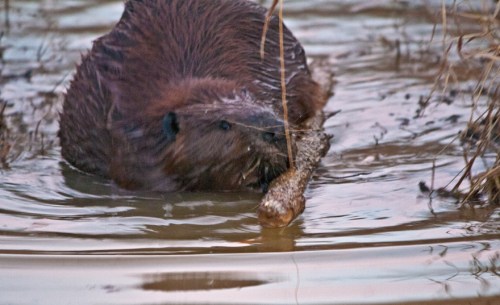
Here is a profile shot from this weekend of one of the beavers munching on a stick (more like a twig) in the icy waters of the pond outside their lodge. I love the delicate way the beaver is holding the twig in his front paws, which look a lot like hands to me. Be sure to check out the nails on the left paw—they look to me like they were manicured.

Who knew that beavers have lips (at least that’s what it looks like in this photo)?

beaver_profile_blog

© Michael Q. Powell. All rights reserved
Read Full Post »

A couple of weeks ago I finally got some relatively clear shots of the North American Beavers (Castor canadensis) at my local marshland and showed you one image in a posting called Beaver at dusk—the sequel. A brief overseas trip and other distractions have kept me from posting additional photos (as I promised to do in the original blog entry), but I finally have worked up a couple more photos.

The first image shows a shaggy, dark-haired beaver in profile. It was late afternoon, about an hour before sunset, and this beaver and the lighter-colored one that you can see in the background had emerged from their lodge and seemed to be grooming themselves and each other. Judging from the crying sounds that I have heard coming from inside the lodge, I suspect that there is a younger beaver in there too.

Shaggy beaver

Shaggy beaver

The second images shows the two beavers interacting. It looks like the lighter-colored one is giving the other beaver a massage, but I wasn’t close enough to determine for sure what they were doing. Could it be love or is he merely loosening up for a night of heavy lifting?

Beaver masseuse

Beaver masseuse

© Michael Q. Powell. All rights reserved

Read Full Post »

Beaver at Huntley Meadows Park

Beaver at Huntley Meadows Park

This past Saturday I introduced you to one of the local beavers in a posting entitled Beaver at dusk. The photos of the beaver were shot at a very high ISO and were pretty grainy. Yesterday, I was fortunate enough to photograph the beaver in better light, when he came out of his lodge an hour or so before sunset. I’m still going through my photos and may work up a few more, but wanted to post one immediately.

He is a beautiful specimen of a North American Beaver (Castor canadensis). From what I’ve read, it is almost impossible to tell a male and female beaver apart, except when the female is nursing a kit (baby beavers are called kits), so I may be wrong in using male pronouns with this particular beaver.

© Michael Q. Powell. All rights reserved.

Read Full Post »

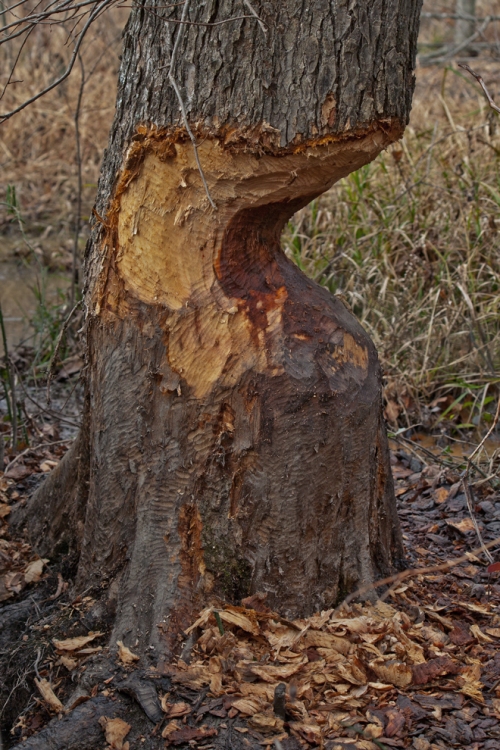
The beavers in my local marsh have been really busy recently as winter draws near (“busy as beavers,” you might say). Each time I visit the marsh I can see evidence of their handiwork. Hmm, “handiwork” is probably not the right word, since most of the evidence I see is work they have accomplished with their teeth. Maybe I should call it “dentalwork,” but that terms conjures up images of beavers with braces on their teeth. I’ll just call it “work.”

Over the past few weeks I have been noting their progress on chewing through a pretty large tree. First they chewed one side and then it looks like they gradually moved around the circumference of the tree. Circumference? Who says that high school geometry doesn’t have everyday applications? They now have gnawed (try saying that phrase quickly multiple times) into the center of the tree and I expect to see to see a fallen tree soon. I won’t be disappointed, and certainly not crestfallen.

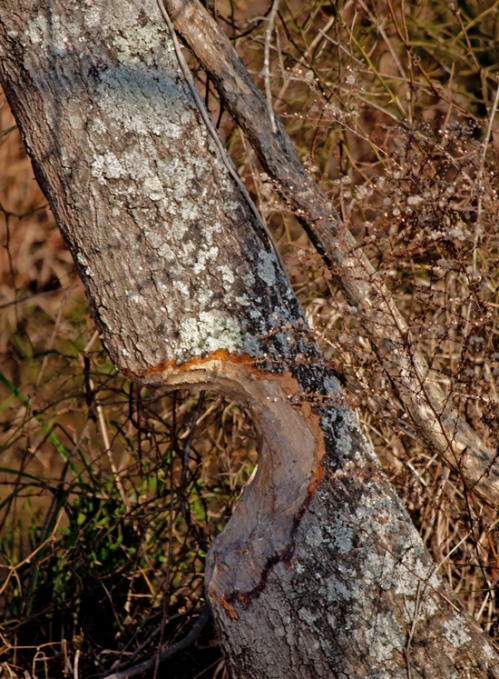
On a slightly more serious note, I am genuinely amazed that the beavers don’t just take down small saplings. I confess that, as a result of living most of my life in the suburbs, I don’t know much about wildlife. It’s fascinating to me to look at all of the individual tooth marks in the wood that bear witness to the persistence of this industrious creature. I also see its work in the mud walls that have been built up along the edges of parts of this little pond and the ever-increasing amounts of mud that have been packed on the lodge.

The beaver is ready for a cold winter. Am I?

Let the chips fall where they may

Let the chips fall where they may

How do they gnaw this high?

How do they gnaw this high?

© Michael Q. Powell. All rights reserved.

Read Full Post »

The beavers at my local marshland park have built a lodge that spills onto a bench on the boardwalk and the entrance to the lodge appears to be in the waters underneath the boardwalk itself. There are signs that the beavers have been actively getting ready for winter with new mud walls and fallen trees each time I visit. I’ve only seen a beaver a few times and it has always been a time of reduced visibility, i.e. early morning or late in the day.

As I was walking back toward the park entrance yesterday evening after taking photos of the sunset, I heard noise near the beaver lodge and saw that a beaver was visible through the brush. I snapped a couple of photos, but realized that ISO 400 would not work, so I cranked up the ISO to 1600, the highest that my camera would go. This was uncharted territory for me, because I had already seen prominent grain when I set the ISO at 800. Even with the ISO set that high, the shutter speed was around 1/15 sec, so I tried to keep my camera on my tripod. The beaver was somewhat preoccupied and did not immediately dive, the normal reaction of a beaver when I see them, so I was able to get some shots of the beaver in action.

In many ways, these are aspirational shots, for they reflect photos that I want to take in the future with better results. I am sharing some of them, however, because I find them to be interesting, poor quality notwithstanding. It will definitely be a challenge to figure out a solution to the dilemma of getting quality shots in limited light.

Gathering more sticks for his lodge

Gathering more sticks for his lodge

Beaver close-up

Swimming beaver

Beaver with open mouth

Beaver with open mouth

Beaver looking at me

Beaver looking at me

Swimming toward the light

Swimming toward the light

© Michael Q. Powell. All rights reserved.

Read Full Post »

« Newer Posts