Feeds:
Posts
Comments

Archive for the ‘Insects’ Category

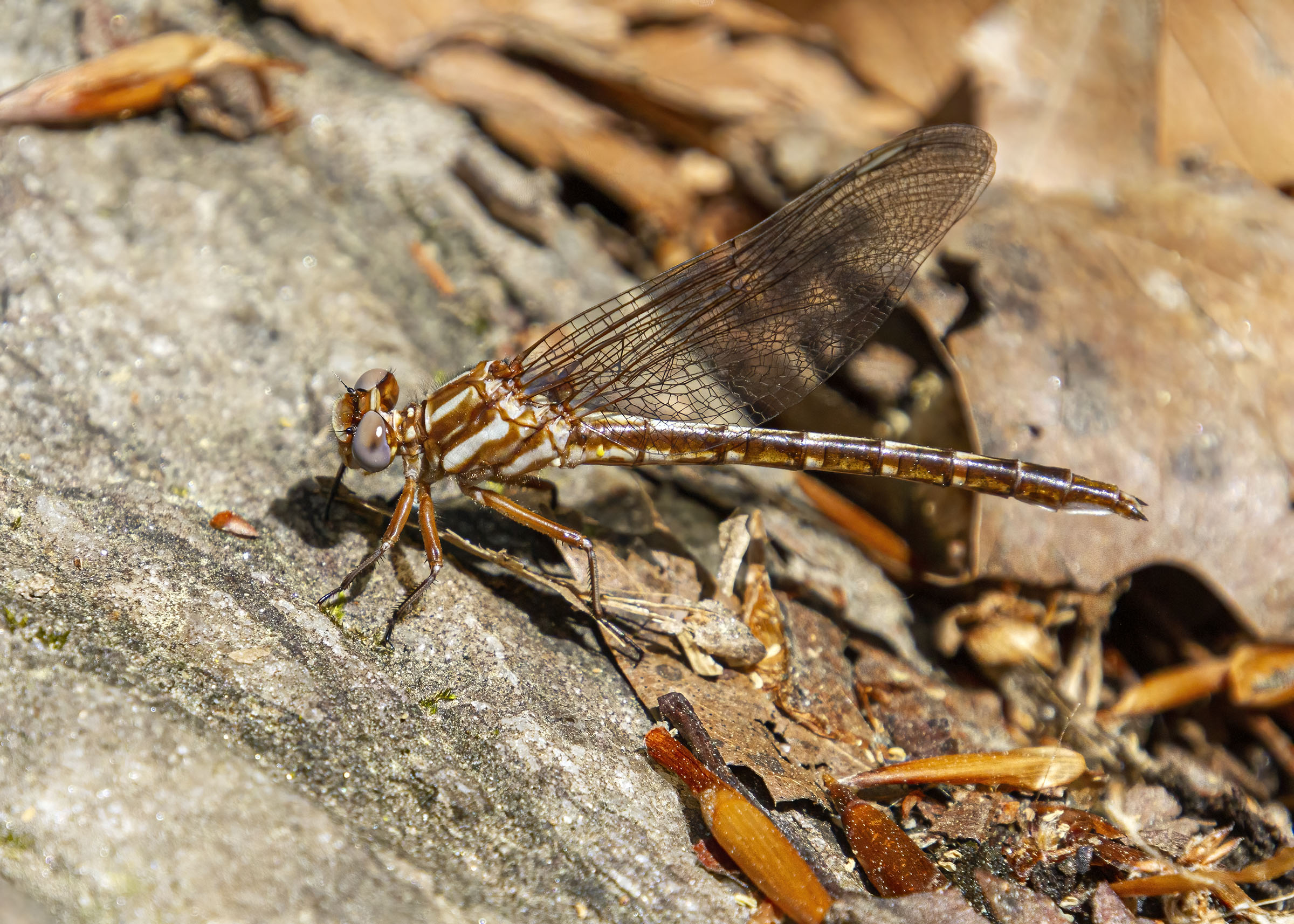
Dragonfly season has definitely begun. I spotted several Stream Cruiser dragonflies (Didymops transversa) on Wednesday this week while I was exploring several creeks in Prince William Park here in Virginia. Stream Cruisers are pretty easy to identify, with a single stripe on their thoraxes, pale-colored tips of their abdomens, and long, thin legs. They tend to perch at an angle or to hang vertically.

Stream Cruisers are one of the earliest dragonfly species to appear each spring and it was exciting to spot them. They tend to be habitat specialists and are generally found near forest streams with good flow and rocks.

Stream Cruiser

Stream Cruiser

Stream Cruiser

© Michael Q. Powell. All rights reserved.


Read Full Post »

The weather has warmed up considerably and I have started to see many of the spring dragonflies and even some of those that will remain with us through the summer. Last Friday I spotted numerous Ashy Clubtail dragonflies (Phanogomphus lividus), many of which appeared to have emerged recently, judging from their very shiny wings and pale coloration, as you can see in the first photo. Getting shots of them was tough, because they perch on the ground in the vegetation, are only about 2 inches in length (50 mm), and are often very skittish.

Kevin Munroe described well the challenges of finding early spring dragonflies in his wonderful Dragonflies of Northern Virginia website, “Searching for dragonflies in spring is a wholly different endeavor than finding them in July and August. Most summer dragonflies spend their time at sunny ponds or open fields, and engage in showy displays and aerial battles – they are, in a word, visible. The majority belong to the showy and successful skimmer family, along with a few darners and emeralds. The spring dragonfly community is more diverse, and has a very different M.O. They are for the most part, habitat specialists, with low population numbers, secretive habits, and denizens of woodland streams, not sunny ponds. Spiketails, Petaltails, Clubtails, Darners and Emeralds are all out and about in spring. To find these species in April and May, one must spend many hours searching forest edges, woodland clearings, and the banks of springs, streams and creeks.”

In fact, I photographed these Ashy Clubtails in the vegetation near a creek in Prince William County and I can testify to the fact that I walked about for hours searching for them. I am pretty happy with the photos that I was able to take. I especially like the second photo that has some really cool shadows that seem to magnify the number of legs and wings of the dragonfly.

The final two photos were taken only a few seconds apart and show the wings in very different positions. The penultimate photo shows the wings in a typical outstretched pose, while the final photo shows the wings clasped together over the dragonfly’s body, similar to the way that damselflies hold their wings when perched. In my experience recently emerged dragonflies sometimes flex their wings this way as fluid is pumped into the wings and the wings are hardening.

Ashy Clubtail

Ashy Clubtail

Ashy Clubtail

Ashy Clubtail

© Michael Q. Powell. All rights reserved.


Read Full Post »

When this little butterfly flew by me last Friday at Prince William Forest Park, it looked like a nondescript brown moth. Fortunately it landed on some nearby vegetation and I was able to zoom in on it. Wow—what an amazing variety of colors, textures, and markings on this tiny butterfly. I was able to determine that it was a Henry’s Elfin butterfly (Callophrys henrici).

I was pretty sure that I had never seen a butterfly like this until I searched my blog and discovered that I had seen one last spring on almost the same date. I don’t think that I’m losing my memory yet, but I keep filling my head with so much information that it is almost inevitable that I will forget some things.

There is something so whimsical about the word “elfin” that I can’t help but smile whenever I use it. I love the idea of magical creatures like elves and nymphs, drawn from the works of Shakespeare or perhaps from Tolkien’s Lord of the Rings.  These creatures blend in so well with their surroundings that you have to look carefully to spot them and I should warn you that you may become blissfully enchanted by them.

Henry's Elfin

© Michael Q. Powell. All rights reserved.


Read Full Post »

I was delighted to finally spot my first Uhler’s Sundragon (Helocordulia uhleri) of the year on 18 April near a small pond in Prince William County, Virginia. I went searching for these dragonflies, which are usually the first ones I see in the spring, on several occasions in late March and early April, but came up empty-handed. Uhler’s Sundragons are usually around for only about a month, soI was fearful that I might miss them this season.

I have a pretty good idea of the type of habitat that this early season dragonfly prefers and tend to begin my searches by returning to spots where I have photographed them in the past and then begin to widen my search. Quite often this means that I spend a lot of time walking and watching, trying to remain alert to any movement in the air or on the ground.

As you can see in the first photo, Uhler’s Sundragons often hang from a perch, rather than perch horizontally, which makes it a little easier to get a detailed shot. When the dragonfly perches low to the ground, as in the second photo when it hung from the stem of a fallen leaf, I end up doing some improvised acrobatics to capture an image.

Uhler's Sundragon

Uhler's Sundragon

© Michael Q. Powell. All rights reserved.

Read Full Post »

Happy Easter to friends and family who are celebrating today. This past week has been a whirlwind of activity and services for me at my church as we have commemorated Christ’s last days, beginning with his entry into Jerusalem on Palm Sunday, through his last supper, and finally his crucifixion and burial. Today we celebrate Jesus’s triumph over death with a joyous Easter service.

I photographed this beautiful little Pearl Crescent butterfly (Phyciodes tharos) during a recent visit to Occoquan Bay National Wildlife Refuge. Butterflies have always been special for me as symbols of the amazing transformations that can take place in this world, even when the situation seems hopeless and sad.

I offer my prayers for all of you, believers and non-believers alike, that your lives will be full of joy, hope, and peace.

Christ is risen!

Pearl Crescent

© Michael Q. Powell. All rights reserved.

Read Full Post »

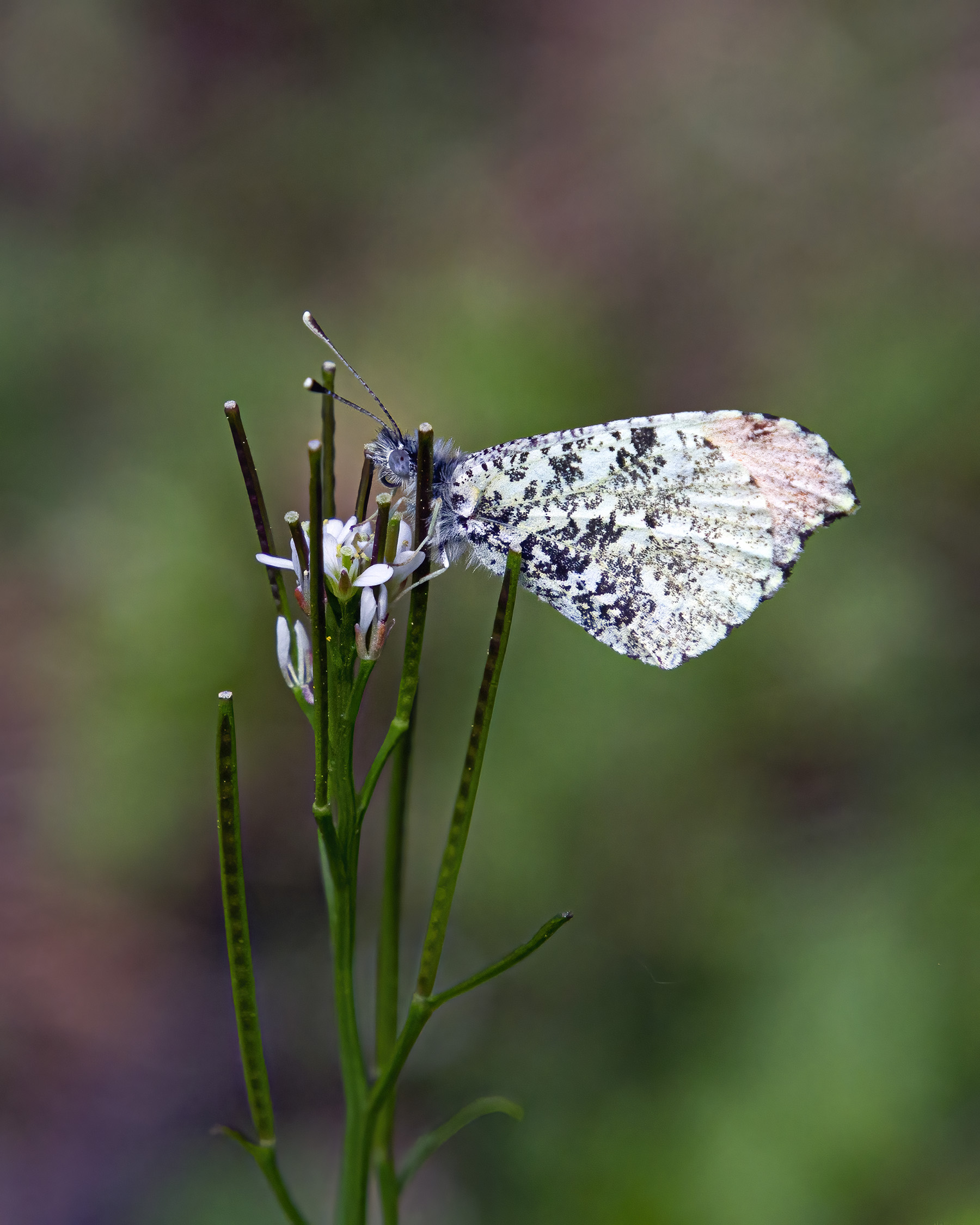
I was delighted to spot this Falcate Orangetip butterfly (Anthocharis midea) on 15 April at Occoquan Bay National Wildlife Refuge. The butterfly is somewhat nondescript when its wings are closed, but spectacular when they open, revealing the orange tips for which the species is named.

I encourage you to click on the second image to get a closer look at the beautiful details of this tiny butterfly, including its speckled gray eyes and wonderfully marbled wings.

Falcate Orangetip butterfly

Falcate Orangetip butterfly

© Michael Q. Powell. All rights reserved.

Read Full Post »

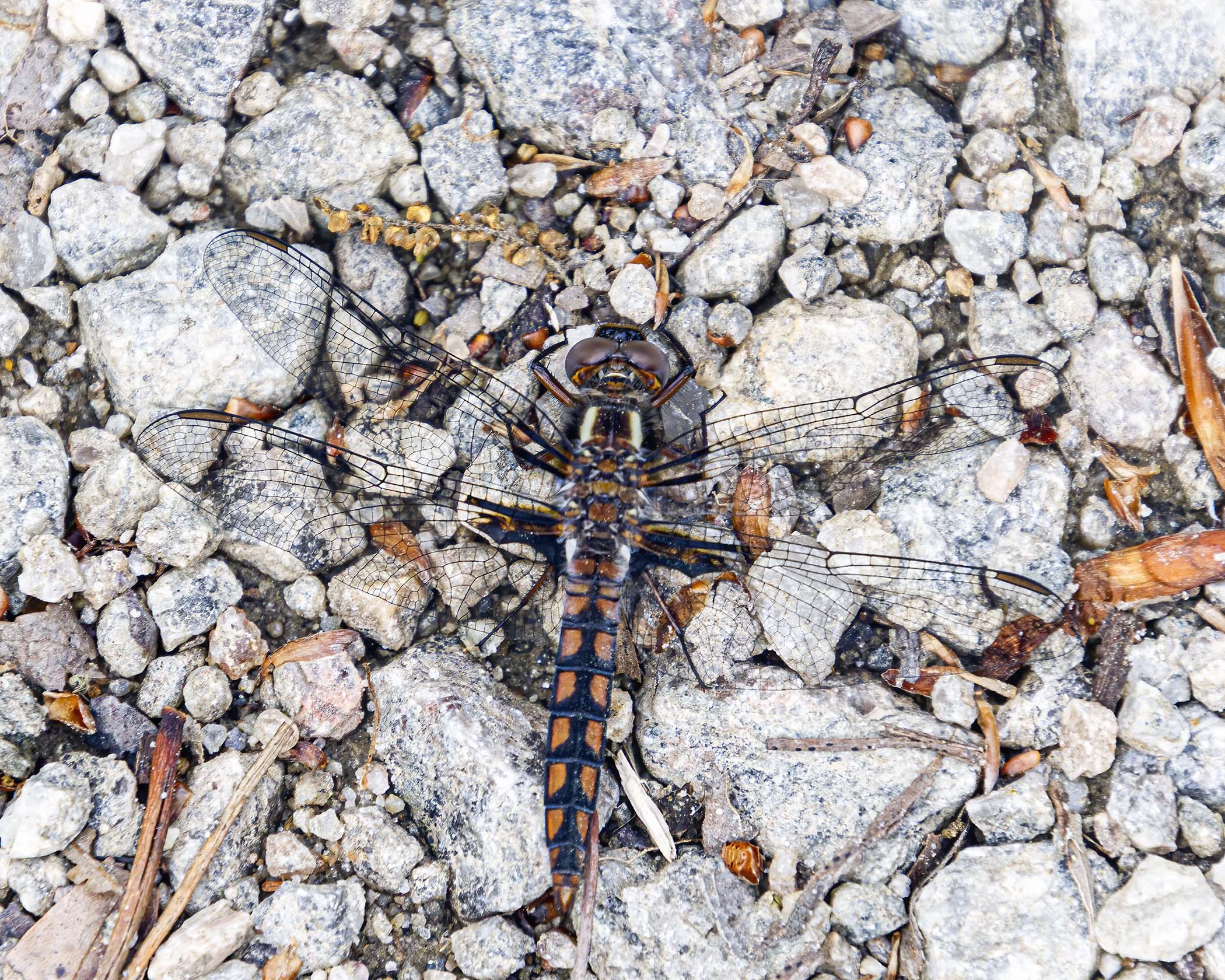
I am a little late in finding my first dragonflies of 2025, but on Wednesday (15 April) I finally spotted some Blue Corporals (Ladona deplanata) at Occoquan Bay National Wildlife Refuge. As an added bonus, the first image also shows a metallic-green Six-spotted Tiger Beetle (Cicindela sexguttata) that was crawling past the dragonfly.

Blue Corporals, one of the first dragonflies to emerge in the spring, are relatively easy to identify because they have two stripes of their shoulders—two stripes is the traditional marking for the rank of corporal in the armed forces. When they first emerge, males and females have similar colorations, but the males turn blue as they mature. Judging from the shape of their terminal appendages, I believe that the dragonflies in the first two images are females and the one in the final photo is an immature male.

Blue Corporal

Blue Corporal

Blue Corporal

© Michael Q. Powell. All rights reserved.

Read Full Post »

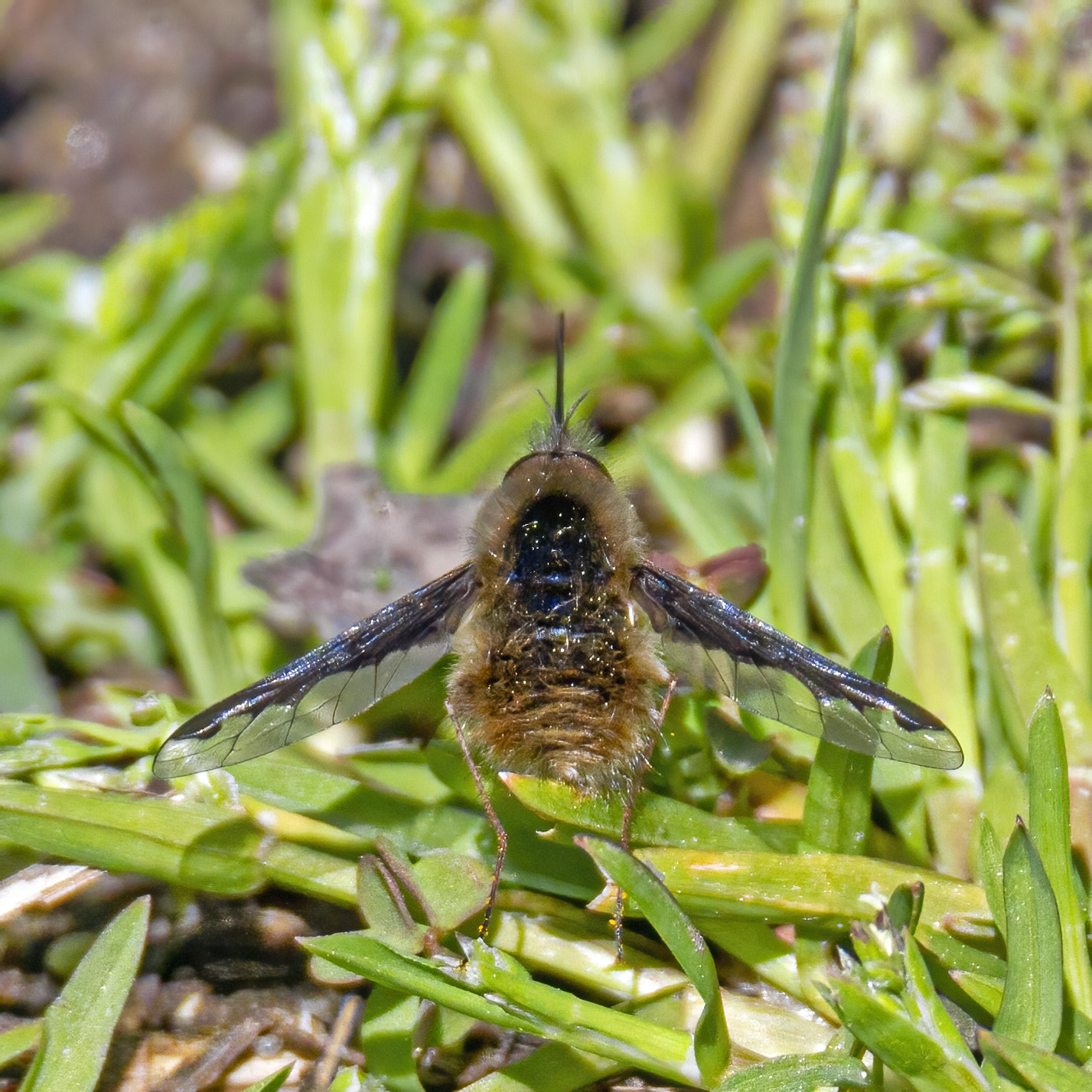
Is it a bee? Is it a fly? Well, it has a fuzzy body like a bumblebee and has a long, rigid proboscis that looks like a stinger, but its patterned wings and long legs look more like those of a fly. In actuality, it is a Greater Bee Fly (Bombylius major), a parasitic bee mimic that is one of the earliest spring pollinators of wildflowers. I photographed this bee fly last week at Occoquan Bay National Wildlife Refuge.

I was quite happy to be able to capture so many of the details of this curious creature, including its long proboscis, spindly legs, patterned wings, and fuzzy body. In case you are curious, the body of one of these bee flies is about six-tenths of an inch (15mm) in length and its wing span is about one inch (25mm). I recommend that you double-click on the image to get a better look at the little details of this bee fly.

If you would like to learn more about these fascinating little bee flies, including their parasitic behavior, check out this article on the US Forest Service website by Beatriz Moisset entitled “A Pollinator with a Bad Reputation.

Bee Fly

© Michael Q. Powell. All rights reserved.

Read Full Post »

I was absolutely thrilled last week to spot this Zebra Swallowtail butterfly (Eurytides marcellus) at Occoquan Bay National Wildlife Refuge. Zebra Swallowtails overwinter winter in the chrysalis (cocoon) stage before emerging as adult butterflies in the spring. A second brood is born later in the year and they are the ones that lay the eggs that develop into the caterpillars that will enter into cocoons and hibernate throughout the winter.

I love the beautiful colors of this butterfly, with its zebra-like stripes and pops of red and blue—I often think of the Zebra Swallowtail as a “patriotic” butterfly, because of its red, white, and blur coloration..

Zebra Swallowtail

© Michael Q. Powell. All rights reserved.


Read Full Post »

I was surprised and delighted to spot this Cabbage White butterfly (Pieris rapae) as it was feeding on a newly sprouted dandelion on Tuesday at Occoquan Bay National Wildlife Refuge. I love chasing these elusive little butterflies that I used to think were moths.

Gardeners consider Cabbage Whites to be pests, because their caterpillars can do significant damage to plants, including cabbage, broccoli, cauliflower, and collard greens, but I find them to be beautiful. In that respect I guess I am a kind of dreamer who prefers to focus more on form than on function.

Cabbage White

© Michael Q. Powell. All rights reserved.

Read Full Post »

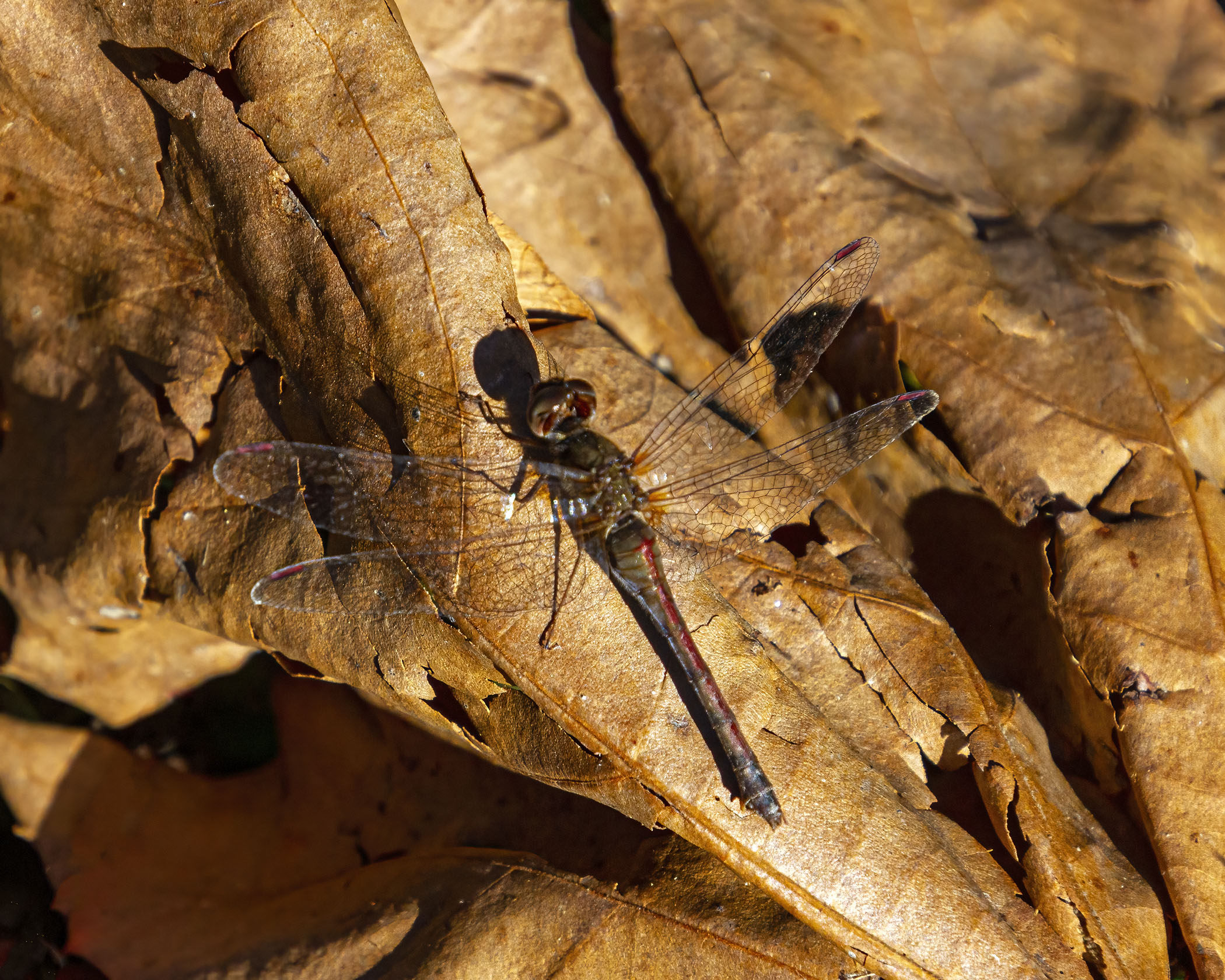
I was delighted on Monday to spot multiple Autumn Meadowhawk dragonflies (Sympetrum vicinum) at Occoquan Bay National Wildlife Refuge. During the past couple of weeks I saw a few female Autumn Meadowhawks, but until this week I had not photographed a single male—I think that all of the dragonflies that I spotted that day were males. Females are mostly brown with touches of red, while the bodies of males are mostly red, as you can see in the photo below.

Autumn Meadowhawks are only about 1.2 inches (30 mm) in length, so they are difficult to spot, despite their bright coloration. At this time of the year when fallen leaves litter the ground, they tend to blend in pretty well with their surroundings.

I was using my Tamron 150-600mm lens with a monopod, my preferred combination for photographing birds, so it was a challenge to focus on such tiny subjects as dragonflies. I was persistent, however, and was successful in capturing some pretty detailed shots of them.

Autumn Meadowhawk

© Michael Q. Powell. All rights reserved.

Read Full Post »

The number of butterflies continues to dwindle, so I was thrilled to spot this pretty little Variegated Fritillary butterfly (Euptoieta claudia) last Tuesday at Occoquan Bay National Wildlife Refuge. The weather has gotten cooler and it won’t be long before below freezing temperatures arrive, so I will be out chasing these last summer survivors until none remain.

Variegated Fritillary

© Michael Q. Powell. All rights reserved.

Read Full Post »
By mid-November most butterflies have disappeared in my area as the weather has cooled off. One notable exception, however, has been the Common Buckeye (Junonia coenia). I was delighted to spot numerous Common Buckeyes last week at Occoquan Bay National Wildlife Refuge.

The markings on these little butterflies are incredibly beautiful and I was happy to be able to capture some of that beauty in the photo below.

Common Buckeye

© Michael Q. Powell. All rights reserved.

Read Full Post »

After a month away on a car road trip, I finally returned home last week. On Friday I ventured out to Occoquan Bay National Wildlife Refuge to see if I could find any dragonflies. It is pretty late in the season for most dragonfly species, but I was optimistic that I might be able to find some Autumn Meadowhawks (Sympetrum vicinum) that are almost always the final dragonflies to disappear in late autumn.

Happily I was able to spot a half-dozen or so Autumn Meadowhawk dragonflies, although I was able to capture images of only a few of them. The female in the first photo was quite cooperative and landed on a colorful fallen leaf. The dragonfly in the second photo is also a female and I am pretty sure that it too is an Autumn Meadowhawk—there is a slight chance that it could be a Blue-faced Meadowhawk (Sympetrum ambiguum), though it would be unusual to see that species so late in the season.

The final image is a long distance shot of another female Autumn Meadowhawk that is almost perfectly camouflaged. You will need to look very carefully at the upper edge of the leaf in order to spot the little dragonfly. I watched it land at that spot, but actually could not see the dragonfly when I took this shot. I will probably be out again with my camera later this week diligently searching for more dragonflies, the final survivors of the 2024 dragonfly season.

Happy Veterans Day to all those who have served or are continuing to serve in the Armed Forces of the United States. As someone who served for 20 years in the U.S. Army, this day is a special one for me. It seems a bit trite to say “Thank you for your service,” but those words reflect my heartfelt thanks to those men and women who voluntarily defend our freedoms.

In other parts of the world this day is celebrated as Armistice Day (or Remembrance Day) and I remember well being in Paris, France on this day several times and observing the impressive ceremonies on the Champs-Élysées to commemorate the armistice that ended World War I. Some thought at the time that it would be the “war to end all wars,” but, alas, those hopes proved to be unfounded.

Autumn Meadowhawk

Autumn Meadowhawk

Autumn Meadowhawk

© Michael Q. Powell. All rights reserved.

Read Full Post »

I was delighted on Thursday to encounter my first Blue-faced Meadowhawk dragonfly (Sympetrum ambiguum) of the season at Occoquan Bay National Wildlife Refuge. A few minutes later I got a peek at a pair of mating Blue-faced Meadowhawks—spring is not the only season for love.

Blue-faced Meadowhawks are one of the prettiest dragonfly species that I have ever encountered. I love the contrast between their turquoise faces and their bright red bodies. Generally I spot them in the early autumn, just as most of the other dragonfly species are starting to disappear.

Blue-faced Meadowhawks will be around for a bit longer and then their “cousins,” the Autumn Meadowhawks will end up as the last remaining dragonflies of the season. In some years I have seen Autumn Meadowhawks as late as mid-December and a fellow photographer spotted one in early January one year. Autumn Meadowhawks also have red bodies, but have brown eyes.

Blue-faced Meadowhawk

Blue-faced Meadowhawk

© Michael Q. Powell. All rights reserved.


Read Full Post »
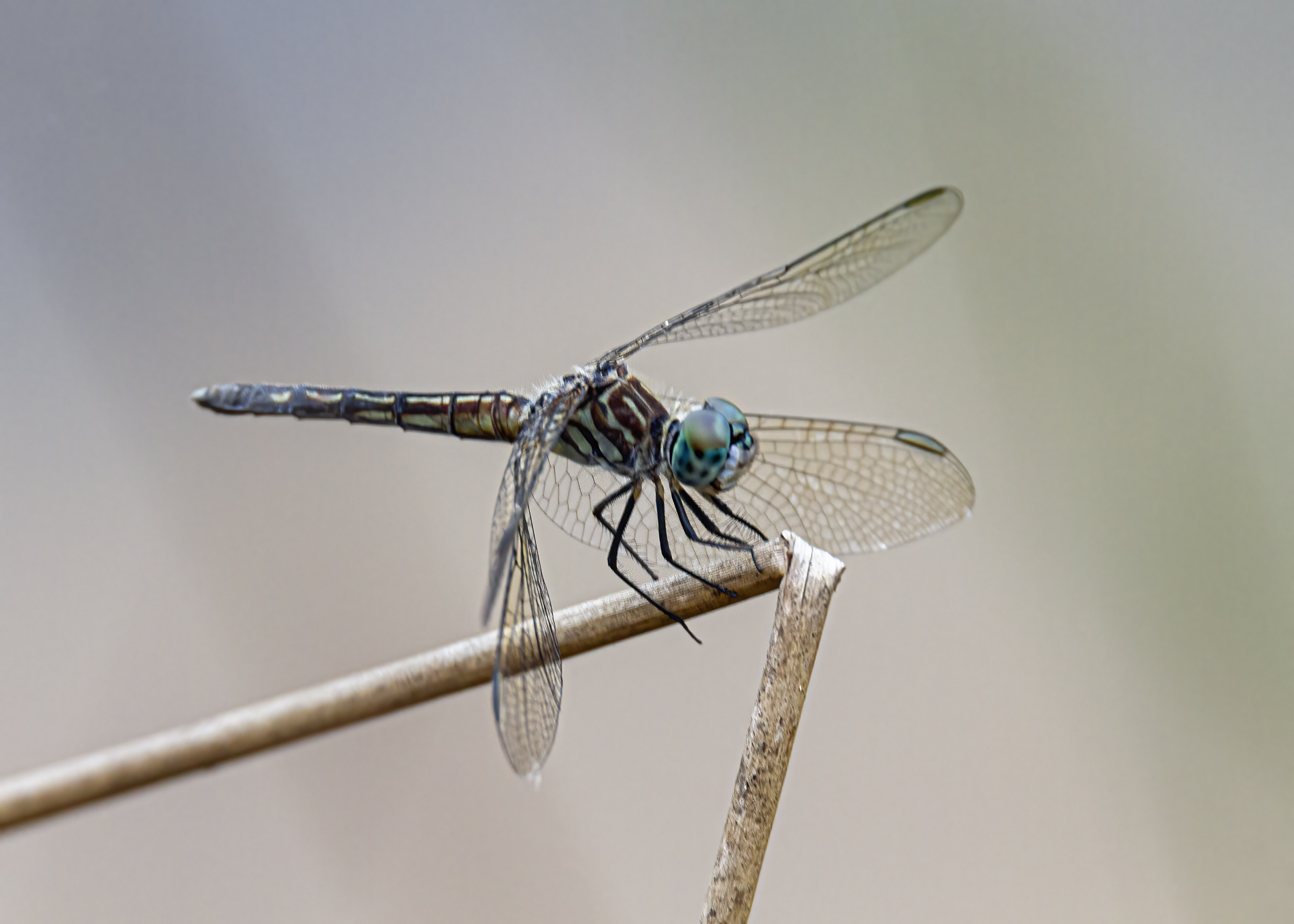
I know that there should be more dragonflies still around, but this past Wednesday, this Blue Dasher (Pachydiplax longipennis) was the only dragonfly that I spotted during a visit to Occoquan Bay National Wildlife Refuge. The day was cool and gloomy with intermittent drizzle, which almost certainly contributed to the relative scarcity of dragonflies. This month the number of dragonflies will continue to drop, but there still should be some Autumn Meadowhawks and Blue-faced Meadowhawks flying into November.

Blue Dashers are one of our most common dragonfly species and are usually among the first species to emerge in the spring and to disappear in the fall. The dragonfly in this photo was perched at the edge of a small pond. I was happy to capture this shot, considering that I had switched to my longer Tamron 150-600mm lens, which sometimes is a bit soft when extended to 600mm. I had changed lens in anticipation of seeing more birds, which largely was not the case that day.

Blue Dasher

© Michael Q. Powell. All rights reserved.

Read Full Post »
Last Wednesday I was thrilled to spot multiple Monarch butterflies (Danaus plexippus) during a visit to Occoquan Bay National Wildlife Refuge, the most Monarchs that I have seen at one time this entire season. I do not know if these are local Monarchs that are preparing to migrate southward or if they are migrating Monarchs that are stopping by to refuel their bodies as they continue on their journey.

In either case, the butterflies were really active, in almost constant motion as they moved about the the open thistle flowers. I was hoping to get multiple butterflies in a single shot, but was never able to capture more than two of them in any photo, as you can see in the first image below.

The final photo shows the kind of photo that I was trying to take, a sidewards view of the Monarch in action. If you look closely, you can even see the butterfly’s extended proboscis. I also love the wonderful contrast between the orange of the butterfly and the pink of the thistle flower.

Monarch butterfly

Monarch butterfly

© Michael Q. Powell. All rights reserved.

Read Full Post »

Several months ago, Great Blue Skimmer dragonflies (Libellula vibrans) were quite common at Occoquan Bay National Wildlife Refuge. As we approach the end of September, though, they have now become an uncommon sight and those that I do spot are often survivors that show signs of advanced age.

Last week I spotted this female Great Blue Skimmer. This species is quite easy to identify, because both males and females have white faces. Younger females are yellow and brown in color, but those colors gradually get duller and darker with age. Interestingly enough, their eyes also change colors—younger females have eyes that are reddish brown over a dull green and as they get older their eyes often become blue, like those of the dragonfly in the photo below.

I could not help but notice that this dragonfly has some damage to her wings, a frequent sight as the dragonflies get older. Still, she was getting along pretty well, a testament to the resilience and determination of these senior citizens of the dragonfly world.

Great Blue Skimmer

© Michael Q. Powell. All rights reserved.


Read Full Post »

Last week I spotted this female Big Bluet damselfly (Enallagma durum) at Occoquan Bay National Wildlife Refuge, one of the few damselflies still around this late in the season. Big Bluets are primarily a coastal species in our area, which helped me to narrow down the possibilities when trying to identify the damselfly species. Generally female damselflies are tougher to identify than males, but I pretty confident that this one is a Big Bluet.

UPDATE: A sharp-eyed viewer pointed out to me that this is probably an immature male Big Bluet, not a female, based on a number of specific physical features. I think he’s right! It is not the first time that I have misidentified a damselfly and it almost certainly will not be the last time.

I love the way that the light green in the background matches the color of the damselfly’s body and makes for a really pleasing image.

Big Bluet

© Michael Q. Powell. All rights reserved.


Read Full Post »

It is getting to be that time of the year when certain dragonfly species, like the Common Green Darner (Anax junius), begin to migrate southward. Most people are aware of the migration of Monarch butterflies, but are surprised to learn that some dragonflies also migrate.

The Science News website described this amazing migration in an on-line article, “At least three generations make up the annual migration of Common Green Darner dragonflies. The first generation emerges in the southern United States, Mexico and the Caribbean starting around February and flies north. There, those insects lay eggs and die, giving rise to second generation that migrates south until late October. (Some in that second generation don’t fly south until the next year, after overwintering as nymphs.) A third generation, hatched in the south, overwinters there before laying eggs that will start the entire process over again.”

Last week I spotted a formation of helicopters flying in formation overhead as I was searching for dragonflies at Occoquan Bay National Wildlife Refuge. For a moment the helicopters, which look to be UH-60 Black Hawk helicopters, reminded me of migratory dragonflies. Before long their loud engines disturbed my reverie and I realized that they were probably flying to Fort Belvoir, a nearby military base.

The image I captured of the helicopters may look like it was turned into black-and-white after the fact, but that was actually the way that it came out of the camera. I really like the stark,  monochromatic feel of image that works well with the subject.

helicopters

© Michael Q. Powell. All rights reserved.

Read Full Post »

I have seen quite a few Viceroy butterflies this summer, but have had real difficulties finding Monarch butterflies (Danaus plexippus). I have repeatedly heard warnings about how their habitats are threatened and fears that they might soon become extinct.

I was therefore quite thrilled when I spotted this bright orange butterfly on Thursday at Occoquan Bay National Wildlife Refuge. It seemed to be a bit larger that the Viceroys that I am used to seeing, so I chased after it, full of hope that it might be a Monarch. It landed for only a moment and I was able to capture this shot of the beautiful creature—it was indeed a Monarch butterfly.

The Monarch took off a few seconds later and flew out of sight. I stayed in place a bit longer, still filled with awe and wonder at the brief encounter, before I too moved on. It is amazing how much moments like this one lift my spirits.

Monarch

© Michael Q. Powell. All rights reserved.

Read Full Post »

After searching diligently for the last few weeks, today yesterday I finally spotted a Fine-lined Emerald dragonfly (Somatochlora filosa) at Occoquan Bay National Wildlife Refuge. In the past this species has appeared on the scene in early September and is quite uncommon in my area.

As you can see from the photos, Fine-lined Emeralds like to hang vertically when they are perched, unlike many of the familiar dragonflies that I see throughout the summer that perch horizontally. When I spotted this dragonfly initially, it was flying back and forth at about knee-height and I immediately suspected that it was my target species. I have been watching dragonflies for a number of years and can identify some species (or at least make a good basis) on the basis of their flight profile.

I first spotted this species in 2017 at this refuge and have searched for them every year since then. The last few years it has grown increasingly hard to find Fine-lined Emeralds, so I was really happy yesterday to see this one.

This was actually my second encounter of the day with the species. A bit earlier, I observed one flying, but lost it in the vegetation while tracking it. This one might possibly be the same dragonfly, though it was far enough away that it could be a second one. Later in the day in another part of the refuge I caught a glimpse of another one as it zoomed by me. I chased after it, but came up empty-handed.

I will probably return to the wildlife refuge early next week to see if I can find another Fine-lined Emerald or perhaps I will find a Blue-faced Meadowhawk or an Autumn Meadowhawk, two other autumn dragonfly species.

Fine-lined Emerald

Fine-lined Emerald

© Michael Q. Powell. All rights reserved.

Read Full Post »

As I have mentioned previously, I have real difficulties in identifying many of the dark swallowtails that I encounter. However, sometimes I get a perfect view of one and the task is vastly simplified.

Last week at Occoquan Bay National Wildlife Refuge, for example, I spotted this Spicebush Swallowtail butterfly (Papilio troilus) feeding on a blooming thistle plant. I could tell it was a Spicebush Swallowtail because its row of inner orange spots was interrupted by a swoosh of blue that looks a bit like the tail of a comet. Additionally, the position of the butterfly made for a beautiful composition of the image that I was able to capture.

Spicebush Swallowtail

© Michael Q. Powell. All rights reserved.

Read Full Post »
I had not seen a Swift Setwing dragonfly (Dythemis velox) in several weeks at Jackson Miles Abbott Wetland Refuge and feared that they might be gone for the season. I was therefore thrilled when I spotted this one last Thursday. Most of the previous times when I have seen Swift Setwings, they have been perched with their wings pulled forward, but this one had its wings fully extended.
A bit later that same day, I spotted a Swift Setwing that appeared to be missing an entire wing, as you can see in the second photo below. I looked carefully at other shots of the same dragonfly and in a couple of them I can see at least a partial wing in that spot. It is interesting that I did not notice this problem with the wing while out in the field, and the dragonfly flew away without any issues whatsoever.

Swift Setwing

Swift Setwing

Swift Setwing

© Michael Q. Powell. All rights reserved.

Read Full Post »

Recently I have featured numerous large, beautiful butterflies feeding on blooming plants, especially thistles. Today, I decided to turn the spotlight to the smaller, more nondescript butterflies, commonly referred to as skippers, that have been equally active and visible in recent weeks.

According to Wikipedia, there are more than 3500 species of skipper butterflies in the world and many of the species are visually similar in appearance. For that reason, I am especially cautious in trying to identify one of these small butterflies. Sometimes I will request assistance in identifying specimens in one of many Facebook groups to which I belong. I have learned the “secret” to getting a response—if I make a misidentification, some experts who might not help me with an identification will feel compelled to correct me.

I spotted the little beauty in the photo below last week while I was exploring a patch of flowers at Jackson Miles Abbott Wetland Refuge. It might be a Peck’s Skipper (Polites peckius), but to me it looks a bit more like a Zabulon Skipper (Poanes zabulon). Whatever the case, I like the way that I was able to capture the butterfly in action, sipping nectar with its proboscis fully extended.

Peck's Skipper

© Michael Q. Powell. All rights reserved.

Read Full Post »

I spotted this spectacular Great Spangled Fritillary butterfly (Speyeria cybele) last week at Occoquan Bay National Wildlife Refuge. Although I usually have something to say about an image, in this case I will let it speak for itself. Suffice it to say that I love the wonderful combination of the pink of the flower and the orange of the butterfly. Wow!

Great Spangled Fritillary

© Michael Q. Powell. All rights reserved.

Read Full Post »

We are definitely in a period of time when butterflies are everywhere, especially in the patches of thistles that are blooming now. Earlier in the week I spotted this beautiful male Eastern Tiger Swallowtail (Papilio glaucus) at Occoquan Bay National Wildlife Refuge as he was feeding on a thistle. I was delighted to capture a shot when the butterfly had his wings fuly extended, showing off all the details of the wings.

In case you are curious, you can tell that the butterfly is a male because he lacks the band of blue spots along the hindwings that are found on the females of the species.

© Michael Q. Powell. All rights reserved.

Read Full Post »
On Monday I spotted these cool-looking black- and-red beetles at Occoquan Bay National Wildlife Refuge. I think that they are immature Florida Predatory Stink Bugs (Euthyrhynchus floridanus), a species considered to be beneficial, because its diet consists of many species of pest insects. The nymphs of this species go through five stages (instars) in their growth process and I believe these bugs are in one of the later stages of development.

Florida Predatory Stink Bugs

© Michael Q. Powell. All rights reserved.

Read Full Post »

There has been a relatively recent resurgence of butterflies in my area. In the past week or so I have seen more butterflies than at any other time this summer. Several of the dark swallowtail butterflies, though, are similar in appearance and are hard to tell apart, especially when wing damage hides some of the features that I rely on for identification.

Last week at Occoquan Bay National Wildlife Refuge, I spotted this beautiful dark swallowtail as it was feeding on a thistle plant. I can’t tell for sure, but I think that it may be a Spicebush Swallowtail butterfly (Papilio troilus). A chunk of the hind wing is missing, but otherwise the butterfly seems to be in good shape. It was moving around a lot on the thistle, but I was patient and eventually was able to capture a decent shot of this beautiful creature.

Pipevine Swallowtail

© Michael Q. Powell. All rights reserved.

Read Full Post »

How old does a dragonfly have to be to collect Social Security? OK, that’s a bit of a crazy question, but collecting Social Security is a sure sign that you are getting old. A couple of weeks ago, I received my first payment from the Social Security Administration, a sure sign that I am officially “old.” Last week I also stopped in a a Metro offices in Washington D.C. to sign up for a senior pass that allows me to ride Metro trains at a reduced rate—one of the few tangible benefits of becoming a senior.

Here in the United States, people are living longer than in the past and it is anticipated that the Social Security Administration will run out of money to pay full benefits in a decade or so of changes are not made. Politicians don’t want to deal with the issue and keep putting off coming up with a solution to the problem.

Comparatively speaking, dragonflies live uncomplicated lives. They hang on for as long as they can and then they die, hopefully after successfully procreating. Last week I spotted this elderly female Great Blue Skimmer dragonfly (Libellula vibrans) at Occoquan Bay National Wildlife Refuge. Her coloration was dark and faded and her wings were tattered, but she was still functioning. After spending a few quiet moments with her, I pushed onward, still lost in my thoughts about life and growing older.

Great Blue Skimmer

© Michael Q. Powell. All rights reserved.

Read Full Post »

I’ve noted several times recently the tattered butterflies that I tend to encounter at this time of the year. However, not all of the ones that I see have suffered wing damage. Some of them appear to have recently emerged and are in perfect condition, like these Eastern Tiger Swallowtail butterflies (Papilio glaucus) that I spotted during a recent visit to Occoquan Bay National Wildlife Refuge.

Eastern Tiger Swallowtail

Eastern Tiger Swallowtail

Eastern Tiger Swallowtail

© Michael Q. Powell. All rights reserved.

Read Full Post »

« Newer Posts - Older Posts »