Feeds:
Posts
Comments

Archive for the ‘Butterflies’ Category

I have seen birds and bees stick their heads inside tubular flowers, but I had never before seen a small butterfly do so. I watched this Cloudless Sulphur butterfly (Phoebis Sennae) yesterday at Occoquan Bay National Wildlife Refuge almost bury itself inside this flower as it searched for nectar. I love the way that the light was shining though its wings, illuminating some of the fine details of its tiny body.

I think that this is a Cloudless Sulphur butterfly, but I am easily confused because there is a similar-looking Clouded Sulphur butterfly. To borrow a line from Joni Mitchell, “I really don’t know clouds at all.”

Cloudless Sulphur

© Michael Q. Powell. All rights reserved.

Read Full Post »

Eastern Tiger Swallowtails (Papilio glaucus) were definitely enjoying this patch of Joe Pye Weed (Eutrochium purpureum) when I spotted them last Saturday at Riverbend Park. The butterfly in the foreground is a dark morph female and I believe the one in the background is a male. One of the cool things about Eastern Tiger Swallowtails is that females come in two varieties, one with coloration close to that of the male and one with the dark colors that you see in the image below.

This image is a a pretty straightforward presentation of a fairly common subject, but there is something about the composition that I really like. Maybe it’s the contrasting colors or the overlapping shapes. Who knows? So often I like what I like without being able to articulate the precise reasons why.

Eastern Tiger Swallowtail

© Michael Q. Powell. All rights reserved.


Read Full Post »

I spotted this pretty Viceroy butterfly (Limenitis archippus) last Thursday at Occoquan Bay National Wildlife Refuge. The Viceroy has the same coloration as the Monarch, but has a line across its hind wings that is not present on the Monarchs. As I have learned more  about insects, I have been amazed to find how often insects have adapted to mimic other species that predators may find bad-tasting or even toxic.

Viceroy

© Michael Q. Powell. All rights reserved.


Read Full Post »

This seems to be the prime season for butterflies and I have been seeing lots of them this past week. I spotted this spectacular Eastern Tiger Swallowtail (Papilio glaucus) as I was exploring Occoquan Regional Park last Thursday. It was attracted to a pink flowering plant that I think is some kind of milkweed—I am a whole lot more confident in identifying butterflies than plants.

I am happy with both shots, but must that I particularly like the background in the first image.

Eastern Tiger Swallowtail

Eastern Tiger Swallowtail

© Michael Q. Powell. All rights reserved.

Read Full Post »

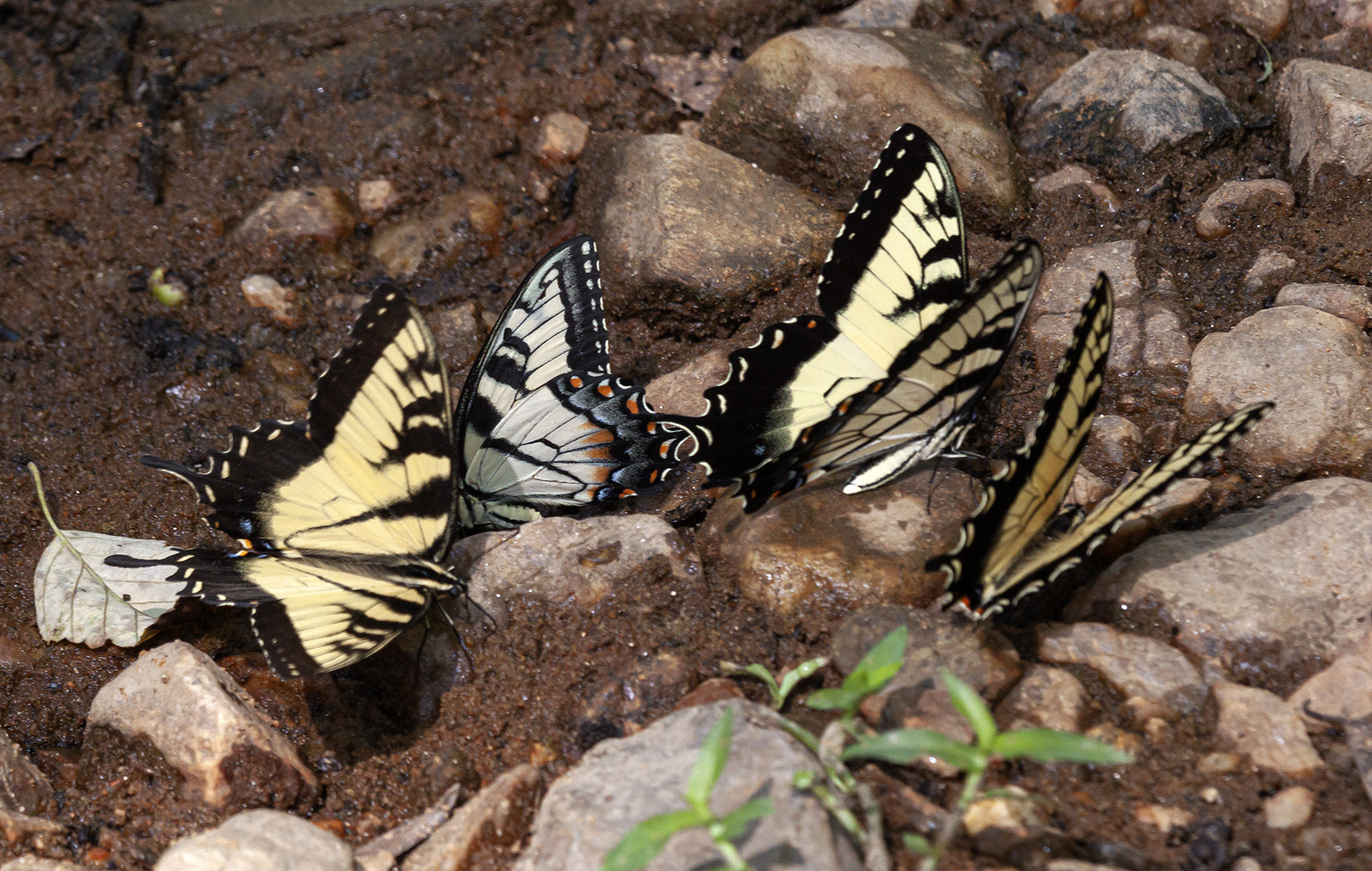
Most of us associate butterflies with flowers, but they sometimes can be found on the sandy banks of creeks, like this cluster of male Eastern Tiger Swallowtails (Papilio glaucus) that I spotted earlier this month in Prince William County, Virginia.

I went looking for information about this behavior and learned the following on the thoughtco.com website:

“Butterflies get most of their nutrition from flower nectar. Though rich in sugar, nectar lacks some important nutrients the butterflies need for reproduction. For those, butterflies visit puddles. By sipping moisture from mud puddles, butterflies take in salts and minerals from the soil. This behavior is called puddling, and is mostly seen in male butterflies. That’s because males incorporate those extra salts and minerals into their sperm. When butterflies mate, the nutrients are transferred to the female through the spermatophore. These extra salts and minerals improve the viability of the female’s eggs, increasing the couple’s chances of passing on their genes to another generation.”

Eastern Tiger Swallowtail

© Michael Q. Powell. All rights reserved.

Read Full Post »

What do you think is going on when you see this cluster of Silvery Checkerspot butterflies (Chlosyne nycteis)? Perhaps you think that they all are feeding on something particularly tasty. If you look closely you will noticed that they are facing in different directions and you get the feeling that something else is going on.

I had the benefit of seeing the situation unfold in front of my eyes. A few moments earlier I spotted the mating couple that you see in the second image. I do not see mating butterflies very often so my attention was very much focused on them. Suddenly another butterfly burst on the scene and attempted to turn this into a ménage à trois. In the first image, the interloper is the one on the left.

I suspect that the third butterfly is a male rival and he is trying to steal the female away. He made attempts from several angles to break apart the couple, but was not successful and eventually gave up. I decided that the couple needed some privacy, so I too departed.

Pearl Crescent

Pearl Crescent

© Michael Q. Powell. All rights reserved.

Read Full Post »

Yesterday I spotted this Common Wood Nymph butterfly (Cercyonis pegala) at the edge of a wooded area as I was exploring Occoquan Bay National Wildlife Refuge. Although the colors of this butterfly are somewhat muted, I really like the distinctive yellow patch that makes it easy to identify.

When I first saw the butterfly, it was on the ground and initially I was disappointed when it flew up into a tree. Fortunately, it perched on a leaf that was at eye level and I was happy to be able to capture this image.

Common Wood Nymph

© Michael Q. Powell. All rights reserved.

Read Full Post »

Last Saturday I spotted this Pearl Crescent butterfly (Phyciodes tharos) on what looks to be a Black-eyed Susan flower (Rudbeckia hirta) at Jackson Miles Abbott Wetland Refuge. Initially the butterfly’s wings were open, which made for an ok shot. When the butterfly partially closed its wings, however, the light coming from the back helped to illuminate one wing like a stained glass window.

It is amazing how a slight change in the position of a subject can radically change the feel of an image—that is one of the reason why I like to shoot in short bursts, hoping to capture a variety of poses in a short period of time.

Pearl Crescent

© Michael Q. Powell. All rights reserved.


Read Full Post »

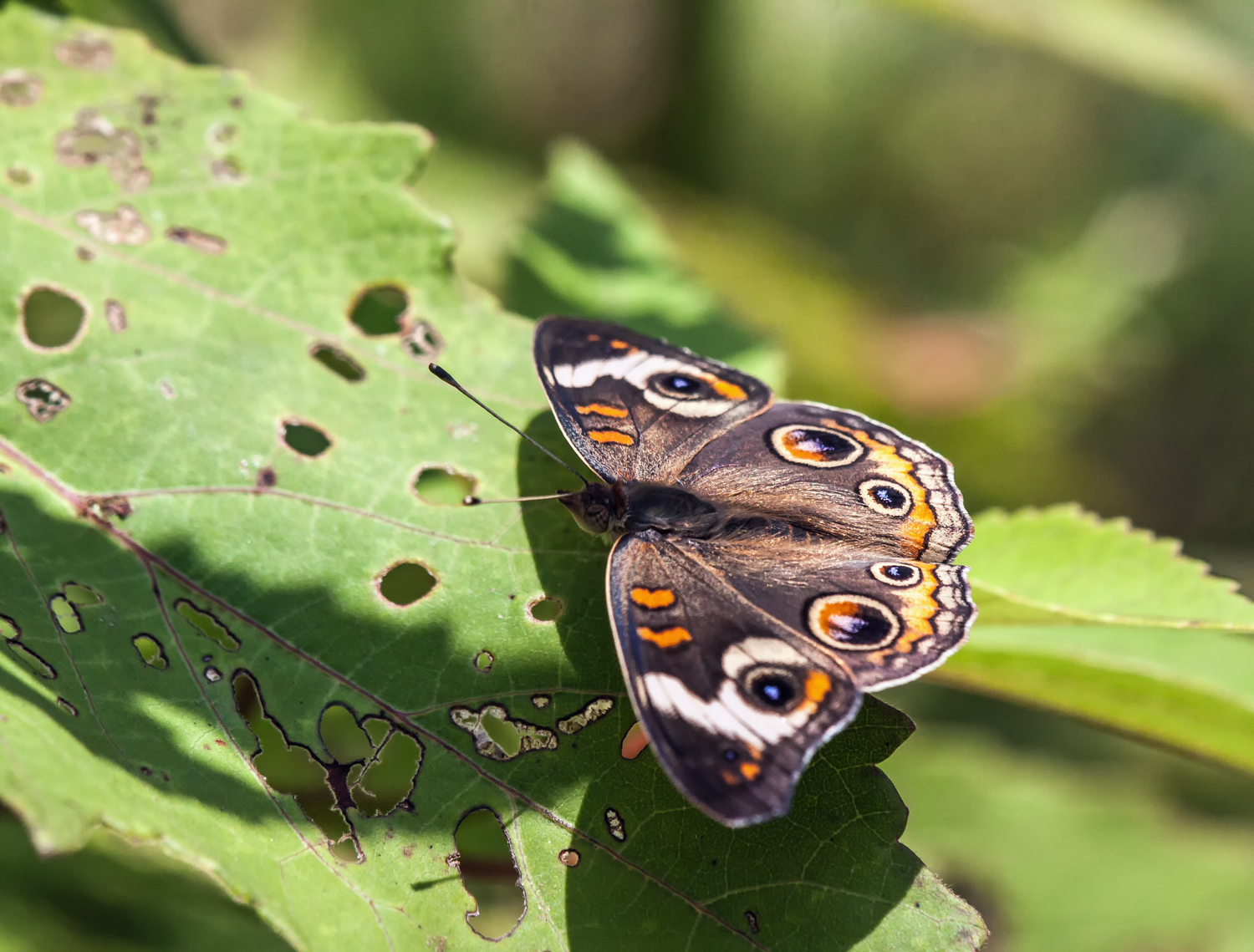
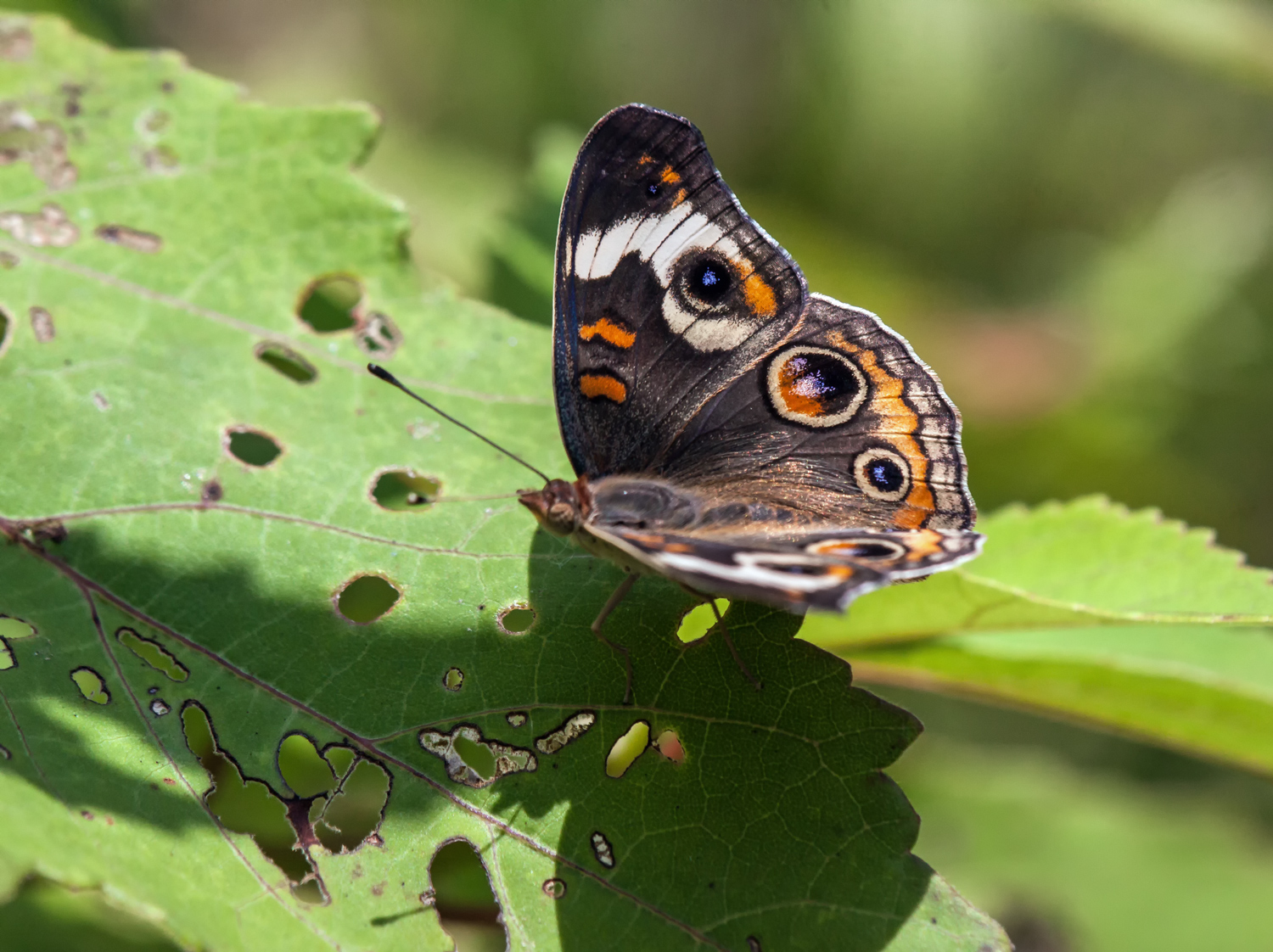
One of the real joys of the summer is having the chance to see colorful butterflies, like this Common Buckeye butterfly (Junonia coenia) that I observed last week at Jackson Miles Abbott Wetland Refuge. I am not sure what creature has been munching on the vegetation on which the butterfly is perched, but I really like the way that the holes in leaves mirror the circular shapes of the butterfly’s eye spots.

Common Buckeye

Common Buckeye


© Michael Q. Powell. All rights reserved.

Read Full Post »

Is the best image of a butterfly only one in which its wings are fully open so that you can see all of the beautiful colors and patterns? Generally that is the angle that most of us seek to shoot. This past Wednesday I was observing an Eastern Tiger Swallowtail (Papilio glaucus) at Jackson Miles Abbott Wetland Refuge when it struck me that the butterfly was “attacking” the flower from all kinds of different angles, even hanging upside down. Why shouldn’t I take the same approach with the butterfly (minus the hanging upside down part)?

I like the way in which the three shots below capture some of the activity of the butterfly and not merely its beauty. At times it seems like beauty and function are at odds with each other, that beauty is best captured in controlled settings like in a studio, where portraits are often taken.

I fully accept that the natural world in which I like to work is chaotic and out of my control, but in the midst of it I still find incredible beauty, a beauty that may be imperfect by some standards. I encourage you to look at your world from a different angle at least from time to time and you may be amazed by the way that a change of perspective can cause you to see things in a totally different way.


Eastern Tiger Swallowtail

Eastern Tiger Swallowtail

Eastern Tiger Swallowtail

© Michael Q. Powell. All rights reserved.

Read Full Post »

On Monday I spotted this small patch of Butterfly Weed (Asclepias tuberosa) at Jackson Miles Abbott Wetland Refuge. True to its name, the Butterfly Weed had attracted several butterflies, which I think are Pearl Crescent butterflies (Phyciodes tharos), as well as several metallic green sweat bees (genus Agapostemon). The insects seemed to love the plant’s nectar and the scene provided a visual feast for viewers like me.

butterfly weed

© Michael Q. Powell. All rights reserved.


Read Full Post »

When I spotted a small patch of milkweed while exploring Occoquan Bay National Wildlife Refuge earlier this month, I stopped and waited. I knew that numerous butterflies are attracted to this plant. Before long, several butterflies in fact appeared.

Here are photos of two of them, both swallowtail butterflies. The first one, a Spicebush Swallowtail (Papilio troilus), appears to be in perfect condition. Its wings and “tails” are intact and its colors are vibrant. By contrast the second butterfly, a Zebra Swallowtail (Protographium marcellus), is clearly a veteran. There are chunks missing from its wings and its long beautiful swallowtails are gone.

Do you find one of the butterflies to be more inherently beautiful than the other? Here in the United States, we tend to worship beauty and a standard of supposed perfection. We are daily bombarded with advertising messages that tell us we can look young again, that we can cover up our imperfections. The current focus on selfies and dating apps that allow you to judge others with a swipe encourages a kind of narcissism and attention to superficial appearances that I personally find to be unhealthy.

I remember watching a video several years ago about photographing nature. The photographer encouraged viewers to photograph only perfect specimens of flowers and insects, following the lead of those who say that in order to create beautiful photographs, you need beautiful subjects.

The photos here are my response to that kind of thinking. There is an incredible beauty to be discovered in the ordinary, everyday subjects that surround us, full of imperfections and blemishes. Take a moment today to slow down and truly experience that beauty.

Spicebush Swallowtail

Zebra Swallowtail

© Michael Q. Powell. All rights reserved.

Read Full Post »

I have not yet spotted any Monarch butterflies this season, but last week at Occoquan Bay National Wildlife Refuge I did see a number of the similarly-colored Viceroy butterflies (Limenitis archippus). Viceroy butterflies are smaller than Monarchs, but the main visual difference between the two is the black line across the hind wings that is present with Viceroys, but not with Monarchs.

I chased after one Viceroy last week for quite some time and eventually managed to get these shots.

Viceroy

Viceroy

Viceroy

© Michael Q. Powell. All rights reserved.

Read Full Post »

It’s always wonderful to see large colorful butterflies, like this Red-spotted Purple butterfly (Limenitis arthemis astyanax) that I spotted last week at Jackson Miles Abbott Wetland Refuge. I don’t know about you, but I find the spots to be a bit more orange than red and the body looks more grayish-blue than purple. Maybe the people responsible for naming the species say it in a different light. 🙂

Red-spotted Purple

Red-spotted Purple

© Michael Q. Powell. All rights reserved.

Read Full Post »

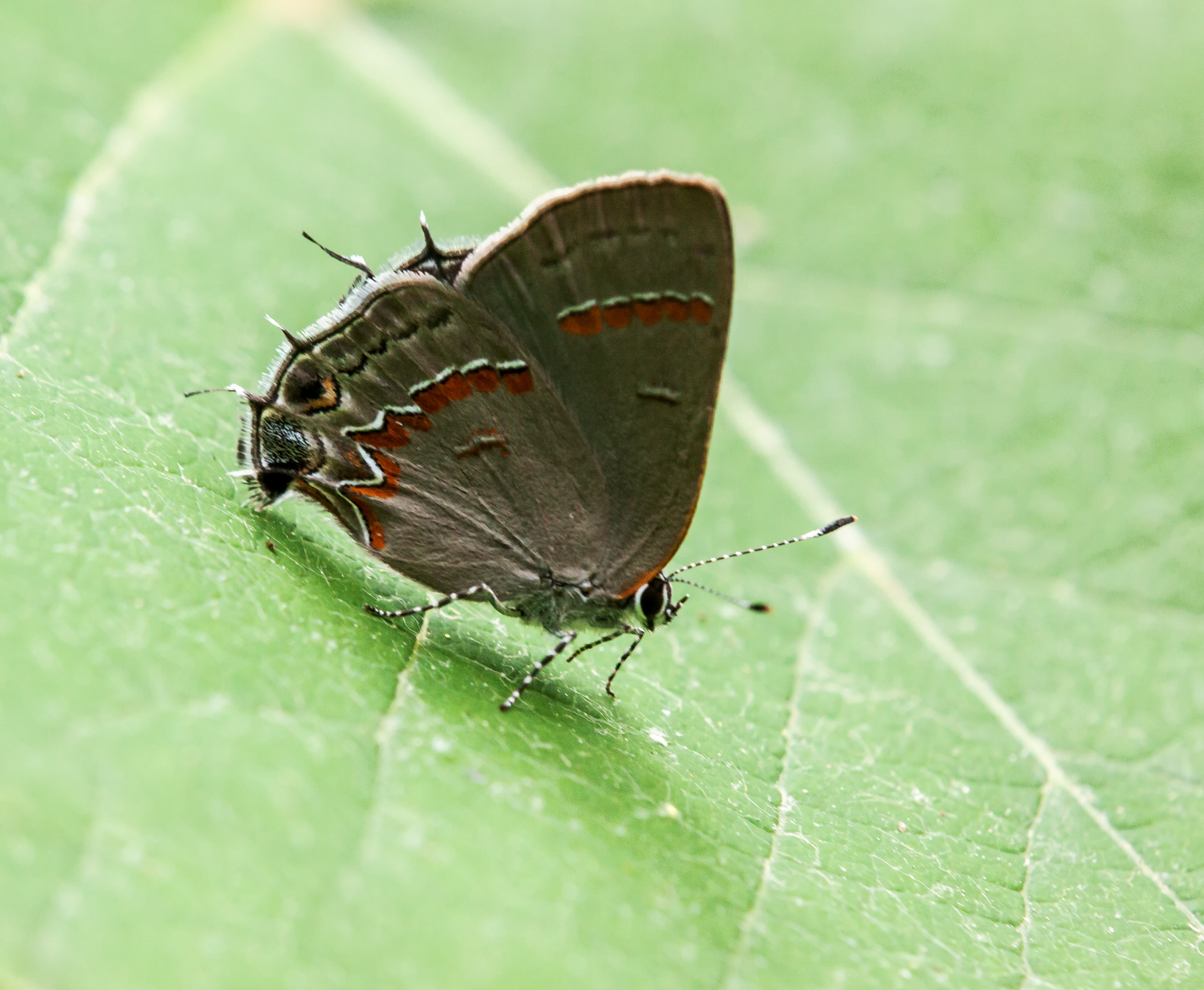
Yesterday I was thrilled to get a shot of this pretty Red-banded Hairstreak butterfly (Calycopis cecrops) at Occoquan Regional Park. These tiny butterflies are only about an inch (25mm) in length, so you really need a macro lens to get a close-enough shot that reveals all of the butterfly’s wonderful colors and patterns. It is also nice to be able to see the little “tails” protruding from the hind wings that I believe are responsible for the name “hairstreak.”


Red-banded Hairstreak

© Michael Q. Powell. All rights reserved.

Read Full Post »

Earlier this week I spotted this male Zabulon Skipper butterfly (Poanes zabulon) while I was exploring Occoquan Regional Park. I am not one hundred percent sure of my identification, given that there are hundreds of different species of skipper butterflies, but I am hoping that I am correct for the simple reason that I find the name “Zabulon” to be exceptionally cool. As some of you may know from the URL for my site, my middle initial is Q, which stands for Quentin, and I am irresistibly drawn to names that begin with infrequently used letters like Q, X, and Z.

In terms of the image itself, I really like the way that the warm orange tones of the butterfly stand out amidst the cooler shades of green in the foreground and in the background.

Zabulon Skipper

© Michael Q. Powell. All rights reserved.

Read Full Post »

When presented with a downward-facing flower, this Eastern Tiger Swallowtail butterfly (Papilio glaucus) was forced to choose an unusual angle of attack. Seeming defying gravity, this acrobatic butterfly hung upside down as it probed upwards earlier this week at Prince William Forest Park in Triangle, Virginia.

If this were an Olympic competition, I would give him a 10 for both his technical skills and overall artistic impression.

Eastern Tiger Swallowtail

© Michael Q. Powell. All rights reserved.


Read Full Post »

As we move deeper into spring, more and more butterflies are starting to appear, like this beautiful Zebra Swallowtail (Protographium marcellus) that I spotted yesterday at Accotink Bay Wildlife Refuge. Zebra Swallowtails are most often associated with pawpaw trees, which is helpful to know, though I must confess I don’t know how to identify a pawpaw tree. What I do know is that these butterflies are constantly on the move and fly in such an erratic way that I have trouble getting a decent photograph of one.

Yesterday I managed to get a shot of a Zebra Swallowtail when it paused momentarily at a small tree, perhaps a possible pawpaw. What I like about the shot is that it shows well the colors of the butterfly as well as its long “tails.” I could not decide how much to crop the image, which was taken from a pretty good distance away, so I am including tow versions of the image. Personally I am drawn most to the second one, but recognize that many folks may prefer the first versions, which draws you more quickly to the butterfly’s beautiful details.

Zebra Swallowtail

Zebra Swallowtail

© Michael Q. Powell. All rights reserved.


Read Full Post »
Do you associate certain colors with certain seasons? For me, yellow is definitely a springtime color. After months of winter weather dominated by shades of gray and a palette of faded colors, spring explodes with bright colors, with yellow daffodils popping up all over the place. Usually I have to wait a bit longer for yellow to pop up in the birds and insects that I enjoy photographing.

As I was exploring with my camera this week, I ran across bright yellow subjects in two very different locations. One, a Pine Warbler (Setophaga pinus) was quite appropriately perched high in a pine tree. The second was an Eastern Tiger Swallowtail butterfly (Papilio glaucus) that appeared to be probing the sand on the bank of a forest creek. I suspect that the butterfly needed the minerals and salts, although I confess to initially thinking that butterflies needed only nectar from flowers for sustenance (and there were definitely no flower in the area of that creek).

Pine Warbler

Eastern Tiger Swallowtail

© Michael Q. Powell. All rights reserved.


Read Full Post »

Insects are becoming more active now as the weather warms up a bit, like this tiny Spring Azure butterfly (Celastrina ladon) that I spotted yesterday at Occoquan Bay National Wildlife Refuge.

There is something about chasing after a butterfly that makes me feel like a child again. I am sure that I would have looked ridiculous to an outside observer, who would have wondered what it the world I was doing.

Try it yourself. Chase a butterfly today or, if you can’t find one, let go of your inhibitions and do something equally childlike, like coloring with crayons. I think that most of us take ourselves too seriously too often.

Spring Azure

© Michael Q. Powell. All rights reserved.


Read Full Post »

Today I saw my first butterfly of the year, an Eastern Comma butterfly (Polygonia comma) that was flying about at Occoquan Bay National Wildlife Refuge. Members of this species overwinter as adults and may emerge form their hibernation for brief periods during winter warm spells.

It is not yet spring, but more and more signs point to the fact that it is just around the corner.

Eastern Comma

© Michael Q. Powell. All rights reserved.

Read Full Post »

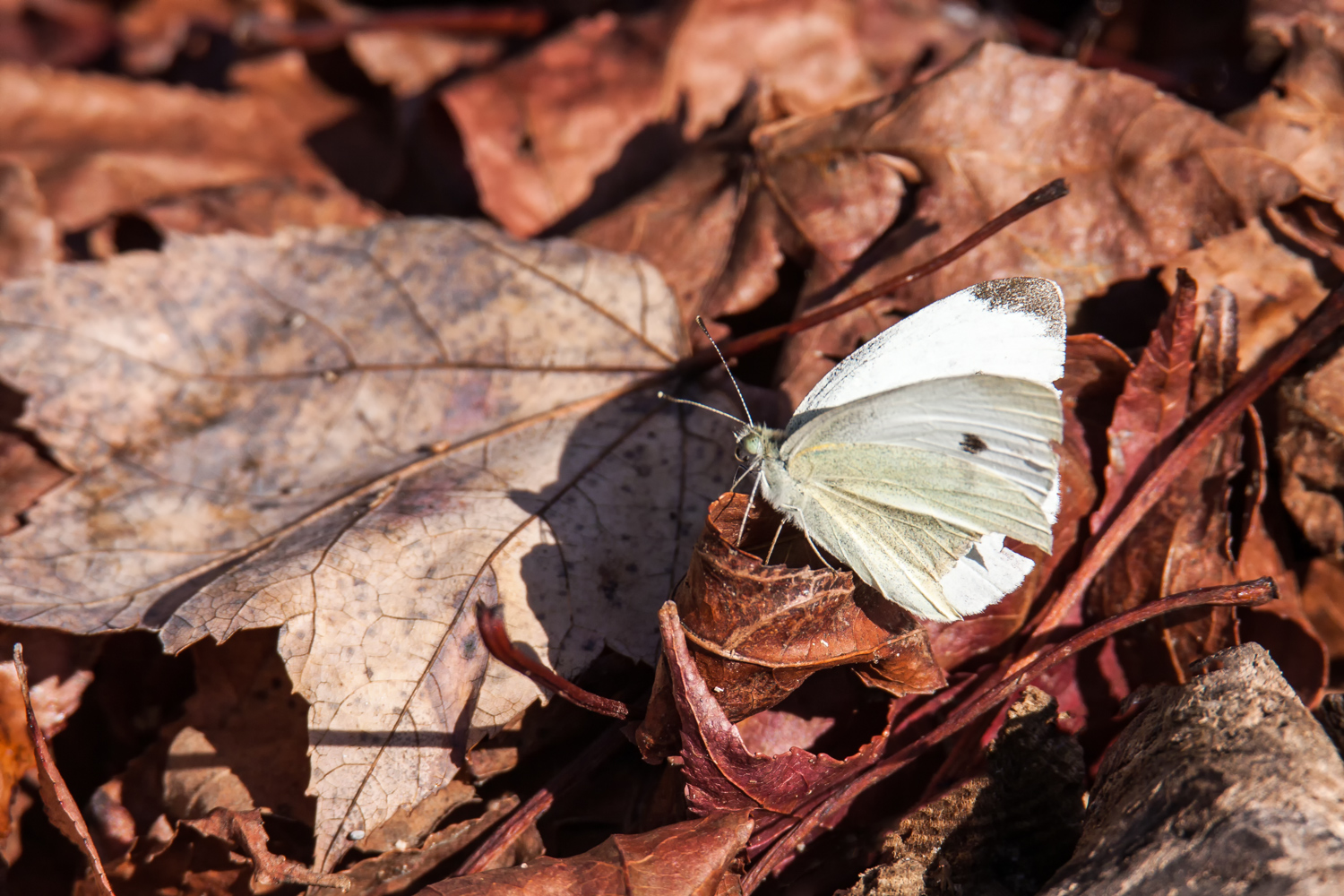
A butterfly in December? I was shocked and thrilled to see this tattered Cabbage White butterfly (Pieris rapae) flying around yesterday at Occoquan Bay National Wildlife Refuge.

I photographed this little butterfly with my telephoto zoom lens fully extended to 600mm. I contemplated cropping the image, but decided that I really like the look and feel of all of the fallen leaves and left it uncropped. I also like the way that the veining in the leaves seems to mirror the veining in the butterfly’s white wings.

Cabbage White

© Michael Q. Powell. All rights reserved.

Read Full Post »

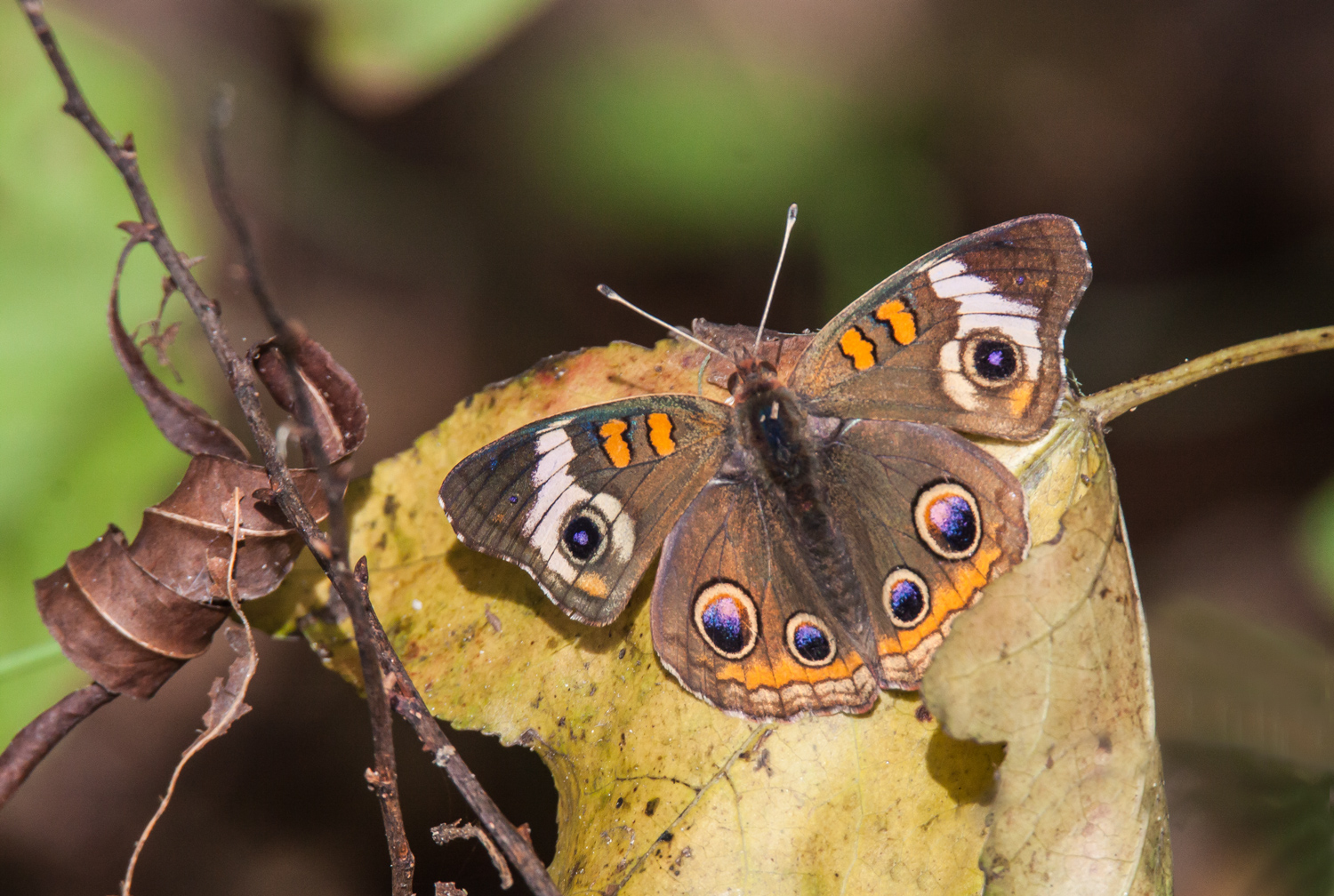
The brightly colored summer butterflies have mostly disappeared, but Common Buckeye butterflies (Junonia coenia) still accompany me in great numbers as I walk the trails of Occoquan Bay National Wildlife Refuge. The subdued, earthy shades of this beautiful butterfly seem a perfect match for the autumn season.

Common Buckeye

© Michael Q. Powell. All rights reserved.

Read Full Post »
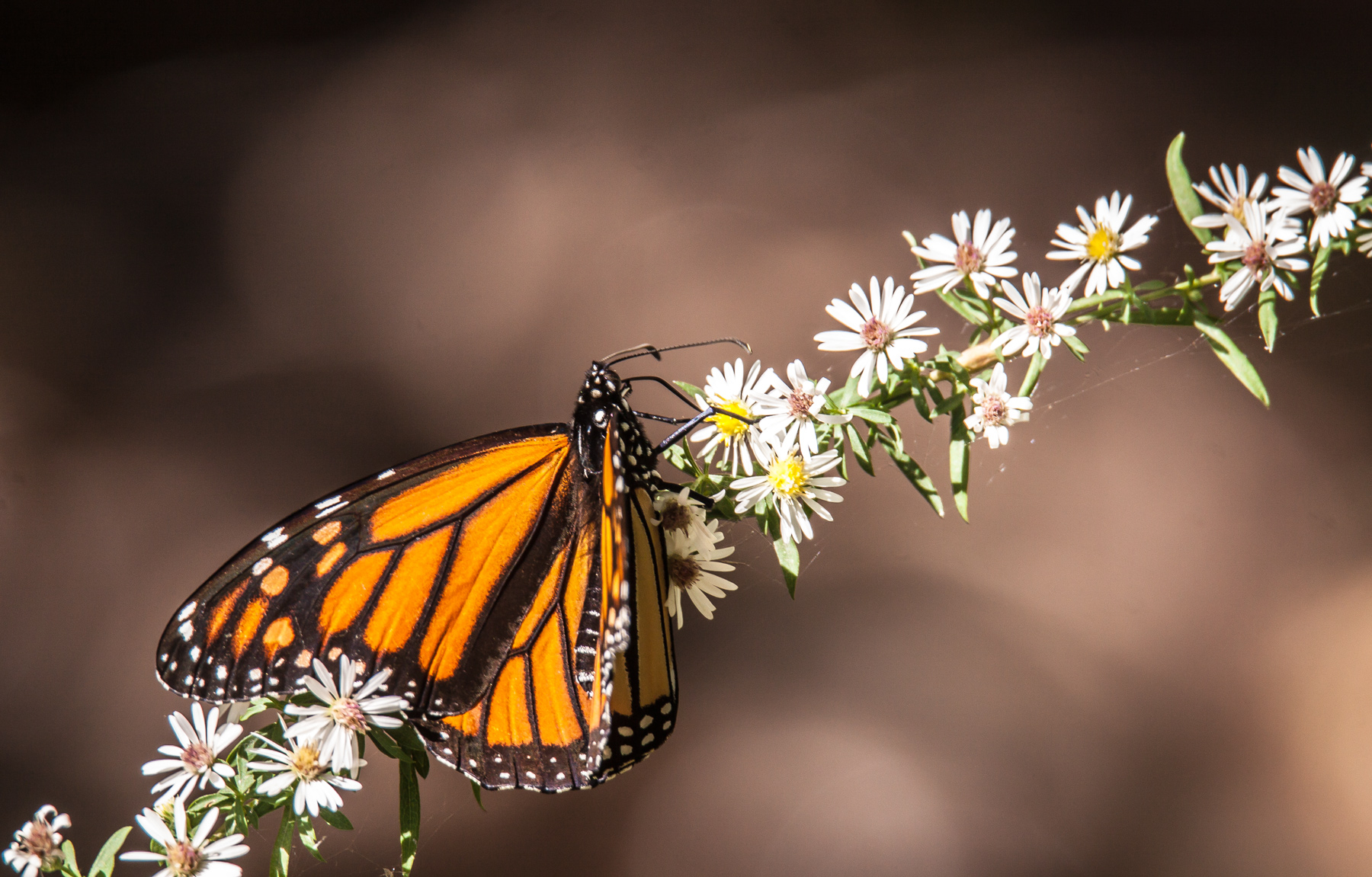
Despite the cooler autumn temperatures, there are still quite a few butterflies fluttering about, like this Monarch butterfly (Danaus plexippus)that I spotted last weekend at Occoquan Bay National Wildlife Refuge. I think that the little flowers are some kind of aster—they seem to be going strong at a time when most other flowers are wilting and turning brown.

Monarch butterfly

© Michael Q. Powell. All rights reserved.


Read Full Post »
Orange and brown seem to be the perfect color combination for the autumn and this Question Mark butterfly (Polygonia interrogationis) was suitably celebrating the season this past Friday at Occoquan Bay National Wildlife Refuge.

Question Mark butterfly

© Michael Q. Powell. All rights reserved.

Read Full Post »

I suspect that all of the Monarch butterflies (Danaus plexippus) will soon be leaving our area for warmer places, so I am really trying to enjoy each and every encounter with one. I spotted this beauty feeding on some kind of thistle plant thispast weekend at Occoquan Bay National Wildlife Refuge.

monarch butterfly

© Michael Q. Powell. All rights reserved.

Read Full Post »

Today I decided to feature two butterflies that I have seen over the past week. I saw them at different times and at different places, so normally I would not put them together in a posting.

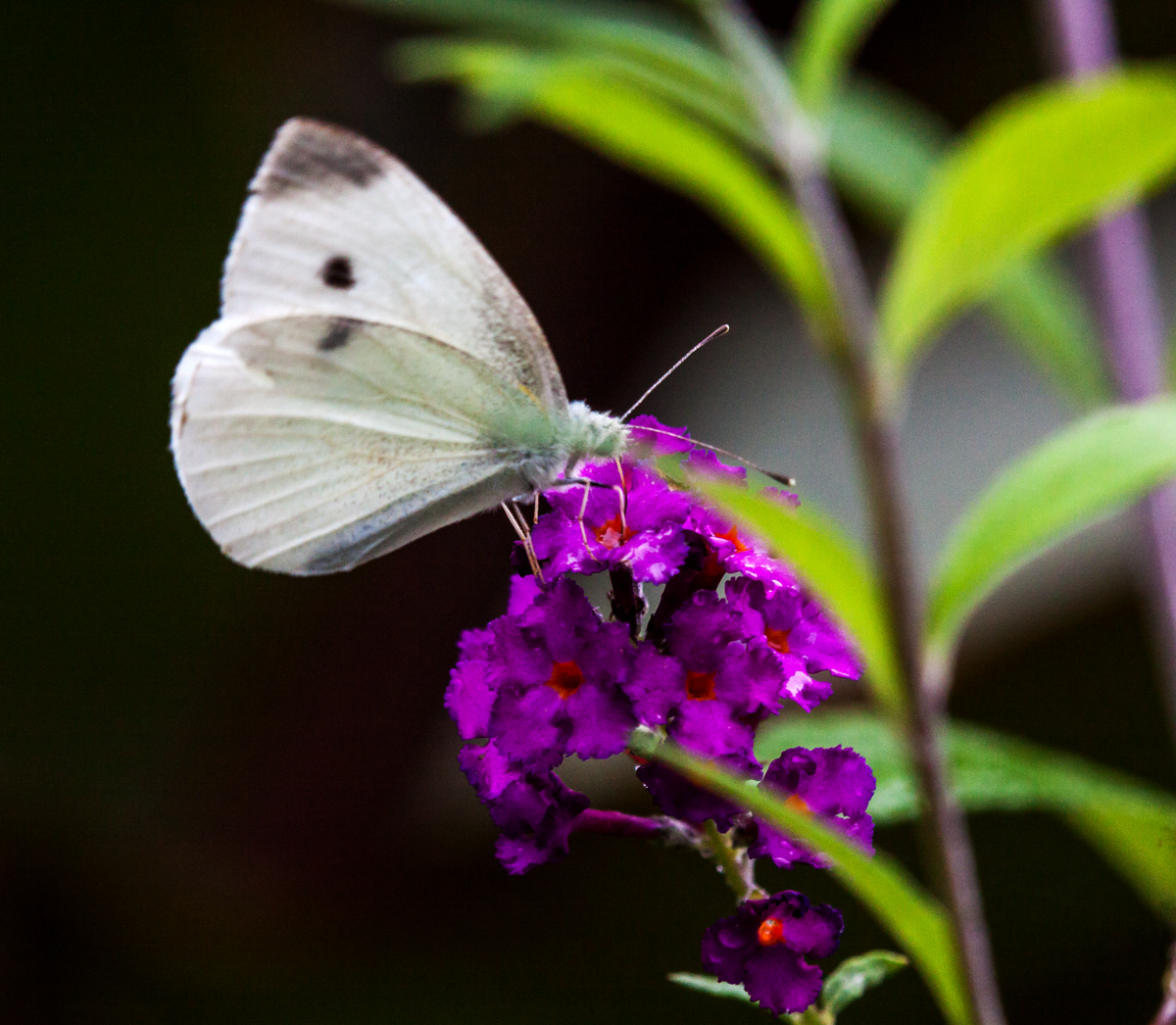
I was struck, however, by the contrast between the two of them. One of them, a Viceroy butterfly (Limenitis archippus), is brightly colored and hard to miss. The other, a Cabbage White (Pieris rapae) is so pale and nondescript that many people don’t notice it at all or dismiss it as being “only” a moth.

Beauty speaks to people in individual deeply personal ways. I find these two butterflies to be equally beautiful.

What do you think? Instinctively do you find one of these two to be more beautiful than the other?

Of course, there is no “right” answer. It seems to me that beauty is almost always subjective rather than universal. Our assessments of beauty tend to be influenced by a whole host of internal factors including our mood, personality, and background as much as by the external characteristics of the subject being considered.

Viceroy butterfly

Cabbage White butterfly

© Michael Q. Powell. All rights reserved


Read Full Post »

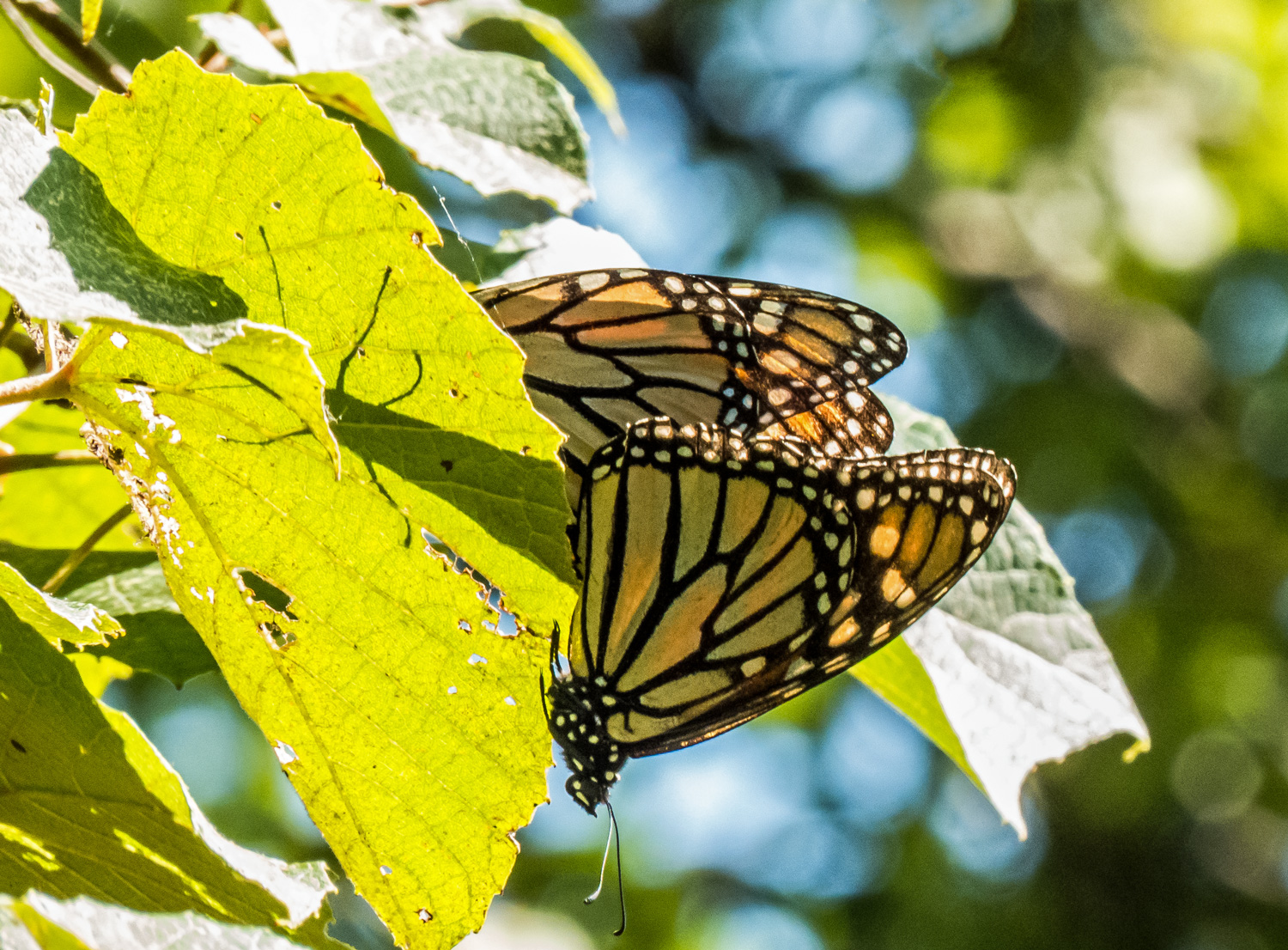
Nestled gently in the leaves of a tall tree, these two Monarch butterflies (Danaus plexippus) were mating, doing their part to perpetuate a species often considered at risk. I captured this image in late August at Occoquan Bay National Wildlife Refuge and re-discovered it yesterday when I was going through my photos from the week before my recent trip to Brussels.

I love the way that the upper butterfly is discreetly hidden by the leaves, but is revealed in its shadow. I find the colors in this image to be especially beautiful. with a wonderful contrast between the warmth of the orange and the coolness of the blue. Most of all, though, I love the way that the background turned out, with its soft circles of out-of-focus highlights.

This is the kind of image that I strive to capture, one that gently draws in viewers and speaks to them softly, reminding them of the undiscovered beauty that surrounds them all of the time.

mating monarchs

© Michael Q. Powell. All rights reserved

Read Full Post »

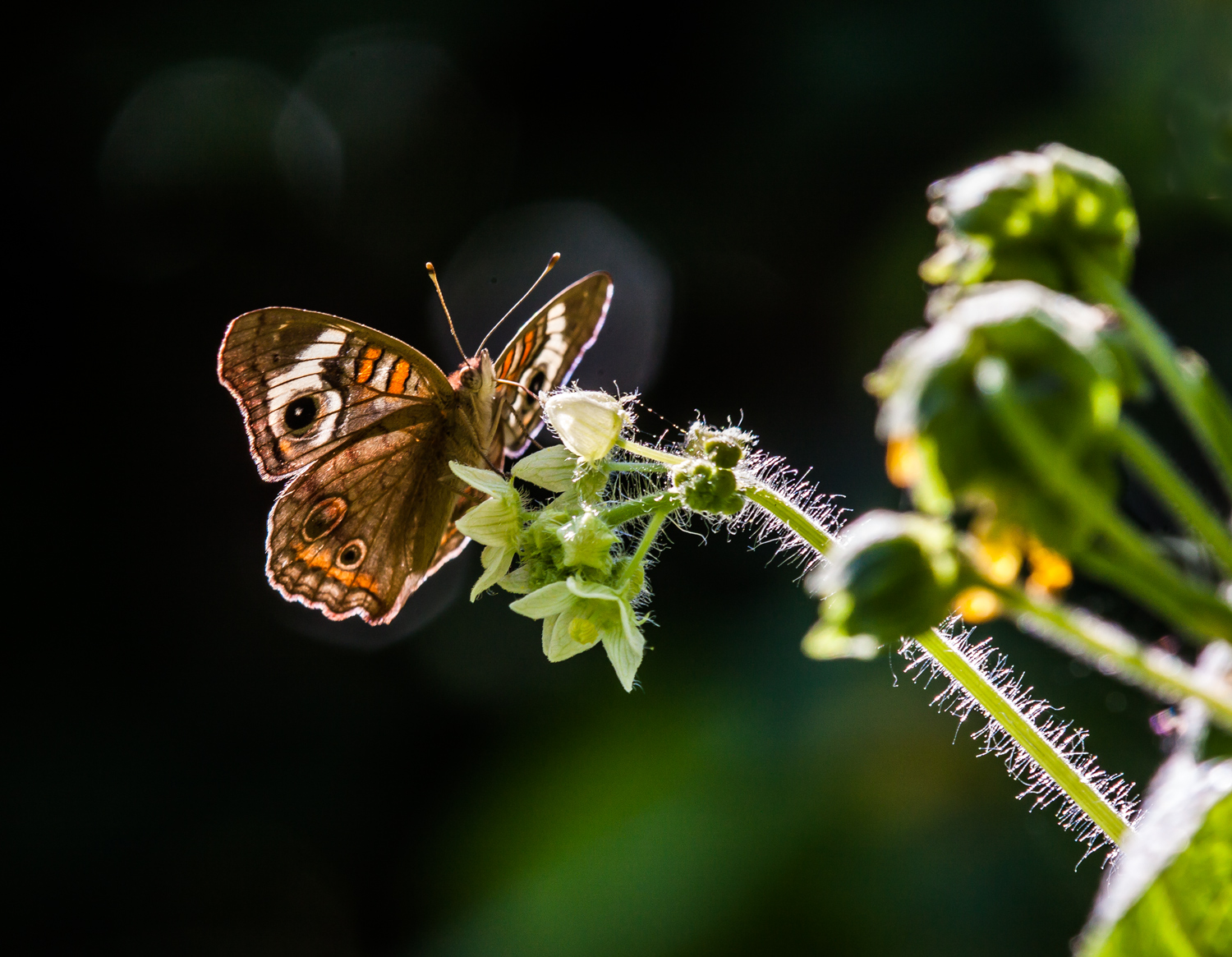
The directional lighting from the back and side gave a cool and dramatically uncommon vibe to this image of a Common Buckeye butterfly (Junonia coenia) that I photographed on 31 August at Occoquan Bay National Wildlife Refuge.

The ground is saturated and rain continues to fall, so I am not sure that I will be out and about today with my camera. It is actually a good thing, I think, to go back and look over my photos—I sometimes get so caught up in taking new photos that I don’t stop and look over my slightly older ones. I am often pleasantly surprised to discover some jewels, like this image.

Common Buckeye

© Michael Q. Powell. All rights reserved

Read Full Post »
The incessant rain and cooler weather since my return from Brussels make it feel like it’s already autumn. Like this Monarch butterfly (Danaus plexippus) at Occoquan Bay National Wildlife Refuge, however, I am not quite ready to cease sipping the sweet nectar of summer.

I captured this image on 31 August, the day before my departure for my recent overseas trip. The combination of rainy weather can jet lag have so far kept me from venturing out with my camera, but I hope to do so this coming week.

monarch butterfly

© Michael Q. Powell. All rights reserved

Read Full Post »

I just love the colors of this Red Admiral butterfly (Vanessa atalanta) that I photographed on Monday at Occoquan Bay National Wildlife Refuge. I mean, really, how can you not like an insect that sports the red, white, and blue?

You don’t have to be American to like those three colors—it seems like there are an awful lot of countries that use them in various shades and patterns in their national flags.

Red Admiral

© Michael Q. Powell. All rights reserved

Read Full Post »

« Newer Posts - Older Posts »