Feeds:
Posts
Comments

Archive for the ‘Birds’ Category

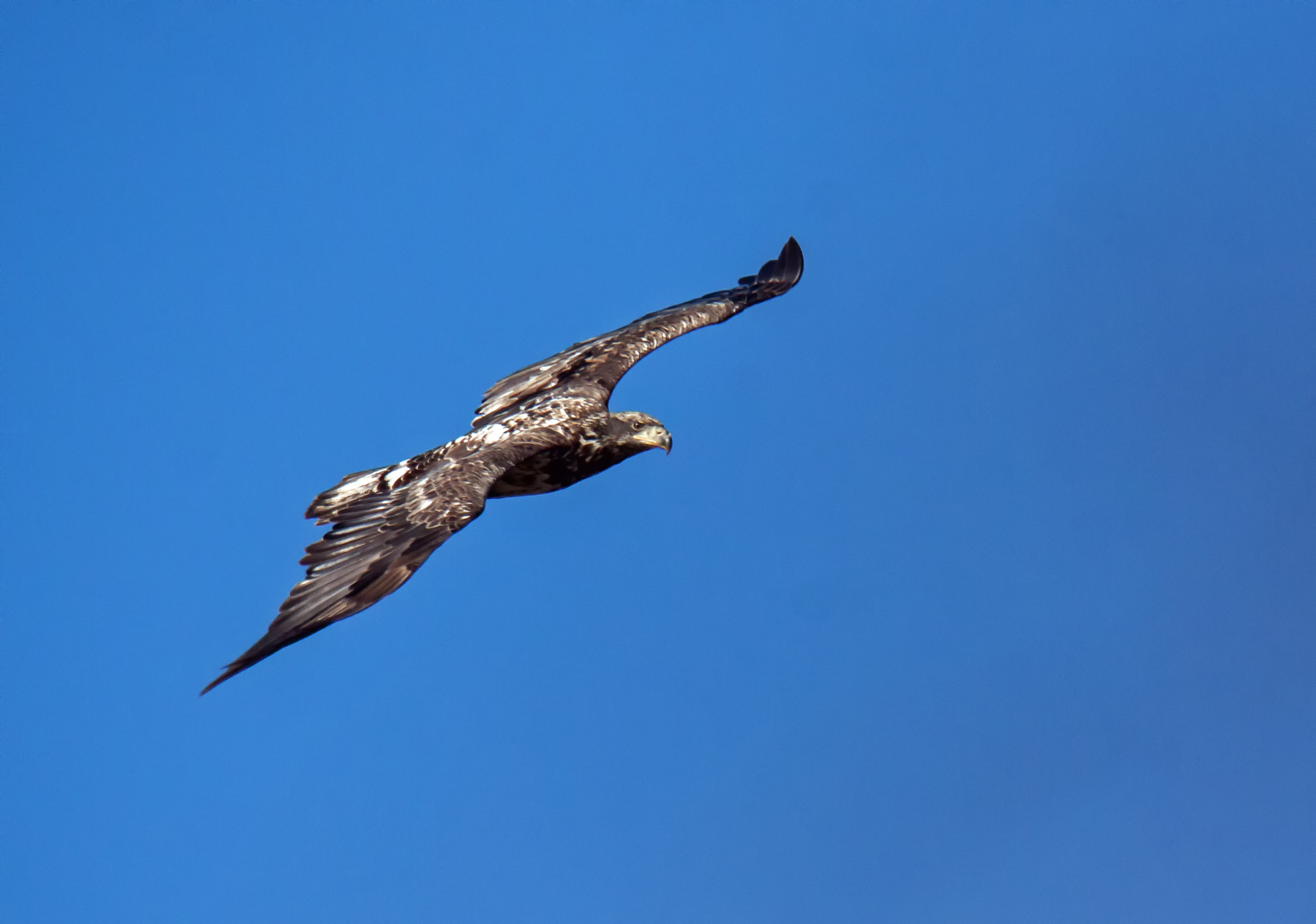
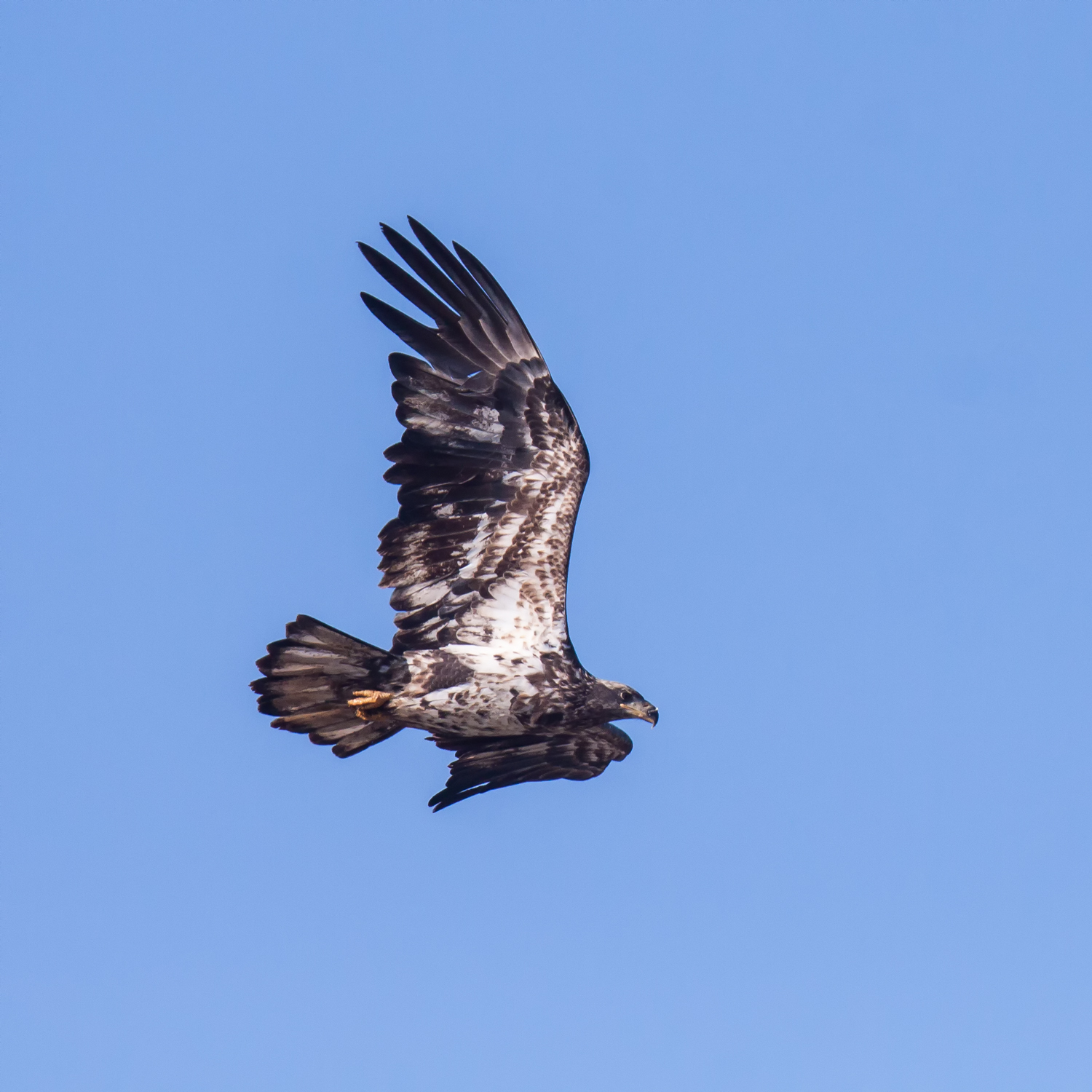
This Bald Eagle (Haliaeetus leucocephalus) dropped more quickly than I anticipated when it took off last Friday at Occoquan Bay National Wildlife Refuge, but somehow I managed to keep most of it within the frame.

Whenever I see an eagle perched in a tree, my mind starts to go into overdrive and my fingers get twitchy. Should I take an immediate shot or should I try to get closer? If I manage to get closer, should I zoom in all the way to capture the perched eagle or leave room in the frame if the eagle decided to take off? I try to anticipate what is going to happen, knowing that I will most likely will have to react to a scenario that I hadn’t predicted.

This eagle, for example, did something unusual—it initially flew towards me. In my experience, eagles almost always fly away from me when they take off. A bird flying right at you is a real challenge to photograph. My focus on the eagle’s eye was off a little bit, but I was very happy to capture an image in which I am looking straight at the eagle’s face from in between the wings.

Growing up, I was a member of the Boy Scouts and the Scout motto of “Be Prepared” serves me well when I am trying to photograph wild creatures like this bald eagle.

bald eagle

© Michael Q. Powell. All rights reserved.


Read Full Post »

When I accidentally flushed this enormous Pileated Woodpecker (Dryocopus pileatus) last week at Occoquan Bay National Wildlife Refuge, it flew to another tree and tried to hide from me.

Note to woodpecker—you need to find a much bigger tree if you want to avoid being seen.

Pileated Woodpecker

© Michael Q. Powell. All rights reserved.

Read Full Post »

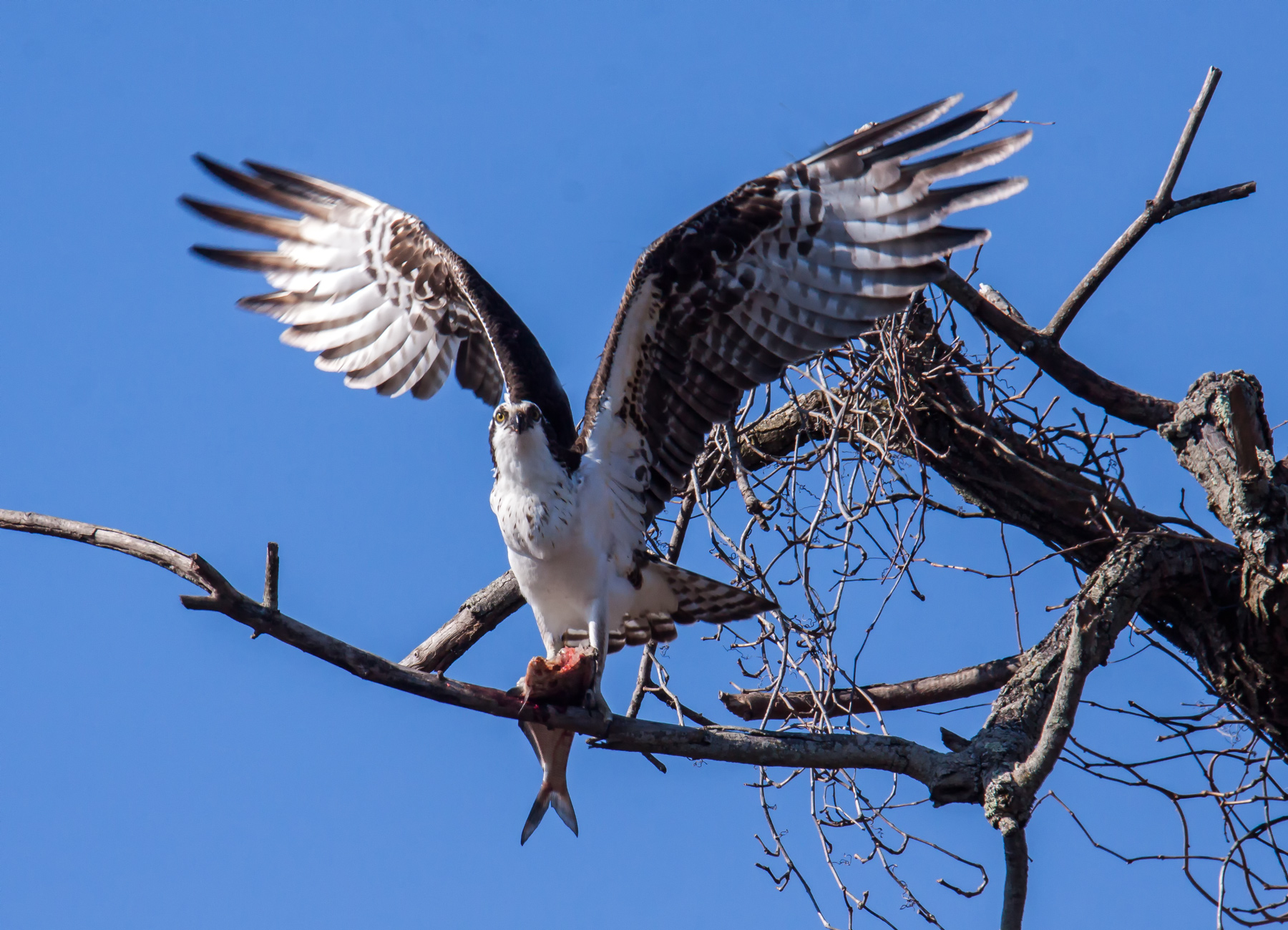
I captured this image this past Tuesday morning at Occoquan Bay National Wildlife Refuge as an Osprey (Pandion haliaetus) was starting to take off from its perch high in a tree with a partially eaten fish firmly in its grasp. I had watched the osprey consume the top portion of the fish and hope that it was carrying the remainder to its mate.

I am somewhat romantic, so I want to believe that this is a story about love and sharing and caring—and maybe it is. It is also possible that the osprey is selfish and fearful and is seeking a more secluded, secure perch when it can enjoy the rest of its catch without having to worry about it being stolen by eagles or potential predators like me.

Whatever the reality of the actual situation, I love the way that this image shows off the osprey’s impressive wingspan and how the v-shape of the wings is repeated in some of the branches and in the tail of the fish.

osprey

© Michael Q. Powell. All rights reserved.


Read Full Post »

Wednesday I saw my first two Great Egrets (Ardea alba) of the year at Occoquan Bay National Wildlife Refuge. I had the sense that they were just passing through. They were resting in the distance and I was able to capture this image of one of them.  An hour later when I passed the same area, they were gone.

Unlike Great Blue Herons, many of which overwinter with us, Great Egrets spent the colder months in warmer locations and return in the spring.

Great Egret

© Michael Q. Powell. All rights reserved.


Read Full Post »

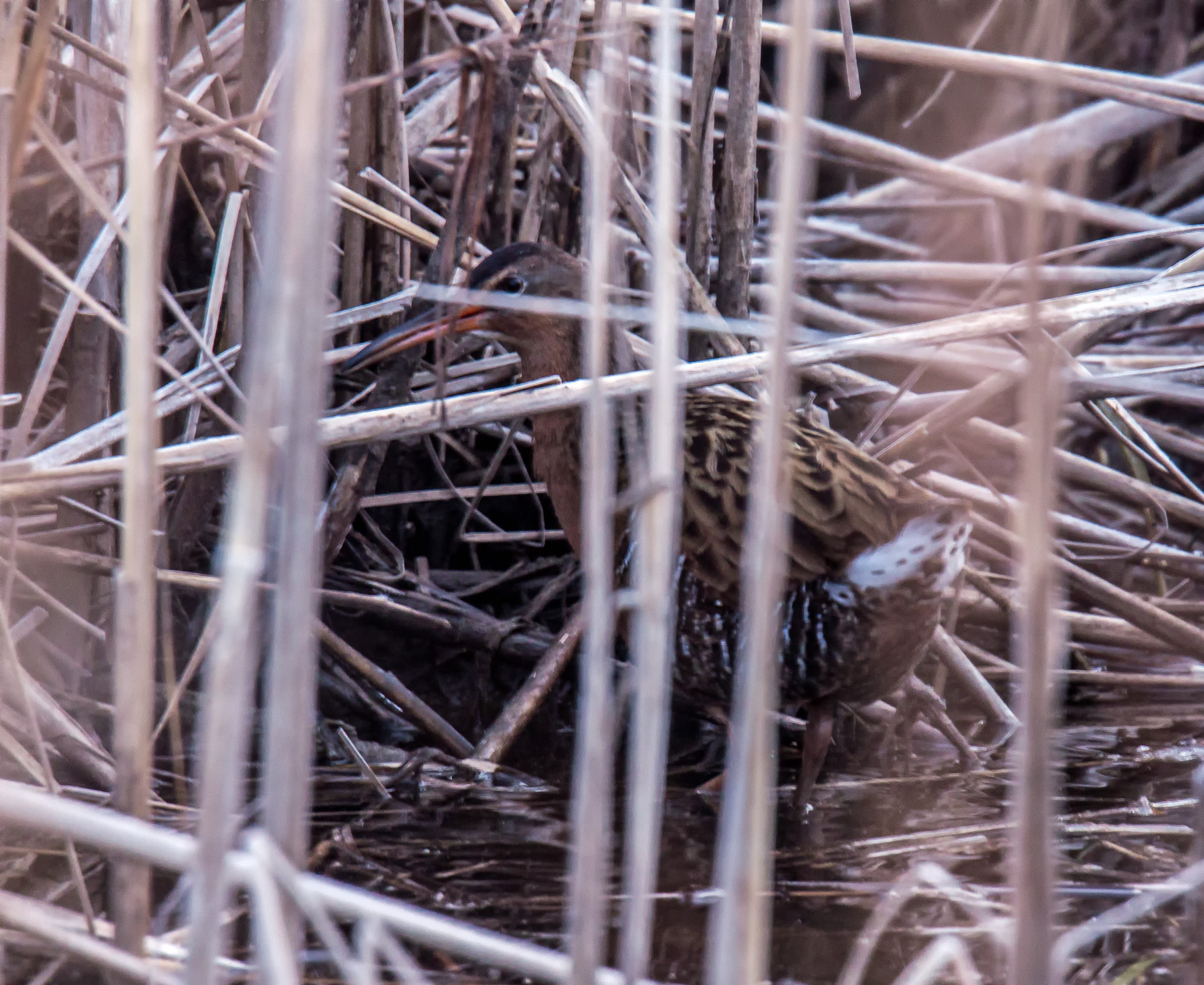
For several weeks I have been hearing a distinctive clicking sound coming from some patches of heavy vegetation within the marshes at Occoquan Bay National Wildlife Refuge. Some experienced birders told me that it was the sound of several King Rails (Rallus elegans). I have repeatedly waited at these locations, hoping in vain that one of these elusive birds would come into view.

Wednesday morning I finally got a glimpse of one of these chicken-like marsh birds. The King Rail did not come out into the open, but I was able to track it by its sounds. I was ready when it made its way to a place where the vegetation was not quite so dense and managed to capture these images.

My birding book describes King Rails as “uncommon, secretive,” so I am happy to get any shots at all. Nonetheless, like all wildlife photographers, I’m never quite satisfied and I’ll be trying to get some additional, better shots in the upcoming days if these birds continue to hang around in our area.

King Rail

King Rail

King Rail

© Michael Q. Powell. All rights reserved.

Read Full Post »

Earlier this week at Occoquan Bay National Wildlife Refuge I captured this image of what I an pretty sure is a Horned Grebe (Podiceps auritus). The subject was significantly backlit and is a bit dark, but even the most casual view will note that the bird has no horns. Well, only breeding adults have golden head tufts that someone decided look like horns.

Horned Grebes are diving ducks and most of the time that I see one it is in deep water in the distance. I was fortunate to be at the right place at the right time when this grebe surfaced closer than normally with a small fish in its mouth. I posted this photo to a Facebook forum, but so far the identity of the fish remains a mystery. The best response I received when I asked if anyone knew what kind of fish it was— “a slow one.”

In any case, I really like how the warm orange of the skinny little fish contrasts with the overall bluish tones of the image. Needless to say, the fish was gone a few seconds later.


Horned Grebe

© Michael Q. Powell. All rights reserved.
Read Full Post »

When I first spotted these Mourning Doves (Zenaida macroura) perched closely together on a branch yesterday morning, I immediately assumed that they were a couple. Are these really doves in love?

I have trouble figuring out the relationships among birds, because I have to judge solely on the basis of outward appearances. Come to think of it, I have the same problem with humans.

Friends or lovers? Who knows?

mourning doves

© Michael Q. Powell. All rights reserved.
Read Full Post »

This Brown Creeper (Certhia americana) blended in so perfectly with the tree bark yesterday morning at Occoquan Bay National Wildlife Refuge that I don’t think I would have spotted it if it had not been moving. Brown Creepers are small in size, 4.7-5.5 inches in length (12-14 cm) and 0.2-0.3 ounces in weight (10-15 grams, and are in motion almost continuously, which makes them pretty tough to photograph.

If you click on the photos below, you can see some of the cool details of this little bird, like its large feet that aid stability and its slender, curved bill used to probe for bugs in and under the bark.


Brown Creeper

Brown Creeper

© Michael Q. Powell. All rights reserved.

Read Full Post »

As we move forward into spring, more and more birds are returning to my local area after spending the winter in warmer spots. This past week I was happy to welcome the return of some Eastern Phoebes (Sayornis phoebe) to Occoquan Bay National WIldlife Refuge.

Two things always stand out to me when I see these little flycatchers—their heads seem unusually large and their tails are constantly flicking. Heads or tails? In either case I know it is an Eastern Phoebe. 🙂

Eastern Phoebe

© Michael Q. Powell. All rights reserved.

Read Full Post »

Do you ever feel the need to scream at the top of your lungs like this Bald Eagle (Haliaeetus leucocephalus) that I spotted on Saturday morning at Occoquan Bay National Wildlife Refuge? I think that most of us have moments in our lives when our emotions overwhelm us and we feel a need to vent. Why not scream? 

As the old children’s rhyme tells us, “I scream, you scream, we all scream for ice cream.” 🙂

screaming eagle

© Michael Q. Powell. All rights reserved.


Read Full Post »

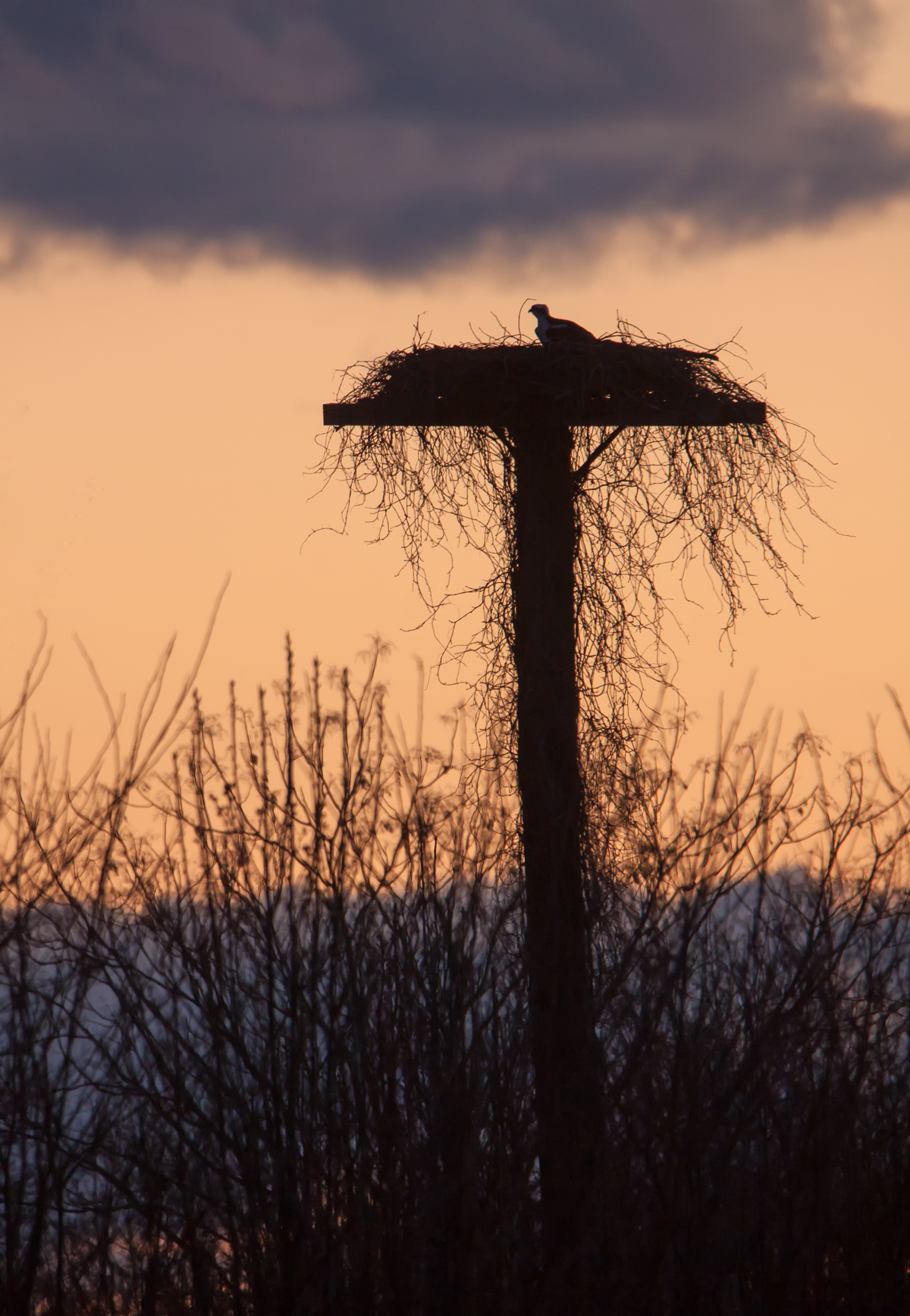
Saturday morning at dawn I noted than an Osprey (Pandion haliaetus) had already claimed the most prominent nesting site at Occoquan Bay National Wildlife Refuge. There are several man-made nesting platforms scattered through the wildlife refuge and there are usually some additional osprey nests in trees and one on the top of a hunting blind on stilts in the water. This particular nesting platform is visible from the parking lot, so it was easy to check to see if it was occupied.

osprey

© Michael Q. Powell. All rights reserved.
Read Full Post »

Tree Swallows (Tachycineta bicolor) were back at Occoquan Bay National Wildlife Refuge this past Thursday and they seemed a bit cranky. They carried on their heated disputes in the air and on the ground as they checked out nesting boxes.

I don’t know if you have ever observed Tree Swallows, but they are small and fast. Worst of all from the perspective of a photographer, they fly erratically and turn quickly and often. For those reason, I am especially happy with the first image. I should note that it is a cropped image—the original image had a lot more sky showing.

Tree Swallow

Tree Swallow

© Michael Q. Powell. All rights reserved.

Read Full Post »

This Bald Eagle (Haliaeetus leucocephalus) was initially facing away from me on Monday at Occoquan Bay National Wildlife Refuge.  Somehow, though, the eagle sensed me approaching and turned its head slightly to glare at me. The eagle seemed to take a little time to check me out before deciding to take off.

I am presenting the images below in reverse chronological order, starting with the “glare” and working backwards in time to the moment when I first spotted the eagle. I had just rounded the bend of a trail and lookeding upwards was shocked to see that I was almost directly this eagle. It is definitely rare for me to get this close to an eagle and to get such detailed shots of its feathers.

bald eagle

bald eagle

bald eagle

© Michael Q. Powell. All rights reserved.


Read Full Post »

How do you mark the beginning of spring? For some, it is the time when crocuses and daffodils begin to bloom. Here in the Washington D.C. area, one of the signs of spring is the blossoming of the cherry trees.

For me, I consider spring to have sprung when Ospreys (Pandion haliaetus) reappear. These impressive raptors, sometimes referred to as fish hawks, depart in the autumn and throughout the winter I eagerly await their return. Why? I gladly spend countless hour in fascination and enchantment as I watch osprey soaring through the skies, hovering in the air, and occasionally plunging feet-first into the water to catch a fish. It is also fun to watch them gathering materials to build or repair nests.

Yesterday I spotted my first ospreys this season while exploring Occoquan Bay National Wildlife Refuge on an unusually warm and sunny March day. Here are a couple of my favorite shots from those encounters, which mark the return of the ospreys for 2019.

Osprey

osprey

© Michael Q. Powell. All rights reserved.

Read Full Post »

Most of the Eastern Bluebirds (Sialia sialis) that I have seen in 2019 have been females, which have more subdued colors than their male counterparts. I was happy recently when I finally captured an image of one of the flashy male bluebirds at Occoquan Bay National Wildlife Refuge.

In my experience, bluebirds have a universal appeal—virtually everyone finds them to be beautiful.

Eastern Bluebird

© Michael Q. Powell. All rights reserved.

Read Full Post »

This immature Bald Eagle (Haliaeetus leucocephalus) certainly was aware of my presence on Monday at Occoquan Bay National Wildlife Refuge, judging by the intensity of the stare it directed toward me. I am guessing that the eagle is about three years old—it takes almost five years for its head feathers to turn completely white and for its beak to turn yellow. At this stage of development, bald eagles look a little scruffy and have not yet acquired the majestic look that I associate with this species.

If you are interested in seeing images of the developmental stages of the bald eagle, check out this posting from onthewingphotography.com that shows an eagle’s age progression from one to five years old.

Bald Eagle

Bald Eagle

© Michael Q. Powell. All rights reserved.

Read Full Post »

Sunny days have been relatively rare this winter, so it is almost a special occasion when we do have one. Although it is nice to capture images of rare subjects on those special days, it is equally pleasurable to photograph the common species, like this Great Blue Heron (Ardea herodias) that I spotted recently at Occoquan Bay National Wildlife Refuge. The additional light from the sun helps to make the heron’s wonderful colors “pop” much more than they do on gray cloudy days.

Great Blue Heron

© Michael Q. Powell. All rights reserved.

Read Full Post »

This past week I was thrilled to spot a Northern Harrier (Circus hudsonius) on two separate occasions at Occoquan Bay National Wildlife Refuge. Northern Harriers are slim, long-tailed hawks. One of the things that distinguish these raptors from others is that, “unlike other hawks, they rely heavily on their sense of hearing to capture prey,” which is why they often fly low and slowly over the ground, according to the Cornell Lab of Ornithology .

During my first encounter, the harrier was flying low over a field. The first photo below gives you an idea of how close to the ground the bird was flying. It reminded me of my military training and the concept of “nap-of-the-earth” flight, a very low-altitude flight course used by military aircraft to avoid enemy detection and attack in a high-threat environment.

A few day later I spotted a Northern Harrier in the same general location. This time the harrier was soaring high above my head. I could not tell for sure if it was hunting, but it sure seemed to be keeping watch over things on the ground and appeared to be looking right at me.

I am not sure how much longer this harrier will be hanging around, so I will be returning to the same location within the next few days with a hope of another encounter with a harrier.


Northern Harrier

Northern Harrier

© Michael Q. Powell. All rights reserved.


Read Full Post »

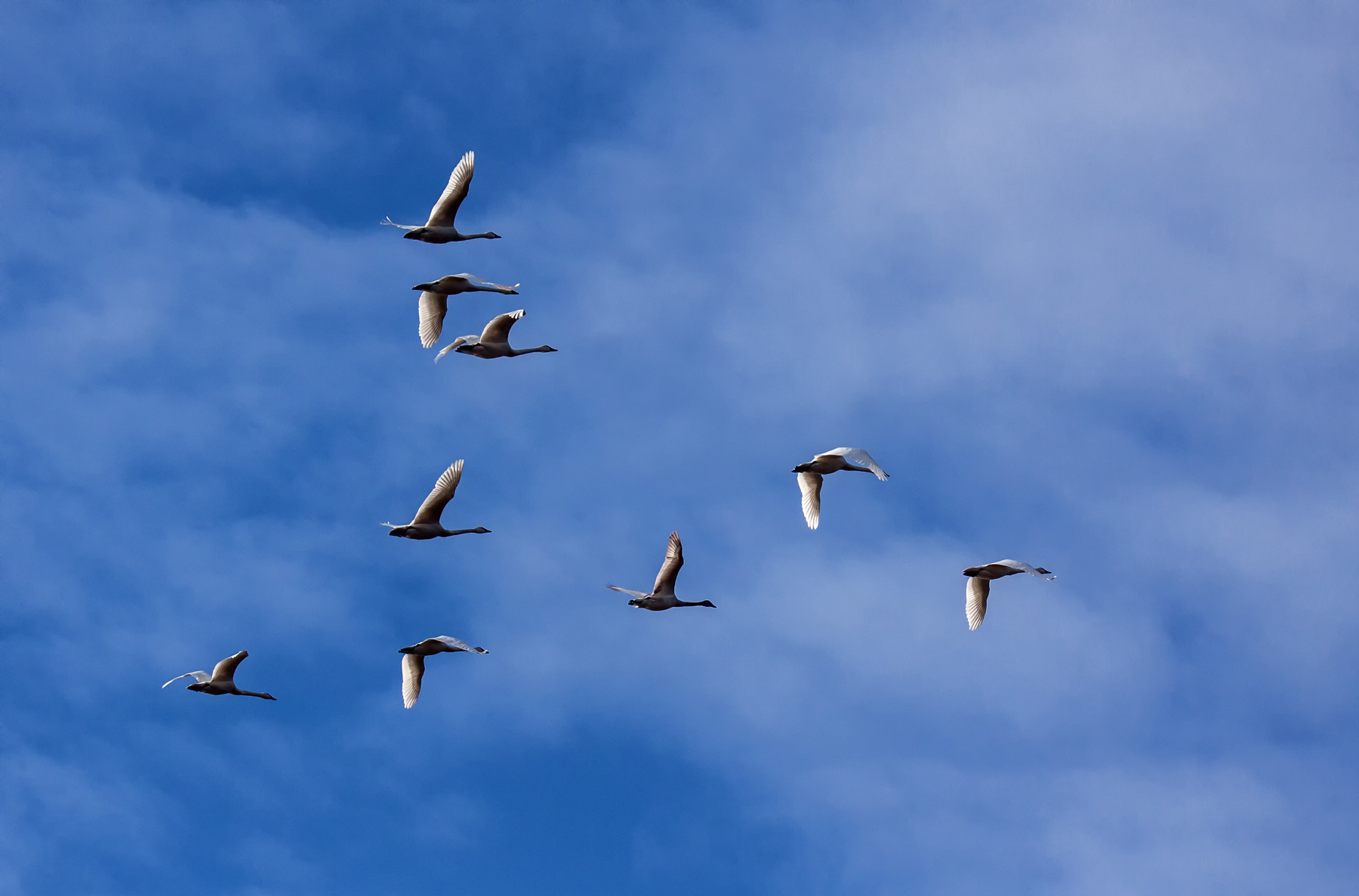
I was thrilled on Thursday when a small flock of Tundra Swans (Cygnus columbianus) flew overhead while I was at Occoquan Bay National Wildlife Refuge. It is rare for me to see swans of any kind in this area. When I spotted the formation approaching, I initially thought they were Canada Geese, but as they got closer I could tell that they looked different and sounded different.

Tundra Swan

© Michael Q. Powell. All rights reserved.

Read Full Post »

It’s tough to get a Turkey Vulture (Cathartes aura) to smile. This was the best we could manage during our portrait session on Thursday at Occoquan Bay National Wildlife Refuge.

Turkey Vulture

© Michael Q. Powell. All rights reserved.
Read Full Post »

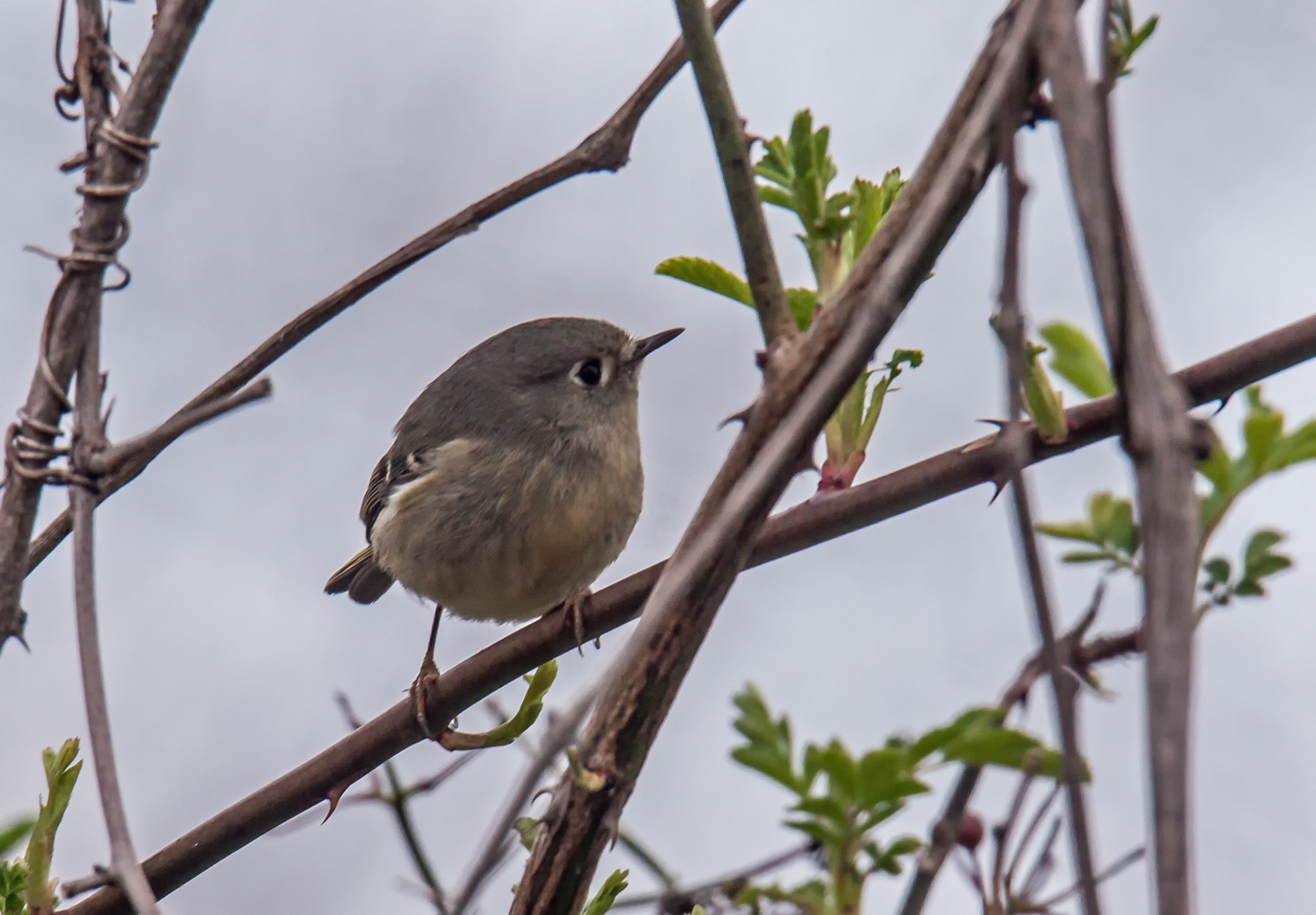
Golden-crowned Kinglets (Regulus satrapa) are tiny, but they can be mighty fierce. This one that I spotted yesterday at Occoquan Bay National Wildlife Refuge seemed to be sending me a definite  “Don’t mess with me” message with its intense glare in my direction.

Golden-crowned Kinglet


© Michael Q. Powell. All rights reserved.

Read Full Post »

When I first spotted this bird perched on a distant piece of floating driftwood, I assumed that it was a cormorant. The more I looked at it, though, the more I thought that the body proportions were wrong for a cormorant.

I was a bit shocked when I zoomed in and discovered that it was a Bald Eagle (Haliaeetus leucocephalus). Why was the eagle perched like this? Was it looking for a moment of solitude?

Somehow the solitary eagle reminded me of a shipwrecked sailor, adrift in the vast expanses of the ocean.

Bald Eagle

© Michael Q. Powell. All rights reserved.

Read Full Post »

There are barriers on several roads to protect the nesting eagles at Occoquan Bay National Wildlife Refuge from human interference, but with a long lens I was able to confirm on Tuesday that one of the Bald Eagles (Haliaeetus leucocephalus) was sitting on the nest. With a little luck, we will have eaglets again this year—last year there were two of them at this nesting site.

The two images below are actually different versions of the same photo. Initially I was going to post just the second image, but then decided to crop it a bit to give viewers a slightly better view of the eagle. I have also noticed that images in a landscape format display better in the WordPress Reader than those in a portrait or square format.

nesting Bald Eagle

nesting Bald Eagle

© Michael Q. Powell. All rights reserved.
 

Read Full Post »

Carolina Wrens (Thryothorus ludovicianus) are small birds that often remain hidden, but their loud songs let you know when they are near. I caught a glimpse of this one from an unusual angle last week at Occoquan Bay National Wildlife Refuge.

Carolina Wren

© Michael Q. Powell. All rights reserved.

Read Full Post »

As I was walking along one of the trails last week at Occoquan Bay National Wildlife Refuge, I glanced to the side and spotted this Red-shouldered Hawk (Buteo lineatus) perched at eye level on a tree that was really close. There was a lot of vegetation between us, but I managed to get this shot that did not have to be cropped at all.

Initially I did not think that I would be able to capture a usable image, because there was no way that I could get an unobstructed shot. I crouched down a bit and managed to find a kind of visual tunnel that provided a clear view of the head. The out-of-focus branches are a little distracting, but they provide the viewer with a sense that they are peering into the world of the hidden hawk.

Red-shouldered Hawk

© Michael Q. Powell. All rights reserved.


Read Full Post »

This male Red-breasted Merganser duck (Mergus serrator) that I spotted last week in the waters off of Occoquan Bay National Wildlife Refuge seemed to be having a bad hair day (or was going for a punk look). At this stage of my life, I’d be happy just to have a hair day.

According to the Cornell Lab of Ornithology, “Red-breasted Mergansers are among the fastest flying ducks, clocking speeds of up to 81 miles per hour.” Wow!

Red-breasted Merganser

Red-breasted Merganser

© Michael Q. Powell. All rights reserved.


Read Full Post »

“Environmental bird portraits” is a fancy way of saying that I was not able to get close enough to my subjects to isolate them and fill the frame. Although that is true, I like the way that these three images give you a sense of the environment in which the birds were found. Often I try to get so close enough to my subjects with a telephoto or macro lens that I lose sight of the “big picture.” These images, all of which were taken last week at Occoquan Bay National Wildlife Refuge, give you some sense of the variety of birds and environments that I encounter when I am out with my camera.

The first image shows a pair of colorful Wood Ducks (Aix sponsa) that took off as soon as they detected my presence (and I was a long way off from them). The male is the one that is in front, with the female just behind him.

The second image shows a Sharp-shinned Hawk (Accipiter striatus), the smallest hawk in the United States. This bird was the toughest one for me to identify and I had to seek assistance from some experts in a Facebook bird forum. There was some discussion about whether this was a Sharp-shinned Hawk or a Cooper’s Hawk, another small hawk, but prevalent view was the it was the former.

The final image shows a male Red-winged Blackbird (Agelaius phoeniceus) as he sang out loudly from atop a tree. Male blackbirds are definitely not shy and the volume of their enthusiastic songs and calls is amazing, i.e. really loud.

Wood Duck

Sharp-shinned Hawk

Red-winged Blackbird

© Michael Q. Powell. All rights reserved.

Read Full Post »

Last year several of my most popular postings featured Eastern Bluebirds (Sialia sialis). In response to one of those postings, one of my youngest followers, Benjamin, asked his grandmother why they were not called Orange Bluebirds, because the birds’ bodies seemed to have as much orange as blue. I appreciate all of the comments that viewers make, but that one comment has particularly stuck with me and it comes to mind whenever I see a bluebird.

On the last day of February, I spotted several bluebirds at Occoquan Bay National Wildlife Refuge, my first sighting of the species in 2019. I was pleased to capture this image that shows some of the subtle coloration of one of those bluebird, with wonderfully varying shades of blue and orange.

As I was poking about on the internet looking for information on bluebirds, I came across a sweet little song by Paul McCartney and Wings called Bluebird. The song was on the album Band on the Run—I remember the album, but don’t recall having heard the song. If you want to hear the song, check out this link to the song on YouTube. As a sneak preview to the song, here are the lyrics to the first couple of stanzas, as found on the website of The Paul McCartney Project.

“Late at night when the wind is still
I’ll come flying through your door
And you’ll know what love is for,
I’m a bluebird
I’m a bluebird
I’m a bluebird

Touch your lips with a magic kiss,
And you’ll be a bluebird too,
And you’ll know what love can do,
I’m a bluebird
I’m a bluebird
I’m a bluebird…”

Eastern Bluebird

© Michael Q. Powell. All rights reserved.

Read Full Post »

I wouldn’t exactly say that this Turkey Vulture (Cathartes aura) was handsome, but you have to admit that it has an impressive wingspan display. I spotted this vulture earlier this week at Occoquan Bay National Wildlife Refuge.

Its spread wing position reminded me of a cormorant, which pens its wings like that to dry them out. I have no idea why the vulture felt the need to do so, but it held its wings open for an extended period of time.turkey vulture

© Michael Q. Powell. All rights reserved.


Read Full Post »

“Brown Thrasher” sounds like it could be the name of a heavy metal band.  I was therefore startled by the melodious sounds of the Brown Thrasher (Toxostoma rufum) that I encountered this past Tuesday at Occoquan Bay National Wildlife Refuge. I was entranced by its beautiful song as well as by its stunning yellow eyes. According to the Cornell Lab of Ornithology, “Brown Thrashers, like catbirds and mockingbirds, are mimics with extremely varied repertoires consisting of more than 1,100 song types.” If you click on the link for the Cornell Lab of Ornithology, you will find some samples of the thrasher’s sounds.

In case you are curious, the bird’s name comes from its foraging behavior. Brown Thrashers typically feed on the ground, often in heavy undergrowth, and sweep their bills through the leaf litter and soil with quick, sideways motions.

Brown Thrasher

© Michael Q. Powell. All rights reserved.

Read Full Post »

As many of you know, I love to photograph Bald Eagles (Haliaeetus leucocephalus). There is something about the majesty and strength of these birds that never fails to impress and inspire me.

On Tuesday, a beautiful sunny day. there were several eagles flying about in the skies over Occoquan Bay National Wildlife Refuge. I am not sure if they were motivated by love or by competition, but it was definitely fun to watch them in action. I had lost sight of a pair that I had been tracking when suddenly I heard the sound of an eagle’s cry that seemed to be really close. I glanced upwards and saw an eagle on an exposed branch in a nearby tree.

My heart was pumping and I probably was holding my breath, but I managed to capture a few shots that may well be the my best shots ever of a Bald Eagle. I was very fortunate to have been presented a situation and I was thrilled to be able to take advantage of it so well. (If you click on the images, you can see more amazing details, like the pink color of the inside of the eagle’s mouth.)

It is moments like this that help to keep me motivated as a wildlife photographer. These may be my best shots of an eagle so far, but who knows, there may be more and better images in the future.

bald eagle

bald eagle

© Michael Q. Powell. All rights reserved.
 

Read Full Post »

« Newer Posts - Older Posts »