Feeds:
Posts
Comments

Archive for the ‘Birds’ Category

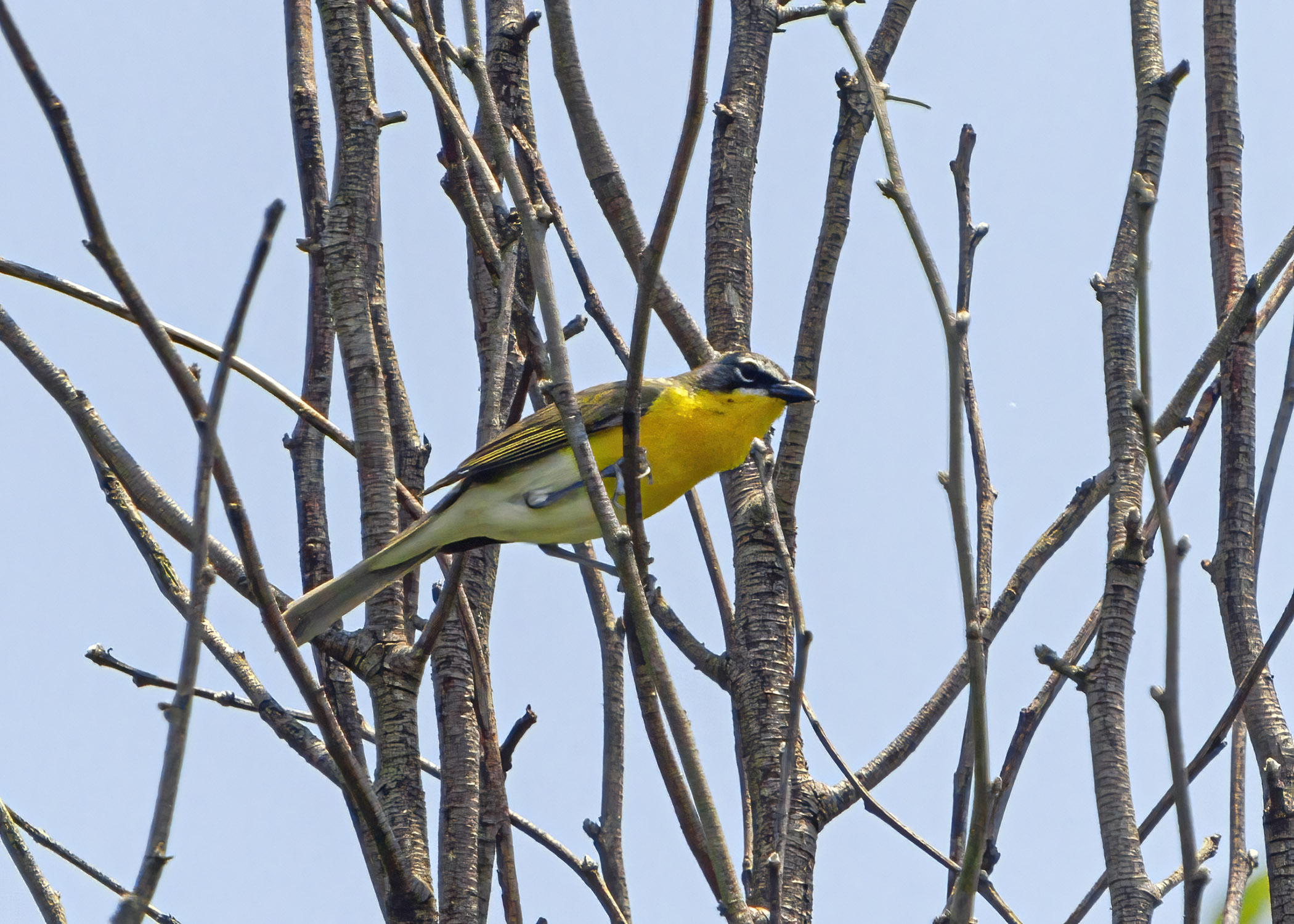
This Yellow-throated Warbler (Setophaga dominica) was pretty far away when I spotted its little patch of bright yellow feathers this past Tuesday at Occoquan Bay National Wildlife Refuge. I doubted that I would be able to get a recognizable shot of it, but decided to take a chance, given that it was the first warbler that I had seen this spring. The resulting shot won’t win any contest, but I am happy that I was able to document my sighting.

Warblers pass through my area each spring at about the same time as the leaves begin to appear on the trees. It can be a bit frustrating for me to be able to hear some of these little birds without being able to see them when they are hidden in the foliage. It is a little game of hide-and-see that I play every year and this time I was able to capture a shot of one of my colorful fellow players.

Yellow-throated Warbler

© Michael Q. Powell. All rights reserved.

Read Full Post »

I have been hearing a lot of Red-winged Blackbirds (Agelaius phoeniceus) during recent visits to Occoquan Bay National Wildlife Refuge and was delighted to finally capture a shot of one last week that shows the distinctive yellow and red shoulder patch of the males of his species.

I was hoping that the blackbird would fly to some lower branches, but he seemed content to perch high above me in a tree. I was pleased, though, to be able to capture this fun little portrait—it is tough to convince birds to pose for me.

Red-winged Blackbird

© Michael Q. Powell. All rights reserved.


Read Full Post »

I spotted this male Northern Cardinal (Cardinalis cardinalis) as he was hopping around on the ground near a stream last week in Prince William County, Virginia. I was delighted when the cardinal bent over and drank briefly from the shallow water. In the first photo, I captured the moment when the cardinal lifted his head and dribbled a few drops of water from his mouth.

It seemed like the cardinal suddenly became aware of my presence and realized that my previous photo might not have been very flattering, which is usually the case when you snap a shot of someone eating or drinking. He then struck a profile pose for me to show his better side. Note the slight tilt of the head that helps to present a slimmer neck—clearly this cardinal had some previous experience as a model.

Northern Cardinal

Northern Cardinal

© Michael Q. Powell. All rights reserved.

Read Full Post »
Springtime has definitely arrived in Northern Virginia. All kinds of trees are starting to put out buds and leaves and Washington D.C.’s famous cherry trees are now in full bloom.

On Wednesday I explored a creek in Prince William County, hoping to find some early dragonflies. I was not successful in my quest, but I was quite happy to capture this image of a female Northern Cardinal (Cardinalis cardinalis) with some of the bright spring colors that have recently emerged. The subdued coloration of the female Cardinal does not stand out quite as much as that of her male counterpart, but I find it her more refined colors to be even more beautiful than those of the male.

Northern Cardinal

© Michael Q. Powell. All rights reserved.

Read Full Post »

In some locations the reappearance of Eastern Phoebes (Sayornis phoebe) is one of the first indications that spring is returning. I am not sure if Eastern Phoebes are with us year round in Northern Virginia, but I know that it as been quite a few months since I last saw one.

On Tuesday I spotted this phoebe in a tree at Occoquan Bay National Wildlife Refuge. Branches were partially blocking my view of the bird, but I managed to find get a clear view of its face (and most importantly of its eye) by making small adjustments to my shooting position.

Eastern Phoebe

© Michael Q. Powell. All rights reserved.


Read Full Post »

I was delighted to spot this Brown Thrasher (Toxostoma rufum) last week at Occoquan Bay National Wildlife Refuge. I had to move around a lot to get a clear view of its head, though I was pretty sure it was a thrasher when I caught a glimpse of its bright yellow eye and long tail. The Cornell Lab of Ornithology did a great job in describing the challenges of spotting this species, “It can be tricky to glimpse a Brown Thrasher in a tangled mass of shrubbery, and once you do you may wonder how such a boldly patterned, gangly bird could stay so hidden.”

Brown Thrashers are present year round in the southern portions of Virginia, but I think they move north into my area of Northern Virginia during the breeding season. Before long we should have lot of other birds, including warblers, migrating through our area and, of course, dragonflies and other insects will soon reappear. Yesterday  i noted a posting in Facebook with photos of dragonflies that were recently taken in central Virginia. I will probably venture out later today to see if I can spot any dragonflies myself.

Brown Thrasher

© Michael Q. Powell. All rights reserved.

Read Full Post »

Osprey (Pandion haliaetus) are very opportunistic birds—they will make a nest almost anywhere there is a bit of space. Last week I spotted an osprey perched on the roof of a duck blind in the water and captured this cool little image.

These little shack-like structures on stilts have been built in the waters off of Occoquan Bay National Wildlife Refuge and are used a few weeks a year during duck hunting season. It is a little disconcerting during that time to hear shotguns being fired only a short distance away, but the money collected for hunting licenses is used for waterfowl habitat improvement and restoration in Virginia.

Osprey

© Michael Q. Powell. All rights reserved.

Read Full Post »

Buds are beginning to grow on many of the trees in my area as we welcome the beginning of spring.  However, it looks like this little Carolina Chickadee (Poecile carolinensis) that I spotted on Tuesday at Occoquan Bay National Wildlife Refuge was impatient and chose to nibble on a tender young bud that had barely started to develop.

The lighting conditions were not optimal, but I like the way that I was able to capture the way that the chickadee used its tiny bill to poke into the underdeveloped bud. It may not seem like much, but I suspect that the chickadee welcomed the taste of the tender spring bud after a long winter of gnawing on hard, wizened seeds.


Carolina Chickadee

© Michael Q. Powell. All rights reserved.

Read Full Post »

Something attracted the attention of this Osprey (Pandion haliaetus) on Tuesday at Occoquan Bay National Wildlife Refuge and it kept looking down at the ground. At first I thought that the osprey had caught a fish that it was trying to protect from competitors, but when I zoomed in, I did not see any fish.

Perhaps the osprey was looking for its mate or was merely curious to observe all the things that were going on. I don’t think that the osprey had spotted me when I took these shots, but that is also a possibility.

Osprey

Osprey

© Michael Q. Powell. All rights reserved.

Read Full Post »

When Great Blue Herons (Ardea herodias) take off from the water, they really stretch out and usually I cut off part of their bodies when trying to photograph them in action. Last week, though, my timing was good and I captured this little sequence of images as a heron took to the air, flew for a short distance, and “stuck” its landing in the water.

I was really happy with the way that I was able to capture so many details, from the arc of the water droplets as the heron rose out of the water to the bird’s different-colored feathers. In the final photo, the spread wings, wind-blown “hair,” and the wonderful reflection combine to create a really cool mood in the image.

Great Blue Heron

Great Blue Heron

Great Blue Heron

© Michael Q. Powell. All rights reserved.

Read Full Post »
When in the shadows, Common Grackles (Quiscalus quiscula) appear to be all black, but in the bright sunlight their iridescent feathers shine in an array of colors. I photographed this uncommonly beautiful Grackle as it perched in a dead tree on Tuesday at Occoquan Bay National Wildlife Refuge.

Beauty is everywhere.Common Grackle

© Michael Q. Powell. All rights reserved.

Read Full Post »

When does spring begin? If you use the meteorological calendar, spring begins on the first of March in the Northern Hemisphere. Most folks here in the United States, though, consider that spring begins with the vernal equinox that falls on 20 March this year.

I look for other signs that mark the beginning of the new season. Yesterday, for example, I saw a few blooming daffodils and crocuses, some of the first spring flowers to appear, and I also spotted some buds starting to open on trees.

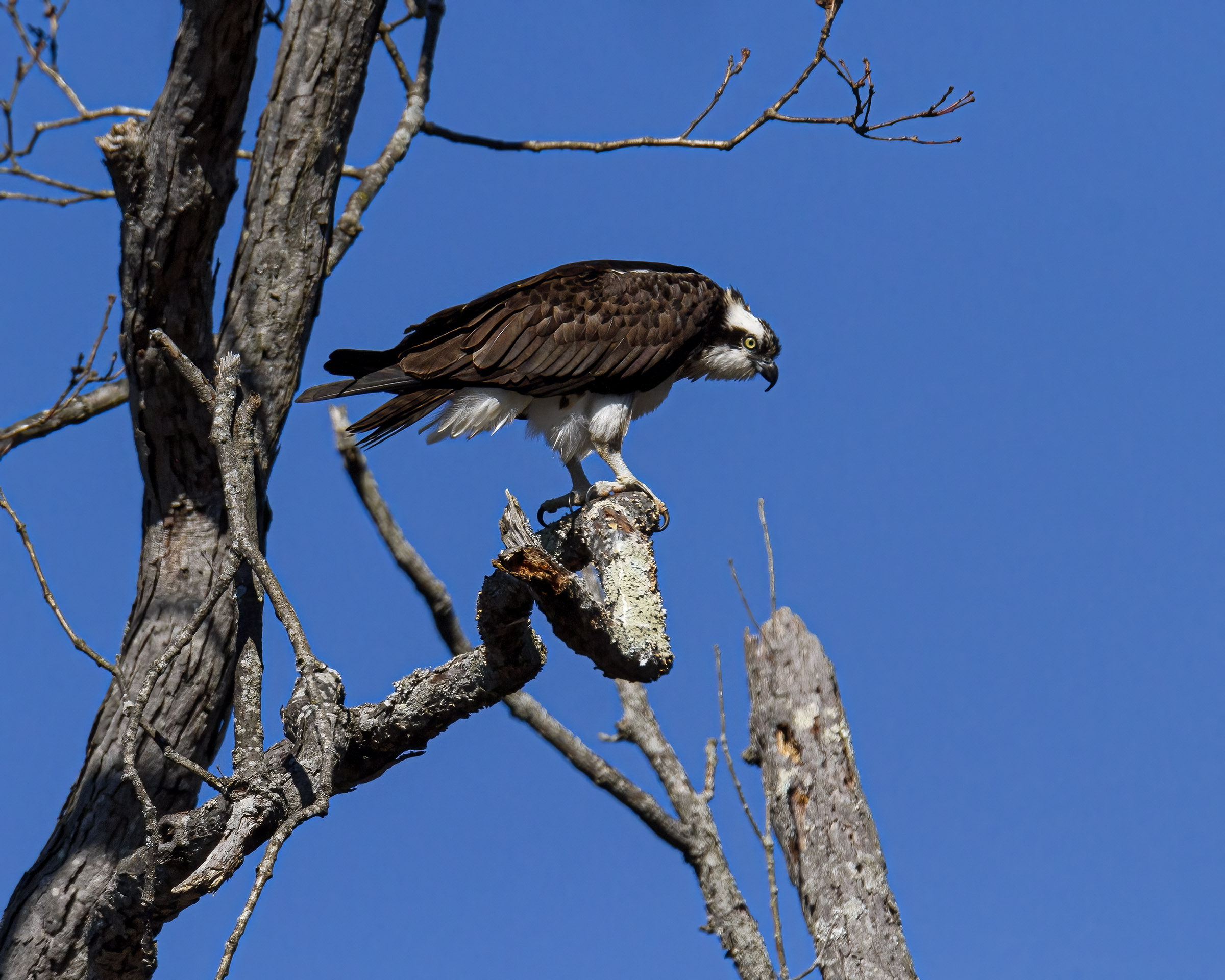
On Tuesday, I spotted my first Ospreys (Pandion haliaetus) of the season at Occoquan Bay National Wildlife Refuge, a sure sign that spring will soon be here.The osprey in the photo was vigorously tearing into the flesh of the fish, stopping periodically to call out to another osprey. I wasn’t sure whether the other unseen osprey was a competitor or a mate, but suspect that it was the latter. A short time later, the osprey flew away to an elevated nesting platform, where I spotted three ospreys that appeared to be sharing the freshly-caught fish, as you can see in the second image below.

Osprey

Osprey


© Michael Q. Powell. All rights reserved.

Read Full Post »

I do not pay too much attention to the statistics that WordPress provides about my blog, but I could not help but notice this morning that, according to the “official” statistics, I have now had over a half million views since July 2012 of 5,33p posts. Wow! It’s a bit of a mystery to me how exactly WordPress counts those views, so I am not sure if the stats are fully accurate, but those numbers indicate a lot of effort on my time.

More than that, though, those statistics reflect an incredible amount of support and encouragement from so many of you. Thanks to all of you, whether you have followed my photographic wanderings for a day for for years. The second image below is a screen shot of the overall statistics for the blog this morning.

As you may have noticed, I have slowed my pace of posting a bit over the last six months as more of my free time has been increasingly devoted to other interests and activities. I’ll be keeping up with the photography blog, though, at least a few times a week and quite possibly more frequently than that as the weather warms up.

During a recent visit to Occoquan Bay National Wildlife Refuge, I captured this shot of a Great Blue Heron (Ardea herodias) in action. Most of the time these herons thrust their bills violently in the water in attempting to catch fish, but this one was doing so much more gently that normally. The water level was low because it was lot tide and the heron may have been trying to pluck a small fish out of the water. On this attempt, though, he was not successful, but the heron’s open bill made for a nice photo.

I thought about posting one of my “best” images for today’s blog entry, but decided instead to continue my habit of posting recent images that appeal to me. As many of you know, I am generally content to post photos of everyday creatures to highlight the beauty that surrounds us all of the time if we slow down and take the time to observe it. Beauty is everywhere.

Great Blue Heron

© Michael Q. Powell. All rights reserved.


Read Full Post »

During a recent visit to Occoquan Bay National Wildlife Refuge I caught a glimpse of bright red deep in the vegetation. I was pretty sure that it was some kind of woodpecker, but I wasn’t absolutely sure. I maneuvered around a bit and managed to determine that it was a Red-bellied Woodpecker (Melanerpes carolinus).

I was happy to capture this image that shows the head of the woodpecker clearly, even though most of its body is partially hidden. This gives you an idea of the kind of view I often get when I am out with my camera. Some photographers might not even try to get a shot of the subject under these circumstances, but I will give it a shot most of the time. Often my shots are blurry, but sometimes I get a decent shot that I like, like the one in this blog post.

Red-bellied Woodpecker

© Michael Q. Powell. All rights reserved.

Read Full Post »

It is still a bit early for trees to be budding with new growth, so birds like this little Carolina Chickadee (Poecile carolinensis) have to be content to forage for seeds among the dried up vegetation from the previous growing season. Last week at Occoquan Bay National Wildlife Refuge I spotted this chickadee that seemed to have struck the jackpot—there was an abundance of dried seeds on the tree on which the bird was perched.

The chickadee had to bend and stretch a bit to reach the seeds, but, as you can see in the second photo below, it had some success in finding food. Before long, spring will arrive and lots of fresher food should appear for the birds, including insects. Chickadees are omnivorous, but like most birds that stay with us during the winter, their diet is mostly a vegetarian one when the weather gets cold and most of the insects disappear.

Carolina Chickadee

Carolina Chickadee

© Michael Q. Powell. All rights reserved.

Read Full Post »

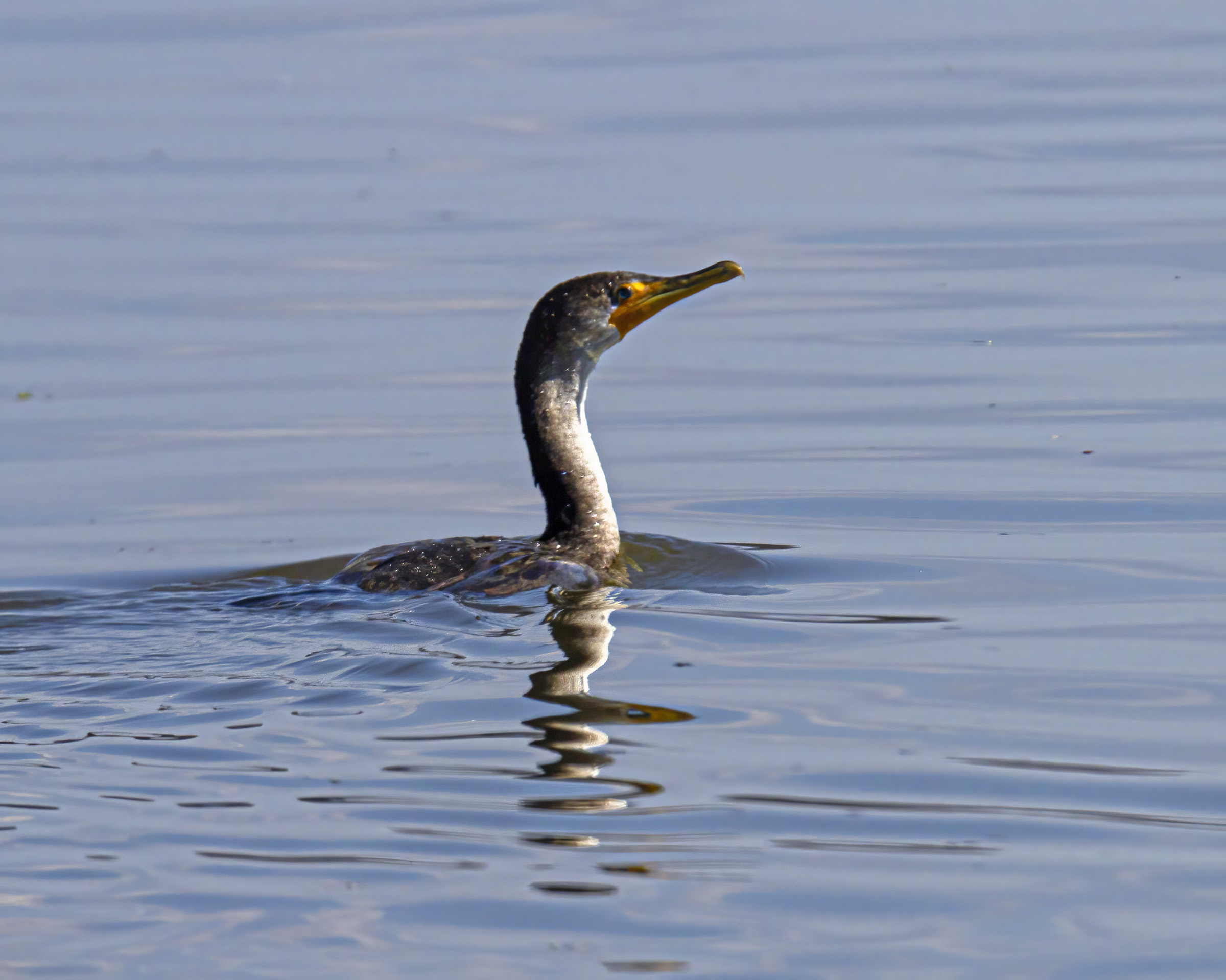
Most of my recent photos of Double-crested Cormorants (Nannopterum auritum) has show the birds taking off. Indeed, cormorants tend to be quite skittish and react quickly when they detect my presence. Last Wednesday, I spotted a cormorant in the waters off of Occoquan Bay National Wildlife Refuge that was so focused on repeatedly diving under that the did not notice me.

I was really happy with the photo that I captured of the cormorant, especially the way that it shows the bird’s beautiful rippled reflection. You may note that the cormorant is really low in the water, with most of its body submerged. As I noted in a recent post, cormorants’ feathers are not completely waterproof and can become waterlogged. For that reason, cormorants need to periodically come out of the water and stretch out their wings to dry them.

Double-crested Cormorant

© Michael Q. Powell. All rights reserved.

Read Full Post »

I see Great Blue Herons (Ardea herodias) quite often at Occoquan Bay National Wildlife Refuge, but generally they are far away from me. Last week, however, I was lucky to get close enough to a heron to be able to capture a portrait-like image of the big bird. How did I do it?

The heron was standing in the waters off of the shore of the refuge and was mostly hidden from view by the vegetation. I was walking along a trail parallel to the water and discovered a little break in vegetation that gave me a clear view of most of the heron. I twisted and turned my body, trying to make sure that no branches were blocking my view and zoomed in with my telephoto lens. I had to wait a little while and eventually the heron lifted its head and turned to the side, giving me a perfect profile pose.

Some wildlife photographers are always searching for new species to photograph, but most of the time I am content to photograph the same species over and over, capturing the changing seasons and environments in which I find these beautiful creatures.

Great Blue Heron

© Michael Q. Powell. All rights reserved.

Read Full Post »

This past Monday I spotted some Double-crested Cormorants (Nannopterum auritum) in the waters off of Occoquan Bay National Wildlife Refuge and once again they took off immediately, even though I was quite a distance away from them. Fortunately I anticipated that this would happen and was able to react quickly enough to capture the action. The second photo below shows the way that cormorants bounce across the water, leaving a trail of small splashes, to gain the speed needed to lift off from the water.

The first photo, my favorite of the two, depicts the cormorant on its last bounce, making final preparations for takeoff with its feet just barely in the water. I really like the position of the extended wings in this image and if you zoom in and look at the face, you will get a look at the brilliant turquoise eyes of the cormorant.

Double-crested Cormorant

Double-crested Cormorant

© Michael Q. Powell. All rights reserved.


Read Full Post »

I was delighted on Monday to photograph this male Bufflehead (Bucephala albeola) duck in good light, which allowed me to see the beautiful purple-green iridescence on its head. Male Buffleheads have a large white patch that wraps around the back of their heads that makes them easy to identify from a distance. It is rare, though, for me to be close enough and in the right light to see the beautiful head coloration.

Buffleheads are small, large-headed ducks that migrate to my area of Northern Virginia during the winter and I often see some of them during my visits to Occoquan Bay National Wildlife Refuge. During the summer, Buffleheads breed near ponds and lakes in boreal forest and aspen parkland of Canada and Alaska, according to the Cornell Lab of Ornithology.

bufflehead

© Michael Q. Powell. All rights reserved.

Read Full Post »

Every year in the late winter and early spring I try to keep an eye on the nests of Bald Eagles (Haliaeetus leucocephalus) at Occoquan Bay National Wildlife Refuge. Several of the locations with nests that were used last year apparently are not being this year, but I have repeatedly observed eagle activity at one very large nest at the refuge.

On Monday, I spotted one eagle perched on the edge of that nest and another eagle in a nearby tree keeping watch over the nest. Does that mean that some eggs have hatched? Who knows? The nest is so deep that it is impossible to see what is going on inside of the nest. I watched the nest for quite a while, hoping I might see a tiny head pop up over the edge of the nest, but a baby eagle never appeared

I will continue to monitor this nest and a couple of other potential nesting sites and, with a little luck, may catch a glimpse of some eaglets in the upcoming weeks.

bald eagle

© Michael Q. Powell. All rights reserved.

Read Full Post »
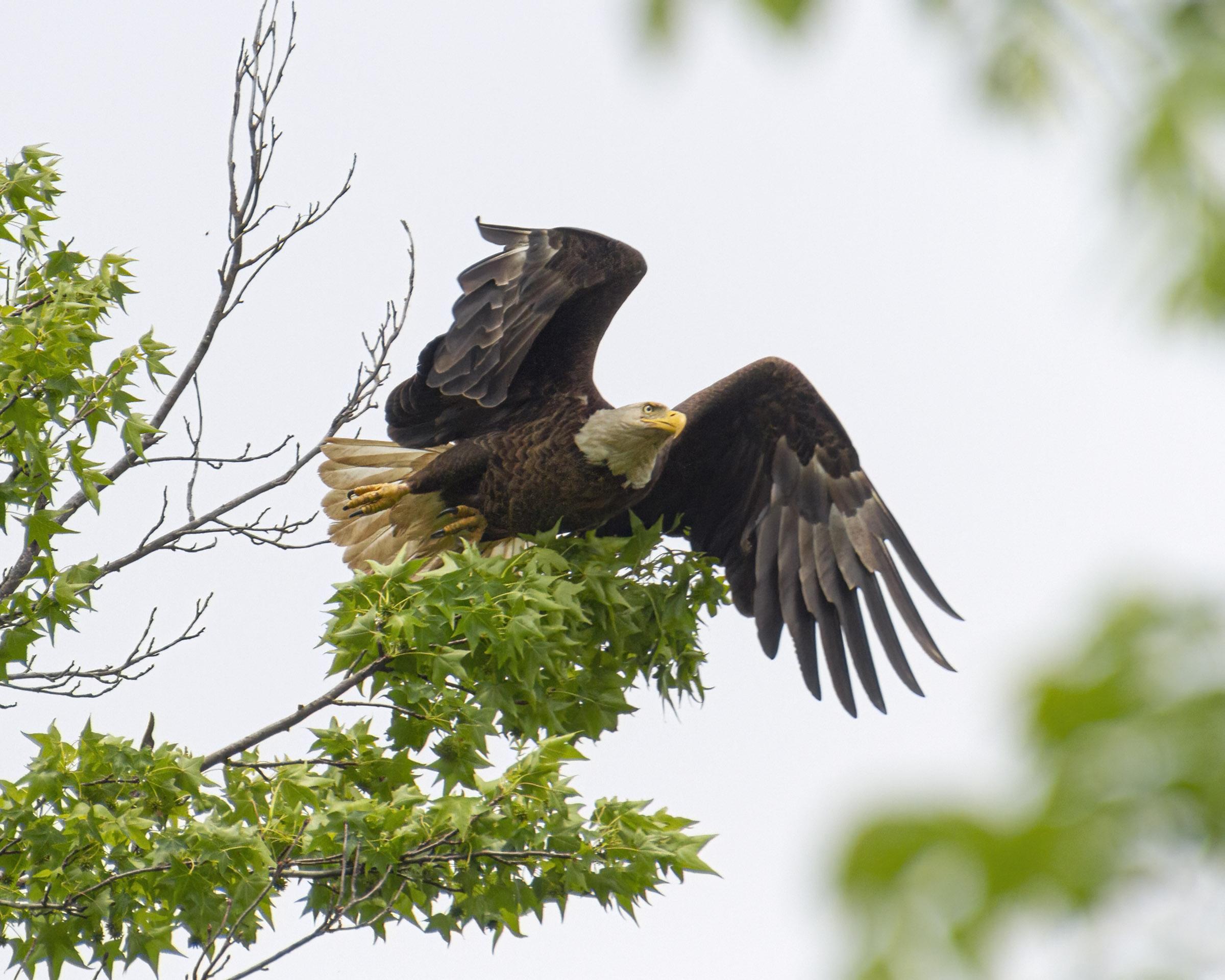
On Monday I spotted this tiny Brown Creeper (Certhia americana) as it spiraled its way up several trees alongside a trail at Occoquan Bay National Wildlife Refuge. This little bird was somewhat frenetic in its movements, often disappearing behind the trunk of the tree, but somehow I managed to track it. As you can see from the photo, the creeper blends in well with the tree bark, so movement is key to detecting the bird.

I was happy to capture an image that shows off the creeper’s distinctive bill so well. Brown Creepers use their slender, downcurved bills to probe into crevices and pick at loose bark in search of insects. From what I have observed, creepers almost always move upwards in a tree, while nuthatches seem move only downwards.

Brown Creeper

© Michael Q. Powell. All rights reserved.

Read Full Post »

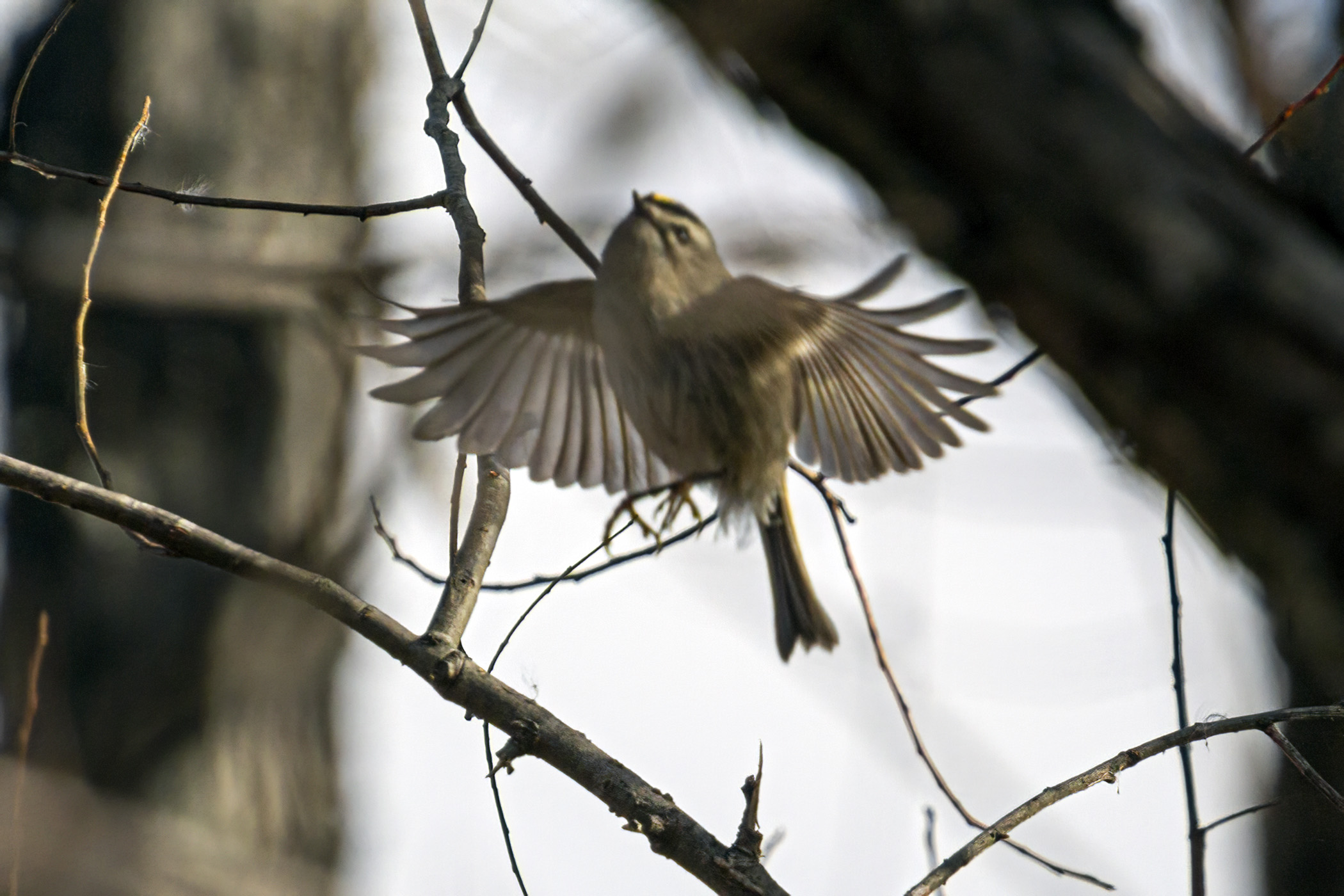
The warmer weather yesterday was a welcome respite from our winter cold—temperatures rose above 50 degrees F (10 degrees C) and it is supposed to be even warmer today. During a lengthy walk at Occoquan Bay National Wildlife Refuge, I was delighted to spot this tiny Golden-crowned Kinglet (Regulus satrapa) on a tree with some visible buds.

Such signs are starting to appear—I can’t wait for spring to arrive with new growth, new colors, and new life.

Golden-crowned Kinglet

© Michael Q. Powell. All rights reserved.

Read Full Post »

The weather this past week has been cold and windy, so I have not been able to get outdoors very much this past week. According to the weather forecasts, things should warm up next week, so hopefully I will be a bit more active.

When I last visited Occoquan Bay National Wildlife Refuge a week or so ago, I captured this image of what I believe is a Song Sparrow (Melospiza melodia). The little bird was perched on the bare stalks of some unidentified vegetation, which permitted me to capture an uncluttered shot—most of the time I see sparrows foraging on in ground in the cluttered underbrush.

Song Sparrow

© Michael Q. Powell. All rights reserved.

Read Full Post »

This past Friday I photographed this Great Blue Heron (Ardea herodias) at Occoquan Bay National Wildlife Refuge in stealth mode as it attempted to sneak up on some potential prey. At other times, the heron walked through the water with its head held high. It was a fun little photo session for me, though I suspect that the heron wished it were more successful in catching some fish.

Great Blue Heron

Great Blue Heron

Great Blue Heron

© Michael Q. Powell. All rights reserved.


Read Full Post »

I never get tired of photographing Bald Eagles (Haliaeetus leucocephalus), like this one that soared by me last week at Occoquan Bay National Wildlife Refuge. The eagle made minor adjustments to its wings and tail to maintain its speed and direction, but it mostly seemed to be enjoying itself without exerting much effort. I couldn’t help but think of the Steve Miller Band and its well-known song “Fly Like an Eagle” from the 1970’s.

“I want to fly like an eagleTo the seaFly like an eagleLet my spirit carry meI want to fly like an eagle‘Til I’m freeOh, Lord, through the revolution…”


Bald Eagle

Bald Eagle

Bald Eagle

Bald Eagle

© Michael Q. Powell. All rights reserved.

Read Full Post »

Last Friday I spotted a Double-crested Cormorant (Nannopterum auritum) in the waters off of Occoquan Bay National Wildlife Refuge. As I was bringing my camera up to my eye, the cormorant suddenly took off and I captured a couple of shots of the action. I was shooting almost directly into the light, so the bird is almost a silhouette, but I was happy to capture some of the action. As you may be able to see, the cormorant initially runs across the surface of the water to generate some momentum before it takes to the air.

When I went searching for the Latin name, I was a little surprised to see that it had changed. The Double-crested Cormorant used to be considered part of the genus Phalacrocorax, but, according to Wikipedia, a 2014 study supported reclassifying it and several other American cormorant species into the genus Nannopterum. The International Ornithologists’ Union reportedly adopted this change in 2021.

Double-crested Cormorant

Double-crested Cormorant

© Michael Q. Powell. All rights reserved.

Read Full Post »

I was thrilled to capture this shot of a tiny Tufted Titmouse (Baeolophus bicolor) during a visit to Occoquan Bay National Wildlife Refuge last Friday. Normally I see Tufted Titmice flitting about high in the foliage, but this one came down closer to the ground for a moment. As you can see, I was shooting through branches, but I like the feeling that the photo somehow conveys of entering into the private world of this little bird.

Tufted Titmouse

© Michael Q. Powell. All rights reserved.

Read Full Post »

Last Friday I was walking slowly along a trail that runs parallel to the water off of Occoquan Bay National Wildlife Refuge when I noticed a Great Blue Heron (Ardea herodias) doing the same thing. Most of the time when I see a heron, it is in the water, though occasionally I have spotted one perched in a tree. It is highly unusual for me to see one on dry land, but this heron seemed to strolling down the path, taking in the sights.

I slowed down a little to maintain my distance from the heron and managed to capture this shot as heron was lifting its long toes to take another step. Eventually the heron became aware of my presence and quickened his walking pace a bit until he reached an opening to the water and flew away. What a fun little encounter with the heron!

Great Blue Heron

© Michael Q. Powell. All rights reserved.

Read Full Post »

When I first spotted this bird in the water on Tuesday at Occoquan Bay National Wildlife Refuge, I thought it might be a Northern Shoveler, because of the enlarged shape of its bill. I zoomed in with my long 150-600mm telephoto lens to try to confirm the identification and decided that it instead looked more like an immature male Lesser Scaup (Aythya affinis) with some kind of mollusk or snail in its mouth.

According to the Cornell Lab of Ornithology website, “Lesser Scaup eat primarily aquatic invertebrates such as mollusks, insects, and crustaceans, but they also eat aquatic plants and seeds.” However, I am not very good at distinguishing Greater Scaups from Lesser Scaups and immature birds make identification even harder, so I am not all that confident that I have correctly identified this bird.

As you can tell from the photo, the it was windy and the water was quite rough that day, so the birds on the bay were bobbing up and down. I decided not to crop this image any closer in order to give you a sense of the choppiness of the water.

Lesser Scaup

© Michael Q. Powell. All rights reserved.

Read Full Post »
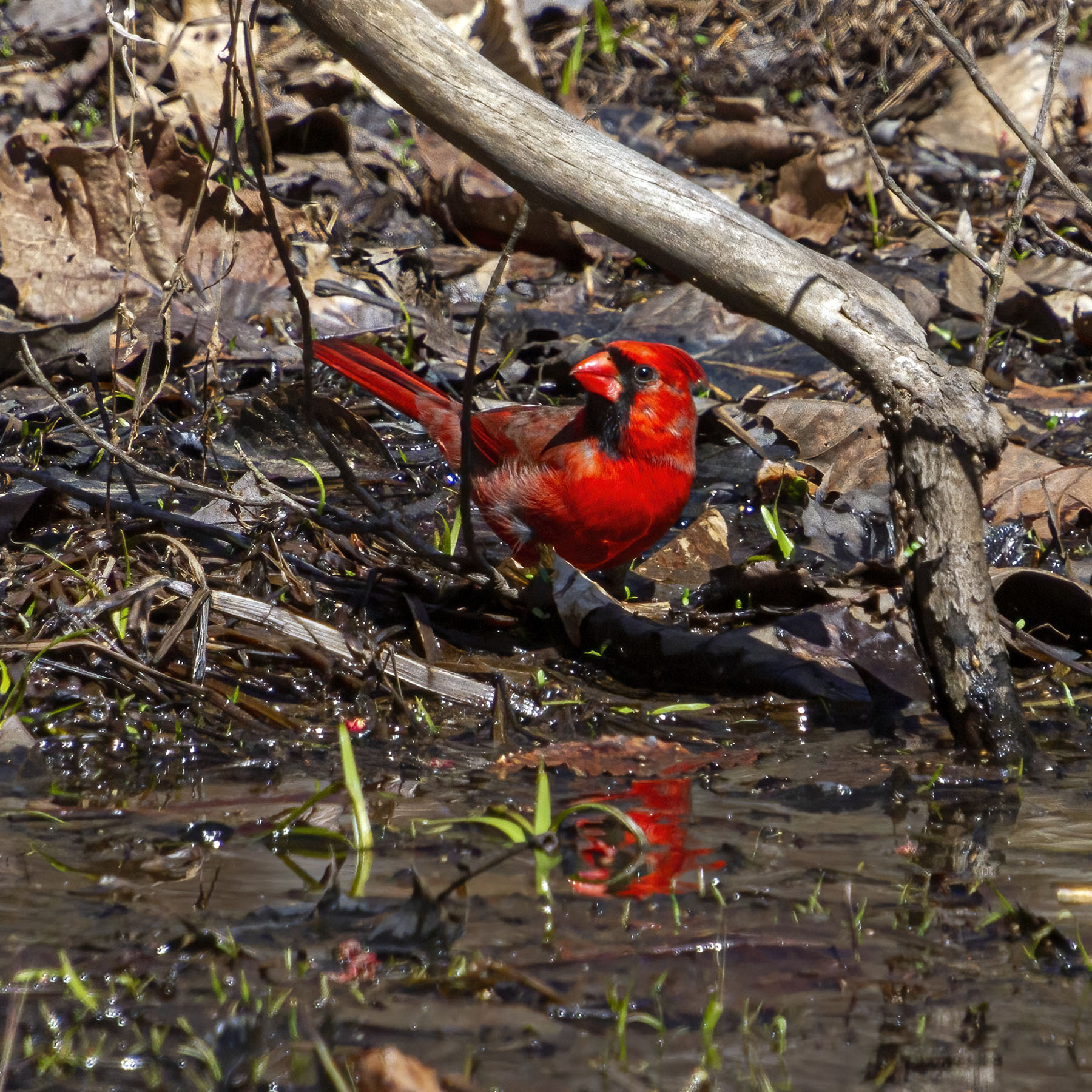
As I peered through the thick vegetation on Tuesday at Occoquan Bay National Wildlife Refuge, I spotted the bright white head of a Bald Eagle (Haliaeetus leucocephalus) perched on a distant tree above what may be a new eagle nest. Some of the nesting sites that eagles used in previous years are empty this year and none of the roads at the refuge appeared to be closed. I have been searching diligently for indications of new nests and am hopeful that this one is now being actively used.

I suspect that there is also nesting activity at the large eagle nest shown in the second photo below. The nest is so large and deep, however, that it is impossible to tell for certain if an eagle is currently sitting on eggs inside.

Spring is a time for new life and for new growth and I am hopeful that I will spot some baby eaglets in these two nests in the upcoming months as spring draws near.

Bald Eagle

eagle nest

© Michael Q. Powell. All rights reserved.

Read Full Post »

Carolina Wrens (Thryothorus ludovicianus) are quite common in Northern Virginia, where I live. Most often, though, I get a only a glimpse of one when I hear it loudly singing. Carolina Wrens often seem to bury themselves in the low vegetation and it is hard to get an unobstructed view of one.

Last week at Occoquan Bay National Wildlife Refuge, I spotted a Carolina Wren as it was moving about and manage to track it. I attempted to take a lot of shots of the little bird, but most of them were blurry or had the head hidden by branches. There are a lot of branches (and shadows) in this photo too, but I was fortunate enough to be able to focus on the wren’s eye.

I really love the warmth of the colors on the wren’s body and how well it blended into its surrounds. The color palette is minimal, with mostly varying shade of brown, but the little green bits add some visual interest and give rises to hope that the bleak days of winter will eventually be replaced by the new growth of spring.

Carolina Wren

© Michael Q. Powell. All rights reserved.

Read Full Post »
« Newer Posts - Older Posts »