Feeds:
Posts
Comments

Archive for December, 2025

Many different warblers pass through my area during the spring and the autumn, but the Yellow-rumped Warbler (Setophaga coronata) is one of the few species that remains here for most of the winter. Their colors are pretty subdued during the winter season, but they do have small patches of bright yellow on their sides and on their rump. It is always a delight to spot their flashes of yellow as they forage in the trees.

I captured this shot of a Yellow-rumped Warbler in mid-December as it was peeking out from behind a tree at Occoquan Bay National Wildlife Refuge.

Yellow-rumped Warbler

© Michael Q. Powell. All rights reserved.

Read Full Post »

When I am out in the wild with my camera, most of my senses are fully engaged. I am listening intently and scanning constantly, seeking audio or visual clues of the presence of potential subjects. During much of the year, sounds don’t help much, because the leaves on the trees hide the sources of the sounds. I marvel at the ability of some folks to identify birds by their calls, but I can do that with only a handful of species. So most of the time I rely on movement and to a lesser extent on color for me to acquire a target—if a bird (or insect) remains still, it often will remain invisible to me.

Last week when I was walking about at Occoquan Bay National Wildlife Refuge, I heard the gentle tapping sounds of a woodpecker. I looked in the general direction of the sounds and saw a distant snag, but did not see the woodpecker. Did I have the right tree identified? As I was focusing on the tree, a Red-bellied Woodpecker (Melanerpes carolinus) poked its head out from behind the tree and I quickly snapped off a couple of photos before the bird disappeared again from view.

The woodpecker was pretty far away, even for my telephoto zoom lens, so I knew that I did not get the kind of close-up detailed image that I usually like to capture. However, when I was reviewing the photos on my computer, I found myself drawn to this profile shot of the woodpecker, surrounded by the wonderful texture of the lichen-covered bark of the tree. The image has a bit of an artsy, minimalist feel that I really like.
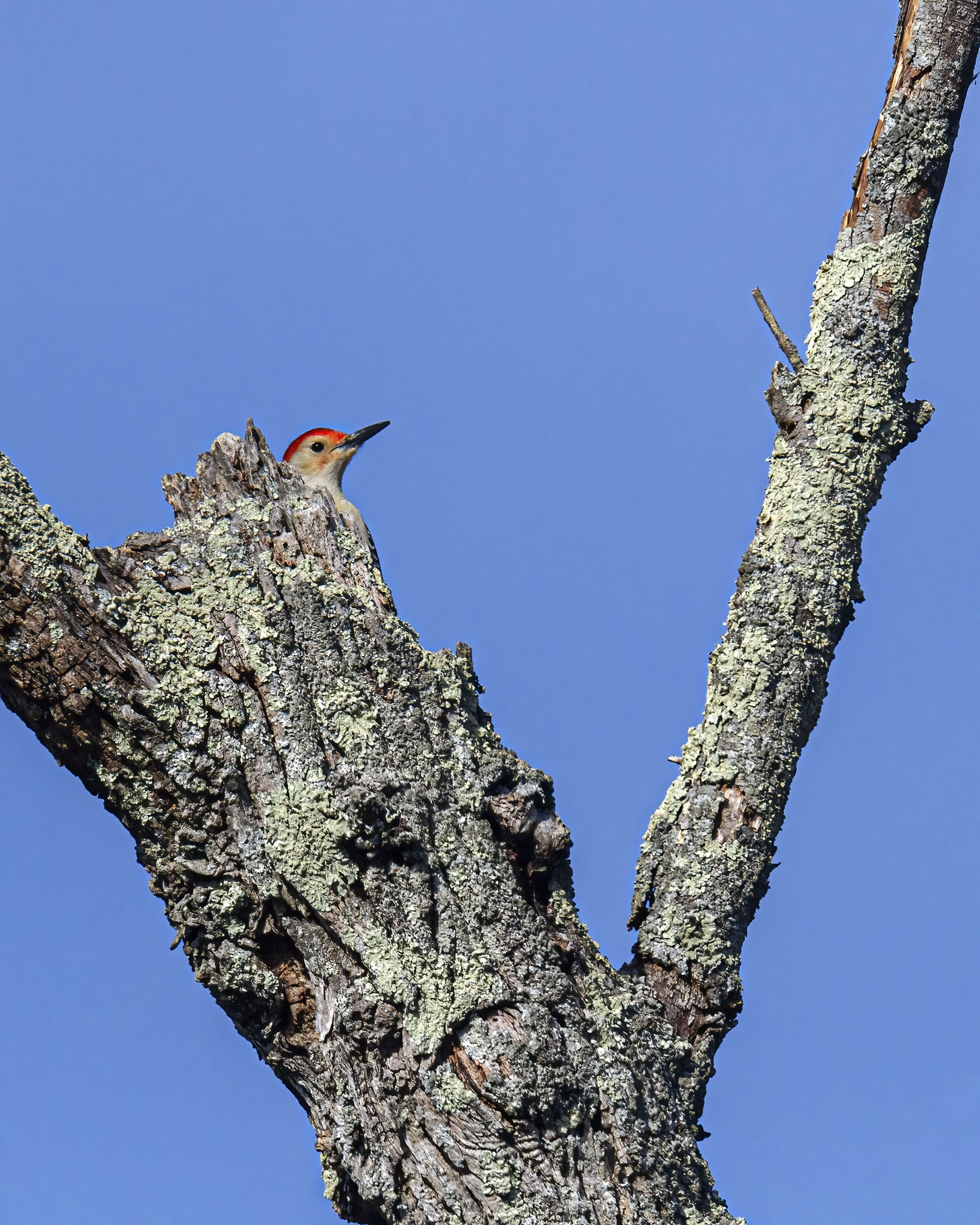
Red-bellied Woodpecker

© Michael Q. Powell. All rights reserved.

Read Full Post »
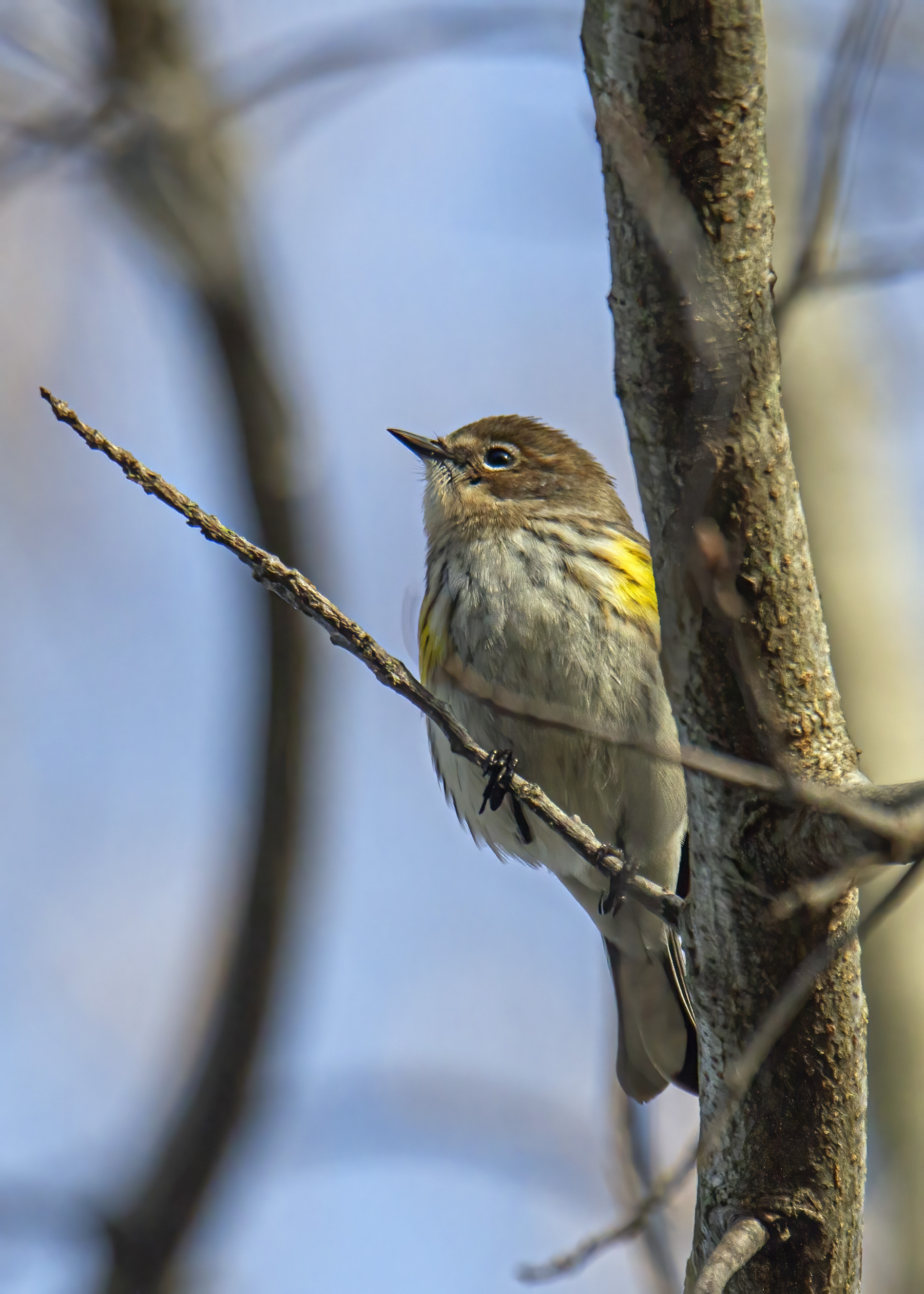
When the leaves are gone from the trees, it’s a little easier to spot perched Bald Eagles (Haliaeetus leucocephalus), like this one that I photographed last week at Occoquan Bay National Wildlife Refuge. I am blessed to live in an area where there are enough bald eagles that it is not uncommon for me to spot one. However, the eagles have much more developed senses that I do, so often my first indication of their presence is when they are flying away from me, as you can see in the first photo below.

In the case of the second photo, there was a good deal of vegetation between me and the eagle that partially hid my presence. I was able to manually focus my lens on the perched eagle through the vegetation and get a relatively clear shot of the eagle, which took off almost immediately after I had snapped a couple of photos.

I am not certain if I will be able to get out with my camera during the few remaining days of 2025, so these photos may well be my last shots of the year of these majestic birds.

Bald Eagle

Bald Eagle

© Michael Q. Powell. All rights reserved.


Read Full Post »
I realize that not everyone celebrates Christmas, but I wish the best for all of you during this holiday season.  In the midst of all of the hype and activity surrounding this overly commercialized day, I hope that you can rediscover its simple message of joy and hope.

On Christmas Day, I can’t help but think of the final verse of “I Heard the Bells on Christmas Day,” which reaffirms that hope: “Then pealed the bells more loud and deep. God is not dead nor doth he sleep. The wrong shall fail, the right prevail, with peace on earth, good will to men.”

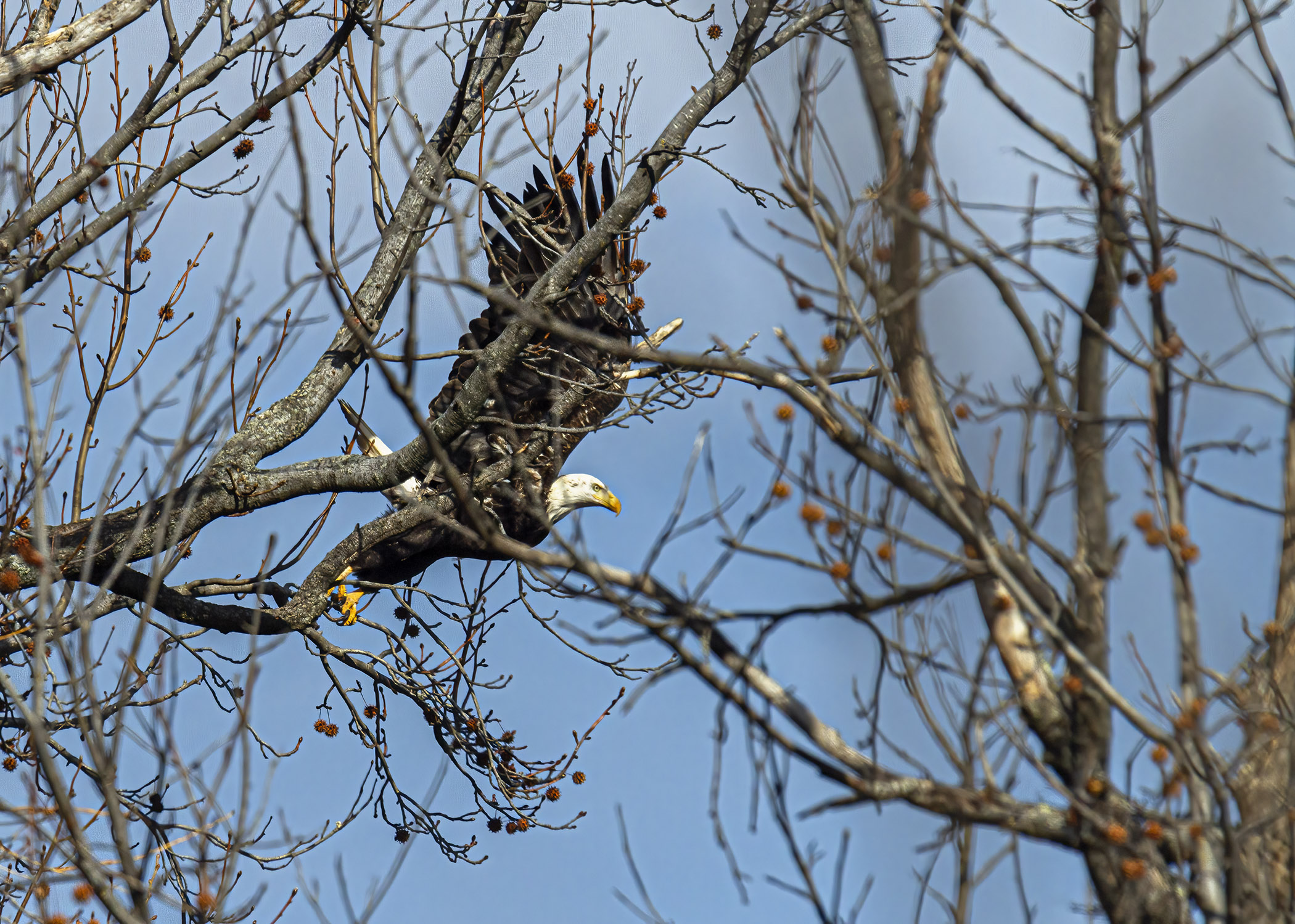
The first photo below shows my almost completed cross stitch project Festive Cardinal designed by Max Pigeon of Pigeon Coop Designs. The second photo shows the inside of my church, St. Martin de Porres Episcopal Church, during the afternoon of Christmas Eve, when we were practicing the music for the evening service. I tear up a little remembering the congregation in the darkened sanctuary singing Silent Night by candlelight at the Christmas Eve service last night—it is always one of the highlights of Christmas for me.

Merry Christmas to all of you.

Festive Cardinal

Christmas Eve

© Michael Q. Powell. All rights reserved.


Read Full Post »

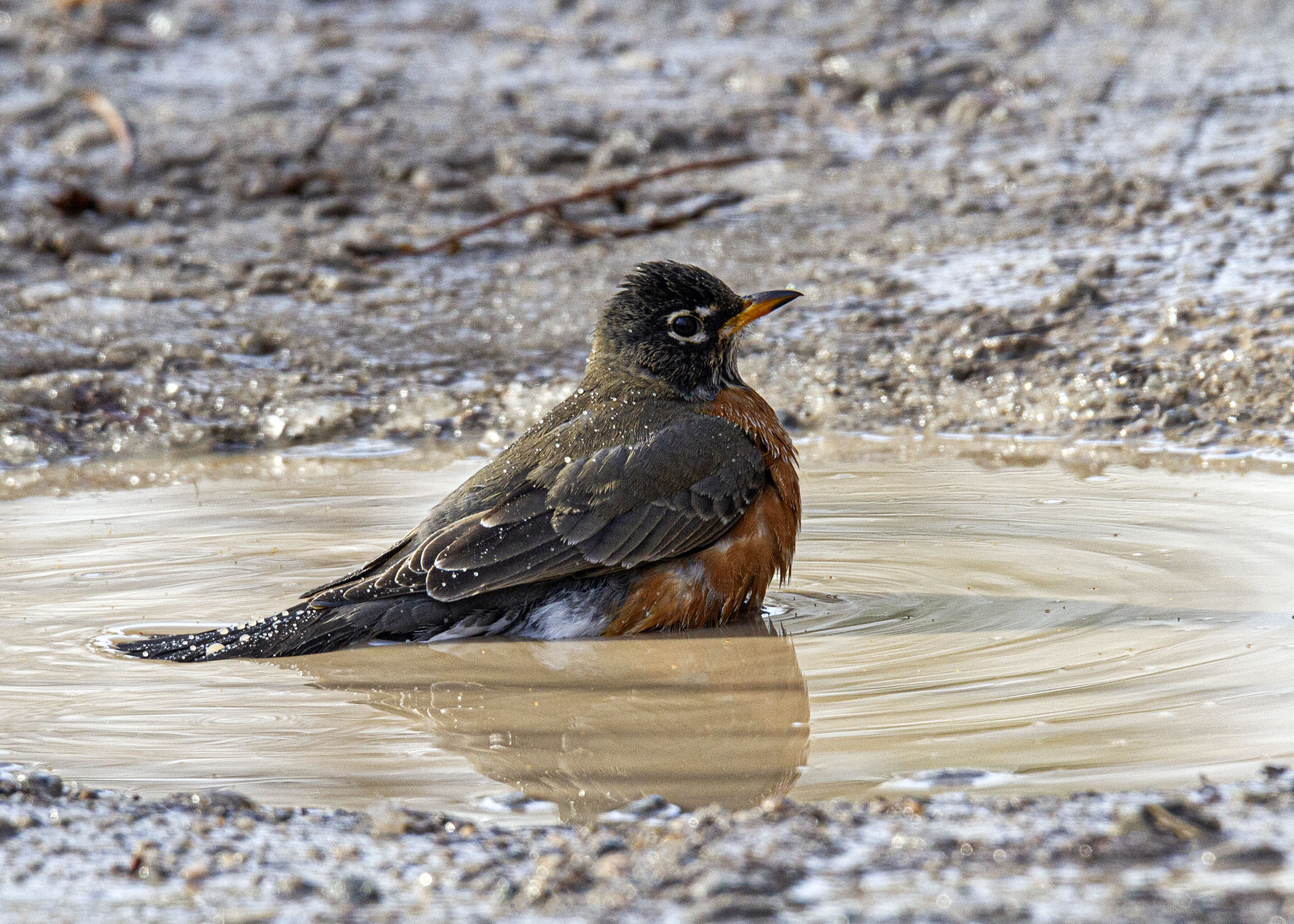
Last week at Occoquan Bay National Wildlife Refuge I spotted a small group of American Robins (Turdus migratorius) clustered around a large puddle. Some of the birds took their turns drinking from the puddle, while others took advantage of the opportunity to take a bath. Some of the birds merely flapped about a bit in the water, but the robin in the photo below seemed to enjoy soaking in the cold water.

American Robin

© Michael Q. Powell. All rights reserved.

Read Full Post »
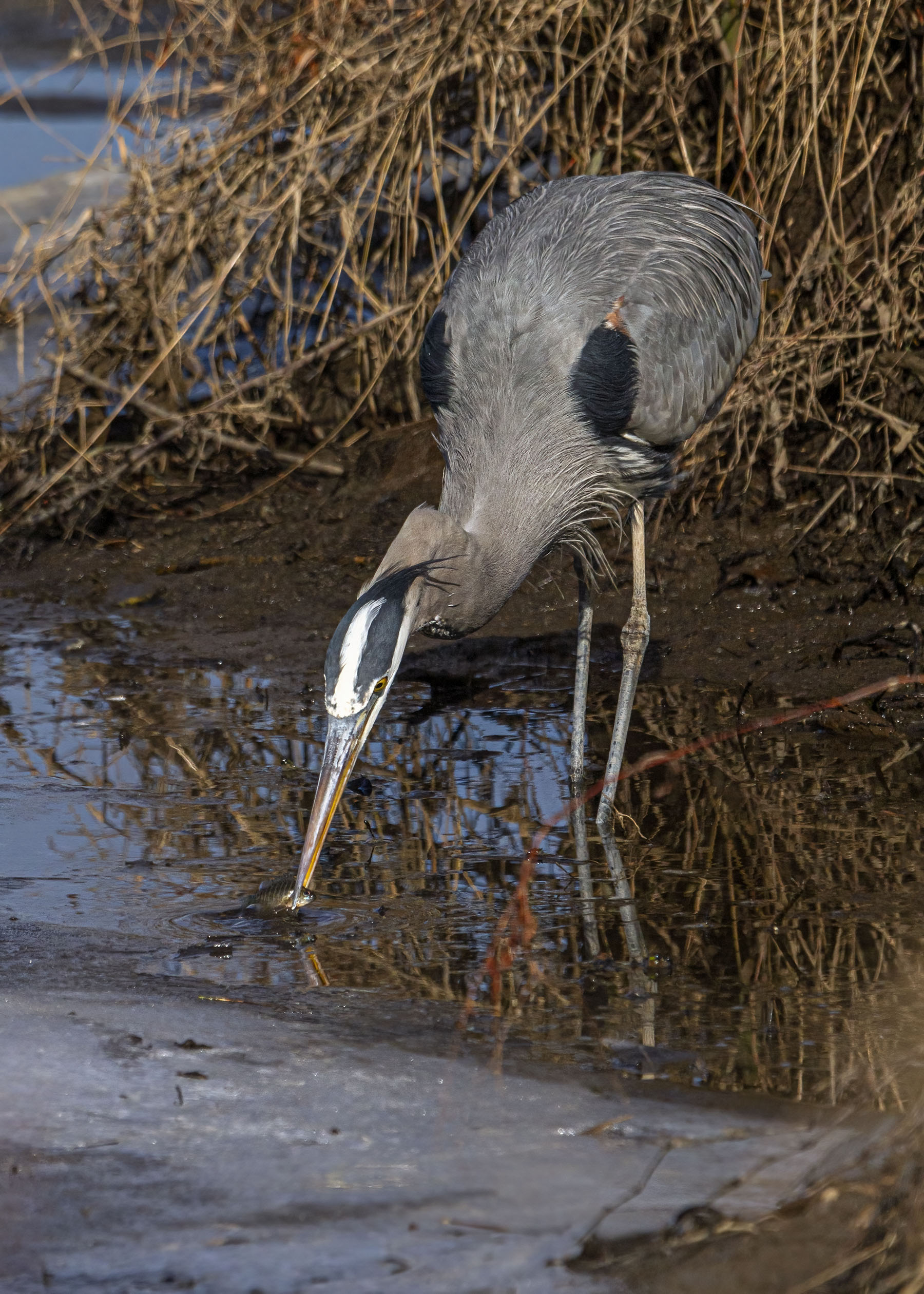
Some birds, like Great Egrets and Green Herons, leave our area during the cold months to overwinter in warmer places. Great Blue Herons, however, remain with us throughout the year. I imagine that it is tough for them  to find food, especially when the small ponds where I often spot them are frozen over.

I was happy last week to spot this Great Blue Heron (Ardea herodias) at Occoquan Bay National Wildlife Refuge. There was ice on parts of the pond where the heron was standing, but there were still some open areas. I watched as the heron patiently scanned the water for potential prey and captured this shot as the heron was pulling a small fish out of the water.

It’s a really small fish and I encourage you to click on the image to enlarge it and get a better look at the fish. For the heron, the fish is probably only an appetizer, but at this time of year, food is scarce, so even tiny bits are undoubtedly welcome.

Great Blue Heron

© Michael Q. Powell. All rights reserved.


Read Full Post »

I was thrilled on 18 December to capture this shot of a beautiful little Field Sparrow (Spizella pusilla) during a visit to Occoquan Bay National Wildlife Refuge. I initially heard this bird as it was foraging in the underbrush and was searching for it when it unexpectedly hopped up onto a fallen branch. The little sparrow posed momentarily for me and I was able to capture this cool little portrait of it. Even though the background is pretty cluttered, the sparrow really stands out in the shot.

When I took the photo, I was not able to identify the sparrow species. However, the rust colored crown, orange-pink bill, and white eye ring as quite distinctive, so I was able to find the Field Sparrow in my identification guide. Still I was not absolutely certain of my identification, so I posted a photo to a Facebook birding group and several experts there confirmed that it was indeed a Field Sparrow.

Field Sparrow

© Michael Q. Powell. All rights reserved.

Read Full Post »
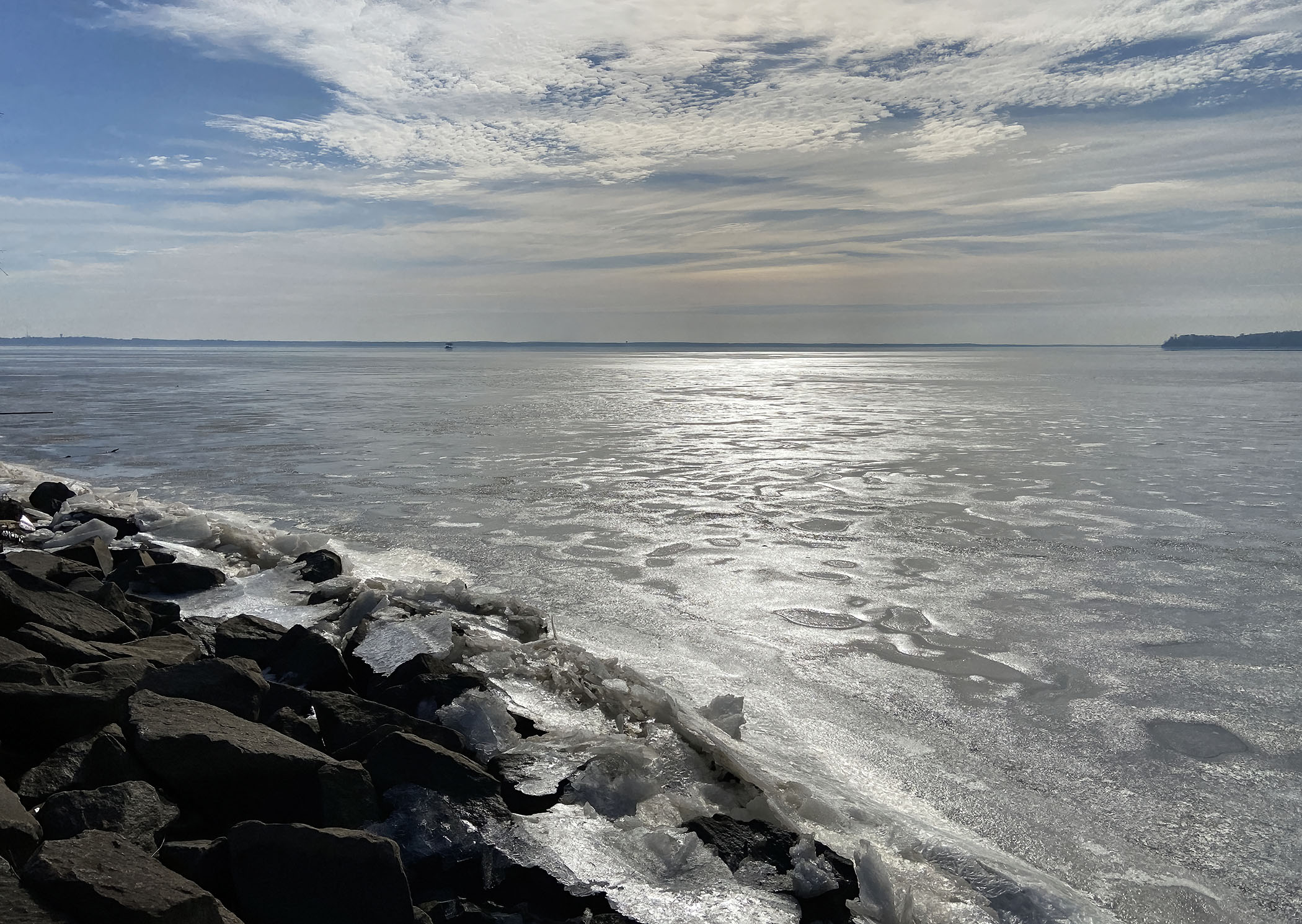
Although the weather was a bit warmer yesterday (18 December), there was still plenty of ice in the frigid waters off of the shores of Occoquan Bay National Wildlife Refuge. For many of us here in the United States, winter does not officially begin until this Sunday, the 21st of December, but we have already had two snow storms with measurable accumulation and some periods of sub-freezing temperatures.

With rain in the forecast for the following couple of days, I ventured out yesterday to my favorite local wildlife refuge with my camera, looking primarily for birds.I did not have a huge amount of success in capturing images of these birds, but it was enjoyable nonetheless to be outdoors in the relatively comfortable temperatures of a beautiful December day.

I was happy that I remembered to take some landscape style shots with my iPhone to document the day—when I am carrying around my camera with a long telephoto zoom lens, I often forget to take some wide-angle shots like these ones.

frozen waters

frozen waters

© Michael Q. Powell. All rights reserved.


Read Full Post »
Now that I am focusing mostly on photographing birds rather than dragonflies or butterflies, I am having to reacquaint myself with my long telephoto lens (Tamron 150-600mm) and with the related differences in shooting techniques. During the warmer months, I spend most of my time looking downwards and scanning an area no more than 10 feet (3 meters) in front of me. When it comes to the colder months, I spend much more time looking upwards for bird activity, although some of the remaining birds forage on the ground, so I can’t totally forget to look down. I also scan areas that are much farther away from me, particularly because my long lens cannot focus on anything that is closer than 9 feet (2.7 meters) from me.

Last week I was delighted to spot this beautiful Song Sparrow (Melospiza melodia) at Occoquan Bay National Wildlife Refuge. I am gradually learning the differences in coloration in the various sparrows in our area, though I must confess that sparrow identification is an ongoing challenge for me.

Song Sparrow

© Michael Q. Powell. All rights reserved.

Read Full Post »

During the wintertime, when the leaves are gone from the trees, I have a better chance of spotting tiny birds, like this Carolina Chickadee (Poecile carolinensis) that I photographed last week at Occoquan Bay National Wildlife Refuge. It was sunny but cold when I photographed the chickadee. Like most birds that I encounter during the winter months, this chickadee looked almost round, having fluffed up its feathers in order to retain its body heat. I have the same body shape when I bundle up in my cold weather clothes and increasingly even without them.

Carolina Chickadee

© Michael Q. Powell. All rights reserved.

Read Full Post »
I was delighted to spot this Autumn Meadowhawk dragonfly (Sympetrum vicinum) on Wednesday, 3 December, at Occoquan Bay National Wildlife Refuge. Despite our recent cold nights, many of which have dipped below the freezing level, this hardy dragonfly managed to survive.

It is snowing out right this moment, so I am not sure how much longer I will be seeing these beautiful little creatures, but I’ll almost certainly be out with my camera next week to see what I can find.

Autumn Meadowhawk

© Michael Q. Powell. All rights reserved.

Read Full Post »