Feeds:
Posts
Comments

Archive for October, 2018

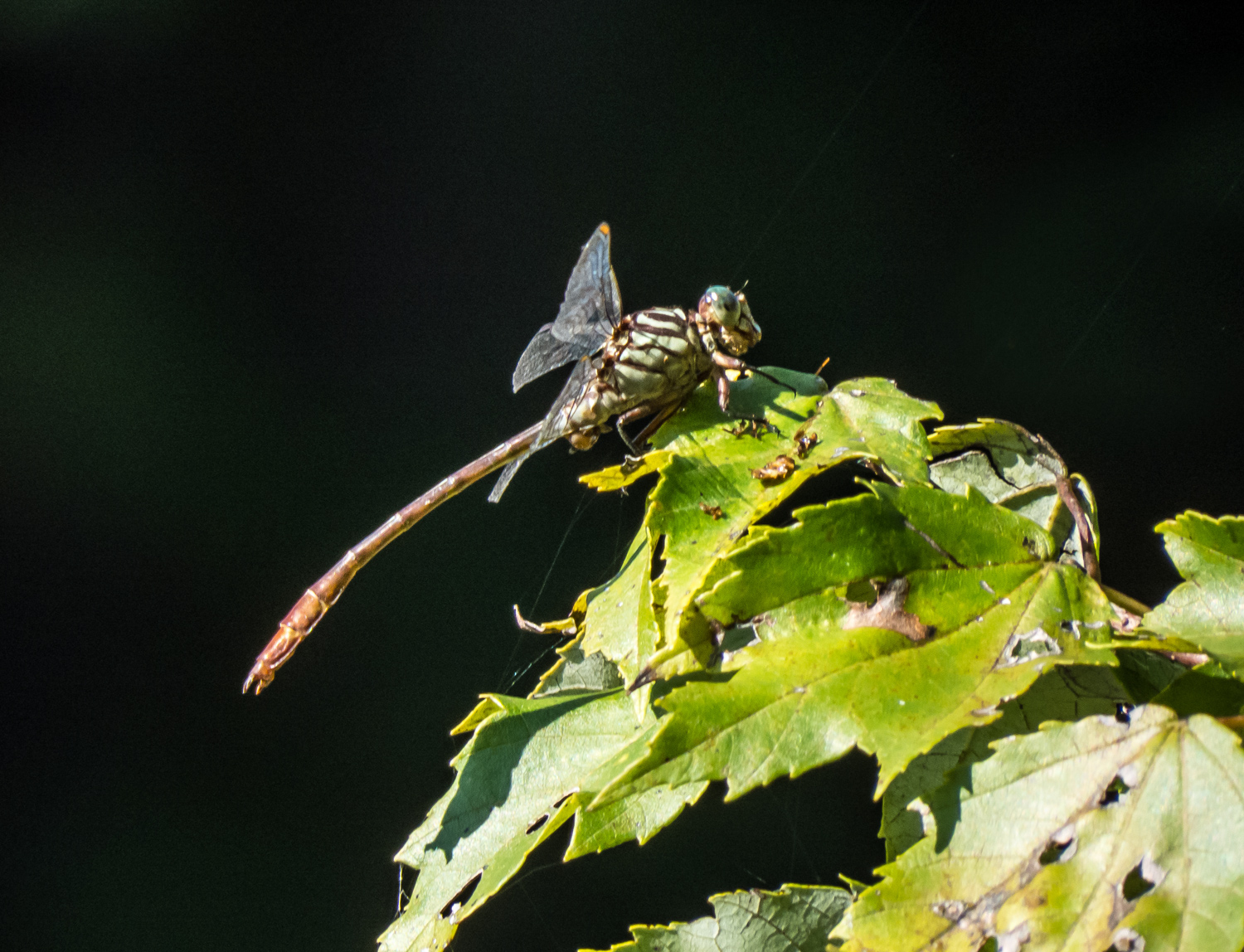
Although we are well into autumn, there are still dragonflies around, including some stunning Russet-tipped Clubtail dragonflies (Stylurus plagiatus) that I spotted earlier this week at Jackson Miles Abbott Wetland Refuge. As you can see from the photos Russet-tipped Clubtails like to perch on somewhat exposed leaves, which makes them a bit easier to spot than some species of dragonflies, though they are not common in my experience

I was able to capture images of Russet-tipped Clubtails (there were at least two individuals that I saw, both males) on several leafy perches in a tree overhanging a pond. My angle of view and the direction of the light gave each of these images a very different feel, primarily because of the way that the background was captured.

Depended on my mood, any one of these three images can be my favorite. Is there one that particularly appeals to you?

Russet-tipped Clubtail

Russet-tipped Clubtail

Russet-tipped Clubtail

© Michael Q. Powell. All rights reserved.

Read Full Post »

I spotted this little Ruddy Duck (Oxyura jamaicensis) all by itself on Wednesday morning at the far end of Painted Turtle Pond at Occoquan Bay National Wildlife Refuge. He must have been feeling a little lonely, however, and tried to strike up a conversation with the mallard decoy that is a permanent feature at this pond. The mallard remained silent.

I was trying to capture a shot of the Ruddy Duck by itself, as in the second image, but I like the eye contact in the first image so much that I decided to make it my lead photo for the posting. The shot simply makes me smile.

Have a wonderful Friday.

Ruddy Duck

Ruddy Duck

© Michael Q. Powell. All rights reserved.

Read Full Post »

Autumn is a prime season for migration. It is almost impossible to ignore the sounds of the Canada Geese as they pass overhead and thousands of other birds pass by unheard, heading south to warmer locations.

Some dragonflies migrate too and at this time of the year it is not unusual to see some of them patrolling high in the air. A good number of dragonflies spend a lot of time perching, and they tend to be easiest to photograph. Other dragonflies, like the species that migrate, spend most of their time in flight. Their stamina is amazing and your patience has to be equally amazing if you try to wait for them to land to photograph them. The alternative is to try to photograph them in flight.

Yesterday I spotted a couple of Wandering Gliders (Pantala flavescens) flying patrols over a small pond at Occoquan Bay National Wildlife Refuge. Wandering Gliders are the most widespread dragonflies on the planet and have an almost worldwide distribution.

I watched the Wandering Gliders for a while to see if I could figure out the patterns that they were flying. Gradually I realized that they often would pass by a certain part of the shore  and hover a little and that became my target zone. With my Canon SX50 superzoom camera in hand, I visually tracked the dragonflies in the air and attempted to photograph them. Mostly I was unsuccessful, but I did get a few decent shots.

In the first shot below, the sharpest that I was able to manage, the Wandering Glider was flying above eye level, so the beautiful blue sky served as a backdrop. In the second image, the dragonfly was flying below eye level and the ripples in the water create a beautiful pattern in the background. When I consider the two images, I am torn between two competing impulses—technically the first shot is superior, but artistically the second shot appeals to me more. Fortunately, I don’t have to choose one over the other and can post both of them.

Wandering Glider

Wandering Glider

© Michael Q. Powell. All rights reserved.

Read Full Post »

Beavers are nocturnal creatures and consequently the best times to see them generally are at dawn and at dusk. Dragonflies, on the other hand, mostly like bright sunlight and they are often most visible during the hottest part of the day.

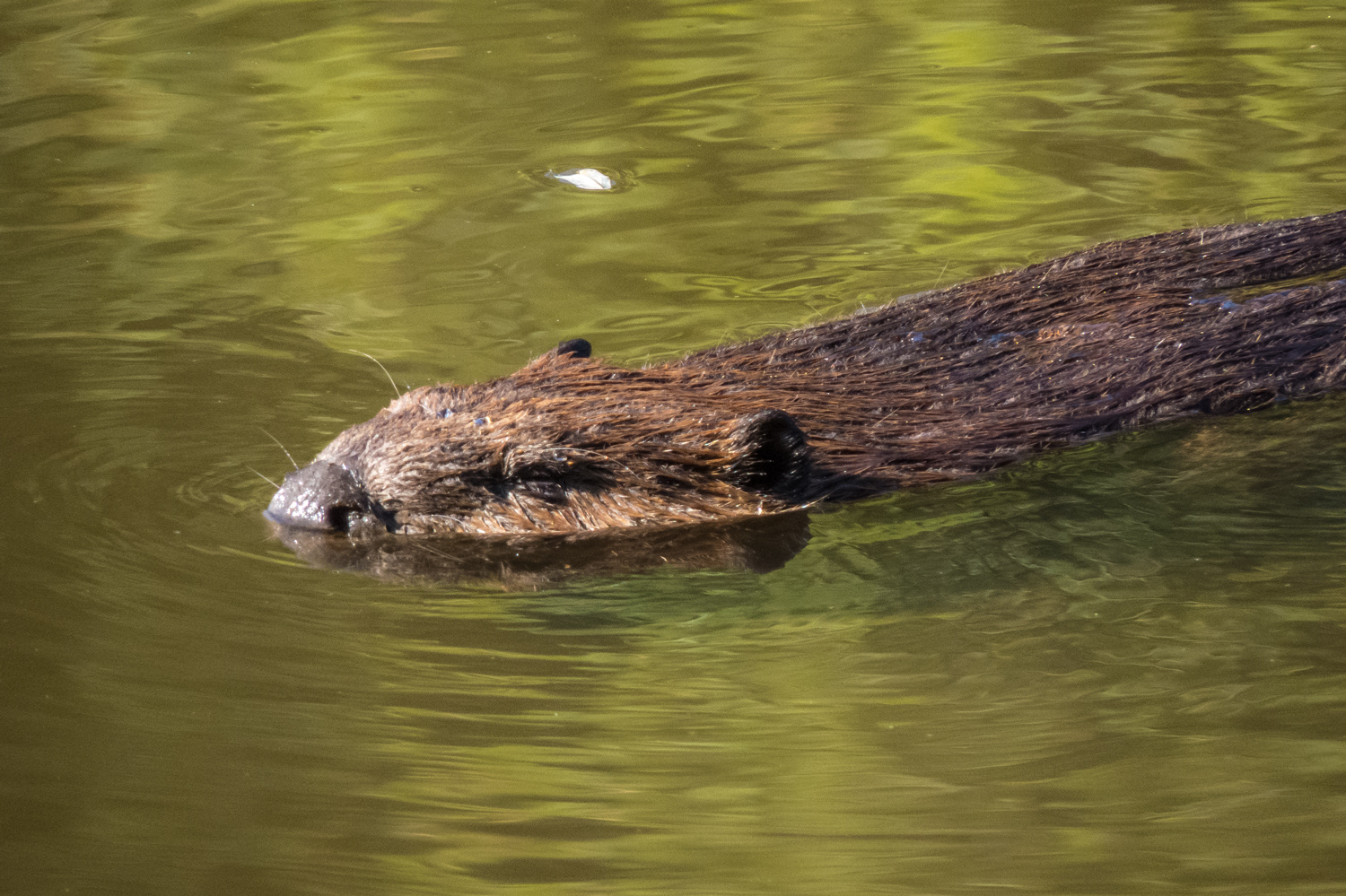
When I was walking around the small pond at Jackson Miles Abbott Wetland Refuge yesterday morning around 10:00, therefore, I was expecting to see dragonflies. Imagine my shock when some motion in the water caught my eye and I spotted a North American Beaver (Castor canadensis) lazily swimming by parallel to the shore on which I was standing.

The light on the water was amazing and gave it a golden glow, as you can see in the first image. The beaver made a gentle u-turn and I was able to capture the ripples and the wake it created in the second image. The beaver was then swimming  toward the light and that is why you can see some of the details of the eye in that second image.

I then decided to switch from my DSLR with my 180mm macro lens that I used for the first two shots to my Canon SX50 superzoom camera. The third image is framed just as it came out of the camera with no cropping and it lets you see some of the texture of the beaver’s fur and the little hairs that stick out of its face. I also love the way the patterns of the water look in this image.

This little incident was a reminder to be eternally vigilant. Wild creatures don’t always follow the rules and may turn up in unexpected places at unanticipated times.

beaver

beaver

beaver

© Michael Q. Powell. All rights reserved.

Read Full Post »

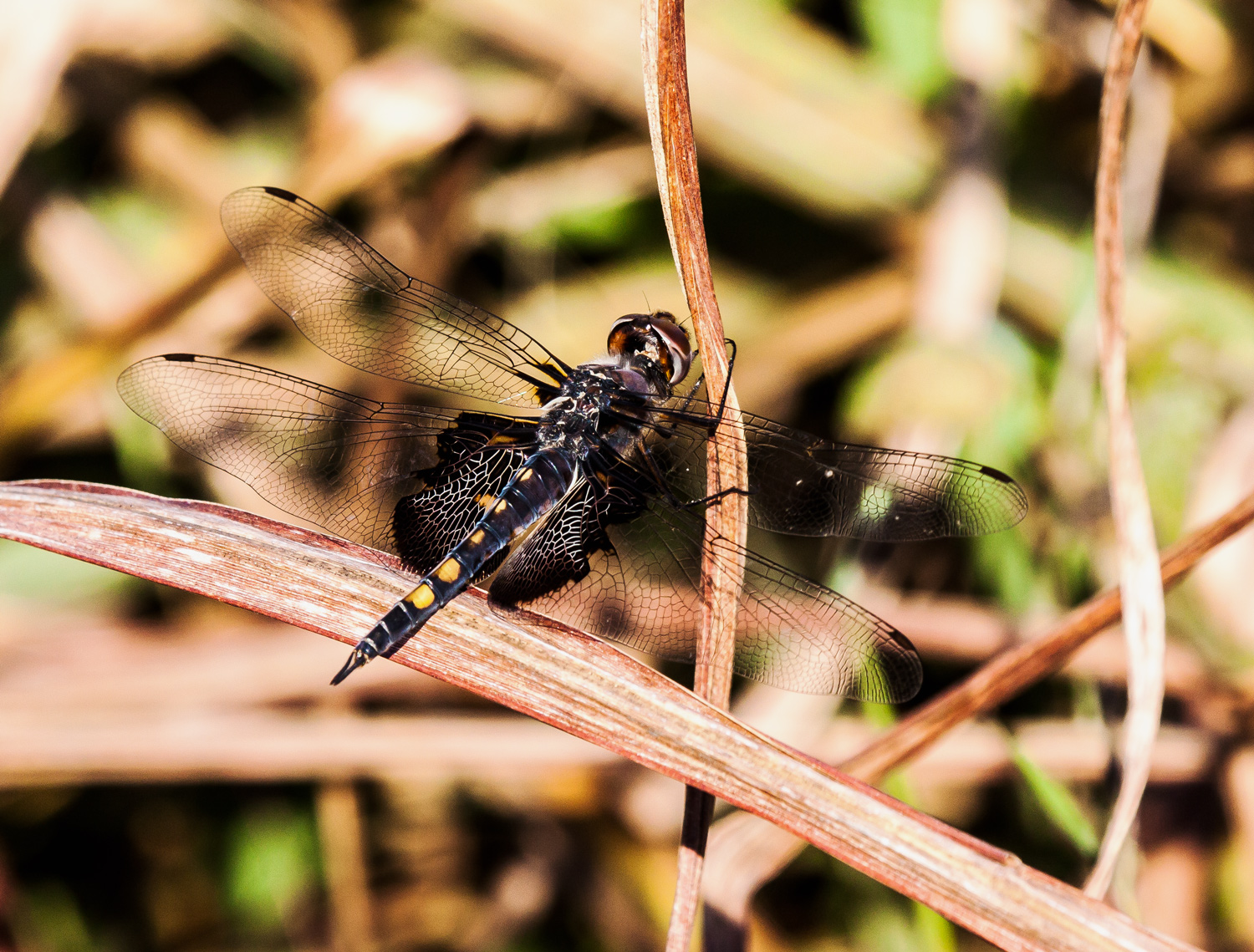
I don’t know if this is a local dragonfly or was merely stopping by while migrating south, but I was happy when this Black Saddlebags dragonfly (Tramea lacerata) stopped circling a field and perched for a moment earlier this week at Occoquan Bay National Wildlife Refuge.

This species of dragonfly is one of several migratory species and in the early autumn I tend to see more Black Saddlebags dragonflies than at any other time of the year. As you might have guessed, the dark blotches on the wings caused some scientist to imagine that they looked like saddlebags. In some cases, I scratch my head when I learn the name of a species, but in this case the name seems to fit and doesn’t require too big a stretch of the the imagination.

Black Saddlebags

© Michael Q. Powell. All rights reserved.


Read Full Post »
I love to photograph bees and realize that I have not featured one for quite some time. I captured this image of one as it perched on some pickerelweed this past weekend at Ben Brenman Park in Alexandria, VA.

In many ways, this image is as much about the flowering plant as it is about the bee. It speaks to me of the interaction between those two main subjects.

For me, photographing nature is about balancing the depiction of the small details, as I often do, with the “bigger” picture—the framing of this shot helps to give the viewer a better sense of the environment than if I had done an extreme close-up shot of the bee itself.

bee and pickerelweed

© Michael Q. Powell. All rights reserved.

Read Full Post »

Despite seeing several Fine-lined Emerald dragonflies (Somatochlora filosa) last Friday at Occoquan Bay National Wildlife Refuge, only this one was cooperative enough to land for a moment and allow me to get some shots.

Previously I posted some photos I took of Fine-lined Emeralds in flight. I had chased and chased these elusive dragonflies, but they never seemed to stop flying. I was beginning to think that I would not get a shot of one perched when suddenly one that I was tracking dropped down into the vegetation. I approached very cautiously and spotted it clinging vertically to a narrow stem.

My heart was racing as I switched to manual focusing—the profile of the perched dragonfly was so slim that I didn’t think my auto-focus would lock on my subject. I took a couple of shots and then inched forward a little. This is part of an eternal struggle for a wildlife photographer, deciding how close you can get to a subject without disturbing it.

I was pretty happy with this image, because I was able to capture a lot of details of this cool-looking species. I recommend clicking on the image to see a higher resolution view of the dragonfly’s spectacular emerald eyes, beautiful body markings, and wonderful wings.

Fine-lined Emerald

© Michael Q. Powell. All rights reserved.

Read Full Post »

« Newer Posts