Feeds:
Posts
Comments

Posts Tagged ‘warbler’

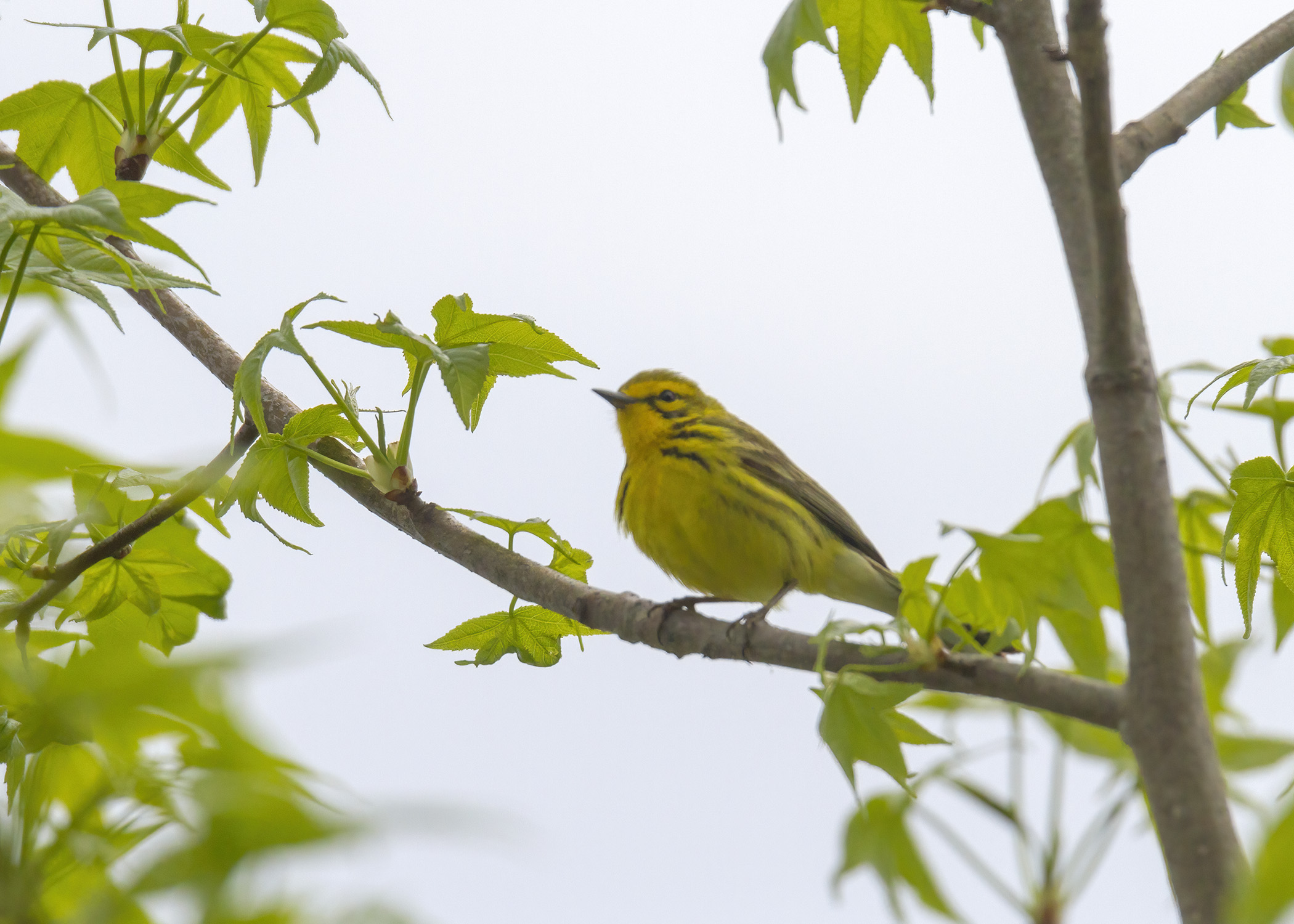
This Yellow-throated Warbler (Setophaga dominica) was pretty far away when I spotted its little patch of bright yellow feathers this past Tuesday at Occoquan Bay National Wildlife Refuge. I doubted that I would be able to get a recognizable shot of it, but decided to take a chance, given that it was the first warbler that I had seen this spring. The resulting shot won’t win any contest, but I am happy that I was able to document my sighting.

Warblers pass through my area each spring at about the same time as the leaves begin to appear on the trees. It can be a bit frustrating for me to be able to hear some of these little birds without being able to see them when they are hidden in the foliage. It is a little game of hide-and-see that I play every year and this time I was able to capture a shot of one of my colorful fellow players.

Yellow-throated Warbler

© Michael Q. Powell. All rights reserved.

Read Full Post »

I had been lethargic and uninspired throughout December, but decided on Monday to visit Occoquan Bay National Wildlife Refuge to try to find some birds before the end of the year. As I walked along one of the trails, I spotted a small bird in the trees and tracked it as it moved about. I was not sure what it was, became a little excited when I thought I spotted a bit of yellow.

There are not many colorful birds in our area during the winter months, so I patiently kept tracking this bird. When I captured the first image below, I convinced myself that I would see traces of yellow in the breast of the bird. Eventually the bird turned and faced the opposite direction and I got a good look at the bright yellow patch on its rump—it was a Yellow-rumped Warbler (Setophaga coronata), one of very few warbler species that I might see during the winter months.

It was a nice treat for me at the end of the year. Happy New Years to you all and best wishes for a healthy and happy 2025.

Yellow-rumped Warbler

Yellow-rumped Warbler

© Michael Q. Powell. All rights reserved.


Read Full Post »

I don’t know how much longer the migrating warblers will be in my area, but this past few weeks I have been trying to get outside with my camera as often as I can, hoping to be able to photograph these colorful little birds.  On Tuesday I spotted a Prairie Warbler (Setophaga discolor) in the patient and patiently tracked it as it moved about.

The first photo was a bit of an anomaly, because the warbler momentarily gave me an unobstructed view when it jumped to a high branch. The second photo gives you a much better idea of the typical challenge I face, with the warbler barely showing itself from behind the wall of foliage. Fortunately, I reacted quick and got a shot that is one of my favorites of this warbler season, which has been my most successful one to date.

Prairie Warbler

Prairie Warbler

© Michael Q. Powell. All rights reserved.

Read Full Post »

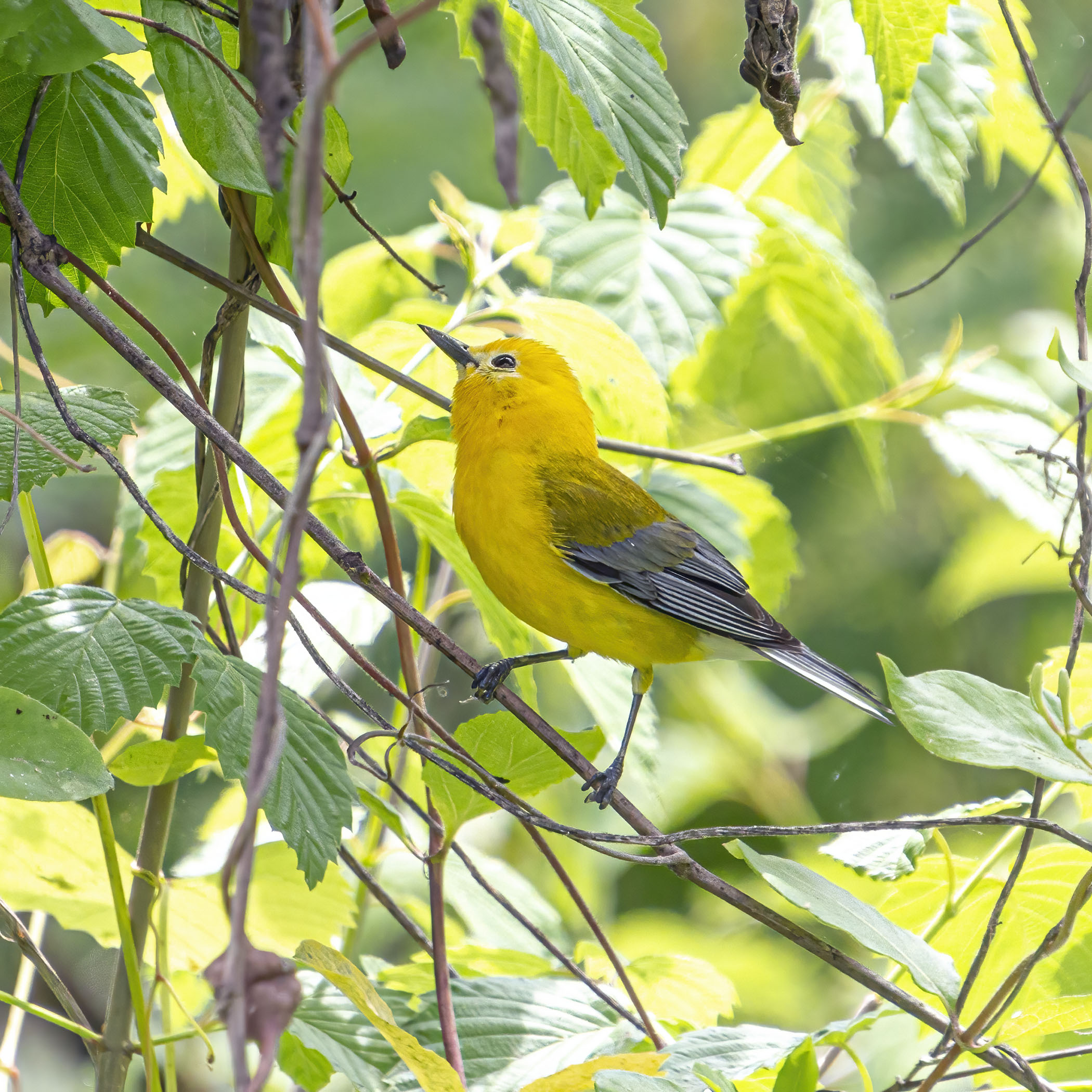
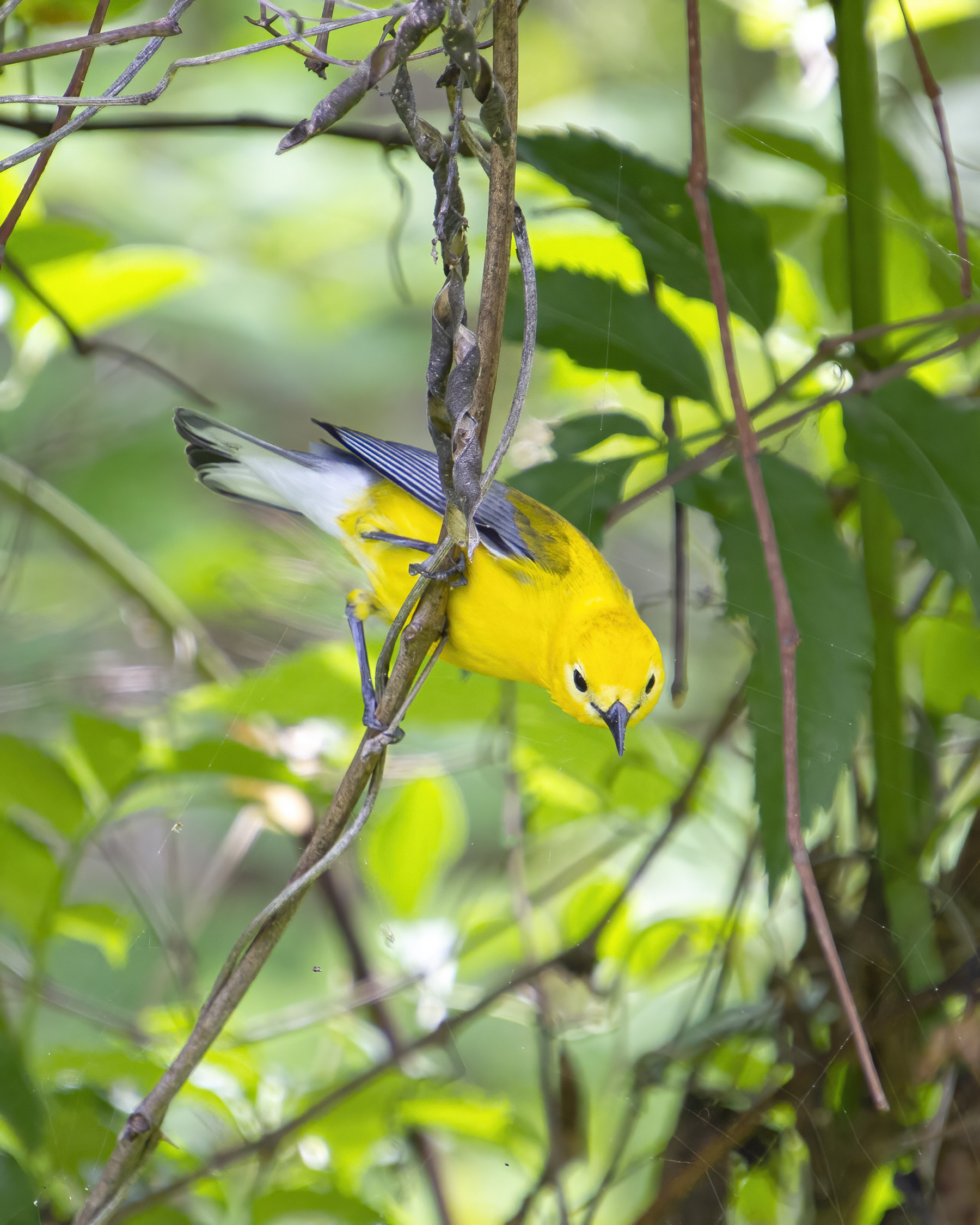
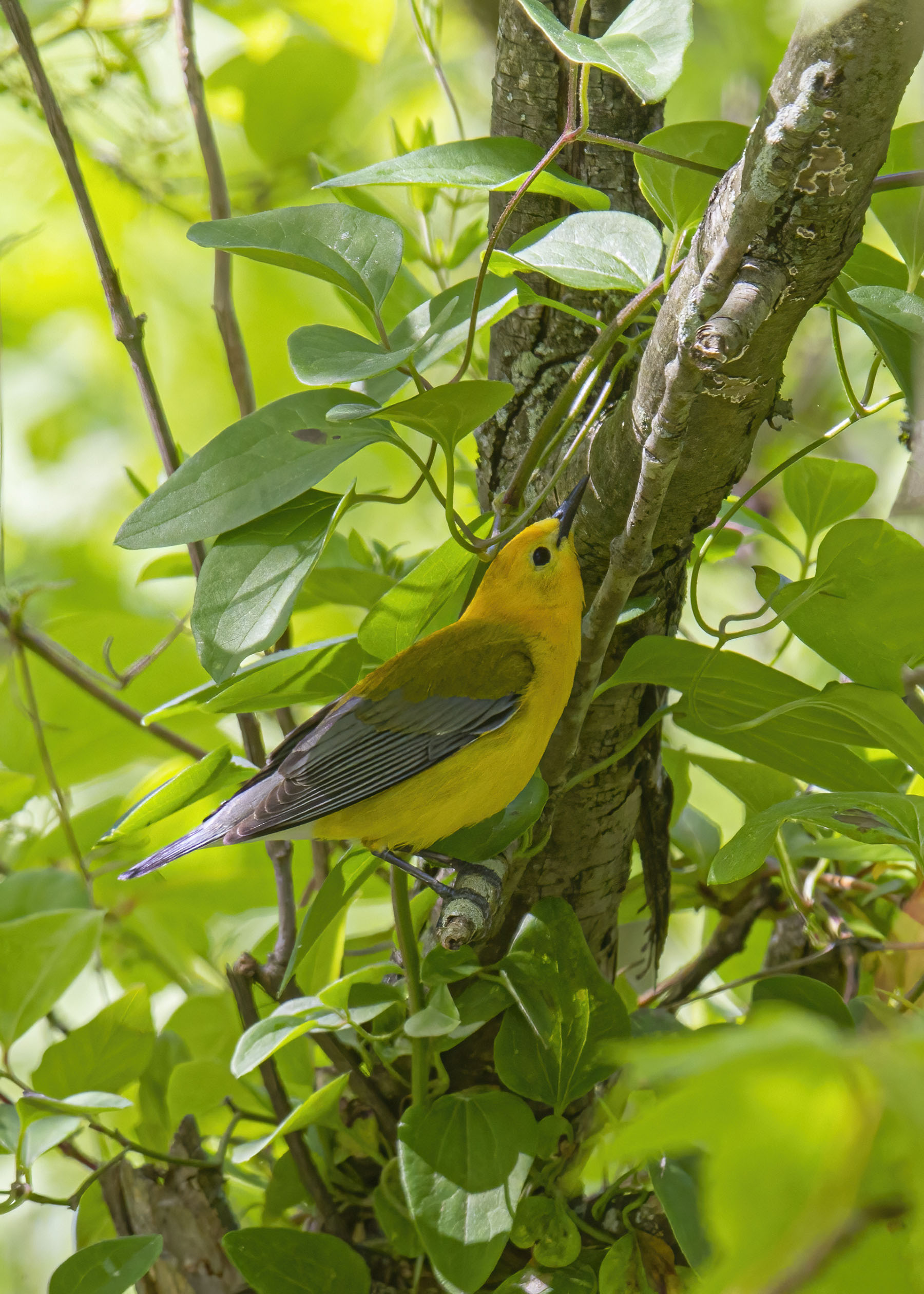
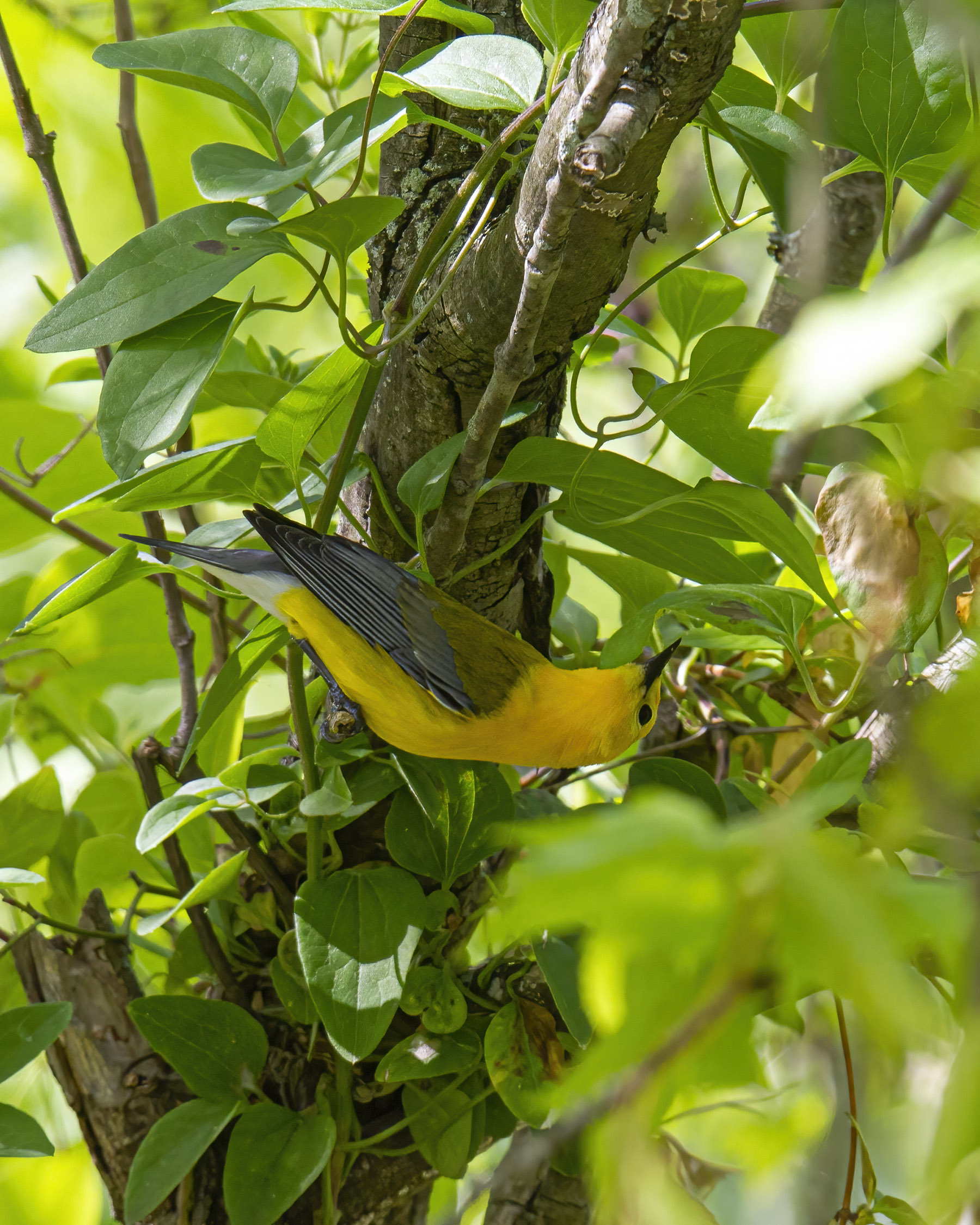
Prothonotary Warblers (Protonotaria citrea) are probably my favorite warblers. I just love their brilliant yellow plumage that seems to glow. Many warblers have touches of bright yellow, especially during the spring breeding season, but the Prothonotary Warbler outdoes them all and is almost completely covered in yellow.

I spotted this little beauty yesterday (1 May) at Occoquan Bay National Wildlife Refuge. I initially caught sight of the warbler as it was flitting about in the foliage. I would see flashes of yellow as it foraged, but could not get a clear look at it. All of the sudden the warbler flew across the trail and landed in a bush, momentarily give me a clear shot.

Quite often I strain my neck when trying to photograph warblers, a phenomenon that is colloquially called “warbler neck.” It is so common that the Audubon website has an article entitled, “A Birder’s Workout Guide for Preventing Warbler Neck.” I was very fortunate in this case, though, that the bird was perched below eye level, so I was able to capture a lot of detail without harming my neck, detail that is often hidden when I am shooting upwards at a sharp angle.

Prothonotary Warbler

© Michael Q. Powell. All rights reserved.

Read Full Post »

I spotted this spectacular Yellow-throated Warbler (Setophaga dominica) on Monday at Occoquan Bay National Wildlife Refuge as it perched amidst the hanging seed pods of what I believe is a sycamore tree. I love the round shape and texture of the seed pods and the warbler was much more in the open than he was when he was hidden amidst the foliage.

Yellow-throated Warbler

© Michael Q. Powell. All rights reserved.

Read Full Post »

I don’t know if this Yellow-rumped Warbler (Setophaga coronata) that I spotted last week at Occoquan Bay National Wildlife Refuge was in a transitional plumage stage, but it looked awfully scraggly to me. The colors on the warbler’s face and body were mottled, but the yellow patches on its chest helped me to identify it as a Yellow-rumped Warbler.

I feel very fortunate when I am able to get any shots of a warbler. The trees are now covered in leaves and I can’t help but feel a bit of frustration when I can hear all kinds of birds singing, but can’t spot them. That’s the reality for a wildlife photographer—sometimes all I can do is watch, listen, and wait patiently, hoping that a subject will come into view.

Yellow-rumped Warbler

Yellow-rumped Warbler

© Michael Q. Powell. All rights reserved.

Read Full Post »

This male Prairie Warbler (Setophaga discolor) was signing loudly and proudly when I captured this image on Thursday at Occoquan Bay National Wildlife Refuge. I just love the way the little bird tilts back his head and sings with all of his might, seemingly putting his entire body into the effort.

Prairie Warbler

Prairie Warbler

© Michael Q. Powell. All rights reserved.

Read Full Post »

Each spring a lot of colorful warblers pass through our area on their northward migration. Most of them stay for only a short time, so it is a hit-or-miss proposition for me to find them. This is also the time of the year when the trees are budding, flowering and pushing out new leaves. All of this new growth is beautiful, but it makes it even harder for me to spot the little birds as they flit about, often at the tops of the trees.

Yesterday I was thrilled to spot this Yellow-throated Warbler (Setophaga dominica) high in a distant tree at Occoquan Bay National Wildlife Refuge. Initially my view of the colorful little bird was blocked by the vegetation, but I bent, twisted, stretched, and leaned in all directions and was eventually was able to get a clear view of the warbler.

My eyes are really active during the spring as I look up to try to find birds and look down to search for dragonflies. I manage to observe lots of cool things, but suspect that there is so much more going on that I do not see or notice.

Yellow-throated Warbler

© Michael Q. Powell. All rights reserved.


Read Full Post »

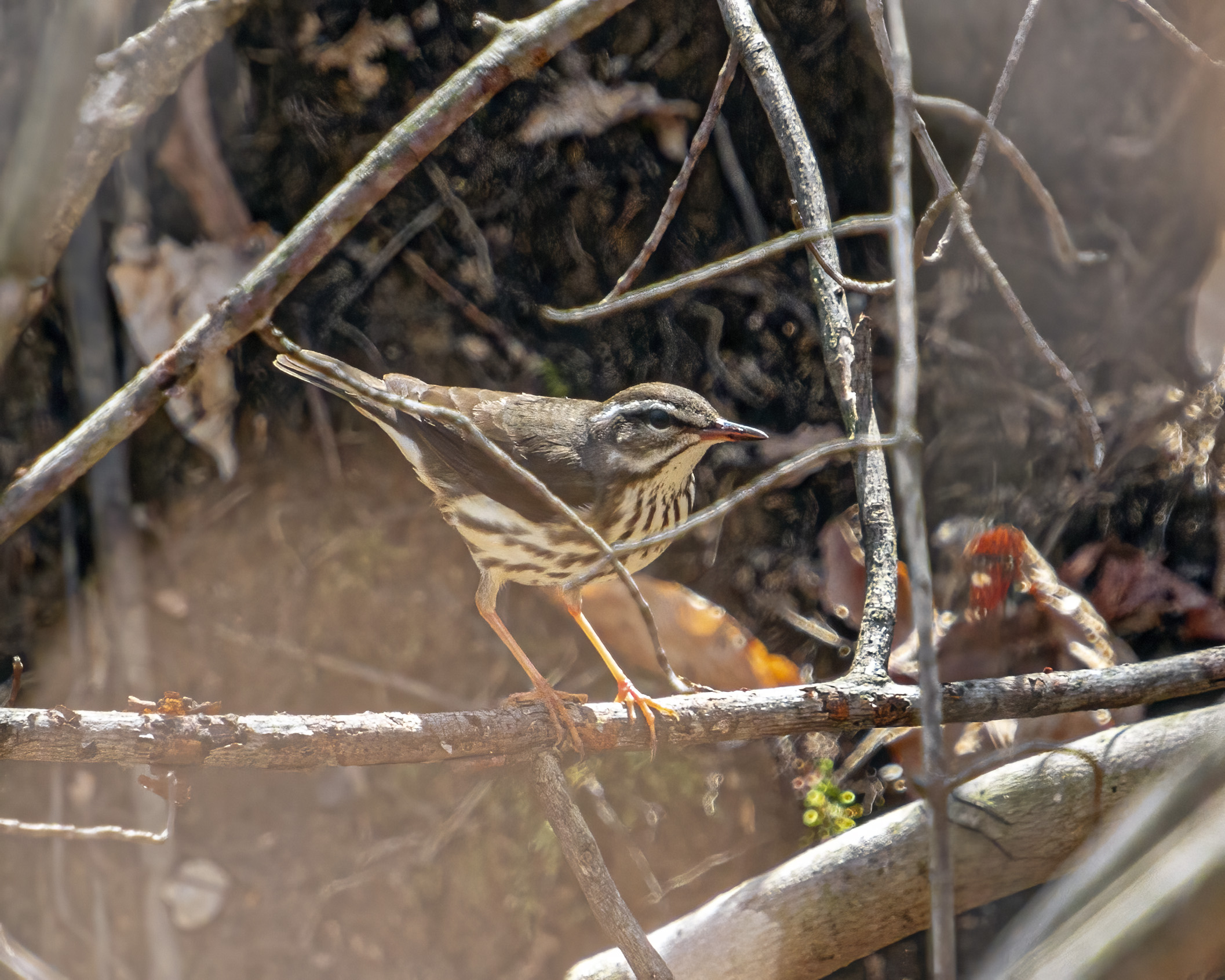
Last week I spotted this bird hopping about in a small creek in Prince William Forest Park. The bird was in constant motion and I could not get close to it, so I was was not able to get a really good shot of it. I vaguely remembered seeing a similar bird a few years ago in the same location, so I checked my old blog entries and determined that it might be a Louisiana Waterthrush (Parkesia motacilla). Several more experienced birders confirmed my tentative identification in a Facebook group for birding forum.

Despite its name, a Louisiana Waterthrush is actually a warbler, not a thrush. The Cornell Lab of Ornithology website provides the following overall description of the species:

“The ringing song of the Louisiana Waterthrush, in cadence so like the rushing streams that are its home, is one of the first signs of spring in eastern North America. Its brown plumage and bold streaking help explain why this member of the warbler family has the word “thrush” in its name. At all seasons, this species stays close to moving water—especially forested streams and creeks—and bobs its rear end almost constantly. In both spring and fall, Louisiana Waterthrushes are among the earliest migrant warblers.”

Several local photographers have started posting photos of more colorful warblers, so I will be keeping my eyes open for them. Leaves are starting to cover the trees, so I will probably have my usual problem of not being able to spot the little birds even when I can hear them singing.

Louisiana Waterthrush

Louisiana Waterthrush

© Michael Q. Powell. All rights reserved.

Read Full Post »

Most warblers pass briefly through my area when they are migrating in the spring and in the fall, but Yellow-rumped Warblers (Setophaga coronata) stay with us for a good part of the colder season. This past Thursday I spotted quite a large number of Yellow-rumped Warblers as I wandered the trails at Occoquan Bay National Wildlife Refuge.

In the first photo, you can see a portion of the yellow patch that is responsible for the name of this species. Most of the time I see only the smaller yellow patches on their sides, because they tend to perch high above me and I am often shooting at an upwards angle.

I am amazed by the light weight of Yellow-rumped Warblers and their ability to perch on incredibly slender branches, as you can see in the second image. According to the Cornell Lab of Ornithology, these little birds weigh only 0.4-0.5 ounces (12-13 g).

In the final photo, the warbler is poised to move on to its next perch. Yellow-rumped Warblers are not quite as hyperactive as some other species that I see at this time of the year, like Ruby-crowned and Golden-crowned Kinglets, but they move around a lot as they forage for food.

Yellow-rumped Warbler

Yellow-rumped Warbler

Yellow-rumped Warbler

© Michael Q. Powell. All rights reserved.

Read Full Post »

I love the poses of this bright yellow Prothonotary Warbler (Protonotaria citrea) that I spotted last Thursday at Occoquan Bay National Wildlife Refuge. The warbler was actively twisting, turning, and stretching as it foraged for food and amazingly was perched quite low in the vegetation—most of the times in the past I have seen Prothonotary Warblers high in the trees and was forced to shoot them from an unflattering sharp upward angle.

Quite often when I am focusing on a wildlife subject, it moves. Most of the time the result is a blurry image, but sometimes I end up with a really cool shot. The Prothonotary Warbler took off just as I pressed the shutter release and I was lucky to capture it in action, as you can see in the final photo.

The yellow plumage of a Prothonotary Warbler is startlingly bright and cheerful. Invariably the sight of a Prothonotary Warbler makes me think of Tweety Bird, a character from Warner Brothers Looney Tunes cartoons that I remember from my childhood. I think that Tweety was supposed to be a canary, but he didn’t really look like a canary. Often Tweety had adventures with Sylvester the cat, the subject of Tweety’s signature line, ” “I tawt I taw a puddy tat!””


Prothonotary Warbler

Prothonotary Warbler

Prothonotary Warbler

Prothonotary Warbler

© Michael Q. Powell. All rights reserved.

Read Full Post »

On Thursday I was blessed to photograph a beautiful little Prairie Warbler (Setophaga discolor) as it was singing in a small tree at Occoquan Bay National Wildlife Refuge. At this time of the year I can often hear the birds, but have trouble spotting them amidst the abundant foliage. Even when I am able to locate a warbler, it is usually perched really high in a tree, out of range of my telephoto lens. In this case, the warbler was almost at eye level when I took these photos.

Despite its name, the Prairie Warbler is not found on a prairie. According to the Cornell Lab of Ornithology, “Finding this bird during the breeding season is often as simple as finding the scrubby second-growth forests, young pine stands, and overgrown pastures that it prefers. In spring, listen for males singing from a mostly exposed perch in one of the tallest trees in its territory, a distinctive sputtering buzz that starts low and climbs high up the scale, beyond human hearing.”


Prairie Warbler

Prairie Warbler

© Michael Q. Powell. All rights reserved.

Read Full Post »

It was fascinating to watch this acrobatic little Prothontary Warbler (Protonotaria citrea) last Friday as it twisted and turned, poked and probed while searching for tasty treats among the leaves of a tree at Occoquan Bay National Wildlife Refuge. We have reached a time of the year when most of the small birds are hidden by the leaves on the trees, so I was really fortunate to be able to spot this warbler and to track it as it moved about in this tree.

Prothonotary Warbler

Prothonotary Warbler

Prothonotary Warbler

© Michael Q. Powell. All rights reserved.

Read Full Post »

Last Friday at Occoquan Bay National Wildlife Refuge I captured this fun little image of a Yellow-rumped Warbler (Setophaga coronata) in mid-air as it hopped to a new position on a tree with colorful fall foliage. I am pretty sure that the warbler was stationary when I clicked off a short burst of shots and luck played a big role in me being able to capture this moment. Yellow-rumped Warbler

© Michael Q. Powell. All rights reserved.

Read Full Post »

I almost never get an unobstructed view of a warbler. Most of the time I see them flitting about in the foliage, making it difficult to get a clear shot of one. If I am lucky, I manage to capture an image, like the final one, when the warbler pokes its head out of the brush for a moment.

Last Wednesday at Occoquan Bay National Wildlife Refuge, I was shocked and delighted when I was able to take a series of unobstructed shots of a Yellow-rumped Warbler (Setophaga coronata) as it was feeding on some poison ivy berries. The first three images shows some moments from that encounter.

As I look at these four images, I am strangely drawn most to the final one. Despite the clutter of the branches in that shot, the warbler stand out—the branches serve as a kind of frame for the central subject. Now I really do like the way that the first two images capture the action of the bird and the way the third shot provides the best view of the perching warbler, but someone the environmental shot appeals to me most this morning as I am composing this posting. What do you think?

Yellow-rumped Warbler

Yellow-rumped Warbler

Yellow-rumped Warbler

Yellow-rumped Warbler

© Michael Q. Powell. All rights reserved.

Read Full Post »

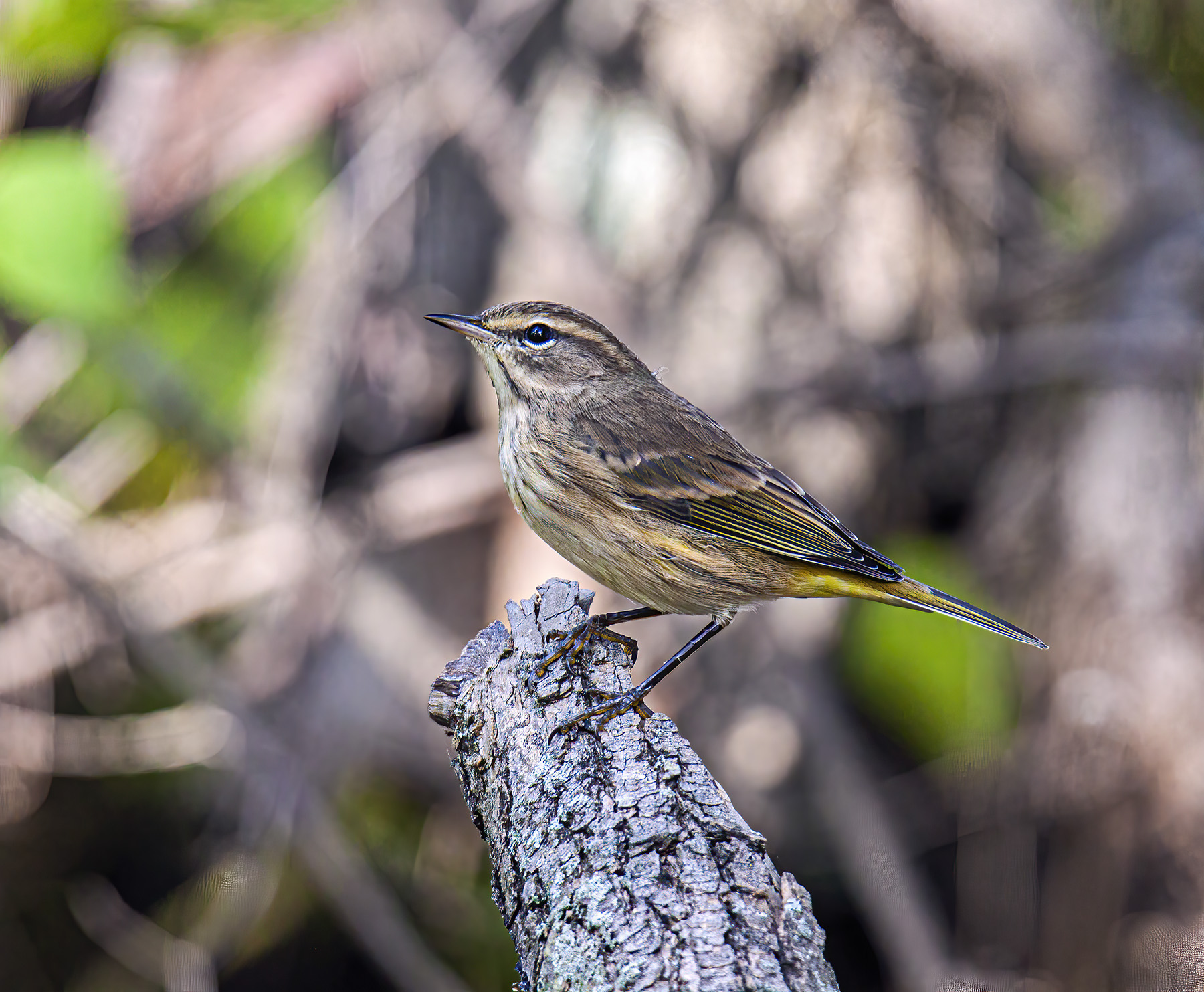
Most warblers forage in the forest canopy and I have to strain my neck to search for them. Palm Warblers (Setophaga palmarum), however, mainly forage on open ground or in low vegetation.  When I saw a flash of yellow in some low bushes last week at Occoquan Bay National Wildlife Refuge, I therefore suspected that it might be a Palm Warbler.

I watched and waited and eventually the bird hopped up onto a branch and I managed to get a clear shot of it. I wasn’t one hundred percent sure that it was a Palm Warbler, but the color and markings looked about right and I could see the rust-colored cap on its head, another identification feature for a Pine Warbler. Some experts in a Facebook forum confirmed that “my” bird is indeed  a Palm Warbler.

The warblers are with us for only a limited period of time in the spring before they continue their migration northward, so I don’t know how many more times I will have a chance to photograph them. At this time of the year, though, colorful flowers are popping up and insects are reappearing, so I won’t suffer from a lack of subjects when the wablers depart.

Palm Warbler

© Michael Q. Powell. All rights reserved.

Read Full Post »

I spotted this colorful Prairie Warbler (Setophaga discolor) as it was singing high in a tree on Thursday at Occoquan Bay National Wildlife Refuge. Most of the time I spot birds like this when they fly to a new perch, but this warbler stubbornly refused to move. I stared and stared at the tree, desperately trying to locate the source of the song that the bird was singing over and over again.

I finally located the warbler in the crook of a branch. I was looking upward at such an acute angle that I mostly got a view of the underside of the bird, but eventually I captured the first image in which the warbler was singing. Prairie Warblers have an unusual rising song that the Cornell Lab of Ornithology described in these words, “The Prairie Warbler sings a distinctive, rising and accelerating song with a buzzy quality, zee-zee-zee-zee-zee-zeeeee.” If you click on this link, you can listen to several sound samples of the songs of the Prairie Warbler.

I do not know how much longer the migratory warblers will be in my area, but I hope to have another chance to see some of these joyous little birds. I am still not confident in my identification skills for warblers, so there is a chance that I am wrong about this being a Prairie Warbler, but its beauty is undeniable.

Prairie Warbler

Prairie Warbler

Prairie Warbler

© Michael Q. Powell. All rights reserved.

Read Full Post »

Yesterday I featured a warbler that was so brightly colored that it was impossible to miss. Today’s warbler is the complete opposite—it was so nondescript and so well hidden that it was almost impossible to see and initially I could not even identify it from my photos.

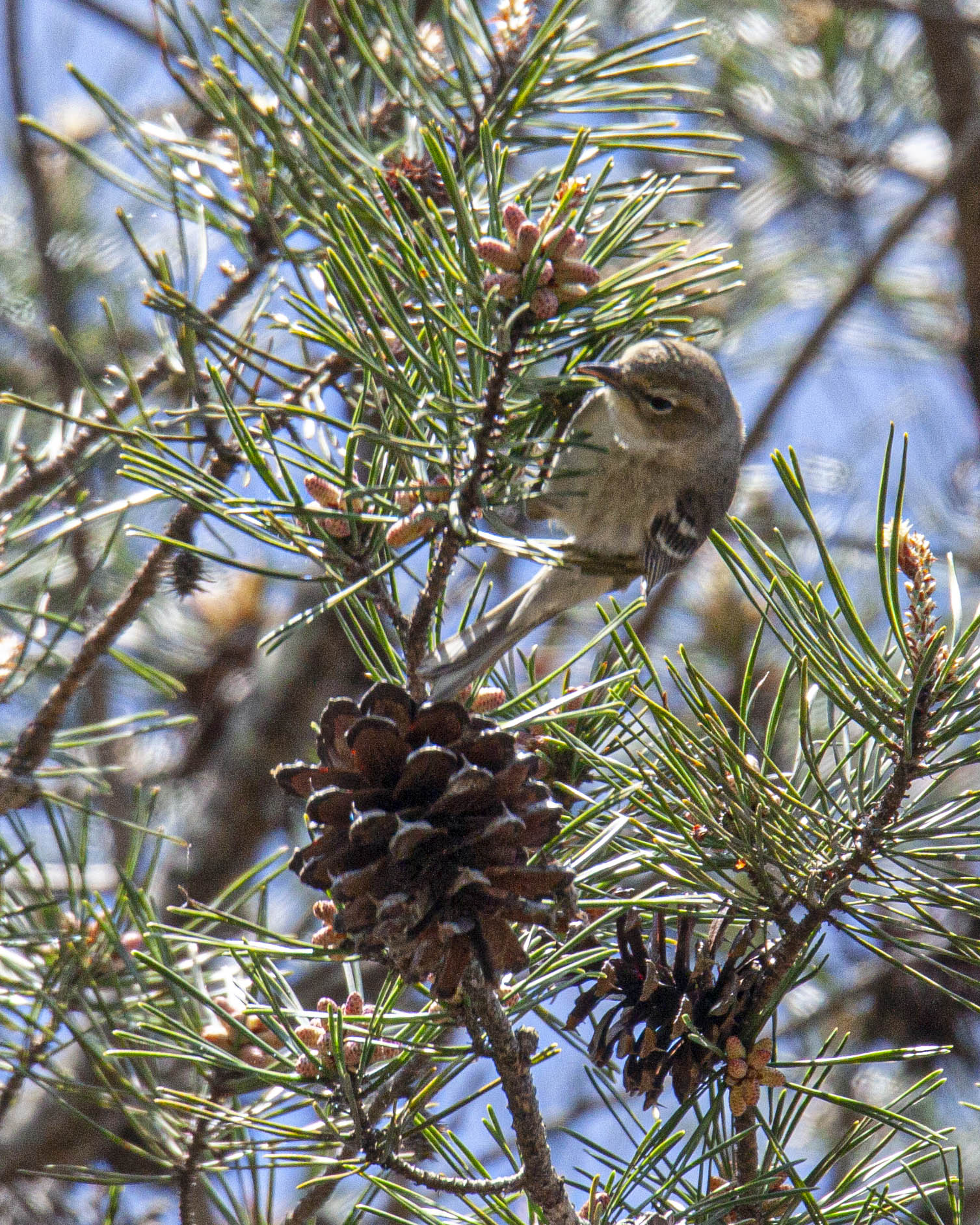
My eyes detected some motion high in a pine tree on Wednesday at Occoquan Bay National Wildlife Refuge and I stopped. I had set my long lens on a monopod, so my arms did not get tired as I strained to make out the bird that was moving about among the pine needles and the pine cones, though my neck quickly became sore. It looked like the bird was feeding on little seeds, so it would stop momentarily from time to time, giving me a change to find it in my viewfinder and acquire focus.

None of my shots was spectacular, but I was able to capture enough details of the bird’s body that some experts in a Facebook birding group identified it as a Pine Warbler (Setophaga pinus). Not only were they able to identify the species of the bird, they determined that it was a first year female on the basis of its markings and coloration. I am always amazed when confronted with that level of expertise.

Pine Warbler

Pine Warbler

Pine Warbler

© Michael Q. Powell. All rights reserved.

Read Full Post »

I was absolutely thrilled to spot this bright yellow warbler on Tuesday at Occoquan Bay National Wildlife Refuge. Some more experienced birders in a birding forum on Facebook have identified it as a Cape May Warbler (Setophaga tigrina). When it comes to identifying warblers, I tend to be wrong as often as I am right. I have learned that it is best to ask for help rather than apologize afterwards for my errors.

I was pretty certain that I had never seen this species before, but decided to do a search of the blog to be sure. I was shocked to find that I spotted a Cape May Warbler last year at the start of October—check out that posting entitled Cape May Warbler. I relied on the help of experts last year too and somehow never internalized the identification into my brain. Alternatively, I can simply blame the aging process for this minor “senior moment.”

Cape May Warbler


Cape May Warbler

Cape May Warbler

© Michael Q. Powell. All rights reserved.

Read Full Post »

At this time of the year, a variety of colorful warblers pass through our area as they make their way south to warmer locations. Warblers are quite small and tend to spend most of their time hidden in the leaves at the top of tall trees.  As a result, it is rare for me to see more than just a flash of color. When the leaves fall from the trees, I have a better chance of spotting a small bird, but most of them are gone by that time of the year.

Last week I was fortunate to capture some shots of a bird that I was able to tentatively identify as a Black-throated Green Warbler (Setophaga virens). A lot of warblers look somewhat similar, so I went back and forth in my bird identification guide to try to identify “my” bird. I was a little surprised when some more experienced birders confirmed my identification of the warbler—it was a bit of an educated guess on my part, but a guess nonetheless.

I am in the process of recalibrating my vision now that I have switched to using my long telephoto zoom lens most of the time. Instead of looking down and scanning a close-in area for subjects, I am now trying to look for subjects that are often much higher up and farther away. In this transitional season, though, it becomes a little more complicated, because there are still some insects that I want to photograph.

It requires good camera technique and careful composition to capture images of insects at 600mm, but I have had some success in doing so, thanks in part to the monopod that I use with my long lens for additional stability. For example, my recent shots of Black Saddlebags dragonflies and Monarch Butterflies were all taken with my Tamron 150-600mm zoom lens. As I have noted before, gear does matter, but only to a much more limited extent than most people assume—my basic approach is to get the best photos that I can with whatever I have at hand.


Black-throated Green Warbler

Black-throated Green Warbler

© Michael Q. Powell. All rights reserved.


Read Full Post »

It was cool and windy yesterday at Occoquan Bay National Wildlife Refuge and most of the birds seemed to be taking refuge from the elements. I was therefore especially thrilled to spot and photograph my first warbler of the season, this Yellow-throated Warbler (Setophaga dominica).

This is the time of the year when a lot of colorful warblers pass through our area on their northward migration. Many of the warbler stay for only a short time, so it is a hit-or-miss proposition for me to find them. This is also the time of the year when the trees are budding, flowering and pushing out new leaves. All of this new growth is beautiful, but it makes it harder for me to spot the little birds as they flit about, often at the tops of the trees.

We had some spring-like temperatures a week ago and I was walking around in a T-shirt or at most a sweatshirt. Yesterday, though, the day started with temperatures below freezing and eventually made it up to only 47 degrees (8 degrees C) with almost constant winds of 15 miles per hour making it feel much colder. I dug out my heavier coat, insulated boots, and thermal underwear and was comfortable walking about, though most of the wildlife seemed to have taken the much more commonsense approach of simply staying sheltered.

Yellow-throated Warbler

© Michael Q. Powell. All rights reserved.

Read Full Post »

The remaining leaves on the trees and other vegetation complicate my efforts to get clear shots of the numerous Yellow-rumped Warblers (Setophaga coronata) that I have seen and heard during my recent trips to Occoquan Bay National Wildlife Refuge. On Monday, however, I manage to capture two images of these colorful little birds, the only warblers that stay with us throughout the winter.

It is always a delight to catch sight of the colorful patches of yellow feathers on these birds. The second image shows the yellow rump that is responsible for the name of this species that is affectionately known to birdwatchers as “butterbutts.”

Yellow-rumped Warbler

Yellow-rumped Warbler

© Michael Q. Powell. All rights reserved.

Read Full Post »

I was excited to spot this beautiful Palm Warbler (Setophaga palmarum) last Friday at Occoquan Bay National Wildlife Refuge. I had more or less given up on seeing any warblers except for Yellow-rumped Warbler, which will remain with us for a while, so this was a pleasant surprise. The little bird was full of energy and shortly after it leaned forward a little, as you can see in the second image, it flew to a more distant part of the field in which it was foraging.

Palm Warbler

Palm Warbler

© Michael Q. Powell. All rights reserved.

Read Full Post »

When I first saw this bird bouncing around on the ground on Monday at Occoquan Bay National Wildlife Refuge, I thought that it might be a sparrow. Then I caught a flash of yellow as the bird wagged its tail and I realized that it was a Palm Warbler (Setophaga palmarum).

Most warblers forage high in the trees, where they are difficult to see. The Palm Warbler, however, forages mainly on open ground or in low vegetation, making it marginally easy to spot and to identify.

Palm Warbler

© Michael Q. Powell. All rights reserved.

Read Full Post »

Yesterday marked the change of seasons for me—I switched the walkaround lens on my camera from my 180mm macro, which has been my almost constant companion throughout the spring and summer, to my much longer 150-600mm telephoto zoom lens. The change signifies my reluctant acceptance of the reality that the insect season is slowly drawing to a close and that increasingly I will be focusing on birds.

Warblers are still passing through our area as they head south, so I decided yesterday to try to find some at Occoquan Bay National Wildlife Refuge, a location where I know that other photographers have spotted a variety of warblers. Although early morning is usually the best time for birding, I went at midday to avoid any potential crowds.

Most of the leaves are still on the trees, so it is a challenge to spot little birds and even tougher to photograph them. I was thrilled when I caught a glimpse of yellow after a long fruitless search and managed to get this mostly unobstructed view of a handsome warbler. I had no idea what species it was, but some experts on a Facebook birding forum informed me that it was a Cape May Warbler (Setophaga tigrina), a species that I had never before encountered.

Cape May Warblers breed in the spruce-fir forests in the North and winter in the Caribbean, in lush habitats with plenty of insects and flowers—I think I might enjoy that lifestyle. According to the Cornell Lab of Ornithology website, the tongue of the Cape May Warbler is unique among warblers—it is curled and semi-tubular and is used to collect nectar, almost like a hummingbird does.

Cape May Warbler

© Michael Q. Powell. All rights reserved.

Read Full Post »

I was both shocked and delighted to spot this brilliant male Prothonotary Warbler (Protonotaria citrea) on Monday during a trip to Huntley Meadows Park, a local marshland refuge. All of the other times that previously I spotted these colorful little birds were during the early spring and I did not know that they were still around in our area.

It is hard for a bird so brightly colored to hide itself completely, but I am used to seeing only flashes of yellow amidst the foliage high in the trees. In this case I spotted the warbler when it was perched on a wooden fence. As I got a little closer, it dropped down to ground level, but I was able to find a small visual tunnel that gave me an unobstructed view of this beautiful little warbler and was able to capture this image.

Prothonotary Warbler

© Michael Q. Powell. All rights reserved.


Read Full Post »

It is warbler season now where I live. This can be a frustrating time of the year for me, because the arrival of these colorful migrating birds coincides with the re-leafing of the trees. I can hear the warblers and occasionally get a glimpse of their bright colors through the leaves, but it is rare for me to get a clear shot of one.

Yesterday, I was thrilled to capture this image of a Yellow-rumped Warbler (Setophaga coronata) at Occoquan Bay National Wildlife Refuge. I started to track this bird as it was moving about in the foliage and was fortunate to be ready when it paused for a split second in the open. I did not plan this particular composition, but it worked out really nicely with the shapes of the branches on the right side of the image and the mostly out of focus leaves on the left.

This image speaks of spring to me. Happy Spring to those in the Northern Hemisphere and hopefully those experiencing autumn in the Southern Hemisphere will also enjoy the bright springtime colors.


Yellow-rumped Warbler

© Michael Q. Powell. All rights reserved.

Read Full Post »

The last few days I have been struck again by some fundamental differences between birders and photographers. In simple (and overgeneralized) terms, birders tend to be more scientific in their approach and photographers tend to be more artistic.

Most birders keep detailed records of what they see when they go out for a walk and have life lists of species they have observed. They know about the ranges of each species for each season and can often recognize a bird from its call. Any sighting of a bird “counts,” even if the bird is far away and a photo of it is tiny and blurry, though a photo is not an absolute requirement.

Many photographers like me don’t keep track of all that they see—if I am not able to get a shot of a bird that I spot, preferably a good shot, I mentally erase the sighting from my memory. I have not studied and internalized information about most bird species and therefore have trouble determining if a species is rare or common. That distinction does not really matter to me as I am generally more focused on getting a well-composed shot in decent light with an interesting pose, ideally a dynamic pose. I was therefore excited by the sequence of shots that I captured of a bald eagle taking off when I did a photowalk on Thursday at Occoquan Bay National Wildlife Refuge and immediately posted those images in posting on Friday morning.

I also took some shots of a small yellow bird on the icy surface of a small pond. I really did not know what it was, but suspected that it was some kind of warbler. I posted a photo on the Virginia Birding Facebook forum and asked for help. The response that I got from birders was immediate and excited—I was asked to document the sighting in eBird, an online database of bird observations with real-time data about bird distribution and abundance, and to repost the photo in the Virginia Notable Bird Sightings Facebook forum.

Why were the birders so excited? The bird, I was told, is a Nashville Warbler (Leiothlypis ruficapilla). According to the moderator of the Virginia Notable Bird Sightings forum, current records for Nashville Warblers are “very sparse on the East Coast. There are no other winter records for the species currently input to eBird at Occoquan NWR so this is quite remarkable.”  Apparently this is really late in the season to see a species that should have migrated through our area quite a while ago.

As for me, I am happy with the way I was able to capture the warbler’s reflection on the ice and the natural framing of the subject by the vegetation. The fact that it is a rare sighting at this time of the year is at best of secondary importance to me.

Nashville Warbler

Nashville Warbler

© Michael Q. Powell. All rights reserved.

Read Full Post »
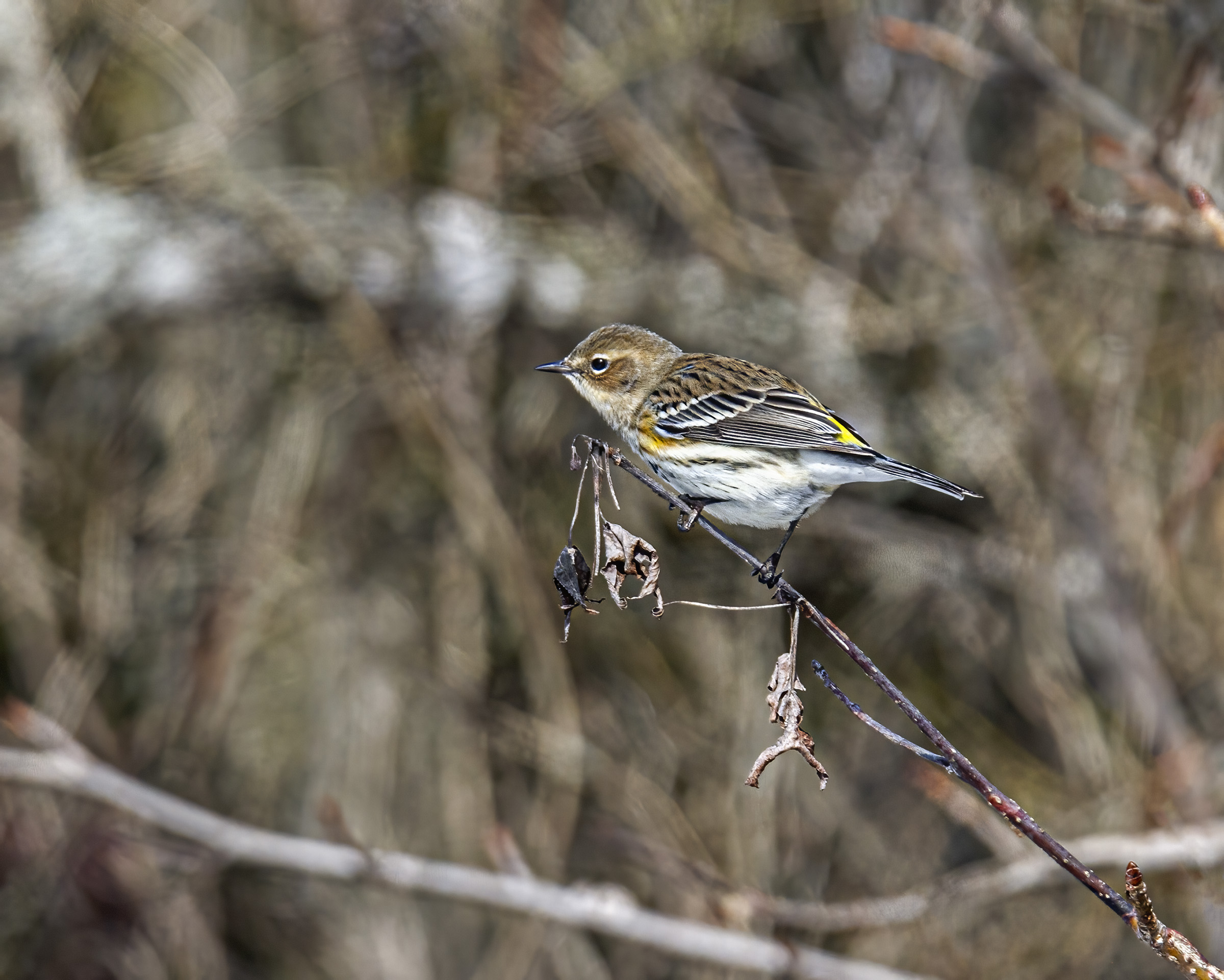
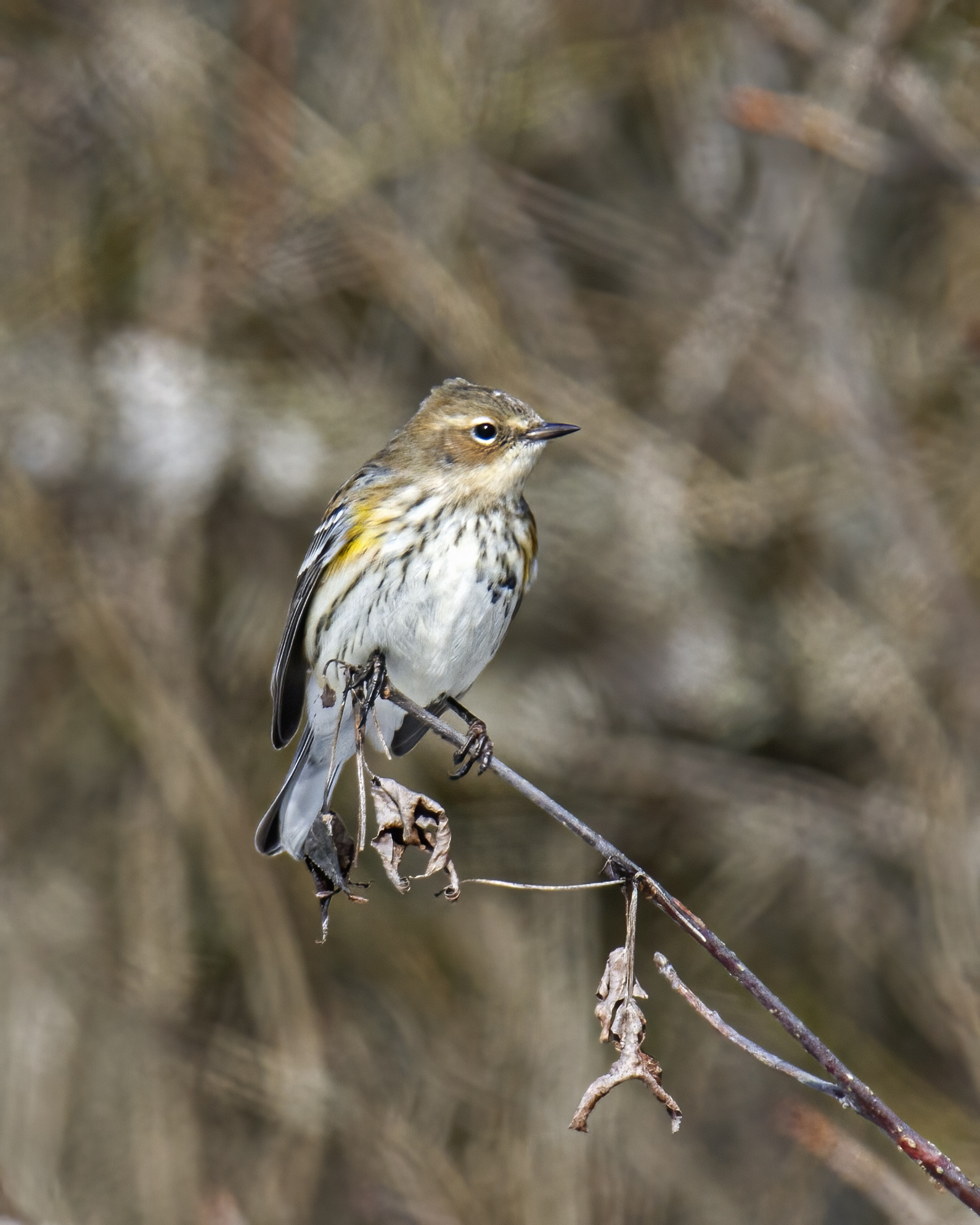
Warblers are migrating southward through my area at this time of the year. Although I can sometimes hear them, most often they stay hidden behind the foliage. I was happy therefore when I caught site of this Palm Warbler (Setophaga palmarum), one of our most common warblers, this past week at Occoquan Bay National Wildlife Refuge.

When I initially spotted this little bird, it was feeding in the grass, as shown in the second image. The warbler was part of a small group and all of them appeared to be really skittish and took to the air when I was still a long way off. Fortunately one of them flew into a tree and paused momentarily, allowing me to get a mostly unobstructed shot of it.

Most of the warblers remain in our area for a short period of time, so I am never confident when or if I will see any of them. I guess that the best way to increase my odds is to spend more time outside with my camera at the ready.

Palm Warbler

Palm Warbler

© Michael Q. Powell. All rights reserved.

Read Full Post »
A couple of weeks ago I spotted a colorful Prothonotary Warbler (Protonotaria citrea) building a nest in a nesting box at Occoquan Bay National Wildlife Refuge. The warbler made multiple trips to the nest carrying a variety of materials in its bill. Each time that it got ready to leave the box, the warbler would stick its head out and look around. Although I tried repeatedly to capture the bird in flight as it left the box, the last image was the only one that was partially successful.

I am finally catching up on a backlog of photos—normally I post my photos within a few days of shooting them.

Prothonotary Warbler

Prothonotary Warbler

Prothonotary Warbler

© Michael Q. Powell. All rights reserved.

Read Full Post »
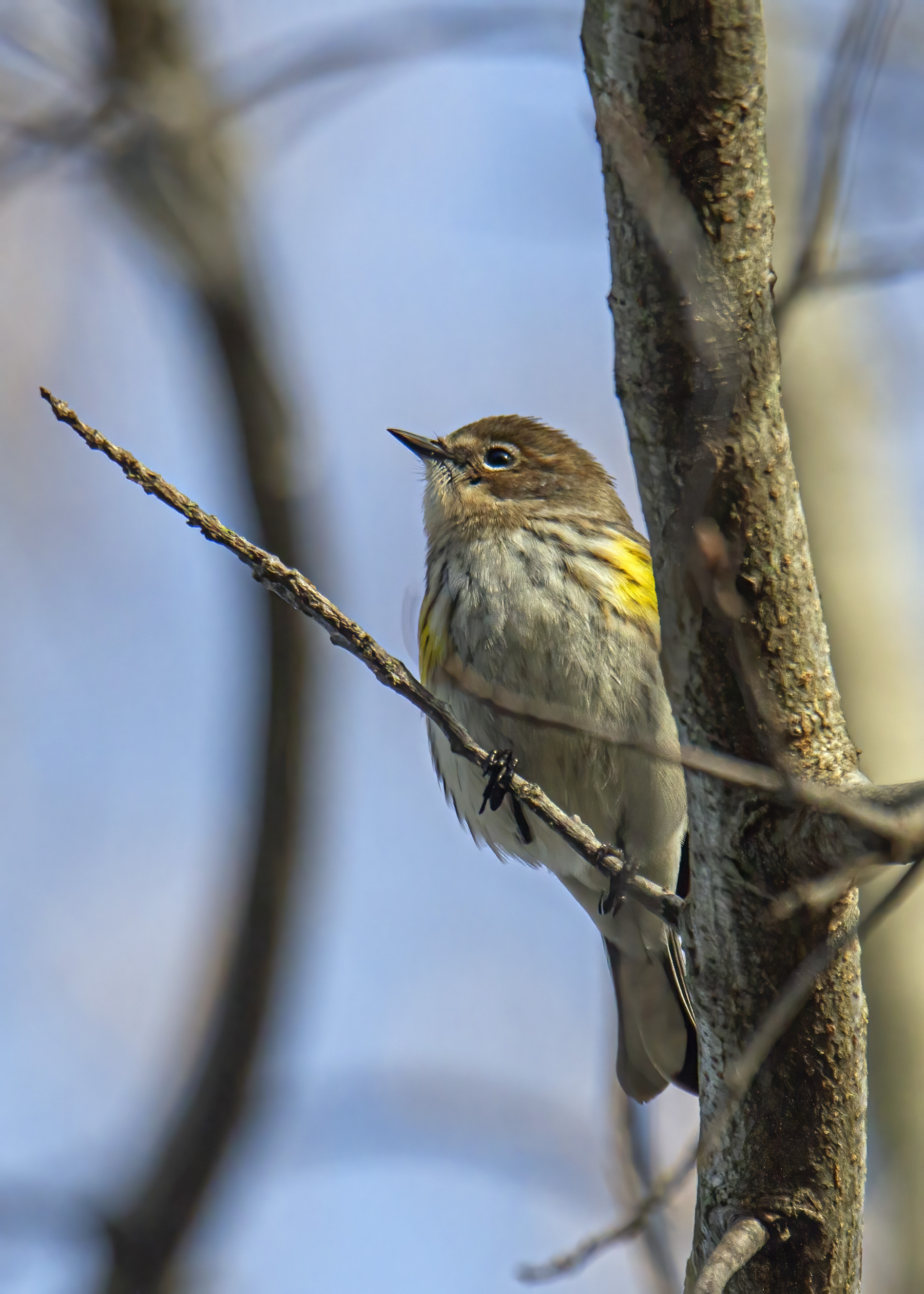
Yesterday at Occoquan Bay National Wildlife Refuge I spotted my first warbler of the spring, a Palm Warbler (Setophaga palmarum). For several weeks, I have been diligently searching the ground and the trees for warblers, whose appearance marks the beginning of spring for some birders. It was not surprising that the first one I saw was a Palm Warbler, because they are traditionally one of the earliest species to arrive, but I was a little surprised to find several of them at water’s edge, poking about in the rocks and the debris. In the past, I have most often spotted them on the grassy trails.

I was not able to get close to these little warblers, so my normal temptation was to crop my images, as I did in the first one, in order to highlight the bird. As I was working on the second image, I decided I liked the idea of including more of the environment, even though it is a bit cluttered. What do you think?

Palm Warbler

Palm Warbler

© Michael Q. Powell. All rights reserved.


Read Full Post »

Older Posts »