Feeds:
Posts
Comments

Posts Tagged ‘Papilio polyxenes’

When I first spotted this Black Swallowtail butterfly (Papilio polyxenes) last Saturday at Occoquan Bay National Wildlife Refuge, I thought that it was a fresh, newly-emerged specimen. It was only when the butterfly opened its wings fully that I realized that it was missing the lower portion of one of its wings. Although the butterfly seemed to fly quite normally, the significant damage to its wing was visually noticeable.

This encounter caused me to recall a conversation that I had with a fellow wildlife/nature photographer many years ago. This photographer told me that he only photographs “perfect” subject, i.e. those without damage or blemishes. I was a bit stunned at that approach, to be honest. Most aspects of our lives imperfect in one way or another, after all we are humans.

Is beauty to be found only in perfection? I don’t think so, and my general approach to photography (and to life) is to look for the beauty all around me, a beauty that can be found literally everywhere. So I endeavored to highlight the beauty of the damaged butterfly, a beauty that transcends its physical appearance.

Is your idea of beauty based on external, physical characteristics or does it include other aspects as well? Is beauty universal or is it individual and personal? I sometimes ponder and reflect on these kinds of “big” questions, not really seeking for definitive answers to them, but instead forcing myself to explore the limits of my understanding and consciousness and perhaps even expand those limits in the process.

Black Swallowtail

© Michael Q. Powell. All rights reserved.

Read Full Post »

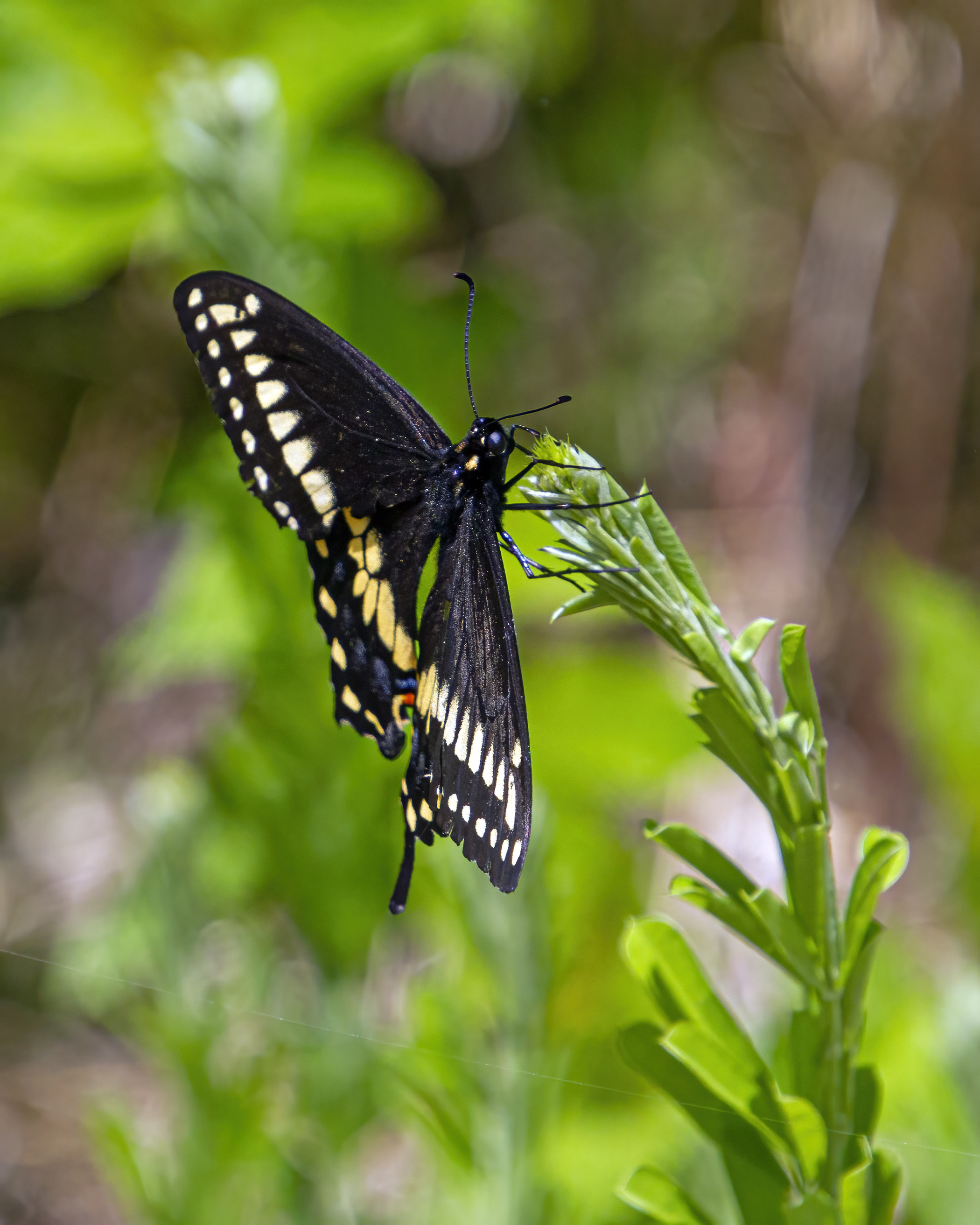
Although it is relatively early in the butterfly season, this beautiful Black Swallowtail (Papilio polyxenes) that I spotted on Wednesday at Occoquan Bay National Wildlife Refuge was already beginning to show signs of the wear and tear of everyday life, with damage to its wings and body and one missing “tail.” I don’t know what caused the damage to the butterfly’s wings, but suspect that it might have been attacks by predators or collisions with thorns or other sharp vegetation.

Black Swallowtail

Black Swallowtail

© Michael Q. Powell. All rights reserved.
Read Full Post »

Last Friday I spotted this Black Swallowtail butterfly (Papilio polyxenes) as it was feeding on a thistle plant at Occoquan Bay National Wildlife Refuge. I love the shape, color, and texture of these thistle plants. I was a little shocked to see the excellent condition of the butterfly this late in the season.

When I returned home I did a little research and found out that this butterfly has at least two broods each year, with the second one flying at least until the end of August. Sometimes there is a partial third brood. Perhaps the butterfly in the photo recently emerged.

The later broods will lay eggs and winter is spent in a chrysalis stage. In the springtime, the adults will emerge and the cycle will continue. Nature is amazing!

Black Swallowtail

© Michael Q. Powell. All rights reserved.

Read Full Post »

I spotted this beautiful Black Swallowtail butterfly (Papilio polyxenes) last week at Occoquan Bay National Wildlife Refuge. The orange circle with the black dot in between the wings helps to distinguish this species from several similar-looking dark butterflies in our area.

I chased this butterfly around for quite some time before it finally stopped for a moment on this vegetation—I often get a good workout when photographing butterflies. I am quite happy with the way that I was able to capture the varying shades of green surrounding the butterfly that add a lot of visual interest to this simple composition.

Black Swallowtail

© Michael Q. Powell. All rights reserved.


Read Full Post »

I am happy that I continue to see quite a few butterflies during my visits to Occoquan Bay National Wildlife Refuge. Summer is definitely not over yet—today’s high temperature is forecast to be 97 degrees (36 degrees C) with a heat index well above 1oo degrees (38 degrees C)—but increasingly I am seeing signs that the seasons are starting to change.

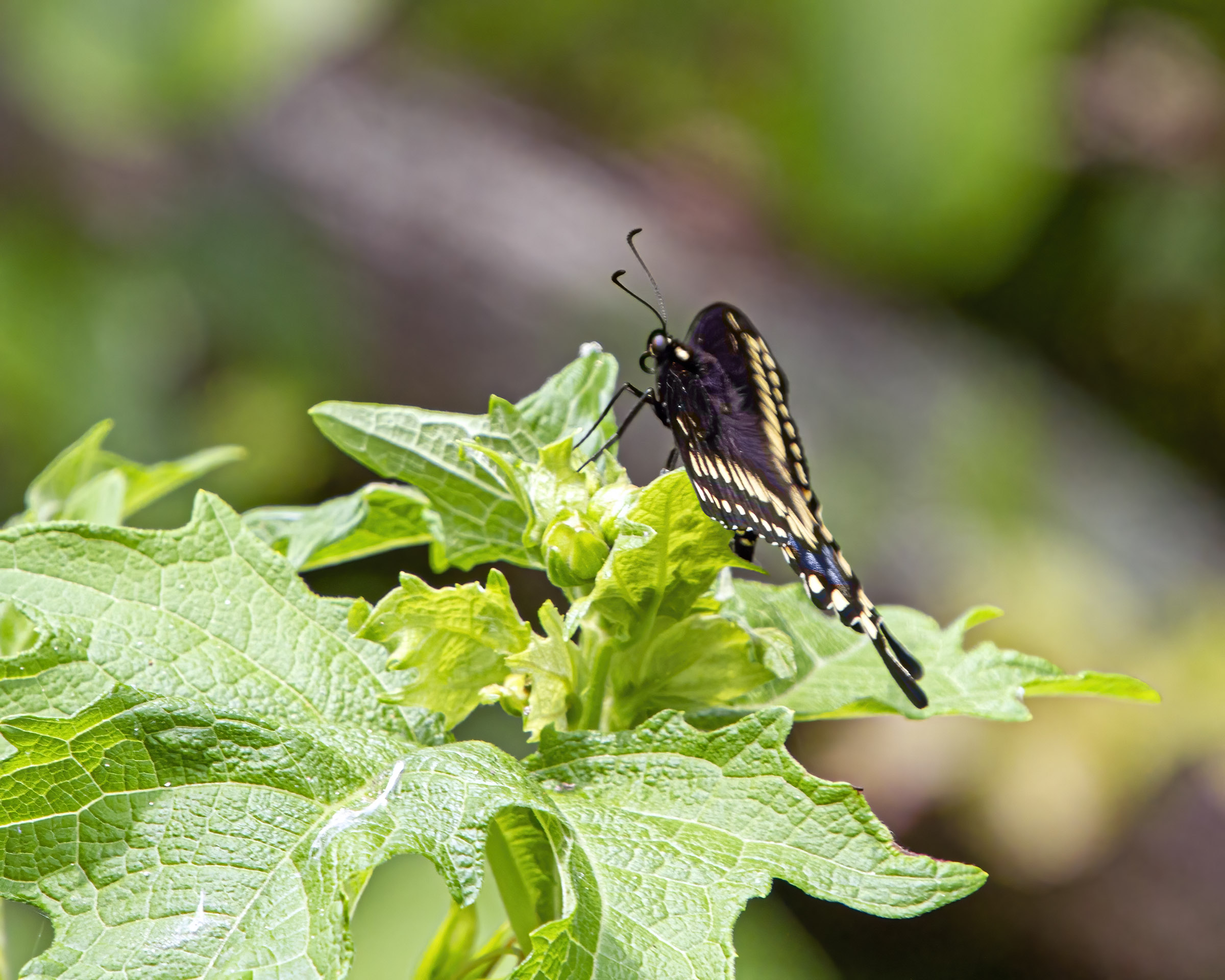
I spotted this Black Swallowtail butterfly (Papilio polyxenes) recently as it fed upon some kind of leafy plant. The butterfly’s “tails” were fully intact, but there seemed to be a little damage to its wings and the wings seemed to be strangely separated from its body in the first photo. I am not sure if this is normal or not.

I am trying to decide if I will venture out into the heat today, seeking some of the late season dragonflies, like the Blue-faced Meadowhawk and the Fine-lined Emerald, that emerge onto the scene in early September. If I do go out, I will be sure to bring lots of water and will stay in the shade as much as I can.

Black Swallowtail

Black Swallowtail

© Michael Q. Powell. All rights reserved.

Read Full Post »

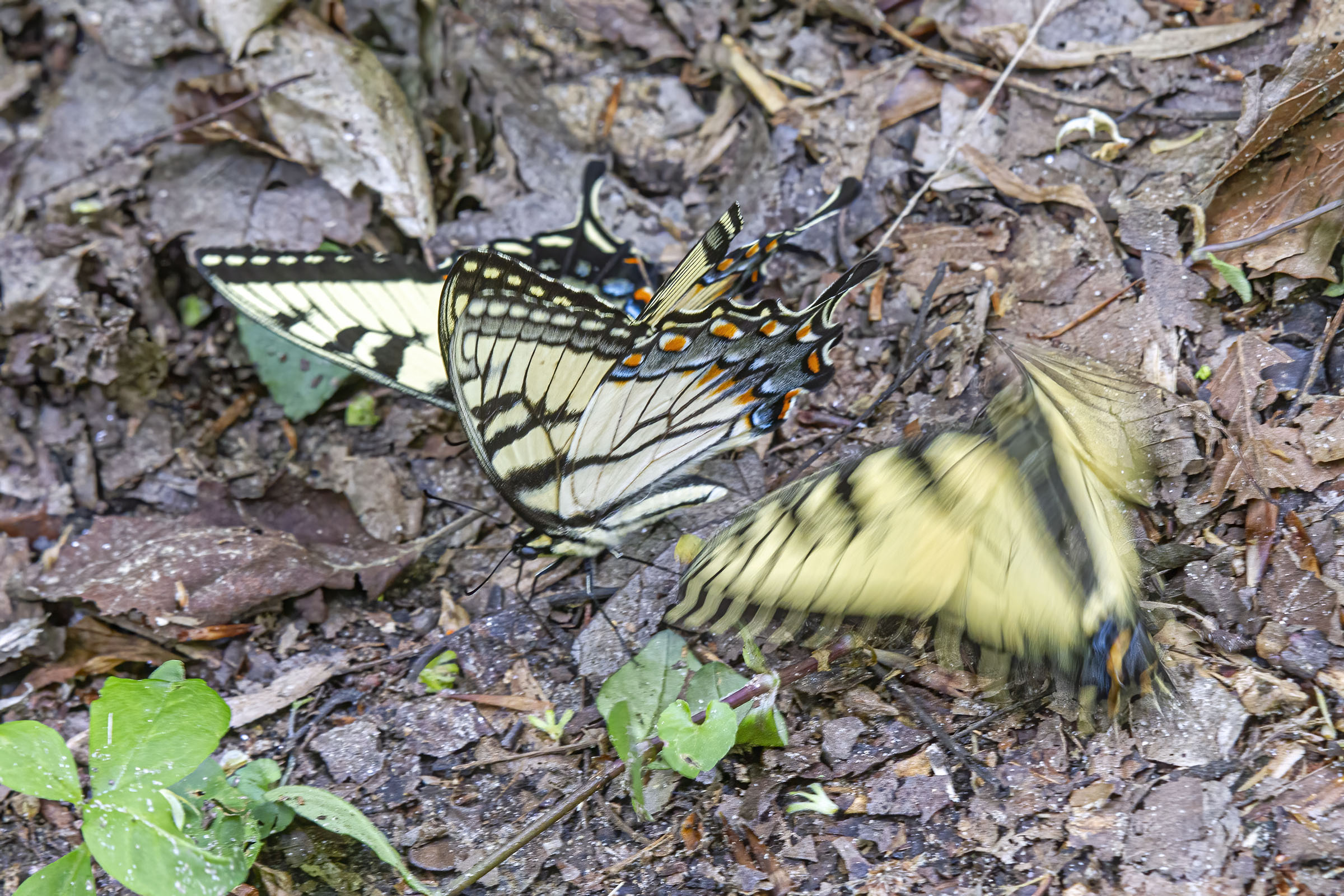
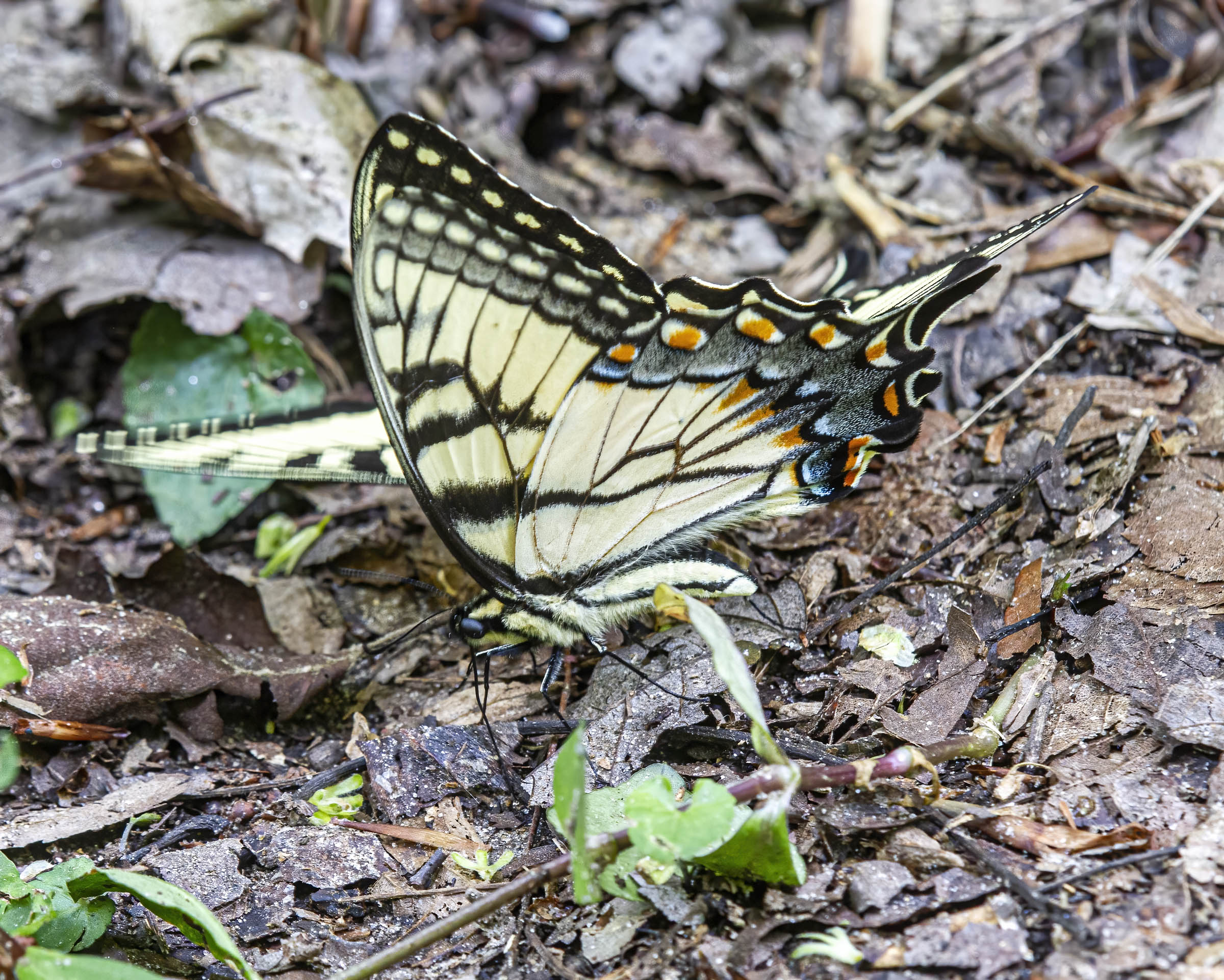
I usually think of butterflies drinking nectar from colorful flowers. Sometimes, though, newly emerged Eastern Tiger Swallowtails (Papilio polyxenes) will gather around  mud puddles or other damp spots—a behavior often referred to as “puddling”—to suck minerals and other substances out of the damp ground, like these butterflies that I spotted in early May alongside a creek in Prince William County, Virginia.

Butterflies were constantly moving in and out of a small group that seemed to be concentrated at one particular spot. As I was taking this shot, a new arrival “photobombed” me. I really like the motion blur of the arriving butterfly, which gives the image a dynamic feel and also a bit of whimsy. The second shot is a close-up view of one of the butterflies as it extracted nutrients from the moist area.

“Puddling” behavior is mostly associated with male butterflies.  According to an article at the Thoughtco website, “Nectar lacks some important nutrients the butterflies need for reproduction. For those, butterflies visit puddles. By sipping moisture from mud puddles, butterflies take in salts and minerals from the soil. This behavior is called puddling, and is mostly seen in male butterflies. That’s because males incorporate those extra salts and minerals into their sperm.”

Eastern Tiger Swallowtail

Eastern Tiger Swallowtail

© Michael Q. Powell. All rights reserved.
Read Full Post »

One of the clear signs that we are moving through spring is the emergence of large numbers of full-sized butterflies. Last week I was delighted to spot multiple Black Swallowtail (Papilio polyxenes) butterflies. Dark swallowtail butterflies can sometimes be problematic for identification, because in our area we have Pipevine Swallowtails, Spicebush Swallowtails, and the dark morph female Eastern Tiger Swallowtail, in addition to the Black Swallowtail.

However, these butterflies were relatively easy to identify, because I could clearly see the black dot inside the orange dot in each of the photos, one of the field markers of a Black Swallowtail. I was quite struck by the unblemished state of each of these butterflies, which seemed to be fresh and bright with fully intact swallowtails. As the season moves on, some of the butterflies will become more and more tattered and faded.

If you are curious about the identifying marks for the different kinds of dark swallowtails, I highly recommend a blog posting by Louisiana Naturalist called Four Dark Swallowtails. In this posting, she does side-by-comparisons of the four species from different angles and points out the visible differences that are really useful in identification.

Black Swallowtail

Black Swallowtail

Black Swallowtail

© Michael Q. Powell. All rights reserved.
Read Full Post »

Perspective and timing really matter. In the first photo, the Black Swallowtail (Papilio polyxenes) is immediately recognizable as a butterfly. When the butterfly opened its wings wider and I took the second shot, however, I captured an image that forces viewers to pause for a second to process what their eyes are seeing. We are so used to seeing butterflies with wings fully visible that we may not immediately recognize a butterfly when the angle of the shot causes the wings to virtually disappear. The final image is a more “normal” view of the butterfly on a different perch.

I spotted this Black Swallowtail butterfly last Friday as I was wandering about at Occoquan Bay National Wildlife Refuge. Dragonflies were pretty scarce that day, so it was nice to see so many butterflies still flying. That day was nice and warm, but since then our temperatures have been lower than average—it is currently 40 degrees (4 degrees C) as I write this posting at 5:30 in the morning and today’s high is forecast to be about 65 degrees (18 degrees C). Autumn has definitely arrived.

Black Swallowtail

Black Swallowtail

Black Swallowtail

© Michael Q. Powell. All rights reserved.
Read Full Post »

There has been an explosion of butterflies in the last few weeks in my area. Throughout most of the summer, I felt lucky when I managed to spot a few large, colorful butterflies.  All of the sudden I am seeing lots of butterflies in multiple locations at Occoquan Bay National Wildlife Refuge.

Here are a few of my favorite butterfly shots from a visit to the wildlife refuge last Friday. Quite often I will focus on a single species in a blog posting, but in this case I like the way that these three images work as a set that highlights the beauty and diversity of these wonderful creatures that I was blessed to photograph that day.

The butterfly in the first image is a Monarch (Danaus plexippus); the butterfly in the second image is a Zebra Swallowtail (Eurytides marcellus); and the butterfly in the third image is a Black Swallowtail (Papilio polyxenes).

I like each of the photographs for different reasons, but, if pressed, I would probably say that the final one is my favorite. Do you have a favorite?

Monarch butterfly

Zebra Swallowtail

Black Swallowtail

© Michael Q. Powell. All rights reserved.


Read Full Post »

It was hot and humid when I went trekking with my camera this past Wednesday and most of the wildlife seemed to be taking siestas in the shade at Occoquan Bay National Wildlife Refuge. I could hear the sounds of birds, but spotted only a few of them. Even the dragonfly activity seemed to be lower than normal.

Fortunately, a good number of butterflies were active. In fact they were so active, that I expended a lot of energy chasing after them. I noticed that several of them were showing some wear and tear, with visible damage to their wings.

The first and third photos show Black Swallowtail butterflies (Papilio polyxenes), while the butterfly in the middle shot is a Zebra Swallowtail butterfly (Eurytides marcellus). None of these images is spectacular, but I like the way that they work together as a set, with the green vegetation in the background of each of them serving as a unifying element.

Have a happy weekend and chase a few butterflies if you can find them—it will make you feel like a child again.

Black Swallowtail

Zebra Swallowtail

Zebra Swallowtail

© Michael Q. Powell. All rights reserved.


Read Full Post »

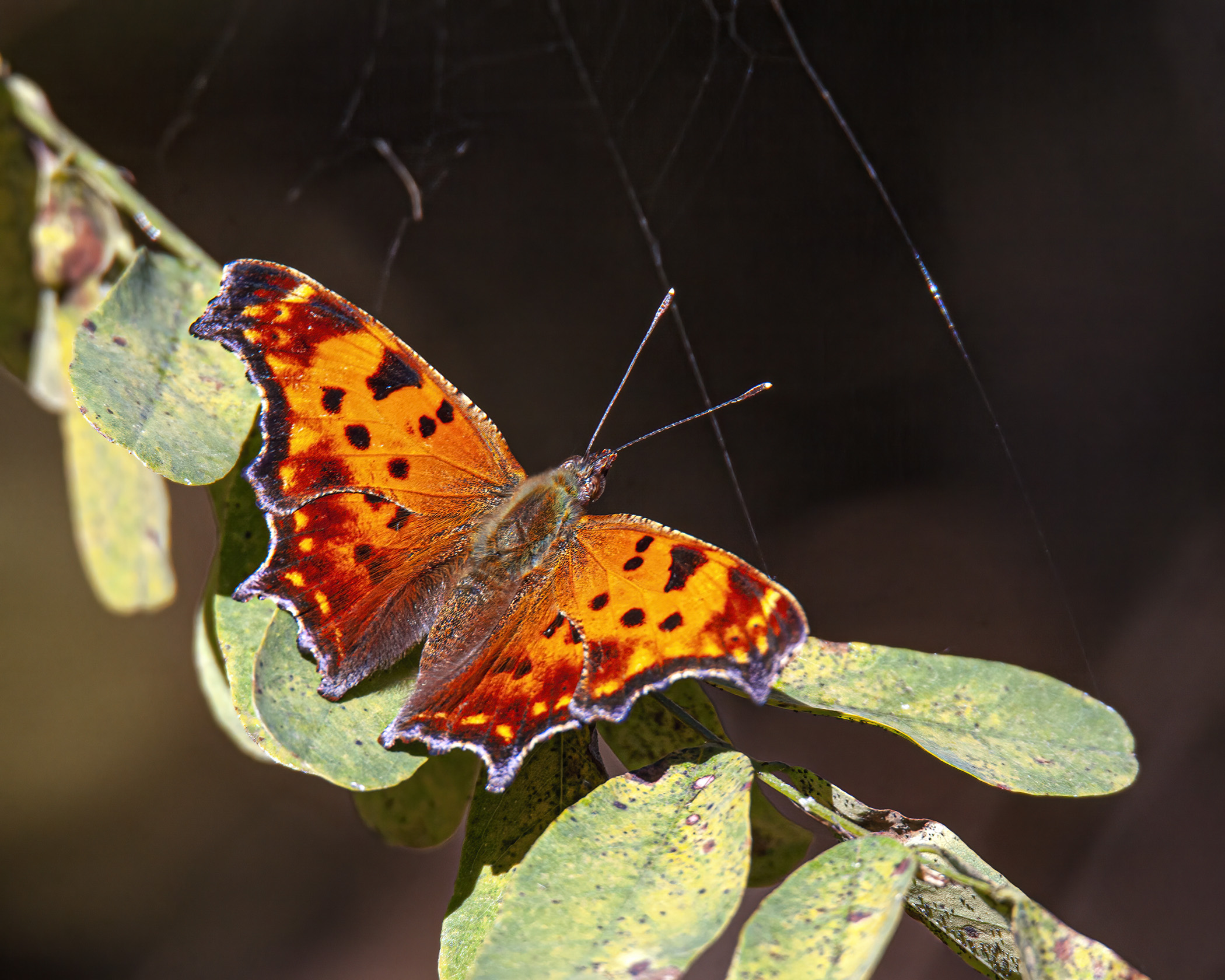
I am happy to see that some butterflies are still with us as we move deeper into November. Eastern Comma butterflies (Polygonia interrogationis), like the one in first photo, overwinter as adults, rather than as eggs or pupae as most butterflies do, so there is a chance that I will continue to see them for a while longer if the weather does not get too bad.

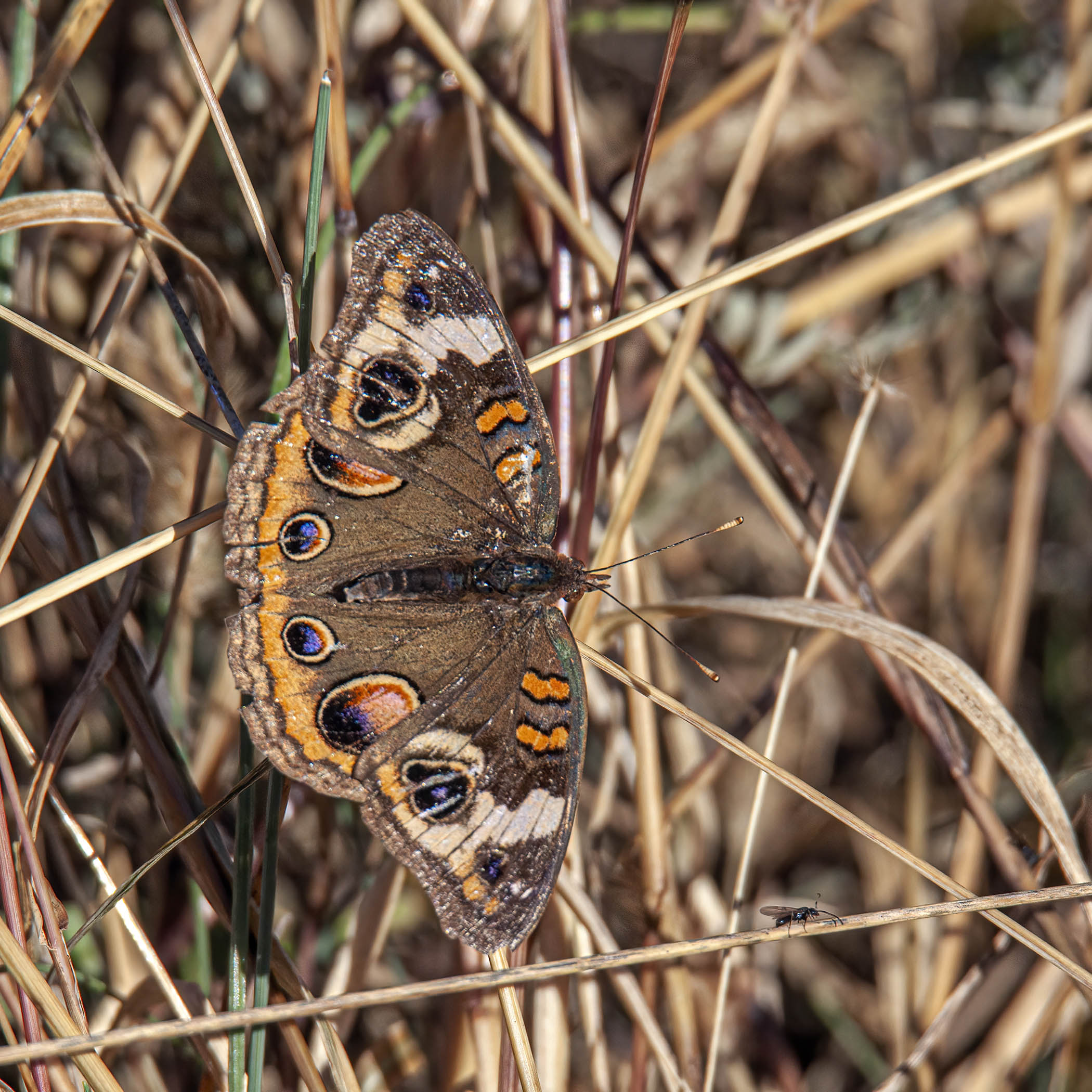
Common Buckeyes (Junonia coenia), like the one in the second photo, cannot tolerate cold temperatures. Some of them, according to Wikipedia, migrate to the south for the winter and then return when the weather warms up in the spring.

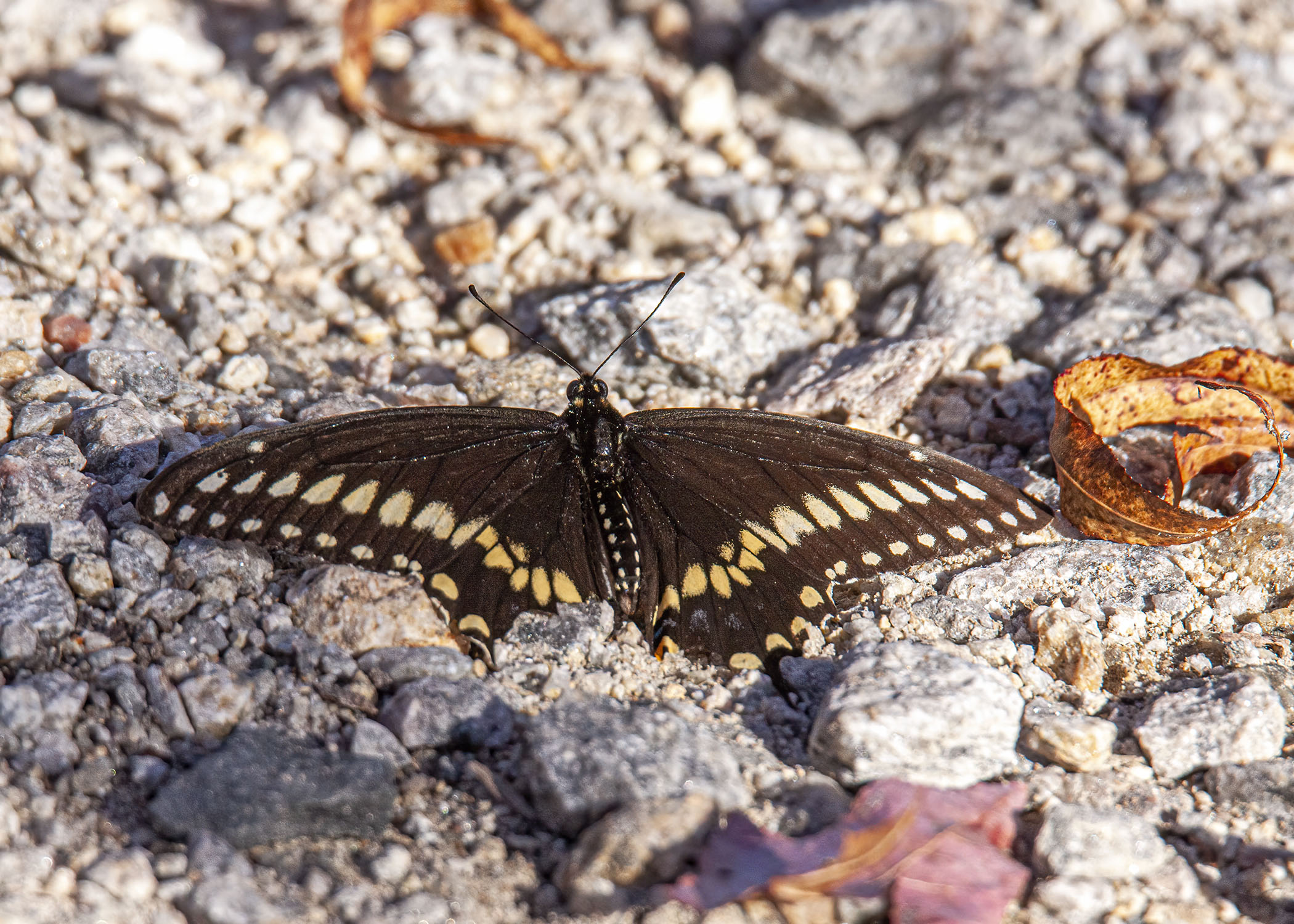
I was most surprised this week to spot the Black Swallowtail (Papilio polyxenes) in the final photo—it had been a month or so since I had last seen a Black Swallowtail. This species spends the winter in the chrysalis stage, and adults emerge in the spring to seek out host plants.

We are nearing the end of the butterfly season, but I am delighted to share my walks in nature with these fragile little creatures for a little while longer.

Eastern Comma

Common Buckeye

Black Swallowtail


© Michael Q. Powell. All rights reserved.


Read Full Post »

As we rush towards the end of September, the number of butterflies is continuing to drop and many of the ones that I see are faded and tattered. Yet somehow, despite the obvious signs of age and infirmity, they manage to adapt and survive. I photographed this Black Swallowtail butterfly (Papilio polyxenes) last Friday at Occoquan Bay National Wildlife Refuge.

For folks of my generation, the title of this blog will immediately bring to mind the memorable song by that name as sung by Gloria Gaynor in the late 1970’s.

“Oh no, not I, I will survive
Oh, as long as I know how to love, I know I’ll stay alive
I’ve got all my life to live
And I’ve got all my love to give and I’ll survive
I will survive”

Black Swallowtail

© Michael Q. Powell. All rights reserved.


Read Full Post »

It is always a little tricky taking photos in the bright sunlight, but I like the way that this photo turned out of a Black Swallowtail butterfly (Papilio polyxenes)that I encountered last Thursday at Occoquan Bay National Wildlife Refuge. Why do I like it? It is often really difficult for me to describe precisely why I like a particular photo, particularly when it is one of my own, which makes it almost impossible for me to assess it objectively.

I love it when viewers take the time to describe their reactions. When I posted this image in Facebook in the Nature Lovers of Virginia group, Patricia Holt made the following comment that absolutely delighted me.

“This photo is a pleasure. I love the way the lower flower is a darker hue mimicking the darker spots lower on the butterfly. The way the spots on the butterfly are narrower at the top than the bottom contrary to the flower petals. It struck me how there’s a vague sense of a mirror image but not. Definitely the light and you have captured a feeling of balance as in yin yang. So pretty!”

As is generally the case, I recommend clicking on the image to get a better look at some of the wonderful details in this image.

Have a wonderful Friday.

Black Swallowtail

© Michael Q. Powell. All rights reserved.


Read Full Post »

How close should I try to get to my subject? How much attention should I pay to environmental elements when composing a shot? When is the decisive moment to grab a shot when the subject is in motion? These were some of the thoughts swirling through my head when I spotted this Black Swallowtail butterfly (Papilio polyxenes) last Friday at Occoquan Bay National Wildlife Refuge.

There are several dark swallowtails in our area, including the Spicebush Swallowtail, the Pipevine Swallowtail, the dark morph of the Eastern Tiger Swallowtail, and the Black Swallowtail. Sometimes it is hard to tell them apart, but in this case I spotted the black dots inside of the orange dots in the area between the wings, one of the identifying marks of a Black Swallowtail.

The first shot was one of the earliest shots that I took and I remember staying far enough away from the butterfly to be sure that I included the curl of the leaf coming out of the stalk of vegetation. I also tried to time my shot to catch the butterfly with its wings spread wide and was mostly successful.

I moved in closer and captured the second image, which shows more of the details of the butterfly. Although the camera settings remained the same, the background is more out of focus than in the first shot, because depth of field tends to get shallower when you get closer to a subject. I also tried to shoot from a slightly higher angle by standing on my tiptoes—you can see more of the vegetation over the butterflies left eye in the second image than in the first.

I chased this butterfly around as it flew about and waited patiently for it to perch again. I captured the final image when it landed on a different kind of plant. Normally a shot like this when the subject is facing away from you is not a good shot and is derisively referred to as a “butt shot” by many photographers. In this case, however, I was struck by the way that the angle of the butterfly’s wings complemented the angular shape of the plant’s leaves and I like the abstract feel of the image that I captured.

Black Swallowtail

Black Swallowtail

Black Swallowtail

© Michael Q. Powell. All rights reserved.


Read Full Post »

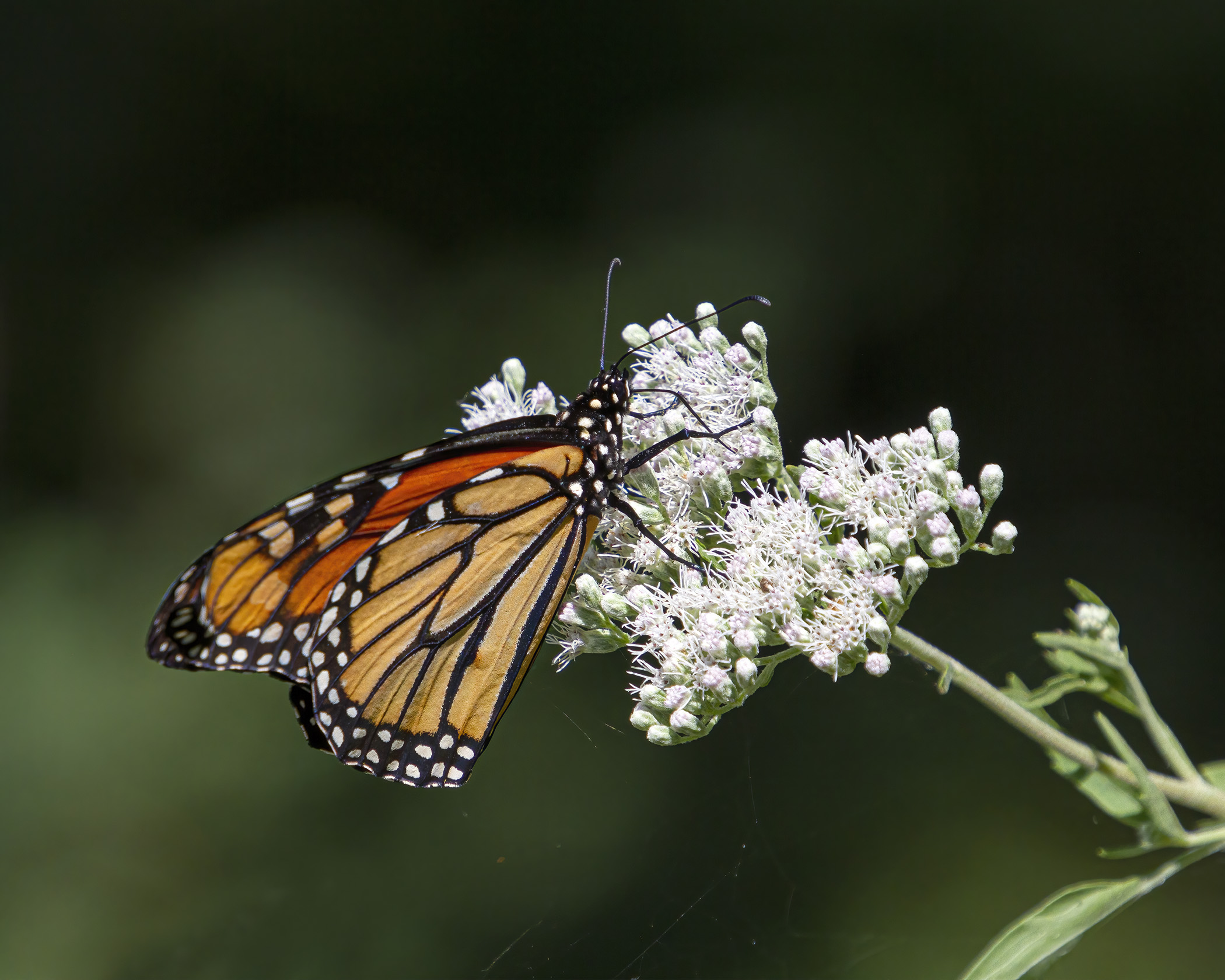
Although I did a posting fairly recently featuring a Black Swallowtail butterfly (Papilio polyxenes), I like this image so much that I decided to give you another look at this striking species. I spotted this beautiful butterfly last Sunday at Occoquan Bay National Wildlife Refuge as it was gather nectar from some kind of thistle flower. As I mentioned in the previous posting, you can distinguish this butterfly from similar species by the orange dot on the lower wing with a black dot inside of it.

Black Swallowtail

© Michael Q. Powell. All rights reserved.
Read Full Post »

I spotted this Black Swallowtail butterfly (Papilio polyxenes) last Thursday at Occoquan Bay National Wildlife Refuge. In our area black-colored swallowtails also include dark morph Eastern Tiger Swallowtails, Spicebush Swallowtails, and Pipevine Swallowtails, so identification can be a bit tricky.

I can tell, however, that this butterfly is a Black Swallowtail because it is the only one of the dark swallowtails with a black dot inside of an orange dot on the edge of the wings near the body, a characteristic that you can see in the photo below. Unlike most of the butterflies that I have photographed, this one is not actively feeding, so its proboscis is curled up, rather being extended. If you double-click on the image, you can get a closer look at the curled-up proboscis and other wonderful details of this beautiful Black Swallowtail butterfly.

Black Swallowtail

© Michael Q. Powell. All rights reserved.

Read Full Post »

I was really thrilled to spot this spectacular Black Swallowtail butterfly (Papilio polyxenes) last week as it fed on some kind of thistle plant at Occoquan Bay National Wildlife Refuge. There are several dark swallowtail species in our area and I often have trouble telling them apart. In this case, though, I could see the distinctive back dot inside the orange dot which is telltale sign that this is Black Swallowtail. I highly recommend a helpful posting by Louisiana Naturalist that points out way to distinguish among four dark swallowtails—it is a reference that I repeatedly return to when I have a question about a dark swallowtail.

Black Swallowtail

© Michael Q. Powell. All rights reserved.

Read Full Post »

This spectacular Black Swallowtail butterfly (Papilio polyxenes) spread its wings wide and seemed to be posing for fellow wildlife enthusiast Walter Sanford and for me as we explored Occoquan Bay National Wildlife Refuge this past weekend. We have a number of different dark-colored swallowtail butterflies in our region, including the black morph of the female Eastern Tiger Swallowtail, the Pipevine Swallowtail, and the Spicebush Swallowtail, but this is the only place that I have encountered the Black Swallowtail.

Whenever I photograph a swallowtail that is black, I will usually refer to a very helpful blog posting by Louisiana Naturalist that compares some of the identification features of the four different dark swallowtails.

Black Swallowtail

© Michael Q. Powell. All rights reserved.

Read Full Post »