Feeds:
Posts
Comments

Posts Tagged ‘Medora North Dakota’

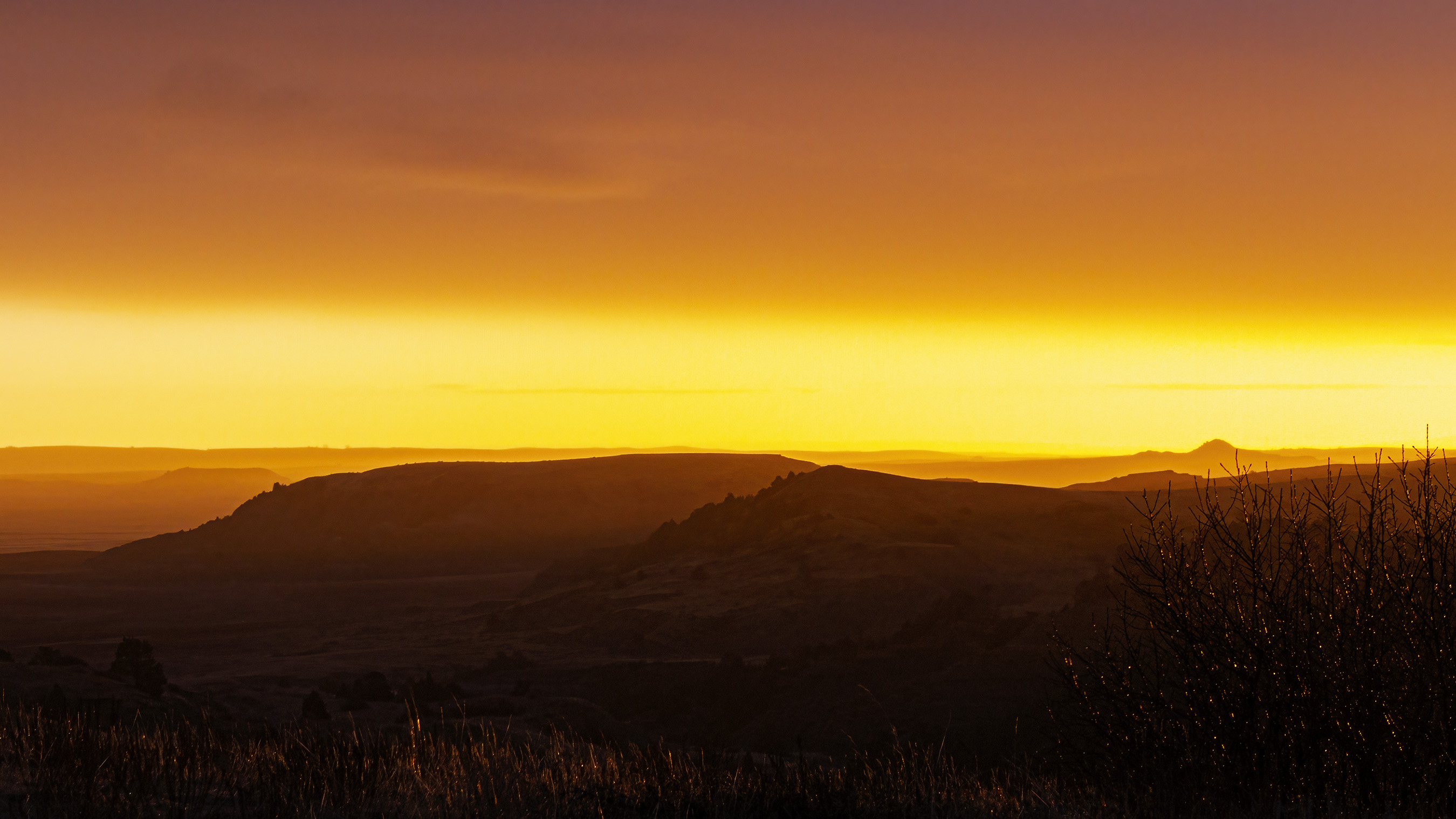
I am finally more or less caught up with my photos from my road trip to Seattle and back. Here are a couple of my favorite shots of the trip, when I captured the sunrise on 5 November at Theodore Roosevelt National Park in Medora, North Dakota. It was dark and cold when I crawled out of my sleeping bag that morning, but I really wanted to try to see the sunrise.

The sun rises and sets each day, but each one is unique, affected by a whole host of uncontrollable factors, including meteorological conditions and the landscape. Sometimes the sun arrives slowly and subtly and sometimes it explodes into view. Professional landscape photographers scout locations in advance and figure out the optimal locations to catch the sunrise. I simply got into my car and began to drive slowly on the road through the park.

As I was driving I came upon this view as I rounded a corner just as the sun was rising over the horizon. Results are unpredictable when you point your camera directly at the sun, but somehow I managed to get it almost right in the first shot below—well at least I got a cool image that I like. When I moved the camera to the side a little so the sun was no longer in the frame, I was able to capture the final photo. I really like the sort of layering in the background, as the sun painted the various land features.

I am not sure if I will do a posting tomorrow, when those of us in the United States will be celebrating Thanksgiving. In case there is posting tomorrow, let me thank all of you now who pause for a moment to look at my photos or read my rambling prose. Thanks for all of your support and encouragement over the years.

sunrise

sunrise

© Michael Q. Powell. All rights reserved.
Read Full Post »

I am finally nearing the end of my photos from my brief stay in Theodore Roosevelt National Park in North Dakota at the beginning of November. I captured quite a few images of wild horses, bison, and prairie dogs at the national park and it has been a real joy reviewing the photos on my computer and relive the memories after my return home. Normally I try to post images on my blog that are a week old or less, but I figure that you will forgive me for posting images that are three weeks old.

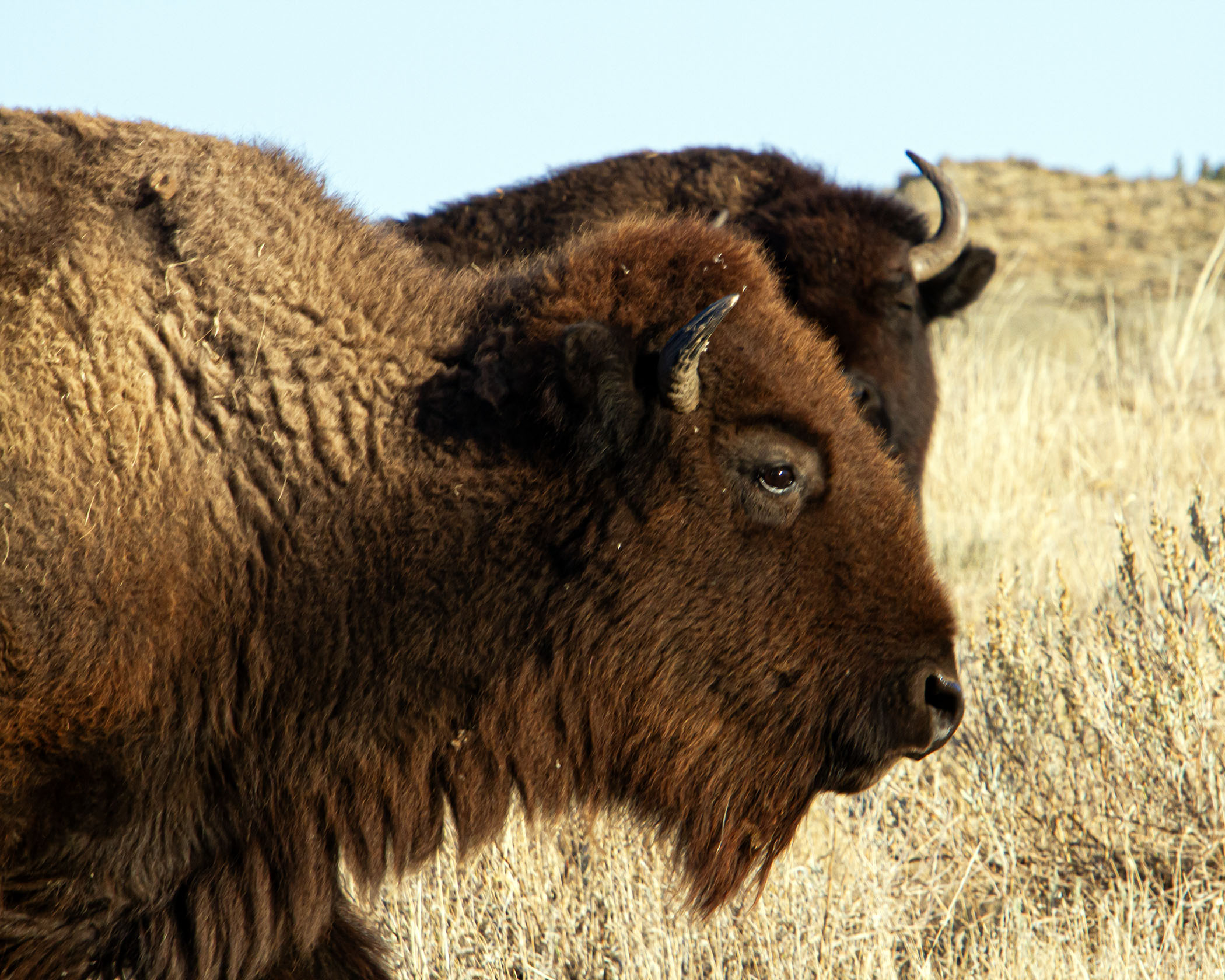
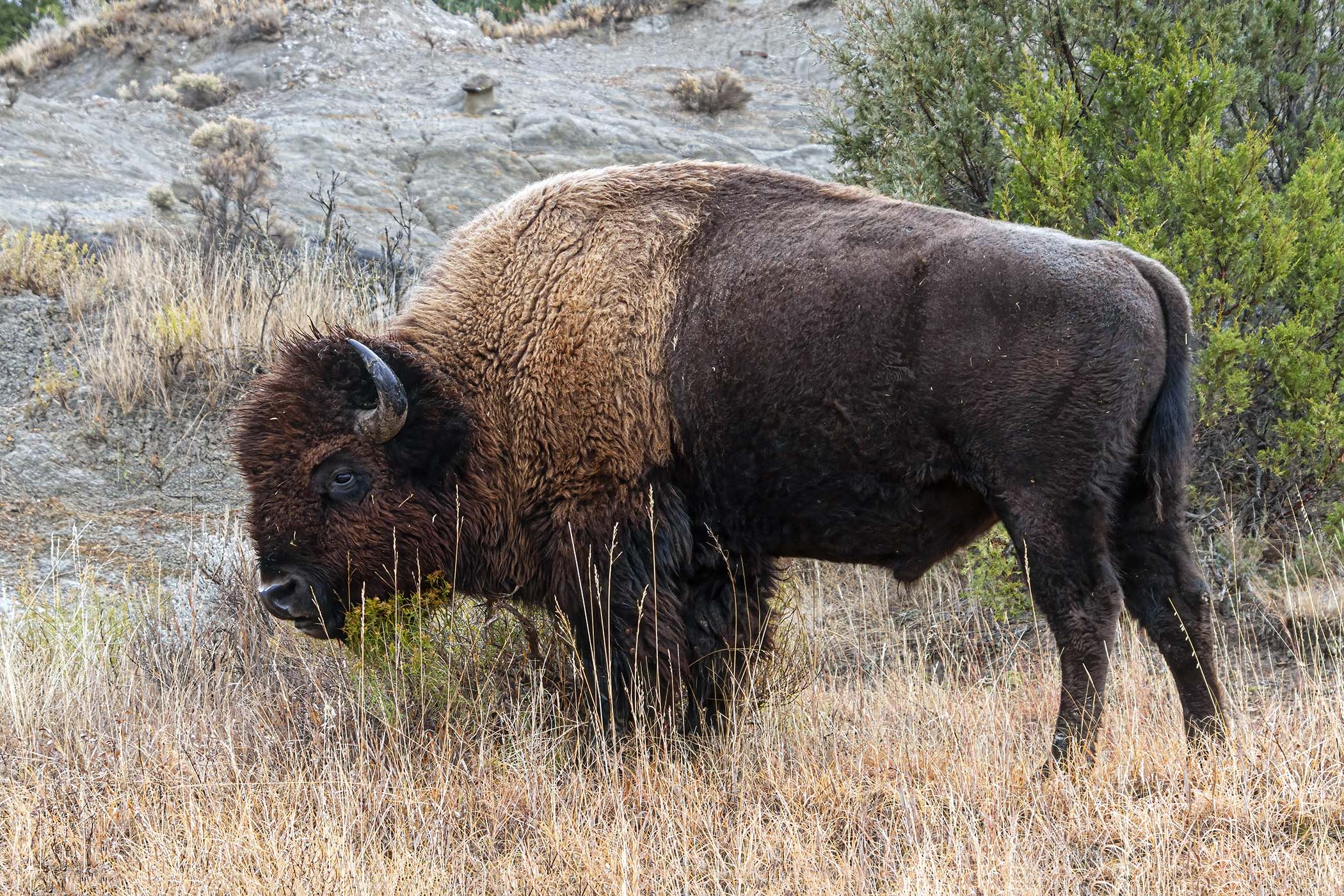
Here are a few selected images of American Bison (Bison bison) that I spotted at the park in early November. Most often the were simply grazing, so frequently I would try to capture some interesting background, as in the first photo below. I was quite excited to spot the young bison in the second photo. It was quite a bit smaller than the adults, but already seemed to be growing horns.

The bison in the final photo lifted its head momentarily, allowing me to capture this informal portrait. It may look like I was really close to the bison, but I was using a telephoto zoom lens on my camera and I am pretty sure that I took the shot from inside my car. However, the bison was close enough that I had to zoom out a little to 322mm (on an 18-400mm lens) to fit the bison’s enormous head in the frame.

American Bison

American bison

American Bison

© Michael Q. Powell. All rights reserved.


Read Full Post »

Although I returned from my road trip out West several weeks ago, I am still going through some of the images that I captured. One of the real highlights of the trip was staying for a few nights in Theodore Roosevelt National Park in North Dakota. Unlike some other national parks in that part of the USA, like Yosemite and Glacier National Parks, this park is uncrowded and I was able to drive slowly on its roads and observe a variety of wildlife species.

One of my favorites was the bands of wild horses that live in the national park. It’s estimated that there are about 200 wild horses in the park, though it is hard to know for sure. Most of the time I spotted some of the horses at a distance, out of the range of my telephoto lens, but I did have a few closer encounters and was able to capture some decent images of them.

It was interesting to note that the horse in the final photo is wearing what looks to be some kind of tracking collar. I am not sure if this is a normal practice at the national park or if the horse is part of some special study.

I grew up watching lots of Western show on television, like The Rifleman, Bonanza, and Gunsmoke. As a result, I have a special fondness for cowboys and find it really cool to see wild horses and bison herds.

wild horses

wild horse

wild horse

© Michael Q. Powell. All rights reserved.

Read Full Post »

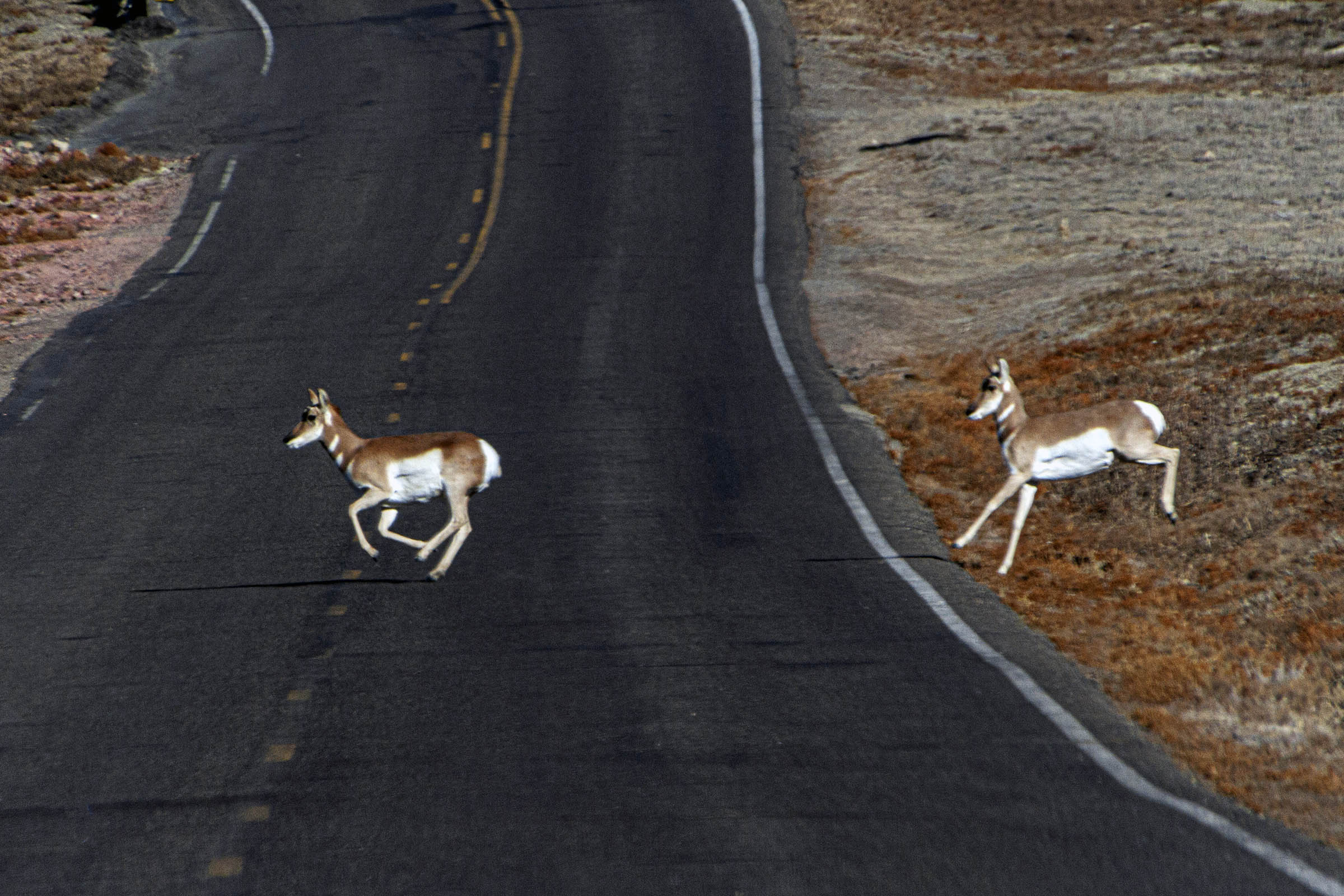
When I was a child, I recall hearing and singing an old American folk song called “Home on the Range.” Its lyrics speak of a home where buffalo roam and “the deer and the antelope play.” Those words kept coming back to me earlier this month during my brief stay at Theodore Roosevelt National Park in North Dakota.

Over the years I have learned that the song is technically inaccurate, because there are no antelopes in North America. However, the Pronghorn (Antilocapra americana) closely resembles the antelopes of the Old World and are known colloquially as “American antelope.” The closest living relatives of pronghorn, though, are the giraffe and the okapi, an animal often referred to as the “forest giraffe” found in the Democratic Republic of the Congo. Of note, the pronghorn is the fastest land mammal in the Americas, capable or reaching speeds of up to 55 miles per hour (88 km/h).

When I first spotted these pronghorns, they were coming down the side of a hill and preparing to cross the road on which I was traveling. There were two young pronghorns and one an adult, that I presumed was their mother. I focused primarily on the young ones, as you can see in the first two photos, and finally got a shot of the adult as the the pronghorns were climbing a hill on the other side of the road. If I remember correctly, I took the first two photos through the windshield of my car.


pronghorn

pronghorn

Pronghorn

© Michael Q. Powell. All rights reserved.

Read Full Post »

Early in the morning on 5 November, I encountered some mule deer (Odocoileus hemionus) at Theodore Roosevelt National Park in Medora, North Dakota. Initially the deer were lapping up water that had accumulated alongside the road after a rainstorm.

I remained in my car as I captured a few shots of the deer, who looked at me with what appeared to be curiosity rather than fear. I was happy to be able to capture views of the tails and the ears of the mule deer, two of their most distinctive features, before they slowly moved into the underbrush.

mule deer

mule deer

mule deer

© Michael Q. Powell. All rights reserved.

Read Full Post »

Earlier this month I spotted a coyote (Canis latrans) at Theodore Roosevelt National Park in North Dakota. The coyote was hanging around a prairie dog town (you can see a prairie dog in the background) and magpies accompanied it, hoping to scavenge some tasty remnants.

I took these photos from inside my car with the windows open, hoping that no other cars would come by and disturb the coyote. Fortunately it was early in the morning and I was able to watch the coyote without interruptions. The coyote was unsuccessful in its hunt while I was there and eventually moved on.

Although we have coyotes at the wildlife refuge where I do a lot of my photography in Northern Virginia, this was my first time seeing and photographing one.

coyote

coyote

coyote

© Michael Q. Powell. All rights reserved.

Read Full Post »

It is always a challenge to shoot directly into the sun. You never quite know what kind of sun flares will make their way into you photo or how much your subject will become a silhouette. Still I can’t help but attempt to capture a photo whenever the opportunity presents itself.

My gamble paid off last week when I captured this cool image of an American Bison (Bison bison) last week at Theodore Roosevelt National Park in Medora, North Dakota. It was just after sunrise and the sun was still quite low on the horizon, creating a distorted, elongated shadow of the bison. You can see only a few details of this magnificent animal, but the shape of the profile of the bison makes it easy to identify the primary subject.

Luck plays often plays a significant role when it comes to wildlife photography, but I can’t help but think of the old adage, usually attributed to Wayne Gretzky, “You miss 100 % of the shots that you don’t take.” While I am not a fan of the “spray and pray” approach to photography, I do think it is worthwhile to take a shot whenever something catches your eye—sometimes you will be pleasantly surprised by the results.

© Michael Q. Powell. All rights reserved.

Read Full Post »

After a frigid night camping at Theodore Roosevelt National Park in North Dakota, I awoke early Tuesday morning to catch the sunrise. It was not super spectacular, but I was able to capture some of the color as the sun rose over the mountains.

When the sun was a little higher in the sky, I was able to get a better view of the spectacular landscape with incredible rock formations, as you can see in the final photo. I encourage you to click on that photo to get an enlarged view of the details of the landscape. In this part of the country, these terrain features are referred to as “buttes,” though it is not always clear exactly what make a “butte” a “butte,” rather than a “hill” or “mountain.” No matter what you call them, these terrain features are breath-taking.

sunrise in North Dakota

sunrise in North Dakota

buttes in North Dakota

© Michael Q. Powell. All rights reserved.
Read Full Post »

Two years ago I had the awesome opportunity to view some of the wild horses at Theodore Roosevelt National Park in North Dakota at relatively close range. During my recent visit to the same national park, I was not quite as lucky and spotted wild horses only in the distance.

The horses were grazing on an elevated spot, so I was forced to shoot at an upward angle. Consequently my shots of them all had only the sky in the background. Still, I was really happy to be able to spot some wild horses during the somewhat limited time that I spent at the park.

wild horse

wild horse

© Michael Q. Powell. All rights reserved.


Read Full Post »

The Little Missouri River runs through Theodore Roosevelt National Park in North Dakota and I was delighted to capture these shots of it during a recent visit there. There were some indications of autumn colors in the foliage and vegetation and especially in the reflections in the water, as you can see in the second photo below.

Little Missouri River

Little Missouri River

© Michael Q. Powell. All rights reserved.


Read Full Post »

During my recent visit to Theodore Roosevelt National Park in North Dakota I encountered several colonies of Prairie Dogs (Cynomys ludovicianus). It was a lot of fun observing these active little creatures scurrying in and out of their interconnected holes.

Some of them seemed to be foraging for food, but many of them seemed to be playing and/or interacting with each other. I had the impression that some of them were youngsters, but they never stood still long enough for me to get an impression of their relative sizes.

prairie dog

prairie dog

prairie dog

© Michael Q. Powell. All rights reserved.

Read Full Post »

One of the highlights of my recent visit to Theodore Roosevelt National Park in Medora, North Dakota was having the chance to see quite a few American Bison (Bison bison). Unlike during a previous visit there two years ago, the bison were not blocking the road, but some of them were alongside the edges of the road.

These mammoth creatures seemed to be almost as large as my KIA Soul, so I often stayed inside my car when taking photographs of them. I ventured outside of the relatively friendly confines of my little car only when the bison were a good distance away from me.

bison

bison

bison

© Michael Q. Powell. All rights reserved.

Read Full Post »

On several of my drives through Theodore Roosevelt National Park in North Dakota I spotted Mule deer (Odocoileus hemionus) with fawns. I was always struck by the proportionally large ears on the youngsters—apparently they grow into them as they age.


deer and fawn

deer and fawn

© Michael Q. Powell. All rights reserved.

Read Full Post »

I captured this shot of a mule deer (Odocoileus hemionus) early in the morning during my recent visit to Theodore Roosevelt National Park in Medora, North Dakota. I woke up before dawn and crawled out of my warm sleeping bag on a frigid morning to drive slowly through the park.

I spotted several small groups of mule deer grazing alongside the park roads and this was my favorite shot of one of them.

© Michael Q. Powell. All rights reserved.

Read Full Post »

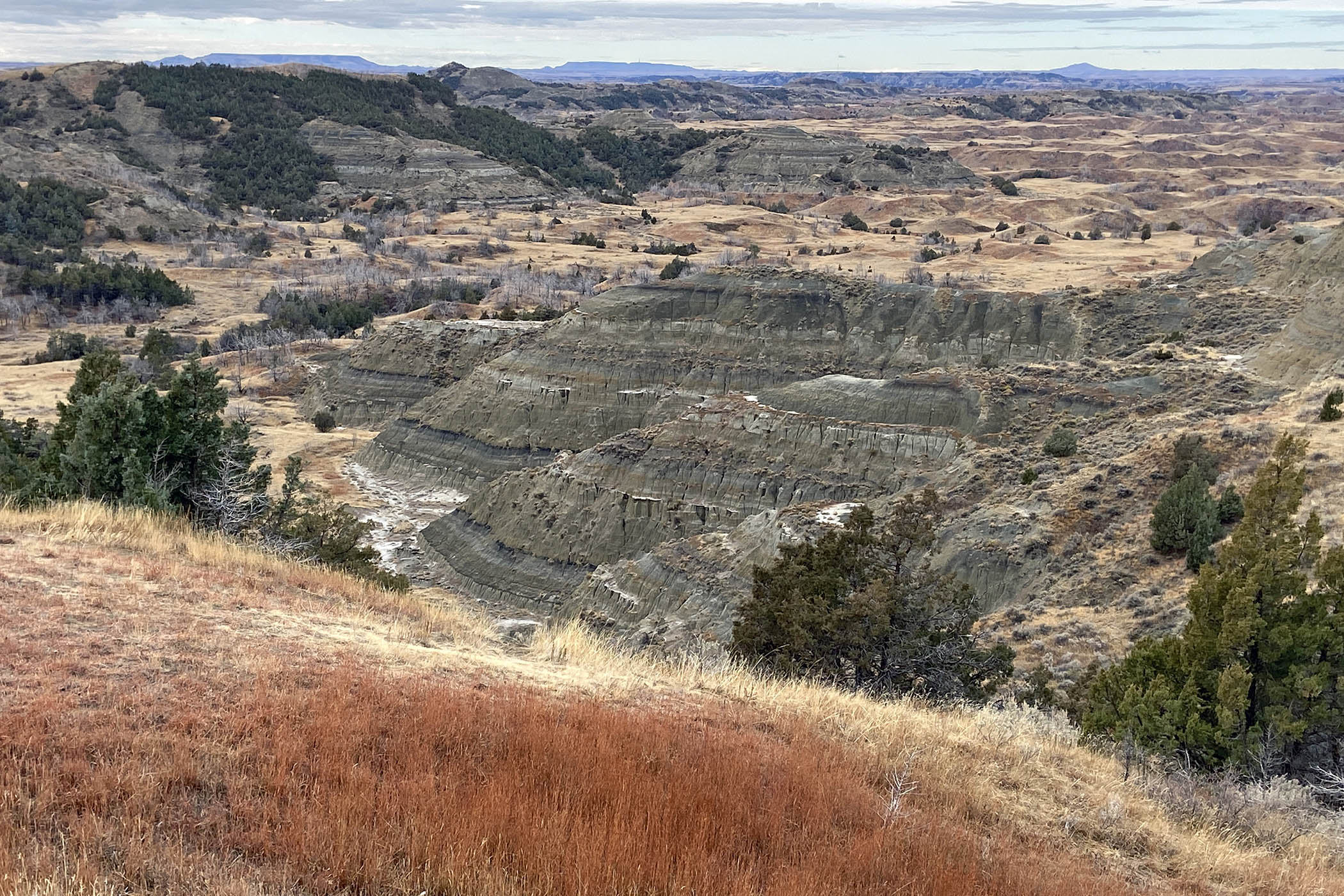
I got up early to catch the sunrise at Theodore Roosevelt National Park in South Dakota on 13 October during a road trip to visit family. I had spent the previous night tent camping in the park where temperatures dropped down into the 20’s (about minus 3 degrees C). I was warm enough in my little tent, though its outer surface was covered with frost when I first woke up.

It was dark when I started to drive slowly along the roads in the national park, but gradually the rising sun began to illuminate the spectacular landscape with its warm light. Here a couple of images that I was able to capture with my iPhone 11, which did a good job in somewhat difficult lighting conditions.

sunrise in South Dakota

© Michael Q. Powell. All rights reserved.


Read Full Post »

Most of the wild horses that I saw at Theodore Roosevelt National Park in North Dakota during my recently completed road trip were on relatively level ground, but I did observe one band of horses climbing a steep slope. They were pretty far away, but I managed to capture these shots as they slowly made their way up  a canyon wall.

In the first photo, the horses were just starting their climb and were bunched together. As they climbed higher, they spread out a bit. In the second shot, the lead horse was nearing the top, perhaps the edge of a plateau.

From what I have read, the bands are usually led by a head mare when they are traveling and she leads the band to watering holes and grazing spots. The band’s stallion brings up the rear when the band travels—his job is to fight off predators and other males who try to join the herd and to nip at stragglers to make sure they keep up with the others.

wild horses

wild horses

© Michael Q. Powell. All rights reserved.


Read Full Post »