Feeds:
Posts
Comments

Posts Tagged ‘Aurora Damsel’

Identification guides for birds, dragonflies, and damselflies often use illustrations rather than photos? Why? It is almost impossible for a photo to show all of the key identification features of a species.

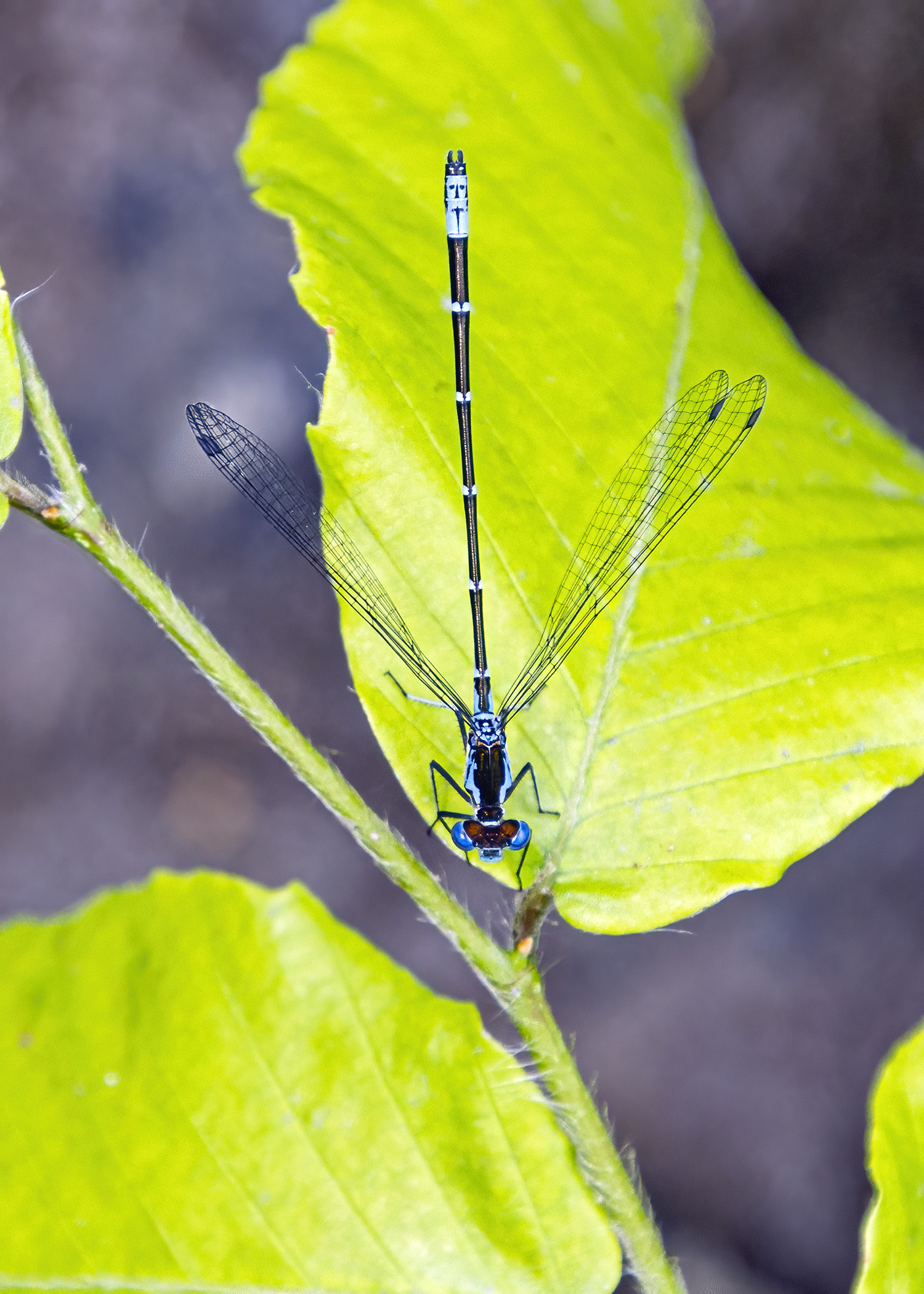
Last week, for example, I captured some wonderful photos of a male Aurora Damsel damselfly (Chromagrion conditum) at a small pond in Prince William County, Virginia. In the first photo below, I was able to capture an image from almost directly overhead that shows the markings on the tiny damselfly’s thorax and abdomen. The image also shows how this damselfly species perches with its wings partially spread, unlike most damselflies that perch with their wings closed above their bodies. The second shot shows many of the same features.

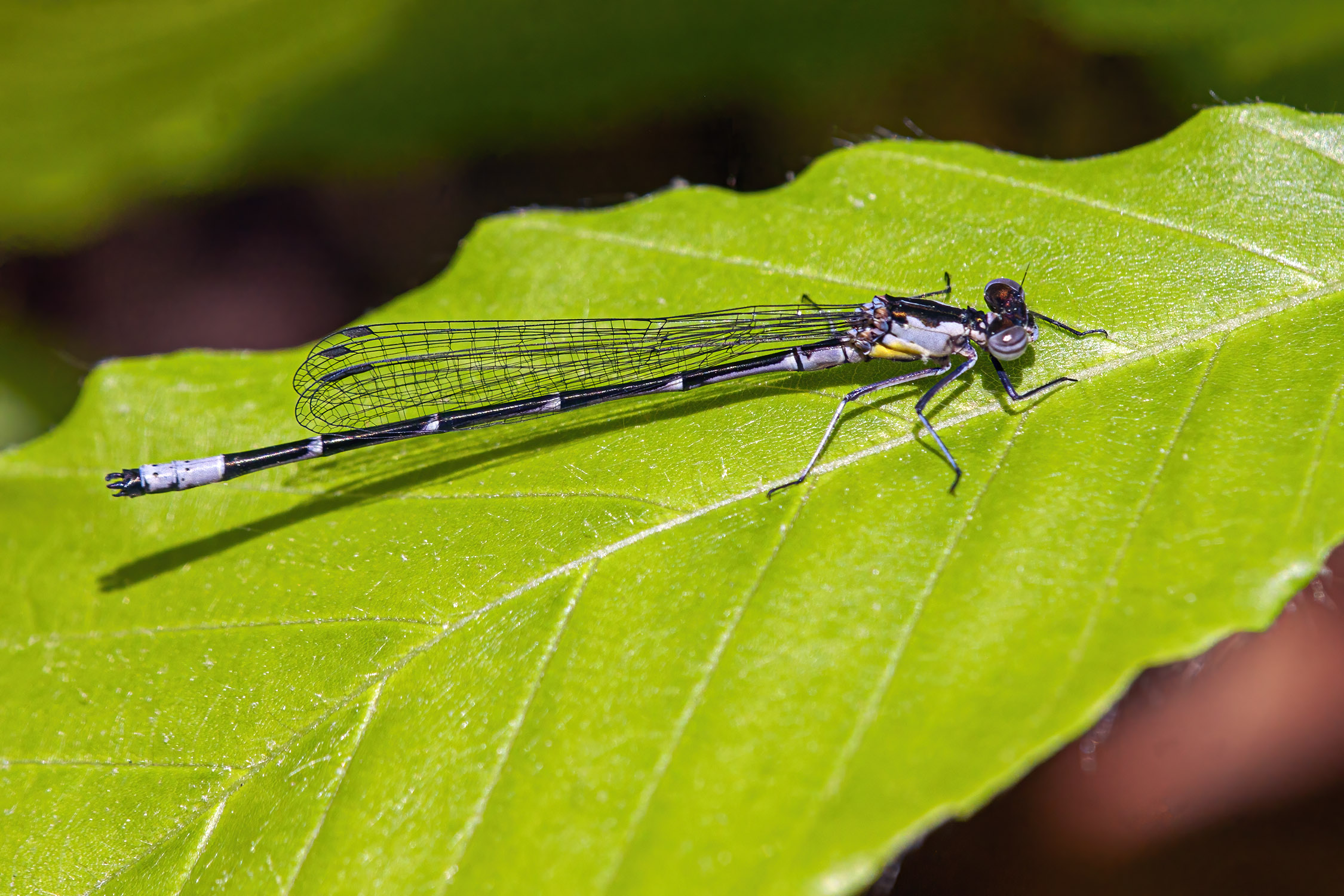
However, it is fairly uncommon to be able to capture views like those in the first two shots and they do not show what is often the key identification feature for this species. Both genders of Aurora Damsels have distinctive bright yellow patches on the sides of their thoraxes, as you can see in the third photo. You might notice that in this photo, the markings on the tip of the abdomen are much less clear than in the first two shots, but that’s not a problem, because that yellow patch immediately signals that it is an Aurora Damsel.

Whenever I can, I try to capture shots of my subjects from multiple angles. The different angles of view may help in identifying a species or may create a more aesthetically pleasing image. One of the coolest things about photography is the way in which it combines science and art—I can be as scientifically geeky or as artistically creative as I want to be.
Aurora Damsel

Chromagrion conditum

Aurora Damsel

© Michael Q. Powell. All rights reserved.


Read Full Post »

Last week I was delighted to spot several Aurora Damsel (Chromagrion conditum) damselflies as I was exploring a pond in Prince William County. I had seem some Aurora Damsels earlier in the spring, when they were newly emerged, but had not yet seen any mature adults.

According to the damselfly guide that I use for reference, Damselflies of the Northeast by Ed Lam, the genus Chromagrion “consists of a single species, the Aurora Damsel, a blue and black damselfly with bright yellow on the side of the thorax. It lacks eyespots and shoulder stripes and often perches with its wings slightly spread, unlike most members of its family” of Pond Damsels (Coenagrionidae).

As I have learned from photographing insects and birds, I rarely can capture all of the distinguishing features of a species in a single photograph. In the first photo, you can see the slightly-spread wings, the distinctive markings on the abdomen and thorax, and the lack of eye spots.  You cannot, however, see the bright yellow markings on the thorax. I like to think of these kinds of shots as “scientific,” because the entire body of the damselfly is in almost perfect focus.

I personally tend to be a little more fond of shots like the second image. The damselfly seems to be posing for me with its head slightly cocked and the background and the perch are creative parts of the image. The eyes of the damselfly are in focus, but most of the rest of its body is at least a little blurry. I like to think of this type of shots as “artistic.”

Most of my photography is a mixture of  the “scientific” and the “artistic” approaches. Sometimes the approach is dictated by the circumstance, e.g. when I have to react instantaneously, and sometimes the approach is a consequence of the creative choices that I have made in my camera settings or in composition or angle of view. The cool thing about photography is that it easily accommodates a wide range of approaches and I can be as geeky or artsy as I want to be at ay given moment.

Aurora damsel

Aurora Damsel

© Michael Q. Powell. All rights reserved.

Read Full Post »

It was pretty cool to spot this male Aurora Damsel damselfly (Chromagrion conditum) on Friday while I was exploring in Prince William County. I love the accents of brilliant yellow on the sides of its upper body that make this damselfly stand out from many others that are also black and blue.

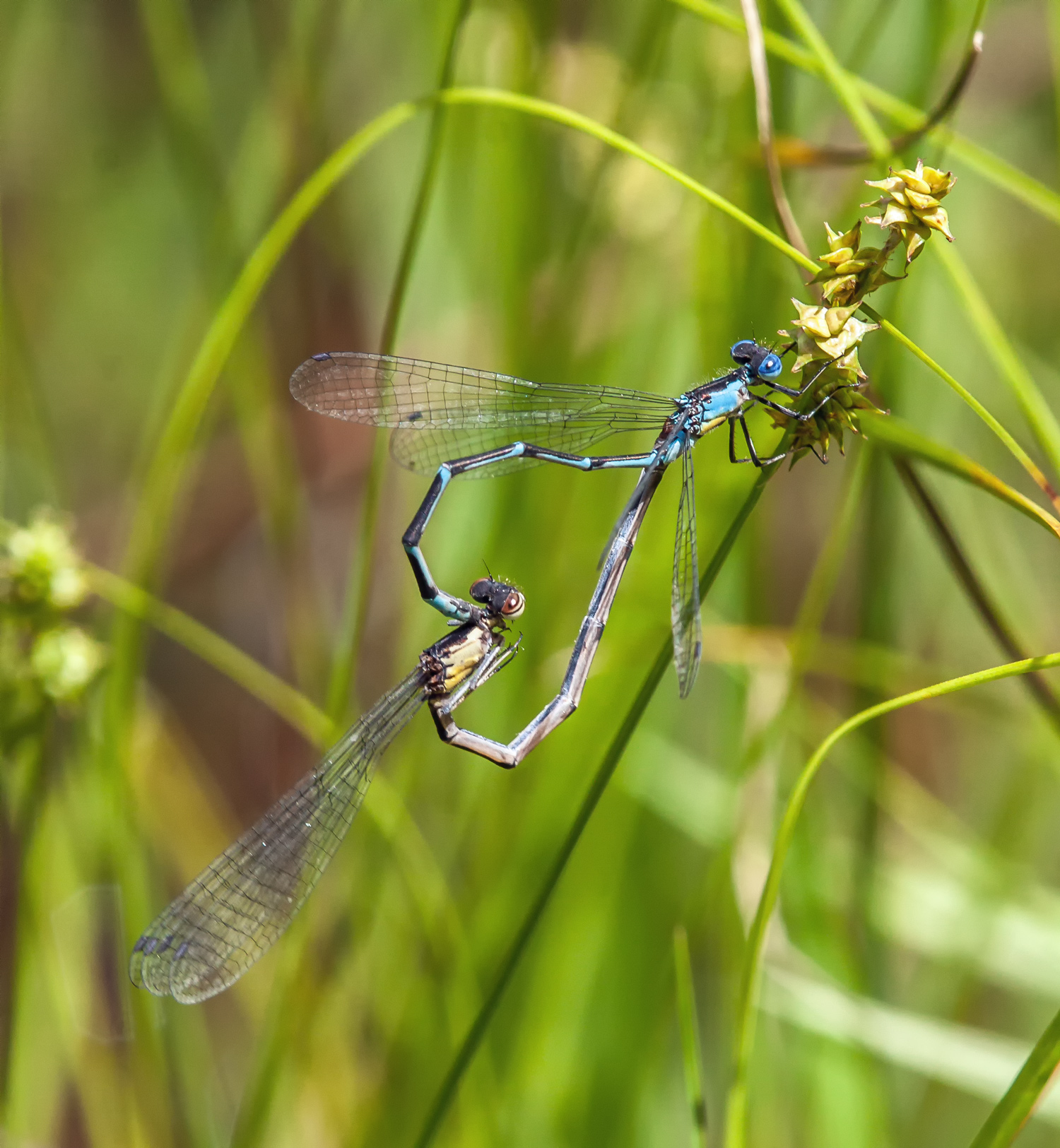
I also managed to get a shot of an Aurora Damsel couple in what is known as the “tandem” position. The female of this species, the lower damselfly in the second photo, also has the yellow accents, although her body coloration is more subdued, as is often the case with damselflies and dragonflies.

When they are mating, damselflies join together in a heart-shaped position, known as the “wheel position,” and afterwards the male will often remain attached to the female, including while flying, as she lays her eggs. He does this by retaining his grip on the front part of the female’s thorax, as you can see in the second photo, using claspers located at the tip of his abdomen.

If you have never seen the distinctive sidewards-heart that damselflies make when mating, check out a posting that I did last year entitled Sidewards heart that shows a pair of Ebony Jewelwing damselflies forming the aforementioned heart.

aurora damselfly

aurora damselfly

© Michael Q. Powell. All rights reserved.
Read Full Post »

I love to photograph dragonflies and damselflies when they are perched, but it is even more exciting to capture them in action. Now you may be wondering what kind of action I can possibly observe  and photograph. Dragonflies and damselflies seem to have two major biological imperatives—eating and mating. This posting focuses on the latter.

I was thrilled this week in Prince William County, Virginia to observe a new species of damselfly—the beautiful Aurora Damsel (Chromagrion conditum). Like many damselflies, the male Aurora Damsel has a black and blue coloration, but as an added bonus the male and female both have a bright yellow patch on the sides of their thoraxes (the “chest” area).

The first image shows the female, on the left, and the male in what is known as the “tandem” position. If you look carefully, you can see the yellow patched on both of their bodies. Often this position is a prelude to mating, and that certainly was the case in this situation. The second image shows the couple in the mating position known as the “wheel,” which often resembles a sideward-facing heart.

When mating is completed, the couple remains attached and they fly together to the water in order for the female to deposit her eggs in a process known as “ovipositing.” In the final image, you see the female ovipositing in some vegetation floating on the surface of the water. You don’t see it here, but sometimes the male will push down so hard that the female ends up partially submerged in the water.

Aurora Damsel

Aurora Damsel

Aurora Damsel

© Michael Q. Powell. All rights reserved.

Read Full Post »