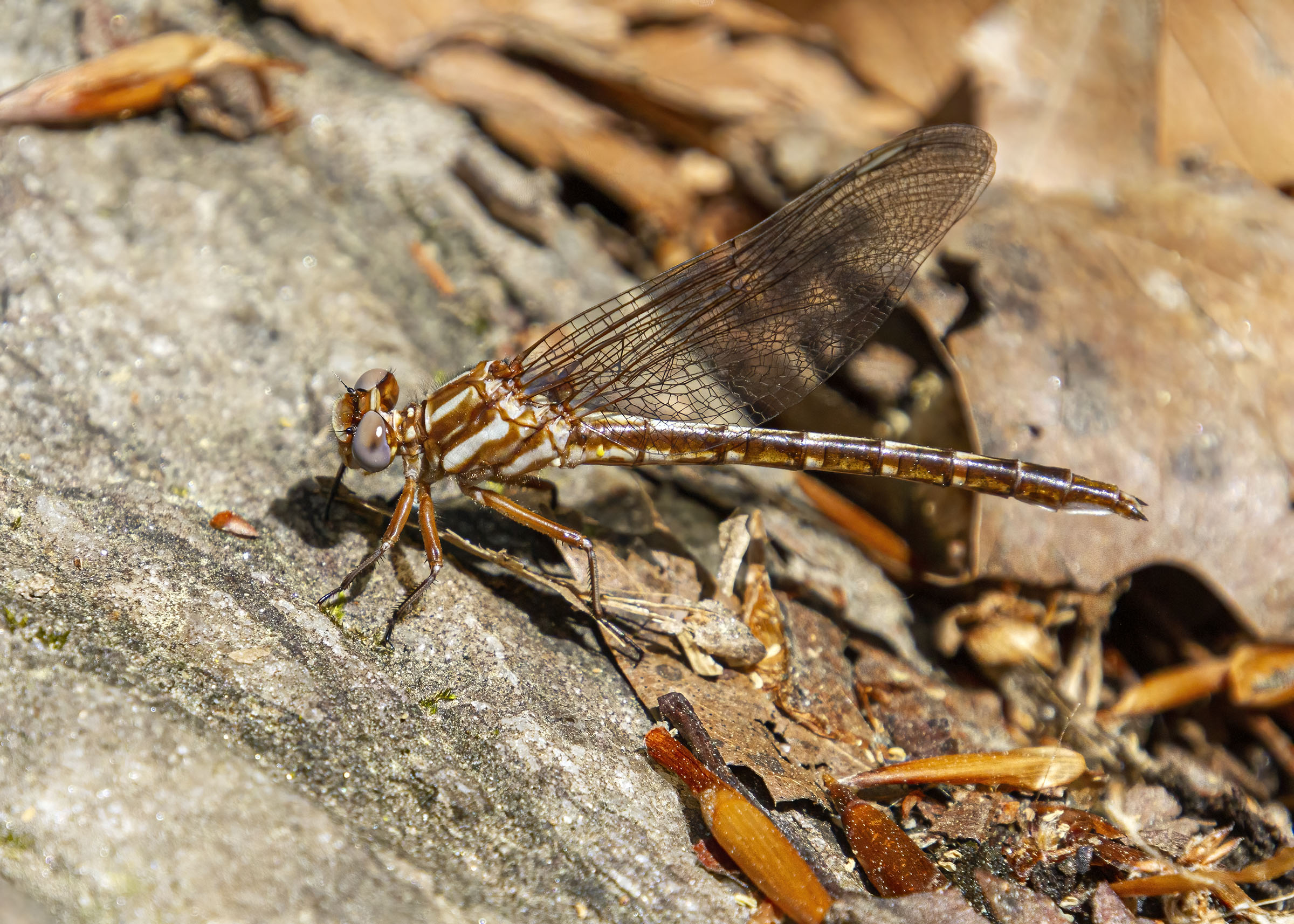
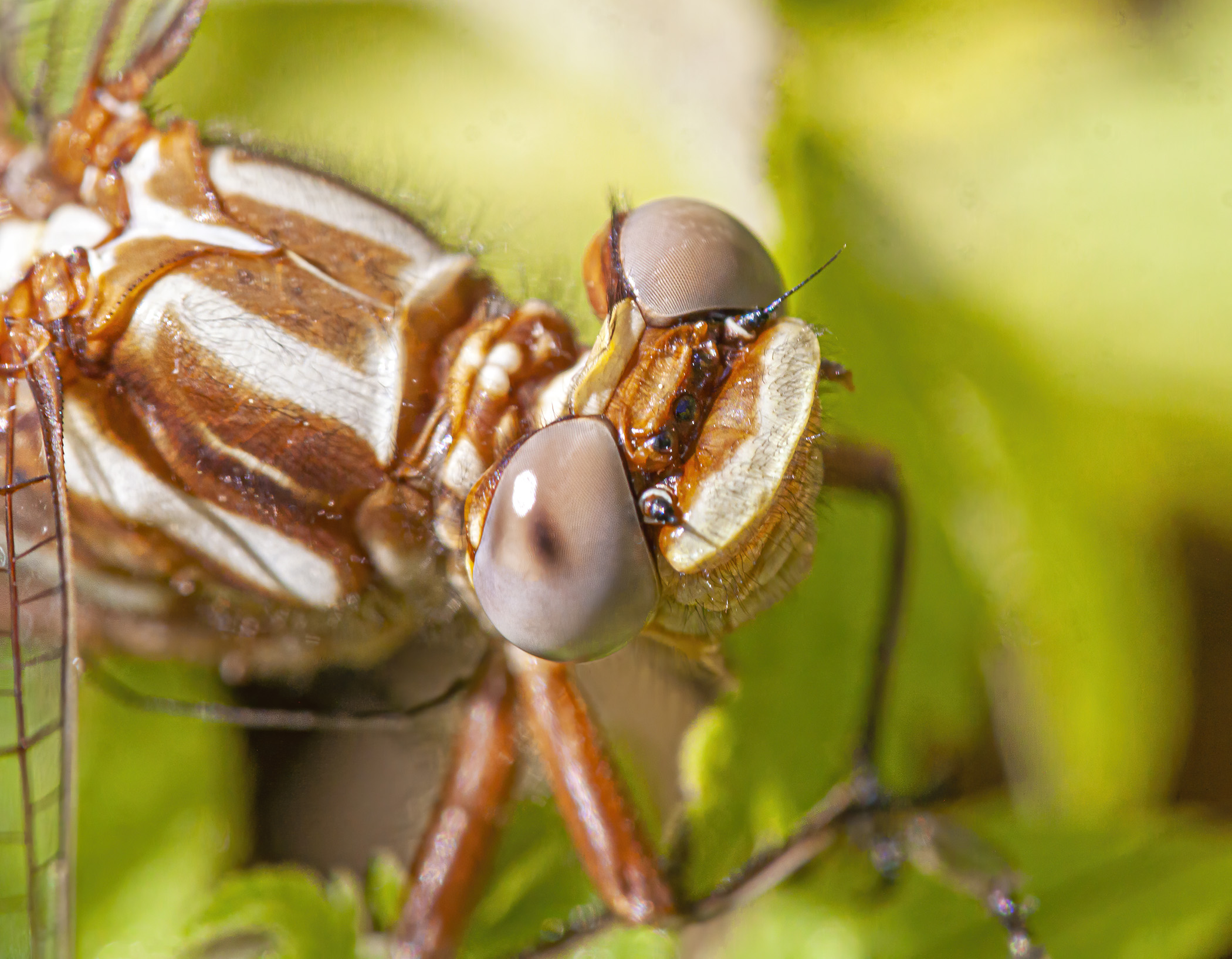
The weather has warmed up considerably and I have started to see many of the spring dragonflies and even some of those that will remain with us through the summer. Last Friday I spotted numerous Ashy Clubtail dragonflies (Phanogomphus lividus), many of which appeared to have emerged recently, judging from their very shiny wings and pale coloration, as you can see in the first photo. Getting shots of them was tough, because they perch on the ground in the vegetation, are only about 2 inches in length (50 mm), and are often very skittish.
Kevin Munroe described well the challenges of finding early spring dragonflies in his wonderful Dragonflies of Northern Virginia website, “Searching for dragonflies in spring is a wholly different endeavor than finding them in July and August. Most summer dragonflies spend their time at sunny ponds or open fields, and engage in showy displays and aerial battles – they are, in a word, visible. The majority belong to the showy and successful skimmer family, along with a few darners and emeralds. The spring dragonfly community is more diverse, and has a very different M.O. They are for the most part, habitat specialists, with low population numbers, secretive habits, and denizens of woodland streams, not sunny ponds. Spiketails, Petaltails, Clubtails, Darners and Emeralds are all out and about in spring. To find these species in April and May, one must spend many hours searching forest edges, woodland clearings, and the banks of springs, streams and creeks.”
In fact, I photographed these Ashy Clubtails in the vegetation near a creek in Prince William County and I can testify to the fact that I walked about for hours searching for them. I am pretty happy with the photos that I was able to take. I especially like the second photo that has some really cool shadows that seem to magnify the number of legs and wings of the dragonfly.
The final two photos were taken only a few seconds apart and show the wings in very different positions. The penultimate photo shows the wings in a typical outstretched pose, while the final photo shows the wings clasped together over the dragonfly’s body, similar to the way that damselflies hold their wings when perched. In my experience recently emerged dragonflies sometimes flex their wings this way as fluid is pumped into the wings and the wings are hardening.


© Michael Q. Powell. All rights reserved.




 Mike Powell