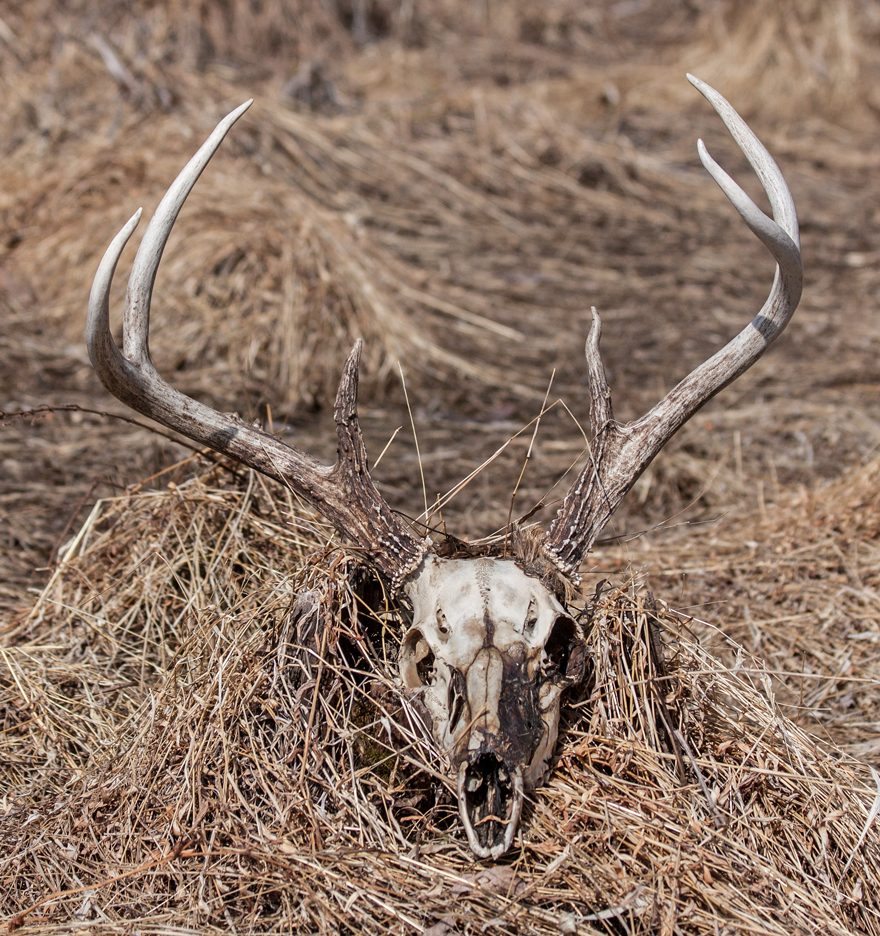
Male White-tailed Deer (Odocoileus virginianus) shed their antlers during the winter and start to grow a new set in early spring. When I first spotted the pointed white tips of deer antlers while exploring Prince William Forest Park this past Wednesday, I assumed that they were shed antlers. As I got closer, I was shocked to see that they were still attached to the skull of the now dead deer.
We have an overpopulation of White-tailed Deer in our area, in part because there are not many natural predators. I couldn’t help wondering how this large buck met his demise. Was it a coyote or fox? Was it disease, starvation, or old age? Whatever the cause of death, scavengers had done their part and the only other body parts that I spotted in the immediate area were several small spinal sections.
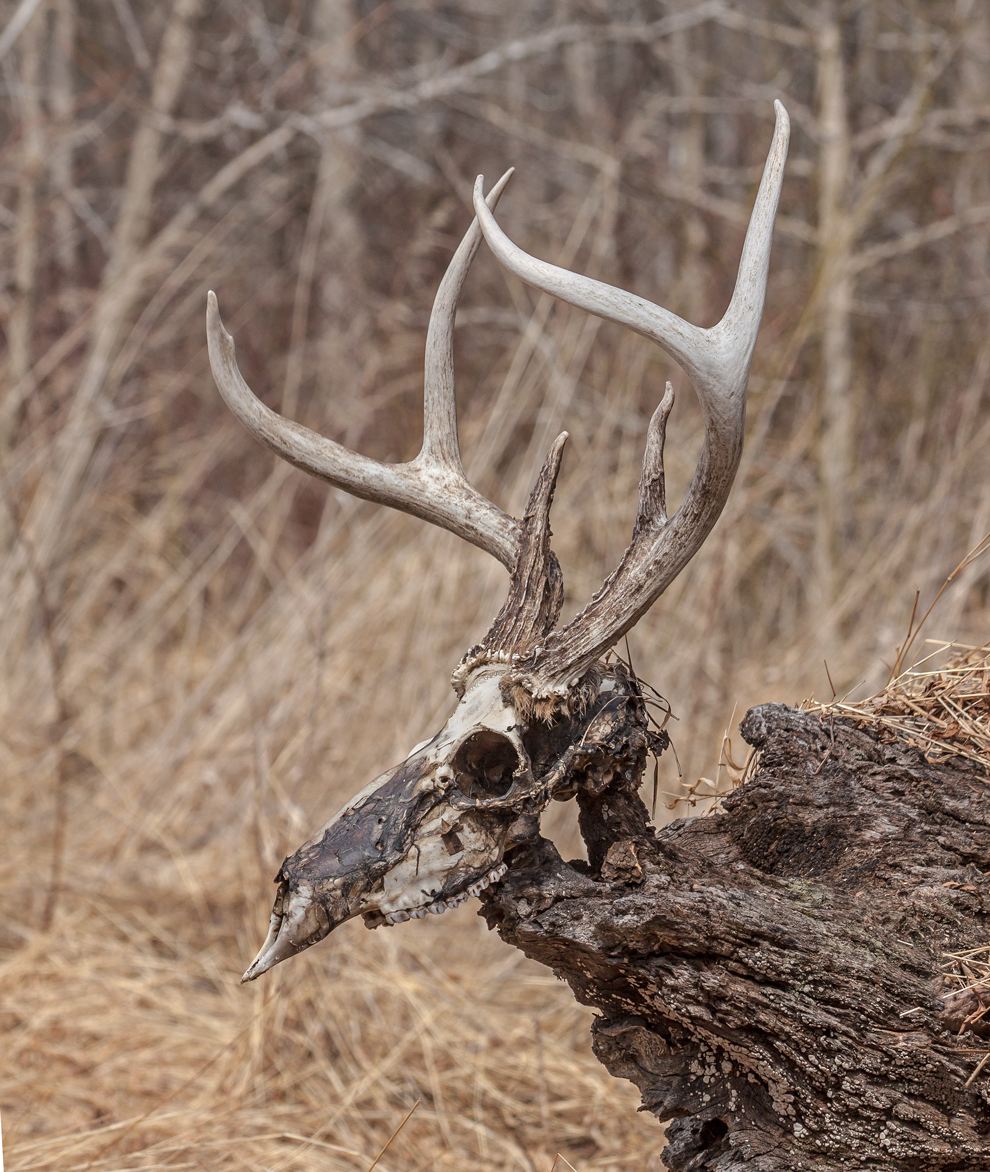
Later that day, I spotted a second set of antlers with the skull still attached. These antlers, shown in the second photo below, showed more damage and it is hard to tell how large they may have initially been. As was the case with the first deer, there were few parts of the deer carcass in the surrounding area—the only parts I saw in the surrounding area were the lower jaw bones.
I spend a good deal of time out in nature, but see only a small part of what really takes place in the areas that I visit. Spring often makes us think of new life as baby birds and animals are born and trees and flowers emerge with new growth. These antlers, however, are a sober reminder that death is also a part of the cycle of life for the wildlife that I enjoy observing and photographing.


© Michael Q. Powell. All rights reserved.
 Mike Powell