Feeds:
Posts
Comments

Posts Tagged ‘American Tree Sparrow’

Do all sparrows look the same to you? I am definitely no bird expert, but I could immediately see that the sparrow that I spotted yesterday at Occoquan Bay National Wildlife Refuge was different from the ones that I am used to seeing. The first thing that I noticed was that it was lighter in color than the usual sparrows and that the cap on its head was red, rather than the typical brown.

When I returned home and looked at the images on my computer, I also noted the two-toned bill and the black spot in the middle of its chest. All of these characteristics made it relatively easy to identify it as an American Tree Sparrow (Spizella arborea). I could not remember if I had seen this species before, so I checked my blog postings and found that it has been more than five years since I last photographed one.

It is easy to dismiss commonplace subjects, like sparrows, as not worthy of your time and attention. If you do so, though, you will miss the chance to discover their beauty. Like people, birds are not merely members of their species—they are unique individuals. I recommend spending time with them and getting to know them better.
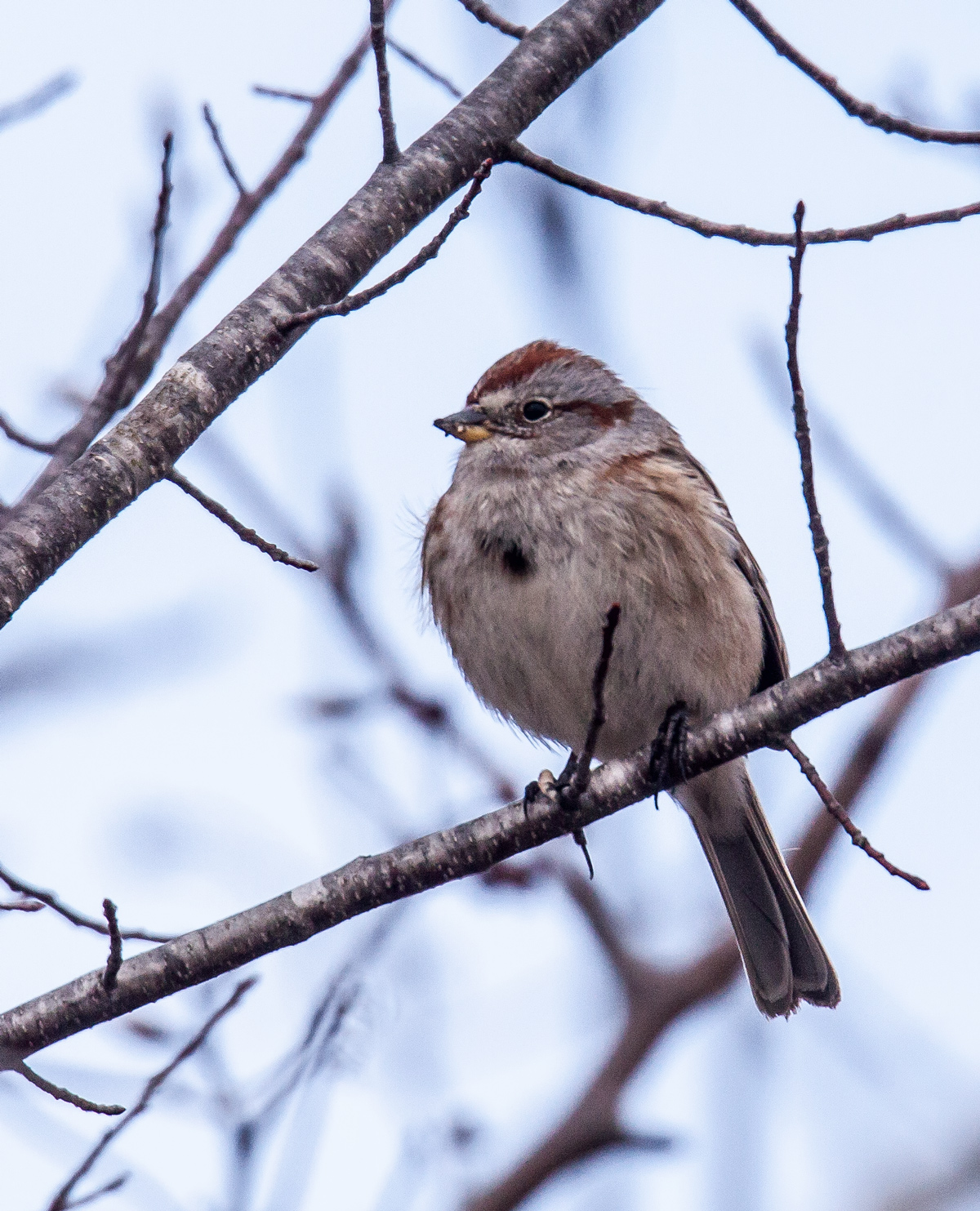
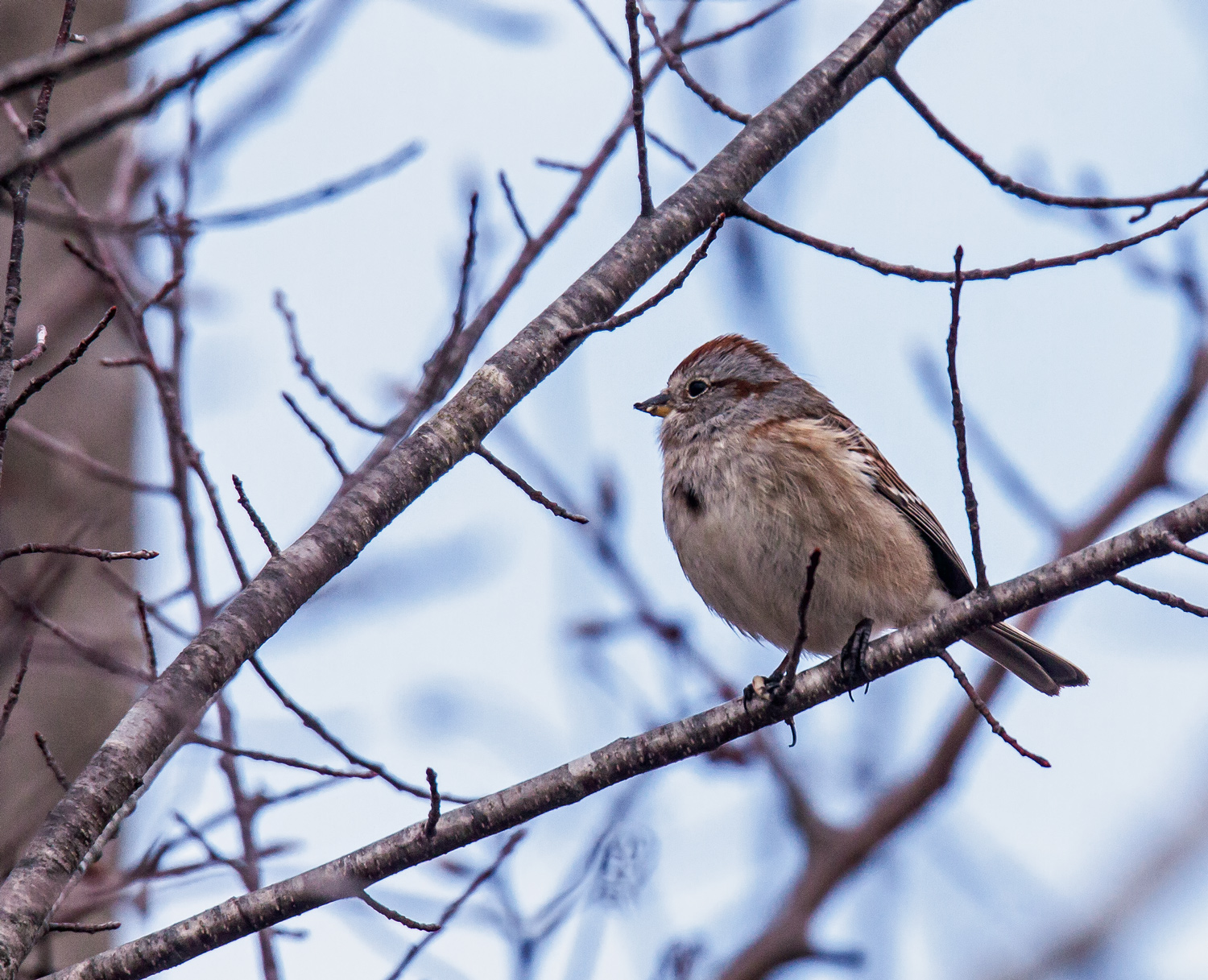
American Tree Sparrow

American Tree Sparrow

© Michael Q. Powell. All rights reserved.

Read Full Post »

Last month I featured a photo of an American Tree Sparrow (Spizella arborea), a species that is among the most visible and active during the cold, gray days of winter. I should probably caveat my statement about the sparrows being visible, because they are usually only partially visible as they root around in the tangled undergrowth and move quickly from place to place.

Occasionally I manage to get a somewhat clear shot of the American Tree Sparrow and I decided to share a couple of them this morning. The first one shows the sparrow in what I consider his most “natural” environment, mostly surrounded by vines and branches. I like the way he just poked out his head, permitting me to get a clear profile shot. The second image shows a sparrow at the top of cattail, a place where I rarely see them, which made it a little easier to get a clear shot.

Although I may not show photos of some of these smaller birds as often as I post photos of ducks, geese, and herons, I am attempting to photograph them almost every time that I am out shooting. I enjoy the challenge, even if my success rate is relatively low.

sparrow_blogsparrow2_blog

© Michael Q. Powell. All rights reserved

Read Full Post »

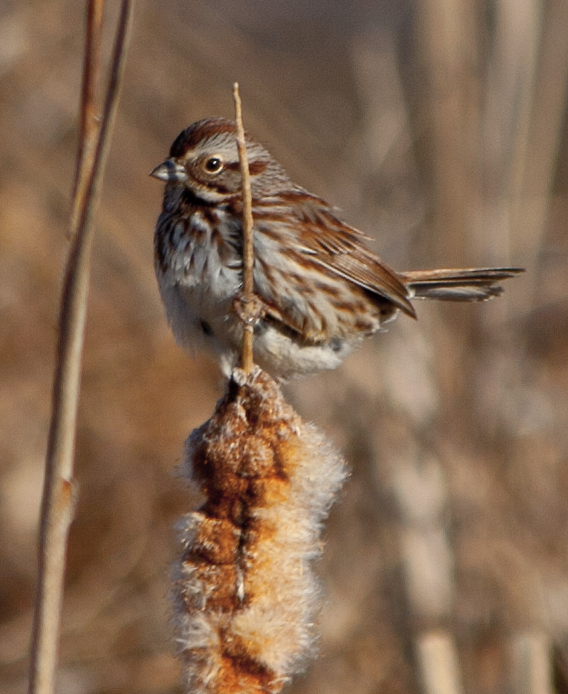
Thia little bird that I photographed this past weekend is not in a tree, but I am pretty sure that he is an American Tree Sparrow (Spizella arborea). The reddish eye stripe and the two-toned bill made this identification easier than usual for me. This sparrow was amazingly active, pecking at a variety of plants close to the ground.

Why is he called a Tree Sparrow if he’s not in a tree? According to the Cornell Lab of Ornithology, the birds were misleadingly named by European settlers reminded of Eurasian Tree Sparrows back home.  American Tree Sparrows are in fact ground birds that forage on the ground and nest on the ground.

Has anyone ever told you that you eat like a bird? If so, I hope they weren’t referring to this sparrow. American Tree Sparrows need to take in about 30 percent of their body weight in food and a similar percentage in water each day, according to the Cornell Lab website.

American Tree Sparrow

American Tree Sparrow

© Michael Q. Powell. All rights reserved.
Read Full Post »