Feeds:
Posts
Comments

Archive for the ‘Birds’ Category

Whenever I walk the trails parallel to the water at Occoquan Bay National Wildlife Refuge I try to stay alert, because I never know when a Bald Eagle (Haliaeetus leucocephalus) will come zooming by, as this one did last week.

I had my camera already set to relatively appropriate settings and my biggest challenge was to acquire the eagle in my viewfinder before it flew out of sight. I was fortunate that the eagle was flying on a level plane, so I did not have to worry about having to zoom the lens in or out. I took a burst of shots and the image below was the one that I liked the best, primarily because of the wing position and the catch light in the eye.

Each opportunity to photograph a bird in flight is unique. I never know when circumstances will work together to permit me to capture a good in-flight image, but it feels almost magical when somehow I do.


Bald Eagle

© Michael Q. Powell. All rights reserved.

Read Full Post »

What does it mean to have your ducks in a row? For most of us, it means being well-prepared and organized in advance. Personally, I am a little scatter-brained and disorganized, so it is not a term that I would apply to myself very often.

As is the case with many such expressions, it is sometimes fun to apply them literally. Last week I spotted some Ruddy Ducks (Oxyura jamaicensis) in the waters off of Occoquan Bay National Wildlife Refuge. The wind was blowing pretty hard and the ducks seemed to be struggling to stay together. From my perspective, they seemed to be ducks in a row, though from their perspective, they probably felt like they were ducks in a column. It’s all a matter of perspective.

Most of the time that I see Ruddy Ducks, they are in groups like the one in the first photo, usually in the deeper waters. For more than a month, though, I have been seeing a solitary male Ruddy Duck in the more placid waters of a small pond at the wildlife refuge. I captured him in the second image below on the same day as the first shot. In both of the photos, you can see the stiff tail that is one of the distinguishing characteristics of this species.

I often wonder about the origins of expressions like “ducks in a row.” I assumed that it had to do with a mother duck and her ducklings, but decided to search the internet to see if that was the case. I came across a wonderful posting by The Word Detective that addresses speculation that the expression comes from the game of pool. It is a fun read, particularly the comments from readers suggesting that the expression is related to ship or aircraft construction or to duck hunting.

Ruddy Duck

Ruddy Duck

© Michael Q. Powell. All rights reserved.


Read Full Post »

I have been seeing increasing numbers of scaups off of Occoquan Bay National Wildlife Refuge, but they stayed in the deep water, so I never managed to get a close look at them.

I think they are Greater Scaups (Aythya marila), but there is also a chance that they are the similar-looking Lesser Scaups (Aythya affinis). The differences between the two species are subtle enough that I do not feel at all confident in distinguishing between the two. The white stripe behind the bill indicates that the one in the first image is a a female. I think the one on the left in the second photo may be an immature female and the one on the right is almost certainly a female.

Greater Scaup

Greater Scaups

© Michael Q. Powell. All rights reserved.


Read Full Post »

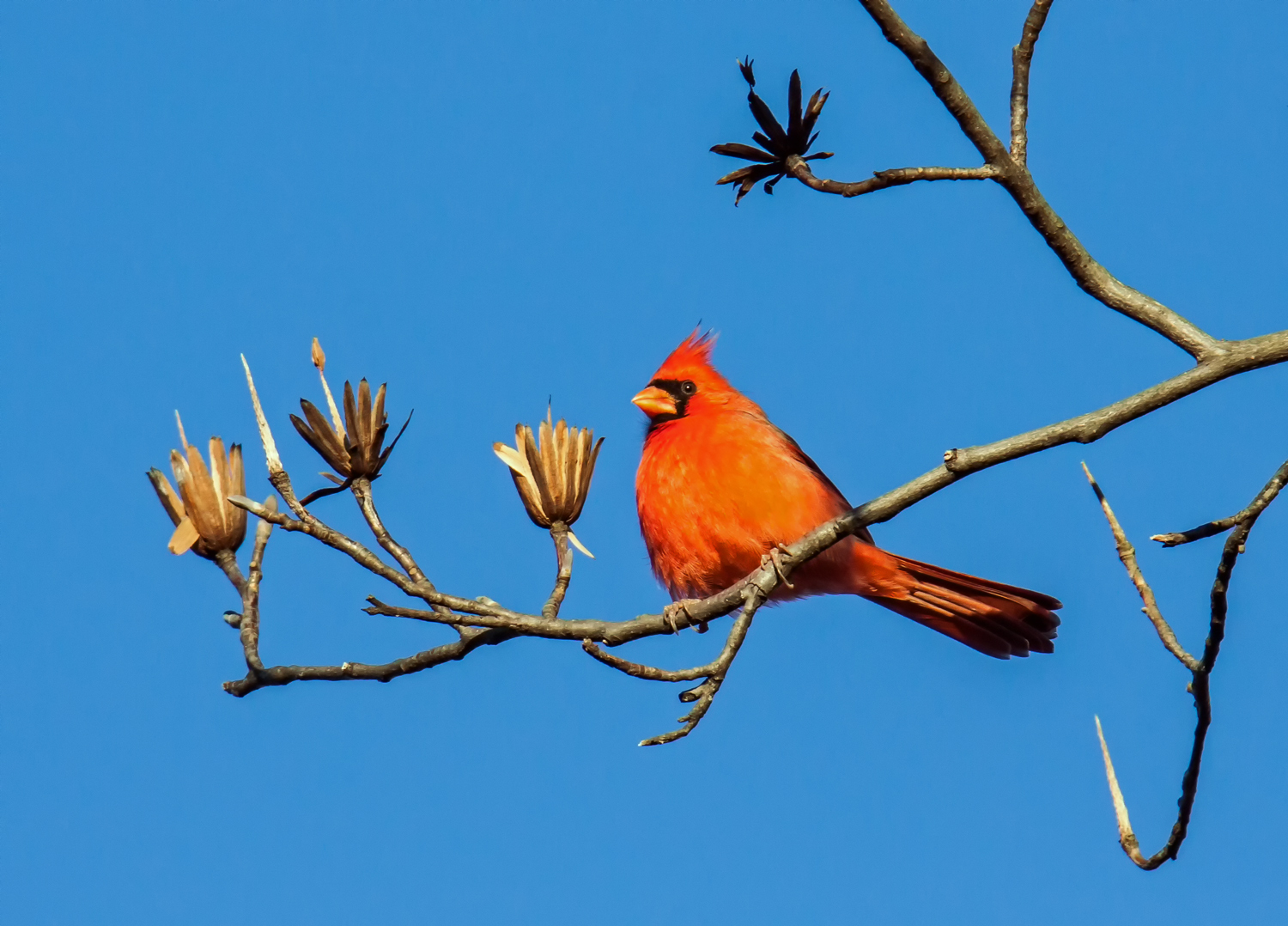
Recently I have been seeing flocks of American Robins (Turdus migratorius) throughout Occoquan Bay National Wildlife Refuge. Growing up, I used to think of the appearance of robins primarily as a harbinger of spring. Where I live now, however, I see robins during most of the year.

Earlier this week during a period of the morning when the light was exceptionally beautiful I was searching desperately for a subject to photograph when I spotted this handsome robin in a bare tree. The branches of the tree were fascinating in their shapes and they became an important compositional element in the three images that I included in this posting.

American Robin

American Robin

American Robin

© Michael Q. Powell. All rights reserved.
Read Full Post »

As I was observing a Bald Eagle (Haliaeetus leucocephalus) earlier this week at Occoquan Bay National Wildlife Refuge, something seemed to catch its eye and without warning the eagle took off into the air.

I was a little slow in reacting, but managed to capture an in-flight shot. The image you see is framed just as I took it. I was already partially zoomed out at 375mm on my 150-600mm, but that was not wide enough to capture the full wingspan of the eagle. When the action happens so quickly, it is hard to simultaneously track the moving subject and use the zoom—it is a bit like trying to rub your stomach and pat your head at the same time.

The second shot shows the eagle just before the takeoff. I like the tension of its body position and and the intense focus of the eagle’s eyes.

The final shot was taken before the other two and gives you an idea of how the eagle was perched as I approached it. There were a lot of branches surrounding the eagle and I tried to move slowly and cautiously to get a mostly unobstructed shot.

For those of you in the United States celebrating today, I wish you a very happy Thanksgiving Day. It is good to pause and reflect on all the blessings in our lives, not just on the one day each year that is set aside for doing so. I thank all of you for your continuous support and encouragement for me as I share my photography and my life in this blog. Over the last six years it has become part of my daily life and I consider many of you to be a part of my extended family.

“In everything give thanks.”

Bald Eagle

Bald Eagle

Bald Eagle

© Michael Q. Powell. All rights reserved.

Read Full Post »

I love the tranquility of the early morning, especially when I am alone with nature. It fills me with a sense of inner peace and helps me to slow down and appreciate better the world around me.

It is difficult to convey that inner feeling in a single photo, but this image of an Eastern Bluebird (Sialia sialis) from last week at Occoquan Bay National Wildlife Refuge comes pretty close. The bluebird was perched on some reeds in the middle of a marshy field. There was no way that I was going to be able to move closer, but I was ok with that. I focused on capturing a sense of the bird and its autumn environment and I am pretty happy with the way that the shot turned out.

Eastern Bluebird

© Michael Q. Powell. All rights reserved.


Read Full Post »

The colorful fall foliage has mostly disappeared and the natural world seems increasingly drab. At this time of the year, even tiny touches of bright colors are welcome, like the patches of yellow feathers on this Yellow-rumped Warbler (Setophaga coronata) that I spotted recently at Occoquan Bay National Wildlife Refuge.

On many of the Yellow-rumped Warblers that I see, the yellow markings seem pale and faded. I was really struck, though, by the intensity and saturation of the yellow on this particular bird. Yellow is one of those colors that never fails to lift my spirits, even when delivered in tiny doses.

Yellow-rumped Warblers

© Michael Q. Powell. All rights reserved.

Read Full Post »

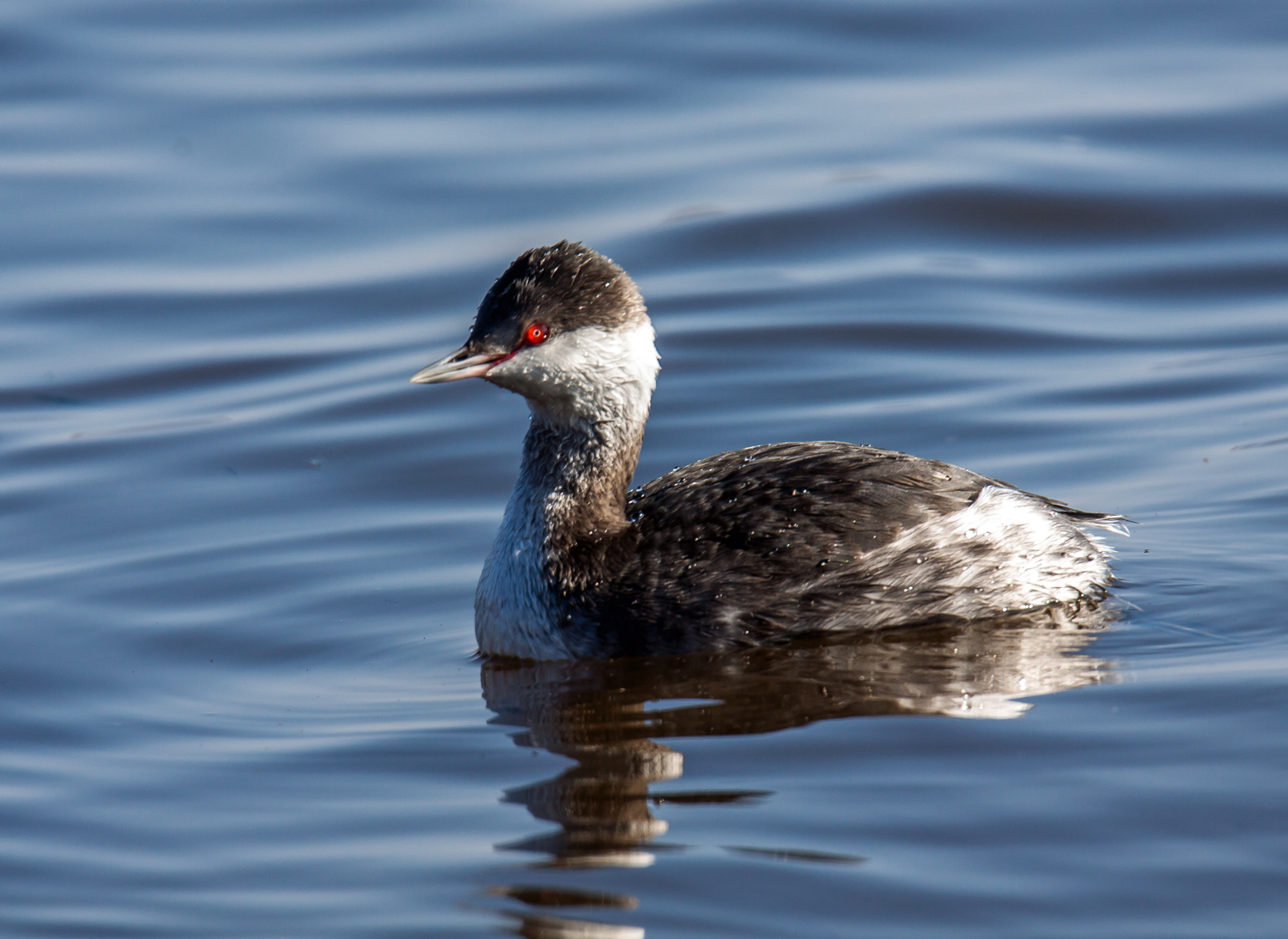
This past weekend I spotted a Horned Grebe (Podiceps auritus) while exploring Occoquan Bay National Wildlife Refuge. I tend to see this little diving waterbird only a few times a year and often it is so far from the shore that I am not able to capture a decent shot.

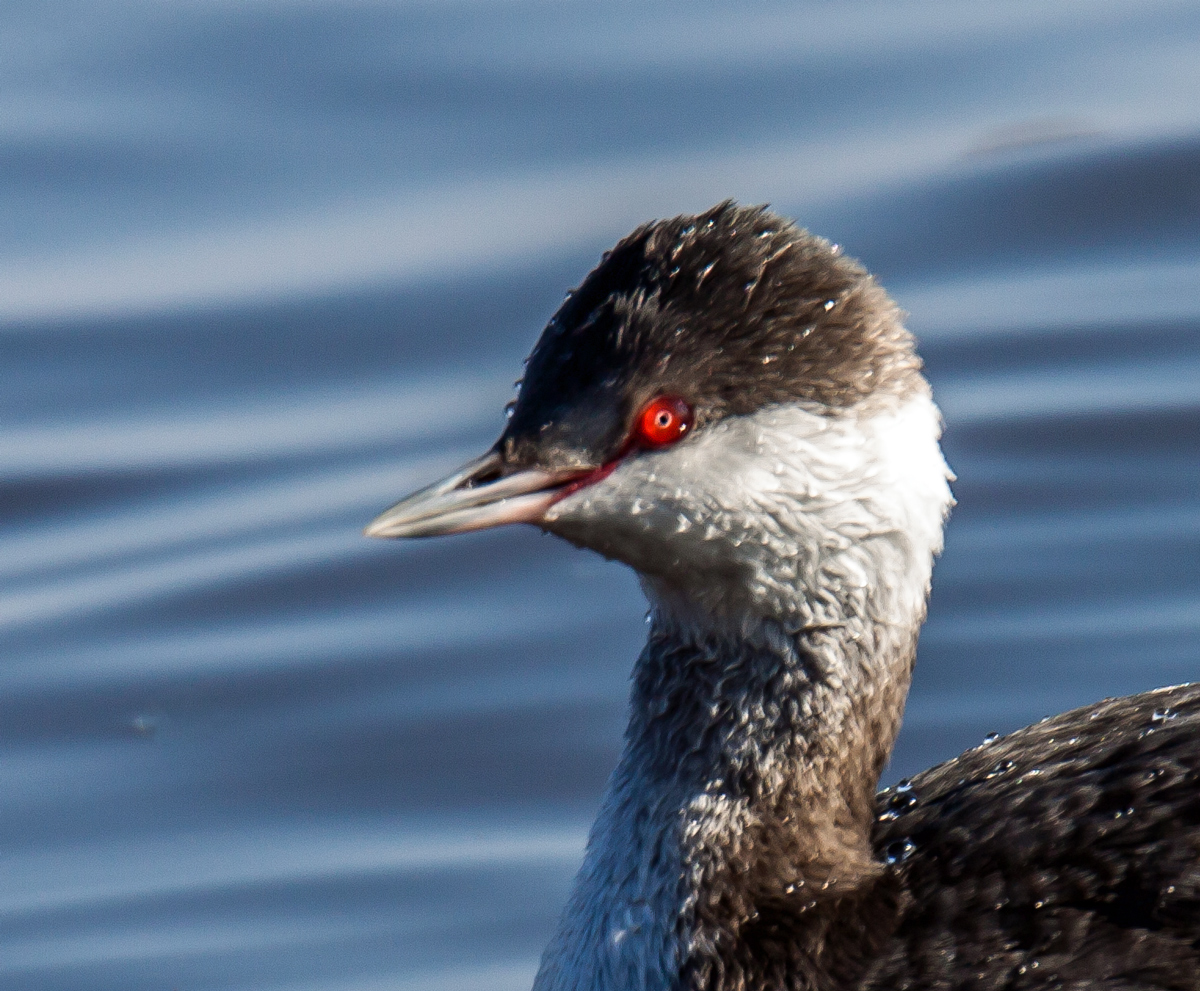
This grebe was within range and I watched it dive and resurface multiple times, hoping it would turn toward the sun so I could see its amazing looking red eyes trimmed with gold. Eventually my patience was rewarded and it turned in the proper direction.

The second image is merely a closer crop of the first one that gives you a closer look at those fantastic red eyes. Wow!

Horned Grebe

Horned Grebe

© Michael Q. Powell. All rights reserved.

Read Full Post »

Yesterday at Occoquan Bay National Wildlife Refuge I spotted this bright yellow warbler. Amazingly, it is actually called a Yellow Warbler (Setophaga petechia). There is sometimes a mismatch between the appearance of a bird and its official name, so I have learned that common sense does not always help in identifying a subject.

I was quite shocked when I first caught a glimpse of this little bird. The bright yellow on its body really stood out among the more muted tones of the fall foliage. I don’t know the normal dates for this warbler to be present, but I suspect that this is really late in the season for it to be around still.

We had several inches of snow this week and nighttime temperatures have dropped below the freezing levels. Most migratory birds, I suspect, have already passed through our area on the way to warmer spots.


Yellow Warbler

© Michael Q. Powell. All rights reserved.

Read Full Post »

When I spotted a small bird hanging from a branch, I zoomed in with my telephoto lens and discovered that it was a Yellow-rumped Warbler (Setophaga coronata). I could also see that there were numerous clusters of poison ivy berries on the branch, so I waited to see if I could capture an image of the warbler grabbing a berry.

The warbler turned its head away from me when it pulled the berry from the cluster, but fortunately turned back in my direction with the berry still visible in its mouth. I was really happy to get the shot and the warbler seemed to be berry contented.

Yellow-rumped Warbler

yellow-rumped warbler

© Michael Q. Powell. All rights reserved.

Read Full Post »

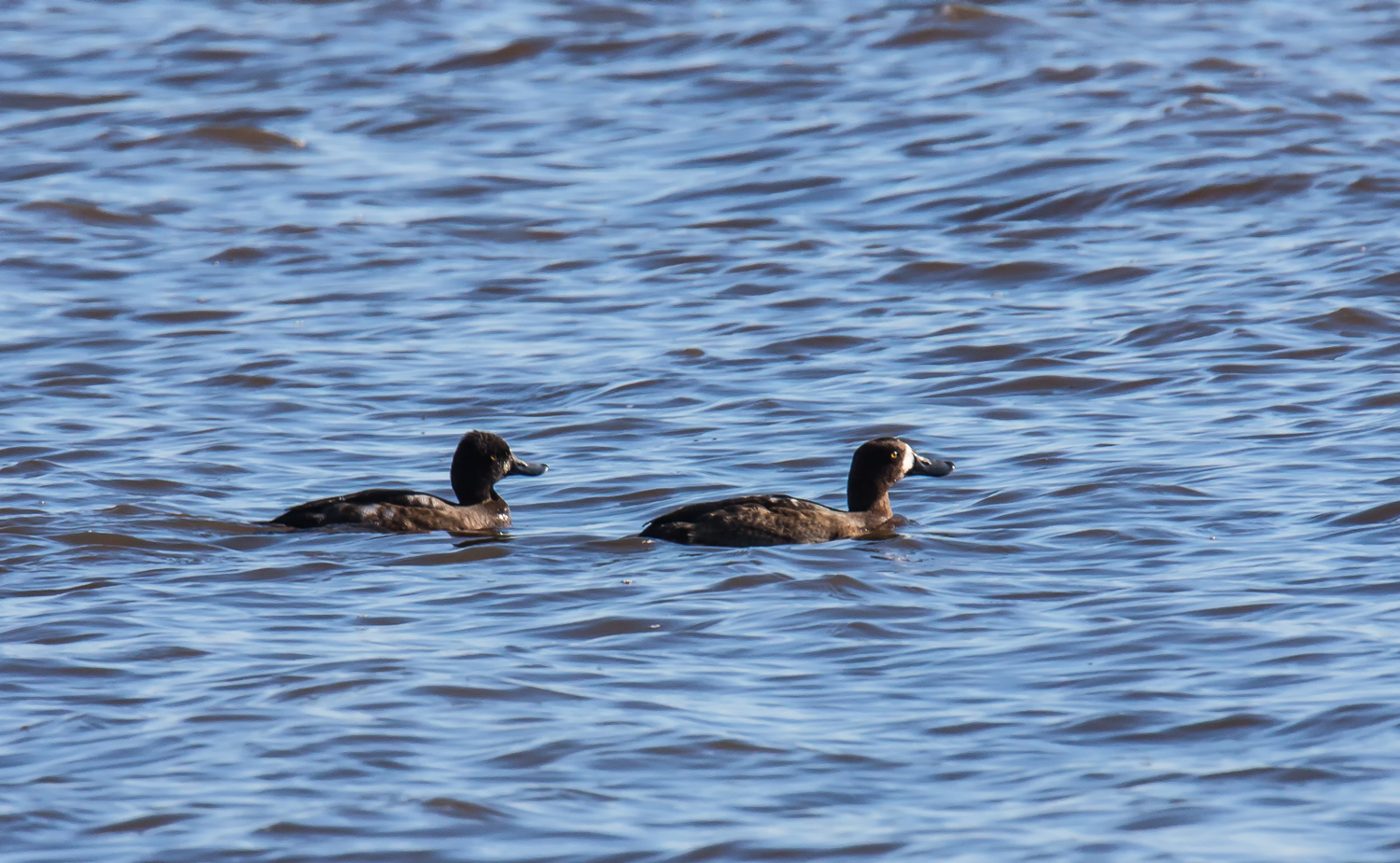
I am not sure what is so special about the small pond in Kingstowne, a suburban development not far from where I live, but every year about this time a group of Ring-necked ducks (Aythya collaris) shows up and generally spends the winter there. There are not too many other local places where I find this particular duck species.

I know that Ring-necked ducks are diving ducks rather then dabbling ducks like Mallards and I wonder if the depth of the water in the pond is the determining factor in their decision. I am always happy each year to see the golden eyes, striped bills, and odd-shaped heads of these Ring-necked ducks.

Ring-necked Duck

Ring-necked Duck

Ring-necked Ducks

© Michael Q. Powell. All rights reserved.
 

Read Full Post »

Northern Flickers (Colaptes auratus), the most colorful woodpeckers in our area, prefer to eat ants and other insects. Now that the weather had gotten colder and insects are scarcer, they have switched their diet to include more berries and seeds.

Earlier this week I spotted this male Northern Flicker (males have moustaches and females do not) foraging among the clumps of poison ivy berries in a tree at Occoquan Bay National Wildlife Refuge. The photos give you a sense of the wonderful colors and patterns on the body of this incredible bird.

I didn’t get to see the insides of the wings of this particular flicker, but Northern Flickers on the East Coast have beautiful yellow-shafted feathers on the underside of their wings and tails. On the West Coast, Northern Flickers have red moustaches and red shafts on the underside of their wings and tails.

Northern Flicker

Northern Flicker

© Michael Q. Powell. All rights reserved.


Read Full Post »

Leaves are now falling from the trees, making my walks though the woods increasingly crunchy. I feel like I am announcing my presence to all of the birds as I approach them. This little Yellow-rumped Warbler (Setophaga coronata) lifted its head for a moment to check me out, then returned to its foraging among the fallen leaves, probably having decided that I did not represent a threat.

Yellow-rumped Warbler

© Michael Q. Powell. All rights reserved.

Read Full Post »

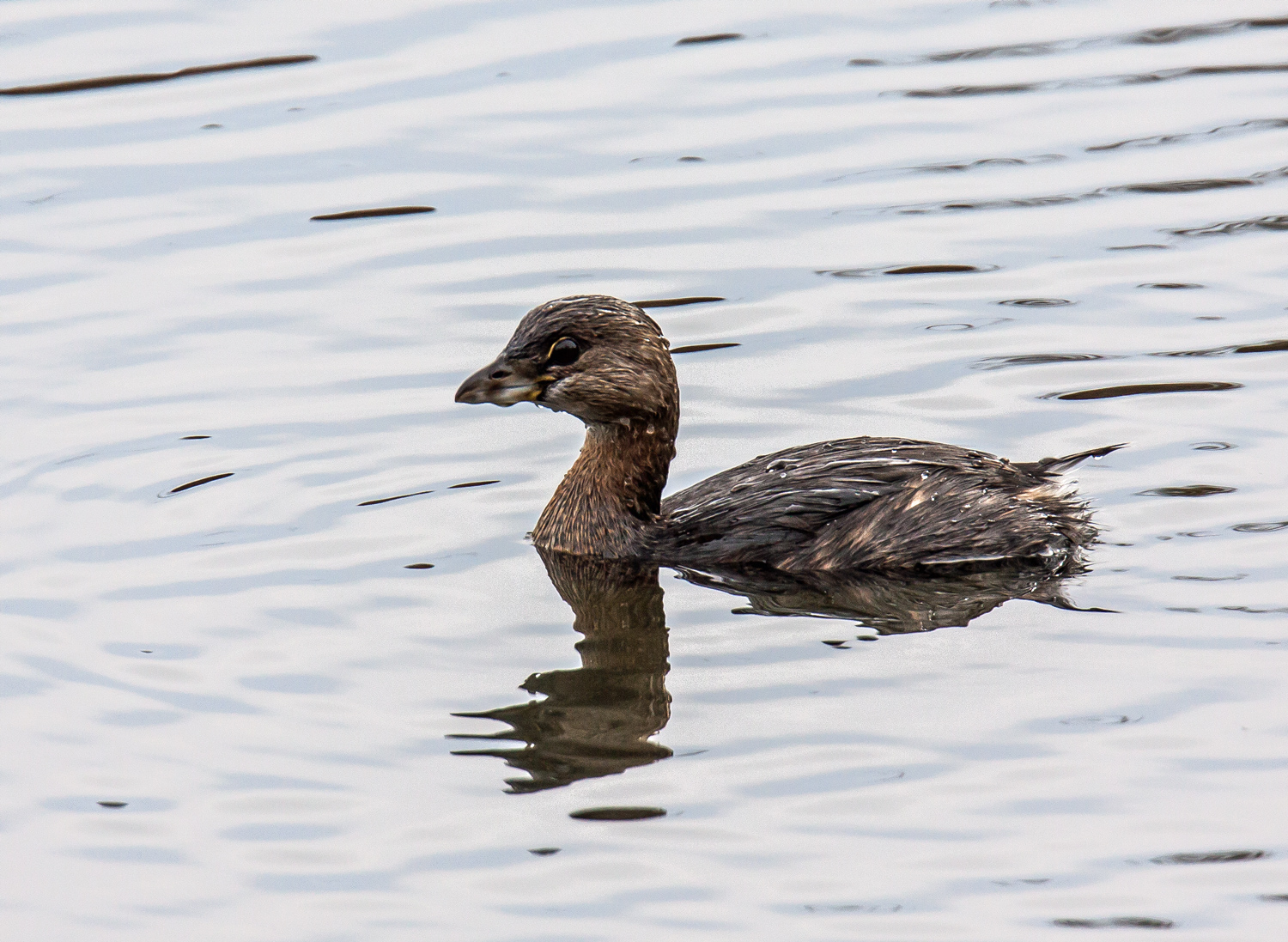
Although Pied-billed Grebes (Podilymbus podiceps) swim like ducks and dive like ducks, it only takes a quick look at one to see that they definitely are not ducks. The shape of the bill and of the body are quite different from those of a duck. I’ve always found the overall look the Pied-billed Grebe to be so unusual that it looks almost cartoonish to me.

I spotted this grebe yesterday in a small suburban pond not far from where I live. This little bird repeatedly was diving underwater. presumably in search of food, though I never saw him catch anything. If you look closely at the photos, you can see droplets of water on the body of the grebe and, in some cases, on his face.

Pied-billed Grebe

Pied-billed Grebe

Pied-billed Grebe

© Michael Q. Powell. All rights reserved.

Read Full Post »

It’s sometimes said that the camera adds pounds to a subject, so maybe these Yellow-rumped Warblers (Setophaga coronata) that I saw last week at Occoquan Bay National Wildlife Refuge are not quite as chubby as they appear at first glance.

I was trying to be funny, but it actually is true that the focal length of a lens can affect the features of a subject. Most of you have probably seen how a fish-eye lens can make a face look bloated in the middle and stretched out on the edges. Other lenses can produce less dramatic effects. Generally it is believed that you get the most flattering portrait of a human subject with a lens of 85mm to 135mm. Here’s a link to an interesting article at businessinsider.com that shows a series of images of a face that were shot with lenses from 20mm to 200mm.

In this case, I think the birds are taking advantage of the abundant food sources while they are still around. Some of these warblers may be continuing their journeys southward, but others may choose to spend part of the winter with us.

Yellow-rumped Warbler

Yellow-rumped warbler

Yellow-rumped Warbler

© Michael Q. Powell. All rights reserved.
Read Full Post »

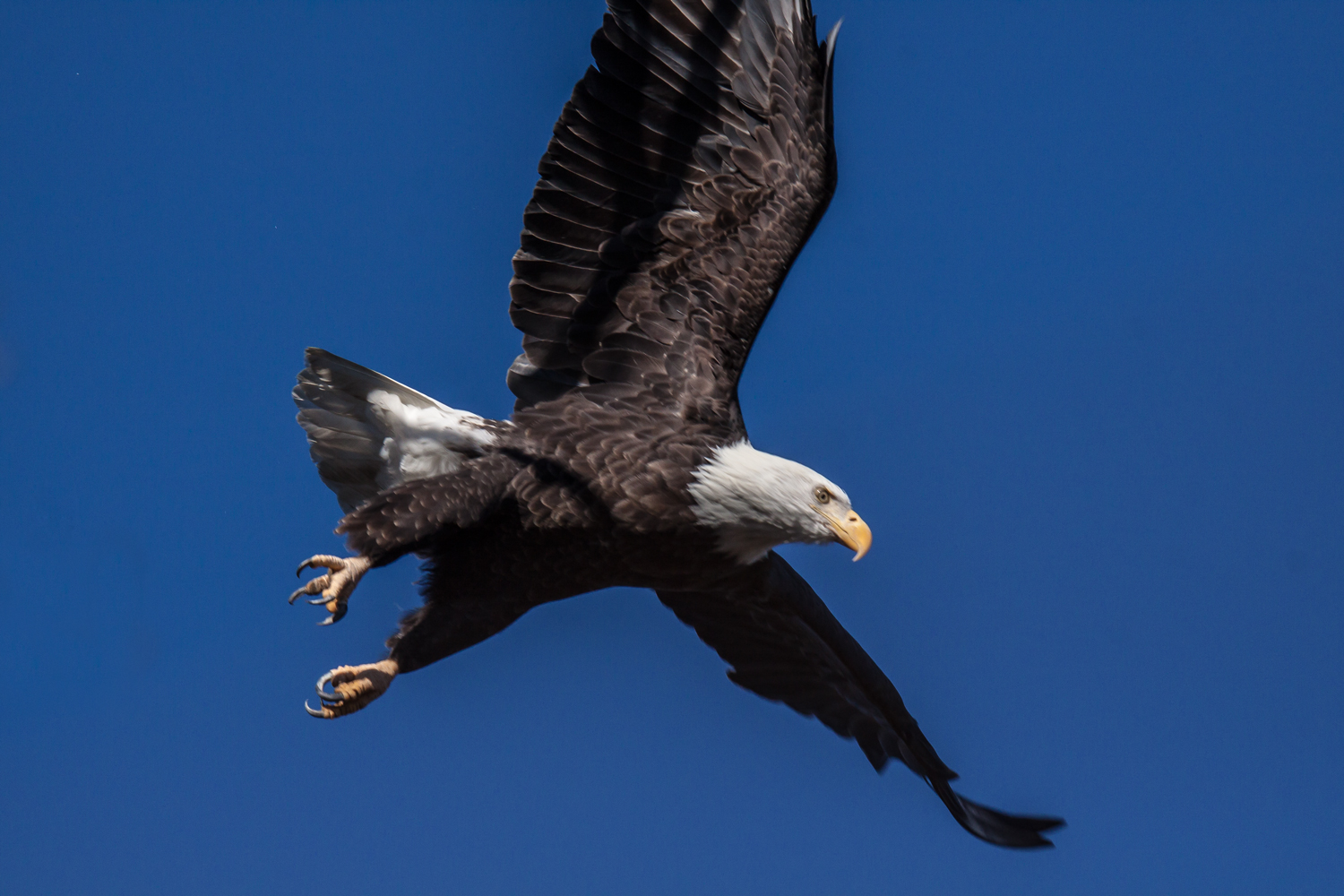
What’s the price of freedom? Today in the United States it is Veterans Day, a day we set aside to honor all of the selfless men and women who have served and continue to serve in our armed forces, often enduring considerable sacrifice and separation for our common benefit.

In many other places in the world, today is celebrated as Armistice Day and 2018 is special because it marks the 100th anniversary of the end of World War I, the war that many hoped would be the war to end all wars. The world is still a dangerous place and military forces, I believe, are a necessary element in ensuring national security.

I served for twenty years in the United States Army, so this posting is as much personal as it is patriotic. I have lived through periods of time when veterans have been reviled and other times when they have been honored.

I hope that you can join me today in thanking and saluting all veterans for their service and it is my sincere prayer that your sense of gratitude will continue long after the parades are over and the celebration are completed.

(I spotted this Bald Eagle (Haliaeetus leucocephalus) last week at Occoquan Bay National Wildlife Refuge and since it is one of the symbols of the United States, it seemed appropriate to feature the Bald Eagle in this posting.)

Bald Eagle

Bald Eagle

© Michael Q. Powell. All rights reserved.

Read Full Post »

Downy Woodpeckers (Dryobates pubescens) are the smallest woodpeckers in North America.  They more than make up for their lack of size, however, with their inexhaustible energy. Their constant motion makes them fun to watch, but a challenge to photograph.

I spotted this male Downy Woodpecker earlier this week at Occoquan Bay National Wildlife Refuge. How do I know that it is a male? The males of this species have a little patch of red on the back of their heads and in each of these photos you get a small peek at the red on the head.


Downy Woodpecker

Downy Woodpecker

© Michael Q. Powell. All rights reserved.
Read Full Post »

Nuthatches are curious little birds. Most of the time that I spot one, it is climbing head first down the trunk of a tree.

Earlier this week at Occoquan Bay National Wildlife Refuge, however, I spotted a hyperactive White-breasted Nuthatch (Sitta carolinensis) in the upper branches of a tree. In a series of corkscrewing motions that reminded me of a female gymnast on the uneven parallel bars, the nuthatch made its way up and down and around each of the branches.

If I were an Olympic judge, I would award the acrobatic nuthatch a score of 10 for its brilliant performance.

White-breasted Nuthatch

White-breasted Nuthatch

White-breasted Nuthatch

© Michael Q. Powell. All rights reserved.

Read Full Post »

Some days the birds seem to keep their distance from me, so I do my best to capture modest images of them in their environment, like this Eastern Bluebird (Sialia sialis) that I spotted in a field last week at Occoquan Bay National Wildlife Refuge.

I hesitated a little about posting this image, but I kept coming back to it when I thought about the shots that I wanted to share. I could enumerate technical reasons why this is a somewhat flawed photo, but there is something about the mood of the image that I find appealing. In the end, I decided to follow my basic approach of posting images that I like and letting others decide for themselves how they feel about the shots.

Eastern Bluebird

© Michael Q. Powell. All rights reserved.


Read Full Post »

A small flock of Cedar Waxwings (Bombycilla cedrorum) was active last week at Occoquan Bay National Wildlife Refuge. They stayed high in the trees, but I did manage to get this shot of one of these distinctive and very cool-looking birds as they foraged among the plentiful berries.

Cedar Waxwing

© Michael Q. Powell. All rights reserved.
Read Full Post »

When I entered Occoquan Bay National Wildlife Refuge early one morning last week, a layer of ground fog was hanging over the fields, giving the landscape an eerie feel that somehow seemed appropriate for the Halloween season.

As I made my way to the water’s edge, the skies brightened a bit and the fog seemed to lift a little. I was filled with a peaceful and serene feeling as I enjoyed the early morning moments with a Great Blue Heron in the distance.

morning fog

morning fog

morning fog

© Michael Q. Powell. All rights reserved.
Read Full Post »

As I rounded a curve on a trail at Occoquan Bay National Wildlife Refuge one morning last week, I spotted a fierce looking Bald Eagle (Haliaeetus leucocephalus) almost directly overhead in a tree. I wasn’t sure if the eagle had seen me, but when it looked down and glared at me, I realized it was quite aware of my presence.

In several earlier postings I have mentioned that this is a tough time of the year for spotting birds, because most of the leaves are still on the trees. Often I can hear birds, but I can’t see them. It turns out that the leaves on the trees can also hide me from the birds sometimes. I think that is how I ended up almost directly below this eagle, forced to shot upwards at a somewhat uncomfortable angle.

It wasn’t long before the eagle decided that it had had enough of me and it took off. Alas, I was not able to capture any in-flight shots, but I am definitely happy with the shots I managed to get of the perched bald eagle.

Bald Eagle

Bald Eagle

© Michael Q. Powell. All rights reserved.


Read Full Post »

Several years ago, I received some advice that I continue to follow to this day. I was told that if a vulture is circling overhead, as this one was doing earlier this week at Occoquan Bay National Wildlife Refuge, make sure you move from time to time.

When I first spotted this vulture, I was a little confused. It looked like a Turkey Vulture (Cathartes aura), but the bird lacked the distinctive red head that I am used to seeing on a Turkey Vulture. After doing a little research I learned that juvenile Turkey Vultures have an ashy-gray head that transitions to red as they mature.

juvenile Turkey Vulture

© Michael Q. Powell. All rights reserved.

Read Full Post »

Are you a risk-taker? How often do you go out on a limb?

If you were a Yellow-rumped Warbler (Setophaga coronata) you literally would be doing it all of the time. I love the texture, color, and shape of the branch so much that this image is as much about the branch as it is about the bird—that is the primary reason why I did not crop the image any closer.

Yellow-rumped Warbler

© Michael Q. Powell. All rights reserved.

Read Full Post »

Sometimes it is better to be lucky and to react quickly than it is to be skillful and systematic. As I was tracking a Yellow-rumped Warbler (Setophaga coronata) recently at Occoquan Bay Wildlife Refuge, it suddenly took off.

In and of itself, this was not unusual, because these small birds are in almost constant motion, weaving their way in and out of the vegetation. Instinctively I snapped off a short burst of shots. I thought I had missed the shot and the empty frames at the end of the sequence indeed showed that I was a bit late in reacting.

However, one of the initial shots was this fun image that shows the warbler raising its wings to prepare to provide propulsion while its feet are still attached to the branch. I was shooting in aperture-preferred mode, which meant that the camera chose the shutter speed. There was enough light that the shutter speed of 1/1600 froze most, but not all, of the bird’s motion.

Wouldn’t it be cool to be able to take off into the air like this little warbler, free to fly off to new destinations in search of new adventures?

Yellow-rumped Warbler

© Michael Q. Powell. All rights reserved.

Read Full Post »

I read the newspaper this morning before I looked at the photos I took yesterday. This image of a Mourning Dove (Zenaida macroura) at Occoquan Bay National Wildlife Refuge seems to reflect my innermost feelings at this moment about the senseless slaughter of innocents in Pittsburgh.

My heart goes out to all of those mourning their losses.

Mourning Dove

© Michael Q. Powell. All rights reserved.

Read Full Post »

It’s hard to ignore a red head. No matter whether it is on a human or a woodpecker, it simply attracts your eyes. I spotted this handsome male Red-bellied Woodpecker (Melanerpes carolinus) last week at Occoquan Bay National Wildlife Refuge.

You might wonder why this woodpecker is not called a Red-headed Woodpecker. That name is reserved for a woodpecker that has a completely red head. For comparison purposes, I am attaching an image from 2016 of a Red-headed Woodpecker. If you’d like to see more shots of the Red-headed Woodpecker, check out the 2016 posting Red-headed Woodpecker in late January.

Red-bellied Woodpecker

Red-headed Woodpecker

© Michael Q. Powell. All rights reserved.

Read Full Post »

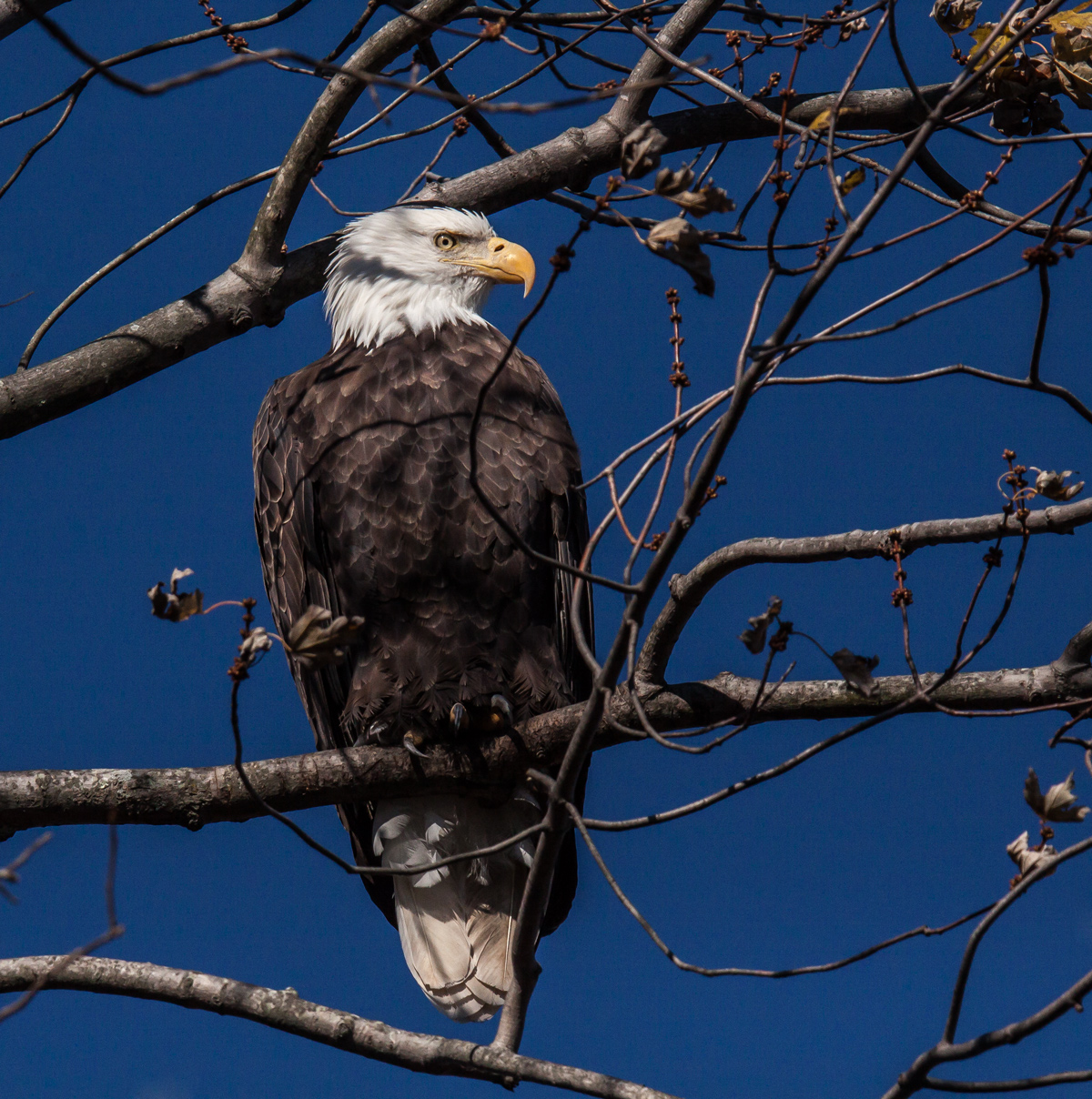
If its head feathers were not so white, I probably would not have spotted this Bald Eagle (Haliaeetus leucocephalus) amidst all of the leaves still on the trees at Occoquan Bay National Wildlife Refuge earlier this week.

Bald Eagle

A short while later, I spotted a second bald eagle, possibly the same one, in a different leafy perch near the top of some trees.

Bald Eagle

It is rare for me to have the chance to photograph a perched bald eagle at what qualifies as close up (though I was shooting at the long end of my 150-600mm lens) and I was incredibly thankful to have two separate opportunities to do so in a single day.


© Michael Q. Powell. All rights reserved.

Read Full Post »

It has been quite a while since I last got a shot of a Bald Eagle (Haliaeetus leucocephalus), so I was really happy when I saw this young one in the distance earlier this week at Occoquan Bay National Wildlife Refuge. Experienced birders can tell the age of a Bald Eagle by its coloration. All I know for sure that it is less that five years old, the age at which the head feathers turn white, though I have the impression that it is pretty young.

As is often the case, the eagle spotted me right afterwards and took to the air, but I managed to get a shot as the eagle flew off. When it comes to eagles, it is always a challenge to get a shot, because the eagle’s eyesight is so much better than mine and its reaction time so much quicker.  I therefore have to react almost instantly when I see one and then hope that luck is on my side.

Bald Eagle

Bald Eagle

© Michael Q. Powell. All rights reserved.


Read Full Post »

I suspected that this Great Blue Heron (Ardea herodias) at Occoquan Bay National Wildlife Refuge would be silhouetted because I was shooting into the light. I was going to make some adjustments to my camera settings, but it took off before I could do so and I captured a cool series of images.

Great Blue Heron

Great Blue Heron

Great Blue Heron

I liked the way that a few details of the feathers were visible in the images and the pink and blue streaks in the background were a nice touch. I decided, however, to play around with one of the images and opened the second shot in SIlver Efex Pro 2, a black and white conversion software program that is part of the Nik Collection.

One of the filters turned the heron into a completely black silhouette—with some birds, identification would be a problem, but the shape of the heron is unmistakable here. Another filter created the effect of a pinhole camera and you can see the result in the final images. There is something about that final image that really appeals to me.

I tend to strive for realism in my photos and normally do only a minimal amount of post-processing. I had so much fun, though, playing around with the different effects you can achieve with software that I suspect I will consider doing so again in the future.

Great Blue Heron

Great Blue Heron

© Michael Q. Powell. All rights reserved.

Read Full Post »

I spotted this large Wild Turkey (Meleagris gallopavo) strutting about at Occoquan Bay National Wildlife Refuge this past weekend with about a dozen of his close friends. It was hard to get a group shot, so I focused instead on the largest turkey in the group and captured this image.

Wild Turkey

© Michael Q. Powell. All rights reserved.

Read Full Post »

« Newer Posts - Older Posts »