Feeds:
Posts
Comments

Archive for June, 2018

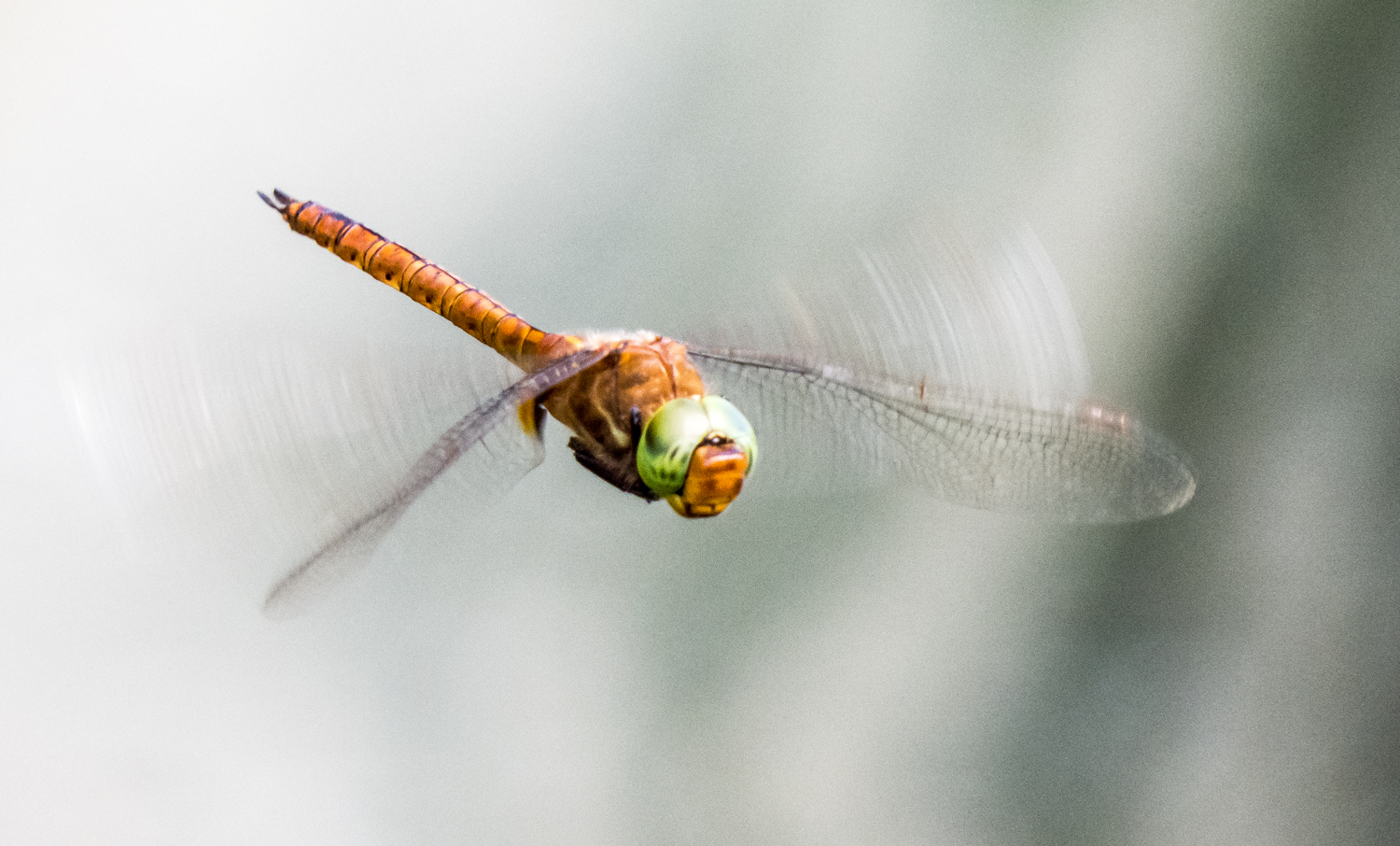
During this past weekend here in Brussels, I managed to find some really cool dragonflies, like this Green-eyed Hawker (Anaciaeschna isoceles or Aeshna isoceles) that I spotted at a pond in the Rouge-Cloître (Red Cloister) Park. This rather large dragonfly, also known as a Norfolk Hawker, is really striking as it flies, with a combination of colors that I have never seen before on a dragonfly.

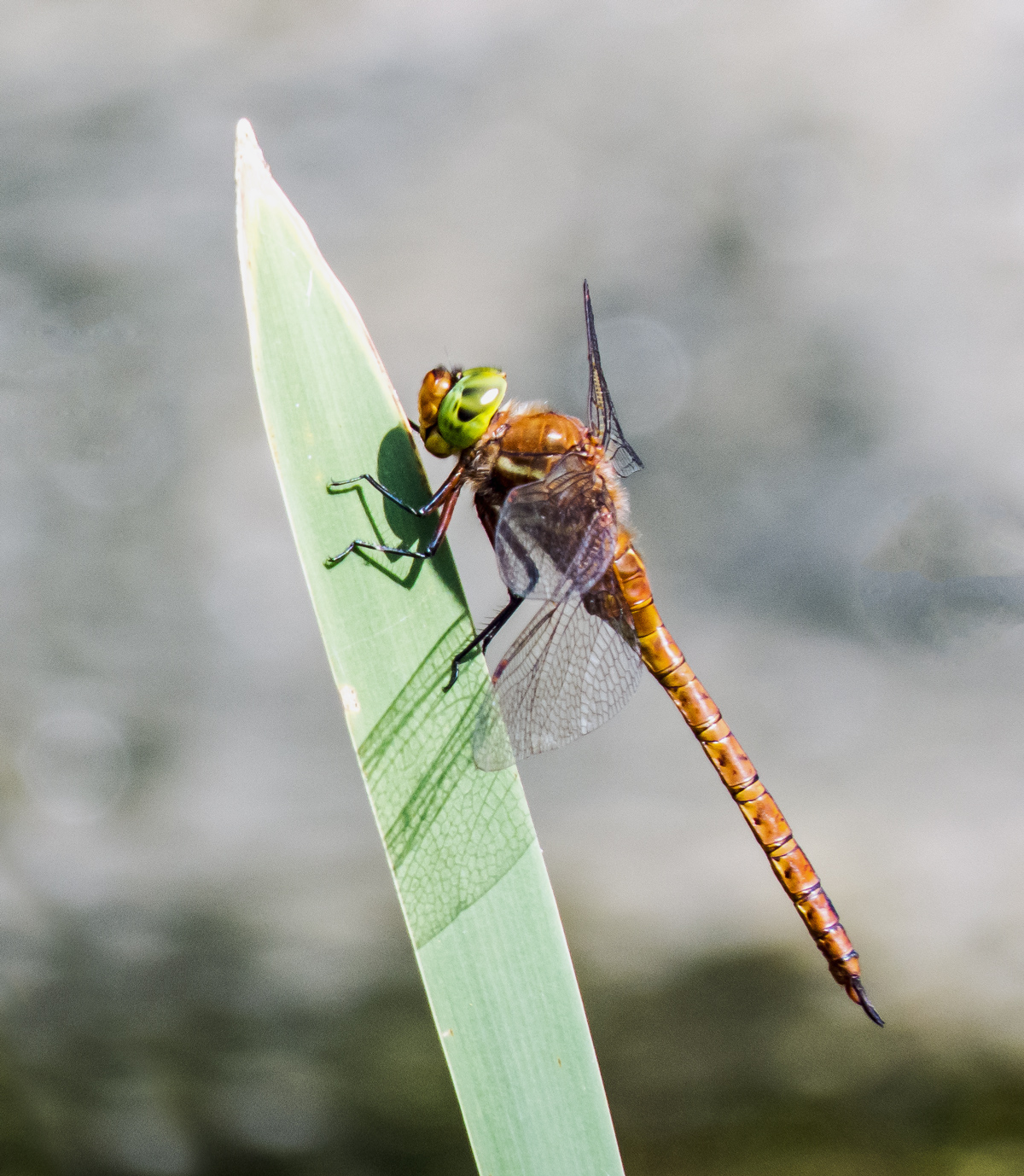
With a bit of persistence and a lot of luck, I managed to capture an in-flight shot of a Green-eyed Hawker, but mostly I waited and waited for one to land. It was a little frustrating when one of them would land in a location that was too far away or in a location that did not afford me a clear shot, but eventually I was able to capture some images of a perching Green-eyed Hawker.

I was happy to capture the last photo that shows the yellow triangle on the upper part of the abdomen that is responsible for the “isoceles” portion of the Latin name of the species.
Green-eyed Hawker

Green-eyed Hawker

Green-eyed Hawker

© Michael Q. Powell. All rights reserved.

Read Full Post »

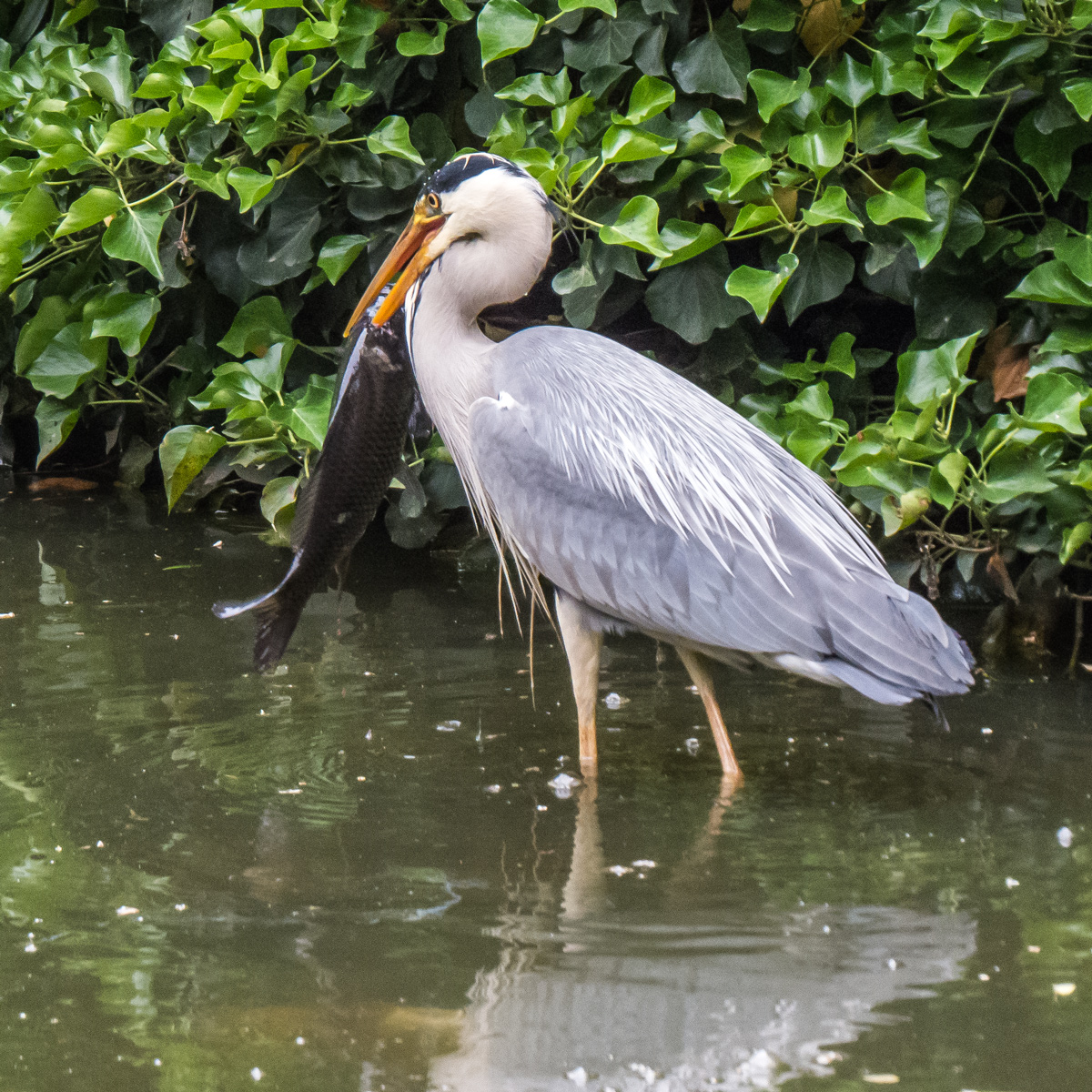
Grey Herons (Ardea cinerea), like this one that I observed at the Botanical Garden here in Brussels, look and act a lot like the familiar Great Blue Heron (Ardea herodias) of North America, but are a little smaller and slightly different colored. Shortly after it caught this big fish, the heron let it go or it somehow managed to escape—maybe they have a catch-and-release policy at this location.

Grey Heron

Grey Heron

Grey Heron

© Michael Q. Powell. All rights reserved.
Read Full Post »

Egyptian Geese (Alopochen aegyptiaca) have a look that is so unusual and distinctive that I can now recognize them almost instantaneously. I am fortunate to have the chance to travel to Brussels, Belgium a couple of times a year for work and one of my favorite places to visit here is the botanical gardens of Brussels. There is a small pond at the botanical gardens that always has an assortment of birds, and I was delighted to spot this beautiful Egyptian Goose swimming in the pond yesterday, my day of arrival in this historic city. I have seen an Egyptian Goose at this location a couple of times in the past, but the lack of surprise did not diminish at all my excitement at seeing this exotic species.

As their name suggests, Egyptian Geese are native to the Nile River area and sub-Saharan Africa, but there are now established breeding populations in parts of Europe and even in the United States. According to information in Wikipedia, Egyptian geese were considered sacred by the ancient Egyptians, and appeared in much of their artwork. They have been raised for food and extensively bred in parts of Africa since they were domesticated by the ancient Egyptians, although I suspect that they are viewed in Europe as primarily an ornamental bird.

Egyptian Goose

© Michael Q. Powell. All rights reserved.


Read Full Post »

Most dragonflies have clear wings and different colors and patterns on their bodies. Some dragonflies, however, have patterns on their wings too that I think really accentuates their beauty and makes them particularly striking.

The first shot below shows a female Calico Pennant dragonfly (Celithemis elisa) that I spotted in mid-May at Occoquan Bay National Wildlife Refuge. The second shot shows a male Painted Skimmer dragonfly (Libellula semifasciata) that I spotted in late May at a small pond in Prince William County in Northern Virginia.

Calico Pennant

Painted Skimmer

© Michael Q. Powell. All rights reserved.


Read Full Post »

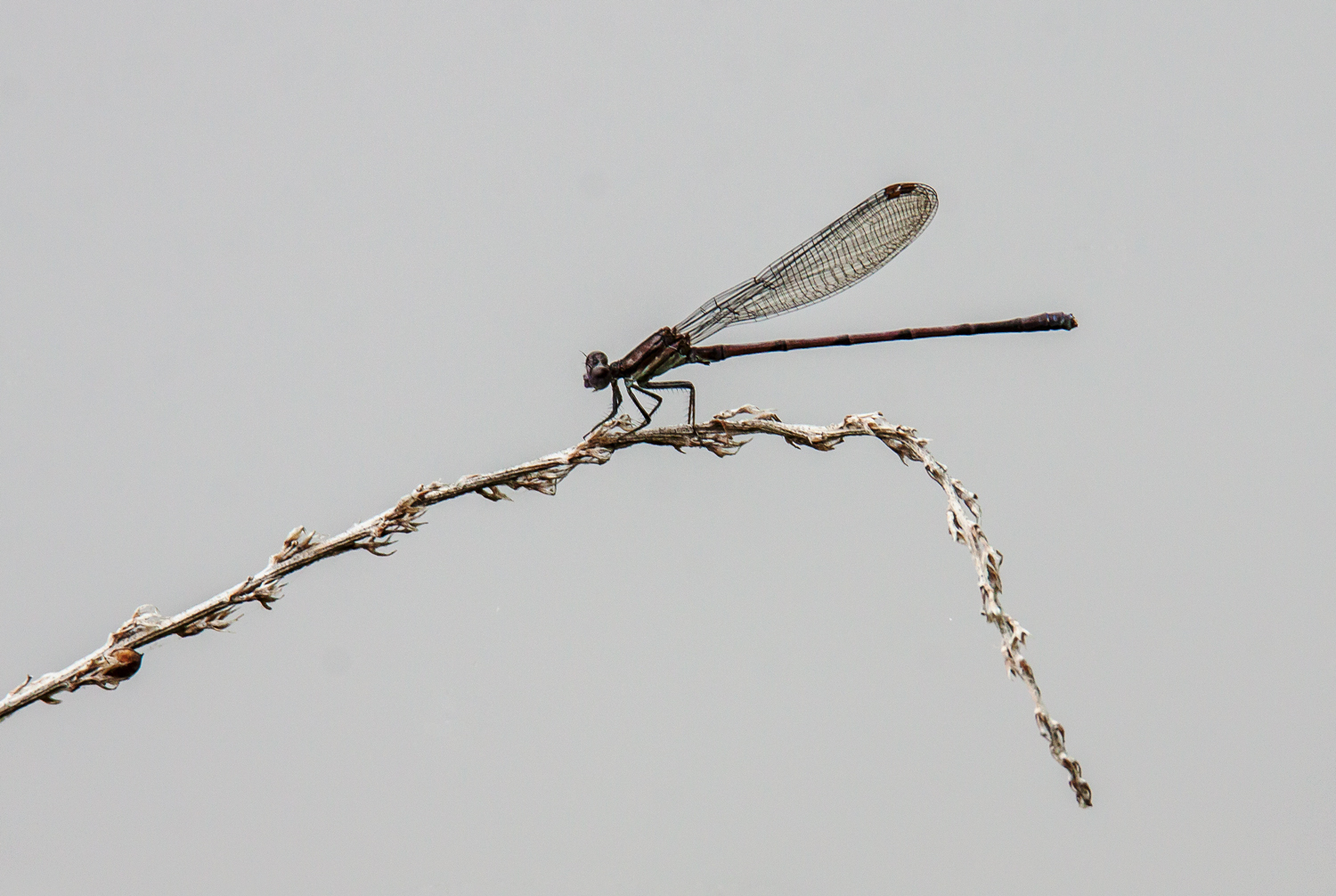
I love close-up photography, but sometimes it is good when necessity (or choice) compels me to shoot from a distance. This image has the simplest of compositions—a damselfly and a stalk on which to perch—but I like the way that the elements combined to create a sense of tranquility when I captured this moment this past Monday at Jackson Miles Abbott Wetland Refuge.

As I recall, the light was coming from in front of me, which caused the damselfly to appear as a partial silhouette. Without the normal color information, it’s hard for me to identify the species of damselfly with any degree of certainty. One of the experts on a Facebook forum, however, suggest that it might be a Variable Dancer damselfly (Argia fumipennis), the sames species that appears at the top of my blog’s home page.  As for the dried-out stalk that serves as a perch for the damselfly, I have no idea what kind of plant it is.

tranquil damselfly

© Michael Q. Powell. All rights reserved.


Read Full Post »

« Newer Posts