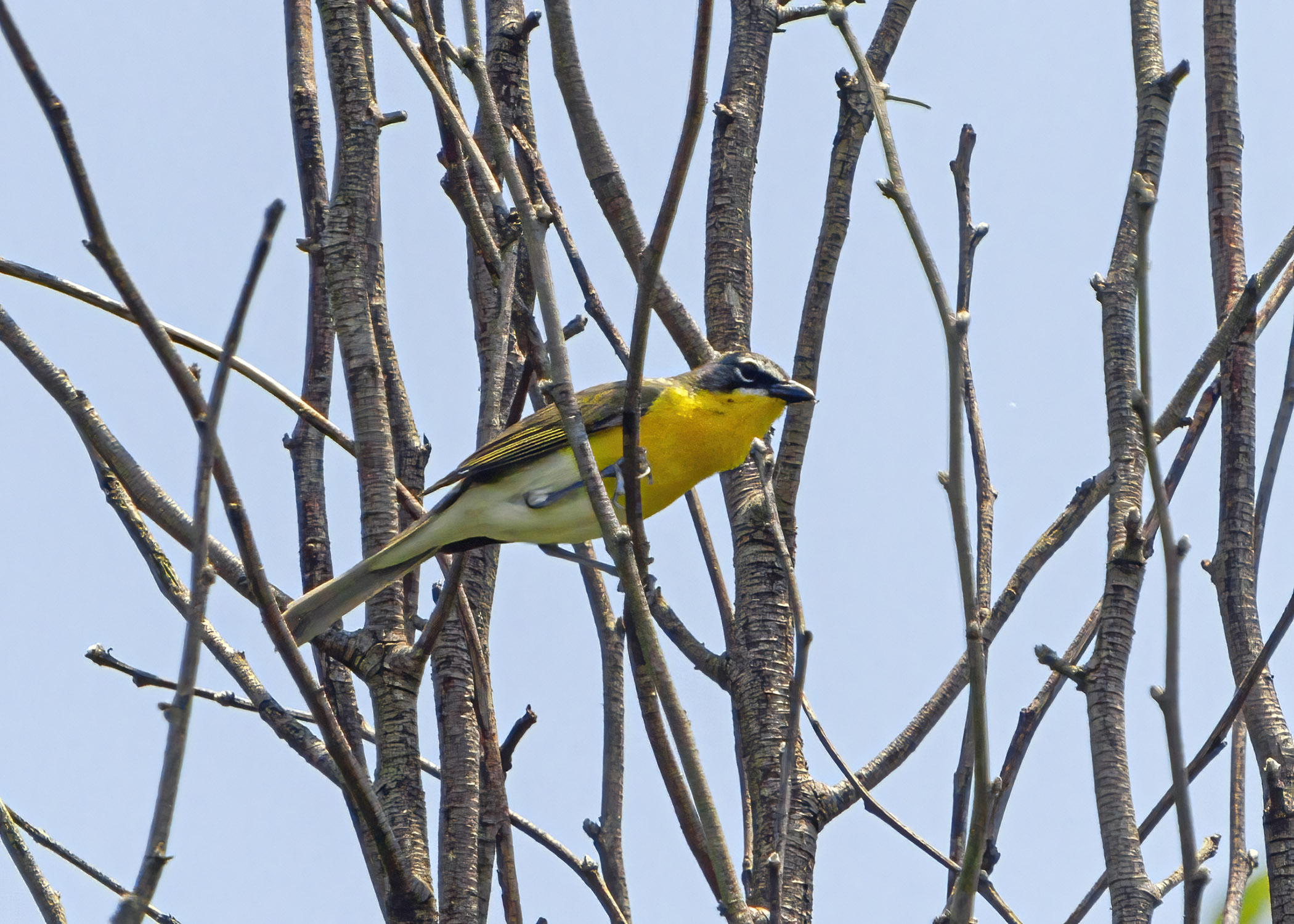
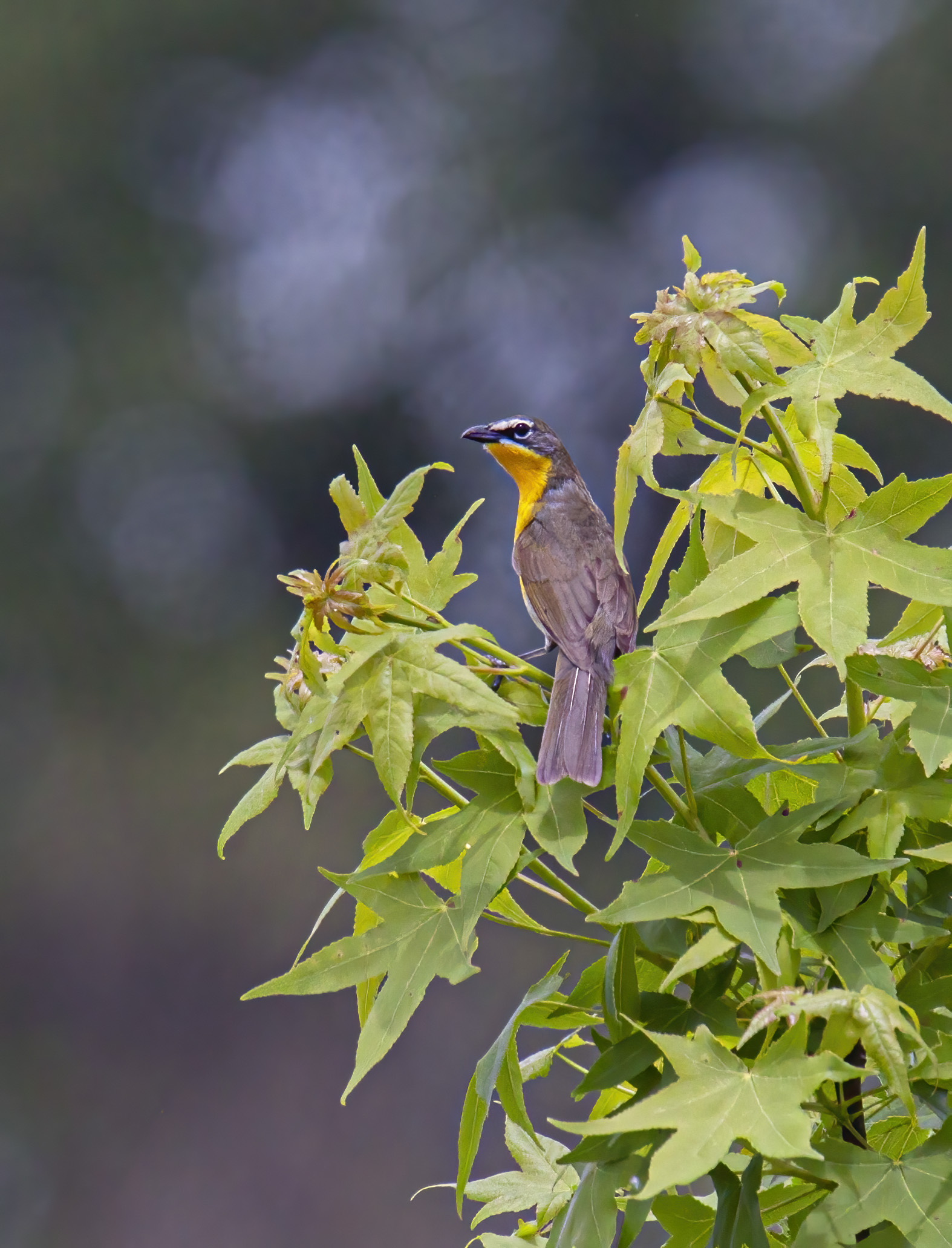
Last Monday I spotted this beautiful Yellow-breasted Chat (Icteria virens) at Occoquan Bay National Wildlife Refuge. I thought that this was my first encounter with this bird species, but a search of my previous blog postings revealed that I got some long distance shots of one in 2022.
Many of the migrating warblers that are passing through my area have various yellow markings, so I assumed that this was simply another warbler. The reality, however, is hardly simple. According to the Cornell Lab of Ornithology, “The Yellow-breasted Chat has always been a mystery to taxonomists—it looks similar to warblers but is larger, with a more varied repertoire of songs and calls, and also has other differences in behavior and anatomy. The species was placed in the warbler family (Parulidae) for decades, but in the late 2010s was given its own family (Icteriidae), in recognition of these differences.”
If that were not confusing enough, the name “chat” is used for a number of different birds throughout the world. According to Wikipedia, “Chats (formerly sometimes known as “chat-thrushes”) are a group of small Old World insectivorous birds formerly classified as members of the thrush family (Turdidae), but following genetic DNA analysis are now considered to belong to the Old World flycatcher family (Muscicapidae). The name is normally applied to the more robust ground-feeding flycatchers found in Europe and Asia and most northern species are strong migrants.”
All of this scientific explanation leaves me utterly confused. The only thing I know for sure is that the Yellow-breasted Chat that I photographed was a real treat for me—its bright yellow color immediately brought a smile to my face and lifted my spirits. For me, that is more than enough—I’ll leave the arguments about taxonomy and classification to others.

© Michael Q. Powell. All rights reserved.

 Mike Powell