Feeds:
Posts
Comments

Posts Tagged ‘Red-breasted Merganser’

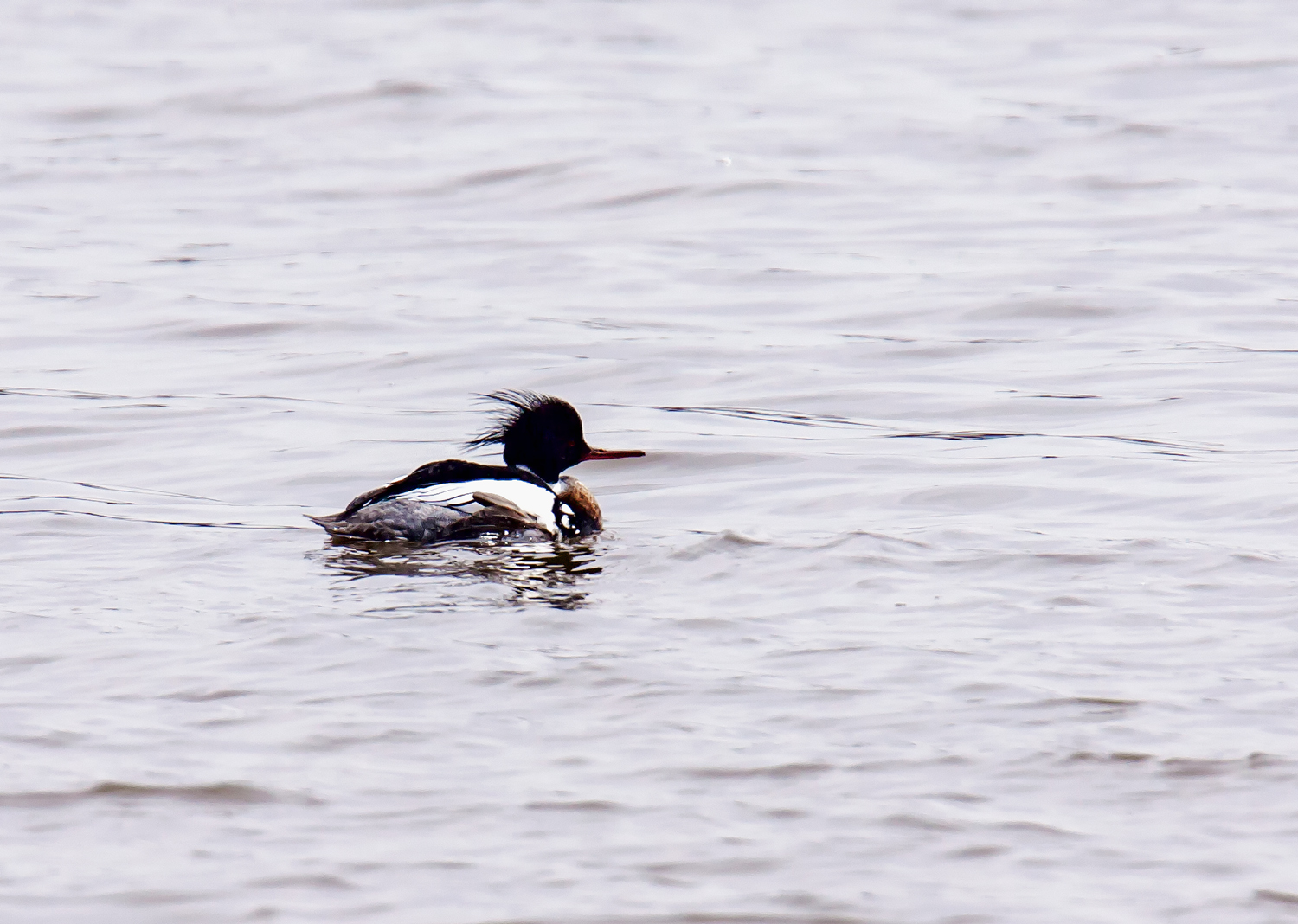
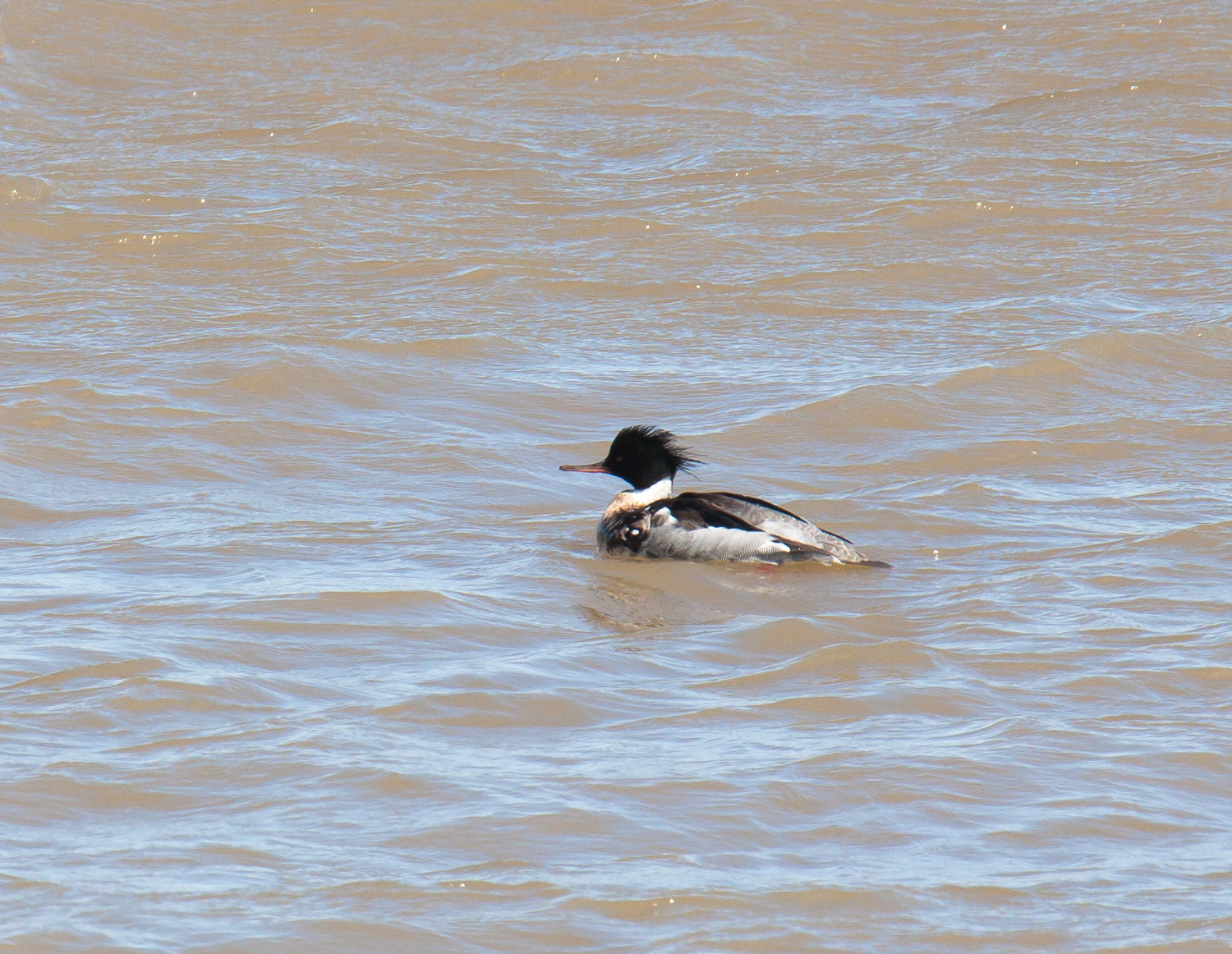
I spotted these cool-looking ducks last week in the waters off of Occoquan Bay National Wildlife Refuge. Some research and help for on-line experts helped me determine that these are Red-breasted Mergansers (Mergus serrator), a duck species that I do not see very often. I really like the spiky hairdos and long bills of these ducks that give them a distinctive punk vibe. I kept hoping that they would swim closer to shore, but, alas, they drifted farther and farther away, so I could not capture any close-up images.

Red-breasted Merganser

Red-breasted Merganser

© Michael Q. Powell. All rights reserved.

Read Full Post »

How good are you at identifying a bird by its silhouette? When you are shooting directly into the light, one of the challenges of photographing a bird is that many of the details, or even all of them, disappear into the shadows—you often have to rely more on the shapes than the colors to identify the bird.

I could not see the eyes or any of the facial features of this bird that I spotted last Saturday at Occoquan Bay National Wildlife Refuge, but its long bill and distinctive “punk rock” head feathers made it relatively easy to identify it as a Male Red-breasted Merganser (Mergus serrator), a type of diving duck that I see only occasionally. For the record, the white collar also helped in making the identification.

Red-breasted Mergansers are one of the bird species that spend their winters with us. I suspect that it will not be long before they depart for more more northern locations for the breeding season.


Red-breasted Merganser

© Michael Q. Powell. All rights reserved.

Read Full Post »

This male Red-breasted Merganser duck (Mergus serrator) that I spotted last week in the waters off of Occoquan Bay National Wildlife Refuge seemed to be having a bad hair day (or was going for a punk look). At this stage of my life, I’d be happy just to have a hair day.

According to the Cornell Lab of Ornithology, “Red-breasted Mergansers are among the fastest flying ducks, clocking speeds of up to 81 miles per hour.” Wow!

Red-breasted Merganser

Red-breasted Merganser

© Michael Q. Powell. All rights reserved.


Read Full Post »

Most diving ducks quite naturally prefer to hang out in places where the water is deep, which makes it a challenge to get any shots of them and almost impossible to get close-up shots. Last Friday I was happy to spot some Red-breasted Mergansers (Mergus serrator), a species of diving duck that I rarely encounter, in the wind-swept waters of Belmont Bay at the confluence of the Occoquan and Potomac Rivers in Northern Virginia.

Both the male and female of this species have spiky hair that takes on wild shapes thanks to the effects of the wind and the water. The male in the middle of the first shot was busy preening, so I am including a separate shot of him when he deemed he was ready for an individual portrait.

Red-breasted Merganser

Red-breasted Merganser

© Michael Q. Powell. All rights reserved.

Read Full Post »

I spotted this duck last Friday at Occoquan Bay National Wildlife Refuge in Northern Virginia. At first I was certain that it was a female Hooded Merganser, but the bill seemed extra long and the coloration different from others I had seen.

I asked some birding experts in a Facebook group for assistance with identification and they informed me that it is a female Red-breasted Merganser (Mergus serrator), a species that spends its summers in Canada and its winters in coastal areas.

The sky was covered with clouds and lighting was limited when I took these shots, which made it tough to capture the details of this duck, which was located a pretty good distance from me. The second image gives a good view of the Red-breasted Merganser, but I personally am drawn even more to the “artsy” first image.

Red-breasted Merganser

Red-breasted Merganser

© Michael Q. Powell. All rights reserved.


Read Full Post »