Feeds:
Posts
Comments

Posts Tagged ‘Great Blue Heron fishing’

I do not pay too much attention to the statistics that WordPress provides about my blog, but I could not help but notice this morning that, according to the “official” statistics, I have now had over a half million views since July 2012 of 5,33p posts. Wow! It’s a bit of a mystery to me how exactly WordPress counts those views, so I am not sure if the stats are fully accurate, but those numbers indicate a lot of effort on my time.

More than that, though, those statistics reflect an incredible amount of support and encouragement from so many of you. Thanks to all of you, whether you have followed my photographic wanderings for a day for for years. The second image below is a screen shot of the overall statistics for the blog this morning.

As you may have noticed, I have slowed my pace of posting a bit over the last six months as more of my free time has been increasingly devoted to other interests and activities. I’ll be keeping up with the photography blog, though, at least a few times a week and quite possibly more frequently than that as the weather warms up.

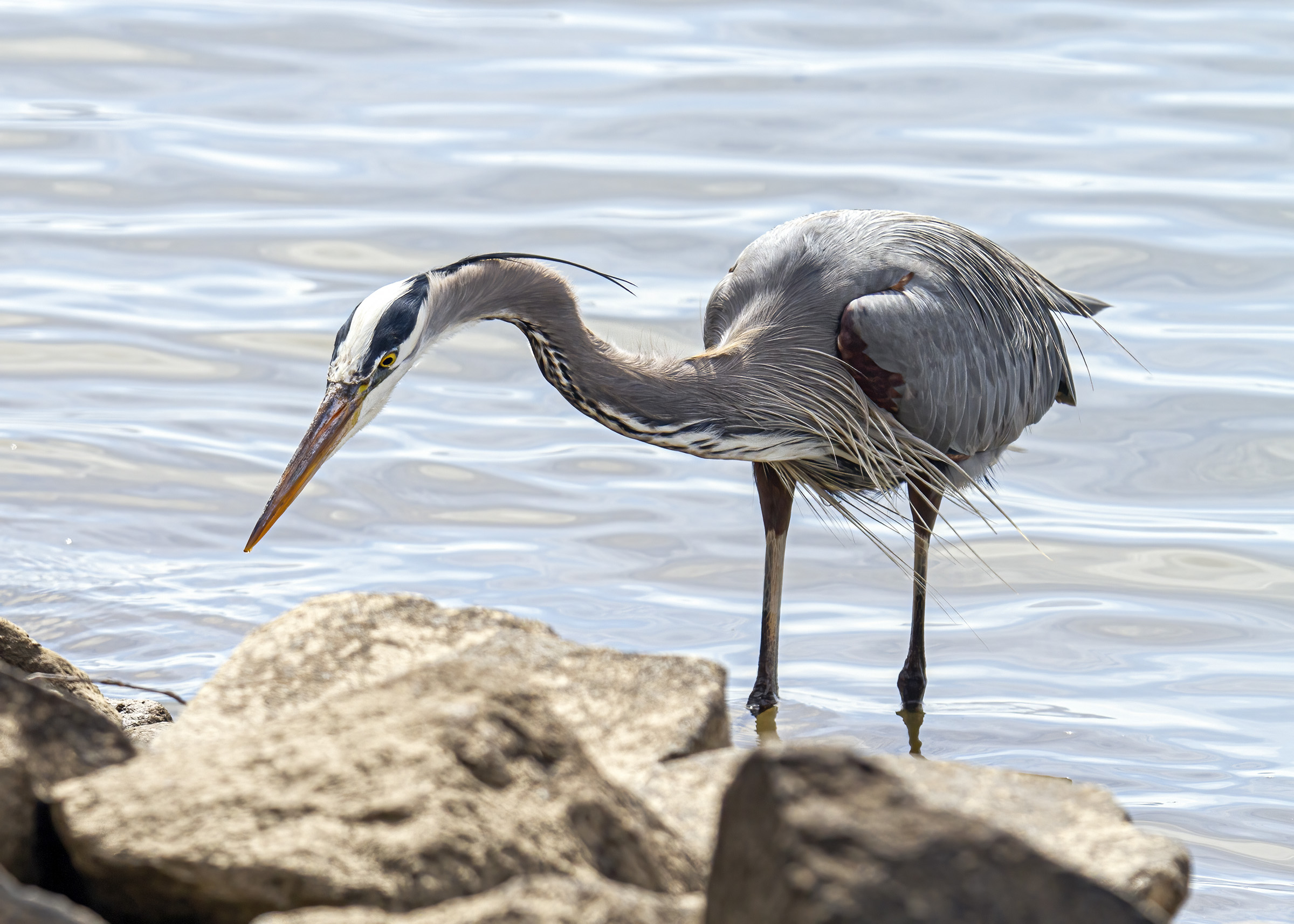
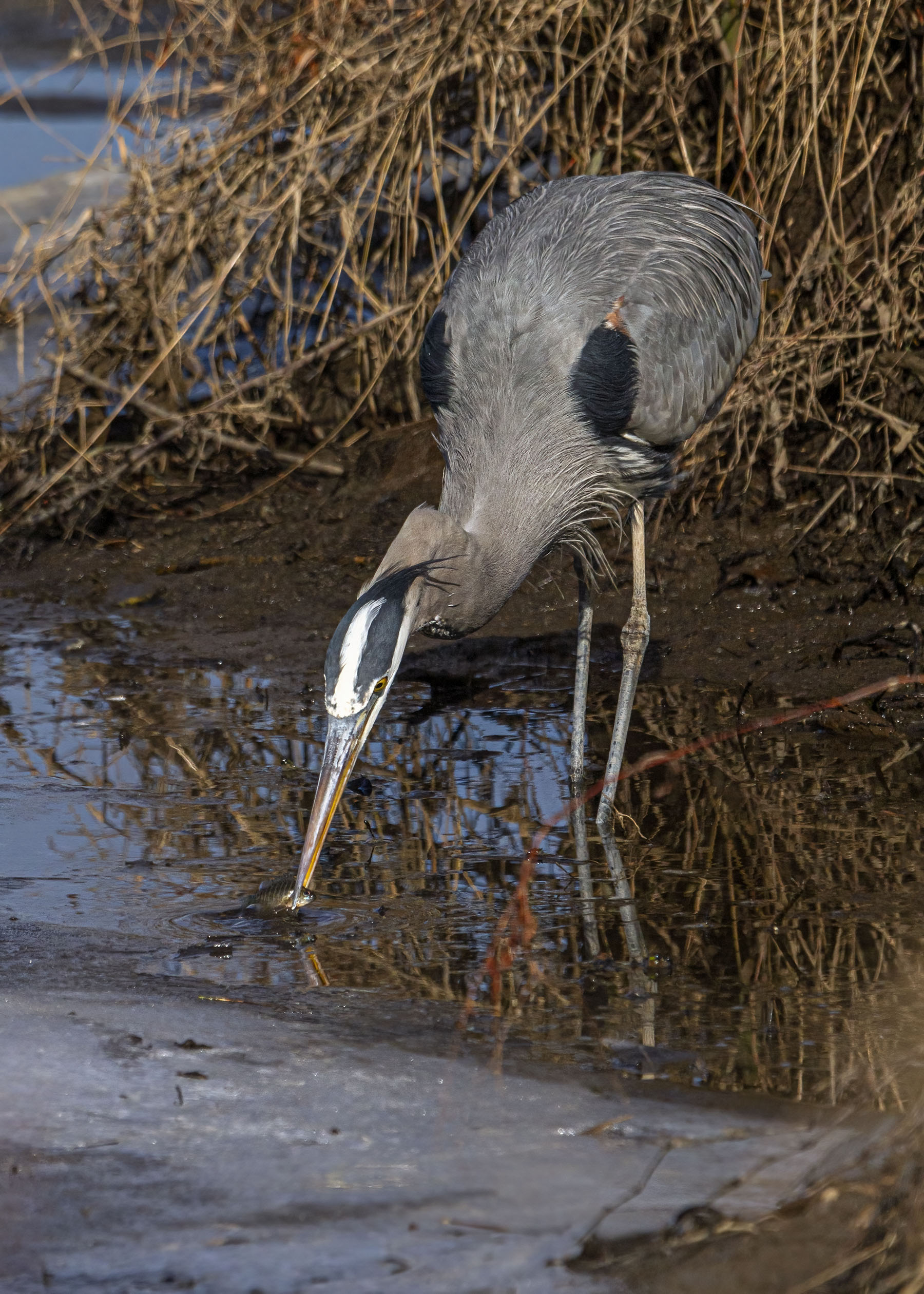
During a recent visit to Occoquan Bay National Wildlife Refuge, I captured this shot of a Great Blue Heron (Ardea herodias) in action. Most of the time these herons thrust their bills violently in the water in attempting to catch fish, but this one was doing so much more gently that normally. The water level was low because it was lot tide and the heron may have been trying to pluck a small fish out of the water. On this attempt, though, he was not successful, but the heron’s open bill made for a nice photo.

I thought about posting one of my “best” images for today’s blog entry, but decided instead to continue my habit of posting recent images that appeal to me. As many of you know, I am generally content to post photos of everyday creatures to highlight the beauty that surrounds us all of the time if we slow down and take the time to observe it. Beauty is everywhere.


Great Blue Heron

© Michael Q. Powell. All rights reserved.


Read Full Post »
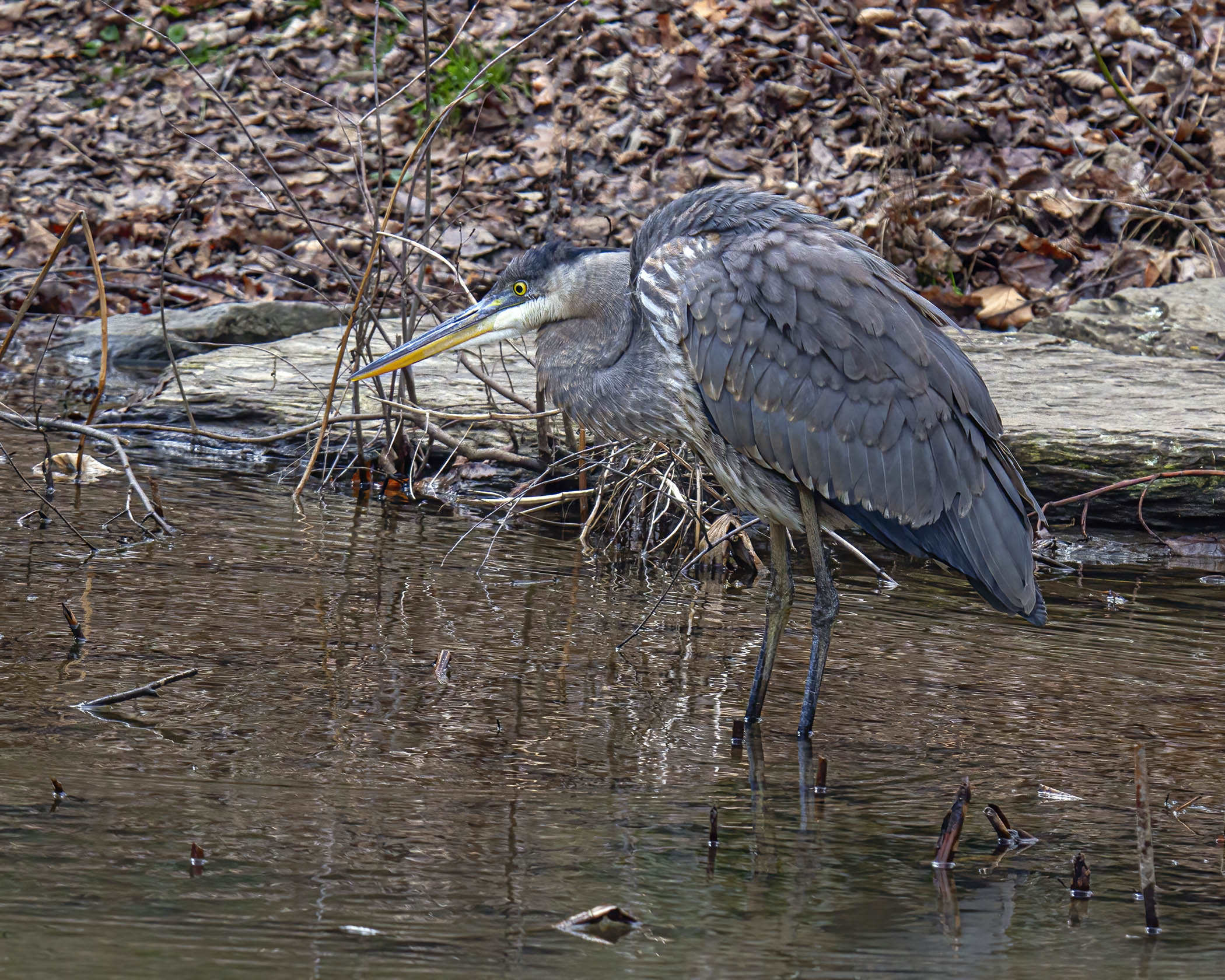
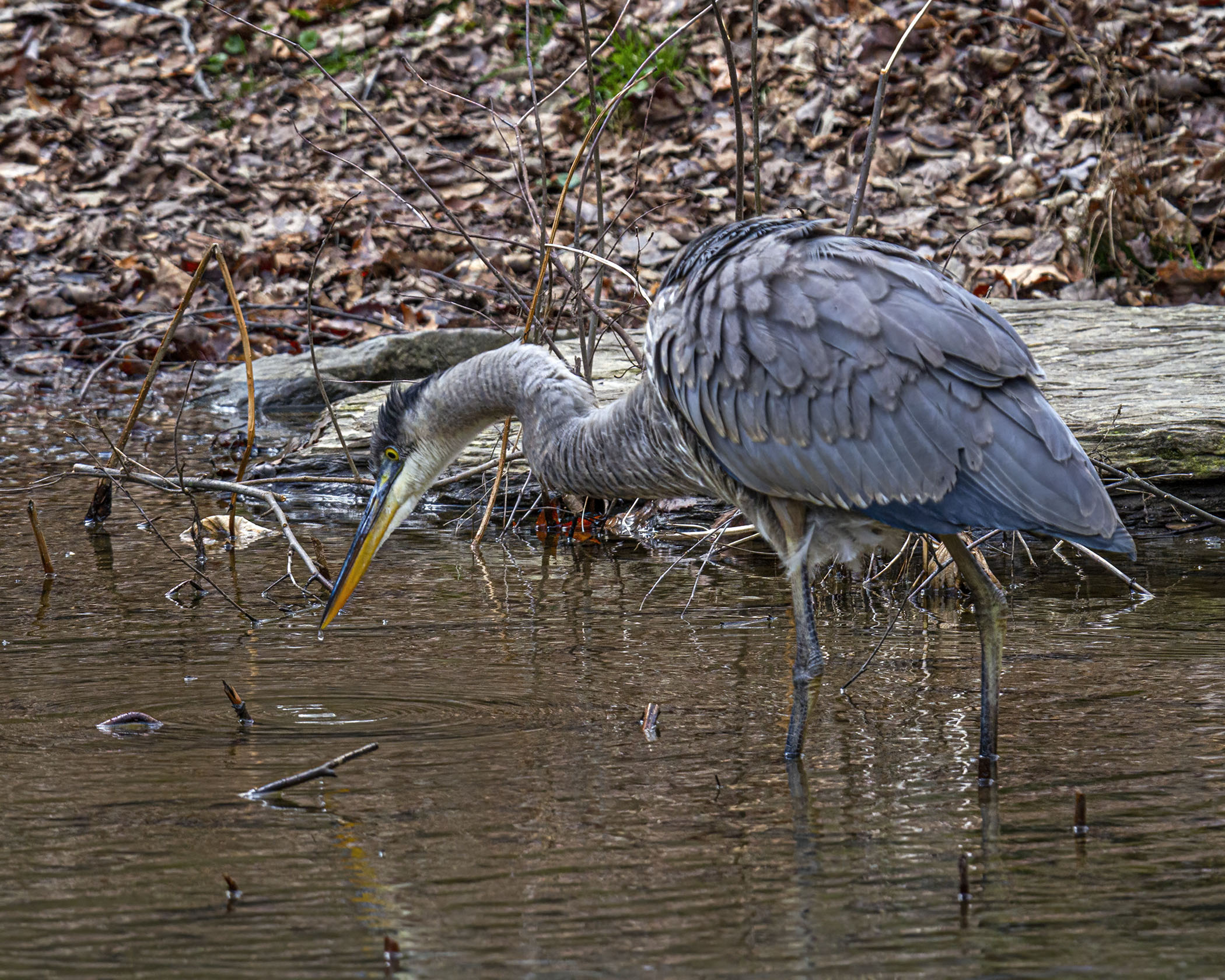
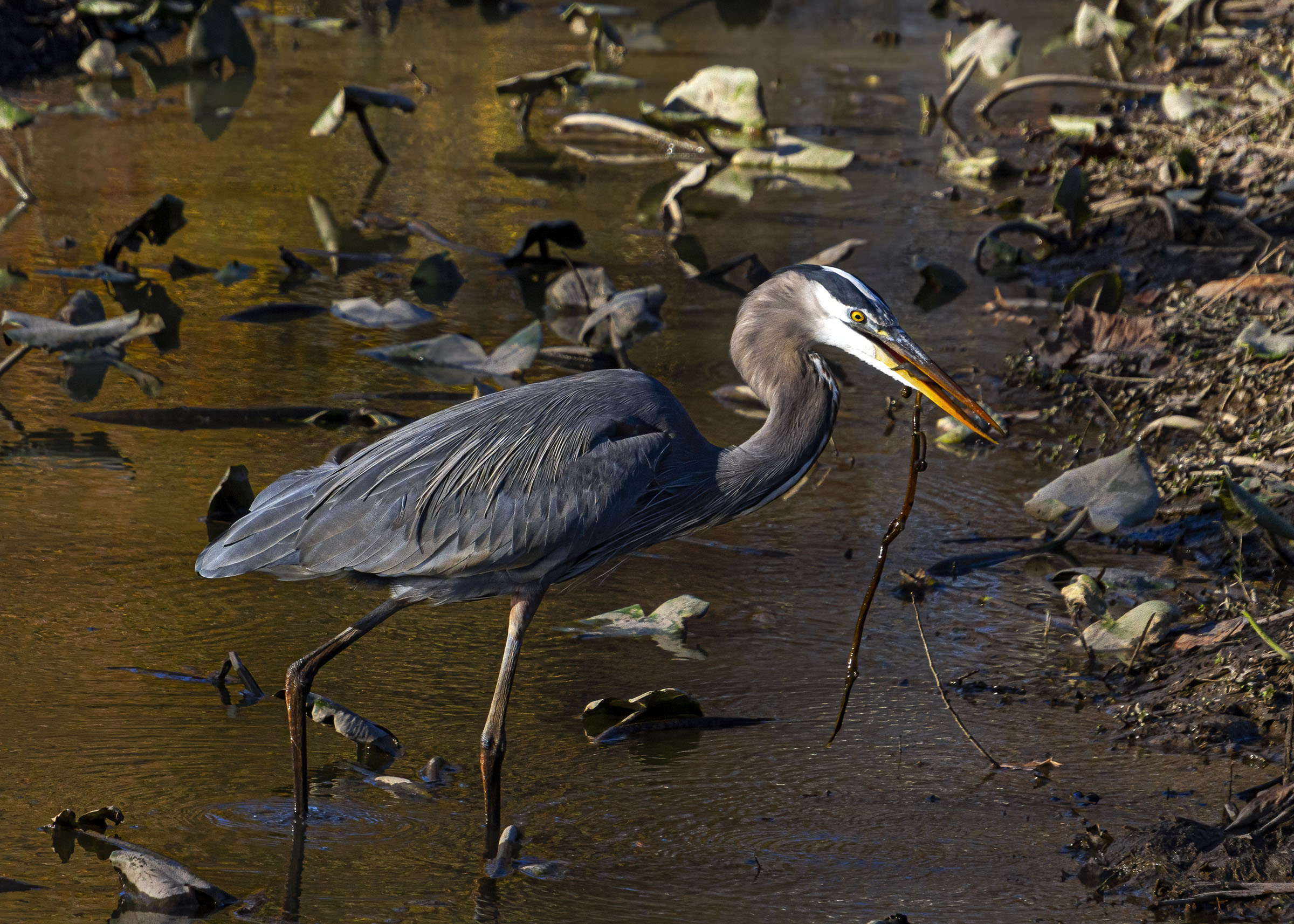
This past Friday I photographed this Great Blue Heron (Ardea herodias) at Occoquan Bay National Wildlife Refuge in stealth mode as it attempted to sneak up on some potential prey. At other times, the heron walked through the water with its head held high. It was a fun little photo session for me, though I suspect that the heron wished it were more successful in catching some fish.

Great Blue Heron

Great Blue Heron

Great Blue Heron

© Michael Q. Powell. All rights reserved.


Read Full Post »

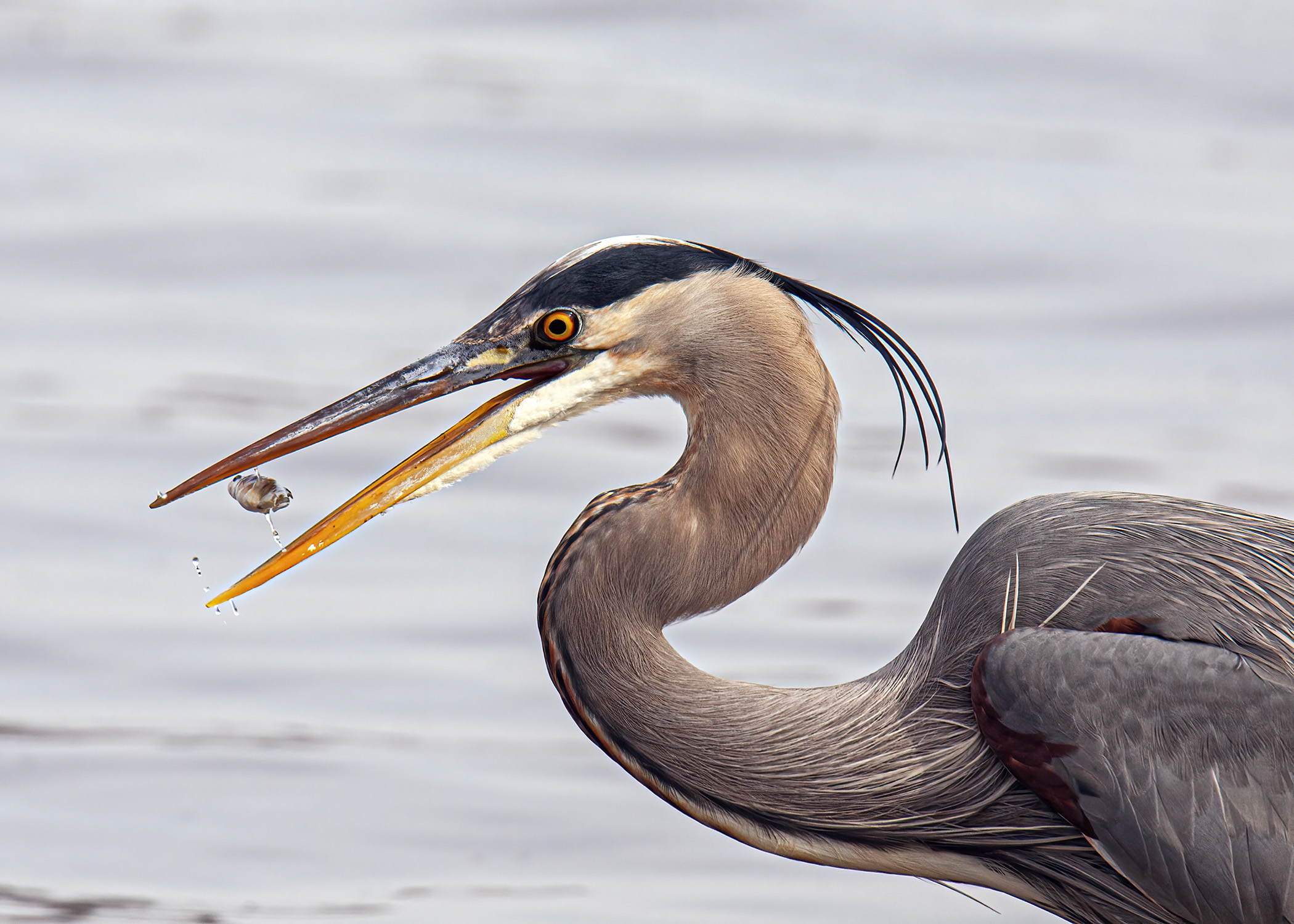
This Great Blue Heron (Ardea herodias) was having pretty good success in catching some small fish one morning last week at Occoquan Bay National Wildlife Refuge. I personally do not like to have fish for breakfast, but am aware that some people like lox, mackerels, or other kinds of fish with their morning meals. As the old Latin saying goes, “De gustibus non est disputandum” (“There is no accounting for taste.”)

Great Blue Heron

© Michael Q. Powell. All rights reserved.

Read Full Post »

Some birds, like the ospreys and Great Egrets, leave our area and migrate to warmer climates as winter approaches. Others, like Great Blue Herons (Ardea herodias), remain with us and have to work harder to find food.

Last week I spotted a heron standing in the shallow water of one of the tidal ponds at Occoquan Bay National Wildlife Refuge. In the past I have often seen herons wait patiently for extended periods of time to catch large fish, but this heron was content to strike often and pluck small fish from the water—every few minutes he would catch another fish, swallow it in a single gulp, and return to fishing.

I encourage you to click on the image to get a better look at the small fish in the heron’s bill and the visible spray of water droplets. I also really like the dynamism of the  heron’s pose that suggests both the energy and the focus of the heron.

Great Blue Heron

© Michael Q. Powell. All rights reserved.

Read Full Post »

I can usually count on spotting at least one Great Blue Heron (Ardea herodias) during my visits to Occoquan Bay National Wildlife Refuge. Sometimes, when the tides are right, I will see them in the waters of the bay, but most often they are in the small ponds throughout the refuge.

Last Friday I caught sight of this heron in the shallow waters of one such pond. The heron was intently focused on the water and eventually plunged its head into the water. When the water is deep, the heron will thrust violently into the water, but in this case the movement was much smaller.

I watched and waited as the heron slowly lifted its head to see if it had been successful in catching a fish. As you can see in the final photo, the results were not clear. Obviously the “catch” included a lot of vegetation, but I can’t tell for sure if there was also a small fish. A few seconds later the heron seemed to swallow, dipped its bill into the water to rinse it, and resumed its fishing.

Great Blue Heron

Great Blue Heron

© Michael Q. Powell. All rights reserved.

Read Full Post »

It is hard to anticipate when a Great Blue Heron (Ardea herodias) will strike. Herons have an amazing amount of patience and will often stand stationary for extended periods of time and then without much warning they will strike swiftly and violently.

Last week I was fortunate to be able to capture a sequence of shots of a heron in action at Occoquan Bay National Wildlife Refuge. I was amazed at how deeply the heron plunged its head, neck, and upper body into the water, creating quite a splash in doing so.

It seemed like the heron kept its head underwater for quite a while, but my sense of time is sometimes distorted in these kinds of situations. In any case, I impatiently waited for the heron to lift its head, anxious to see what it had caught. The heron slowly lifted its head and eventually it became clear that it had caught nothing but water. It may be my imagination, but I seem to see a mix of disbelief, dismay, and disgust in the heron’s expression in the final photo.

Undeterred, the heron returned to fishing and I moved on down the the trail, undoubtedly happier with my “catch” than the heron was with his.

Great Blue Heron

Great Blue Heron

Great Blue Heron

Great Blue Heron

Great Blue Heron

© Michael Q. Powell. All rights reserved.

Read Full Post »

The tide was going out on Monday when I spotted a Great Blue Heron (Ardea herodias) in the shallow waters off of Occoquan Bay National Wildlife Refuge. The heron was walking slowly, stopping periodically as it scanned the water, patiently searching for prey. I decided to stop, wait, and watch the heron.

I know from long experience that herons are very patient—it is hard to remain constantly alert for extended periods of time, hoping to anticipate the moment when the heron will strike.

On this occasion, I was able to capture some of the action when the heron plunged its head into the water. Time seemed to slow down as I waited to see what, if anything, the heron had caught. As you can see in the first photo, the heron’s catch was a modestly-sized fish. The heron flipped its head to the side to reposition the fish—herons swallow fish headfirst in a single gulp. The final photo shows the fish’s final repositioning in the heron’s long bill. A split second later the heron tilted it bill upward and the fish disappeared from sight.

As I looked a these three photos, I was struck by the way that the heron’s long head feathers moved around as it twisted and turned its head. That little detailo revived distant memories of the 1970’s when I had long hair—I remember flipping my head from time to time to keep the hair out of my eyes.

Great Blue Heron

Great Blue Heron

Great Blue Heron

© Michael Q. Powell. All rights reserved.


Read Full Post »

Great Blue Herons (Ardea herodias) often stand still for extended periods of time when fishing. I consider myself to be quite patient, but most of the time a heron’s patience exceeds my own and I will move on before he has made a strike to catch a fish.

Sometimes, though, herons will walk slowly through the water, carefully lifting their large feet to create minimum disturbance in the water. That was the case last week at Occoquan Bay National Wildlife Refuge, where I spotted a heron slowing making its way through the shallow water—the waters in the Potomac River area are influenced by the tides and it was near low tide when I was observing the heron.

I captured this fun little image just as the tips of the heron’s visible foot cleated the water. If you look closely, you will notice that he claws on the heron’s visible foot were just touching the water. (I love to play with words, so you could say that the heron was “just scratching the surface.” Sorry.)

The angle at which I took the shot caused the heron’s two legs to blend together, so that it looks almost like there are two legs coming out of a single knee. The reflections further confuse the viewer, because it is not clear where the legs end (especially the back leg) and where the reflections begin. The net result, I think, is a positive one, prompting the view to linger longer on the image in an effort to resolve the visual confusion—many viewers scroll through photos really quickly and it is a real plus when something about an image causes them to pause for a moment and examine it more closely.

Great Blue Heron

© Michael Q. Powell. All rights reserved.

Read Full Post »
Birds have to work really hard to find even the smallest amount food during the winter, as this Great Blue Heron (Ardea herodias) demonstrated last week at Occoquan Bay National Wildlife Refuge. Alas, the fish that the heron pulled out of the water turned out to be a tiny one, nothing more than an appetizer. After gulping the fish down, the heron patiently returned to its fishing and I moved along.

As you can probably tell from the blurred foreground of the photo, I was crouched in some vegetation adjacent to a small pond and did not have an unobstructed view of the heron. I generally try not to disturb my wildlife subjects and am even more careful during the cold months, not wanting to cause the subject to expend excess energy in escaping me that it might need to find food.

Great Blue Heron

© Michael Q. Powell. All rights reserved.


Read Full Post »

When I first spotted this Great Blue Heron (Ardea herodias) at Occoquan Bay National Wildlife Refuge, I immediately noticed how spiky its feathers looked—they were sticking out in all directions. When I was growing up (and had hair), there were times when I had some unruly strands of hair that were equally uncontrollable. I would sometimes resort to a little bit of Brylcreem to slick down my hair—to this day I remember one of the marketing slogans for this product, “Brylcreem—a little dab will do ya!” When I was really little, my Mom would sometimes use a little saliva on her fingers to control my wayward hairs—it worked.

The heron was intently focused on an area with rocks and slowly moved closer to it, gradually lowering its head. I waited and waited and eventually the heron struck. I did not see the actual strike, because the heron’s head was hidden by the rocks at that moment. I was excited to see what the heron had caught. As the heron lifted its head, I was shocked to see a tiny fish in its bill. Though the fish was only an appetizer at best, the heron carefully maneuvered it into position and swallowed it.

When I left the heron, it had returned to fishing, dreaming perhaps of its next catch, which would hopefully be bigger than this one.

Great Blue Heron

Great Blue Heron

Great Blue Heron

Great Blue Heron

Great Blue Heron

© Michael Q. Powell. All rights reserved.


Read Full Post »
During a recent visit to Green Spring Gardens, a county-run historic garden in my area, I spotted a Great Blue Heron (Ardea herodias) that looked extra fluffy. I suspect that the heron had just fluffed up its feathers in an effort to stay warm.

Despite the cold weather, the heron was standing in the shallow water of a small, man-made pond, attempting to catch something to eat. The heron seemed to be carefully tracking some prey and plunged its beak into the water several times. During the time that I was observing it, however, the heron was unsuccessful in its fishing efforts.

Great Blue Heron

Great Blue Heron

© Michael Q. Powell. All rights reserved.

Read Full Post »

The weather had warmed up enough that by Wednesday all of the ice had melted at Occoquan Bay National Wildlife Refuge. This made things a bit easier for the Great Blue Heron (Ardea herodias) that I spotted patiently fishing in the shallow waters of one of the small ponds at the refuge.

Although he did not catch any large fish while I was observing him, he did catch a number of small ones, including the one that I captured in this sequence of photos.

Great Blue Heron

Great Blue Heron

Great Blue Heron

© Michael Q. Powell. All rights reserved.

Read Full Post »

I was amazed on Tuesday when I saw a Great Blue Heron (Ardea herodias) snag a really large fish in the shallow waters off of Occoquan Bay National Wildlife Refuge. The heron carefully made its way to a secluded area of the shore where it was hidden from view to enjoy its big catch. It might have been a bit of a struggle for the heron to swallow a fish that large, but I have seen Great Blue Herons swallow fish almost that big in the past.

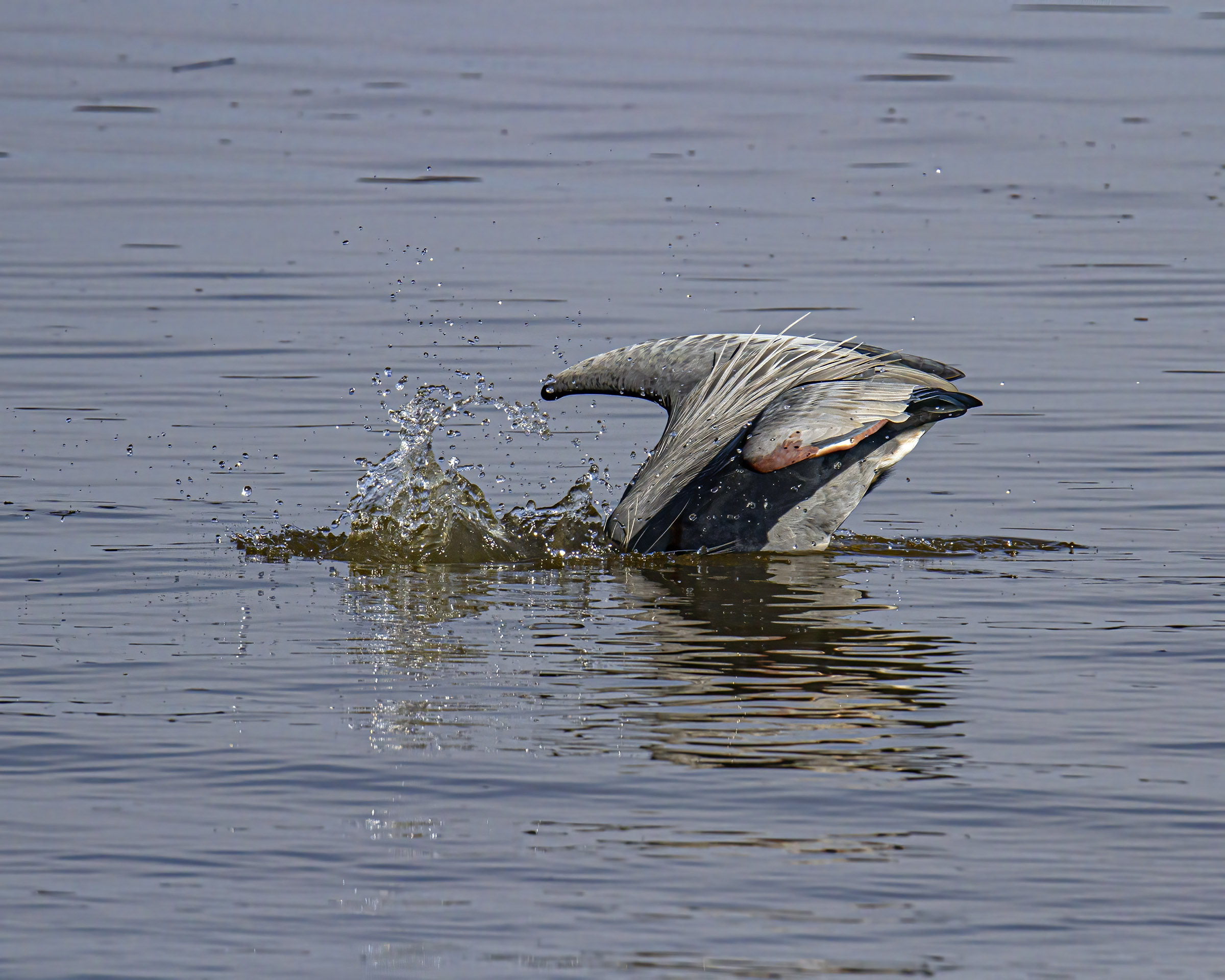
I had been observing the heron for quite a while and had seen it catch numerous tiny fish as it waded about in the shallow water. Gradually the heron moved to slightly deeper water and continued to look for fish. All of the sudden the heron extended its neck and plunged its head forcefully into the water, extending its wings as it did so. The third image shows how committed the heron was as it submerged its entire upper body.

Once it had grabbed the fish underwater, the heron flapped its mighty wings, as you can see in the final photo, to generate enough force to pull the large fish out of the water. The first image shows the moment when the fish first came out of the water. The second image shows the heron as it slowly and gingerly walked to the shore—it apparently did not want to take the chance of losing its catch.

Tuesday was overcast and cool and up to that point in the day I had not had much success in finding subjects to photograph—this encounter priduced the catch of the day for me and probably for the heron too.

Great Blue Heron

Great Blue Heron

Great Blue Heron

Great Blue Heron

© Michael Q. Powell. All rights reserved.

Read Full Post »

I love to watch Great Blue Herons (Ardea herodias). Most of the time when I see them, they are standing motionless in the water, watching and waiting for prey to come within range. We both stand there, waiting for a decisive moment when the heron will strike.

When I spotted this heron last Friday, he was in shallow water, water that was much to shallow for it to be able to catch a large fish. The heron was hunched over and was making multiple strikes, but I could not tell if they were successful. From the angle at which I was shooting, the heron’s bill looked cartoonishly long and its body seemed much more compact and squat than normal.

Finally, as you can see in the second photo, the heron caught something big enough for me to see. The heron flipped the little fish into the air and I managed to capture the moment when the fish was in mid-air, just before the heron gulped it down. The positioning of the heron and the direction of the light made the heron’s mouth look a bit like that of a mini-pelican.

Later that same day I spotted a Great Blue Heron standing in some colorful vegetation that hid its lower body. Unlike the first heron that seemed to be having fun, this second heron seemed to be stern and intense as it surveyed the marshland. I really like the way that the vegetation in both the foreground and the background was blurred, which draws the viewer’s attention directly to the heron.


Great Blue Heron

Great Blue Heron

Great Blue Heron

© Michael Q. Powell. All rights reserved.


Read Full Post »

I watched a Great Blue Heron (Ardea herodias) snag a small fish on Wednesday at Occoquan Bay National Wildlife Refuge. Herons like to swallow their catches head-first, so the heron tossed the fish in the air several times to reposition it.

In the final photo, the heron had finally flicked the fish into the proper position and was preparing to swallow it. I am pretty sure that he was successful in doing so, although the photo suggests that his aim was somewhat less than perfect. I have tossed popcorn, M&M’s, and other tasty treats into the air and tried to catch them in my mouth and can testify to the fact that it is not as easy as it looks.

Great Blue Heron

Great Blue Heron

Great Blue Heron

© Michael Q. Powell. All rights reserved.


Read Full Post »

On an unusually warm winter day when temperatures soared into the 60’s (16 degrees C), this Great Blue Heron (Ardea herodias) was taking advantage of the conditions to fish in a small pond at Occoquan Bay National Wildlife Refuge. The heron struck repeatedly during the time that I watched him and appeared to be having a good deal of success, although the fish were all pretty small, like the one in the second image below.

It was wonderful to walk about in the warmth and sunshine of a spring-like day, a foretaste of things to come. As I write this posting, however, a cold rain is falling that forecasters predict might turn into a couple of inches of snow.

I personally have had enough of winter this year with an unusually snowy January and am ready for spring to arrive. I feel a little like a child in the back seat of a car during a long road trip, endlessly inquiring, “Are we there yet?

Great Blue Heron

Great Blue Heron

Great Blue Heron

© Michael Q. Powell. All rights reserved.

Read Full Post »
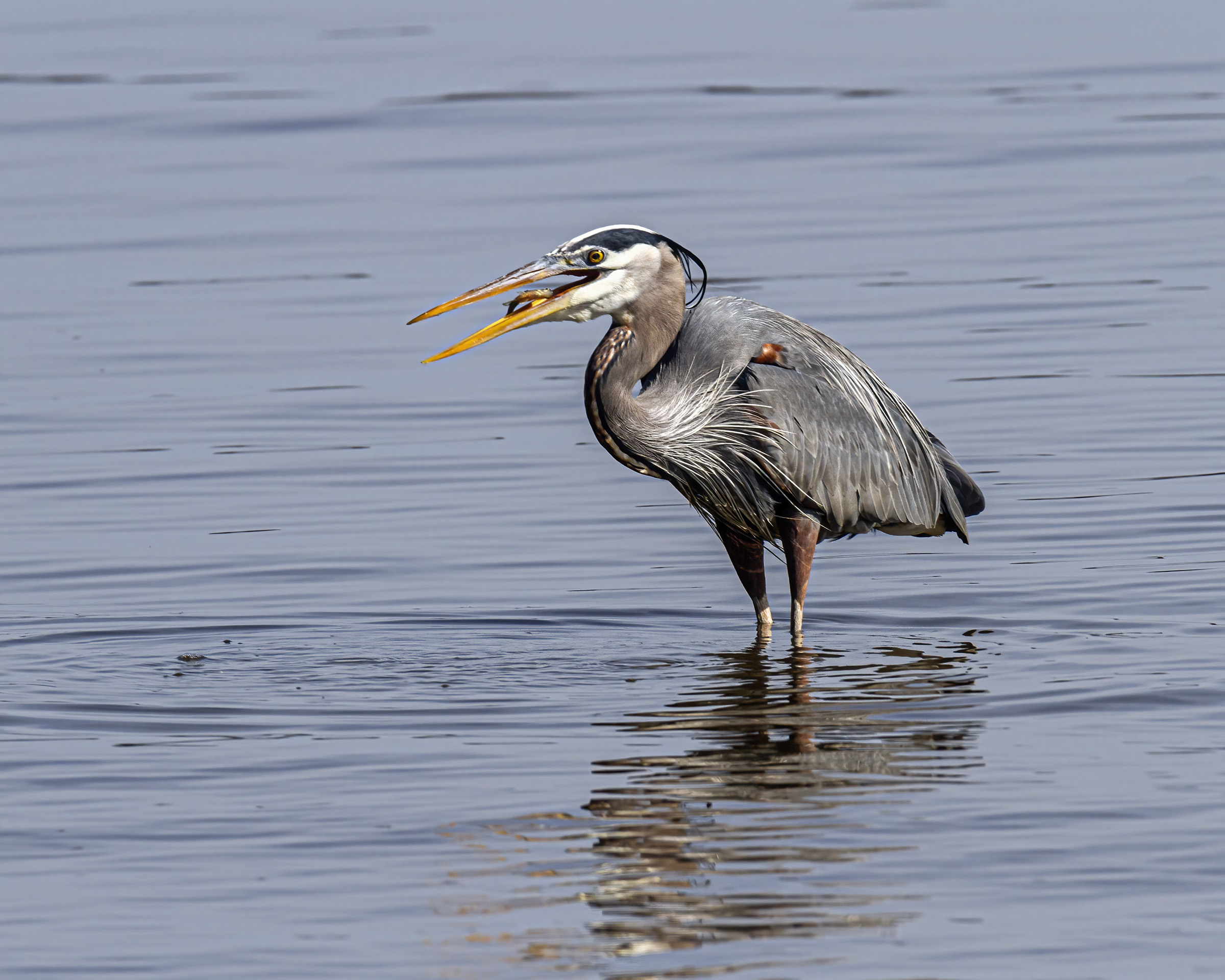
In the past I have seen Great Blue Herons (Ardea herodias) catch some incredibly large fish, but the tiny fish this heron caught on Thursday at Occoquan Bay National Wildlife Refuge may be the smallest prey that I have ever seen a heron catch.

Hopefully the fish was just an appetizer and not the main course.

Great Blue Heron

© Michael Q. Powell. All rights reserved.

Read Full Post »

As the waves rhythmically struck the rocky shoreline, the Great Blue Heron (Ardea herodias) slowly moved forward, all of his attention focused on one small spot. It was lunchtime on Wednesday at Occoquan Bay National Wildlife Refuge and this heron was hungry. I watched and waited and finally the heron struck the water with a mighty thrust. When he pulled his bill out of the water, it was empty.

The heron paused for a moment and seemed pensive, wondering perhaps if he was looking for lunch in all the wrong places.

Great Blue Heron

© Michael Q. Powell. All rights reserved.

Read Full Post »

The fish was modest in size, but the Great Blue Heron (Ardea herodias) had waited so patiently to catch the fish that it was determined not to lose its prey. As the heron adjusted the fish in its mouth, it turned away from the water, so that if the fish somehow escaped its grasp, it would not be able to swim away.

A few seconds later the heron tilted its head back and swallowed the fish. The heron took a quick drink of water and went back to fishing, probably hoping that it would be able to catch a main course to go along with the tasty appetizer that it had already consumed.

I watched this little drama unfold this past Thursday at Occoquan Bay National Wildlife Refuge.

Great Blue Heron

© Michael Q. Powell. All rights reserved.

Read Full Post »