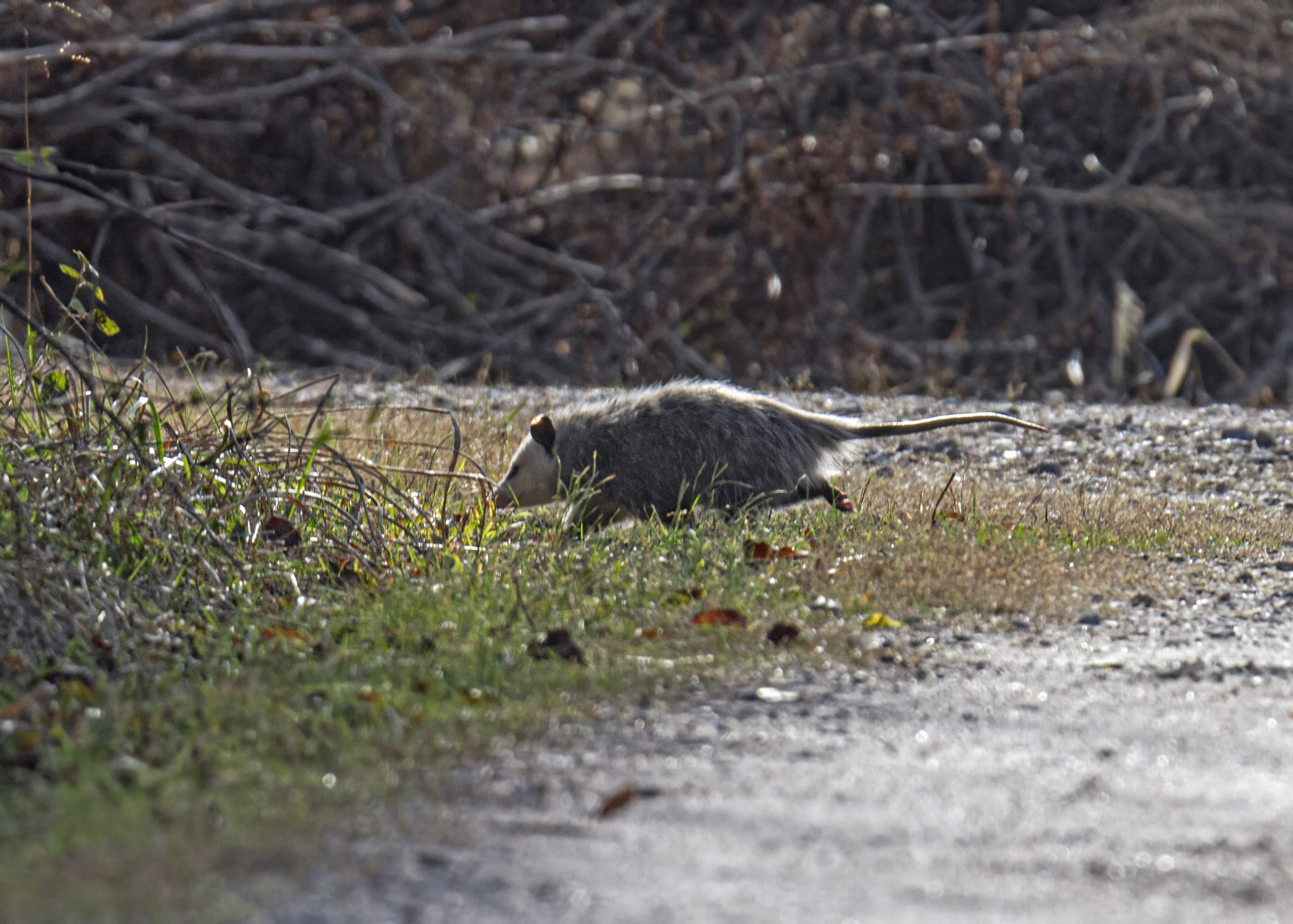
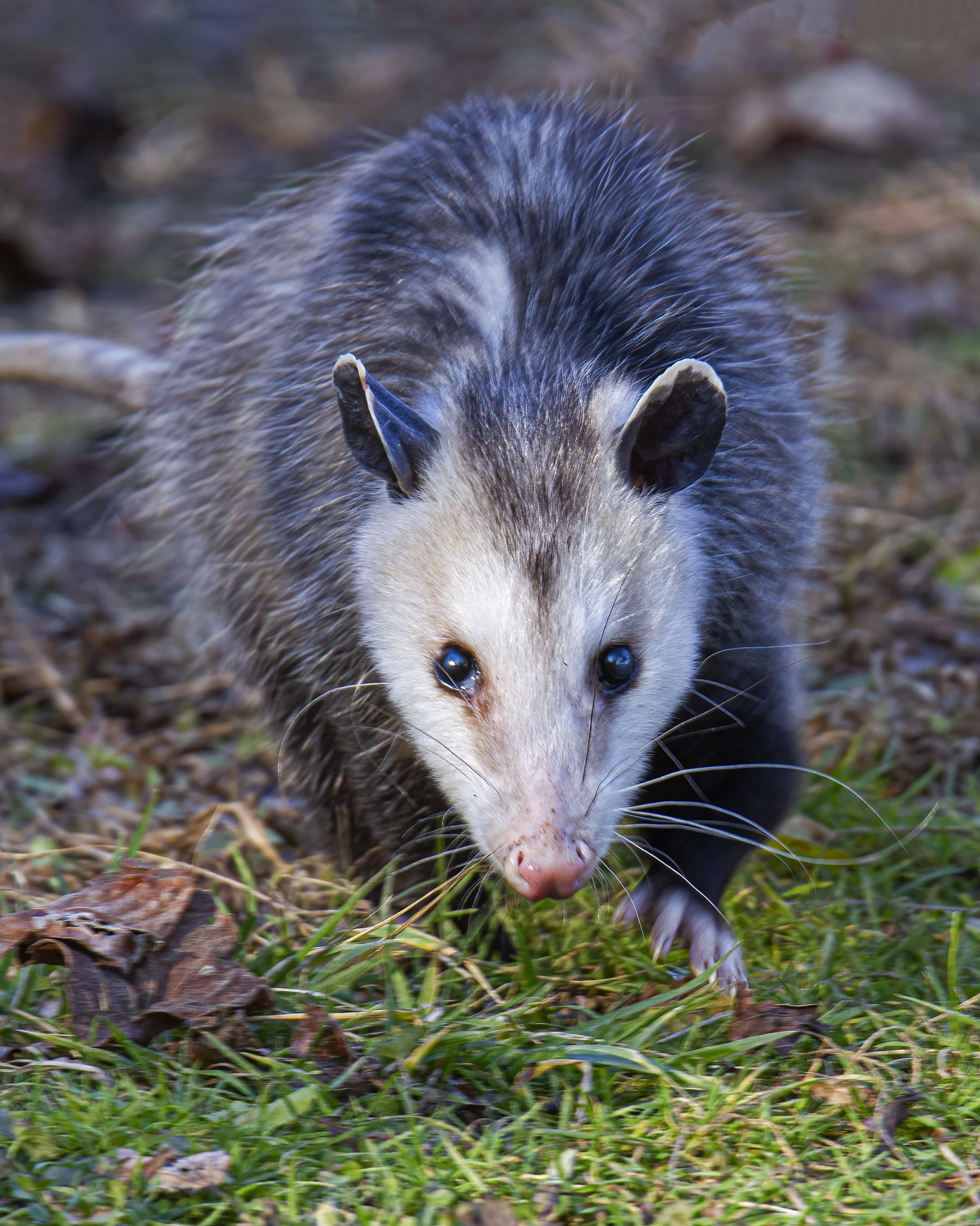
Yesterday I encountered a cool-looking Virginia Opossum (Didelphis virginiana) at Occoquan Bay National Wildlife Refuge. It was walking down the middle of a trail straight towards me and did not seem aware of my presence. Opossums are mostly nocturnal, so I do not see them very often—apparently they do not seem me very often either. An opossum’s eyesight is much better in the dark than it is in daylight, so the opossum may not have initially seen me, even though it was looking right at me in a number of these photos.
Virginia Opossums, also known as North American Opossums, are the northernmost marsupial in the world, and the only one living north of Mexico, according to Wikipedia. Like other marsupials such as a kangaroos, kolas, and wombats, opossums give birth to incompletely developed babies that develop further in a pouch—he word “marsupial” comes from the Latin word “marsupium”, which means pouch.
The gestational period lasts only 11-13 days, according to Wikipedia, and the average litter size is 8–9 infants, although over 20 infants may be born. “Newborns are the size of a honeybee. Once delivered through the central birth canal, newborn opossums climb up into the female opossum’s pouch and latch onto one of her 13 teats. The young remain latched for two months and in the pouch for 2+1⁄2 months. The young then climb onto the mother’s back, where she carries them for the remainder of their time together. It is during this time that the young learn survival skills. They leave their mother after about four or five months.”
If you want to learn more about opossums, check out an article called “50 Opossum Facts That Are Too Awesome to Miss” at the website facts.net. For example, I was shocked to learn that the word “opossum” originated in Virginia, where I live. Between 1607 and 1611, colonists John Smith and William Strachey first recorded the usage of opassom and aposoum at the early British colony in Jamestown, Virginia.
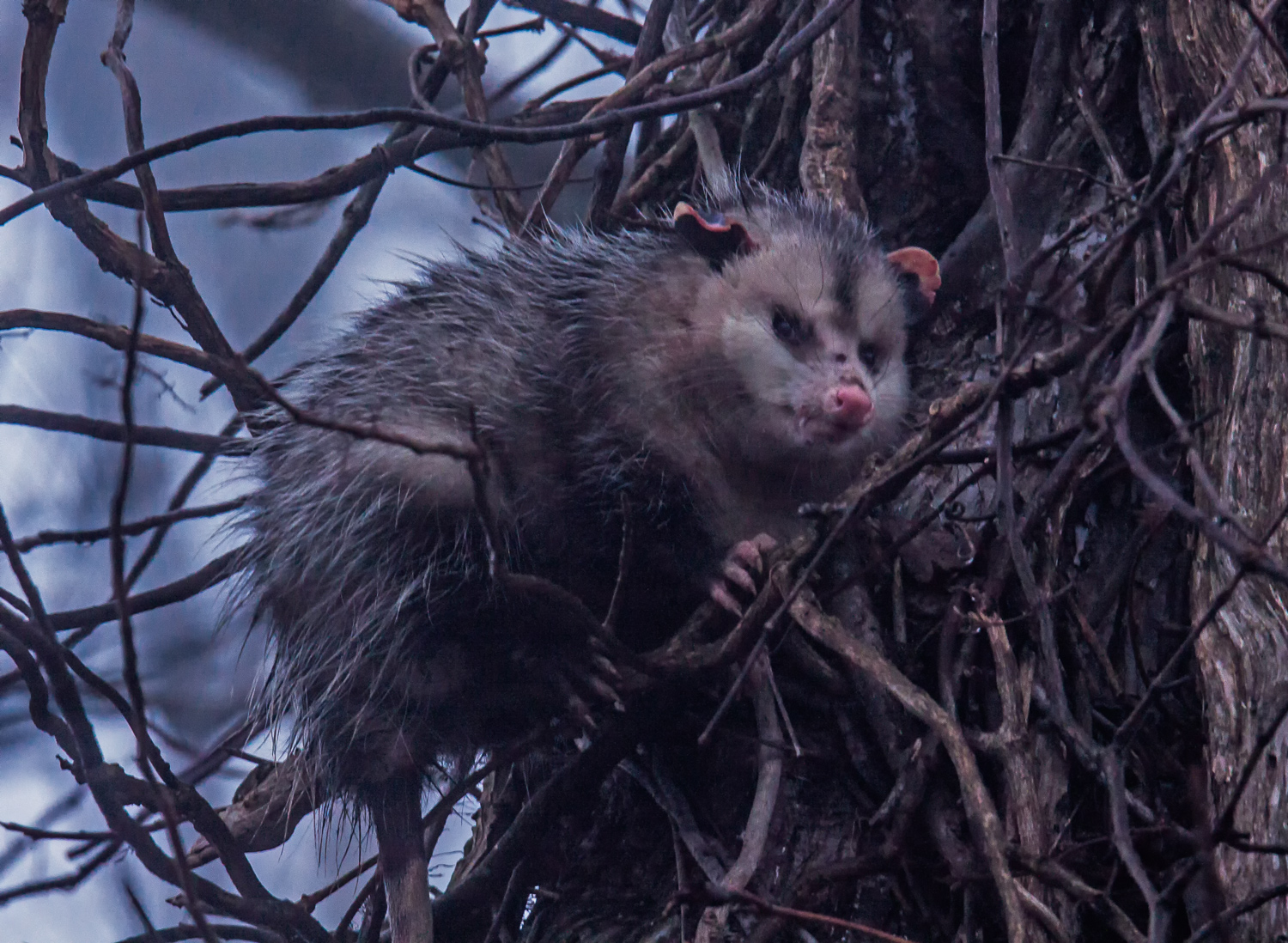
The opossum seemed curious, cute, and almost cuddly, but I kept my distance and tried not to disturb. From certain angles, such as in the second image, though, the opossum seemed focused and a little menacing.
I encourage you to click on the photos to get a closer look at some of the details of the opossum, like its prehensile tail and the little claws on its feet. You can’t see it very well, but opossums have opposable clawless thumbs on their hind feet that lets them grip onto tree branches.


© Michael Q. Powell. All rights reserved.
Read Full Post »




 Mike Powell