Feeds:
Posts
Comments

Posts Tagged ‘Corthylio calendula’

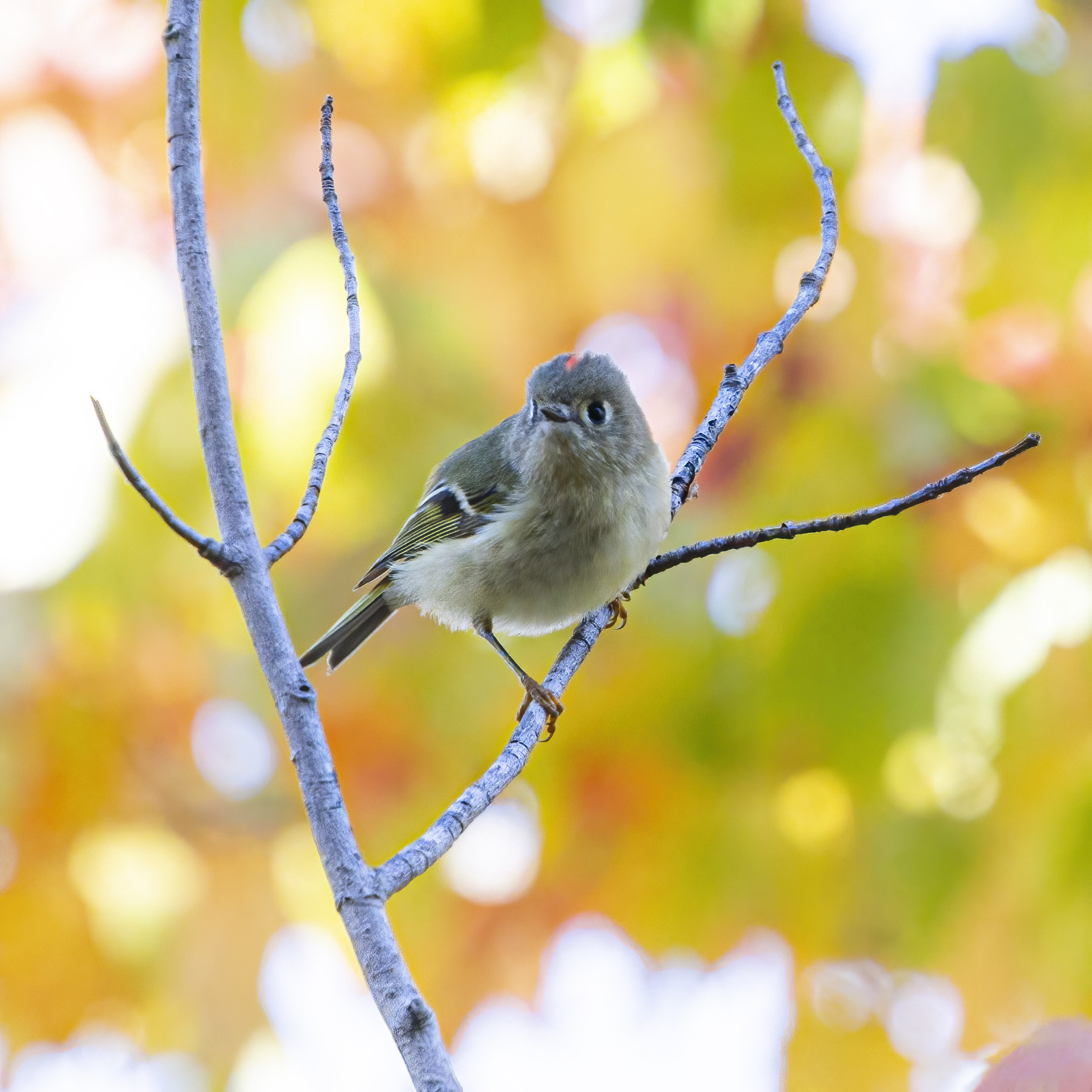
It is fun to watch the acrobatics of tiny Ruby-crowned Kinglets (Corthylio calendula) as they forage for food, like this one that I photographed last Thursday at Occoquan Bay National Wildlife Refuge. I love the twisting, spiral shape of the little branchlet on which the kinglet is perched so much that I might well have photographed it even if the kinglet were not there. The yellow colors in the background are a huge plus in creating an autumnal feeling in this image.

© Michael Q. Powell. All rights reserved.

Read Full Post »

This tiny Ruby-crowned Kinglet (Corthylio calendula) glared down at me as I photographed it on Wednesday in a tree overhanging a stormwater retention pond in Kingstowne, a suburban community only a mile or so from where I live. The autumn foliage surrounding the pond had several patches of  impressively colorful leaves and I was delighted to be able capture some of the beautiful autumn color in the background of these two images.

In the first photo, you can see a portion of the kinglet’s “ruby crown,” a feature of the males that is often hidden from sight. The second image gives you a better overall view of the little kinglet, which only about four inches (10 cm) in length and weighs about .3 ounces (9 grams).

Ruby-crowned Kinglets are generally hyperactive, so it was unusual when this one paused for a moment in its foraging efforts and “posed” for me in the open.

Ruby-crowned Kinglet

Ruby-crowned Kinglet

© Michael Q. Powell. All rights reserved


Read Full Post »

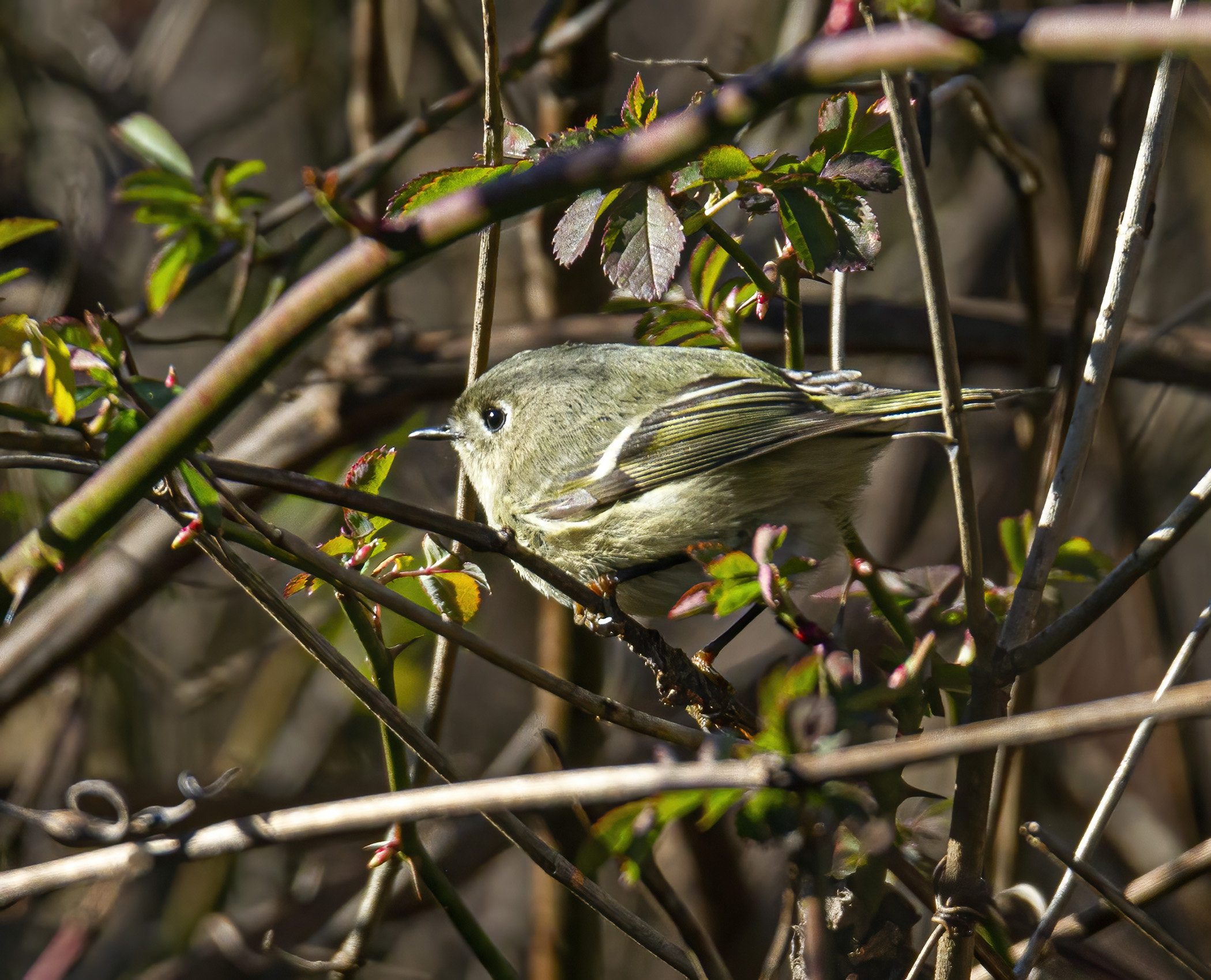
It can be a real challenge to get shots of tiny little songbirds, like this Ruby-crowned Kinglet (Corthylio calendula) that I spotted last week at Occoquan Bay National Wildlife Refuge. These kinglets are only about 4 inches (10 cm) in length and move about continuously in the vegetation. I love the description of them on the Cornell Lab of Ornithology website, “A tiny bird seemingly overflowing with energy, the Ruby-crowned Kinglet forages almost frantically through lower branches of shrubs and trees. Its habit of constantly flicking its wings is a key identification clue.”

Generally I strive to isolate my subject from the background, but that is virtually impossible with this species, which rarely seems to perch in the open. In this case, I took over a dozen shots of the kinglet and this was the only one that came out ok.

Some of you may have noticed that I have not posted for several day, which is somewhat unusual for me—I try to do a blog posting every day. This weekend, however, I drove to Massachusetts, about 600 miles (965 km) each way, for a family funeral. During my time there, I chose to disconnect myself from the internet and am only now catching up on my e-mail and blog postings.

Ruby-crowned Kinglet

© Michael Q. Powell. All rights reserved.

Read Full Post »

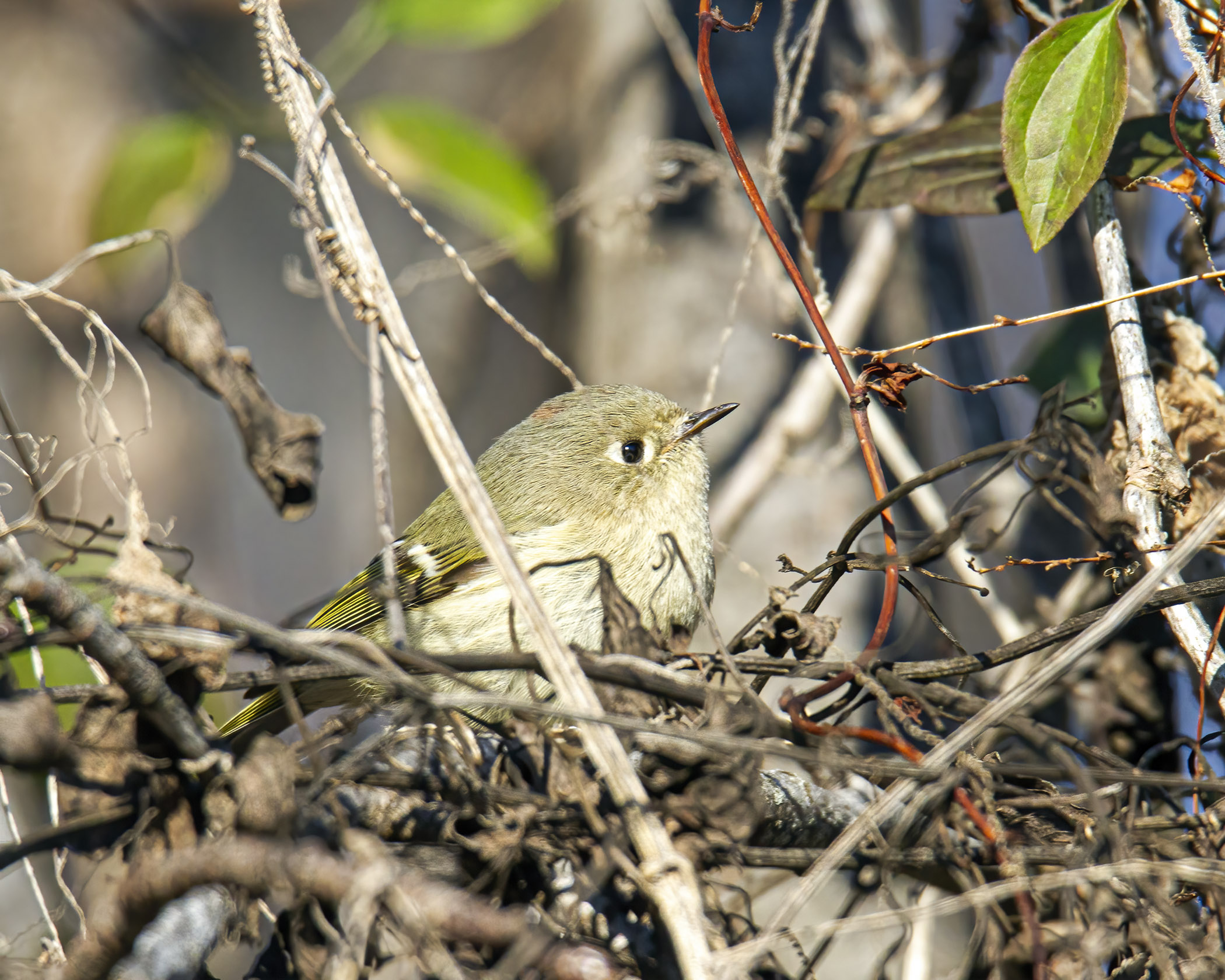
One of the tiniest birds that I see in the winter months is the Ruby-crowned Kinglet (Corthylio calendula). Birds of this species so small—about  3.5-4.3 in (9-11 cm) in length—and frenetic that it is rare for me to get an unobstructed view of one.

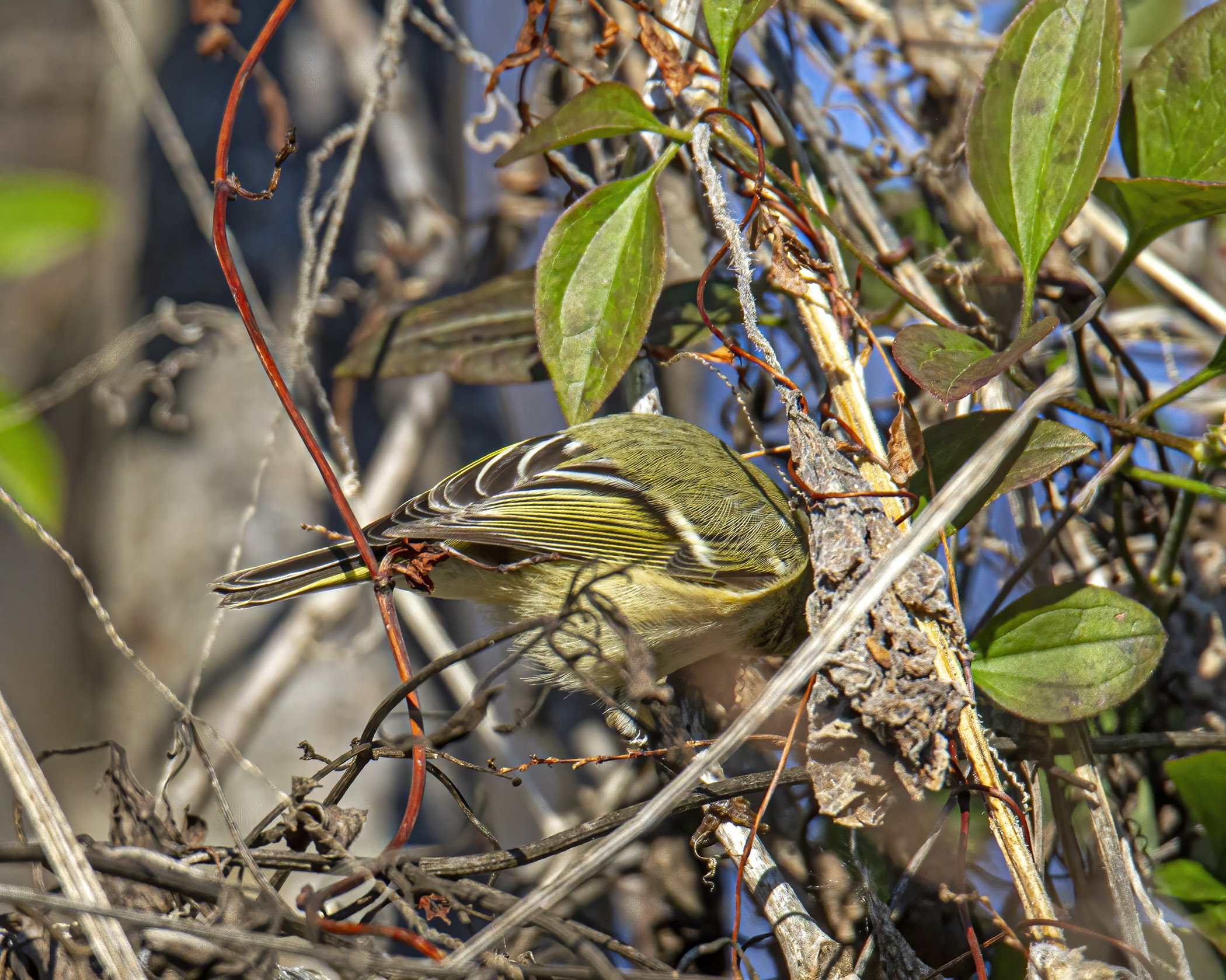
Even rarer, though, is a look at the ruby “crown,” which is usually hidden. If you look really closely at the top of the kinglet’s head in the first photo you can see a trace of red, but nothing more. The second shot provides a good look at the body of a kinglet with its head buried in the vegetation.

According to the Cornell Lab of Ornithology, Ruby-crowned Kinglets are “restless, acrobatic birds that move quickly through foliage, typically at lower and middle levels. They flick their wings almost constantly as they go.” Despite their energetic behavior, they do not need much food. “Metabolic studies on Ruby-crowned Kinglets suggest that these tiny birds use only about 10 calories (technically, kilocalories) per day.” Yikes!

Ruby-crowned Kinglet

Ruby-crowned Kinglet

© Michael Q. Powell. All rights reserved.

Read Full Post »