Feeds:
Posts
Comments

Archive for the ‘warbler’ Category

This Yellow-throated Warbler (Setophaga dominica) was pretty far away when I spotted its little patch of bright yellow feathers this past Tuesday at Occoquan Bay National Wildlife Refuge. I doubted that I would be able to get a recognizable shot of it, but decided to take a chance, given that it was the first warbler that I had seen this spring. The resulting shot won’t win any contest, but I am happy that I was able to document my sighting.

Warblers pass through my area each spring at about the same time as the leaves begin to appear on the trees. It can be a bit frustrating for me to be able to hear some of these little birds without being able to see them when they are hidden in the foliage. It is a little game of hide-and-see that I play every year and this time I was able to capture a shot of one of my colorful fellow players.

Yellow-throated Warbler

© Michael Q. Powell. All rights reserved.

Read Full Post »

Most warblers nest either on the ground, in shrubs, or in trees, according to the Cornell Lab of Ornithology website, but the Prothonotary Warbler and the Lucy’s Warbler build their nests in holes in standing dead trees or may use nest boxes when available. On Monday I was delighted to spot a Prothonotary Warbler (Protonotaria citrea) at Occoquan Bay National Wildlife Refuge checking out a nest box from the outside and eventually from the inside too.

The nest box is old and may have a leaky roof, but the warbler seemed happy to have found it. The real estate market is tight in Northern Virginia right now and finding any place to live is difficult. After a short stay on the roof, the Prothonotary Warbler flew away and made an aerial approach from the front, perching at the entrance for a moment before entering the nest box.

I obviously could not see what was going on in the box, but periodically I could see flashes of yellow as the warbler moved about inside the box. Perhaps there are already eggs in the box. The warbler stayed inside the box for about five minutes before it poked its head out of the entrance and began to look around, as you can see in the final photo. I was hoping to capture a shot of the bird exiting the nest box, but it left more quickly and unexpectedly and I missed the shot.

I will be checking this spot out during my next visits to the wildlife refuge, hoping that I will be lucky enough to see some baby warblers.

Prothonotary Warbler

Prothonotary Warbler

Prothonotary Warbler

© Michael Q. Powell. All rights reserved.

Read Full Post »

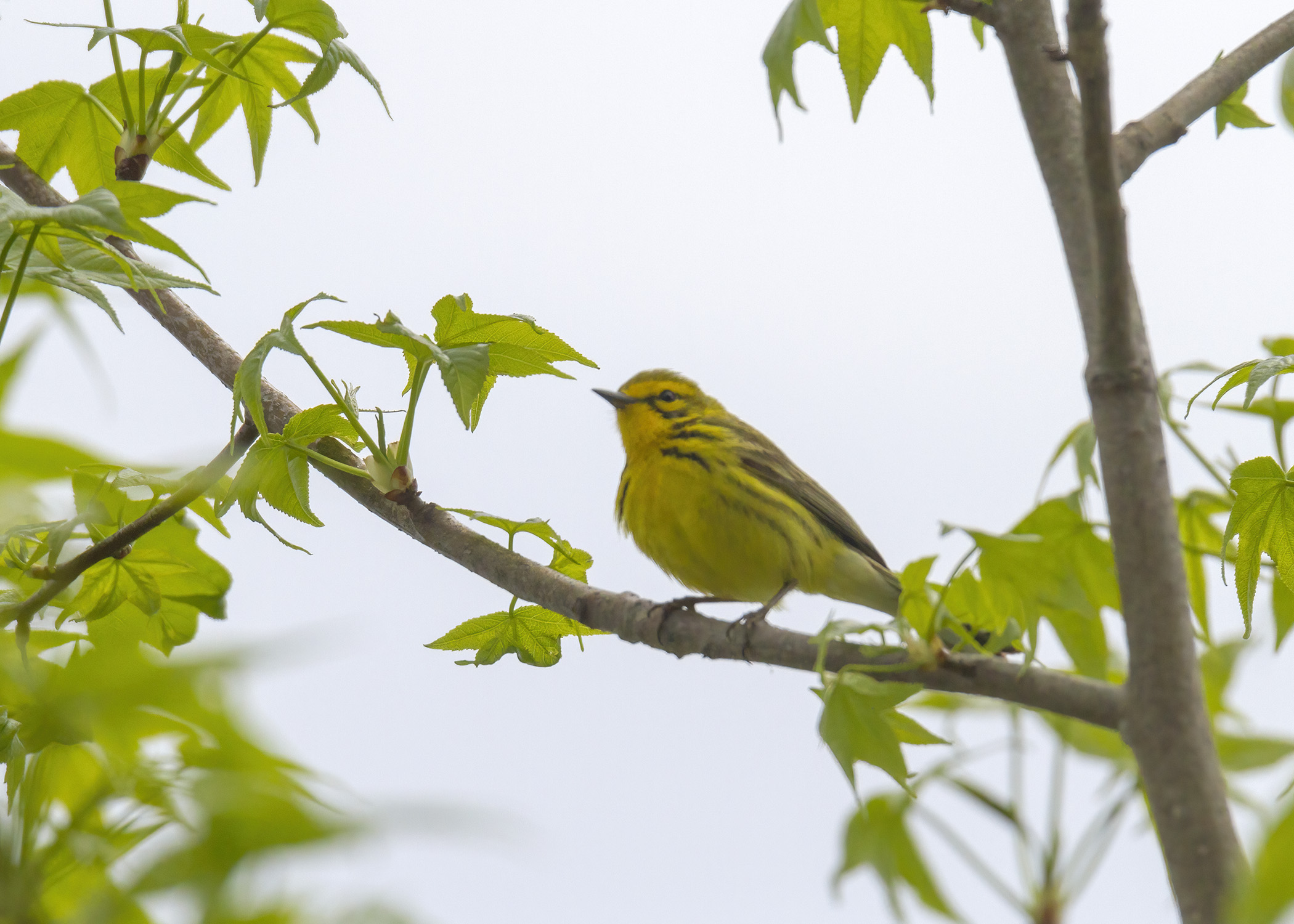
I don’t know how much longer the migrating warblers will be in my area, but this past few weeks I have been trying to get outside with my camera as often as I can, hoping to be able to photograph these colorful little birds.  On Tuesday I spotted a Prairie Warbler (Setophaga discolor) in the patient and patiently tracked it as it moved about.

The first photo was a bit of an anomaly, because the warbler momentarily gave me an unobstructed view when it jumped to a high branch. The second photo gives you a much better idea of the typical challenge I face, with the warbler barely showing itself from behind the wall of foliage. Fortunately, I reacted quick and got a shot that is one of my favorites of this warbler season, which has been my most successful one to date.

Prairie Warbler

Prairie Warbler

© Michael Q. Powell. All rights reserved.

Read Full Post »

Prothonotary Warblers (Protonotaria citrea) are probably my favorite warblers. I just love their brilliant yellow plumage that seems to glow. Many warblers have touches of bright yellow, especially during the spring breeding season, but the Prothonotary Warbler outdoes them all and is almost completely covered in yellow.

I spotted this little beauty yesterday (1 May) at Occoquan Bay National Wildlife Refuge. I initially caught sight of the warbler as it was flitting about in the foliage. I would see flashes of yellow as it foraged, but could not get a clear look at it. All of the sudden the warbler flew across the trail and landed in a bush, momentarily give me a clear shot.

Quite often I strain my neck when trying to photograph warblers, a phenomenon that is colloquially called “warbler neck.” It is so common that the Audubon website has an article entitled, “A Birder’s Workout Guide for Preventing Warbler Neck.” I was very fortunate in this case, though, that the bird was perched below eye level, so I was able to capture a lot of detail without harming my neck, detail that is often hidden when I am shooting upwards at a sharp angle.

Prothonotary Warbler

© Michael Q. Powell. All rights reserved.

Read Full Post »

I spotted this spectacular Yellow-throated Warbler (Setophaga dominica) on Monday at Occoquan Bay National Wildlife Refuge as it perched amidst the hanging seed pods of what I believe is a sycamore tree. I love the round shape and texture of the seed pods and the warbler was much more in the open than he was when he was hidden amidst the foliage.

Yellow-throated Warbler

© Michael Q. Powell. All rights reserved.

Read Full Post »

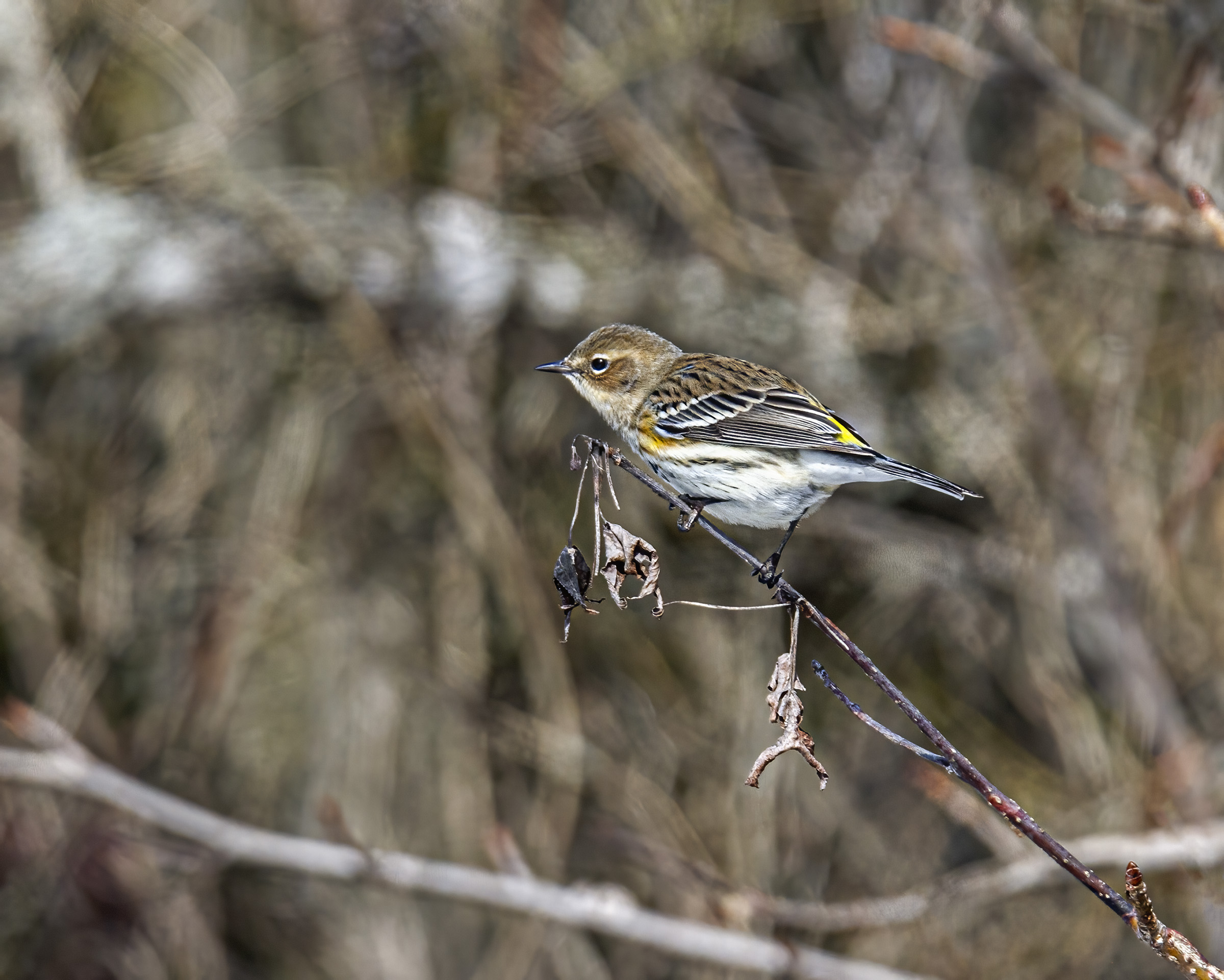
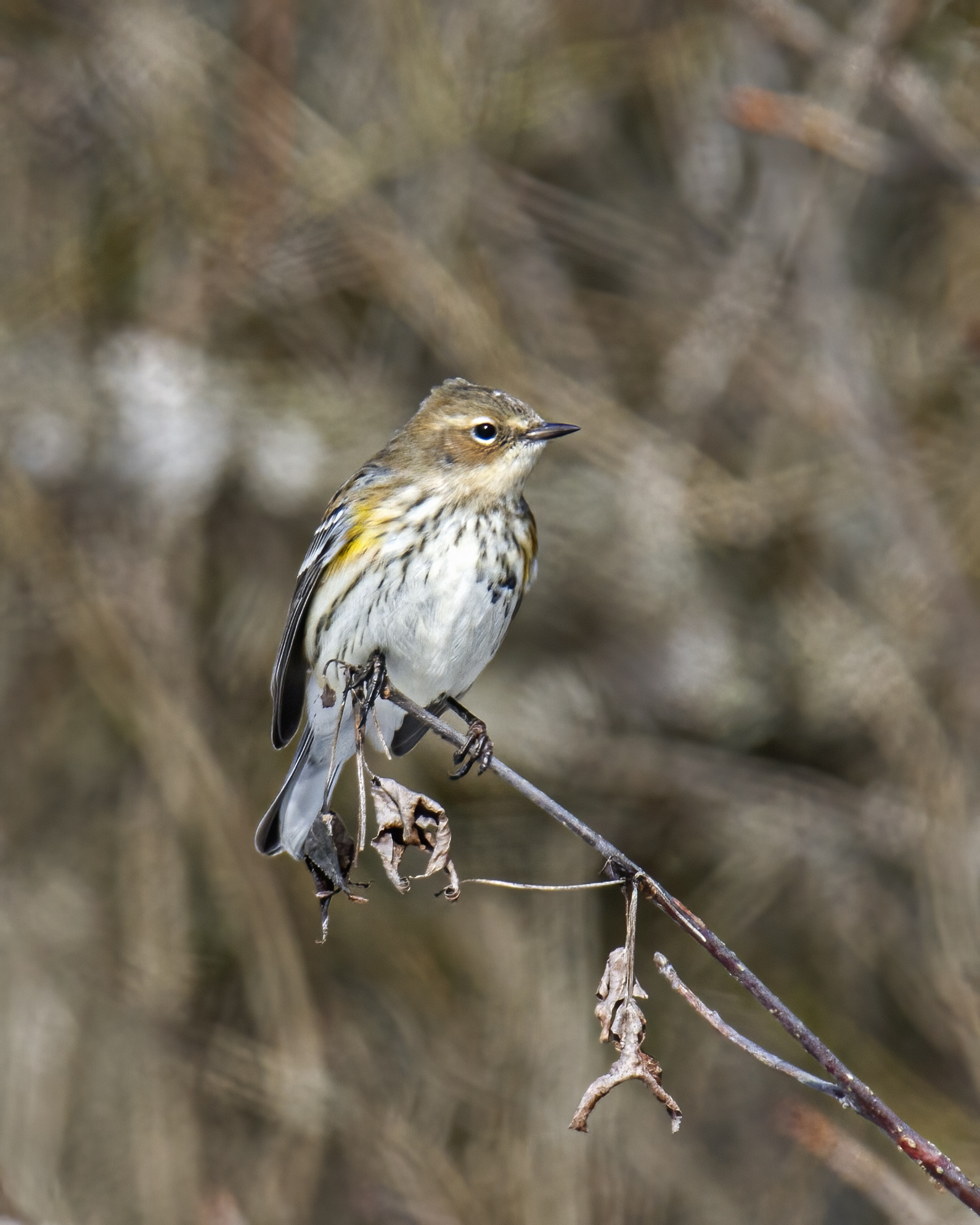
I don’t know if this Yellow-rumped Warbler (Setophaga coronata) that I spotted last week at Occoquan Bay National Wildlife Refuge was in a transitional plumage stage, but it looked awfully scraggly to me. The colors on the warbler’s face and body were mottled, but the yellow patches on its chest helped me to identify it as a Yellow-rumped Warbler.

I feel very fortunate when I am able to get any shots of a warbler. The trees are now covered in leaves and I can’t help but feel a bit of frustration when I can hear all kinds of birds singing, but can’t spot them. That’s the reality for a wildlife photographer—sometimes all I can do is watch, listen, and wait patiently, hoping that a subject will come into view.

Yellow-rumped Warbler

Yellow-rumped Warbler

© Michael Q. Powell. All rights reserved.

Read Full Post »

This male Prairie Warbler (Setophaga discolor) was signing loudly and proudly when I captured this image on Thursday at Occoquan Bay National Wildlife Refuge. I just love the way the little bird tilts back his head and sings with all of his might, seemingly putting his entire body into the effort.

Prairie Warbler

Prairie Warbler

© Michael Q. Powell. All rights reserved.

Read Full Post »

Each spring a lot of colorful warblers pass through our area on their northward migration. Most of them stay for only a short time, so it is a hit-or-miss proposition for me to find them. This is also the time of the year when the trees are budding, flowering and pushing out new leaves. All of this new growth is beautiful, but it makes it even harder for me to spot the little birds as they flit about, often at the tops of the trees.

Yesterday I was thrilled to spot this Yellow-throated Warbler (Setophaga dominica) high in a distant tree at Occoquan Bay National Wildlife Refuge. Initially my view of the colorful little bird was blocked by the vegetation, but I bent, twisted, stretched, and leaned in all directions and was eventually was able to get a clear view of the warbler.

My eyes are really active during the spring as I look up to try to find birds and look down to search for dragonflies. I manage to observe lots of cool things, but suspect that there is so much more going on that I do not see or notice.

Yellow-throated Warbler

© Michael Q. Powell. All rights reserved.


Read Full Post »

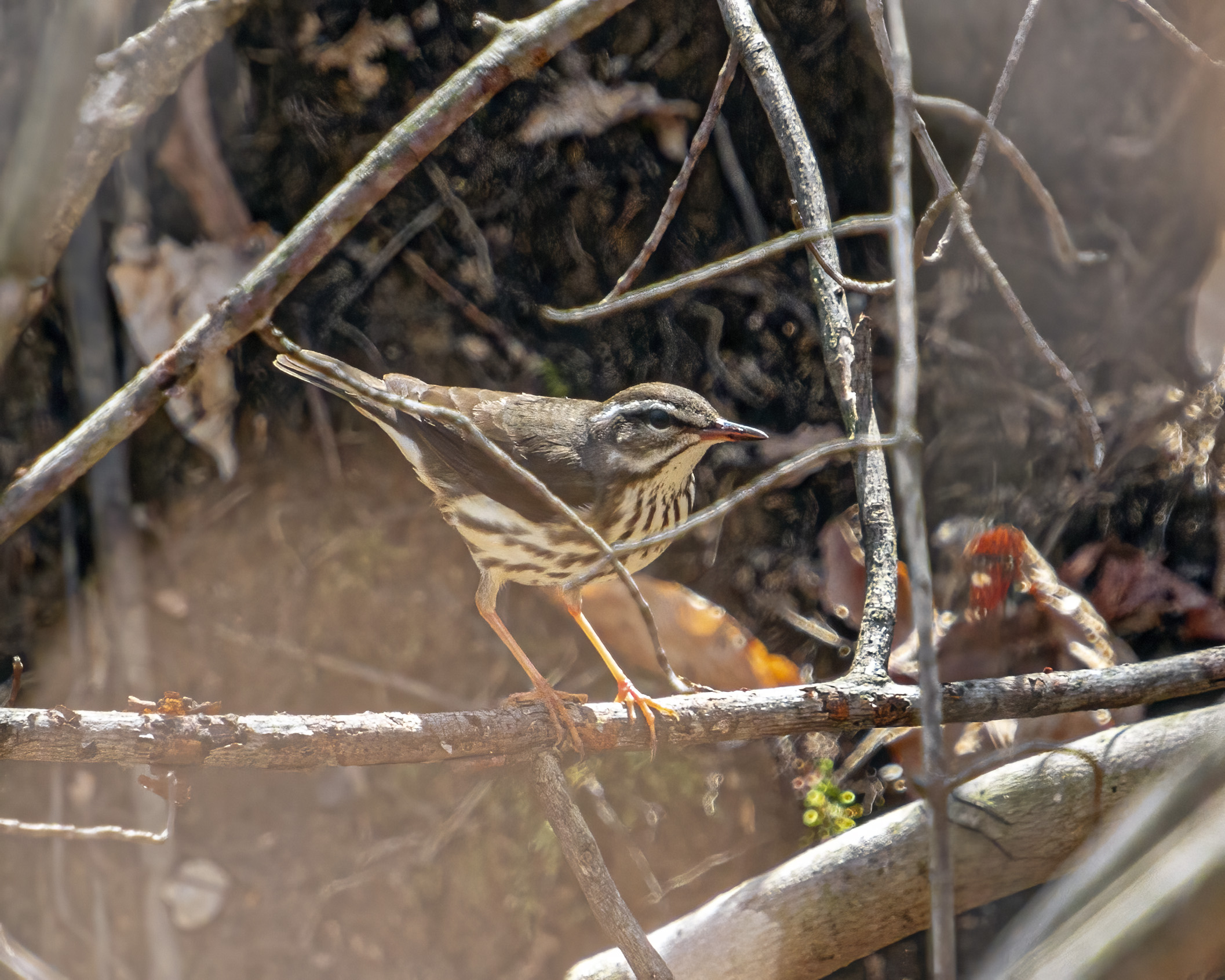
Last week I spotted this bird hopping about in a small creek in Prince William Forest Park. The bird was in constant motion and I could not get close to it, so I was was not able to get a really good shot of it. I vaguely remembered seeing a similar bird a few years ago in the same location, so I checked my old blog entries and determined that it might be a Louisiana Waterthrush (Parkesia motacilla). Several more experienced birders confirmed my tentative identification in a Facebook group for birding forum.

Despite its name, a Louisiana Waterthrush is actually a warbler, not a thrush. The Cornell Lab of Ornithology website provides the following overall description of the species:

“The ringing song of the Louisiana Waterthrush, in cadence so like the rushing streams that are its home, is one of the first signs of spring in eastern North America. Its brown plumage and bold streaking help explain why this member of the warbler family has the word “thrush” in its name. At all seasons, this species stays close to moving water—especially forested streams and creeks—and bobs its rear end almost constantly. In both spring and fall, Louisiana Waterthrushes are among the earliest migrant warblers.”

Several local photographers have started posting photos of more colorful warblers, so I will be keeping my eyes open for them. Leaves are starting to cover the trees, so I will probably have my usual problem of not being able to spot the little birds even when I can hear them singing.

Louisiana Waterthrush

Louisiana Waterthrush

© Michael Q. Powell. All rights reserved.

Read Full Post »