When I first saw this bird yesterday in the waters off of Occoquan Bay National Wildlife Refuge, I thought it might be some kind of grebe. The more I watched it though, the more skeptical I became of my initial identification. It seemed bigger than the grebes that I had previously seen and its bill seemed considerably longer. Additionally, it acted differently. Rather than diving, it poked its head under the water and then would swim for a bit with its head submerged.
So I did what I usually do in this kinds of situation and posted some photos in the What’s This Bird? forum on Facebook. Within a few minutes I received a chorus of responses, all indicating that this was a Common Loon (Gavia immer). I have absolutely no experience with loons, but tend to associate them with northern lakes. Mentally, I think of them as dark colored with distinctive patterns, which is true when they are in breeding plumage. It turns out that they are much more subdued in coloration when they are in non-breeding or immature plumage.
In other parts of North America, loons are a more common and popular sight than in Northern Virginia where I live. According to Wikipedia, the Common Loon is the provincial bird of Ontario, and it appears on Canadian currency, including the one-dollar “loonie” coin and the previous series of $20 bills. In 1961, it was designated the state bird of Minnesota, and appears on the Minnesota State Quarter.


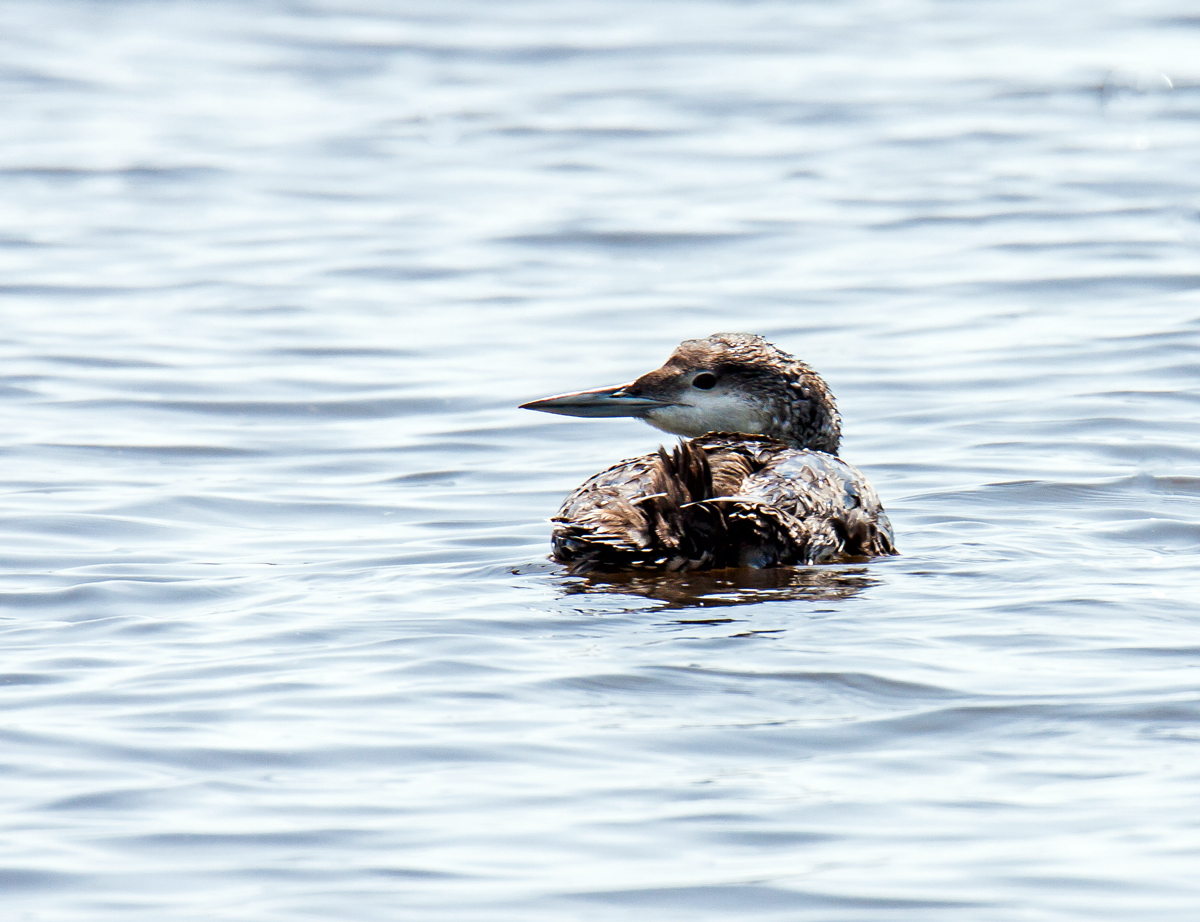
© Michael Q. Powell. All rights reserved.
 Mike Powell
Thank you for the great photo today and in your other posts. I do enjoy them. I live in NH but did not know what a non breeding or juvenile loon looked like. I’ve only seen the dark colored adults. Always so much to learn from nature.
>
I think that I would have to travel to see the dark colored adults and when I see photos of them, it seems like it would be worth it. One of the coolest things about having a blog is that I get to interact with folks from different parts of the USA and the world for whom “normal” wildlife is a whole lot different from what I see in my area.
One of my favorite birds. Right up there with American Bald Eagles! We used to see Loons quite often on Raquette Lake in Upstate NY. They have such an eerie call.
Uncommon beauty.
Loons are a common site in Maine and I’ve often seen and heard them on our vacations there. Benjamin and his Dad have seen them in Massachusetts on the lake near their home during their excursions. Benjamin told me : “A Loon has a very sharp beak and it’s long to catch fishes to eat, Daddy told me.” When I enlarged the photos, he pointed and said : “See that beak and they dive into the water to get the fishes too.” The student is the teacher today! Thank-you, Mr. Mike!!
Indeed he is. This was my very first loon.